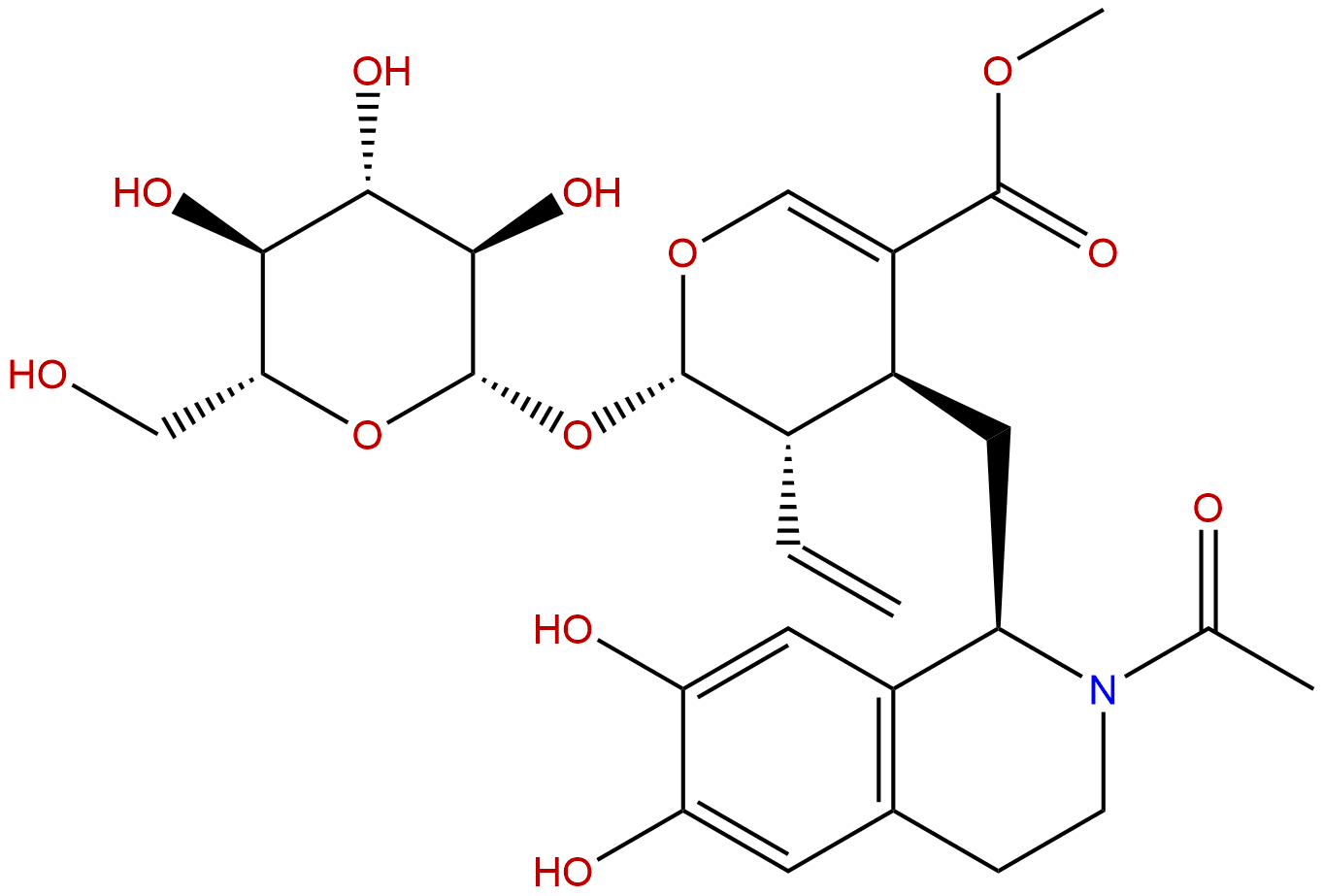


Product name: Ipecoside
Synonym name:
Catalogue No.: BP2010
Cas No.: 15401-60-2
Formula: C27H35NO12
Mol Weight: 565.572
Botanical Source:
Physical Description:
Type of Compound: Alkaloids
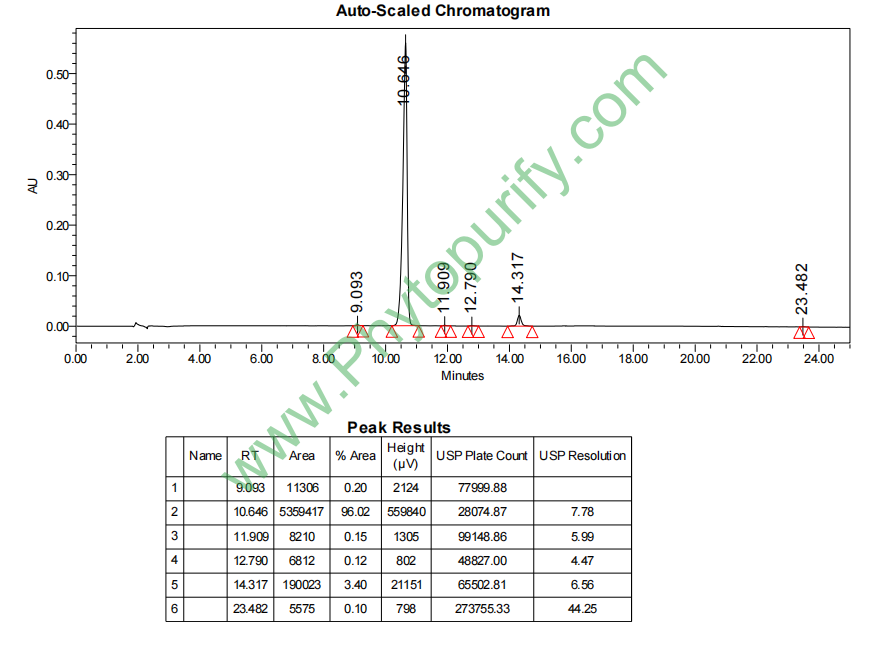
Purity: 95%~99%
Analysis Method: HPLC-DAD or/and HPLC-ELSD
Identification Method: Mass, NMR
Packing: Brown vial or HDPE plastic bottle
Storage: Store in a well closed container, protected from air and light. Put into refrigerate or freeze for long term storage.
Whenever possible, you should prepare and use solutions on the same day. However, if you need to make up stock solutions in advance, we recommend that you store the solution as aliquots in tightly sealed vials at -20℃. Generally, these will be useable for up to two weeks.
The product could be supplied from milligrams to grams
Inquire for bulk scale.
For Reference Standard and R&D, Not for Human Use Directly.
HPLC of Ipecoside
Storage conditions:Short-term storage at 2~8℃, long-term storage at -20 ~ -80℃
195.6800
-.3942
-.3969
14.1701
.5785
.4671
Low
65.5363
4.9547
Yes
No
No
No
Yes
No
0.0
Yes
No
Yes
Yes
Natural products, as an important source of drug discovery, play an irreplaceable role in the long history of human fight against diseases. From the modern scientific interpretation of traditional herbs to precise drug screening based on activity-based separation, the chemical diversity inherent in nature continues to provide modern medicine with structurally novel and uniquely mechanistic lead compounds. Among numerous biologically active natural product families, it originates from the genus Turmeric(Psychotria)The isoquinoline alkaloids in related plants have attracted much attention due to their significant pharmacological activities. Among them, Ipecoside (CAS No. 15401-60-2), as a monoterpene isoquinoline alkaloid glycoside with unique structure, not only represents a key member of this kind of natural products, but also becomes an important object in the field of natural product pharmacology due to its potential in anti amebic dysentery and other protozoal infectious diseases.
The discovery and research of Ipecoside are rooted in the understanding of the root cause of vomiting(Cephaelis ipecacuanha)Long term exploration of the medicinal value of closely related plants. Turmeric, as a classic medicinal plant, its extract is mainly used in traditional medicine to treat amoebic dysentery and as an emetic agent. Modern chemical research has revealed that the main active ingredients in ipecac are isoquinoline alkaloids such as emetine and cephareline. However, with the advancement of separation technology and the improvement of structural analysis methods, researchers have Psychotria A series of more complex alkaloid glycosides, including Ipecoside, have been discovered in the genus plants. These compounds retain the isoquinoline core while introducing monoterpene units and glycosyl moieties, forming unique hybrid structures that endow them with chemical properties and biological activity spectra distinct from simple isoquinoline alkaloids.
From the perspective of chemical taxonomy, Ipecoside belongs to the cross class of isoquinoline alkaloids, β - D-glucosides, terpenoid glycosides, and olefinic compounds. Its molecular structure contains both acetamide and methyl ester groups, as well as a complex isoquinoline alcohol skeleton. This multifunctional and multi ring characteristic makes it a highly valuable natural product model for research. Functionally, Ipecoside has been identified as a plant metabolite whose biosynthetic pathway is closely related to the production of other alkaloids in ipecoside and has a direct precursor product relationship with ipecoside aglycones. The complexity of this structure not only determines its unique physicochemical properties, but also lays the foundation for its diverse biological activities.
In recent years, with the continuous deepening of research on the anti infective, anti-tumor, and immune regulatory activities of natural products, the pharmacological potential of Ipecoside and its analogues has been re examined. Especially in response to the global public health problem of amoebic dysentery, especially in areas with underdeveloped sanitation conditions, there is still an urgent need to find efficient and low toxicity new anti amoebic drugs. Ipecoside and its related compounds exhibit specific inhibitory effects by acting on key targets of amoebic protozoa, such as EHI1 to EHI5, providing important lead structures for the development of novel anti amoebic drugs. This article aims to comprehensively review the chemical structure, plant origin, extraction methods, pharmacological activity, mechanism of action, medicinal characteristics, and clinical application prospects of Ipecoside, in order to provide systematic references for the in-depth research and development of this natural product.
The chemical structure of Ipecoside is the fundamental determinant of all its biological activity and pharmacological characteristics. As a typical monoterpene isoquinoline alkaloid glycoside, its molecular skeleton is composed of three core structural units connected by specific chemical bonds: an isoquinoline alkaloid nucleus, a monoterpene unit, and a β - D-glucose group. Specifically, the isoquinoline portion of Ipecoside is not simply tetrahydroisoquinoline, but rather an oxidized and modified isoquinoline alcohol structure with an acetamide group (- NHCOCH ∝) and a methyl ester group (- COOCH ∝) attached to it. Monoterpene units are fused with isoquinoline rings through carbon carbon bonds, forming a more complex polycyclic system. Finally, a β - D-glucose molecule is linked to the phenolic or alcohol hydroxyl group of isoquinoline alcohol through a glycosidic bond, endowing the molecule with significant water solubility characteristics. This hybrid structure of alkaloids terpenes sugars is a typical "defensive" metabolite feature in natural product chemistry, typically indicating that the compound plays a role in resisting pathogens or herbivores in plants.
From the molecular formula, the precise molecular weight of Ipecoside is 565.5720 Da, which is above average among natural small molecule drugs and reflects the complexity of its structure. The multiple polar functional groups in its chemical structure, including multiple hydroxyl groups, amide bonds, ester bonds, and oxygen atoms on the sugar ring, collectively determine its hydrophilic and lipophilic balance. The calculated LogP value is -0.3942, which is a negative value indicating that Ipecoside has strong hydrophilicity and relatively weak lipophilicity. This property has a profound impact on its absorption, distribution, metabolism, and excretion (ADME) processes within living organisms. The polar LogP value means that Ipecoside is not easily passively diffused through the lipid bilayer of the cell membrane, and its transmembrane transport may depend on specific transport proteins. Meanwhile, this also explains why its blood-brain barrier (BBB) penetration ability is evaluated as' low '. For the treatment of diseases outside the central nervous system, such as intestinal amoebic infections, low BBB penetration may actually be an advantage as it can reduce potential side effects on the central nervous system.
Topological Polarity Surface Area (TPSA) is another key parameter for evaluating drug oral absorption and membrane permeability. The TPSA of Ipecoside is as high as 195.6800 Å ². According to Rule of 5 and its extended rules, molecules with TPSA greater than 140 Å ² are generally considered to have poor oral absorption and are not easily able to penetrate cell membranes. The TPSA value of Ipecoside is significantly higher than this threshold, which is highly consistent with the hydrophilicity characteristics reflected by its LogP value. The high polarity surface area is mainly due to the large number of hydrogen bond donors (such as hydroxyl and amide N-H) and hydrogen bond acceptors (such as carbonyl oxygen and ether oxygen) in the molecule. Although these functional groups are beneficial for forming hydrogen bonds with water molecules and increasing water solubility, they also constitute energy barriers for transmembrane transport. The water solubility data (14.1701 mg/mL) further confirms this, indicating that Ipecoside has good solubility in water environment, which is beneficial for its dissolution and release as an oral drug in the gastrointestinal tract, but poses a challenge for its absorption through intestinal epithelial cells.
In terms of chemical stability, the ester and glycosidic bonds in Ipecoside molecules are potential "fragile points". Under acidic or alkaline conditions, or under the action of esterases and glycosidases in the body, these chemical bonds may undergo hydrolysis. For example, the methyl ester group may be hydrolyzed into a carboxylic acid, while the glucose group may be cleaved to generate ipecoside aglycones. This metabolic transformation is not only a pathway for drug inactivation or activation in the body, but also an important component of its pharmacokinetic behavior. In addition, the olefinic structure (double bond) in the molecule gives it certain chemical reactivity and may participate in oxidation or addition reactions. Overall, the physicochemical properties of Ipecoside exhibit typical characteristics of "high water solubility, low fat solubility, and high polarity", which determines that the strategy for drug development must revolve around how to improve its membrane permeability and oral bioavailability.
Ipecoside originally originated from the Rubiaceae family Psychotria Separated from plants.Psychotria Genus is a vast plant group that includes hundreds of shrubs and small trees distributed in tropical and subtropical regions worldwide, known for their rich alkaloid diversity. Among them, species closely related to Ipecoside include Psychotria ipecacuanha(i.e. medicinal roots) and other closely related species. It is worth noting that the ipecaceae plant has historically been the main source of extracting emetine and ipecaceae, while Ipecoside, as a more complex alkaloid glycoside, usually has lower content and may have species and tissue specificity in distribution. Except for Psychotria Belonging to other plants in the Rubiaceae family, such as Cephaelis Belonging (sometimes classified)Psychotria It has also been reported to contain Ipecoside or its analogues. The limitations of this plant source and its low content in the plant body are one of the main bottlenecks that restrict the large-scale acquisition and in-depth research of Ipecoside.
From the perspective of plant chemical taxonomy, the biosynthesis of Ipecoside is a product of the intersection of the isoquinoline alkaloid pathway and the terpenoid pathway. Its precursor substances include dopamine derived from the shikimic acid pathway (providing isoquinoline skeleton) and secologanin derived from the mevalonic acid pathway or deoxyxylulose phosphate pathway (providing monoterpene units). The two undergo Pictet Spengler enzymatic condensation reaction to form key intermediates, which are then subjected to subsequent glycosylation, methylation, and oxidative modifications to ultimately form Ipecoside. Therefore, the accumulation of Ipecoside is closely related to the growth stage of plants, environmental stress (such as diseases and pests), and tissue parts (roots, stems, leaves, fruits). It is generally believed that the roots are the main synthesis and storage organs for this type of alkaloid glycoside.
For the extraction method of Ipecoside, the classic natural product chemistry process usually follows the paradigm of "solvent extraction liquid-liquid distribution chromatographic separation". The specific steps are as follows:
In recent years, some green extraction techniques such as supercritical fluid extraction (SFE) and microwave-assisted extraction (MAE) have also been attempted for the extraction of alkaloids, but they have not yet been widely used in the large-scale extraction of Ipecoside. Due to the low content of Ipecoside in plants and the cumbersome separation and purification steps, its acquisition cost is high, which greatly limits its further medicinal chemical modification and in vitro and in vivo pharmacological evaluation as a lead compound. Therefore, developing efficient synthetic biology methods (such as heterologous expression of their biosynthetic gene clusters) or total synthetic routes is the future direction to solve the problem of Ipecoside sources.
The pharmacological activity research of Ipecoside has been closely related to the core indication of anti amoebic dysentery since its discovery. Amoebic dysentery is caused by Entamoeba histolytica(Entamoeba histolytica)A infectious diseases caused by intestinal protozoa has caused a huge disease burden worldwide, especially in tropical and subtropical developing countries. Traditional therapeutic drugs such as metronidazole, although effective, have issues such as drug resistance, side effects (such as metallic taste, gastrointestinal discomfort), and potential mutagenicity. Therefore, finding novel structures, unique mechanisms, and higher safety anti amoebic drugs from natural products has always been a research hotspot.
The inhibitory effect of Ipecoside and its analogues on Entamoeba histolytica is their most studied pharmacological activity. Early in vitro studies have shown that Ipecoside can effectively inhibit the growth and proliferation of amoebotrophs. Its active mechanism is different from traditional amoeboid drugs, as it does not directly interfere with DNA synthesis or damage cell membranes, but may be achieved by affecting the unique metabolic pathways or signal transduction processes of amoeboids. It is worth noting that the activity of Ipecoside is closely related to its structure. Research has shown that the integrity of its ipecoside glycoside and glycosyl components is crucial for its activity. Removing glucose groups may alter their binding ability to the target, while hydrolysis of methyl ester groups may lead to loss of activity. The preliminary understanding of this structure-activity relationship (SAR) provides direction for subsequent chemical modifications.
In addition to its direct anti amoebic activity, Ipecoside has also been reported to have other biological effects. Some studies suggest that it may have anti-inflammatory or immunomodulatory activity. Considering that the pathological process of amoebic dysentery is accompanied by a strong intestinal inflammatory response, the anti-inflammatory effect of Ipecoside may have a synergistic effect with its anti amoebic activity, thereby more comprehensively alleviating disease symptoms. For example, it may alleviate intestinal mucosal damage by inhibiting the release of inflammatory factors (such as TNF - α, IL-1 β) or regulating the NF - κ B signaling pathway. However, these anti-inflammatory studies are not yet in-depth, mostly at the preliminary cellular or molecular level, lacking systematic in vivo validation.
In addition, considering that many members of the isoquinoline alkaloid family, such as berberine and sanguinarine, have significant antibacterial, antiviral, and even anti-tumor activities, researchers have also explored the broad-spectrum antimicrobial activity of Ipecoside. Preliminary results indicate that Ipecoside may have a certain inhibitory effect on certain Gram positive bacteria and fungi, but its activity intensity is far less specific than its specificity for amoeboids. There is currently no direct evidence to suggest that Ipecoside has significant cytotoxicity against cancer cell lines in terms of anti-tumor effects. This is consistent with its high polarity and low membrane permeability physicochemical properties, as it is difficult to enter the cell and exert cytotoxic effects. Therefore, the current research consensus is that the core pharmacological value of Ipecoside still focuses on the field of anti amoebic dysentery, with high selectivity and relatively low toxicity to host cells. This is an important advantage of Ipecoside as a candidate for anti infective drugs.
It should be pointed out that current research on the pharmacological activity of Ipecoside mostly remains at the in vitro experimental stage. The in vivo pharmacological studies, especially the validation using amoebic dysentery animal models such as mouse cecal infection model or Hamster liver abscess model, have very limited data. These in vivo studies are crucial for evaluating the actual efficacy, metabolic stability, and potential toxic side effects of Ipecoside in complex biological environments. Future pharmacological research should focus on filling this gap and systematically evaluating its therapeutic effects under different routes of administration (oral, intraperitoneal injection).
A deep understanding of the mechanism of action of Ipecoside, especially its interaction with molecular targets, is key to transforming it from a natural product into a clinical candidate drug. Recent studies have revealed that Ipecoside may exert its pharmacological effects by targeting multiple protein targets specific to Entamoeba histolytica, in response to its core activity against amoebic dysentery. These targets are named EHI1 to EHI5, representing key nodes in the life cycle and pathogenic process of amoebic protozoa.
EHI1 to EHI5 are not single function proteins, but a group of highly expressed and functionally important proteins in amoebic protozoa. Preliminary molecular docking and affinity experiments have shown that Ipecoside can specifically bind to these target proteins, thereby interfering with their normal function. Specifically:
It is worth noting that the effect of Ipecoside on these targets is not a classic model of "one drug, one target", but more likely a "multi-target" or "network regulation" model. This multi-target mechanism of action has significant advantages: firstly, it makes it difficult for amoebas to develop drug resistance through a single gene mutation; Secondly, lower doses of drugs can achieve effective therapeutic effects by synergistically inhibiting multiple pathways, thereby reducing the high affinity requirements for individual targets and minimizing off target toxicity. This is more robust than traditional single target drugs in dealing with complex infectious diseases.
At the molecular level, the binding of Ipecoside to target proteins may depend on multiple functional groups in its structure. Its isoquinoline ring system may interact with aromatic amino acid residues (such as tryptophan, tyrosine, phenylalanine) of target proteins through π - π stacking; The sugar moiety and polar groups (hydroxyl, amide, ester) may bind to the polar pocket of the protein through hydrogen bonding and electrostatic interactions. Molecular docking studies suggest that Ipecoside may be embedded into the active or conformational sites of target proteins, thereby altering the protein's conformation, inhibiting its catalytic activity, or interfering with its interactions with other proteins.
However, it must be acknowledged that there are still many unknowns regarding the specific identities and biological functions of EHI1 to EHI5, as well as the precise molecular details of Ipecoside's interactions with them. The identification of these target proteins is mostly based on genomics, transcriptomics, and bioinformatics predictions, lacking direct biochemical validation. For example, is EHI1 indeed a specific kinase? What is the Ki value of Ipecoside combined with it? Does binding cause significant changes in protein conformation? These key questions need to be answered through more in-depth biochemical, structural biology (such as X-ray crystallography, cryo electron microscopy), and cell biology experiments. Future research should focus on cloning and expressing these target proteins, establishing in vitro activity detection systems, and analyzing the three-dimensional structure of Ipecoside target protein complexes, in order to provide accurate templates for structure based drug design.
The promotion of Ipecoside from an active molecule in the laboratory to a clinical candidate drug requires rigorous drug efficacy evaluation. As mentioned earlier, its physicochemical properties (high LogP negative value, high TPSA, high water solubility) indicate that it may face significant challenges in oral absorption and bioavailability. The core of drug efficacy evaluation lies in balancing its Potency with ADME/Tox properties (absorption, distribution, metabolism, excretion/toxicity).
absorb The LogP of Ipecoside is -0.3942 and the TPSA is 195.68 Å ², both of which indicate poor oral absorption. According to Lipinski's "Five Rules", an ideal drug molecule typically requires LogP ≤ 5 and TPSA ≤ 140 Å ². Ipecoside clearly does not meet these standards. Its high polarity and high water solubility mean that it is difficult to passively diffuse through the lipid bilayer of intestinal epithelial cells. Therefore, after oral administration, Ipecoside is likely to remain mostly in the intestine and cannot effectively enter the bloodstream. This is both a disadvantage and an advantage: for the treatment of intestinal amoebic infections, the drug does not need to be absorbed into the bloodstream, only needs to reach an effective concentration locally in the intestine. Therefore, Ipecoside may be more suitable for development as a locally effective formulation in the intestine after oral administration, such as sustained-release tablets or colon targeted formulations. If it is desired to exert systemic effects (such as treating amoebic liver abscess), drug delivery systems such as liposomes, nanoparticles, or prodrug strategies must be utilized.
distribution Due to its high polarity, the distribution volume of Ipecoside in the body may be relatively small, mainly distributed in extracellular fluid and blood. Its binding rate to plasma proteins is not yet clear, but highly polar molecules typically have lower protein binding rates. Its low blood-brain barrier penetration has been confirmed, which is beneficial for avoiding central nervous system side effects. For the treatment of amoebic liver abscess, drugs need to be able to penetrate liver cells and be taken up by amoebic trophs, which puts higher demands on their distribution.
Metabolism The metabolism of Ipecoside is a key link in pharmacokinetic research. The ester and glycosidic bonds in its molecules are the "hotspots" of metabolism. After oral administration, esterases and glycosidases may hydrolyze it in the gastrointestinal tract and liver. Methyl ester hydrolyzes to form carboxylic acid, and the glucose group is cleaved to form ipecoside aglycone. What is the activity of these metabolites? Is it an increase, decrease, or toxicity in activity? It is currently unclear. If the glycoside activity is stronger, Ipecoside may be a prodrug; If the glycoside activity is lost or the toxicity is greater, then protecting these metabolic sites is the key to drug design. In addition, its isoquinoline ring system may also be oxidized by cytochrome P450 enzyme system, generating hydroxylated or demethylated metabolites. Comprehensive metabolite identification and metabolic pathway research are essential.
excretion Due to its high water solubility, Ipecoside and its metabolites are likely to be primarily excreted from urine in their original form or as conjugates through the kidneys, and may also be excreted into the intestine through bile. For drugs that work locally in the intestine, the unabsorbed portion is directly excreted with feces.
toxicity In the evaluation of drug properties, toxicity is an indispensable part. The preliminary computer prediction (in silico) results showed that the Ames test result of Ipecoside was 0.0, indicating that it does not have significant mutagenicity. Meanwhile, hERG inhibition was predicted as' no ', indicating a lower risk of causing prolonged QT interval and arrhythmia in the heart. These are positive signals. However, this cannot replace the in vivo toxicological evaluation of the system. It is necessary to conduct acute toxicity tests (LD50 determination), subchronic toxicity tests (repeated administration for 28 or 90 days), as well as specialized studies on reproductive toxicity, genetic toxicity, etc., to comprehensively evaluate its safety. Especially for local medication in the intestine, attention should be paid to its long-term effects on the gut microbiota and intestinal mucosa.
Overall, the pharmacological properties of Ipecoside exhibit typical "double-edged sword" characteristics. Its high polarity and low membrane permeability limit its development as a systemic drug, but it may make it an ideal local anti infective drug for the intestine. The preliminary toxicological prediction results are good, but there is a lack of systematic in vivo validation. Future pharmacokinetic studies should focus on: 1) establishing sensitive LC-MS/MS quantitative methods for Ipecoside and its metabolites in biological samples (plasma, tissue, feces); 2) Conduct pharmacokinetic studies in animal models after oral and intravenous injection to clarify their absorption degree, bioavailability, metabolic pathways, and excretion mode; 3) Evaluate the relationship between local intestinal concentration and drug efficacy, and determine its feasibility as a local intestinal drug.
Based on the unique chemical structure, clear anti amoebic activity, and preliminary favorable pharmacological characteristics of Ipecoside, its clinical application prospects mainly focus on the field of anti amoebic dysentery, but there is also the possibility of expanding in other directions.
Primary application: Development of new anti amoebic drugs
Currently, there is still an urgent demand for new anti amoebic drugs worldwide. As a first-line drug, metronidazole's drug resistance is becoming increasingly prominent, and its side effects limit its use in some patients (such as pregnant women and children). Ipecoside, as a natural product, may have a different mechanism of action than metronidazole (which inhibits amoebic DNA synthesis), thus it is expected to overcome the resistance of existing drugs. Its multi-target mechanism of action (EHI1-EHI5) also reduces the risk of drug resistance. More importantly, its high polarity and low absorption properties make it highly suitable for development as a locally effective oral preparation for the intestine. This' non absorbable 'medication can minimize systemic side effects and improve medication safety to the greatest extent possible. For example, it can be designed as a colon targeted release agent, allowing drugs to be released at high concentrations in the colon (the main site of amoebic infection), directly acting on the nutritive body, and rarely entering the systemic circulation. This will be an ideal 'precision treatment' strategy.
Expansion direction: anti-inflammatory and intestinal microbiota regulation
The pathological process of amoebic dysentery is accompanied by severe inflammatory reactions. The potential anti-inflammatory activity of Ipecoside, if confirmed in vivo, will give it a dual advantage in the treatment of amoebic dysentery: it can directly kill pathogens, reduce host inflammatory damage, and promote intestinal mucosal repair. In addition, as a highly polar natural product, Ipecoside may have a certain impact on the gut microbiota in the intestine. Although its main target is amoebic protozoa, studying its interactions with symbiotic microbiota may reveal new pharmacological mechanisms or potential side effects. For example, will it affect the growth of beneficial bacteria? Will it change the intestinal metabolic environment? These explorations will provide more comprehensive safety data for the clinical application of Ipecoside.
Challenges faced and future research directions
Despite its promising prospects, the clinical translation of Ipecoside still faces many challenges:
Ipecoside, This originates from Psychotria Monoterpenoid isoquinoline alkaloid glycosides belonging to the plant genus occupy a unique and important position in the field of natural product pharmacology due to their unique chemical structure and clear anti amoebic dysentery activity. This article provides a systematic review from multiple dimensions, including chemical structure, plant origin, pharmacological activity, mechanism of action, medicinal properties, and clinical application prospects.
The molecular structure of Ipecoside - a complex system that combines isoquinoline alkaloids, monoterpenes, and glucose groups - determines its physicochemical properties of "high polarity, low fat solubility, and low membrane permeability". This property presents both a challenge for its development as an oral medication and a unique opportunity for its use as a local anti infective drug in the intestine. Its core pharmacological activity lies in its inhibitory effect on Entamoeba histolytica. Preliminary studies have shown that it may exert a synergistic inhibitory effect through multiple pathways by acting on multiple amoeboid specific targets such as EHI1 to EHI5, which endows it with the potential to overcome drug resistance. The drug efficacy evaluation shows that Ipecoside has a relatively low risk of mutagenicity and cardiac toxicity, but its oral bioavailability is extremely low, its pharmacokinetic characteristics are not yet clear, and there is a serious lack of in vivo efficacy and toxicity data.
Looking ahead to the future, the clinical translation of Ipecoside remains a long and challenging journey. Solving its source problem (through synthetic biology or total synthesis), deepening its mechanism of action research (confirming targets and analyzing complex structures), conducting systematic drug chemistry optimization, and developing appropriate formulation technologies are key steps in pushing it from laboratory active molecules to clinical applications. Despite the bumpy road ahead, the research value of Ipecoside, as a novel and unique anti amoebic lead compound endowed by nature, cannot be ignored. In today's increasingly severe global situation of antimicrobial resistance, in-depth exploration and rational development of natural products such as Ipecoside is not only expected to provide new treatment options for amoebic dysentery patients, but also contribute valuable scientific accumulation to the field of natural product drug discovery. The study of Ipecoside is a vivid epitome of humanity drawing strength from natural wisdom to address health challenges.
