Introduction/Overview
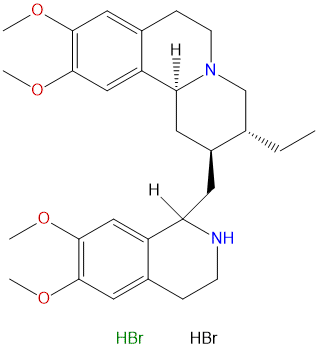
Emetine hydrobromide is the hydrobromide form of the isoquinoline alkaloid Emetine. As a natural product with a long history, it occupies an important position in the history of antiparasitic treatment. Turmeric alkaloids originated from the roots of plants in the Rubiaceae family(Cephaelis ipecacuanha)It was isolated from the roots and was used by indigenous people in South America as early as the 17th century to treat diarrhea. Later, it was scientifically verified that its main active ingredients were matrine and its analogues. The most famous clinical application of this compound is as an effective drug for treating amoebic dysentery and hepatic amoebic abscess, and its strong anti amoebic activity made it a first-line choice during specific historical periods. However, due to its significant cardiac toxicity and other serious side effects, its systemic application in clinical practice has significantly decreased, and it has been replaced by safer and more efficient modern drugs.
However, turmeric alkaloids have not withdrawn from the field of scientific research. In recent years, with the rapid development of molecular biology and cell biology technologies, researchers have gained a deeper and more microscopic understanding of the mechanism of action of turmeric alkaloids and their salts. Research has found that its pharmacological effects go far beyond traditional anti amoebic activity, and it also exhibits potential biological activity in fields such as antiviral and anti-tumor effects. Especially for Entamoeba histolytica(Entamoeba histolytica)The revelation of the multi-target characteristics of the central role provides a new perspective for understanding its efficiency and toxicity. Meanwhile, a systematic analysis of its pharmacological parameters also explains the underlying reasons for its limited clinical application. This article aims to systematically review the chemical characteristics, plant sources, pharmacological activities, multi-target mechanisms of action, and pharmacological evaluation of hydrobromic acid turmeric alkaloids, and explore their possible new positioning and application prospects in modern medicine.
Chemical structure and physicochemical properties
The chemical name of hydrobromic acid turmeric is (2S, 3R, 11bS) -2- {[(1R) -6,7-dimethoxy-1,2,3,4-tetrahydroisoquinolin-1-yl] methyl} -3-ethyl-9,10-dimethoxy-2,3,4,6,7,11b-hexahydro-1H-benzo [a] quinazine-1-one hydrobromide. The parent nucleus structure is a complex benzoquinoline quinoline isoquinoline system, containing multiple chiral centers, and its stereochemical configuration is crucial for its biological activity. Turmeric alkaloid itself is a white amorphous powder, and its hydrobromide form increases the water solubility and stability of the compound, making it more suitable for formulation development.
According to the provided pharmacological parameters, the molecular weight of hydrobromic acid turmeric base is 480.6490, which is a medium-sized molecule. The calculated lipid water partition coefficient (LogP) is 4.7897, indicating that the compound has high lipophilicity, which is beneficial for its penetration of cell membranes, but may also affect its water solubility and in vivo distribution. The topologically polar surface area (TPSA) is 52.19 Å ², which is relatively low, further confirming its good membrane permeability. However, its water solubility value is only 0.2096 (usually measured in mg/mL or log mol/L, here relative), indicating poor solubility in water, which may be a challenge in its formulation development. It is worth noting that its blood-brain barrier (BBB) permeability is predicted to be "high", indicating that the compound can enter the central nervous system, which may provide theoretical possibilities for the treatment of central nervous system amoebic infections (such as primary amoebic meningoencephalitis, although the efficacy of turmeric alkaloids is limited), but also increases the potential risk of neurotoxicity. The key toxicity warning parameters indicate that the compound is a hERG potassium channel inhibitor ("Yes"), which is directly associated with its known cardiac toxicity causing arrhythmias such as QT interval prolongation and apical torsion transition ventricular tachycardia. The Ames test result is 0.0 (usually indicating no mutagenicity), indicating that no genetic toxicity was shown in the bacterial recovery mutation test, but its in vivo genetic toxicity still needs to be comprehensively evaluated.
Plant sources and extraction methods
The main natural source of turmeric alkaloids is plants in the Rubiaceae family, especially Brazilian turmeric(Cephaelis ipecacuanha, also known as Psychotria ipecacuanha)And Tucan, Colombia(Cephaelis acuminata). These plants are native to tropical rainforests in South America, and their dry roots and rhizomes, also known as "spitting roots," are the raw materials for extracting active alkaloids. In addition to the main active ingredient, matrine, it also contains its demethylated derivatives, Cephaline (which has similar activity and toxicity to matrine but slightly weaker), and Psychotrine.
The traditional extraction method is mainly based on the universal extraction principle of alkaloids. Dry root powder is usually soaked or percolated with dilute acid (such as hydrochloric acid or sulfuric acid) to dissolve alkaloids in salt form. Then, alkalize the acidic water extract (usually using ammonia or sodium hydroxide) to free the alkaloids, and extract them with organic solvents such as chloroform and ether. After further acid-base purification, crystallization and other steps, the crude extract can obtain a mixture of turmeric alkaloids. To obtain pure turmeric alkaloids or their salts (such as hydrobromide), modern separation techniques such as column chromatography and preparative high-performance liquid chromatography are required for fine separation. The preparation of its hydrobromide salt from turmeric alkali usually involves dissolving the free base in a suitable solvent, forming a salt with hydrobromide, and then obtaining the pure product through recrystallization. Due to slow plant growth, limited content of active ingredients, and lengthy synthesis routes with low yields, the production of turmeric alkaloids still heavily relies on plant extraction, which also limits their large-scale supply.
Pharmacological activity research
The pharmacological activity research of hydrobromic acid sophocarpine has a long history, and its core activity is its strong anti amoebic effect.
1. Anti amoebic activity This is the most classic and strongest activity of turmeric alkaloids. It has a direct killing effect on the trophozoites of Entamoeba histolytica, and can effectively eliminate amoebic parasites that enter the intestinal tract, intestinal wall, liver and other tissues. It has been widely used in clinical practice to treat acute amoebic dysentery and hepatic amoebic abscess, with definite therapeutic effects. Its effect is rapid, but the cure rate is not 100%, and it often needs to be used in combination with drugs that act on intestinal amoebas (such as dichloronite).
2. Antitumor activity In vitro studies have shown that ipecacine can significantly inhibit the proliferation and induce apoptosis of many human tumor cell lines, such as leukemia, breast cancer, lung cancer, prostate cancer cells, etc. The mechanism may be related to inhibiting protein synthesis, inducing DNA damage, and affecting the cell cycle. However, due to its severe systemic toxicity, the prospects for direct development as an anti-cancer drug are bleak, but it provides ideas for designing new derivatives with lower toxicity or as a tool for studying the relationship between protein synthesis inhibition and cell apoptosis.
3. Antiviral activity Research has shown that matrine has inhibitory effects on certain viruses at the cellular level, such as human cytomegalovirus (HCMV), dengue virus, SARS-CoV-2, etc. Its antiviral mechanism may involve inhibiting the synthesis of viral proteins or interfering with certain pathways of host cells. However, research in this area is still in its early stages and is far from clinical application.
4. Other activities Turmeric alkaloids also have emetic effects (small doses stimulate gastric mucosal reflex to induce vomiting, previously used as emetics), expectorant effects, but have been eliminated due to side effects. In addition, it is also used as a tool drug for studying protein synthesis in eukaryotic cells, as it can specifically inhibit ribosome translocation.
Mechanism of action and molecular targets
The anti amoebic mechanism of turmeric alkaloids is complex, involving multi-target effects, which may be the basis for their high efficiency, but may also be related to toxicity. In recent years, research, especially on Entamoeba histolytica, has revealed a series of potential molecular targets:
-
Core mechanism: Inhibit protein synthesis Similar to in mammalian cells, the main mechanism of action of matrine in amoebas is to inhibit protein synthesis by eukaryotic ribosomes. It binds to the E site of the ribosomal subunit (60S) to prevent tRNA from being released from the E site of the ribosome, thereby blocking the translocation step during translation extension and leading to protein synthesis arrest. This is one of the fundamental reasons for its cytotoxic effect.
-
Specific/Relevant Targets for Entamoeba histolytica:
- Ribosomal proteins and related genes Research has identified multiple ribosomal proteins or genes related to ribosome biosynthesis that may be associated with the action of turmeric alkaloids, such as EHI_115350、EHI_182180、EHI_056990、EHI_089710、EHI_123030 Wait. The mutations or changes in expression of these genes may be related to the sensitivity or resistance of amoebas to emetic alkaloids.
- Cysteine protease (EhCP5)Entamoeba histolytica destroys host tissues by secreting cysteine proteases (such as EhCP5). Research has found that matrine can inhibit the activity of EhCP5, which may weaken the invasion and pathogenic ability of amoebas.
- Alcohol dehydrogenase (EhADH)This is an enzyme that plays a crucial role in amoebic energy metabolism and detoxification processes. Turmeric alkaloids may affect the metabolic homeostasis of amoebas by interfering with the function of EhADH.
- Gal/GalNAc lectin This is a key surface molecule for amoebas to adhere to host cells. Turmeric alkaloids may affect the expression or function of this lectin, thereby interfering with the colonization of amoebas.
- Small GTPase (EhRab7)Rab7 is involved in the endocytosis/lysosome pathway. Turmeric alkaloids may disrupt the intracellular transport and nutrient uptake of amoebas by affecting EhRab7-mediated vesicle transport.
- Stress inducible protein (EhSTIRP)This is a stress response protein. Treatment with matrine can induce its expression, indicating that amoebas attempt to respond to drug stress by activating stress response pathways.
Multi target synergistic effect Turmeric alkaloids may act on multiple targets simultaneously, including directly "shutting down" the cell's protein synthesis factory (ribosome), weakening its invasive weapon (EhCP5), disrupting its energy supply (EhADH), interfering with its adhesion (Gal/GalNAc) and nutrient uptake (EhRab7) abilities, and inducing strong cellular stress (EhSTIRP). This multi pronged attack makes it difficult for amoebas to develop drug resistance through a single mechanism, but it also means that it may cause similar widespread interference to host cells, especially cells with high protein synthesis requirements such as cardiomyocytes, leading to toxicity.
Evaluation of drug properties and pharmacokinetics
The pharmacological evaluation of hydrobromic acid turmeric reveals why it has been phased out from first-line drugs.
-
Absorption, distribution, metabolism, excretion (ADME):
- absorb Oral absorption is unstable and strongly irritating to the gastrointestinal tract, which can easily cause nausea and vomiting. Therefore, in clinical treatment of severe amoebiasis, deep subcutaneous or intramuscular injection is usually used (intravenous injection is strictly prohibited as it can easily lead to acute myocarditis and hypotension).
- distribution After injection, it is rapidly absorbed and widely distributed in various tissues throughout the body, especially with high concentrations in the liver, lungs, kidneys, and spleen. Its high LogP value and low TPSA value make it easy to enter cells, including cardiomyocytes. High BBB permeability allows it to enter the central nervous system.
- Metabolism and excretion The metabolic research of matrine in vivo is relatively limited, and it is known that it is partially metabolized in the liver. Its excretion is slow, mainly through the kidneys, and it can still be detected in urine for several weeks after stopping the medication. This accumulation characteristic is an important cause of its chronic toxicity.
-
Analysis of Drug Defects:
- Severe cardiac toxicity This is the main factor limiting its clinical application. As a HERG channel inhibitor It can block the rapid delayed rectifier potassium current (IKr) in the heart, leading to prolonged action potential duration and ECG manifestations of QT interval prolongation, which can easily induce fatal ventricular arrhythmias (such as apical torsion transition ventricular tachycardia). In addition, its direct inhibition of protein synthesis in myocardial cells may also lead to myocardial injury and heart failure.
- Widespread systemic toxicity In addition to the heart, it can also cause serious gastrointestinal reactions (nausea, vomiting, diarrhea), neuromuscular toxicity (muscle weakness, tremors, pain), liver and kidney function damage, etc.
- Treating narrow windows The effective dose is very close to the toxic dose, with a small safety range, and should be used under close supervision.
- Poor pharmacokinetics Poor oral bioavailability, requiring injection administration; Long elimination half-life and easy accumulation of poisoning.
Clinical application prospects and prospects
Although systemic applications have been largely replaced by nitroimidazole drugs such as metronidazole, hydrobromic acid turmeric has not completely lost its value, and its future may exist in the following directions:
- Localized or targeted therapy Given its strong cytotoxicity, its local application can be explored to reduce systemic exposure. For example, studying its potential for local treatment of cutaneous leishmaniasis or treatment of certain solid tumors through intratumoral injection. Developing targeted delivery systems based on nanocarriers (such as liposomes and polymer nanoparticles) to deliver turmeric alkaloids specifically to lesion sites (such as amoebic liver tumors and tumor tissues) is a promising strategy for reducing their systemic toxicity.
- Alternative drugs for drug-resistant amoebiasis With the emergence of drug resistance such as metronidazole, as an old drug with different mechanisms of action, ipecac may become one of the "last resort" for treating multidrug-resistant amoebic infections, but it must be used cautiously in medical institutions with complete cardiac monitoring and rescue conditions.
- The starting point of pharmaceutical chemical modification Using aconitine as the mother nucleus, structural modification is carried out with the aim of preserving or enhancing its anti amoebic/anti-tumor activity, while significantly reducing its inhibitory activity on hERG and cardiac toxicity. For example, simplifying its complex structure, introducing polar groups to improve water solubility and reduce LogP, or avoiding interactions with key amino acids in the hERG channel lumen through computer-aided design, are important directions for rational drug design.
- Compounds as tools for biological research In basic research, matrine remains a valuable tool for studying the protein synthesis mechanism and inducing apoptosis pathways in eukaryotic cells.
- Further exploration of the new use of old drugs By combining its multi-target characteristics and re evaluating its efficacy in more precise disease models (such as tumor models with specific genotypes), new indications may be discovered.
Conclusion
Hydrobromic acid turmeric is a natural product drug full of contradictions and inspirations. It was once a powerful weapon for humans to fight against the deadly parasitic disease amoebiasis, and its excellent therapeutic effect stems from its multi-target and multi-level synergistic attack mechanism on pathogens. However, this powerful biological activity is a double-edged sword, as its lack of selective cytotoxicity, especially cardiac toxicity caused by inhibition of hERG potassium channels, ultimately severely limits its systemic application and leaves it in the face of safer modern drugs.
From the rise and fall of turmeric alkaloids, we can deeply understand the extreme importance of balancing efficacy and safety in drug development. It is not only an important chapter in the history of pharmacology, but also a mirror of modern drug development: while pursuing high efficiency, unprecedented attention must be paid to potential toxicity, especially cardiac toxicity. In the future, research on matrine should not stop at a historical review. By optimizing its structure through modern medicinal chemistry, pharmacology, and molecular biology methods, or utilizing advanced delivery technologies for targeted therapy, it is possible to sharpen this "double-edged sword" into a more selective "surgical knife". Meanwhile, the continuous in-depth analysis of its complex mechanism of action will also provide valuable molecular blueprints for the development of new drugs that act on similar pathways but are safer. The story of hydrobromic acid turmeric is far from over.