Introduction/Overview
In the vast field of natural product chemistry and pharmacology research, active ingredients derived from traditional medicinal plants continue to provide valuable lead compounds for modern drug development. Rhodiola rosea(Rhodiola rosea L.), As an "adaptogen" herb with a long history of application, its anti fatigue, anti stress, neuroprotective, and cognitive function enhancing effects have received widespread attention. Rhodiolin (CAS number: 86831-54-1) is an important flavonoid glycoside compound isolated from the root of Rhodiola rosea. In recent years, it has become a research hotspot due to its unique dual enzyme inhibitory activity and multi-target pharmacological effects. Research has shown that Rhodiola rosea is not only an effective dual inhibitor of cytochrome P450 2D6 (CYP2D6) and acetylcholinesterase (AChE), but also exhibits significant antioxidant and neuroprotective activities, and can exert central nervous system protection by regulating the hypoxia inducible factor-1 α (HIF-1 α) signaling pathway. Its potential anti fatigue effect involves multiple key signaling nodes such as AMPK, SIRT1, CREB1/BDNF, etc. This article aims to systematically review the chemical properties, plant sources, pharmacological activities, mechanisms of action, and medicinal properties of salidroside, in order to provide comprehensive scientific references for the in-depth research and development of this compound.
Chemical structure and physicochemical properties
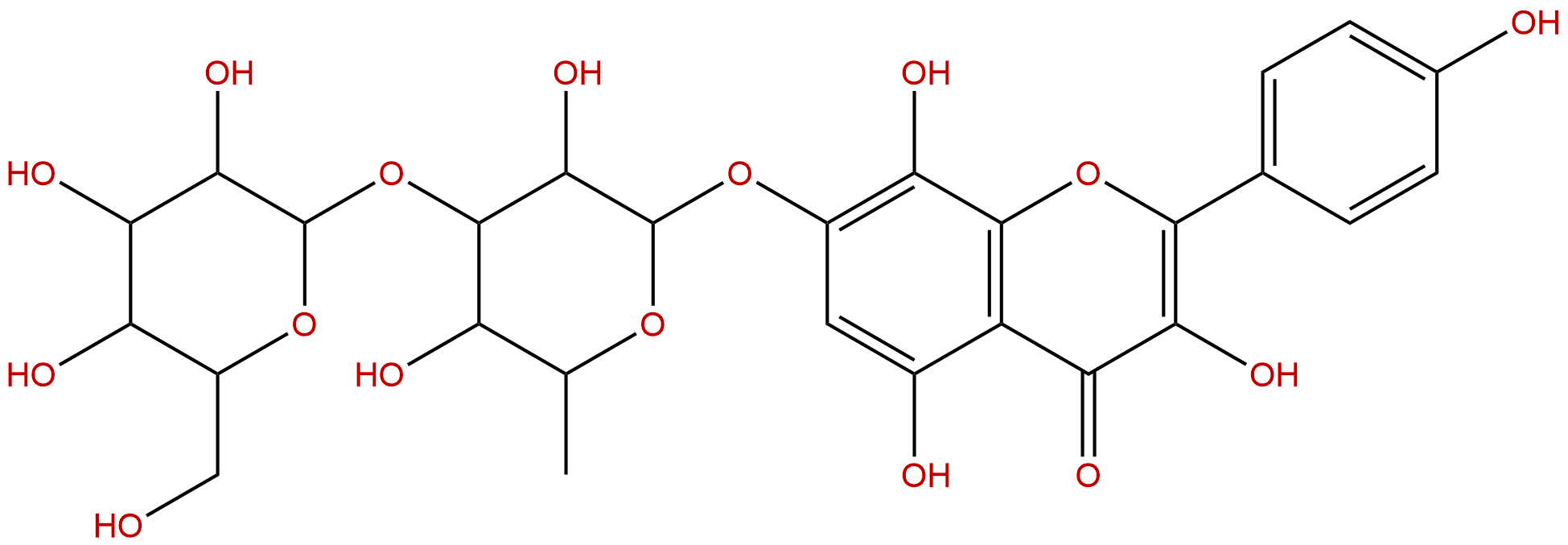
Rhodiola rosea is a flavonol glycoside compound with a molecular formula of C27H30O16 and a molecular weight of 610.5210. Its chemical structure is composed of Quercetin as the aglycone, which connects two sugar units, usually glucose and rhamnose, through glycosidic bonds to form a specific disaccharide chain structure. This structure endows Rhodiola rosea with unique physicochemical properties and biological activity.
From the analysis of parameters related to drug properties, the lipid water partition coefficient (LogP) of Rhodiola rosea is -0.4993, indicating its good hydrophilicity. Its topological polar surface area (TPSA) is as high as 269.4300 Å ², mainly attributed to the presence of multiple hydroxyl and sugar groups in the molecule, which are the main sites for hydrogen bonding. The higher TPSA and hydrophilicity parameters are consistent with the water solubility data (3.3506, usually indicating good solubility), indicating good solubility in aqueous media, which is a favorable factor for the development of oral formulations. However, high polarity also brings challenges: its blood-brain barrier (BBB) permeability is predicted to be "low", which may limit its efficiency in directly acting on the central nervous system in the form of prototype drugs, requiring optimization through formulation techniques or structural modifications. In the preliminary safety screening, Rhodiola rosea did not show significant hERG potassium channel inhibitory activity (hERG inhibition: No), indicating a low risk of causing QT interval prolongation in the heart. The Ames test result was 0.6, indicating that no significant mutagenicity was observed under the experimental conditions, providing preliminary support for its safety.
Plant sources and extraction methods
Rhodiola extract mainly comes from the Sedum plant Sedum in the Sedum family(Rhodiola rosea L. Dry roots and rhizomes. Rhodiola grows in high-altitude areas with high altitude and oxygen deficiency. This special growth environment may be closely related to its synthesis of secondary metabolites with antioxidant and adaptogen activities, such as salidroside and salidroside.
The extraction of salidroside from Rhodiola raw materials usually involves solvent extraction combined with modern chromatographic separation techniques. The standard procedure is as follows:
1. Preprocessing and Extraction Crush the dried rhizomes of Rhodiola rosea and use polar solvents such as ethanol water (such as 70% ethanol) or methanol for heating reflux extraction or ultrasound assisted extraction to fully extract flavonoid glycosides.
2. Coarse separation After vacuum concentration, the extract was subjected to liquid-liquid extraction and classification using organic solvents such as petroleum ether, ethyl acetate, and n-butanol in sequence. Rhodiola rosea is mainly enriched in the highly polar n-butanol extraction sites or aqueous residue.
3. Refining and Purification: Column chromatography is used to separate the parts rich in the target ingredients, usually using macroporous adsorption resin (such as D101, AB-8), silica gel, polyamide or dextran gel (such as Sephadex LH-20) and other fillers. Gradient elution is performed using different ratios of organic solvents such as chloroform methanol and ethyl acetate methanol water.
4. Identification and testing The isolated monomeric compounds need to be detected for purity by high performance liquid chromatography (HPLC), and structurally confirmed using techniques such as ultraviolet spectroscopy (UV), mass spectrometry (MS), and nuclear magnetic resonance spectroscopy (NMR, including 1H-NMR and 13C-NMR) to obtain high-purity salidroside.
Optimizing the extraction process (such as enzyme assisted extraction, microwave extraction) and adopting efficient preparation techniques such as high-speed counter current chromatography can help improve the yield and production efficiency of salidroside.
Pharmacological activity research
Rhodiola rosea exhibits various pharmacological activities, with research mainly focused on neurological protection, anti fatigue, and metabolic regulation.
-
Neuroprotective and Cognitive Improvement Activities One of the core activities of salidroside is its neuroprotective effect. Research has shown that it can effectively alleviate neuronal damage and apoptosis induced by β - amyloid (A β), glutamate, or oxidative stress. As an acetylcholinesterase (AChE) inhibitor, it can reduce the hydrolysis of acetylcholine (ACh) and increase the level of synaptic cleft ACh, which may improve cholinergic neurotransmission defects and cognitive dysfunction associated with diseases such as Alzheimer's disease. In addition, its antioxidant activity (clearing free radicals and inhibiting lipid peroxidation) also provides a basis for neuroprotection.
-
Anti fatigue activity Anti fatigue is the core of traditional application of Rhodiola rosea. Rhodiola rosea participates in energy metabolism and stress adaptation processes through multiple targets, exerting anti fatigue effects. Experimental studies have shown that salidroside can prolong the exhaustion time of weight-bearing swimming mice, reduce post exercise blood lactate and serum urea nitrogen levels, and increase liver glycogen reserves. These effects are closely related to their regulation of key proteins in energy metabolism (such as AMPK), alleviation of oxidative damage, regulation of neurotransmitter systems (such as 5-HT, NE), and impact on hypothalamic pituitary adrenal axis function.
-
Antioxidant and anti-inflammatory activities Rhodiola rosea has strong free radical scavenging ability (such as DPPH, ABTS free radicals), and can enhance the activity of endogenous antioxidant enzyme systems in cells (such as superoxide dismutase SOD, glutathione peroxidase GSH Px). Its anti-inflammatory effect is reflected in inhibiting the overexpression of inflammatory factors (such as TNF - α, IL-6, IL-1 β) induced by lipopolysaccharides (LPS), as well as regulating inflammatory signaling pathways such as NF - κ B.
-
Metabolic regulation and cardiovascular protection Preliminary research suggests that salidroside may affect glucose and lipid metabolism by activating AMPK, regulating PPAR γ and other targets, and has the potential to improve insulin resistance and lipid metabolism disorders. Its antioxidant and anti-inflammatory properties also help protect endothelial function and have beneficial effects on the cardiovascular system.
Mechanism of action and molecular targets
The pharmacological effects of Rhodiola rosea stem from its regulation of multiple molecular targets and signaling pathways, forming a multi-target, networked mechanism of action.
-
Dual enzyme inhibition: CYP2D6 and AChE
- CYP2D6 inhibition Rhodiola rosea exhibits strong inhibitory activity against cytochrome P450 2D6 (CYP2D6) (IC50=0.761 μ M, Ki=0.769 μ M). CYP2D6 is an important drug metabolizing enzyme in the liver, involved in approximately 25% of clinical drug metabolism. The inhibition of CYP2D6 by salidroside suggests that it may pose a risk of drug drug interactions when used in combination therapy and should be given attention in clinical applications; On the other hand, this inhibitory activity may also be used for metabolic regulation in specific contexts.
- AChE inhibition As an acetylcholinesterase inhibitor, salidroside reversibly binds to the active site of AChE, preventing acetylcholine hydrolysis and enhancing cholinergic neurotransmission. This is one of the key mechanisms for improving learning and memory, and exerting neuroprotective effects.
-
Regulating the HIF-1 α signaling pathway Under stress conditions such as hypoxia or ischemia, Rhodiola rosea can regulate the stability and activity of hypoxia inducible factor-1 α (HIF-1 α). HIF-1 α is a core transcription factor for cells to adapt to low oxygen environments, regulating hundreds of genes related to angiogenesis, erythropoiesis, glucose metabolism, and cell survival (such as VEGF, EPO). Rhodiola rosea may enhance cell tolerance to hypoxia/ischemia injury by stabilizing HIF-1 α or regulating its downstream target genes, providing a molecular basis for its application in cardiovascular and cerebrovascular diseases and central nervous system protection.
-
Multi target network related to fatigue resistance The anti fatigue mechanism of Rhodiola rosea involves a complex signaling network:
- Energy metabolism regulation Activate AMP activated protein kinase (AMPK), a cellular energy sensor that promotes glucose uptake and fatty acid oxidation, increases ATP production, and alleviates energy crisis during fatigue.
- Mitochondrial function and thermogenesis May regulate mitochondrial function and energy metabolism efficiency by affecting uncoupling protein 1 (UCP1) and other factors.
- Neuroendocrine and neurotransmitter regulation Regulating the activity of monoamine oxidase A (MAOA) and affecting the metabolism of monoamine neurotransmitters such as serotonin (5-HT) and norepinephrine (NE); Acting on serotonin transporter (SLC6A4), 5-HT1A receptor (HTR1A), β 2-adrenergic receptor (ADRB2), etc., to balance neurotransmitter levels under stress.
- Neuronutrition and plasticity Activate cyclic adenosine monophosphate effector binding protein (CREB1) to promote the expression of brain-derived neurotrophic factor (BDNF). BDNF is crucial for the survival, differentiation, and synaptic plasticity of neurons, and its upregulation helps to resist stress-induced brain function damage and enhance psychological tolerance.
- Deacetylation and metabolic regulation It may participate in cellular stress resistance, inflammation inhibition, and maintenance of metabolic homeostasis by activating silencing information regulatory factor 1 (SIRT1) and peroxisome proliferator activated receptor gamma (PPAR gamma).
Evaluation of drug properties and pharmacokinetics
Based on its physicochemical parameters and preliminary biological data, a comprehensive evaluation of the pharmacological properties of salidroside is conducted
Advantage:
1. Good water solubility and oral potential High water solubility and hydrophilicity facilitate its dissolution and absorption in the gastrointestinal tract, laying the foundation for oral administration.
2. Clear activity and multi-target characteristics The dual inhibitory activity against CYP2D6 and AChE is clear, with IC50/Ki values at the micromolar level, indicating strong activity. Its multi-target mode of action is in line with the treatment strategies for complex diseases such as neurodegenerative diseases and chronic fatigue syndrome.
3. Preliminary safety is good No hERG inhibition warning, Ames test negative, providing preliminary safety assurance.
Challenges and research questions:
1. Poor blood-brain barrier permeability The predicted BBB low permeability is the main obstacle to its development for the treatment of central nervous system diseases. In the future, it may be necessary to study its prodrug strategy, nano drug delivery systems (such as liposomes, polymer nanoparticles), or explore the possibility of indirectly exerting central effects by regulating the peripheral central axis.
2. Potential drug interactions As a strong inhibitor of CYP2D6, when combined with drugs metabolized by CYP2D6 (such as certain beta blockers, antiarrhythmics, antidepressants, etc.), salidroside may significantly increase the blood concentration of the latter and increase the risk of adverse reactions. This is a key aspect that must be evaluated in preclinical and clinical research.
3. Lack of pharmacokinetic data Currently, there is very limited publicly available data on the systematic pharmacokinetic studies of salidroside, including absorption, distribution, metabolism, excretion, and ADME. Further research is needed on its oral bioavailability, in vivo metabolic pathways (whether it is hydrolyzed into aglycones by gut microbiota), major metabolites, tissue distribution characteristics, and excretion methods. The possibility of using it as a substrate for CYP2D6 also needs to be explored.
4. Formulation development requirements To improve its bioavailability or achieve brain targeted delivery, it is necessary to develop suitable drug delivery systems.
Clinical application prospects and prospects
Rhodiola rosea, as a natural compound with multiple biological activities, has broad development prospects in the following fields:
-
Adjuvant therapy for neurological disorders:
- Alzheimer's disease (AD) and related cognitive impairments With its multiple mechanisms of AChE inhibition, antioxidant, anti-inflammatory, neurotrophic (BDNF upregulation), and potential anti A β toxicity, Rhodiola rosea is expected to be developed as a multi-target therapy or adjuvant therapy for AD. Combining or supplementing with existing single target AChE inhibitors may result in synergistic effects.
- Neural repair after cerebral ischemia/stroke By regulating the HIF-1 α pathway, reducing oxidative stress and inflammatory response, salidroside may play a role in protecting against cerebral ischemia-reperfusion injury and promoting later neural repair.
- Chronic Fatigue Syndrome (CFS) and Depression Its comprehensive effects of regulating the HPA axis, balancing monoamine neurotransmitters, activating the AMPK/SIRT1 energy metabolism pathway, and enhancing BDNF levels are highly compatible with the pathophysiological mechanisms of CFS and depression (especially with fatigue symptoms), and it is expected to be developed as a novel plant-based drug component for anti fatigue/anti depression.
-
As a regulator of drug metabolizing enzymes Under specific circumstances, its CYP2D6 inhibitory activity can be used to design drug combinations to regulate the metabolic rate of co administered drugs, but the risks and benefits need to be evaluated with extreme caution.
-
Functional foods and health products As one of the iconic active ingredients of Rhodiola rosea, Rhodiola rosea extract can be further developed as a health food or dietary supplement for anti fatigue, enhancing tolerance, improving mood and cognitive function.
Future research directions should focus on:
* In depth mechanism research Using omics techniques (transcriptomics, proteomics, metabolomics) to comprehensively reveal its functional network; Clarify whether it exerts its main function in the body through metabolites such as quercetin.
* Overcoming the bottleneck of traditional Chinese medicine Key strategies to improve BBB permeability, such as structural modification and development of novel brain targeted drug delivery systems.
* Systematic pharmacokinetic and toxicological evaluation Complete standardized preclinical ADME and long-term toxicity studies to clarify their safety window.
* Clinical research validation Design rigorous clinical trials to validate its effectiveness and safety in indications such as AD, CFS, and mild cognitive impairment.
* Development of compound preparations Explore the rational compatibility of salidroside with other active ingredients (such as salidroside and other neuroprotective agents) to achieve synergistic effects and reduce side effects.
Conclusion
Rhodiola rosea is a flavonoid glycoside compound with significant research value isolated from the traditional medicinal plant Rhodiola rosea. It is not only a dual inhibitor of CYP2D6 and AChE, but also forms a multi-target network that acts on neuroprotection, anti fatigue, antioxidant, and metabolic regulation by regulating multiple key signaling nodes such as HIF-1 α, AMPK, CREB1/BDNF, SIRT1, etc. Although it faces challenges in terms of low blood-brain barrier permeability and potential drug interactions in terms of drug efficacy, its clear biological activity, multi mechanism action characteristics, and preliminary good safety features make it show great potential in the treatment and healthcare of neurological diseases, especially Alzheimer's disease and chronic fatigue syndrome. Future research needs to further clarify its system pharmacokinetics and material basis of action in vivo, at the same time, make efforts to overcome its delivery obstacles by using modern pharmaceutical and pharmaceutical chemical means, and promote it from laboratory to clinical application through standardized clinical research, so as to finally make this ancient plant essence glow with modern science and technology and benefit human health.