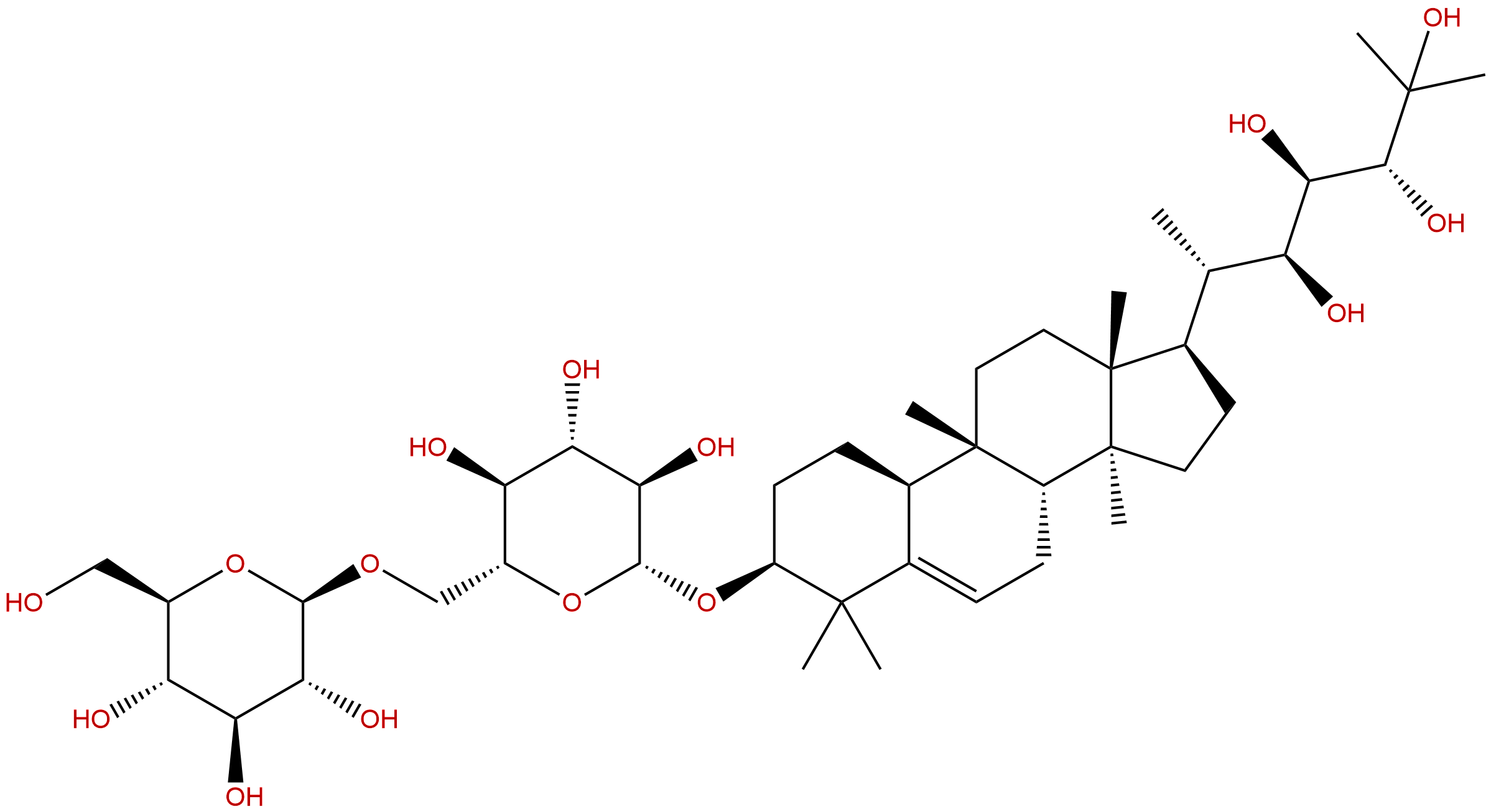
Momordicin A: a natural anti diabetes candidate molecule derived from Momordica charantia
1. Overview
Momordicoside A is a traditional medicinal plant derived from bitter gourd(Momordica charantia)The natural compound obtained through separation has a CAS number of 75801-95-5. As a kind of Trihydroxysteroid saponins and Disaccharide derivatives It has demonstrated remarkable biological activity in modern pharmacological research, particularly in anti-diabetic field The core known pharmacological effects are Inhibition of protein tyrosine phosphatase 1B (PTP1B)PTP1B is a key negative regulator in insulin signaling pathway, and its overexpression will lead to insulin resistance, which is one of the important mechanisms for the occurrence and development of type 2 diabetes. Therefore, PTP1B inhibitors are regarded as a potential research direction of anti diabetes drugs.
The discovery of bitter melon glycoside A closely links the experience of traditional medicinal plants with modern molecular pharmacology. Balsam pear has long been used in traditional medicine in Asia, Africa, South America and other regions to treat "diabetes" (that is, diabetes related symptoms). Bitter melon glycoside A, as one of its active ingredients, has become a key entry point for scientists to analyze the substance basis and molecular mechanism of bitter melon's hypoglycemic effect. With the deepening of research, its targets are no longer limited to PTP1B, but also involve multiple targets closely related to glucose metabolism and insulin signaling, such as glucokinase (GCK), peroxisome proliferator activated receptor gamma (PPARG), protein kinase B (AKT1), glucose transporter 4 (SLC2A4), and insulin (INS) itself, forming a multi-target and multi pathway network of action. This article will provide a systematic professional popularization of this natural product from the aspects of its chemical structure, plant origin, pharmacological mechanism, medicinal evaluation, and research prospects.
2. Chemical structure and physicochemical properties
The molecular formula of bitter melon glycoside A is C42H72O15, with a molecular weight of 817.0230 g/mol. From its SMILES structural formula, it can be inferred that it is a complex structure Steroidal saponins The basic skeleton is a modified steroid nucleus (cyclopentane dihydrophenanthrene structure), which is connected to a glycosidic bond at the C-3 position Disaccharide chain The disaccharide chain is composed of two sugar (such as glucose) units, which are the main source of its hydrophilicity. There are also multiple hydroxyl (- OH) and methyl groups attached to the steroid nucleus.
From the perspective of pharmacological parameters, its physicochemical properties exhibit typical characteristics of large polar molecules:
- Molecular weight (MW)817.02 significantly exceeds the scope of conventional small molecule drugs (usually<500 Da), which may affect their oral absorption and transmembrane transport.
- Topological Polarity Surface Area (TPSA)Up to 259.45 Å ², mainly attributed to the presence of multiple hydroxyl groups and oxygen atoms on the sugar ring in the molecule. High TPSA usually means that the molecule has strong hydrophilicity The ability to form hydrogen bonds, but it may also lead to Poor cell membrane permeability。
- Lipid water partition coefficient (LogP/LogD)Both are 2.32. LogP is a key parameter for measuring the lipophilicity of compounds. The value is between 2-3, indicating that bitter melon glycoside A has a certain degree of lipophilicity, but is not highly lipophilic. Considering its high TPSA, it belongs to Amphiphilic molecule But the overall polarity is strong.
- Water solubility The value is 0.1042 (unit may be mg/mL or molar concentration, depending on specific database definitions), indicating limited solubility in water and belonging to slightly soluble or poorly soluble substances. This is consistent with its saponin structure, which often has surface activity but may not have high solubility in pure water.
These physicochemical properties determine the basic behavior of bitter melon glycoside A in vivo and serve as the basis for evaluating its potential as a drug.
3. Plant sources and traditional applications
The plant source of bitter melon glycoside A is single and clear, that is Cucurbitaceae family Plant Momordica charantia L Commonly known as "lianggua" or "lao grape". Bitter gourd is originally from tropical Asia and is now widely cultivated in tropical and subtropical regions around the world.
In the traditional medical system, bitter gourd has a long history of application. In traditional Chinese medicine (TCM), bitter melon has a cold nature, bitter taste, and is associated with the heart, spleen, and lung meridians Clearing heat and dispelling heat, improving eyesight and detoxification, nourishing qi and strengthening yang It is commonly used to treat symptoms such as heatstroke, dysentery, and redness and swelling of the eyes. More importantly, in Ayurvedic medicine and many folk therapies in India, the fruit, leaves, and seeds of bitter gourd are widely used Manage blood sugar levels, to treat diabetes (in Chinese medicine, it belongs to the category of "eliminating thirst"). People often control their blood sugar levels by consuming fresh bitter melon, drinking bitter melon juice, or boiling bitter melon water.
Modern plant chemistry research has confirmed that bitter gourd is rich in various bioactive components, including Triterpenes (such as bitter melon glycosides A, B, etc.), saponins, alkaloids, peptides, and polysaccharides Among them, bitter melon glycoside A is one of its characteristic saponin components. The therapeutic effect of traditional applications is likely the result of the synergistic effect of these components. The directional separation of balsam pear glycoside A from balsam pear and the determination of its anti diabetes activity is a model for the use of modern science and technology to verify, explain and enhance the wisdom of traditional medicine, and also provides a lead compound for the development of new hypoglycemic drugs based on natural products.
4. Pharmacological activity and mechanism of action
The most significant and extensively studied bitter melon glycoside A is its Antidiabetic activity The database information shows that its function involves five key targets: GCK, PPARG, AKT1, SLC2A4, and INS. Based on its known PTP1B inhibitory activity, we can outline a multi-target synergistic hypoglycemic mechanism network:
1. Inhibit PTP1B and enhance insulin signaling pathway (core mechanism)
Insulin binds to the insulin receptor (IR) on the cell membrane, triggering tyrosine phosphorylation of the receptor itself and downstream insulin receptor substrates (IRS), thereby activating the phosphatidylinositol 3-kinase (PI3K)/protein kinase B (AKT) signaling pathway. PTP1B can dephosphorylation Activate IR and IRS to inactivate them, thereby negative regulation Insulin signaling. As a PTP1B inhibitor, bitter melon glycoside A can block this negative feedback process, allowing insulin signals to persist and amplify, ultimately improving insulin resistance and promoting cellular uptake and utilization of glucose.
2. Activate AKT1 (AKT1)
AKT (also known as PKB) is a key serine/threonine kinase downstream of PI3K in the insulin signaling pathway. Activated AKT can phosphorylate and activate a series of downstream targets. Bitter melon glycoside A may indirectly activate AKT1 through upstream signaling (such as inhibiting PTP1B), or it may have a direct regulatory effect on it. The activation of AKT is crucial for Promote the translocation of glucose transporter 4 (SLC2A4/GLUT4) to the cell membrane crucial.
3. Promote SLC2A4 (GLUT4) translocation
The SLC2A4 gene encodes glucose transporter 4 (GLUT4), which is mainly present in adipocytes and muscle cells. Under insulin stimulation or AKT activation, GLUT4 is transferred from intracellular vesicles to the cell membrane, thereby Significantly increase cellular uptake of glucose in the blood Bitter melon glycoside A enhances insulin signaling and activates AKT, ultimately promoting membrane translocation of GLUT4, which is its direct cytological effect in reducing blood glucose.
4. Regulating PPARG (PPAR γ)
PPAR γ is a member of the nuclear receptor superfamily, mainly highly expressed in adipose tissue, and is a key regulatory factor for adipocyte differentiation and lipid metabolism. Thiazolidinediones (TZDs) insulin sensitizers (such as Rosiglitazone) are agonists of PPAR γ. They indirectly improve systemic insulin resistance by activating PPAR γ, improving insulin sensitivity in adipose tissue, and regulating the secretion of adipokines such as adiponectin. The regulatory effect of bitter melon glycoside A on PPARG suggests that it may have a similar function to TZDs Insulin sensitization The effect may vary, but the mechanism of action or spectrum of side effects may differ.
5. Affects GCK (glucokinase) and INS (insulin)
- GCK Mainly present in liver and pancreatic beta cells, it is involved in glucose metabolism rate-limiting enzyme In the liver, it catalyzes the phosphorylation of glucose to glucose-6-phosphate, promoting glycogen synthesis; In beta cells, it is a component of glucose receptors, and ATP produced by glucose metabolism triggers insulin secretion. Regulating GCK activity can affect hepatic glucose processing and insulin secretion.
- INS Bitter melon glycoside A may affect insulin itself by protecting beta cells, promoting insulin secretion, or enhancing its stability.
Summarize its mechanism of action Bitter melon glycoside A may pass through Multi target, multi pathway Play an anti diabetes role: on the one hand, by inhibiting PTP1B, the key "brake", it strongly enhances insulin signal transduction, activates AKT, and ultimately promotes the translocation of GLUT4 to increase glucose uptake in peripheral tissues; On the other hand, it is possible to improve insulin sensitivity by regulating PPAR γ and regulate hepatic glucose metabolism and insulin secretion by affecting GCK and INS. This multi-target characteristic may give it comprehensive advantages in improving insulin resistance and regulating blood sugar, but it also increases the complexity of its mechanism of action research.
5. Evaluation of drug properties
Based on the provided pharmacological parameters, we can conduct a preliminary evaluation of the development potential of bitter melon glycoside A as an oral medication. Commonly used Lipinski's Rule of Five (Ro5) As a preliminary screening criterion:
1. Hydrogen bond donor number (HBD) ≤ 5: Bittermelon glycoside A molecule contains multiple hydroxyl groups, and HBD is much greater than 5.
2. Hydrogen bond acceptor number (HBA) ≤ 10: The molecule contains a large number of oxygen atoms (sugar rings and hydroxyl groups), and HBA is much greater than 10.
3. Molecular weight (MW) ≤ 500:817.02>>500.
4. The lipid water partition coefficient (LogP) is ≤ 5:2.32, which is in compliance.
Obviously, bitter melon glycoside A seriously violates the three terms (HBD, HBA, MW) in Ro5, which strongly suggests its Oral bioavailability may be low Ro5 is based on the empirical rules summarized from a large number of successful oral drugs, and violating multiple rules usually means that the compound will face huge challenges in intestinal absorption and transmembrane transport.
Further analysis based on other parameters:
- Caco-2 permeability (0.7767)The Caco-2 cell model is commonly used to predict drug absorption in the intestine. The low value indicates that it Poor intestinal permeability Consistent with Ro5 prediction.
- Blood-brain barrier penetrability (BBB)Annotated as' low '. This is unfavorable for central nervous system (CNS) drugs, but for anti diabetes drugs, there is no need to enter CNS, and low BBB penetration may reduce potential central side effects.
- Plasma protein binding rate (PPB: 75.76%): Belongs to a moderate to high level. High PPB can affect the free concentration of drugs, thereby affecting their efficacy and metabolic clearance rate.
- Effective penetration rate (Peff: 0.4734)Another parameter describing intestinal absorption has a lower value, which once again confirms its difficulty in oral absorption.
- Toxicity related parameters:
- AMES test (0.0)、Chromosomal aberration (none)、HERG inhibition (No)These results indicate that bitter melon glycoside A is Genotoxicity and cardiotoxicity (risk of QT interval prolongation) The preliminary results show a negative result, indicating good safety.
- Serum biochemical indicators: Tips may be applicable Alkaline phosphatase (ALK) and Alanine aminotransferase (ALT) There is an impact, this suggests that attention should be paid to it Potential liver effects Detailed liver toxicity assessment is required in subsequent development.
Conclusion of comprehensive drug evaluation:
Bitter melon glycoside A as a lead compound It has clear, multi-target anti diabetes pharmacological activity, and low risk of initial genotoxicity and cardiotoxicity, which is its advantage. However, its biggest development bottleneck lies in Poor drug similarity The main manifestation is that the molecular weight is too large and the polarity is too high, resulting in very poor predicted oral absorption and possibly extremely low bioavailability. This limits its potential for direct development as a traditional oral small molecule drug.
Future development strategies may need to consider:
1. Structural modification Simplify or modify it through medicinal chemical methods, while retaining the core pharmacophore, reducing molecular weight and polarity, and improving membrane permeability.
2. Prodrug strategy Make it into a prodrug, improve its absorption characteristics, and metabolize it into an active form in the body.
3. New drug delivery system Develop delivery systems such as nanomaterials, liposomes, and microemulsions to improve their solubility and transmembrane ability.
4. Non oral administration route Explore other routes such as injection administration.
6. Research Status and Application Prospects
At present, research on bitter melon glycoside A is still mainly in progress Preclinical stage A large amount of research has focused on its in vitro activity screening, exploration of its mechanism of action, and optimization of the extraction and separation process from bitter gourd. Its hypoglycemic effect in animal models (such as diabetes mice and rats) has been partially verified, and its activity in vivo has been confirmed. However, there is still a relative lack of systematic research on its detailed pharmacokinetics (absorption, distribution, metabolism, excretion), long-term toxicology, and formulation development.
Application Prospects Mainly reflected in the following directions:
-
As a lead compound for new drug development Although its pharmacological parameters are not ideal, its unique PTP1B inhibitory activity and multi-target mechanism make it an excellent lead compound template. Pharmaceutical chemists can use it as a starting point to conduct systematic research Structure Activity Relationship (SAR) Study The aim is to discover derivatives or analogues that retain activity but have smaller molecules and better drug like properties.
-
As an active biomarker for functional foods or dietary supplements Bitter gourd and its extracts have been widely used as health products to assist in lowering blood sugar. Bitter melon glycoside A can be used as a measure to evaluate the quality and standardization level of bitter melon products Key Quality Marker (Q-Marker)By controlling the content of bitter melon glycoside A, the effectiveness and consistency of the product can be ensured.
-
Research on Multi component Collaborative Therapy In traditional usage, the therapeutic effect of bitter gourd is the result of the synergistic action of multiple ingredients. Future research can further explore the interactions between bitter melon glycoside A and other active ingredients in bitter melon, such as peptides and polysaccharides, and develop a basis for Multi component collaboration Compound preparations may be more effective and safer than single ingredients.
-
In depth exploration of the mechanism of action In addition to known targets, modern omics technology (such as proteomics and metabolomics) is used to comprehensively reveal the action network of momordicin A in cells and animals, which may discover its new action targets and pathways, providing new ideas for the treatment of diabetes and its complications.
Summary Momordicin A is a natural saponin with clear anti diabetes activity, which was excavated from the traditional medicinal plant Momordica charantia. It exerts hypoglycemic and insulin sensitizing effects through multi-target mechanisms such as inhibiting PTP1B, regulating PPAR γ, and activating the AKT/GLUT4 pathway. Although its current physicochemical properties indicate a challenging path for direct development into oral small molecule drugs, it is undoubtedly a highly valuable lead compound and scientific research tool. With the progress of pharmaceutical chemistry, pharmaceutics and other disciplines, through in-depth research and reasonable transformation of balsam pear glycoside A, it is expected that it will eventually be transformed into a new anti diabetes drug with clinical application value, or improve the scientific and technological connotation of related health products to better serve human health.