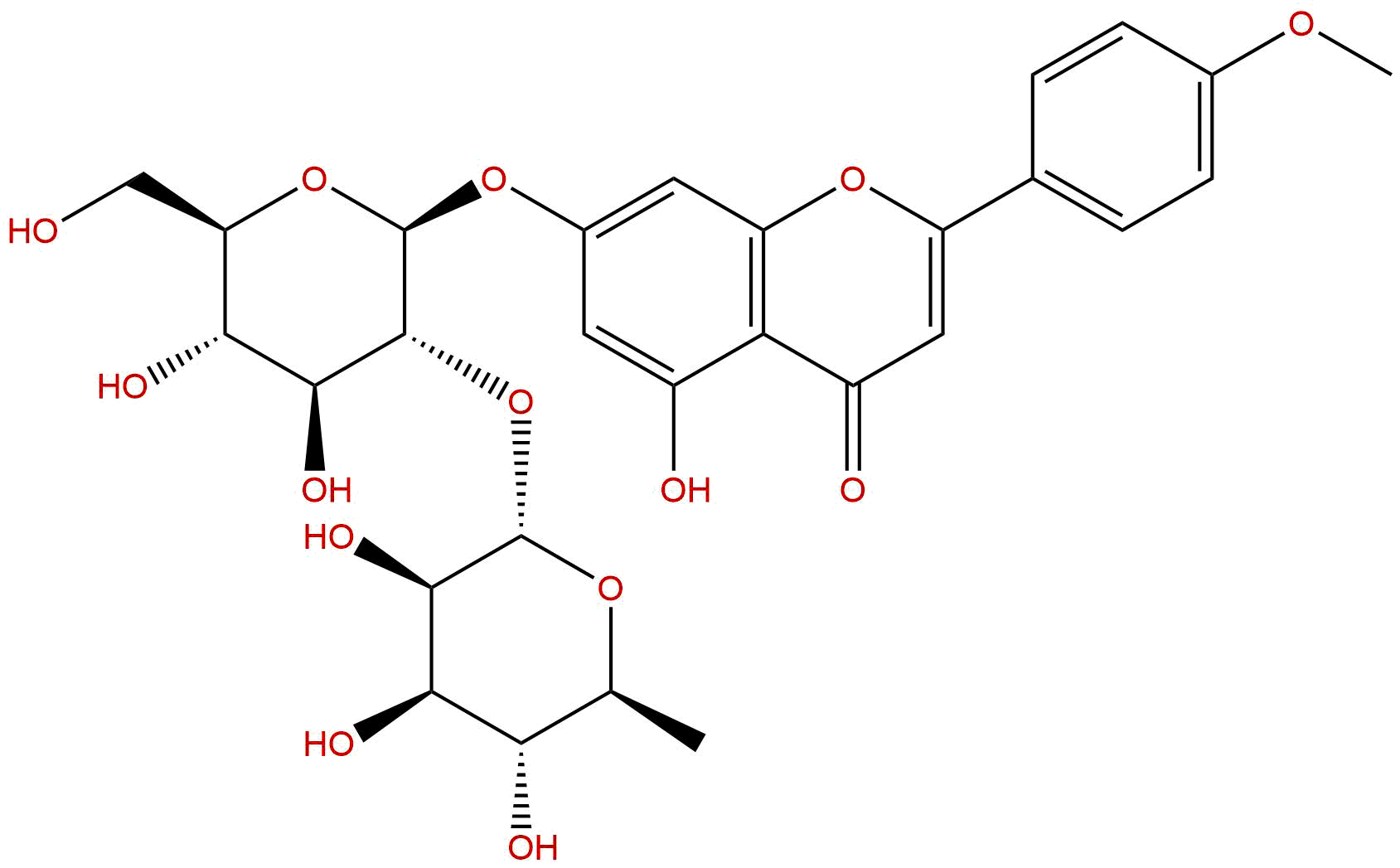


Product name: Fortunellin
Synonym name:
Catalogue No.: BP5460
Cas No.: 20633-93-6
Formula: C28H32O14
Mol Weight: 592.55
Botanical Source:
Type of Compound: Flavonoids
Purity: 95%~99%
Analysis Method: HPLC-DAD or/and HPLC-ELSD
Identification Method: Mass, NMR
Packing: Brown vial or HDPE plastic bottle
Storage: Store in a well closed container, protected from air and light. Put into refrigerate or freeze for long term storage.
Whenever possible, you should prepare and use solutions on the same day. However, if you need to make up stock solutions in advance, we recommend that you store the solution as aliquots in tightly sealed vials at -20℃. Generally, these will be useable for up to two weeks.
The product could be supplied from milligrams to grams
Inquire for bulk scale.
For Reference Standard and R&D, Not for Human Use Directly.
Storage conditions:Short-term storage at 2~8℃, long-term storage at -20 ~ -80℃
239.9500
1.0000
No
No
No
No
Unknown
No
Unknown
Natural products, as an important source of lead compounds for drugs, play an indispensable role in the long history of human fight against diseases. Flavonoids, as the most widely distributed class of secondary metabolites in nature, have always been a hot topic in medicinal chemistry and pharmacology research due to their structural diversity and extensive biological activity. They are commonly found in daily diets such as vegetables, fruits, and tea. Numerous epidemiological studies and experimental evidence have shown that flavonoids have various beneficial health effects such as antioxidant, anti-inflammatory, anti-tumor, and cardiovascular protection. Among numerous flavonoids, Fortunellin, as a relatively late but highly promising member, is gradually attracting attention from the academic community.
Fortunallin, named after its original isolated plant source - kumquat(Fortunella margarita)The Latin genus name. Kumquat, also known as kumquat or kumquat, is an evergreen shrub or small tree in the Rutaceae family. Its fruit has a unique flavor and can be eaten fresh or processed. In traditional medicine, it is also used to treat diseases such as colds, coughs, and indigestion. Bittermelon extract is an important active flavonoid glycoside component in kumquat fruit. Although its name contains the word "bitter melon", this "bitter melon" is not the same as the other "bitter melon"(Momordica charantia)There is no direct correlation between the two in terms of plant taxonomy and chemical composition, and bitter melon extract is one of the characteristic components of kumquat.
In recent years, with the deepening of pharmacological activity research on kumquat, the biological functions of bitter melon extract have gradually been revealed. Existing research indicates that bitter melon extract exhibits multifaceted pharmacological potential, particularly in the fields of metabolic diseases and cardiovascular complications. Research has confirmed that bitter melon extract has low acute toxicity to mice and has a good safety foundation. More importantly, it can significantly inhibit lipopolysaccharide (LPS) - induced inflammatory response and reactive oxygen species (ROS) generation in cardiomyocytes (H9C2 cells), suggesting its potential cardioprotective effect. In addition, in the fructose induced metabolic disorder model, bitter melon extract effectively prevents inflammation and oxidative stress by enhancing the AMP activated protein kinase (AMPK)/nuclear factor E2 related factor 2 (Nrf2) signaling pathway. These findings closely link momordicin with the study of diabetes cardiomyopathy (DCM), and provide a solid scientific basis for its use as a candidate natural product for the treatment or prevention of cardiovascular complications in diabetes. This article aims to systematically review the chemical structure, physicochemical properties, plant origin, pharmacological activity, mechanism of action, pharmacological evaluation, and clinical application prospects of bitter melon extract, in order to provide comprehensive references for the in-depth research and development of this natural product.
Bitter melon extract is a typical flavonoid compound, specifically belonging to the flavonol glycoside class. Its chemical structure consists of two parts: aglycone and glycosyl. The glycoside component is Kaempferol, a widely present flavonol in nature, with a classic 2-phenylchromen-4-one core structure and hydroxyl groups attached at C-3, C-5, C-7, and C-4 'sites. The sugar moiety of bitter melon extract is connected to the C-3 hydroxyl group of the glycoside, consisting of two monosaccharide molecules: rhamnose and glucose, which are linked by an alpha-1,2 glycosidic bond to form a neohesperidose disaccharide chain. Therefore, the systematic chemical name of bitter melon extract is usually Kaempferol-3-O-neohesperidoside. The chemical structural formula is as follows (note: this is a textual description, and structural formula images can be inserted in actual articles):
The molecular formula of bitter melon extract is C ₂₇ H ∝₀ O ₁₅, with a molecular weight of 592.5400 g/mol. Its physicochemical properties largely determine its bioavailability and potential as a drug. According to the provided pharmacological parameters, bitter melon extract has the following key characteristics:
Lipid water partition coefficient (LogP)Its LogP value is 1.0000. LogP is an important indicator for measuring the lipophilicity or hydrophilicity of compounds, with lower values indicating stronger hydrophilicity. The LogP of bitter melon extract is 1, indicating its moderate to strong hydrophilicity, which is closely related to its molecular structure containing multiple hydroxyl groups (phenolic hydroxyl and sugar hydroxyl) as well as the sugar moiety. Higher hydrophilicity is beneficial for its dissolution and transport in the blood, but may limit its passive diffusion through the cell membrane.
Topological Polarity Surface Area (TPSA)The TPSA is 239.9500 Å ². TPSA is a key parameter for predicting drug oral absorption and blood-brain barrier penetration ability. It is generally believed that molecules with TPSA greater than 140 Å ² have poor oral absorption, while molecules with TPSA greater than 90 Å ² have difficulty penetrating the blood-brain barrier. The TPSA of bitter melon extract reaches 239.95 Å ², indicating that its oral bioavailability may be low and it cannot enter the central nervous system through the blood-brain barrier. This is completely consistent with the conclusion of "blood-brain barrier: No" in its pharmacological parameters.
Number of hydrogen bond acceptors Bittermelon extract has 14 hydrogen bond acceptors (mainly oxygen atoms in hydroxyl and ether bonds). The large number of hydrogen bond acceptors further enhances its ability to form hydrogen bonds with water molecules, which is the direct reason for its high hydrophilicity and high TPSA.
Other pharmacological parameters Preliminary toxicity predictions indicate that bitter melon extract has no hepatotoxicity or cardiac toxicity, and does not inhibit hERG potassium ion channels (hERG inhibition: No), which rules out its potential risk of causing prolonged QT interval and arrhythmia in the heart. The Ames test results are unknown, and its genetic toxicity needs further experimental verification.
In summary, bitter melon extract is a highly polar and high molecular weight flavonoid glycoside. Its physicochemical properties determine that it may face challenges such as poor oral absorption and low bioavailability, but at the same time, it also endows it with good water solubility and low initial toxicity risk. These properties are key factors that must be considered in subsequent drug design and formulation development.
Bitter melon extract was originally derived from kumquat(Fortunella margarita)Separate and identify from the fruit. Kumquat is originally from China and is now widely planted in East Asia, Southeast Asia, the Mediterranean coast, the southern United States, and other regions. Except for F. margarita Other species of the kumquat genus, such as the long leaved kumquat(F. polyandra)Round kumquat(F. japonica)It may also contain bitter melon extract, but the content may vary depending on the variety, place of origin, harvest season, and fruit part. Usually, the peel of kumquat is the part with high content of bitter melon extract, which is consistent with the biological function of flavonoids accumulating in plant epidermal tissues to resist ultraviolet radiation and pathogen infection.
In addition to kumquats, bitter melon extract is also present in some other plants, such as certain citrus genera(Citrus)Hybrid species and some medicinal plants such as basil(Ocimum basilicum)And certain types of eucalyptus trees(Eucalyptus)In the middle. However, kumquat fruit is still widely recognized as the most abundant and easily accessible natural source.
The extraction of bitter melon extract usually follows the classic process of natural product chemistry, which includes the following main steps:
Raw material pretreatment Fresh or dry kumquat fruits (especially skin) are crushed or ground into fine powder to increase solvent contact area and improve extraction efficiency.
Solvent extraction Due to the high polarity of bitter melon extract, polar solvents are usually used for extraction. The most commonly used solvents are aqueous solutions of methanol or ethanol (such as 70% -80% ethanol or methanol). The extraction methods include:
Preparation of crude extract Filter the extract, combine the filtrate, and concentrate under reduced pressure (rotary evaporator) to obtain a paste or crude extract.
Separation and purification The crude extract has complex components and requires further chromatographic techniques for separation and purification.
Structural Identification The purified compound was structurally confirmed by techniques such as nuclear magnetic resonance spectroscopy (NMR), mass spectrometry (MS), ultraviolet visible spectroscopy (UV Vis), and infrared spectroscopy (IR).
In recent years, in order to meet the needs of research and development, more efficient and environmentally friendly extraction methods have been continuously explored, such as enzyme assisted extraction, microwave-assisted extraction, supercritical fluid extraction, etc. These methods are expected to improve the extraction efficiency and purity of bitter melon extract, while reducing the use of organic solvents.
Although the pharmacological activity research of bitter melon extract started relatively late, it has demonstrated its potential therapeutic value in multiple disease models, especially in anti-inflammatory, antioxidant, and cardiovascular system protection.
Inflammation is a defense response to injury and infection, but chronic inflammation is the common pathological basis of many diseases (such as cardiovascular disease, diabetes, neurodegenerative disease). Bitter melon extract exhibits significant anti-inflammatory activity.
Anti inflammatory effect in myocardial cells A key study found that bitter melon extract can inhibit lipopolysaccharide (LPS) - induced inflammatory response in H9C2 rat cardiomyocytes. LPS is the main component of the cell wall of Gram negative bacteria, which can strongly activate immune cells and parenchymal cells, leading to inflammation. Bittermelon extract treatment can significantly reduce pro-inflammatory cytokines such as tumor necrosis factor - α and TNF - α in H9C2 cells stimulated by LPS; Interleukin-6, IL-6; The mRNA and protein expression levels of interleukin-1 β and IL-1 β. This indicates that bitter melon extract may directly protect myocardial cells from inflammatory damage by intervening in the inflammatory signaling pathway.
Anti inflammatory effects in fructose induced model In the fructose induced metabolic disorder mouse model, bitter melon extract also showed strong anti-inflammatory effects. High fructose intake is an important factor leading to metabolic syndrome and insulin resistance, often accompanied by low-grade chronic inflammation. Administration of bitter melon extract can effectively reduce the levels of various inflammatory factors in the serum and liver of model mice, and improve systemic inflammatory status.
Oxidative stress refers to the imbalance between the production of free radicals such as reactive oxygen species (ROS) and reactive nitrogen species (RNS) in the body and the antioxidant defense system. Excessive ROS can damage lipids, proteins, and DNA, and is an important cause of cell damage and aging.
Inhibit ROS generation In the LPS induced H9C2 cell model, bitter melon extract can significantly inhibit the excessive production of intracellular ROS. LPS stimulation activates enzyme systems such as NADPH oxidase, leading to a burst of ROS. Bittermelon extract effectively reduces intracellular oxidative stress levels by clearing free radicals or inhibiting ROS generating enzymes.
Enhance antioxidant defense system In the fructose induced model, bitter melon extract not only directly reduces ROS, but more importantly, it enhances the body's own antioxidant capacity. Research has found that bitter melon extract treatment can upregulate the expression and activity of various antioxidant enzymes, such as superoxide dismutase (SOD), catalase (CAT), and glutathione peroxidase (GPx), and increase the level of reduced glutathione (GSH). This strategy of enhancing antioxidant defense through endogenous pathways is more advantageous than relying solely on exogenous antioxidants.
Diabetes cardiomyopathy (DCM) is one of the most serious complications of diabetes. It refers to the abnormal structure and function of myocardium in diabetes patients after excluding coronary artery disease, hypertension, valvular heart disease and other heart disease factors. Its pathogenesis is complex, involving metabolic disorders induced by high blood sugar, oxidative stress, inflammation, myocardial fibrosis, and cell apoptosis. The potential of bitter melon extract in DCM research is particularly remarkable.
Improve myocardial metabolic disorders High blood sugar and insulin resistance lead to abnormal substrate utilization in myocardial cell energy metabolism, increased fatty acid oxidation, decreased glucose oxidation, resulting in lipid accumulation and insufficient energy supply. Bittermelon extract can improve the energy metabolism of myocardial cells, promote glucose uptake and fatty acid oxidation, and reduce lipid toxicity by activating the AMPK signaling pathway.
Inhibit myocardial fibrosis Myocardial fibrosis is an important pathological feature of DCM, characterized by excessive deposition of extracellular matrix (such as collagen), leading to myocardial stiffness and diastolic dysfunction. The anti-inflammatory and antioxidant effects of bitter melon extract can inhibit the expression of pro fibrotic factors such as transforming growth factor - β (TGF - β), thereby reducing myocardial fibrosis.
Anti cardiomyocyte apoptosis High sugar and oxidative stress can induce myocardial cell apoptosis, leading to a decrease in the number of myocardial cells and a decline in heart function. Research has shown that bitter melon extract can inhibit high glucose or oxidative stress-induced cardiomyocyte apoptosis and protect cardiomyocyte survival by regulating the expression of apoptosis related proteins such as Bax, Bcl-2, and Caspase-3.
Overall, bitter melon extract has shown great potential as a candidate drug for the treatment of DCM by exerting multiple effects such as anti-inflammatory, antioxidant, metabolic improvement, and anti apoptotic effects, and combating the pathological process of DCM at multiple stages.
The molecular mechanism by which bitter melon extract exerts its pharmacological activity is multi-layered and multi-target, among which the activation of the AMPK/Nrf2 signaling pathway is considered one of its core mechanisms of action.
AMP activated protein kinase (AMPK) is an intracellular energy receptor that plays a central role in maintaining energy homeostasis. When the cellular energy state is low (such as an increase in AMP/ATP ratio), AMPK is activated, initiating a series of catabolic pathways (such as fatty acid oxidation, glucose uptake) to produce ATP, while inhibiting synthetic metabolic pathways (such as lipid and protein synthesis). In addition, AMPK also has strong anti-inflammatory and antioxidant functions.
Nuclear factor E2 related factor 2 (Nrf2) is a core transcription factor that cells use to respond to oxidative stress and electrophilic substances. Under normal circumstances, Nrf2 binds to the inhibitory protein Keap1 in the cytoplasm and is in an inactive state. When cells are stimulated by oxidative stress or electrophilic substances, Nrf2 dissociates from Keap1, translocates into the nucleus, binds to antioxidant response elements (ARE), and initiates the transcription of a series of genes encoding antioxidant enzymes and detoxifying enzymes (such as SOD, CAT, GPx, glutathione S-transferase GST, quinone oxidoreductase NQO1).
The anti-inflammatory effect of bitter melon extract is mainly achieved by inhibiting the classical pro-inflammatory signaling pathway.
NF - κ B pathway Nuclear factor kappa B (NF - κ B) is the core transcription factor in inflammatory response. In the resting state, NF - κ B binds to its inhibitory protein I κ B and remains in the cytoplasm. LPS, TNF - α and other pro-inflammatory stimuli can activate I κ B kinase (IKK), leading to phosphorylation and degradation of I κ B, releasing NF - κ B into the nucleus and initiating gene transcription of various pro-inflammatory cytokines (TNF - α, IL-6, IL-1 β), chemokines and adhesion molecules. Bittermelon extract can inhibit the activity of IKK, prevent the degradation of I κ B, thereby blocking the nuclear translocation of NF - κ B and ultimately inhibiting the expression of inflammatory factors. The activation of AMPK is also believed to negatively regulate the NF - κ B signaling pathway.
MAPK pathway The mitogen activated protein kinase (MAPK) family, including ERK, JNK, and p38, also participates in the regulation of inflammatory responses. Bittermelon extract can inhibit LPS induced phosphorylation of JNK and p38 MAPK, thereby reducing the production of inflammatory mediators.
The mechanism of action of bitter melon extract can be summarized as an interrelated network: bitter melon extract first activates AMPK, which directly improves energy metabolism and enhances antioxidant defense by activating the Nrf2 pathway, while inhibiting pro-inflammatory pathways such as NF - κ B and MAPK. The activation of Nrf2 further enhances antioxidant capacity, while the inhibition of NF - κ B directly weakens the inflammatory response. This multi-target and multi pathway synergistic mode enables bitter melon extract to comprehensively combat metabolic disorders, oxidative stress, and inflammatory damage in complex diseases such as DCM. Its molecular targets mainly include AMPK, Nrf2, NF - κ B, MAPK (JNK/p38), as well as various downstream antioxidant enzymes and inflammatory factors.
To push a natural product from laboratory research to clinical application, it is necessary to rigorously evaluate its drug like and pharmacokinetic (ADME) properties. Bitter melon extract has both advantages and significant challenges in this regard.
Based on the parameters provided earlier and the Lipinski Rule of Five, we can conduct a preliminary evaluation of the pharmacological properties of bitter melon extract. The Lipinski rule is an empirical rule for predicting oral drug absorption and permeability, with criteria including: molecular weight<500, LogP<5, Hydrogen bond donor<5, hydrogen bond acceptor<10.
Therefore, bitter melon extract seriously violates three of Lipinski's five rules, which strongly suggests that its oral bioavailability may be low. The high TPSA (239.95 Å ²) further confirms this. These parameters reflect that bitter melon extract, as a large molecule and highly polar glycoside, is difficult to cross the intestinal epithelial cell membrane through passive diffusion.
However, the evaluation of drug properties is not absolute. Many successful natural medicines, such as cyclosporine A, also violate Lipinski's rules. The advantage of bitter melon extract lies in its good preliminary safety evaluation (no hepatotoxicity, cardiotoxicity, hERG inhibition), which provides an important safety window for its development. In addition, its high water solubility is beneficial for the development of injectable formulations.
At present, there is insufficient detailed research data on the pharmacokinetics of bitter melon extract in vivo. However, based on its physicochemical properties and the metabolic pattern of similar flavonoid glycosides, its ADME characteristics can be inferred
Absorption Poor oral absorption is the biggest challenge faced by bitter melon extract. Its large molecules and high polarity make it difficult to pass through the lipid bilayer of small intestinal epithelial cells. After oral administration, most bitter melon extract may not enter the bloodstream in its original form. It may be metabolized by the gut microbiota, hydrolyzing sugar groups and releasing the glycoside kaempferol, which has better lipid solubility and membrane permeability. Therefore, the systemic exposure of bitter melon extract after oral administration may be low, and its in vivo efficacy may be partially or mainly achieved through its metabolites (such as naringenin).
Distribution Due to its high polarity and negative charge (phenolic hydroxyl dissociation), the binding rate of bitter melon extract to plasma proteins may be low, mainly distributed in the extracellular fluid. Its high TPSA also determines that it cannot penetrate the blood-brain barrier, which limits its application in central nervous system diseases, but also avoids potential central side effects.
Metabolism The metabolism of bitter melon extract mainly occurs in the intestine and liver. In the intestine, its glycosidic bonds can be hydrolyzed by β - glucosidase and α - rhamnosidase of the gut microbiota to produce the glycoside kaempferol. Shanna phenol subsequently undergoes phase II metabolism in the liver, such as glucuronidation, sulfation, and methylation, producing metabolites that are more easily excreted. In addition, bitter melon extract itself may also be metabolized in the liver.
Excretion Bitter melon extract and its metabolites (mainly glucuronic acid and sulfuric acid complexes) are mainly excreted through bile and urine. Due to its high molecular weight, bile excretion may be its main clearance pathway.
Given the inherent limitation of low oral bioavailability of bitter melon extract, future drug development needs to adopt strategies to overcome this obstacle:
Based on the existing pharmacological activity, mechanism and safety data of momordicin, its clinical application prospects mainly focus on the field of metabolic cardiovascular disease, especially the prevention and treatment of diabetes cardiomyopathy (DCM).
DCM is one of the main causes of disability and death in patients with diabetes. At present, there is a lack of specific therapeutic drugs in clinical practice. Bittermelon extract activates the AMPK/Nrf2 pathway and targets the three core pathological processes of DCM - metabolic disorders, oxidative stress, and inflammation, demonstrating the advantages of multi effect therapy. Compared to synthetic drugs with a single target, this multi-target natural product may have better efficacy and lower risk of side effects. Therefore, bitter melon extract is expected to be developed as a novel candidate drug for the treatment or adjuvant therapy of DCM.
Despite the bright future, bitter melon extract still faces many challenges from the laboratory to clinical practice:
As a natural flavonoid glycoside derived from kumquat, Fortunellin has emerged in the field of natural product pharmacology due to its unique chemical structure and pleiotropic pharmacological activity. Through activating AMPK/Nrf2 signaling pathway, it can effectively inhibit inflammation and oxidative stress, improve metabolic disorder, and show a significant protective effect in the model of diabetes cardiomyopathy. The preliminary pharmacological evaluation revealed its good safety, but also pointed out the key bottleneck of low oral bioavailability.
Although the road from laboratory discovery to clinical application is still long and full of challenges, momordicin undoubtedly provides a potential natural lead compound for the treatment of complex metabolic diseases such as diabetes and cardiomyopathy. Future research should focus on elucidating its precise molecular targets, overcoming pharmacokinetic barriers, and validating them in more comprehensive preclinical models. With the deepening of research, we have reason to believe that balsam pear and its derivatives are expected to become an important weapon to prevent cardiovascular complications of diabetes in the future and make contributions to human health. The continuous exploration of such natural products once again confirms that nature is an inexhaustible treasure trove for drug discovery.
Batch can search by a CAS number,one per line
