| Catalog No | Package | Original Price | Price | Inventory | Quantity | Operating |
|---|---|---|---|---|---|---|
| BP3915-5mg | 5mg | $296.00 | Sign in |
|


Storage conditions:Short-term storage at 2~8℃, long-term storage at -20 ~ -80℃
218.9900
2.7854
2.7855
.0491
.5494
.3594
Low
75.4064
6.1253
No
No
No
No
No
No
0.0
Yes
No
Yes
Yes
Natural products, as an important source of drug discovery, play an irreplaceable role in the long history of human fight against diseases. Among them, active ingredients derived from traditional medicinal plants have always been a hot topic in modern medicinal chemistry and pharmacology research due to their structural diversity and unique biological activity. Chaihu, as a plant in the Apiaceae family, is known as Chaihu(Bupleurum chinense DC. or Narrow leaved Bupleurum chinense(Bupleurum scorzonerifolium Willd.'s dried root is one of the most commonly used surface clearing medicines in traditional Chinese medicine clinical practice, with the effects of dispersing and reducing fever, soothing the liver and relieving depression, and elevating yang qi. Modern pharmacological research has confirmed that Chaihu and its preparations have various pharmacological activities such as anti-inflammatory, hepatoprotective, anti-tumor, and immune regulation. The material basis of Chaihu is mainly attributed to the saikosaponin components it contains.
Chaihu saponins are a type of triterpenoid saponins with an oleane skeleton in Chaihu, which are characteristic chemical components and main active ingredients of plants in the Chaihu genus. Since the 1960s, over 100 types of saikosaponin have been isolated and identified, among which saikosaponin a, c, and d are the most extensively studied representative components. However, with the advancement of separation technology and the application of activity oriented separation strategies, some trace saponins with lower content but significant biological activity have gradually entered the field of researchers. Saikosaponin G (SSG) is one of them.
Chaihu saponin G (CAS number: 99365-19-2) is a natural triterpenoid glycoside isolated from the roots of Chaihu. Compared to its "star" homolog Chaihu saponin d, the research on SSG started relatively late, and early literature reports were relatively limited. However, in recent years, with the deepening understanding of the structure-activity relationship of saikosaponin and the application of high-throughput screening techniques, the unique pharmacological activity spectrum of SSG, especially in the field of anti-tumor, has begun to show remarkable potential. Research has shown that SSG can regulate multiple signaling pathways closely related to tumor occurrence and development, such as STAT3 and MAPK, and act on multiple key targets including MCL1, BCL2, MMP2, and TOP1, thereby inhibiting tumor cell proliferation, inducing apoptosis, and suppressing invasion and metastasis. These findings not only enrich the pharmacological connotation of saikosaponin compounds, but also provide important lead compounds for the development of novel anti-tumor candidate drugs.
This article aims to provide a systematic review of the research progress of saikosaponin G, starting from its chemical structure and physicochemical properties, plant sources and extraction methods. It focuses on its pharmacological activity, mechanism of action and molecular targets, and objectively evaluates and prospects its clinical application prospects based on its pharmacological parameters and pharmacokinetic characteristics, in order to provide reference for the in-depth research and development of this natural product.
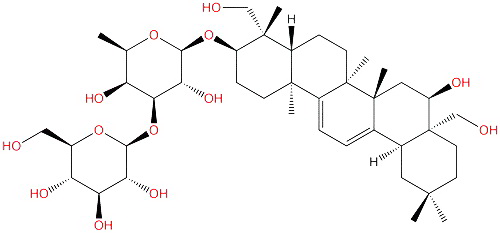
Chaihu saponin G belongs to the oleanane type derivatives of pentacyclic triterpenoids. Its chemical structure consists of two parts: aglycones (sapogenins) and sugar chains. The glycoside skeleton of SSG is 13,28-epoxyoleanane type, which is an important structural feature that distinguishes saikosaponin from other triterpenoid saponins. Specifically, the glycoside structure of SSG is the same as that of Saikogenin F, a glycoside of saikosaponin d (SSd), which is a 13,28-epoxide derivative of oleagine-11,13 (18) - dien-3 β, 16 β, 23,28-tetraol. However, the key difference between SSG and SSd lies in the different sugar groups connected to the C-3 and C-16 positions. SSG is connected to a β - D-glucose group at C-3 and a β - D-fucosyl group at C-16, while SSd is connected to a β - D-glucose group at C-3 and a β - D-fucosyl group at C-16. However, the C-2 'or C-3' positions of fucosyl groups are often replaced by acetyl groups. In fact, more precise structural analysis indicates that the C-16 fucosyl group of SSG usually does not contain an acetyl group, while the fucosyl group of SSd contains an acetyl group. This small structural difference leads to significant differences in their physicochemical properties and biological activities. In addition, the structural difference between SSG and saikosaponin a (SSa) lies in the substituent at the C-16 position, where SSa has a hydroxyl group and SSG has a fucosyl group.
From the perspective of physical and chemical properties, the molecular formula of SSG is C ₄₂ H ₆₈ O ₁∝, with a molecular weight of 780.9930 g/mol. As a typical glycoside compound, it has high polarity and poor lipid solubility. The calculated LogP value is 2.7854, indicating that it tends to be distributed in the aqueous phase in the n-octanol/water two-phase system, which is consistent with the properties of most saponin compounds. Its topological polar surface area (TPSA) is as high as 218.9900 Å ², far exceeding the recommended upper limit of 140 Å ² for oral drugs, indicating that its transmembrane permeability may be poor. The water solubility parameter is 0.0491 mg/mL, which belongs to the category of difficult to dissolve in water, which may pose challenges in formulation studies in practical applications. In addition, theoretical calculations indicate that the blood-brain barrier (BBB) penetration ability of SSG is relatively low, suggesting that its potential in the treatment of central nervous system diseases may be limited. Importantly, preliminary toxicological predictions indicate that SSG has a low risk of inhibiting hERG potassium ion channels (hERG inhibition: No), and the Ames test result is 0.0, indicating that it does not have significant mutagenicity, providing preliminary favorable evidence for its safety as a candidate drug.
Chaihu saponin G mainly exists in the roots of plants of the Bupleurum genus in the Umbelliferae family, among which medicinal Chaihu is used(Bupleurum chinense)Narrow leaved Bupleurum chinense(B. scorzonerifolium)As the main source. In addition, in other Bupleurum plants such as B. falcatum、B. kaoi The presence of SSG was also detected, but its content is usually low. The content of SSG in total saponins of Bupleurum chinense is much lower than that of SSa, SSc, and SSd, and it belongs to trace components. This low abundance characteristic is one of the main reasons for its relatively lagging early research.
The extraction and separation of SSG usually follow the classic natural product chemical process of "extraction enrichment purification". Due to the high polarity of SSG, traditional solvent extraction methods such as reflux extraction or cold extraction using methanol, ethanol, or aqueous alcohols are commonly used to obtain crude extracts. In order to improve the extraction efficiency of SSG, researchers have explored various modern extraction techniques. For example, ultrasound assisted extraction (UAE) utilizes the cavitation effect of ultrasound to destroy plant cell walls, accelerate solvent penetration and component dissolution, significantly shorten extraction time, and improve the yield of SSG. Microwave assisted extraction (MAE) utilizes the body heating effect of microwaves to efficiently extract target components. In addition, enzyme assisted extraction method destroys cell wall structure through cellulase, pectinase, etc., which also helps to increase the release of saponins such as SSG.
After obtaining the crude extract, efficient separation and purification techniques are required due to the low SSG content and numerous structurally similar compounds. The classic silica gel column chromatography is a commonly used method for separating saikosaponin. By adjusting the ratio of eluent (such as chloroform methanol water system), preliminary separation of SSG from other components with significant polarity differences can be achieved. However, for isomers or homologues of SSG with highly similar structures to SSd, SSa, etc., silica gel column chromatography often fails to achieve ideal separation results. At this point, reverse phase silica gel column chromatography (such as ODS-C18) shows advantages due to its differential retention of different hydrophobic components. High performance liquid chromatography (HPLC), especially preparative HPLC, is a key technology for obtaining high-purity SSG. By using a reverse phase C18 chromatography column with acetonitrile water or methanol water as the mobile phase and optimizing the gradient elution program, effective separation of SSG from interfering components can be achieved. In recent years, high-speed countercurrent chromatography (HSCCC), as a liquid-liquid distribution chromatography technique, has been successfully applied in the separation and purification of saikosaponin due to its advantages of irreversible adsorption and high sample recovery rate, providing a new technical pathway for obtaining high-purity SSG at the milligram or even gram level.
In recent years, significant progress has been made in the pharmacological activity research of saikosaponin G, with its activity spectrum mainly focused on anti-tumor, anti-inflammatory, hepatoprotective, and immune regulation aspects, among which anti-tumor activity is particularly prominent.
1. Antitumor activity
The anti-tumor effect of SSG is currently the core of research. In vitro experiments showed that SSG had significant inhibitory effects on the proliferation of many human tumor cell lines, including liver cancer (HepG2, SMMC-7721), lung cancer (A549), breast cancer (MCF-7, MDA-MB-231), colon cancer (HCT-116), gastric cancer (SGC-7901) and leukemia (K562). Its mechanism of action involves multiple aspects. Firstly, SSG can induce apoptosis of tumor cells. By activating caspase cascade reactions (such as caspase-3, -8, -9), upregulating the expression of pro apoptotic proteins Bax and Bad, and downregulating the expression of anti apoptotic proteins Bcl-2 and Mcl-1, mitochondrial membrane potential is disrupted, releasing cytochrome c, ultimately leading to cell apoptosis. Secondly, SSG can induce cell cycle arrest. Research has found that SSG can block various tumor cells in the G0/G1 phase or G2/M phase, which is related to the downregulation of the expression of cell cycle proteins (Cyclin D1, Cyclin B1) and cyclin dependent kinases (CDK4, CDK2). In addition, SSG can also inhibit the migration and invasion ability of tumor cells, which is closely related to its downregulation of the expression of matrix metalloproteinases MMP-2 and MMP-9, as well as inhibition of epithelial mesenchymal transition (EMT) process.
2. Anti inflammatory activity
Inflammation is a key link in the occurrence and development of various diseases, including cancer. SSG exhibits good anti-inflammatory activity. In a macrophage model stimulated by lipopolysaccharide (LPS), SSG can significantly inhibit the production of pro-inflammatory factors such as tumor necrosis factor - α (TNF - α), interleukin-6 (IL-6), and interleukin-1 β (IL-1 β). The mechanism is related to the inhibition of the activation of the nuclear factor kappa B (NF - κ B) signaling pathway. SSG can block the phosphorylation and degradation of I κ B α, thereby preventing the translocation of NF - κ B p65 subunit to the nucleus and reducing the transcription of downstream inflammatory genes. In addition, SSG can inhibit the expression of cyclooxygenase-2 (COX-2) and inducible nitric oxide synthase (iNOS), and reduce the production of prostaglandin E2 (PGE2) and nitric oxide (NO).
3. Liver protective activity
Based on the traditional hepatoprotective effect of Chaihu, the liver protective effect of SSG has also received attention. In animal models of acute liver injury induced by carbon tetrachloride (CCl ₄) or acetaminophen (APAP), SSG pretreatment can significantly reduce serum transaminase (ALT, AST) levels and alleviate liver tissue pathological damage (such as necrosis and inflammatory infiltration). Its hepatoprotective mechanism may be related to antioxidant stress. SSG can increase the activity of endogenous antioxidant enzymes in the liver, such as superoxide dismutase (SOD) and glutathione peroxidase (GSH Px), and reduce the content of malondialdehyde (MDA), thereby alleviating oxidative stress damage to liver cells. Meanwhile, SSG can also exert a protective effect by inhibiting hepatocyte apoptosis and reducing inflammatory response.
4. Immune regulatory activity
SSG has a bidirectional regulatory effect on the immune system. In the model of immune dysfunction, SSG can enhance the phagocytic function of macrophages, promote the proliferation of splenic lymphocytes, and increase the activity of natural killer (NK) cells. In models of excessive immune response (such as autoimmune diseases), SSG exhibits immunosuppressive effects, which can inhibit T cell activation and proliferation, and regulate the balance of Th1/Th2 cytokines. This immune regulatory activity provides the possibility for its application in tumor immunotherapy and autoimmune disease treatment.
The pharmacological activity of saikosaponin G, especially its anti-tumor effect, is achieved by regulating a complex signaling network and acting on multiple key molecular targets. Based on existing research, its main mechanism of action and targets can be summarized as follows:
1. Regulating apoptosis related proteins: MCL1 and BCL2
One of the core mechanisms by which SSG induces apoptosis in tumor cells is through the endogenous mitochondrial pathway. BCL2 family proteins are key molecules that regulate mitochondrial outer membrane permeability. SSG can significantly downregulate the expression of anti apoptotic proteins BCL2 and MCL1, while upregulating the expression of pro apoptotic protein BAX. MCL1, as an important anti apoptotic member of the BCL2 family, is closely associated with drug resistance and poor prognosis in various tumors due to its high expression. The inhibitory effect of SSG on MCL1 makes it potentially valuable in overcoming the resistance of certain tumors to conventional chemotherapy drugs. This regulation of the BCL2/MCL1 to BAX ratio leads to a decrease in mitochondrial membrane potential, release of cytochrome c, and activation of caspase-9 and downstream caspase-3, initiating the apoptotic program.
2. Inhibit the STAT3 signaling pathway
Signal transducer and activator of transcription factor 3 (STAT3) is a key oncogenic transcription factor that is continuously activated in various tumors, promoting cell proliferation, survival, angiogenesis, and immune escape. Research has shown that SSG can effectively inhibit the phosphorylation of STAT3 (Tyr705 site), thereby blocking its dimerization, nuclear translocation, and binding ability to DNA. The inhibition of STAT3 activity directly leads to the downregulation of downstream target genes such as Cyclin D1 (cell cycle), Survivor and Bcl xL (anti apoptosis), VEGF (angiogenesis), and MMP-2 (invasion and metastasis). Therefore, targeting STAT3 is one of the key molecular mechanisms by which SSG exerts multiple anti-tumor effects.
3. Intervention in MAPK signaling pathway
The mitogen activated protein kinase (MAPK) signaling pathway, including ERK, JNK, and p38 MAPK, plays a central role in regulating cell proliferation, differentiation, stress response, and apoptosis. The effect of SSG on the MAPK pathway is cell type dependent. In most tumor cells, SSG can inhibit the phosphorylation of ERK1/2 (MAPK1), thereby suppressing cell proliferation driven by the Ras/Raf/MEK/ERK pathway. Meanwhile, SSG often activates the JNK and p38 MAPK pathways, which are typically associated with stress-induced apoptosis. Therefore, SSG promotes tumor cell death by inhibiting the survival promoting ERK pathway and activating the apoptosis promoting JNK/p38 pathway.
4. Inhibit invasion and metastasis related targets: MMP2 and HIF1A
The invasion and metastasis of tumors are the main causes of patient death. Matrix metalloproteinase 2 (MMP2) can degrade the extracellular matrix and is a key enzyme for tumor cells to break through the basement membrane, achieve invasion and metastasis. SSG can significantly inhibit the mRNA and protein expression levels of MMP2, thereby reducing the invasive ability of tumor cells. In addition, hypoxia inducible factor 1 alpha (HIF1A) is a core transcription factor for tumor adaptation to the hypoxic microenvironment. It promotes angiogenesis by upregulating genes such as VEGF and participates in regulating processes such as glycolysis, invasion, and metastasis. Research has shown that SSG can inhibit the protein expression and transcriptional activity of HIF1A, which may be one of the important mechanisms underlying its anti angiogenic and anti metastatic effects.
5. Inhibition of Topoisomerase Activity: TOP1 and TOP2A
DNA topoisomerase is an important target for anti-tumor drugs. TOP1 and TOP2A play a crucial role in DNA replication, transcription, and repair by regulating the supercoiled structure of DNA. Some classic anti-tumor drugs, such as camptothecin (targeting TOP1) and etoposide (targeting TOP2), exert their cytotoxic effects by inhibiting the activity of these enzymes. Preliminary molecular docking and enzyme activity experiments suggest that SSG may have good binding affinity with TOP1 and TOP2A, and can inhibit their catalytic activity. This suggests that SSG may inhibit tumor cell proliferation by interfering with DNA topology, leading to DNA damage, which adds a new dimension to its anti-tumor mechanism.
6. Other potential targets: ESR1 and CYP19A1
For hormone dependent tumors such as breast cancer, estrogen receptor alpha (ESR1) and aromatase (CYP19A1) are important therapeutic targets. CYP19A1 is responsible for converting androgens into estrogens, while ESR1 is the receptor for estrogens to exert biological effects. Some preliminary computational chemistry studies suggest that SSG may interact with ESR1 and CYP19A1. Although the direct experimental evidence is not sufficient, it provides a potential exploration direction for the application of SSG in hormone related tumors such as breast cancer.
In summary, SSG exerts its pharmacological effects through multiple targets and pathways, and its anti-tumor mechanism involves direct induction of apoptosis, blocking of proliferation signals, inhibition of invasion and metastasis, interference with DNA topology, and other aspects, demonstrating great potential as a natural multi-target anti-tumor lead compound.
The evaluation of drug properties and pharmacokinetic studies are crucial steps in advancing natural products from laboratory research to clinical applications. Based on the provided parameters and existing literature, conduct a preliminary evaluation of the pharmacological properties of SSG.
1. Analysis of pharmacological parameters
According to Lipinski's "Rule of Five", an orally active drug should typically meet the following criteria: molecular weight<500, LogP<5, The number of hydrogen bond donors is less than 5, and the number of hydrogen bond acceptors is less than 10. The molecular weight of SSG is 780.99, far exceeding 500; The TPSA is 218.99 Å ², much higher than 140 Å ²; its molecular structure contains multiple hydroxyl and sugar groups, and the number of hydrogen bond donors and acceptors far exceeds the limit of the "Five Rules". Therefore, SSG clearly violates the "five rules", indicating that its oral bioavailability may be extremely low. Its LogP is 2.7854, which meets the requirements, but high polarity and high molecular weight are the main obstacles to its oral absorption. The poor water solubility (0.0491 mg/mL) also limits the development of its formulations. However, the "Five Rules" mainly target traditional small molecule oral drugs. For natural glycoside compounds, their absorption may depend on gut microbiota metabolism or specific transporters, so the potential for oral administration cannot be completely denied. Low BBB penetration (low) and low hERG inhibition risk (no), as well as negative Ames test results (0.0), are positive factors in its drug development, indicating a low risk of neurotoxicity and cardiac toxicity, and no significant genotoxicity.
2. Pharmacokinetic characteristics
At present, there are few specialized research reports on the pharmacokinetics of SSG in vivo, but the pharmacokinetic behavior of its homologues SSa and SSd can be used for inference. After oral administration, the absorption of saikosaponin compounds is extremely poor, and their absolute bioavailability is usually less than 5%. They are unstable in the gastrointestinal tract and are easily degraded by stomach acid or metabolized by gut microbiota. Under the action of gut microbiota, some saponins gradually hydrolyze their sugar chains to produce secondary glycosides or aglycones, which may be the true active forms of metabolites. For example, after oral administration, SSd can be metabolized into saikosaponin b2 or aglycone in the intestine. SSG may undergo similar metabolic processes. After intravenous administration, saikosaponin is rapidly distributed in the body, but eliminated quickly with a short half-life. They are mainly excreted through bile and exhibit obvious hepatic intestinal circulation. The plasma protein binding rate is relatively high. Given the extremely poor oral absorption characteristics of SSG, developing its non oral delivery routes (such as injections, transdermal delivery systems, liposomes, nanoparticles, etc.) may be a key strategy to improve its bioavailability and achieve clinical applications.
Although saikosaponin G has shown exciting activity in basic pharmacological research, its clinical application still faces many challenges and also contains enormous development opportunities.
1. Challenges faced
* Low bioavailability As mentioned earlier, extremely low oral bioavailability is the main obstacle faced by SSG. How to improve its absorption and in vivo exposure through drug chemical modification (such as prodrug design, structural simplification) or novel drug delivery systems (such as nanocarriers, phospholipid complexes) is a top priority for future research.
* Restricted source The content of SSG in Bupleurum chinense is extremely low, and the cost of extracting and isolating large amounts from natural plants is high, making it difficult to meet the needs of preclinical and clinical research. Developing efficient chemical synthesis or semi synthesis methods, as well as utilizing biotechnology such as genetic engineering and cell culture for large-scale production, are the fundamental ways to solve the problem of raw materials.
* The mechanism of action still needs to be deepened Although multiple targets have been identified, the primary secondary relationships, synergistic effects, and specificity among these targets in different tumor types are not fully understood. It is necessary to utilize more advanced systems biology and network pharmacology methods, combined with experimental techniques such as gene knockout/knock in, to deeply elucidate its core mechanism of action and key targets.
* Insufficient toxicity research The current toxicity data mainly comes from in vitro and preliminary in vivo experiments, lacking systematic and GLP compliant long-term toxicity, reproductive toxicity, and immunotoxicity evaluations, which must be completed before entering clinical trials.
2. Future development direction
* Development of anti-tumor drugs Given its multi-target anti-tumor activity, SSG is expected to be developed as a novel anti-tumor candidate drug. Especially its inhibitory effect on "difficult to drug" targets such as STAT3 and MCL1 gives it a unique advantage in treating tumors resistant to traditional chemotherapy. Combining SSG with existing chemotherapy drugs or targeted drugs to explore synergistic effects and reduce toxicity is also an important research direction.
* Development of anti-inflammatory and hepatoprotective drugs Based on its precise anti-inflammatory and hepatoprotective activities, SSG or its derivatives have potential for development in the treatment of chronic hepatitis, liver fibrosis, non-alcoholic fatty liver disease (NAFLD), and inflammatory bowel disease. Local administration (such as topical preparations for treating skin inflammation) or liver targeted delivery systems may be effective strategies to overcome their poor oral absorption.
* As a lead compound for structural optimization Using the unique skeleton of SSG as a guide, structural modifications can be carried out through medicinal chemical methods, such as simplifying sugar chains, introducing specific functional groups to improve pharmacokinetic properties or enhance target selectivity, which is expected to obtain new compounds with better drug properties.
* Combination therapy strategy Combining SSG with other natural products or chemotherapy drugs through multi-target synergistic effects may achieve a "1+1>2" therapeutic effect while reducing the toxic side effects of a single drug. For example, the combination of SSG and cisplatin may enhance the killing effect of platinum based drugs on drug-resistant tumor cells by inhibiting the STAT3 pathway.
Chaihu saponin G, as an important trace triterpenoid glycoside component in plants of the Chaihu genus, has a unique chemical structure and increasingly rich pharmacological activity research, especially its multi-target and multi pathway regulation ability in the field of anti-tumor, which has made it gradually become a new star in the research of natural medicinal chemistry and pharmacology from an unknown natural product. It exerts multiple anti-tumor effects such as inhibiting proliferation, inducing apoptosis, and resisting invasion and metastasis by acting on a series of key targets closely related to tumor occurrence and development, such as MCL1, BCL2, STAT3, MMP2, TOP1, etc. Its mechanism of action is complex and exquisite.
However, SSG still has a long way to go from laboratory discovery to clinical translation. The inherent physical and chemical property defects, such as high molecular weight, poor water solubility, and low oral bioavailability, are the main "bottlenecks" facing its drug development. Future research should focus on: firstly, developing derivatives or new dosage forms that can overcome their pharmacokinetic deficiencies using modern medicinal chemistry and pharmacology methods; The second is to use synthetic biology or chemical synthesis techniques to solve its source problem; The third is to conduct more in-depth and systematic pharmacological and toxicological research, clarify its target network and safety characteristics. We have reason to believe that with the continuous deepening of research and the advancement of technological means, saikosaponin G and its derivatives are expected to make their due contributions to human health in the future, especially in the treatment of major diseases such as tumors. The study of SSG not only deepens our understanding of the traditional pharmacological substance basis of Chaihu, but also provides a valuable example for discovering innovative drugs from traditional Chinese medicine.
Batch can search by a CAS number,one per line
