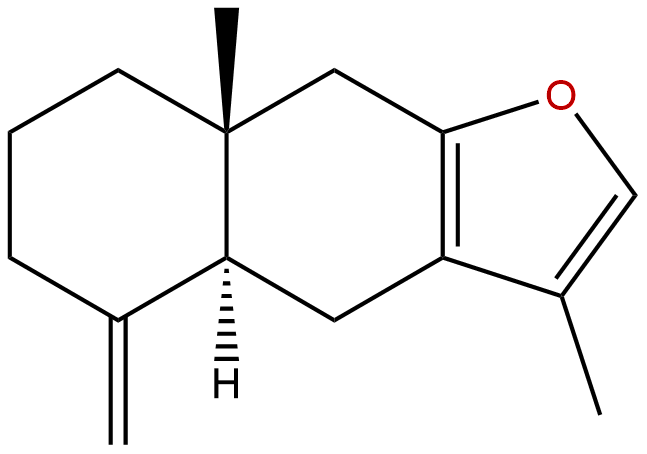


Product name: Atractylon
Synonym name:
Catalogue No.: BP3078
Cas No.: 6989-21-5
Formula: C15H20O
Mol Weight: 216.324
Botanical Source:
Physical Description:
Type of Compound: Sesquiterpenoids
Purity: 95%~99%
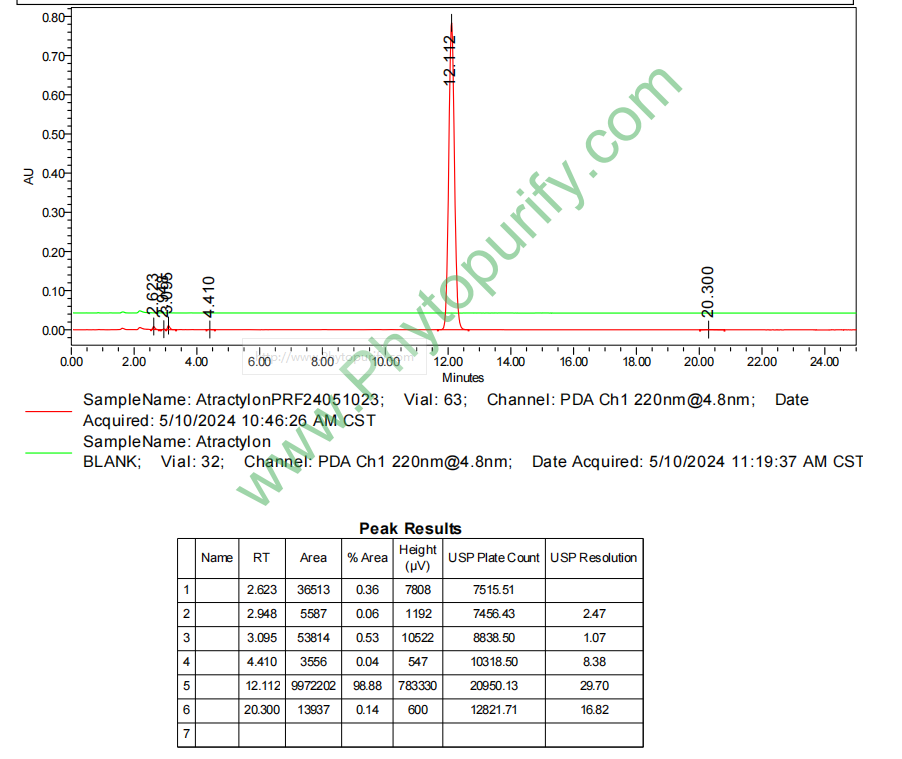
Analysis Method: HPLC-DAD or/and HPLC-ELSD
Identification Method: Mass, NMR
Packing: Brown vial or HDPE plastic bottle
The product could be supplied from milligrams to grams. Inquire for bulk scale.
We provide solution to improve the water-solubility of compounds, thereby facilitating the variety of activity tests and clinic uses.
For Reference Standard and R&D, Not for Human Use Directly.
Description:
Atractylone has inhibitory effects on mast cell-mediated allergic reactions, it regulates the degranulation of mast cell, proves its potential in the treatment of mast cell-mediated allergic reactions.
References:
World J Microbiol Biotechnol. 2012 Feb;28(2):575-84.
Comparison of the effects of fungal endophyte Gilmaniella sp. and its elicitor on Atractylodes lancea plantlets.
The effects of the endophytic fungus Gilmaniella sp. and its elicitor on the defense and metabolic responses of host plants Atractylodes lancea were investigated, in order to understand how to utilize endophytic fungi and their elicitor resources better.
METHODS AND RESULTS:
The results showed that the promotion effect of the fungus on the growth of host plantlets was much better than that of its elicitor. Both fungus and elicitor enhanced defense-related enzyme activities. In fungus-inoculated groups, phenylalanine ammonia lyase and polyphenol oxidase activities increased slowly, and reached a maximum level during the later stages, whereas peroxidase activity peaked in the first few days. Additionally, the activities of chitinase and β-1,3-glucanase were significantly higher than those of the control plants. In elicitor-treated groups, however, most of the enzymes were activated during the early stage, and their highest levels were generally lower than those of the fungus-inoculated groups. Compared with the elicitor, fungal infection improved the photosynthetic rate of the host, and increased carbohydrate levels as well as chlorophyll content in host leaves. The total content of the four main components of volatile oil was also increased in elicitor-treated groups, but there was no particular pattern in this increase. Meanwhile, in the fungus-inoculated groups, the content of Atractylone significantly increased with time, while the content of β-eudesmol decreased.
CONCLUSIONS:
These results indicated that fungal elicitor could substantially improve the total content of volatile oil, while the fungus could more effectively enhance the quality of herbal medicines.
Chem.Biol. Interact., 2016, 258:59–68
Inhibitory effects of atractylone on mast cell-mediated allergic reactions.
This study investigated a salutary effect of Atractylone (Atr) which is an active constituent of Pyeongwee-San (KMP6) on mast cell-mediated allergic reactions. Our previous report indicated that KMP6 regulated allergic reactions.
METHODS AND RESULTS:
Thus, this study sought to determine the potential of Atr in vitro models, compound 48/80-stimulated rat peritoneal mast cells (RPMCs), phorbol 12-myristate 13-acetate (PMA) plus A23187-stimulated human mast cell line (HMC-1) cells, and stem cell factor (SCF)-stimulated RPMCs as well as in vivo models, IgE-mediated passive cutaneous anaphylaxis (PCA), compound 48/80-induced systemic anaphylaxis, and compound 48/80-induced ear swelling. The results showed that Atr inhibited compound 48/80-induced RPMCs degranulation, intracellular calcium level, tryptase release, and histamine release. Atr inhibited the up-regulation of p56(lck) tyrosine kinase activity by compound 48/80. And Atr reduced tryptase and histamine releases from PMA plus A23187-stimulated HMC-1 cells. In addition, Atr decreased histidine decarboxylase activity and expression in the activated HMC-1 cells. Atr inhibited SCF-induced morphological alteration and filamentous actin formation in RPMCs. Atr improved IgE-induced PCA reaction by decreasing the levels of histamine, IgE, interleukin (IL)-4, IL-5, IL-6, vascular endothelial growth factor, and IL-13 in the serum of PCA-induced mice. Furthermore, Atr mitigated compound 48/80-induced systemic anaphylaxis and ear swelling.
CONCLUSIONS:
Taken together, these results of this study indicate that Atr regulates the degranulation of mast cell, proving its potential in the treatment of mast cell-mediated allergic reactions.
HPLC of Atractylon
Storage conditions:Short-term storage at 2~8℃, long-term storage at -20 ~ -80℃
13.1400
4.4384
4.4384
.0037
10.0559
24.8985
High
86.9058
4.0822
No
Yes
No
No
Yes
No
0.0
No
No
No
No
Atractylone, also known as (4R, 5S, 7R) -1,4-dimethyl-7- (1-methylvinyl) -1,2,3,4,5,6,7,8-octahydroazulene-4-ol, is a sesquiterpene compound with a unique bicyclic [5.3.0] decane skeleton. Its CAS number is 6989-21-5, molecular formula is C15H20O, and molecular weight is 216.3240 g/mol. As one of the key active ingredients in the traditional Chinese medicine Atractylodes lancea, Atractylodes lancea ketone is not only the main contributor to its aroma, but also an important material basis for its traditional therapeutic effects. In traditional Chinese medicine theory, Atractylodes macrocephala is known for its effects of "drying dampness and strengthening the spleen, dispelling wind and dispelling cold", and is commonly used to treat conditions such as dampness obstructing the middle burner, abdominal distension, diarrhea, and edema. Modern research has revealed that Atractylodes macrocephala is one of the core active molecules that achieve these gastrointestinal regulatory functions.
In recent years, with the rapid development of natural product chemistry and molecular pharmacology, research on Atractylodes macrocephala has progressed from early chemical composition identification to exploring its multi-target and multi pathway mechanisms of action. Database analysis shows that Atractylodes macrocephala interacts with multiple targets closely related to gastrointestinal function, including muscarinic acetylcholine receptor M3 subtype (CHRM3), histamine H2 receptor (HRH2), cholecystokinin A receptor (CCKAR), secretin receptor (SCTR), and gastric potassium hydrogen ATPase (ATP4A). The correlation between these targets scientifically confirms their traditional treatment experience for gastrointestinal disorders. This article will systematically review the plant sources, pharmacological activities, mechanisms of action, and potential medicinal properties of Atractylodes macrocephala from its chemical essence, providing a professional perspective for the modern research and development of this traditional natural product.
The chemical structure of Atractylodes macrocephala belongs to the eucalyptol type sesquiterpene, and its SMILES is expressed as: C=C1CCC [C @] 2 (C) Cc3occ (C) c3C [C @ @ H] 12. This structure reveals its core feature: a fused bicyclic system (a seven membered ring fused with a five membered ring), connected with hydrophobic groups such as isopropylidene. There are two chiral centers in the molecule that give it a specific stereochemical configuration, which is crucial for its specific recognition and binding to biological targets.
Based on the analysis of pharmacological parameters, the molecular weight (MW) of Atractylodes macrocephala is 216.32 g/mol, which meets the requirement of "molecular weight less than 500" in Lipinski's Five Rules. The logarithm of its lipid water partition coefficient (LogP/LogD) is 4.44, indicating that the compound has high lipophilicity. This is consistent with the lack of strong polar groups in its structure and the abundance of carbon and hydrogen parts. A higher LogP value is usually beneficial for compounds to penetrate cell membranes, but it may also lead to poor water solubility. Its theoretical polar surface area (TPSA) is only 13.14 Å ², far below the threshold commonly believed to be favorable for oral absorption (140 Å ²), which further indicates its good membrane permeability.
Specifically regarding solubility and permeability: Its water solubility is extremely low, only 0.0037 mg/mL, which is a typical characteristic of high LogP compounds. However, its permeability (Peff) in the Caco-2 cell model is as high as 10.06 cm/s × 10 ⁻⁶, and the Caco-2 permeability also reaches 24.90 cm/s × 10 ⁻⁶, both significantly higher than the conventional standards for highly permeable compounds (such as Peff>1.5), indicating its excellent oral absorption potential. In addition, its blood-brain barrier (BBB) penetration is predicted to be "high", suggesting that it may have central nervous system activity, which provides a chemical basis for expanding its application scope (such as gastrointestinal diseases related to the brain gut axis). The plasma protein binding rate (PPB) is 86.91%, which is a moderately high level and may affect its free drug concentration and efficacy.
Atractylodes ketone mainly comes from the rhizomes of Atractylodes plants in the Asteraceae family, with Atractylodes lancea and Atractylodes chinensis being the most abundant. Atractylodes macrocephala is a traditional Chinese medicinal herb with a history of over two thousand years. It was first recorded in the "Shennong Bencao Jing" and is classified as a top-grade herb.
In the traditional medical system, the application of Atractylodes macrocephala is extensive and profound. Under the guidance of traditional Chinese medicine theory, it has a warm nature, a pungent and bitter taste, and is regulated by the spleen, stomach, and liver meridians. The core efficacy is to dry dampness and invigorate the spleen, dispel wind and dispel cold, and improve vision. Mainly used for:
1. Damp resistance and coking certificate Manifesting as abdominal distension, loss of appetite, nausea and vomiting, fatigue and weakness, and thick and greasy tongue coating. Often combined with Magnolia officinalis, Chenpi, etc., such as the classic formula "Pingwei San".
2. Diarrhea and dysentery Especially suitable for diarrhea caused by dampness.
3. Rheumatic arthralgia Because it can dispel wind and dampness, it is commonly used for joint pain.
4. External wind cold and dampness table syndrome Often used interchangeably with Qianghuo and Baizhi.
5. Night blindness and blurred eyes Can be used alone or cooked with sheep liver.
In Japanese traditional Chinese medicine (Kampo), Atractylodes macrocephala is also an important compound medicine (such as Anzhong San, Pingwei San, Weiling Tang) used to regulate spleen and stomach function. These long-standing clinical applications, although not directly directed towards Atractylodes macrocephala, provide a solid historical basis and clinical clues for its modern pharmacological research, especially for its effects on the gastrointestinal system. Modern analytical chemistry has confirmed that the volatile oil of Atractylodes macrocephala is its main active site, and Atractylodes macrocephala ketone is one of the characteristic components with abundant content and significant activity in this volatile oil.
Based on the target information provided by the database, the pharmacological effects of Atractylodes macrocephala mainly focus on regulating gastrointestinal function. Its mechanism of action involves the regulation of multiple key receptors and enzymes, forming a multi-target synergistic network.
1. Effects on CHRM3 (muscarinic acetylcholine receptor M3 subtype):
CHRM3 is widely distributed in smooth muscle cells and glandular cells of the gastrointestinal tract. Acetylcholine can strongly stimulate gastrointestinal smooth muscle contraction, promote gastrointestinal peristalsis, and increase the secretion of gastric acid and digestive enzymes by activating CHRM3. If Atractylodes macrocephala is used as a modulator (agonist or allosteric modulator) of CHRM3, it can explain its traditional efficacy in treating "bloating and fullness in the epigastric region" (possibly related to insufficient gastrointestinal motility) and "loss of appetite". By enhancing cholinergic signaling, it can promote gastrointestinal emptying and secretion of digestive fluids, thereby improving digestive function.
2. Effects on HRH2 (histamine H2 receptor):
HRH2 mainly exists in gastric wall cells. Histamine is one of the strongest physiological stimuli for gastric acid secretion. By activating HRH2, it initiates the intracellular cAMP signaling pathway, ultimately activating H+/K+- ATPase (proton pump), which pumps out hydrogen ions to form gastric acid. The interaction between Atractylodes macrocephala and HRH2 may affect the regulation of gastric acid secretion. Traditionally, Atractylodes macrocephala is not used to directly suppress acidity, but to regulate the overall state of the spleen and stomach. Atractylodes macrocephala may play a role as a "balance regulator" rather than a simple inhibitor or agonist, which requires further functional experimental verification.
3. Effects on CCKAR (cholecystokinin A receptor):
CCKAR is mainly distributed in pancreatic acinar cells and gallbladder smooth muscle. After binding to its receptor, cholecystokinin (CCK) can stimulate the secretion of pancreatic digestive enzymes and gallbladder contraction, promote bile excretion, and is crucial for fat digestion. Meanwhile, CCK is also an important satiety signaling molecule. Atractylodes macrocephala acts on CCKAR, which may promote the secretion of digestive enzymes and bile excretion, thereby improving fat digestion and alleviating bloating and diarrhea caused by indigestion. This is also consistent with the efficacy of Cangshu in strengthening the spleen and promoting good luck.
4. Effects on SCTR (secretin receptor):
Secretors are mainly secreted by duodenal S cells and act on SCTR on pancreatic ductal cells, stimulating their secretion of bicarbonate rich pancreatic juice to neutralize stomach acid entering the duodenum and provide a suitable alkaline environment for intestinal digestive enzymes. The regulation of SCTR by Atractylodes macrocephala may affect the quality of pancreatic juice secretion, thereby optimizing the digestive environment in the intestine, which is crucial for maintaining intestinal homeostasis.
5. Effects on ATP4A (gastric potassium hydrogenase alpha subunit):
ATP4A is a key component of proton pump (H+/K+- ATPase), located on the top membrane of gastric wall cells, and is the last common pathway for gastric acid secretion. All signals that promote gastric acid secretion, such as histamine, acetylcholine, and gastrin, ultimately converge to activate this pump. If Atractylodes macrocephala can interact with ATP4A, it may directly affect gastric acid secretion at the terminal stage. Considering the comprehensiveness of its traditional applications, this effect may be more inclined towards a mild, adaptive regulation rather than a potent inhibition.
Comprehensive mechanism and related diseases - gastrointestinal dysfunction:
Gastrointestinal dysfunction is a general term for a large class of diseases, including functional dyspepsia, irritable bowel syndrome, etc. Its core characteristics are gastrointestinal motility, secretion, and sensory dysfunction, without organic lesions. Atractylodes macrocephala forms a synergistic network through the multi-target action mentioned above:
- Regulating gastrointestinal motility Through targets such as CHRM3, it is possible to bidirectionally regulate smooth muscle contraction and alleviate motor dysfunction or disorder.
- Coordinate digestion and secretion Through HRH2, CCKAR, SCTR, and other methods, the secretion of gastric acid, pancreatic enzymes, bile, and bicarbonate is comprehensively regulated to create the optimal digestive environment.
- Potential protective effect Moderate stomach acid and normal gastrointestinal motility are part of the defense against pathogens, and their multi-target mild regulation may help maintain this defense function rather than completely blocking it.
This multi-target and systematic regulatory mode precisely conforms to the treatment philosophy of "holistic regulation" and "balancing yin and yang" in traditional Chinese medicine, providing a modern molecular biology explanation for the treatment of various gastrointestinal dysfunction caused by "dampness obstructing the spleen and stomach" in Atractylodes macrocephala.
Based on the provided pharmacological parameters, combined with Lipinski's Five Rules, Drug Likenness, and preliminary toxicity prediction, a systematic evaluation of the pharmacological potential of Atractylodes macrocephala can be conducted.
Lipinski Rule of Five Compliance Analysis:
1. Number of hydrogen bond donors (HBD): From the structural formula, Atractylodes macrocephala does not contain typical OH or NH, so HBD ≈ 0 (<5).
2. Number of hydrogen bond acceptors (HBA): containing one carbonyl oxygen, HBA ≈ 1 (<10)。
3. Molecular weight (MW): 216.32 (<500).
4. Lipid water partition coefficient LogP: 4.44 (<5).
Conclusion Atractylodes macrocephala fully meets all four criteria of Lipinski's five rules, indicating its good oral absorption potential.
In depth analysis of drug like parameters:
- Absorption and penetration The extremely low TPSA (13.14 Å ²) and high Caco-2 permeability data strongly support its excellent intestinal absorption and transmembrane transport capabilities. The high BBB penetration prediction provides the possibility for its application in diseases involving the brain gut axis.
- distribution A high plasma protein binding rate (86.91%) means that most drugs in the blood bind to proteins, which may affect their tissue distribution, onset speed, and strength of action, and needs to be considered in formulations or structural modifications.
- Metabolism and Toxicity (Preliminary Prediction):
- Genotoxicity The Ames test predicts a negative result (0.0), indicating no direct risk of gene point mutations. but Chromosome aberration predicted as' present 'This is a signal that requires high vigilance, indicating that Atractylodes macrocephala or its metabolites may have the risk of causing chromosome breakage or numerical abnormalities, which is an important "red flag" warning in the early stages of drug development.
- cardiotoxicity HERG channel inhibition is predicted as' no ', reducing the potential risk of developing acquired long QT syndrome and leading to fatal arrhythmias, which is a favorable factor.
- Other toxicities Predicted to have skin sensitization (Skid_Sens: Yes), suggesting the possibility of triggering allergic reactions as a hapten. No sensitization to the respiratory system, no phototoxicity. The serum biochemical indicators (ALT, AST, ALK, GGT) predicted no abnormalities, indicating no obvious signs of liver cell damage.
- Maximum Recommended Treatment Dose (MRTD)Predicted as' no ', combined with positive chromosomal aberration, it suggests that the safety window may be narrow.
Comprehensive evaluation of drug properties:
Atractylodes macrocephala ketone Excellent performance in terms of pharmacokinetic (ADME) properties Especially in terms of oral absorption and membrane permeability, it has a good physical and chemical foundation for developing into oral drugs. It fully complies with Lipinski's rules and has no risk of hERG inhibition, indicating a positive signal.
However, the main The development challenge lies in its security。Chromosomal aberration positivity is the key 'roadblock'This usually leads to the elimination of candidate compounds in the preclinical development stage, unless subsequent in-depth in vitro and in vivo genetic toxicity studies can prove that their risks are within an acceptable range, or the toxicity can be eliminated through structural modifications. The high plasma protein binding rate and potential skin sensitization are also aspects that need to be optimized and evaluated.
Poor water solubility is another pharmaceutical challenge that requires the use of formulation technologies such as cyclodextrin inclusion, nanocrystals, liposomes, etc. to improve its solubility and bioavailability.
At present, the research on Atractylodes macrocephala has moved from early plant chemical isolation and identification to the deep-water area of pharmacological activity screening and mechanism exploration. Existing research has not only confirmed its regulatory effect on gastrointestinal function, but also discovered its potential activities such as anti-inflammatory, anti-tumor, and neuroprotective effects, demonstrating multifaceted pharmacological value. However, the vast majority of research still remains at the level of cell and animal experiments, and the mechanism research is not yet systematic and in-depth, especially the lack of clear understanding of the network relationships, dominant targets, and in vivo metabolic processes of its multi-target effects.
Future research should focus on the following directions:
1. In depth mechanism research Using techniques such as molecular docking, surface plasmon resonance (SPR), and cell thermal shift analysis (CETSA), confirm the direct binding and functional effects (excitatory/antagonistic) of Atractylodes macrocephala with predicted targets such as CHRM3 and HRH2. The necessity of using gene knockout, RNA interference, and other techniques to validate key targets in the Cangzhuketone effect in animal models.
2. System toxicology assessment In response to warnings of chromosomal abnormalities, standardized in vitro mammalian cell chromosomal aberration tests, micronucleus tests, and in vivo rodent micronucleus tests must be conducted to clarify their genetic toxicity risk levels. Conduct comprehensive subacute and chronic toxicity experiments simultaneously to determine the safe dosage range.
3. Structural optimization and modification Using Atractylodes macrocephala as the lead compound, structural modifications were carried out through semi synthetic or total synthetic methods. The goal is Improve water solubility, reduce plasma protein binding rate, and most importantly, eliminate genetic toxicity while preserving or enhancing its core pharmacological activity Its simple sesquiterpene skeleton provides a good starting point for chemical modification.
4. Formulation development Develop new drug delivery systems, such as self microemulsions, solid dispersions, phospholipid complexes, etc., to improve their oral bioavailability due to their extremely low water solubility.
5. Exploration of clinical translation After completing sufficient preclinical pharmacological and safety evaluations, it may be considered to develop it as a modern natural medicine for the treatment of specific types of gastrointestinal disorders, such as hypokinetic functional dyspepsia. It can also be used as a standardized active ingredient in compound Chinese medicine to improve product quality controllability.
Application prospects:
Despite facing safety challenges, Atractylodes macrocephala is still a highly valuable natural lead compound. It represents a successful example of discovering multi-target modulators from traditional Chinese medicine. Its clear multi-target gastrointestinal regulation mechanism provides a new approach for the development of novel gastrointestinal motility drugs or digestive function regulators that have more comprehensive effects and are more in line with human physiological regulation laws. In the future, through the "transformation" of modern pharmaceutical chemistry and toxicology, it is expected to transform it from a potential natural molecule into a safe and effective modern medicine, and realize the modernization and internationalization of the essence of traditional Chinese medicine. At the same time, the continuous revelation of its mechanism of action will also reverse the scientific interpretation of traditional Chinese medicine's "spleen and stomach theory" and promote the deep integration of Chinese and Western medicine.
