Introduction/Overview
Natural products, as an important source of drug discovery, play an irreplaceable role in the history of human disease prevention and treatment. Among them, sesquiterpenes have always been a hot topic in medicinal chemistry and pharmacology research due to their structural diversity and wide range of biological activities. Hinesol, as a typical sesquiterpene alcohol compound, is mainly derived from the traditional Chinese medicine Atractylodes macrocephala(Atractylodes lancea The rhizome of Thunb DC. Atractylodes macrocephala has the effects of drying dampness and strengthening the spleen, dispelling wind and dispelling cold, and improving vision in traditional Chinese medicine theory. It is commonly used to treat gastrointestinal dysfunction related diseases such as dampness obstructing the middle burner, abdominal distension, diarrhea, edema, etc. Modern pharmacological research gradually reveals that Maocangzhun is one of the key active ingredients in Atractylodes macrocephala to exert gastrointestinal regulatory effects.
In recent years, with the deepening understanding of the pathological mechanisms of complex diseases such as functional gastrointestinal diseases, the search for multi-target, high safety, and naturally derived therapeutic drugs has become an important direction. Maocang Zhuchun has attracted much attention due to its potential activities in regulating gastrointestinal motility, anti-inflammatory, and analgesic effects. In particular, its action involves multiple targets closely related to gastrointestinal function, such as transient receptor potential vanillic acid subtype 1 (TRPV1), cyclooxygenase (PTGS1/2, i.e. COX-1/2), muscarinic acetylcholine receptor M3 (CHRM3), serotonin transporter (SLC6A4), etc., suggesting its potential to regulate gastrointestinal function through multiple pathways and targets. This article aims to systematically review the chemical properties, plant sources, pharmacological activities, molecular mechanisms of action, medicinal properties, and clinical application prospects of Maocangzhun, in order to provide comprehensive scientific references for the in-depth research and development of this compound.
Chemical structure and physicochemical properties
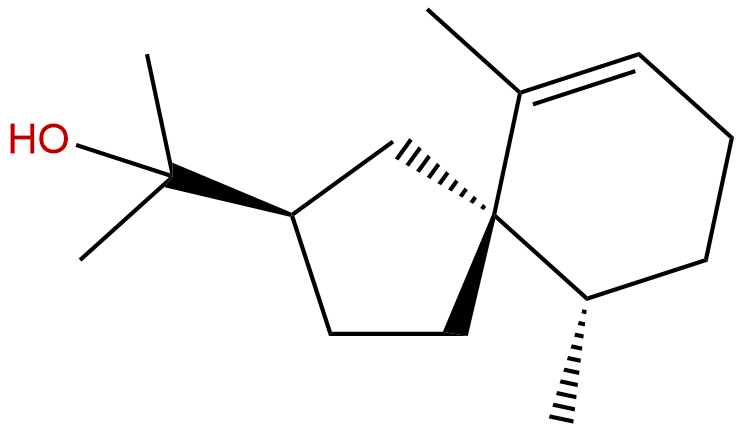
The chemical name of Maocangzhun is (4aS, 8aS) -4a, 5,6,7,8a-hexahydro-4a-methyl-7- (1-methylethylidene) -2 (1H) - naphthone, which is a monocyclic sesquiterpene compound. Its molecular formula is C15H26O and its molecular weight is 222.3720. Structurally, Maocangzhun has a basic framework of decahydronaphthalene, with functional groups such as hydroxyl, methyl, and isopropenyl attached to it. This unique bridge ring structure is the foundation of its stereochemistry and biological activity.
In terms of physicochemical properties, the lipid water partition coefficient (LogP) of Maocangzhun is 4.2895, indicating that the compound has high lipophilicity. Its topological polar surface area (TPSA) is relatively small, only 20.23 Å ², which is related to the presence of only one hydrogen bond acceptor (hydroxyl oxygen atom) in its molecule. These parameters collectively determine that the water solubility of Maocangzhun is relatively low, with a calculated value of approximately 0.0274 mg/mL, making it a poorly soluble compound in water. The characteristics of high lipophilicity and low TPSA usually indicate that the compound has strong cell membrane penetration ability. The prediction analysis of drug properties shows that Maocangzhun has high blood-brain barrier permeability, suggesting that it may have an effect on central nervous system related targets. In addition, preliminary toxicity predictions showed no significant inhibitory risk on hERG potassium channels (hERG inhibition: No), and the Ames test predicted a negative result (0.0), indicating that it may not have mutagenicity and potential cardiac toxicity, providing preliminary positive signals for subsequent safety evaluations.
Plant sources and extraction methods
Maocang Atractylodes mainly exists in plants of the Asteraceae Atractylodes genus, especially in the authentic source of the traditional Chinese medicine "Atractylodes" - Maocang Atractylodes(Atractylodes lancea The content of (Thunb.) DC. is relatively abundant in the dried rhizomes. In addition, in Northern Cangshu(Atractylodes chinensis (DC. Koidz.) and other closely related species have also been detected. As a traditional Chinese medicine, the quality evaluation of Atractylodes macrocephala is often based on the content of volatile oil and characteristic components such as Atractylodes macrocephala alcohol and β - eucalyptol.
The extraction of Maocangzhun from plant materials mainly uses volatile oil extraction technology. The most classic method is steam distillation, which involves heating Atractylodes macrocephala slices or powders with water and using steam to remove volatile components. After condensation, the oil-water mixture is collected and then extracted and separated using organic solvents such as ether to obtain the volatile oil of Atractylodes macrocephala. Maocangzhun is one of the main components in volatile oils. To obtain higher purity or specific components, further refining and separation steps are often required:
1. Solvent extraction and column chromatography Extract the crude volatile oil in segments using solvents of different polarities to preliminarily enrich the target components. Subsequently, techniques such as silica gel column chromatography and alumina column chromatography were used to separate and purify using gradient elution systems such as petroleum ether ethyl acetate or n-hexane ethyl acetate.
2. Modern Separation Technology Supercritical CO2 fluid extraction technology is used for efficient extraction of volatile oil from Atractylodes macrocephala due to its advantages of low temperature, no solvent residue, and adjustable selectivity, and can better protect thermosensitive components. In addition, high-resolution techniques such as preparative high-performance liquid chromatography (HPLC) and high-speed countercurrent chromatography (HSCCC) are effective means to obtain high-purity monomers of Atractylodes macrocephala.
3. Identification and Quality Control The extracted and separated Maocangzhun is usually qualitatively and quantitatively analyzed by gas chromatography-mass spectrometry (GC-MS), and its structure is accurately confirmed by nuclear magnetic resonance spectroscopy (NMR). In the quality control of medicinal herbs, the determination of alcohol content in Atractylodes macrocephala by GC or GC-MS has become one of the important indicators for evaluating the quality of Atractylodes macrocephala medicinal herbs.
Pharmacological activity research
A large number of in vitro and in vivo pharmacological studies have shown that Maocangzhun exhibits various biological activities, especially in areas related to gastrointestinal dysfunction.
1. Regulate gastrointestinal motility Multiple animal experiments have confirmed that Maocangzhun has a bidirectional regulatory effect on gastrointestinal smooth muscle. In ex vivo intestinal muscle experiments, low concentrations of Maocangzhun can counteract spasmodic contractions of intestinal muscles caused by acetylcholine, barium chloride, etc., exhibiting antispasmodic effects; And in specific models, it can also promote gastrointestinal peristalsis. This regulatory effect may be related to its impact on the enteric nervous system, smooth muscle cell ion channels, and neurotransmitter receptors.
2. Anti inflammation and analgesia Inflammation is the core pathological link of many gastrointestinal diseases, such as gastritis and enteritis. Research has shown that Maocang Zhuchun exhibits anti-inflammatory activity in various acute and chronic inflammation models, such as carrageenan induced rat foot swelling and acetic acid induced increased intra-abdominal capillary permeability in mice. Its analgesic effect has also been validated in pain models such as acetic acid writhing method and hot plate method. These effects are closely related to their regulation of the synthesis and release of inflammatory mediators such as prostaglandins.
3. Anti ulcer and gastric mucosal protection In experimental gastric ulcer models induced by ethanol, hydrochloric acid, indomethacin, etc., pretreatment with curcumin can significantly reduce gastric mucosal damage and lower ulcer index. Its protective mechanism may involve enhancing the gastric mucosal barrier function, promoting mucus secretion, improving gastric mucosal blood flow, and inhibiting excessive gastric acid secretion.
4. Neuroregulation and Anti Anxiety Due to its excellent blood-brain barrier permeability, the effects of Maocangzhun on the central nervous system have also begun to receive attention. Preliminary research suggests that it may exhibit certain anti anxiety like effects in behavioral experiments, which may be related to its regulation of monoamine neurotransmitter systems (such as the serotonin system), providing new clues for explaining its gastrointestinal regulatory effects from the perspective of the brain gut axis.
5. Other activities In addition, there are research reports that Maocangzhun has certain potential for antibacterial, antiviral, and anti-tumor cell proliferation, but these activities still need further systematic research to confirm.
Mechanism of action and molecular targets
The pharmacological effects of Maocang Zhuchun are not achieved through a single target, but rather through a complex network closely related to gastrointestinal function, inflammation, and pain perception. According to existing research, its key molecular targets and mechanisms can be summarized as follows:
1. Ion channels and sensory neural regulation: TRPV1 and CACNA1C
* TRPV1 As an important non selective cation channel, TRPV1 plays a central role in sensing nociceptive heat, acid, and capsaicin stimuli, and is closely related to visceral hypersensitivity and pain. Maocang Zhuchun may regulate the activity of TRPV1 channel, affect calcium ion influx, thereby regulating the excitability of sensory nerve endings and the release of neuropeptides (such as substance P and CGRP), alleviating visceral hyperalgesia and inflammatory reactions.
* CACNA1C This gene encodes the α 1C subunit of L-type voltage-gated calcium channels. Maocang Zhuchun may regulate calcium signaling in gastrointestinal smooth muscle cells and neuronal cells by affecting this channel, thereby affecting muscle contraction and neurotransmitter release, which may be one of its mechanisms for bidirectional regulation of gastrointestinal motility.
2. Key enzymes involved in the synthesis of inflammatory mediators: PTGS1 and PTGS2
* PTGS1/2 (COX-1/COX-2)Cyclooxygenase is the rate limiting enzyme for the synthesis of prostaglandins (PGs). COX-1 is involved in maintaining normal gastrointestinal mucosal function, while COX-2 induces high expression during inflammation. Research has shown that Maocangzhun may selectively or non selectively inhibit COX activity and reduce the production of pro-inflammatory prostaglandins (such as PGE2), which is one of the core molecular basis for its anti-inflammatory, analgesic, and gastric mucosal protective effects.
3. Neurotransmitter receptors and transporters
* CHRM3 The muscarine M3 receptor is widely distributed in the smooth muscles and glands of the gastrointestinal tract, mediating the prokinetic and secretory effects of acetylcholine. Maocangzhun may act as a regulator to affect the function of M3 receptors and participate in their regulation of gastrointestinal motility and gastric acid secretion.
* SLC6A4 (5-HTT)The serotonin transporter is responsible for recycling serotonin (5-HT) from the synaptic cleft and is a key protein that regulates 5-HT neurotransmission. 5-HT is crucial in the brain gut axis, involved in regulating emotions, appetite, and gastrointestinal function. Maocang Zhuchun may indirectly regulate central and peripheral 5-HT levels by affecting 5-HTT function, which may be its mechanism for regulating gastrointestinal function and potential anti anxiety effects.
* DRD2 Dopamine D2 receptors are distributed in both the central and peripheral regions (such as the gastrointestinal tract) and participate in inhibitory regulation of motor control, emotions, and gastrointestinal motility. Maocang Zhuchun may interact with it and affect the dopaminergic signaling pathway.
* CCKBR and HRH2 Cholecystokinin B receptor (CCKBR) and histamine H2 receptor (HRH2) mediate the physiological effects of cholecystokinin and histamine, respectively, and participate in regulating gastric acid secretion, gallbladder contraction, and satiety. Maocang Zhuchun may affect digestive fluid secretion and gastrointestinal sensation through these receptors.
4. Intracellular signal transduction: PPP3CA
* PPP3CA (Calcineurin A)Encoding the catalytic subunit of calcium regulated phosphatase, it is a key signaling molecule dependent on calcium ions, involved in various processes such as T cell activation, inflammatory cytokine expression, and neuronal plasticity. Maocang Zhuchun may play a role in immune inflammatory response and neural function regulation by intervening in the calcium regulated phosphatase signaling pathway and regulating the activity of downstream transcription factors such as NFAT.
In summary, Maocang Zhuchun works synergistically through multiple targets and pathways to regulate gastrointestinal motility, inhibit inflammation, protect mucosa, and affect brain gut interaction. This provides a solid scientific basis for its treatment of complex gastrointestinal dysfunction.
Evaluation of drug properties and pharmacokinetics
Based on computational predictions and preliminary experimental data, Maocangzhun has shown certain potential as a drug, but its comprehensive pharmacokinetic characteristics still need to be further explored.
Analysis of drug properties parameters As mentioned earlier, the molecular weight of Maocangzhun is moderate (222.37), which meets the basic requirements of the five rules for generic drugs. Its high LogP value (4.29) and low TPSA (20.23 Å ²) indicate good membrane permeability and oral absorption potential, but may also lead to poor water solubility, affecting its formulation development and bioavailability. The prediction of high blood-brain barrier permeability provides a possibility for its action on central targets. The key early safety warning indicators are relatively optimistic: the absence of hERG inhibition indicates a lower risk of cardiac toxicity, while a negative Ames test reduces genetic toxicity concerns.
Prospects of Pharmacokinetic Research At present, there are relatively limited research reports on the pharmacokinetics of Maocangzhun system, and its absorption, distribution, metabolism, and excretion (ADME) characteristics are not fully understood. Based on its physical and chemical properties, the following speculations and prospects can be made:
* absorb Lipophilicity is beneficial for its absorption through passive diffusion in the gastrointestinal tract, but low water solubility may become a limiting factor for the rate and degree of oral absorption. The key to improving its oral bioavailability is to use appropriate formulation techniques, such as solid dispersions, liposomes, cyclodextrin inclusion complexes, or nanoemulsions, to enhance its dissolution and solubility.
* distribution Prediction of high lipophilicity and blood-brain barrier permeability suggests that Maocangzhun may have a wide distribution in the body, making it easy to enter adipose tissue, liver, and central nervous system.
* Metabolism As a sesquiterpene compound, it is highly likely that Maocangzhun is mainly metabolized through the liver cytochrome P450 enzyme system, undergoing reactions such as hydroxylation, oxidation, and binding. Clarifying its main metabolic enzyme subtypes and metabolites is crucial for evaluating potential drug drug interactions.
* excretion Its metabolites may be mainly excreted through the kidneys or bile.
Future research needs to establish sensitive and specific biological analysis methods (such as LC-MS/MS) to systematically study its pharmacokinetic behavior in animal models and even in humans, clarify its absolute bioavailability, half-life, tissue distribution characteristics, and main metabolic pathways, and provide a basis for dosage form design and clinical dosing regimen formulation.
Clinical application prospects and prospects
As the core active ingredient of traditional Chinese medicine Atractylodes macrocephala, Maocangzhun has broad development prospects in the following fields due to its multi-target regulation of gastrointestinal function:
1. Treatment of functional gastrointestinal diseases For diseases such as irritable bowel syndrome (IBS) and functional dyspepsia (FD), their core pathophysiological mechanisms involve abnormal motility, visceral hypersensitivity, brain gut axis dysfunction, and low-grade inflammation. Maocang Zhuchun simultaneously covers multiple targets such as TRPV1 (visceral sensitivity), CHRM3/SLC6A4/DRD2 (dynamic and neural regulation), PTGS2 (low-grade inflammation), etc., and is expected to be developed as a novel multi-target drug for the treatment of IBS or FD, especially suitable for complex situations where multiple symptoms coexist such as abdominal pain, bloating, and changes in bowel habits.
2. Chronic gastritis and gastric mucosal protection Its anti-inflammatory, anti ulcer, and potential inhibition of gastric acid secretion (through targets such as HRH2) effects support its use as an adjuvant therapy or prevention of recurrence in chronic gastritis and gastric ulcers, especially when long-term medication is needed. Its natural source and good preliminary safety prediction may have certain advantages.
3. Brain gut comorbidity and emotional regulation Based on its potential effects on central targets such as SLC6A4 and DRD2, as well as its anti anxiety like effects, Maocangzhun may be used to treat functional gastrointestinal diseases accompanied by anxiety and depression, achieving overall regulation from the "brain gut axis" level.
4. Development of new drug formulations To solve the problem of poor water solubility, new drug delivery systems can be actively explored. For example, developing oral nano formulations or enteric coated microspheres to improve bioavailability; Developing transdermal drug delivery systems to avoid first pass effects and for chronic pain management; Even exploring the use of inhaled formulations for certain specific situations.
Challenges and Future Directions Faced:
* Deep analysis of the mechanism of action At present, most target associations are still based on prediction or preliminary experiments, requiring the use of molecular docking, surface plasmon resonance, gene knockout/knockdown and other technologies to directly verify their interaction modes (excitation, antagonism or allosteric regulation) with various targets and precise binding sites at the cellular and molecular levels.
* Systematic Pharmacology and Safety Evaluation Long term and systematic pharmacological evaluation is needed in animal models that are closer to human diseases, such as stress-induced IBS models. At the same time, a comprehensive preclinical safety evaluation must be conducted, including repeated administration toxicity, reproductive toxicity, etc., to compensate for the shortcomings in calculation and prediction.
* Clinical translational research Ultimately, its effectiveness, safety, and optimal medication regimen in humans need to be validated through standardized clinical trials.
* Structural optimization and derivative development Using it as the parent nucleus, structural modification and alteration are carried out with the aim of improving activity, selectivity, water solubility or metabolic stability, and developing new derivatives with more pharmacological properties.
Conclusion
Maocang Zhuchun, a sesquiterpene compound derived from the traditional Chinese medicine Atractylodes macrocephala, is increasingly receiving attention in modern pharmacological research due to its unique chemical structure and multi-target pharmacological properties. From regulating gastrointestinal motility, anti-inflammatory and analgesic effects to potential neuroregulatory effects, its broad biological activity provides new candidate molecules for the treatment of gastrointestinal dysfunction and related diseases. Although it has shown certain advantages in predicting drug properties, issues such as poor water solubility, unclear systemic pharmacokinetics, and deep mechanisms of action remain bottlenecks for its clinical application. Future research should strive to comprehensively utilize modern separation and identification techniques, molecular pharmacology, pharmaceutical science, and clinical medicine, among other interdisciplinary methods, to deeply elucidate their scientific connotations and accelerate their transformation from traditional medicinal experience to modern innovative drugs. It is expected to bring new treatment options for many patients troubled by gastrointestinal diseases.