


Product name: Atractyloside A
Synonym name:
Catalogue No.: BP0218
Cas No.: 126054-77-1
Formula: C21H36O10
Mol Weight: 448.509
Botanical Source: Atractylodes Lancea (Thunb.) DC.
Physical Description:
Type of Compound: Sesquiterpenoids
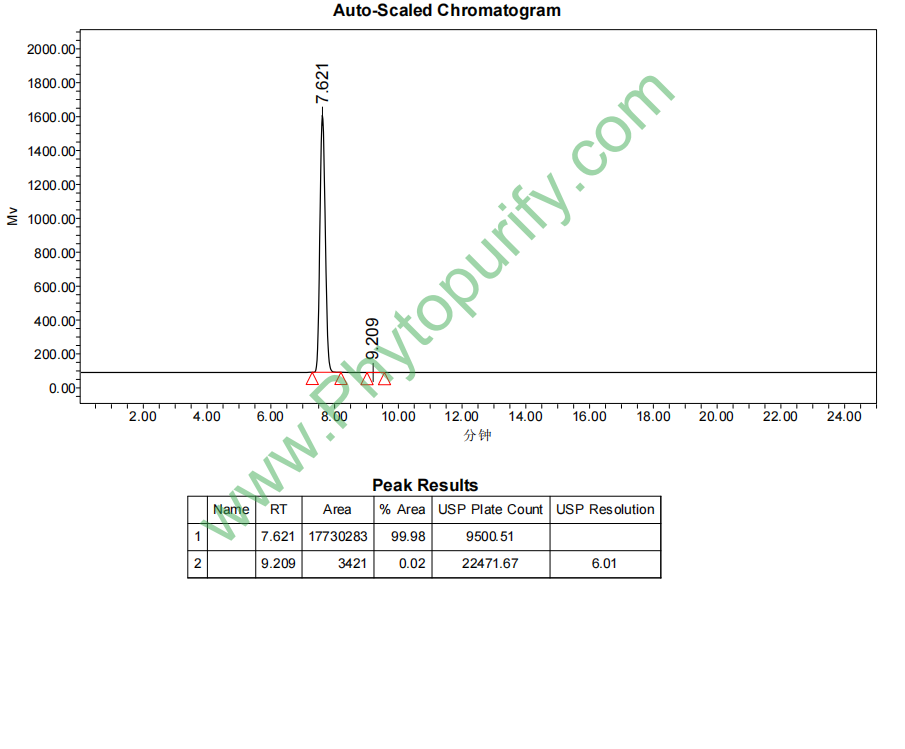
Purity: 95%~99%
Analysis Method: HPLC-DAD or/and HPLC-ELSD
Identification Method: Mass, NMR
Packing: Brown vial or HDPE plastic bottle
Storage: Store in a well closed container, protected from air and light. Put into refrigerate or freeze for long term storage.
Whenever possible, you should prepare and use solutions on the same day. However, if you need to make up stock solutions in advance, we recommend that you store the solution as aliquots in tightly sealed vials at -20℃. Generally, these will be useable for up to two weeks.
The product could be supplied from milligrams to grams
Inquire for bulk scale.
Chengdu Biopurify Phytochemicals Ltd. is a leading company in the research, development, manufacture and marketing of High Quality Phytochemicals and Extracts(especially Active Ingredients from Traditional Chinese Medicine,TCM), Natural Active Pharmaceutical Ingredients worldwide.
The main services:
A. Supply active ingredients and reference standards of TCM, from mgs to kgs scale
B. Custom extraction and purification, target Herb Active Ingredients
C. Custom synthesis and semi-synthesis for Natural Active Ingredients
D. CR(contract research), CM(contract manufacture) and PD(process development) services from lab scale, pilot scale to commercial scale(GMP is also available)
E. TCM compounds library for drug screen,more than 3000 compounds available, many of them are rare and unique.
HPLC of Atractyloside A
Storage conditions:Short-term storage at 2~8℃, long-term storage at -20 ~ -80℃
Natural products, as important resources for drug development, have long played an irreplaceable role in new drug discovery and disease treatment due to their structural diversity and wide range of biological activities. Atractyloside A (CAS number 126054-77-1), as an active ingredient derived from the traditional Chinese medicine Atractylodes spp., has received widespread attention in recent years due to its significant multiple pharmacological activities such as lowering blood pressure, blood sugar, and anti-tumor effects. With the continuous increase of metabolic diseases and tumor incidence rate, the research of natural drugs for these diseases has become increasingly important. Cangshu glycoside A, with its unique molecular structure and multi-target mechanism of action, provides new ideas and potential drug candidate molecules for the treatment of related diseases.
This article aims to systematically review the chemical structure and physicochemical properties, plant sources and extraction methods, pharmacological activity and mechanism of action of Atractylodes macrocephala glycoside A. Combining its pharmacological parameters and pharmacokinetic characteristics, it explores in depth its clinical application prospects and future research directions, providing reference and inspiration for researchers in the field of natural product pharmacology.
The molecular formula of Atractylodes macrocephala glycoside A is C2H24O12, with a molecular weight of 448.5100. Its structural characteristics are manifested by the combination of multiple hydroxyl and glycosidic groups, with high polarity. The LogP value is -1.4900, indicating strong hydrophilicity and good water solubility. The topological polar surface area (TPSA) is 180.2500 and the number of hydrogen bond acceptors is 10. These physicochemical properties suggest that Atractylodes macrocephala A may have certain limitations in cell membrane permeability, but its high polarity is conducive to forming stable hydrogen bond interactions with various biological targets.
Structurally, Atractylodes macrocephala glycoside A belongs to the glycoside class of natural products and has a typical steroid glycoside skeleton. Its multi hydroxyl structure endows it with abundant hydrogen bond donors and acceptors, enhancing its binding ability with enzyme proteins and acceptors. This structural feature also gives it certain advantages in terms of metabolic stability and water solubility in vivo, but at the same time, it also poses a challenge to its oral bioavailability.
Atractylodes macrocephala, Atractylodes lancea, and Atractylodes macrocephala are the main components of Atractylodes macrocephala, a traditional Chinese medicinal herb. As a traditional Chinese medicine, Atractylodes macrocephala has always been used for strengthening the spleen, dispelling dampness, promoting diuresis, and reducing swelling. The systematic study of its active ingredients provides an important foundation for modern pharmacology.
The common methods for extracting Atractylodes macrocephala glycoside A include solvent extraction, chromatographic separation, etc. Generally, ethanol or methanol is used as the extraction solvent to obtain crude extracts through reflux extraction or ultrasound assisted extraction. Subsequently, separation and purification were carried out using techniques such as silica gel column chromatography and reverse phase high-performance liquid chromatography (RP-HPLC). In recent years, the application of supercritical fluid extraction and membrane separation technology has improved extraction efficiency and purity.
During the extraction process, attention should be paid to controlling temperature and pH to prevent hydrolysis and degradation of Atractylodes macrocephala glycoside A. The purified Atractylodes macrocephala glycoside A is usually subjected to structural identification and purity confirmation through methods such as mass spectrometry (MS), nuclear magnetic resonance (NMR), and infrared spectroscopy (IR).
Atractylodes macrocephala glycoside A has shown significant pharmacological effects in various disease models due to its multi-target and multi pathway biological activities.
Atractylodes macrocephala glycoside A has shown good hypoglycemic effects in a model of hyperglycemia. Its mechanism of action involves regulating insulin sensitivity, promoting glucose metabolism, and inhibiting glucose absorption. Research has shown that Atractylodes macrocephala glycoside A can activate the AMPK signaling pathway, enhance cellular uptake and utilization of glucose, while inhibiting SGLT2 (sodium glucose cotransporter 2) function, reducing renal reabsorption of glucose, and thus lowering blood glucose levels. In addition, Atractylodes macrocephala glycoside A also promotes hepatic glucose metabolism and improves glucose metabolism disorders by regulating the activity of glucokinase (GCK).
Atractylodes macrocephala A has the potential to regulate blood pressure, mainly by improving endothelial function and inhibiting angiotensin-converting enzyme (ACE) activity. Its antioxidant and anti-inflammatory effects help alleviate vascular damage, reduce vascular resistance, and thus exert a blood pressure lowering effect. Related in vitro and in vivo experiments have shown that Atractylodes macrocephala glycoside A can regulate the contractile state of vascular smooth muscle cells and promote vasodilation.
Atractylodes macrocephala glycoside A exhibits inhibitory activity on proliferation and induces apoptosis in various tumor cell lines. Its anti-tumor mechanism involves multiple signaling pathways, including inhibiting EHMT2 (a histone methyltransferase) to regulate the epigenetic state of tumor cells, regulating PTPN1 (a protein tyrosine phosphatase) mediated apoptosis signal, and affecting APP and BACE1 related cellular metabolism and apoptosis pathways. In addition, Atractylodes macrocephala glycoside A affects the invasion and metastasis ability of tumor cells by regulating the expression of PAI1 (plasminogen activator inhibitor-1).
Atractylodes macrocephala glycoside A also exhibits various biological functions such as anti-inflammatory, antioxidant, and immune regulation, which provide a theoretical basis for its potential applications in metabolic syndrome, neurodegenerative diseases, and other fields.
The pharmacological effects of Atractylodes macrocephala glycoside A depend on its interactions with multiple key targets, including:
Through the synergistic effect of multiple targets mentioned above, Atractylodes macrocephala glycoside A has achieved its complex pharmacological effects and demonstrated multidimensional disease regulation capabilities.
The pharmacological evaluation of Atractylodes macrocephala glycoside A shows that it has certain challenges. The molecular weight is 448.51, although it does not exceed the conventional upper limit of Lipinski rule (500), its high polarity (TPSA 180.25) and negative LogP value (-1.49) indicate strong hydrophilicity, which may limit its passive diffusion through the cell membrane and affect oral absorption.
The number of hydrogen bond receptors is as high as 10, which enhances its binding ability to the target, but may also lead to poor membrane permeability and lower bioavailability. This type of property suggests that the pharmacokinetic properties of Atractylodes macrocephala glycoside A need to be improved through structural modifications or carrier systems in drug design.
In terms of pharmacokinetics, existing research is relatively limited. Preliminary in vivo experiments have shown that the half-life of Atractylodes macrocephala glycoside A in plasma is moderate, mainly through liver metabolism and renal excretion. Its high polarity structure makes it active in renal excretion, but it may also lead to rapid clearance, affecting the level of exposure in the body.
To enhance the clinical application potential of Atractylodes macrocephala glycoside A, it is necessary to conduct in-depth research on its metabolic pathways, oral absorption mechanisms, and tissue distribution in the future, and optimize its pharmacokinetic properties through strategies such as nanocarrier or prodrug design.
Due to its multi-target and multi effect characteristics, Atractylodes macrocephala A has shown broad application prospects in the fields of hyperglycemia, metabolic syndrome, hypertension, and tumor treatment. Especially in the treatment of diabetes and its complications, Atractyloside A provides a new treatment idea by regulating key targets such as AMPK and SGLT2.
In addition, its anti-tumor activity provides potential natural drug resources for adjuvant therapy of tumors. In the future, combining modern medicinal chemistry and molecular biology technologies, Atractylodes macrocephala A is expected to achieve the transformation from laboratory research to clinical application through structural optimization and dosage form innovation.
However, the clinical research on Atractylodes macrocephala A is still in its infancy and lacks systematic clinical trial data. Future research should focus on its safety evaluation, dose optimization, and drug interactions to promote its clinical development process.
As a natural product with rich pharmacological activity, Atractylodes macrocephala A has become a hot topic in natural product pharmacology research due to its multi-target mechanism of action and potential for multiple disease regulation. Its significant activity in lowering blood sugar, blood pressure, and anti-tumor fields provides a new molecular basis and drug development direction for the treatment of related diseases.
Although there are certain challenges in its pharmacological development, Atractylodes macrocephala A has great potential for clinical translation through modern drug design and dosage form improvement. In the future, combined with systematic pharmacokinetic studies and clinical validation, the application of Atractylodes macrocephala glycoside A in modern medicine will be further promoted, achieving the rational development and utilization of natural product resources.
