Introduction/Overview
Natural products, as an important source of drug discovery, play an irreplaceable role in the history of human disease treatment. Lignin compounds are a type of natural product widely present in the plant kingdom, formed by the oxidative coupling of phenylpropane units. They have attracted much attention due to their structural diversity and extensive biological activity. Veraguensis (CAS number: 19950-55-1) is one of them, which is a furan type lignin isolated from Magnolia sp. plants. Early research revealed its pharmacological effect of inhibiting osteoclast activity and thus bone resorption, providing preliminary clues for its application in bone diseases such as osteoporosis. In recent years, with the deepening of network pharmacology, molecular docking, and in vitro experiments, the anti-inflammatory and antioxidant activities of Weirui Kunsen have been further explored, and its target network has gradually become clear, especially in inflammatory diseases such as pneumonia, showing the potential to regulate multiple key signaling pathways. This article aims to systematically review the chemical properties, plant sources, pharmacological activities, mechanisms of action, medicinal properties, and clinical application prospects of Weirui Kunsen, in order to provide comprehensive scientific references for the in-depth research and development of this compound.
Chemical structure and physicochemical properties
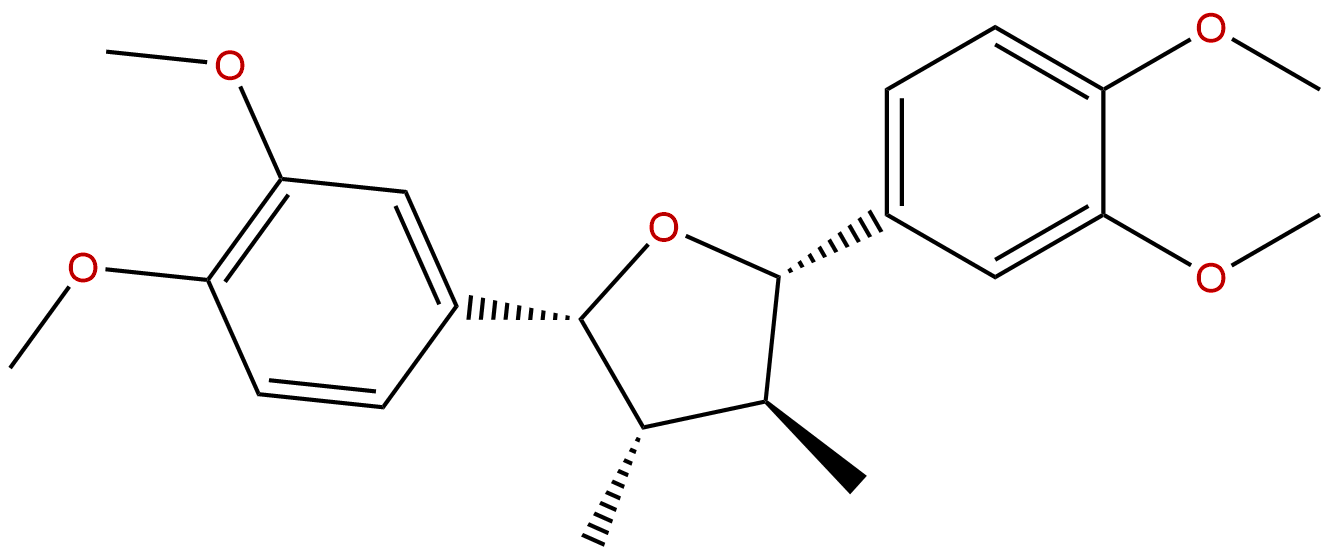
The molecular formula of Ulrich Kunsen is C22H28O5, with a molecular weight of 372.4610. Its core structure is a typical tetrahydrofuran type lignin skeleton, composed of two phenylpropanoid units (usually derivatives of sinapine and/or conidiol) connected by bonds such as C8-O-C4 'and C8-C8'. The structure contains substituents such as methoxy and methylenedioxy, which have important effects on its biological activity and physicochemical properties.
From the analysis of parameters related to drug properties, Ulrich Kunsen exhibits typical lipophilic characteristics. The calculated lipid water partition coefficient (LogP) is 4.4016, indicating that the compound has strong lipid solubility and is easy to penetrate cell membranes, but also suggests poor water solubility (approximately 0.0050 mg/mL). This characteristic is a key factor to consider in drug formulation development, and may require dosage form improvement (such as making cyclodextrin inclusion complexes, nano formulations, etc.) to enhance its bioavailability. Its topological polar surface area (TPSA) is 46.1500 Å ², which is relatively small due to the relatively small number of polar groups (mainly ether bonds and methoxy groups) in its structure. The smaller TPSA and higher LogP values together explain its predicted high blood-brain barrier (BBB) permeability, suggesting that Ulrich Kunsen has the potential to act on central nervous system related targets. However, preliminary pharmacological warning indicators suggest that the compound may pose a risk of hERG potassium channel inhibition (predicted as "yes"), which is often associated with potential cardiac toxicity (such as QT interval prolongation) and is a safety checkpoint that must be rigorously evaluated in subsequent drug development. It is gratifying that the Ames test prediction result is 0.0, indicating that there may be no mutagenicity in this model and the preliminary genetic toxicity risk is low.
Plant sources and extraction methods
Ulrich Kunsen is mainly isolated from the bark, root bark, or seeds of various plants in the Magnoliaceae family, Magnolia genus. Magnolia plants have a long history of application in traditional medicine, and their extracts are often used for anti anxiety, anti-inflammatory, and antibacterial purposes. As a secondary metabolite, Ulrich Kunsen is usually present in low concentrations in plants, and its biosynthetic pathway involves phenylalanine metabolism, which is generated through a series of enzymatic reactions such as hydroxylation, methylation, and oxidative coupling.
Extracting Weirui Kunsen from plant materials usually follows the conventional process of natural product chemistry. Firstly, crush the dried plant tissue (such as magnolia bark) and extract it using organic solvents. Common solvents include methanol, ethanol, ethyl acetate, or mixed solvents of different proportions, which are initially enriched using Soxhlet extraction or cold soaking methods. After vacuum concentration, the crude extract obtained was separated and purified using various chromatographic techniques. Silica gel column chromatography is commonly used for preliminary separation, using solvent systems of different polarities (such as petroleum ether ethyl acetate or chloroform methanol gradient elution) for elution. Subsequently, by combining high-performance liquid chromatography (HPLC), especially preparative or semi preparative HPLC, using a reverse phase C18 chromatographic column and methanol water or acetonitrile water as mobile phases for fine purification, high-purity Wei Rui Kun Sen monomer compounds were finally obtained. The structural identification mainly relies on modern spectroscopic techniques, including nuclear magnetic resonance (NMR, especially 1H-NMR and 13C-NMR), mass spectrometry (MS), and infrared spectroscopy (IR).
Pharmacological activity research
The pharmacological activity research of Ulrich Kunsen has expanded from the initial skeletal system to a wider range of fields, demonstrating multiple biological effects.
-
Inhibit bone resorption activity This is the core activity of Ulrich Kunsen that was first reported. Research has shown that it can effectively inhibit the differentiation and maturation of osteoclasts, and reduce the formation of bone resorption cavities. Osteoclasts are the main functional cells responsible for bone resorption, and their excessive activation is a key pathological link in diseases such as osteoporosis and rheumatoid arthritis bone erosion. Ulrich Kunsen exerts bone protection by intervening in signaling pathways related to osteoclastogenesis.
-
Anti inflammatory and immune regulatory activity This is a current research hotspot, especially in models related to pneumonia. Ulrich Kunsen has been shown to significantly inhibit the excessive production of nitric oxide (NO) and prostaglandin E2 (PGE2) in macrophages induced by inflammatory stimuli such as lipopolysaccharide (LPS), while downregulating the expression of various pro-inflammatory cytokines (such as TNF - α, IL-1 β, IL-6). In animal models of acute lung injury or pneumonia, Wei Rui Kun Sen pretreatment can reduce the infiltration of inflammatory cells in the lungs, lower the levels of inflammatory factors in bronchoalveolar lavage fluid, alleviate pulmonary tissue edema and pathological damage.
-
antioxidant activity Oxidative stress is a common pathological basis for various diseases such as inflammation and infection. The phenolic hydroxyl groups in the Ulrich Kunsen structure endow it with the ability to scavenge free radicals. Experiments have shown that it can increase the activity of intracellular antioxidant enzymes such as superoxide dismutase (SOD) and glutathione peroxidase (GSH Px), while reducing the levels of reactive oxygen species (ROS) and malondialdehyde (MDA), thereby protecting cells from oxidative damage.
-
Other potential activities Some studies also suggest that Weirui Kunsen may have antibacterial and anti-tumor activities, but research in these areas is still in the preliminary stage and requires more evidence to support it.
Mechanism of action and molecular targets
Based on network pharmacology prediction and preliminary experimental verification, Weirui Kunsen may exert its effects in inflammatory diseases such as pneumonia through multi-target and multi pathway pathways, forming a complex regulatory network. Its key targets mainly include:
- Toll like receptor 4/2 (TLR4/TLR2)TLR4 is a key pattern recognition receptor that recognizes LPS (a component of Gram negative bacterial cell walls). Ulrich Kunsen may inhibit TLR4 and its downstream signaling pathways directly or indirectly, thereby blocking the overactivation of inflammatory core pathways such as NF - κ B and MAPK. TLR2 is also involved in recognizing various pathogen related molecular patterns, and its inhibition helps control inflammatory responses.
- Nuclear factor kappa B (NF - κ B) pathway This pathway is the "master switch" of the inflammatory response. Ulrich Kunsen can inhibit the phosphorylation degradation of NF - κ B inhibitory protein (I κ B), prevent NF - κ B subunits (such as RELA/p65) from entering the nucleus, and thereby inhibit the transcriptional expression of many inflammatory mediators such as TNF - α, IL-6, and NOS2 (inducible nitric oxide synthase).
- Protein tyrosine phosphatase non receptor type 1 (PTPN1)PTPN1 is involved in the negative regulation of multiple signaling pathways. Regulating PTPN1 activity may affect insulin signaling, cell growth, and inflammatory response. The specific mechanism by which Ulrich Kunsen acts remains to be elucidated.
- Containing NLRP3 inflammasome pathway The activation of inflammasomes is a key step in the mature release of IL-1 β and IL-18. Ulrich Kunsen may alleviate the inflammatory storm by inhibiting the activation of CASP1 (cysteine protease-1), thereby suppressing the assembly and activation of NLRP3 inflammasomes, reducing the mature secretion of IL-1 β.
- SIRT1 (Silent Information Regulatory Factor 1)SIRT1 is an NAD+- dependent deacetylase with anti-inflammatory, antioxidant, and cell protective effects. Ulrich Kunsen may exert anti-inflammatory effects by upregulating or activating SIRT1 and deacetylating substrates such as NF - κ B p65.
- Transforming Growth Factor - β (TGF - β)/SMAD pathway SMAD3 is a key transcription factor in the TGF - β signaling pathway, involved in processes such as fibrosis and immune regulation. Ulrich Kunsen may affect tissue repair and fibrosis processes by regulating the activity of SMAD3, which may be of great significance in post pneumonia repair.
- Isocitrate dehydrogenase 1 (IDH1)IDH1 mutations are associated with certain cancers, but their role in inflammation is not yet clear. It may participate in immune regulation by affecting cellular metabolism and epigenetic modifications.
In summary, the mechanism of action of Weirui Kunsen is not targeted at a single target, but rather acts as a "multi-directional regulator" that simultaneously acts on multiple links such as inflammation initiation (TLR4/2), signal transduction (NF - κ B, PTPN1), inflammatory mediator production (TNF, NOS2), cell apoptosis (CASP1), and endogenous protective pathway (SIRT1), synergistically exerting anti-inflammatory, antioxidant, and organ protective effects.
Evaluation of drug properties and pharmacokinetics
Although Weirui Kunsen has demonstrated good pharmacological activity, its drug like evaluation reveals the challenges and opportunities that need to be faced during the development process.
Advantage aspects Its molecular weight is moderate (<500), meeting the basic requirements of the five rules for generic drugs. High lipid solubility and good membrane permeability (predicted by high BBB permeability) are beneficial for oral absorption and tissue distribution, especially for central nervous system targets, which may have advantages.
Challenges and Risks:
1. Poor water solubility The main drawback is its extremely low water solubility (0.0050 mg/mL), which may lead to low oral bioavailability, irregular absorption, and difficulty in injection administration. This requires a focus on tackling in the field of formulation.
2. Potential hERG inhibition risk This is a red alert for the cardiac safety of medication. In the subsequent optimization of lead compounds, it is necessary to reduce the affinity for hERG channels through structural modifications (such as introducing polar groups, reducing hydrophobic fragments, etc.), and systematically evaluate their effects on cardiac action potential and QT interval in preclinical studies.
3. Lack of pharmacokinetic (PK) data At present, there are few reports on systematic pharmacokinetic studies (such as absorption, distribution, metabolism, and excretion) of Weirui Kunsen. The key PK parameters such as metabolic stability, major metabolites, in vivo half-life, and protein binding rate are still unknown. Predicting its possible metabolism through the liver cytochrome P450 enzyme system requires in vitro metabolic stability studies and in vivo PK studies to clarify.
4. Formulation development requirements To address the issue of poor water solubility, potential formulation strategies include making nanocrystals, solid dispersions, liposomes, micelles, or forming inclusion complexes with cyclodextrin to increase solubility and dissolution rate, and improve oral bioavailability.
Clinical application prospects and prospects
The clinical application prospects of Ulrich Kunsen are mainly based on its clear inhibition of bone resorption and emerging broad-spectrum anti-inflammatory activity.
- In the field of skeletal diseases As an osteoclast inhibitor, Ulrich Kunsen is a potential candidate drug for treating diseases such as osteoporosis, Paget's bone disease, and bone destruction caused by tumor bone metastasis. Consider developing it as an oral or topical dosage form. Its natural product identity may also lead to better patient acceptance.
- Inflammatory disease field Especially in pneumonia and acute lung injury (ALI)/acute respiratory distress syndrome (ARDS), its multi-target anti-inflammatory mechanism has shown advantages. In view of the high incidence rate of pneumonia and the complexity of treatment of severe pneumonia, it is of great clinical significance to develop drugs with new mechanisms of action. Ulrich Kunsen can be used in combination with existing antibiotics as an adjuvant therapy to control excessive inflammatory reactions and reduce lung tissue damage.
- Other potential areas Its anti-inflammatory and antioxidant properties also suggest its potential application value in rheumatoid arthritis, inflammatory bowel disease, and neuroinflammatory related diseases (such as Alzheimer's disease, due to its high BBB permeability), which is worth exploring.
Future research should focus on the following directions:
* In depth mechanism research Using gene knockout/knockdown techniques, molecular probes, and other methods, confirm its direct interaction and specific mode of action with key targets such as TLR4, CASP1, SIRT1 in cell and animal models.
* Preclinical development of the system Complete comprehensive pharmacological evaluations (dose-response relationships in different disease models), pharmacokinetic studies, toxicological assessments (acute toxicity, long-term toxicity, reproductive toxicity, etc.), especially detailed cardiac safety evaluations for hERG risk.
* Reasonable structural optimization Using natural products as templates for medicinal chemical modification, the aim is to maintain or enhance their anti-inflammatory activity while improving water solubility, reducing the risk of hERG inhibition, enhancing metabolic stability, and obtaining derivatives with better drug properties.
* Research on innovative formulations Develop a new drug delivery system suitable for its physical and chemical properties, laying the foundation for clinical trials.
Conclusion
As a natural lignin compound derived from the Magnolia genus, Ulrich Kunsen is gradually transforming from a traditional medicinal plant chemical composition to a modern drug lead compound with clear molecular targets and mechanisms of action, thanks to its unique inhibitory effects on bone resorption and multiple anti-inflammatory pharmacological activities. It demonstrates the potential for multi pathway synergistic intervention in the treatment of inflammatory diseases such as pneumonia by regulating key signaling nodes such as TLR4/NF - κ B, NLRP3 inflammasome, and SIRT1. Although it currently faces challenges in drug formation such as poor water solubility and potential cardiac toxicity, these challenges are precisely the areas that modern pharmaceutical chemistry and pharmacy can focus on addressing. With the in-depth analysis of its mechanism of action, rational optimization based on structure, and the application of innovative formulation technology, Weirui Kunsen and its derivatives are expected to be developed into new therapeutic drugs for the treatment of osteoporosis and inflammation related diseases, providing another example for the modernization and clinical transformation of natural products. Future research requires interdisciplinary collaboration to jointly promote the clinical application of this promising natural molecule.