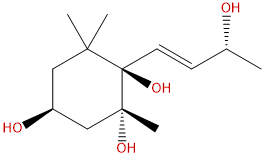
Research progress on the anti-inflammatory natural product derived from lotus leaves, Da Zhu Xiang Bo Long ene tetraol
1. Overview
Megastigm-7-ene-3,5,6,9-tetraol is a traditional medicinal plant derived from lotus leaves(Nelumbo nucifera)The natural terpenoids isolated from the middle have a CAS number of 680617-50-9. This compound belongs to the Megastigmane tetraterpene derivative, with a molecular formula of C13H24O4 and a molecular weight of 244.3310 g/mol. In recent years, with the deepening of research on natural product chemistry and pharmacology, the potential anti-inflammatory activity of large column vanillin tetraol has attracted attention. The database information shows that the compound can act on multiple targets closely related to inflammatory response, including TNF, PTGS2, NFKB1, IL6, and IL1B, indicating its important research value in the treatment of inflammatory diseases. Although there is currently a lack of direct research literature on this compound, combined with its traditional applications from plant sources and modern target validation data, the large column vanillin tetraol has become a lead compound worthy of further exploration. This article will systematically elaborate on its chemical structure, plant origin, pharmacological mechanism, drug evaluation, and research prospects, aiming to provide a professional reference for researchers in related fields.
2. Chemical structure and physicochemical properties
The chemical structure of large column vanillin tetraol is based on the skeleton of large column vanillin, and its SMILES is represented as: C C@@H/C=C/[C@@]1(O)C(C)(C)CC@H C[C@@]1(C)O。 This structure indicates the presence of four hydroxyl (- OH) functional groups in the molecule, located at positions C-3, C-5, C-6, and C-9, and possessing multiple chiral centers (indicated by @ @ and @ symbols). This suggests that the compound may exist in multiple stereoisomers, and its biological activity may be closely related to specific stereoisomers.
From the analysis of physical and chemical parameters, its molecular weight (MW) is 244.33 g/mol, which is in line with the typical range of small molecule drugs (usually<500 Da). The topological polar surface area (TPSA) is 80.92 Å ², which reflects the surface area of polar atoms (especially oxygen atoms) in the molecule. Higher TPSA is usually associated with stronger hydrogen bonding ability and better water solubility. The distribution coefficient (LogP) is 0.7237, and the LogD (distribution coefficient at a specific pH) is 0.7236, both values are close and less than 3, indicating that the compound has good hydrophilicity, which is consistent with the structural feature of containing four hydrophilic hydroxyl groups in the molecule. The predicted value of water solubility is 7.3641 (usually measured in mg/mL or log mol/L, depending on the specific database definition), further confirming its good water solubility characteristics.
These physicochemical properties collectively affect the absorption, distribution, metabolism, and excretion (ADME) processes of compounds. For example, moderate LogP values and high TPSA are beneficial for water solubility, but may pose challenges to cell membrane permeability. The complexity of its stereochemistry may affect its specific binding to target proteins, which are key areas of focus in subsequent drug development.
3. Plant sources and traditional applications
The currently known plant source of Daphnetin Tetraol is lotus leaves, which belong to the Lotus genus of the Water Liliaceae family(Nelumbo nucifera The leaves of Gaertn. Lotus is an aquatic plant with a long history of medicinal and edible use, and its different parts (including roots, seeds, leaves, and flowers) are widely used in various traditional medical systems in Asia, such as traditional Chinese medicine and Ayurvedic medicine.
In traditional Chinese medicine theory, lotus leaves have a mild nature and a bitter taste. They are believed to be associated with the liver, spleen, and stomach meridians, and have the effects of clearing heat, relieving summer heat, promoting hair growth, clearing yang, cooling blood, and stopping bleeding. Commonly used for treating symptoms such as summer heat and thirst, summer dampness diarrhea, spleen deficiency diarrhea, blood heat vomiting, and rectal bleeding. Modern plant chemistry research has isolated various bioactive compounds from lotus leaves, including alkaloids (such as lotus alkaloids), flavonoids, polysaccharides, and terpenoids. As one of the terpenoid components, the discovery of Dapagliflozin provides new clues for elucidating the material basis of the "heat clearing" effect of lotus leaves (related to modern anti-inflammatory effects). Traditionally, lotus leaves are often used in the form of decoction, tea, or pills. Their water extracts may contain highly polar terpenoids, which can regulate the body's inflammatory response. The combination of traditional application experience with modern molecular target discovery is an important paradigm in natural product research, and the large column vanillin tetraol is an example of this combination.
4. Pharmacological activity and mechanism of action
The database information clearly indicates that Dapaglutide is associated with anti-inflammatory activity and acts on five key targets: TNF, PTGS2, NFKB1, IL6, and IL1B. These targets are core molecules in the inflammatory signaling pathway, and their interactions form a complex inflammatory regulatory network. Below, we will analyze these targets and their roles in inflammation one by one, and speculate on the possible mechanism of action of Changzhu Xiangbolongene Tetraol.
1. Tumor necrosis factor (TNF)TNF - α is a pro-inflammatory cytokine mainly produced by activated macrophages, and is an early and core mediator of inflammatory response. It can activate downstream signaling pathways such as nuclear factor kappa B (NF - κ B) and mitogen activated protein kinase (MAPK), induce the expression of other inflammatory factors such as IL-6 and IL-1 β, and promote the production of cell adhesion molecules and chemokines. Inhibiting the excessive production of TNF - α or blocking its signaling pathway is an important strategy for treating autoimmune diseases such as rheumatoid arthritis and inflammatory bowel disease.
2. Prostaglandin endoperoxide synthase 2 (PTGS2, also known as COX-2)COX-2 is a key enzyme that catalyzes the synthesis of prostaglandins (PGs) from arachidonic acid, particularly induced to be highly expressed in inflammatory sites. Prostaglandins (such as PGE2) are potent pro-inflammatory mediators that can cause vasodilation, increased permeability, pain, and fever. Selective COX-2 inhibitors are classic anti-inflammatory and analgesic drugs.
3. Nuclear factor kappa B1 (NFKB1)NF - κ B is a key transcription factor that plays a central role in regulating immune and inflammatory responses. In the resting state, NF - κ B binds to its inhibitory protein I κ B and exists in the cytoplasm. After being stimulated by TNF - α, IL-1 β, etc., I κ B is phosphorylated and degraded, and NF - κ B (such as p50/p65 dimer, where p50 is encoded by the NFKB1 gene) can enter the nucleus, initiating the transcription of a large number of pro-inflammatory cytokines (TNF - α, IL-6, IL-1 β), chemokines, adhesion molecules, and enzymes (such as COX-2), forming a positive feedback loop and amplifying the inflammatory response.
4. Interleukin-6 (IL6) and interleukin-1 β (IL1B)IL-6 and IL-1 β are important pro-inflammatory cytokines. IL-6 is involved in acute phase reactions, B cell and T cell activation. IL-1 β is produced by activated macrophages and can strongly induce fever, promote the release of other cytokines, and activate endothelial cells. They are both downstream products of the NF - κ B pathway and can further activate pathways such as NF - κ B.
Mechanism of action integration speculation:
Da Zhu Xiang Bo Long ene tetraol can simultaneously act on these five targets, suggesting that it may exert anti-inflammatory effects through multi-target and multi pathway pathways. A reasonable mechanism hypothesis is that the compound may inhibit the activation of the NF - κ B signaling pathway (targeting NFKB1) directly or indirectly. Inhibition of NF - κ B activity leads to reduced transcription of a series of downstream pro-inflammatory mediators, including TNF - α, IL-6, IL-1 β, and COX-2. Meanwhile, it may also directly inhibit the activity of COX-2 enzyme and reduce the synthesis of prostaglandins. In addition, it may also interfere with the binding or downstream signal transduction of TNF - α, IL-6, or IL-1 β to their receptors.
This multi-target mode of action, similar to a "network pharmacology" strategy, may help to more effectively control complex inflammatory networks and reduce efficacy limitations caused by insufficient inhibition or feedback activation of a single target. Of course, the above mechanism is based on reasonable speculation of target information. The specific site of action (whether it inhibits gene expression, protein synthesis, or protein function), sequence and intensity of action need to be further validated and elucidated through molecular docking, reporter gene experiments, enzyme activity assays, Western blotting, ELISA and other in vitro experiments, as well as animal in vivo inflammation models.
5. Evaluation of drug properties
Based on the provided pharmacological parameters, we can conduct a preliminary evaluation of the potential of large column vanillin tetraol as a drug. The evaluation will be based on the well-known "Rule of Five" (Ro5) and other key ADMET (absorption, distribution, metabolism, excretion, and toxicity) parameters.
Lipinski's Five Rules Compliance Analysis:
1. Molecular weight (MW)244.33<500, compliant.
2. Lipid water partition coefficient (LogP)0.7237<5, compliant.
3. Hydrogen bond donor (HBD)According to the structure (4- OH), the quantity is 4, which is equal to the upper limit of the rule (5) and meets the requirements.
4. Hydrogen bond acceptor (HBA)According to the structure (4 O atoms), the quantity is 4, which is less than the upper limit of the rule (10) and meets the requirements.
5. Number of rotatable keys Roughly speaking from SMILES, the quantity is moderate and usually does not become a major obstacle.
Conclusion The large column Xiangbolongene tetraol fully complies with Lipinski's five rules, indicating its good oral absorption potential.
Interpretation of other key pharmacological parameters:
- Permeability and absorption The predicted permeability value of Caco-2 cells is 3.0418 (usually log Papp, unit cm/s × 10 ^ -6), which is in the moderate range and suggests that it may have a moderate degree of passive permeability to intestinal epithelial cells. The Peff (effective permeability) is 1.1014 (unit may be x 10 ^ -4 cm/s), which also supports its absorption to some extent. However, higher TPSA (80.92 Å ²) may have certain limitations on transmembrane permeation.
- distribution The predicted plasma protein binding rate (PPB) is 34.44%, which is a relatively low level, indicating a high proportion of free (active) drugs in the blood, which is beneficial for drug distribution to target tissues. The blood-brain barrier (BBB) penetration is predicted to be "low", which is consistent with the characteristics of high TPSA and more polar groups, indicating that it may not easily enter the central nervous system. This may reduce the risk of central side effects for the main treatment of peripheral inflammatory diseases.
- Metabolism and toxicity The AMES test (predicting mutagenicity) yielded a result of 0.0, with negative or "no" predictions for chromosomal aberration, hERG inhibition, skin sensitization, respiratory sensitization, phototoxicity, etc. This suggests that the compound has a low risk of genetic toxicity and certain acute toxicity. However, the parameters indicate that it has potential effects on serum alkaline phosphatase (Ser_LK), gamma glutamyltransferase (Ser_GGT), aspartate aminotransferase (Ser_ST), and alanine aminotransferase (Ser_LT) (marked as "Yes"), which suggests This compound may have potential hepatotoxicity risks This is an aspect that requires high vigilance and must be emphasized in preclinical research.
- Feasibility of synthesis The SyneAccess value is 4.5454 (usually the lower the score, the easier it is to synthesize), indicating that its synthesis may be challenging and may be related to the presence of more chiral centers. Extracting or using biosynthetic methods from natural plants may be a more feasible source.
Comprehensive Assessment Da Zhu Xiangbolongene Tetraol has shown positive prospects in terms of oral absorption potential and target activity, and there is no obvious genetic toxicity signal. but its Potential hepatotoxic signals This is the biggest hidden danger in promoting its development. In addition, moderate permeability and potentially complex synthetic routes are also challenges that need to be considered. In subsequent studies, it is necessary to confirm its hepatotoxicity through in vitro liver cell toxicity experiments and in vivo animal liver enzyme index detection, and explore the possibility of reducing toxicity and improving pharmacokinetic properties through structural modification (optimizing the structure while retaining the pharmacophore).
6. Research Status and Application Prospects
At present, there is relatively limited publicly available research data on the large column coumarin tetraol, which mainly appears as one of the many compounds identified from lotus leaves in plant chemistry research reports. The clear anti-inflammatory target information mostly comes from computational chemistry predictions or preliminary bioinformatics database associations, and further experimental pharmacology validation and mechanism research are still needed.
Research status:
1. Discovery and Separation The isolation and structural identification from lotus leaves have been completed.
2. Target prediction Through databases and computational models, its interactions with multiple inflammatory core targets were predicted, providing direction for functional research.
3. Preliminary prediction of drug properties Completed basic physical and chemical properties and ADMET parameter prediction, identified advantages and risks.
4. Experimental verification gap Lack of systematic validation of anti-inflammatory activity at the cellular level in vitro (such as inhibition experiments on TNF - α, IL-6, NO and other factors secretion in LPS induced macrophage inflammation models), enzyme activity inhibition experiments (such as determination of COX-2 enzyme inhibition rate), and efficacy and safety evaluation data of in vivo animal models (such as mouse ear swelling and colitis models).
Application prospects and future directions:
1. Deepening basic research The primary task is to carry out experimental verification of the above-mentioned gaps. Using techniques such as molecular docking and surface plasmon resonance (SPR), verify its direct binding ability to predicted targets such as NF - κ B p50 and COX-2. By conducting gene experiments and detecting phosphorylation of signaling pathway proteins, we aim to elucidate the specific steps in which it intervenes in signaling pathways such as NF - κ B and MAPK.
2. Research on Structural Optimization and Structure Performance Relationship Given its potential hepatotoxicity risk, one of the core directions for future research should be to make reasonable structural modifications based on the confirmation of its core anti-inflammatory pharmacophore. For example, exploring the effects of the number, position, and stereoconfiguration of hydroxyl groups on activity and toxicity, with the aim of reducing toxicity, improving selectivity, or enhancing pharmacokinetic properties (such as moderately increasing lipid solubility to improve permeability).
3. New anti-inflammatory lead compounds If its multi-target anti-inflammatory mechanism is confirmed in experiments, it is expected to develop into a novel lead compound for the treatment of chronic inflammatory diseases such as arthritis, dermatitis, and inflammatory bowel disease. Its natural source characteristics also meet the current market demand for plant-based medicines and natural health products.
4. Quality indicators of lotus leaf medicinal materials This compound can be used as one of the potential quality markers for lotus leaf medicinal materials and their preparations (for indications related to "clearing heat"), for controlling the quality of medicinal materials and evaluating the rationality of processes.
In summary, Da Zhu Xiangbolongene Tetraol is a natural product with clear anti-inflammatory target specificity and good drug like properties, providing a new candidate molecule for the development of inflammatory disease drugs. However, transforming it from a 'compound in the database' into a true 'candidate drug' requires crossing two key thresholds: experimental validation and toxicity optimization. This requires collaborative efforts from multiple disciplines such as natural product chemistry, pharmacology, medicinal chemistry, and toxicology. With the deepening of research, this natural molecule derived from the millennium old lotus is expected to shine new in modern medical research.