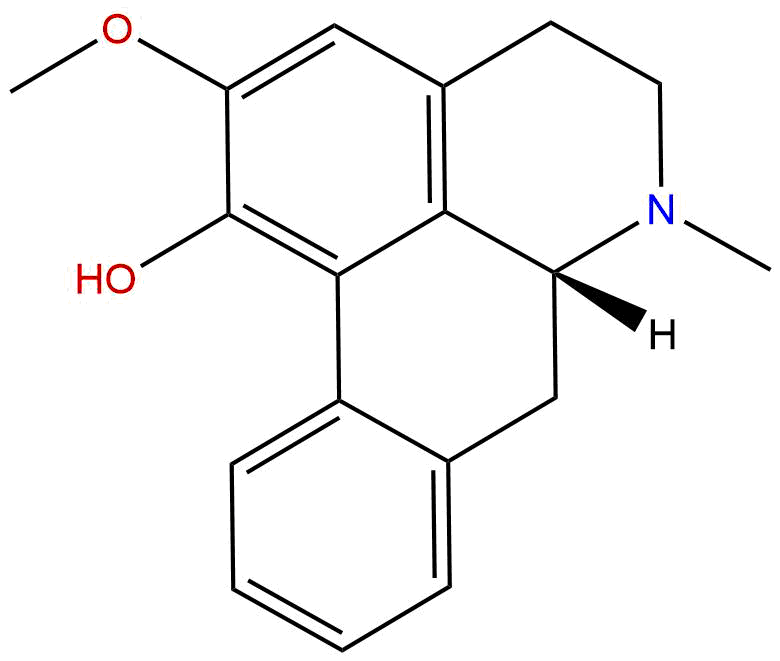


Product name: 1-O-Demethylnuciferine
Synonym name: (-)-Lirinidin
Catalogue No.: BP2416
Cas No.: 37082-15-8
Formula: C18H19NO2
Mol Weight: 281.355
Botanical Source:
Type of Compound: Alkaloids
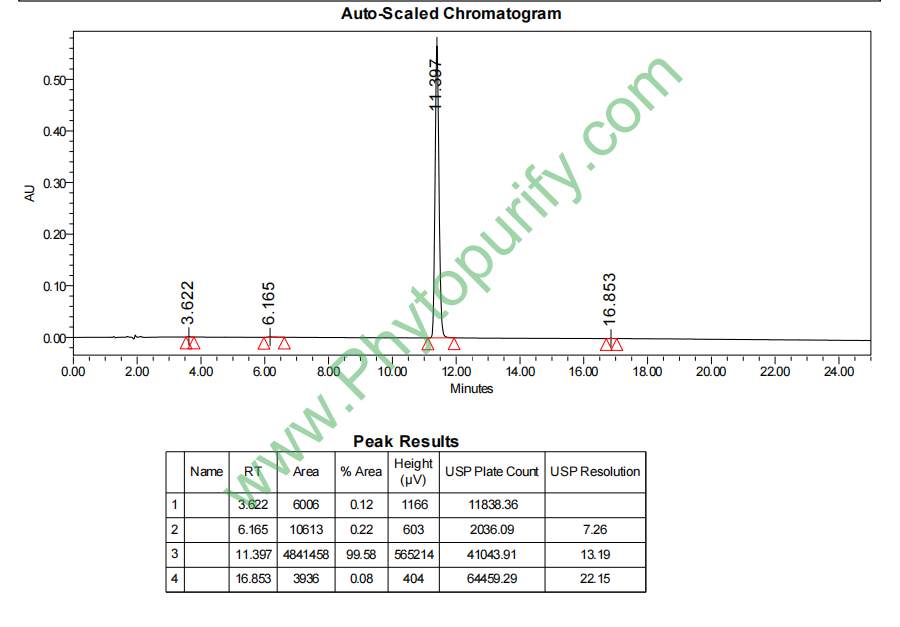
Purity: 95%~99%
Analysis Method: HPLC-DAD or/and HPLC-ELSD
Identification Method: Mass, NMR
Packing: Brown vial or HDPE plastic bottle
Storage: Store in a well closed container, protected from air and light. Put into refrigerate or freeze for long term storage.
Whenever possible, you should prepare and use solutions on the same day. However, if you need to make up stock solutions in advance, we recommend that you store the solution as aliquots in tightly sealed vials at -20℃. Generally, these will be useable for up to two weeks.
The product could be supplied from milligrams to grams
Inquire for bulk scale.
For Reference Standard and R&D, Not for Human Use Directly.
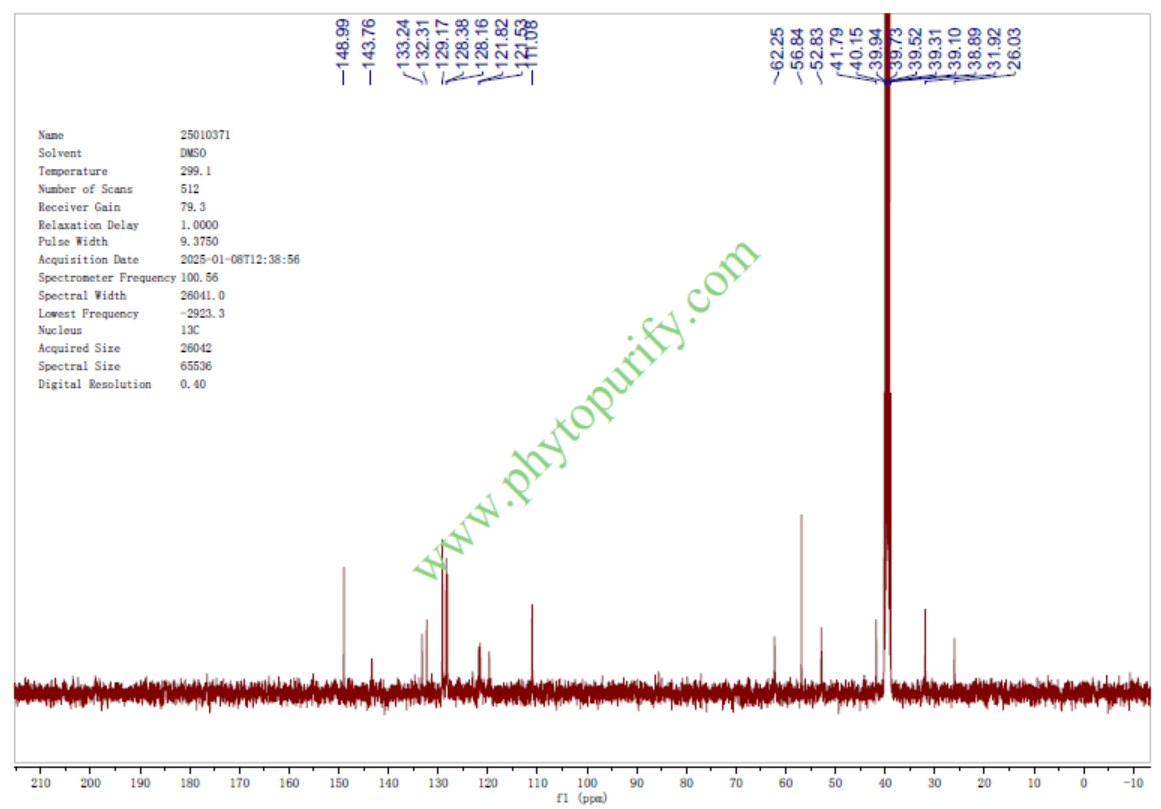
NMR of 1-O-Demethylnuciferine
HPLC of 1-O-Demethylnuciferine
Storage conditions:Short-term storage at 2~8℃, long-term storage at -20 ~ -80℃
32.7000
3.2309
2.6527
.0336
6.3445
14.5705
High
84.1134
2.8717
No
Yes
No
No
Yes
No
0.6
Yes
No
No
No
Obesity, as a global chronic metabolic disease, has become one of the most severe public health challenges of the 21st century. According to data from the World Health Organization, the global obesity rate has nearly tripled since 1975. Obesity is not only an independent disease, but also a key risk factor for type 2 diabetes, cardiovascular disease, non-alcoholic fatty liver disease and multiple cancers. Although existing drugs such as orlistat and liraglutide have been applied in clinical practice, the development of new anti obesity drugs is still urgent due to limitations in efficacy, tolerability, and side effects. In this context, natural products have become an important source of drug discovery due to their structural diversity and multi-target properties.
Apophine alkaloids are an important class of isoquinoline alkaloids found in nature, widely present in plants such as the Nymphaeaceae, Menispermaceae, and Ranunculaceae families. These compounds have a unique four ring skeleton structure and exhibit diverse pharmacological activities, including anti-inflammatory, antioxidant, antidepressant, and anti-tumor effects. Among them, Nuciferine, as a representative aporphine alkaloid, has been proven to have significant lipid-lowering and weight loss effects. 1-O-Demethylnuciferine (CAS number: 37082-15-8) is a natural derivative of nuciferine, characterized by the substitution of a hydroxyl group at the C-1 methoxy group. This subtle structural change endows it with unique physicochemical properties and biological activity spectrum.
In recent years, research on 1-demethylated lotus alkaloids has gradually deepened, especially in the field of anti obesity, showing remarkable potential. Research has shown that this compound can exert comprehensive anti obesity effects by regulating multiple key targets related to energy metabolism and fat homeostasis, such as peroxisome proliferator activated receptor gamma (PPARG), steroid regulatory element binding protein 1 (SREBF1), fatty acid synthase (FASN), leptin receptor (LEPR), β 3-adrenergic receptor (ADRB3), uncoupling protein 1 (UCP1), etc. This article will provide a systematic review of 1-demethylated lotus alkaloid from the aspects of chemical structure, plant origin, pharmacological activity, mechanism of action, medicinal properties, and clinical application prospects, aiming to provide scientific basis for the development of natural product anti obesity drugs.
1-Demethylated lotus leaf alkaloid belongs to the aporphine type isoquinoline alkaloid, and its chemical name is 1-hydroxy-2,9,10-trimethoxy-6-methyl-5,6,6a, 7-tetrahydro-4H-dibenzo [de, g] quinoline. Its core skeleton is composed of a four ring system, including a fused isoquinoline ring (A, B rings) and a biphenyl ring (C, D rings). Compared with lotus leaf alkaloid, 1-demethylated lotus leaf alkaloid replaces the methoxy group with a hydroxyl group at the C-1 position, which significantly affects its molecular polarity and hydrogen bond donor ability.
The molecular formula of this compound is C ₁₈ H ₁₉ NO3, with a molecular weight of 281.3550 g/mol. Its lipid water partition coefficient (LogP) is 3.2309, indicating a certain degree of lipophilicity, which is conducive to transmembrane transport. The topological polar surface area (TPSA) is 32.7000 Å ², far below the upper limit of 140 Å ² typically required for oral medications, indicating its good oral absorption potential. The water solubility test value is 0.0336 mg/mL, which belongs to low water solubility compounds, which may be one of the factors limiting their bioavailability in vivo.
It is worth noting that 1-demethylated lotus leaf alkaloid has high blood-brain barrier penetration. This characteristic is due to its moderate molecular weight and lipophilicity, as well as its lower polar surface area. High blood-brain barrier penetrability means that the compound can enter the central nervous system and may regulate feeding behavior by acting on the appetite regulating center of the hypothalamus (such as POMC neurons), providing a structural basis for its central anti obesity mechanism. In addition, the hERG inhibition test result was negative, indicating a low risk of cardiac toxicity; The Ames test result is 0.6, indicating that its genetic toxicity risk is controllable.
1-demethylated lotus alkaloid is mainly found in Nymphaeaceae plants, especially in Nelumbo nucifera Gaertn. As a traditional medicinal and edible plant, lotus leaves have a long history of application in China, Japan, and Southeast Asia. They are commonly used for lipid-lowering and weight loss, as well as clearing heat and relieving summer heat. In addition to lotus leaves, this compound is also present in plants of the Nymphaea and Nuphar genera, but the content is usually low.
The content of 1-demethylazine in lotus leaves is influenced by factors such as variety, origin, harvest season, and location. Research has shown that the alkaloid content in tender leaves is usually higher than that in old leaves, while the content is the lowest in petioles. In addition, the content of 1-demethylazine in lotus leaves from different origins can vary several times, which may be related to environmental factors such as soil conditions, light intensity, and temperature.
In terms of extraction methods, traditional solvent extraction is still the most commonly used approach. Due to the weak alkalinity of aporphine alkaloids, the acid water extraction method is often used: dry lotus leaf powder is soaked or percolated in 0.5% -2% hydrochloric acid or sulfuric acid solution to dissolve the alkaloids into salts in the aqueous phase, then alkalized (such as adjusting the pH to 9-10 with ammonia water) and extracted with organic solvents (chloroform, ethyl acetate, etc.). This method is easy to operate, but has low extraction efficiency and requires a large amount of organic solvents.
Modern extraction techniques have significantly improved the extraction efficiency of 1-demethylazine. Ultrasound assisted extraction utilizes cavitation effect to destroy cell walls, shorten extraction time, and improve yield; Microwave assisted extraction generates internal heat through the rapid vibration of polar molecules in a high-frequency electromagnetic field, accelerating the dissolution of the target substance. In addition, supercritical fluid extraction (using CO ₂ as the solvent and adding an appropriate amount of ethanol as the entrainer) is increasingly being valued in natural product extraction due to its green and efficient characteristics. Research has shown that the yield of lotus leaf alkaloids extracted by supercritical CO ₂ can be increased by 30% -50% compared to traditional methods.
In terms of separation and purification, silica gel column chromatography is the most classic method, usually using a chloroform methanol ammonia system as the mobile phase for gradient elution. In recent years, the application of high-speed counter current chromatography and preparative high-performance liquid chromatography has enabled the purity of 1-demethylazine to reach over 98%, meeting the requirements of pharmacological research and quality standards.
The anti obesity activity of 1-demethylated lotus leaf alkaloid is currently a hot research topic. In vitro experiments have shown that the compound can significantly inhibit the differentiation and lipid accumulation of 3T3-L1 preadipocytes. During the induction of differentiation, 1-demethylazine showed a concentration dependent decrease in intracellular triglyceride content and reduced lipid droplet formation. At the same time, it can also promote the lipolysis of mature adipocytes, increase the release of free fatty acids and glycerol.
In animal models, 1-demethylated lotus alkaloids exhibit a more comprehensive anti obesity effect. Obese mice induced by a high-fat diet showed a significant reduction in body weight, as well as a significant decrease in epididymal and inguinal fat weight, after oral administration of 1-demethylated quercetin (20-50 mg/kg/d) for 8 consecutive weeks. It is worth noting that the compound did not cause significant changes in muscle mass while reducing fat mass, indicating its selective advantage in reducing adipose tissue. In addition, the serum total cholesterol, triglycerides, and low-density lipoprotein cholesterol levels of the treatment group mice significantly decreased, while the high-density lipoprotein cholesterol level increased, indicating its ability to improve the lipid profile.
The regulation of energy metabolism by 1-demethylazine is reflected at multiple levels. The results of indirect calorimetry showed that the oxygen and energy consumption of the treated mice significantly increased, and the respiratory quotient decreased, indicating an increase in the proportion of fat oxidation. The enhanced activity of brown adipose tissue (BAT) is one of the important mechanisms for increased energy expenditure. Infrared thermography showed that the temperature in the scapular area of mice treated with 1-demethylated lotus leaf alkaloid was significantly higher than that of the control group, indicating that the thermogenic function of BAT was activated.
In addition, the compound can promote the "browning" or "beiging" process of white adipose tissue (WAT). Organizational analysis showed that after treatment with 1-demethylazine, the number of beige adipocytes with multilocular lipid droplets in the inguinal WAT significantly increased. These cells highly expressed heat related proteins such as UCP1, which converted chemical energy into heat energy and increased energy consumption.
The regulatory effect of 1-demethylated lotus leaf alkaloid on appetite is closely related to its high blood-brain barrier penetration. In diet induced obese mice, this compound can significantly reduce food intake, and this effect is most pronounced within 2-4 hours after administration. Further research has found that 1-demethylazine can activate pro melanocortin (POMC) neurons in the hypothalamic arcuate nucleus, promote the release of alpha melanocyte stimulating hormone (α - MSH), and activate the downstream melanocortin 4 receptor (MC4R) pathway, resulting in appetite suppressing effects. Meanwhile, it can also inhibit the activity of agogue associated protein (AgRP) neurons and reduce the release of appetite promoting neuropeptides Y (NPY) and AgRP.
In addition to its anti obesity effect, 1-demethylated lotus leaf alkaloid also exhibits other beneficial biological effects. In terms of anti-inflammatory effects, this compound can inhibit the release of pro-inflammatory cytokines (TNF - α, IL-6, IL-1 β) in macrophages induced by lipopolysaccharide (LPS), and its mechanism is related to the inhibition of the NF - κ B signaling pathway. In terms of antioxidant activity, 1-demethylazine can directly scavenge DPPH free radicals and ABTS free radicals, and upregulate the activity of intracellular antioxidant enzymes (SOD, CAT, GSH Px). In addition, preliminary studies suggest that the compound may have the effect of improving insulin resistance and liver steatosis, which synergize with its anti obesity activity to jointly improve metabolic health.
The anti obesity effect of 1-demethylated lotus leaf alkaloid involves a multi-target and multi pathway network regulatory mechanism. The following will focus on the key molecular targets and signaling pathways related to anti obesity.
Peroxisome proliferator activated receptor gamma (PPARG) is a core transcription factor for adipocyte differentiation and lipid metabolism. The regulation of PPARG by 1-demethylazine has bidirectionality: in the early stage of adipocyte differentiation, it can moderately activate PPARG and promote the differentiation of preadipocytes into mature adipocytes, but this effect is much weaker than that of complete agonists such as Rosiglitazone; In the late stage of differentiation and mature adipocytes, it actually inhibits the excessive activation of PPARG and reduces the expression of lipid synthesis related genes (such as FASN and SCD1). This "partially excited" or "selectively regulated" characteristic allows it to maintain normal adipose tissue function while avoiding excessive fat accumulation and decreased insulin sensitivity caused by PPARG overactivation.
Sterol regulated element binding protein 1 (SREBF1) is an important transcription factor that regulates the synthesis of fatty acids and triglycerides. 1-demethylated lotus leaf alkaloid can significantly inhibit the nuclear translocation and transcriptional activity of SREBF1, thereby downregulating the expression of its target genes FASN, ACACA (acetyl CoA carboxylase alpha), and SCD1 (stearoyl CoA desaturase 1). FASN, as a key enzyme for de novo synthesis of fatty acids, its decreased activity directly reduces the synthesis of fatty acids. In addition, the compound can further block the fatty acid synthesis pathway by activating the AMPK signaling pathway, phosphorylating and inhibiting acetyl CoA carboxylase (ACC).
Leptin (LEP) is a satiety hormone secreted by adipose tissue, which regulates energy balance by acting on the leptin receptor (LEPR) in the hypothalamus. Obesity often leads to leptin resistance, which means high leptin levels but weakened satiety signals. 1-demethylated lotus leaf alkaloid can enhance the sensitivity of the leptin signaling pathway. Research has shown that this compound can increase the expression of LEPR in the hypothalamus and promote phosphorylation of the JAK2/STAT3 signaling pathway, thereby restoring the anorexigenic effect of leptin. Meanwhile, it can also upregulate the expression of LEP in adipose tissue, but interestingly, serum leptin levels did not significantly increase, which may be related to the decrease in total leptin secretion after the reduction of adipose tissue.
The β 3-adrenergic receptor (ADRB3) is mainly expressed in brown and beige adipose tissue and is a key receptor for sympathetic nervous system regulation of thermogenesis. 1-demethylated lotus leaf alkaloid can directly bind and activate ADRB3, thereby activating the downstream cAMP/PKA signaling pathway. PKA phosphorylation activates hormone sensitive lipase (HSL), promoting lipolysis; At the same time, PKA activates p38 MAPK, thereby upregulating the expression of UCP1. UCP1 is located in the inner membrane of mitochondria and can decouple the electron transport chain from ATP synthesis, releasing the proton electrochemical gradient in the form of thermal energy. In addition, the compound can induce the expression of browning marker genes such as PRDM16, PGC-1 α, and CIDEA in white adipose tissue, promoting the formation of beige adipocytes.
Fatty acid binding protein 4 (FABP4) is the main intracellular fatty acid transporter in adipocytes, involved in the uptake, transport, and metabolism of fatty acids. 1-demethylated lotus leaf alkaloid can downregulate the expression of FABP4 and reduce the transport and storage of fatty acids in adipocytes. In addition, FABP4 is secreted into the bloodstream as a adipokine and participates in systemic metabolic regulation. Reducing FABP4 levels can help improve insulin sensitivity and alleviate inflammatory reactions.
Adiponectin (ADIPOQ) is a adipokine secreted by adipose tissue that has insulin sensitizing and anti-inflammatory effects. 1-demethylated lotus leaf alkaloid can significantly upregulate the expression of ADIPOQ in adipose tissue and serum adiponectin levels. Adiponectin activates the AMPK and PPAR α signaling pathways, promotes fatty acid oxidation and glucose uptake, and improves insulin resistance. This effect synergizes with the partial excitatory activity of PPARG to maintain metabolic homeostasis.
As mentioned earlier, 1-demethylazine can penetrate the blood-brain barrier and directly act on POMC neurons in the hypothalamic arcuate nucleus. This compound may promote depolarization of POMC neurons and release alpha MSH by activating 5-HT2C receptors or directly regulating ion channels. Alpha MSH acts on downstream MC4R, producing appetite suppressing and energy consuming effects. This central mechanism, together with peripheral targets such as ADRB3 and UCP1, constitutes a "central peripheral" synergistic anti obesity network of 1-demethylazine.
Based on the Lipinski Five Rules, the molecular weight (281.36 Da) of 1-demethylated lotus alkaloid is less than 500, the LogP (3.23) is less than 5, the number of hydrogen bond donors (1 phenolic hydroxyl group) is less than 5, and the number of hydrogen bond acceptors (4 oxygen atoms) is less than 10, fully meeting the basic requirements for oral medication. Its TPSA is 32.70 Å ², far below the threshold of 150 Å ², indicating good membrane permeability. Although the water solubility (0.0336 mg/mL) is relatively low, it can be improved through formulation techniques such as solid dispersions and lipid nanoparticles.
In terms of safety evaluation, a negative hERG inhibition test ruled out the risk of QT interval prolongation; The Ames test result of 0.6 indicates that no significant mutagenicity was observed under the test conditions. Preliminary acute toxicity experiments showed that the LD ₅₀ of 1-demethyl hydrazone orally administered to mice was greater than 1000 mg/kg, indicating a large safety window. In the subchronic toxicity study, no significant liver, kidney toxicity or hematological abnormalities were observed after continuous administration of 50 mg/kg/d for 12 weeks.
At present, there is limited systematic research on the pharmacokinetics of 1-demethylated hesperetin, but reasonable inferences can be made based on data from its structurally similar compound hesperetin. After oral administration, 1-dimethyl hydrazone may be rapidly absorbed in the gastrointestinal tract, but its absolute bioavailability may be moderately low due to first pass metabolic effects. Its high lipophilicity makes it easy to distribute to organs such as adipose tissue, liver, and brain.
In terms of metabolism, aporphine alkaloids mainly undergo phase I metabolic reactions such as O-demethylation, N-demethylation, and hydroxylation in the liver catalyzed by cytochrome P450 enzyme systems (especially CYP2D6 and CYP3A4), and then combine with glucuronic acid or sulfuric acid for phase II metabolism. The C-1 hydroxyl group of 1-demethylazine may become a site for glucuronidation, accelerating its clearance. Its half-life may be 2-6 hours and requires multiple daily administrations or the development of sustained-release formulations.
The main excretion pathways are urine and bile, and some metabolites may be reabsorbed through the enterohepatic circulation. It is worth noting that its high blood-brain barrier penetrability suggests that the central nervous system may become an important pharmacophore, consistent with its appetite suppressing effect.
To address the issues of low water solubility and first pass metabolism of 1-demethylated lotus leaf alkaloids, the following formulation strategies can be considered: 1) phospholipid complexes: forming complexes with phospholipids can improve the oral absorption of lipophilic drugs; 2) Self microemulsifying drug delivery system: forms microemulsions with particle sizes less than 100 nm, increasing drug dissolution and lymphatic transport in the gastrointestinal tract; 3) Nanocrystallization: By reducing the particle size to the nanometer level to increase the specific surface area and improve the dissolution rate; 4) Prodrug design: Esterify or phosphorylate phenolic hydroxyl groups to improve water solubility or targeting.
1-demethylated lotus leaf alkaloid has shown promising prospects as a new type of anti obesity drug due to its multi-target and multi mechanism anti obesity effects. Compared with existing drugs, its advantages lie in: 1) acting simultaneously on central appetite regulation and peripheral energy metabolism, achieving synergistic weight loss; 2) Simultaneously improving blood lipid profile, enhancing insulin sensitivity, and anti-inflammatory effects, comprehensively improving metabolic health; 3) Based on natural product skeletons, the safety is relatively high. However, its low water solubility and possible first pass metabolism are the main obstacles restricting clinical translation.
Considering the complexity of obesity, a single drug often fails to achieve the desired therapeutic effect. The combination application of 1-demethylated lotus leaf alkaloid with other anti obesity drugs is worth exploring. For example, when combined with glucagon like peptide-1 (GLP-1) receptor agonists such as liraglutide, synergistic weight loss may be achieved through different mechanisms (central appetite suppression+peripheral energy expenditure); Combined with metformin, it can simultaneously improve obesity and insulin resistance. In addition, when used in combination with the lipase inhibitor orlistat, it can play a role in reducing fat absorption and increasing energy expenditure.
In addition to simple obesity, the application of 1-demethylated berberine in obesity related complications is also worthy of attention. Preliminary studies have shown that the compound can improve liver steatosis and inflammation in non-alcoholic fatty liver disease (NAFLD) mice, suggesting its potential use in the treatment of NAFLD. In addition, its improving effect on insulin sensitivity makes it have the potential to treat type 2 diabetes. In terms of cardiovascular protection, its lipid-lowering and anti-inflammatory activities may help prevent atherosclerosis.
Despite the bright prospects, the clinical translation of 1-demethylated lotus alkaloids still faces many challenges. Firstly, it is necessary to establish efficient and scalable extraction and purification processes or develop fully synthetic routes to meet the demand for active pharmaceutical ingredients in clinical research. Secondly, pharmacokinetic, toxicological, and reproductive toxicity studies of the system are necessary prerequisites for entering clinical trials. In addition, its effective dosage, frequency of administration, and long-term safety in the human body still need to be validated through clinical trials.
Future research directions should include: 1) optimizing its pharmacokinetic properties through structural modification or prodrug strategies; 2) Based on its multi-target characteristics, develop a system pharmacology model to predict the optimal treatment window and combination therapy regimen; 3) Explore its role in regulating gut microbiota, as recent studies have shown a close correlation between gut microbiota and obesity; 4) Conduct precise treatment research for specific subtypes of obesity, such as metabolic health obesity and sarcopenia obesity.
As a unique aporphine alkaloid found in lotus leaves, 1-demethylazine has shown significant potential in the field of anti obesity research due to its unique chemical structure and multi-target mechanism of action. This compound comprehensively regulates energy balance from multiple dimensions, including inhibiting fat synthesis, promoting fat breakdown, activating thermogenesis, and suppressing appetite, by regulating a series of key targets such as PPARG, SREBF1, FASN, LEPR, ADRB3, UCP1, FABP4, LEP, ADIPOQ, and POMC. Its high blood-brain barrier penetration endows it with dual advantages in both central and peripheral functions, while its good safety features lay the foundation for its clinical translation.
However, the journey from laboratory discovery to clinical application remains a long and challenging one. The problems of low water solubility, suboptimal bioavailability, and immature large-scale preparation processes urgently need to be solved. With the advancement of modern medicinal chemistry, pharmacy, and systems biology technologies, we have reason to believe that 1-demethylated lotus alkaloids and their derivatives have the potential to become important candidate molecules for the development of anti obesity drugs in the future, providing new strategies and choices for global obesity prevention and treatment. The continuous excavation and in-depth research of the treasure trove of natural products will undoubtedly contribute more wisdom from nature to the cause of human health.
