Introduction/Overview
Natural products, as a treasure trove of drug discovery, play an irreplaceable role in the history of human disease treatment. Among them, isoquinoline alkaloids have always been a hot topic in medicinal chemistry and pharmacology research due to their structural diversity and wide range of biological activities. Armepavine (CAS number: 524-20-9) is one of them. It is a tetrahydroquinoline alkaloid mainly isolated from various parts of the traditional medicinal plant Nelumbo nucifera, such as the embryo and leaves. Lotus has a long history of medicinal use in many Asian countries, often used for clearing heat, calming the mind, stopping bleeding, etc. Modern pharmacological research has gradually revealed that quercetin is one of the key active ingredients that exert various pharmacological effects.
Early studies have preliminarily revealed that apricot yellow poppy alkaloids have sedative and antihypertensive effects. In recent years, with the deepening application of immunology and molecular biology techniques, its core pharmacological value - powerful immune regulation and anti-inflammatory activity - has been unprecedentedly elucidated. Research has shown that apricot yellow poppy alkaloids can not only inhibit the inflammatory response of immune cells such as peripheral blood monocytes in humans, but also specifically regulate T lymphocyte function, and demonstrate significant therapeutic effects in mouse models of autoimmune diseases such as systemic lupus nephritis. Its mechanism of action is closely related to the inhibition of key pro-inflammatory signaling pathways, such as mitogen activated protein kinase (MAPK) and nuclear factor kappa B (NF - κ B) activation. In addition, its potential analgesic effect is also emerging through multi-target regulation.
This article aims to provide a systematic review of the chemical essence, plant origin, detailed pharmacological activity, mechanism of action, and pharmacological evaluation of apricot yellow poppy alkaloids. Finally, it looks forward to their clinical application prospects, in order to provide comprehensive academic references for the deep development and transformation research of this natural product.
Chemical structure and physicochemical properties
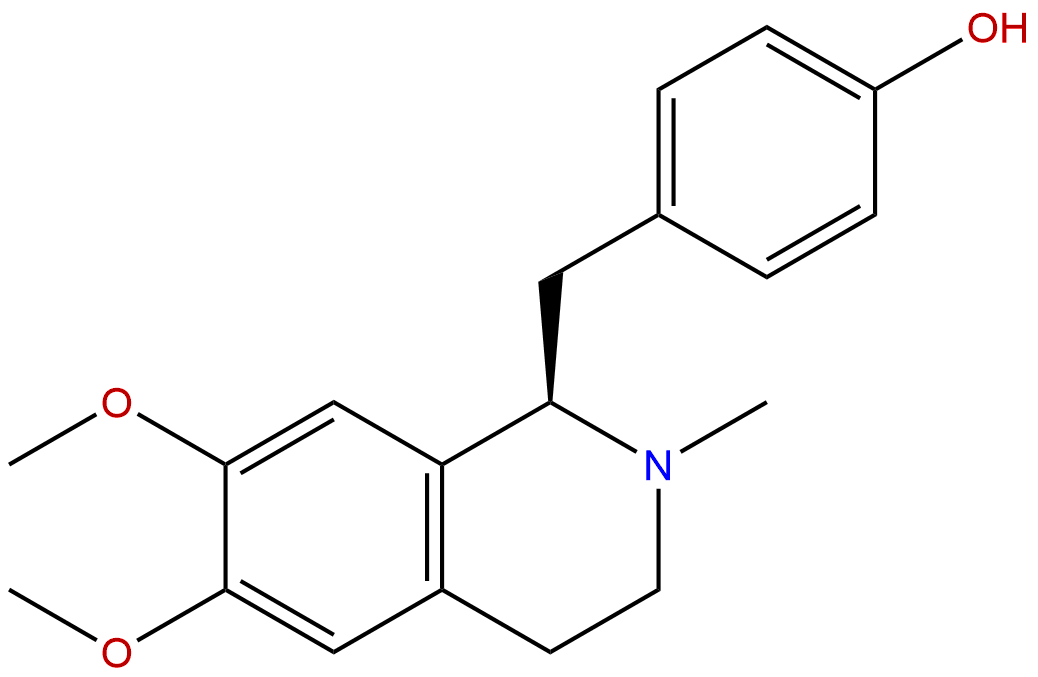
The chemical name of apricot poppy alkaloids is (S) -1- [(3-hydroxy-4-methoxyphenyl) methyl] -6-methoxy-2-methyl-1,2,3,4-tetrahydroisoquinoline-7-ol, with a molecular formula of C19H25NO4 and a molecular weight of 313.3970 g/mol.
Structurally, it is a typical tetrahydroisoquinoline skeleton alkaloid. Its core is a partially saturated isoquinoline ring (1,2,3,4-tetrahydroisoquinoline), whose C-1 position is connected to a 3-hydroxy-4-methoxyphenyl group (i.e., resveratrol) through a methylene group. In addition, the C-6 and C-7 positions of the isoquinoline ring are respectively substituted with methoxy and hydroxyl groups, while the C-2 position is connected to a methyl group. This structure endows the molecule with a chiral center (C-1 position), and naturally occurring apricot poppy alkaloids typically have an S configuration, which is crucial for their biological activity in terms of stereochemistry.
Based on its chemical structure, key physicochemical parameters related to drug properties can be calculated: its lipid water partition coefficient (LogP) is about 3.10, indicating that the compound has moderate lipophilicity and is conducive to transmembrane transport. The topological polar surface area (TPSA) is 41.93 Å ², which is relatively small and consistent with its good membrane permeability prediction. The water solubility value (approximately 0.36 mg/mL) indicates that it belongs to the category of slightly soluble to poorly soluble, which may pose challenges in formulation development. It is worth noting that its high lipophilicity and small TPSA indicate a high blood-brain barrier (BBB) permeability potential, which is consistent with its reported central sedative, analgesic, and other activities. However, preliminary drug efficacy screening also suggests potential risks, such as inhibition of hERG potassium channels (which may lead to prolonged QT interval in the heart), which is a highly vigilant toxic target in drug development. Fortunately, the Ames test result was 0.0, indicating preliminarily that it has no direct genetic toxicity, which is a positive signal.
Plant sources and extraction methods
Apricot yellow poppy alkaloids mainly come from the lotus plant Nelumbo nucifera Gaertn in the family Nymphaeaceae. Lotus is an important aquatic economic plant, and almost its entire body can be used as medicine, including lotus seeds, lotus seed hearts, lotus leaves, lotus chambers, lotus whiskers, etc. Research has shown that apricot yellow poppy alkaloids are distributed in different parts of lotus, but the content varies. Among them, the content is relatively high in lotus seed embryos (lotus hearts) and lotus leaves.
Traditional extraction methods often use solvent extraction. Commonly used polar solvents such as methanol, ethanol, or acidified ethanol (such as adding a small amount of hydrochloric acid or acetic acid) are used for reflux extraction or cold soaking extraction. The purpose of acidification is to make alkaloids salt and increase their solubility in polar solvents. After filtration and concentration, the crude extract is then enriched and purified using the characteristics of alkaloids. The classic method includes acid dissolution alkali precipitation method: the concentrate is dissolved in a dilute acidic aqueous solution, the alkaloids are dissolved as salts, filtered to remove acid insoluble substances, and then adjusted to alkaline with alkali (such as ammonia water, sodium carbonate) to allow the alkaloids to precipitate freely. Organic solvents such as chloroform and ethyl acetate are used for extraction.
Modern separation and purification techniques have greatly improved the efficiency and purity of obtaining apricot yellow poppy alkaloids. Macroporous adsorption resins (such as D101 and AB-8) are commonly used for preliminary enrichment of crude extracts. Subsequently, fine separation was performed using silica gel column chromatography, reverse phase silica gel column chromatography (such as C18 packing), as well as high-performance liquid chromatography (HPLC) and preparative liquid chromatography (pre HPLC). High speed counter current chromatography (HSCCC), as a liquid-liquid distribution chromatography technique that does not require a solid carrier, has been successfully applied for the separation and purification of apricot yellow poppy alkaloids due to its high recovery rate and large preparation capacity.
In addition, chemical synthesis and biosynthetic pathways are also being explored to meet the needs of research and potential applications. Total chemical synthesis can construct its chiral center, but the steps may be cumbersome. The use of plant cell culture or microbial synthetic biology techniques to produce apricot poppy alkaloids is a promising green and sustainable production direction, but it is still in the research stage.
Pharmacological activity research
A large number of pharmacological studies both in vitro and in vivo have confirmed that apricot poppy alkaloids have various biological activities, among which immunosuppressive and anti-inflammatory effects are the most prominent, while also possessing potential for pain relief, neuroprotection, cardiovascular protection, and other benefits.
1. Immunosuppressive and anti-inflammatory activity
This is the field with the most in-depth research and abundant evidence on apricot yellow poppy alkaloids. At the cellular level, it can effectively inhibit the proliferation of human peripheral blood mononuclear cells (PBMCs) and the production of inflammatory factors (such as TNF - α, IL-6, IL-1 β) stimulated by lipopolysaccharide (LPS) or phytohemagglutinin (PHA). More importantly, it exhibits specific regulatory effects on T lymphocytes. Research has shown that apricot yellow poppy alkaloids can inhibit T cell activation and proliferation mediated by T cell receptors (TCR), and induce apoptosis of activated T cells. It can also regulate the balance of T cell subsets, such as inhibiting the differentiation of pro-inflammatory Th1 and Th17 cells in autoimmune models, while possibly promoting the function of regulatory T cells (Tregs).
Its immunosuppressive effect has been strongly validated in animal models. In lupus nephritis mouse models (such as MRL/lpr mice), treatment with apricot yellow poppy alkaloids can significantly reduce proteinuria, lower levels of anti double stranded DNA antibodies in serum, improve renal tissue pathological damage (such as reducing immune complex deposition and inflammatory cell infiltration), and its effect is comparable to or even better than the classical immunosuppressant cyclosporine A, with no significant serious side effects such as bone marrow suppression observed. In addition, in other immune inflammatory models such as delayed type hypersensitivity (DTH) and collagen induced arthritis (CIA), apricot yellow poppy alkaloids have also shown good therapeutic effects.
2. Analgesic activity
Although there are relatively few systematic studies directly targeting the analgesic effects of apricot yellow poppy alkaloids, their structurally similar isoquinoline alkaloids (such as poppy alkaloids) have a history of analgesic effects, and their target prediction and analysis suggest clear analgesic potential. Its analgesic mechanism may involve multiple targets, including acting on central μ, δ, and κ opioid receptors (OPRM1, OPRD1, OPRK1) to regulate the endogenous opioid system; Inhibiting cyclooxygenase (COX-1/COX-2, i.e. PTGS1/PTGS2) to reduce the synthesis of pain inducing substances such as prostaglandins; And regulate nociceptive receptor channels such as transient receptor potential vanillic acid subtype 1 and anchored protein subtype 1 (TRPV1, TRPA1). In addition, its possible effects on dopamine D2 receptor (DRD2) and serotonin transporter (SLC6A4) also suggest that it may affect pain emotion components by regulating the neurotransmitter system.
3. Other pharmacological activities
- Neuroprotection and Sedation Apricot yellow poppy alkaloids can penetrate the blood-brain barrier and exhibit sedative and anti anxiety effects. The mechanism may be related to regulating the monoamine neurotransmitter system and inhibiting neuronal overexcitation. In some studies, it has shown a protective effect against beta amyloid induced neurotoxicity, suggesting its potential value in neurodegenerative diseases such as Alzheimer's disease.
- Cardiovascular protection Traditionally, lotus seeds are used to lower blood pressure, and apricot yellow poppy alkaloids are one of their active ingredients. It can dilate blood vessels, and its mechanism may be related to antagonizing calcium channels and promoting the release of nitric oxide. In addition, its anti-inflammatory and antioxidant effects also help to alleviate the development of cardiovascular diseases such as atherosclerosis.
- anti-fibrotic In liver and kidney fibrosis models, apricot poppy alkaloids exhibit anti fibrotic effects by inhibiting inflammation and the TGF - β 1 signaling pathway.
Mechanism of action and molecular targets
The molecular mechanism by which apricot yellow poppy alkaloids exert their core pharmacological effects, especially anti-inflammatory and immunosuppressive effects, mainly revolves around their regulation of key signaling pathways within cells.
1. Inhibit the NF - κ B signaling pathway
Nuclear factor kappa B (NF - κ B) is a central transcription factor that regulates inflammation, immune response, and cell survival. In the classical pathway, stimuli such as tumor necrosis factor - α (TNF - α) activate the I κ B kinase (IKK) complex, leading to the phosphorylation and degradation of inhibitory protein I κ B α, thereby releasing p65/p50 dimers into the nucleus and initiating the transcription of downstream inflammatory genes (such as TNF - α, IL-6, COX-2). Research has confirmed that quercetin can effectively inhibit TNF - α - induced phosphorylation and degradation of I κ B α, prevent p65 nuclear translocation, and reduce its binding activity to DNA, thereby comprehensively inhibiting the production of inflammatory mediators at the transcriptional level.
2. Inhibit the MAPK signaling pathway
The mitogen activated protein kinase (MAPK) family, including extracellular signal regulated kinase (ERK), c-Jun N-terminal kinase (JNK), and p38 MAPK, is another important class of inflammation and stress signaling molecules. Apricot yellow poppy alkaloids have been shown to dose dependently inhibit the phosphorylation (i.e. activation) of ERK, JNK, and p38 induced by TNF - α or other stimuli. The inhibition of the MAPK pathway not only reduces the activity of pro-inflammatory transcription factors such as AP-1, but also directly affects the decisions of cell proliferation, differentiation, and apoptosis.
3. Specific mechanism of action on T lymphocytes
In T cells, the action of quercetin is more precise. It interferes with downstream signal transduction of TCR/CD3 complex. Specifically, it inhibits the activation of lymphocyte specific protein tyrosine kinase (Lck) and zeta chain associated protein 70 (ZAP-70) after TCR activation, thereby blocking downstream phospholipase C γ (PLC γ) activation, intracellular calcium ion mobilization, and nuclear translocation of activated T cell nuclear factor (NFAT). This series of effects leads to the inhibition of the production of T cell autocrine growth factors such as IL-2, causing the cell cycle to stagnate in the G0/G1 phase, ultimately inhibiting T cell clonal proliferation. At the same time, it upregulates the pro apoptotic protein Bax and downregulates the anti apoptotic protein Bcl-2 through the mitochondrial pathway and death receptor pathway, inducing activated T cell apoptosis and clearing overactive immune cells.
4. Pain related targets
As mentioned earlier, its analgesic mechanism may be the result of multi-target synergy. Computer simulations and partial combination experiments suggest that apricot poppy alkaloids may act as agonists or modulators on opioid receptors (OPRM1, OPRD1), inhibitors on cyclooxygenase (PTGS1/2), and antagonists or modulators on TRPV1 and TRPA1 ion channels. The combined action of these targets may enable them to intervene in the generation and transmission of pain signals at different levels of the central and peripheral nervous systems.
Evaluation of drug properties and pharmacokinetics
Although apricot poppy alkaloids have shown great potential in pharmacological activity, their successful conversion into drugs depends on systematic pharmacological evaluation and pharmacokinetic characteristics.
Pharmacokinetic study The current pharmacokinetic data mainly comes from animal experiments. Research has shown that apricot yellow poppy alkaloids can be absorbed orally, but their absolute bioavailability may be limited due to first pass effects. It is widely distributed in the body, and due to its high lipid solubility and small TPSA, it can penetrate the blood-brain barrier well, which is consistent with its central nervous system activity. In terms of metabolism, it is mainly metabolized in the liver through phase I (such as oxidation, demethylation) and phase II (such as glucuronidation, sulfation) reactions. The main metabolic enzymes may involve the cytochrome P450 family (such as CYP2D6, CYP3A4) and uridine diphosphate glucuronosyltransferases (UGTs). The prototype drug and its metabolites are mainly excreted through the kidneys and urine. Its elimination half-life varies among different species, but overall suggests that multiple daily doses may be necessary to maintain effective blood drug concentrations.
Advantages and challenges of pharmaceutical properties:
- Advantage① Clear and potent immunosuppressive activity, with significant efficacy in lupus nephritis models and relatively minor side effects (no severe bone marrow suppression compared to cyclosporine). ② Multi targeted effects may bring synergistic therapeutic effects and reduce the risk of drug resistance. ③ Good blood-brain barrier permeability, suitable for central nervous system related diseases. ④ Natural product sources have a high level of public acceptance.
- Challenges and Risks:① HERG inhibition risk This is one of the biggest safety challenges facing its clinical development, and potential arrhythmogenic risks must be avoided through structural modifications or in-depth cardiac safety assessments. ② Poor water solubility The impact on its oral absorption and the development of injectable formulations requires improvement through formulation techniques such as salt production, cyclodextrin inclusion complexes, nano formulations, etc. ③ Pharmacokinetic properties need to be optimized Factors such as bioavailability and half-life may need to be optimized through prodrug strategies or delivery systems. ④ Widely applicable mechanism of action Although multi-target targeting is an advantage, it may also lead to unexpected off target effects, requiring more precise target confirmation and selective optimization.
Clinical application prospects and prospects
Based on its unique pharmacological properties, apricot yellow poppy alkaloids have broad clinical application prospects in multiple disease fields.
1. Autoimmune diseases This is its most core application direction. Systemic lupus erythematosus (especially lupus nephritis), rheumatoid arthritis, psoriasis, multiple sclerosis, inflammatory bowel disease, etc. are all potential indications for it. As a plant-based immunosuppressant, it may provide a new option for patients who are unresponsive or intolerant to existing immunosuppressive treatments, and may have better long-term safety.
2. Organ transplantation As an immunosuppressant, it has exploratory value in preventing rejection reactions after allogeneic organ transplantation. Further research is needed to investigate its synergistic effect with existing transplant immunosuppressive regimens.
3. Chronic pain management Its multi-target analgesic mechanism makes it possible to treat refractory pain such as neuropathic pain and inflammatory pain, and may have lower addiction and side effects than single target analgesics such as opioids.
4. Neuropsychiatric disorders Its sedative, anti anxiety, and potential neuroprotective effects suggest its potential in the adjuvant treatment of anxiety disorders, insomnia, as well as neurodegenerative diseases such as Alzheimer's disease and Parkinson's disease.
Future research prospects:
1. Structural optimization and drug design To address the drawbacks of hERG inhibition and poor water solubility, a systematic structure-activity relationship (SAR) study and structural modification were conducted with the aim of preserving or enhancing its immunosuppressive activity while eliminating cardiac toxicity and improving pharmacokinetic properties.
2. Deep analysis of the mechanism of action Using chemical biology methods such as affinity fishing and proteomics to search for its direct target proteins and draw more accurate molecular action networks.
3. Formulation development Develop novel drug delivery systems, such as nanoparticles, liposomes, microemulsions, etc., to enhance their bioavailability, achieve targeted delivery (such as targeting inflammatory sites or lymphatic systems), and control drug release.
4. Preclinical and clinical research Conduct Good Laboratory Practice (GLP) toxicology evaluations that comply with regulations, and design rigorous clinical trials to first validate their safety and efficacy in patients with autoimmune diseases.
5. Exploration of combination therapy Study the combined use of apricot yellow poppy alkaloids and existing standard therapeutic drugs (such as glucocorticoids and methotrexate) in order to reduce their respective doses, minimize side effects, and improve efficacy.
Conclusion
Apricot yellow poppy alkaloids, as an isoquinoline alkaloid isolated from the traditional medicinal plant lotus, are a successful example of modern natural product pharmacological research. It has come from ancient medicinal experience and has shown great potential in the treatment of autoimmune diseases and other fields due to its clear and powerful immunosuppressive and anti-inflammatory activities, as well as multi-target effects. The study of its mechanism of action has delved into key signaling pathways such as NF - κ B and MAPK, as well as the regulation of T cell function, laying a solid scientific foundation for its application.
However, the path from lead compounds to successful drugs is still full of challenges. The inherent pharmaceutical defects, especially the potential cardiac toxicity, are the main obstacles on the path of transformation. Future research requires interdisciplinary collaboration to optimize and recreate apricot poppy alkaloids through the joint efforts of medicinal chemistry, pharmacy, pharmacology, and clinical medicine. We have reason to believe that with the continuous deepening of research, apricot poppy alkaloids or their optimized derivatives have the potential to become a new weapon for treating important human diseases such as autoimmune diseases in the future, continuing a new chapter of natural products benefiting human health.