Dehydrogenated Lotus Leaf Alkaloids: Potential Anti Anxiety Isoquinoline Alkaloids Derived from Lotus Leaves
1. Overview
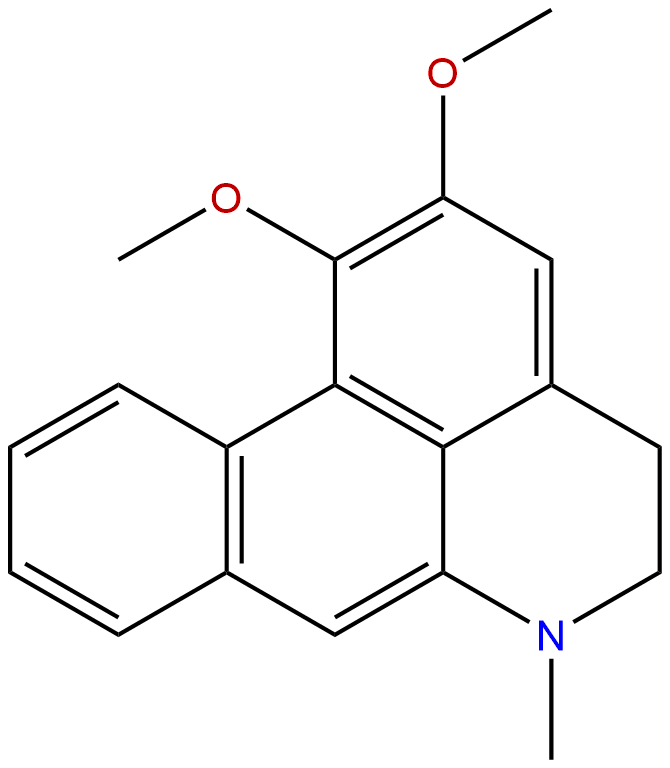
Dehydronuciferin (CAS number: 7630-74-2) is a naturally occurring isoquinoline alkaloid. As a lotus leaf(Nelumbo nucifera)One of the many bioactive ingredients in the plant, it belongs to the derivatives of aporphine alkaloids. Although its molecular formula and molecular weight are limited in public literature, its structural characteristics can be inferred based on its known chemical framework (SMILES: COc1cc2c3c (cc4cccc4c3c1OC) N (C) CC2) and calculated parameters (MW: 293.3660). Isoquinoline alkaloids are an important field in natural product chemistry and medicinal chemistry research, and many compounds with such core structures have been proven to have significant neural activity, such as analgesia, sedation, anti anxiety, etc. Due to its unique chemical structure and preliminary pharmacological target data, dehydrophylline has attracted the attention of researchers in recent years, especially in the field of central nervous system disease treatment. This article will provide a systematic professional popularization of this compound from the aspects of its chemical structure, plant origin, pharmacological mechanism, medicinal evaluation, and research prospects.
2. Chemical structure and physicochemical properties
The chemical structure of dehydrophylline is based on the isoquinoline skeleton and belongs to the aporphine alkaloids. The SMILES string (COc1cc2c3c (cc4cccc4c3c1OC) N (C) CC2) reveals its molecular features: the structure contains two methoxy (- OCH3) substituents, a four ring fused system (including a benzene ring and a nitrogen-containing heterocyclic ring), and an N-methylated tertiary amine group. The presence of this fused ring structure and nitrogen-containing bases gives it a certain flatness and rigidity, which may affect its interaction with biological targets.
According to the provided pharmacokinetic parameters, its molecular weight (MW) is 293.3660, which falls within the typical range of small molecule drugs (usually<500 Da). The topological polar surface area (TPSA) is 21.7000 Å ², which is a relatively low value, indicating that the molecular polarity is small and the hydrophobicity is strong. The lipid water partition coefficient (LogP) is 4.5410, and the LogD (partition coefficient at a specific pH) is 4.5404, both of which are high, further confirming the strong lipophilicity of the compound. This high lipophilicity is beneficial for its penetration through cell membranes, but it may also lead to extremely poor water solubility (with a solubility of only 0.0004 mg/mL), which is one of the key challenges that need to be overcome during its drug manufacturing process.
High lipophilicity is usually associated with good membrane permeability. The permeability data of Caco-2 cells is 17.2139 × 10 ⁻⁶ cm/s, which is a high value, indicating its good intestinal absorption potential. The effective permeability coefficient (Peff) is 8.1258 cm/s × 10 ⁻⁴, which also supports its good permeability. These physicochemical properties provide preliminary positive signals for its potential oral bioavailability, but its extremely low water solubility may limit its dissolution and absorption in gastrointestinal fluids.
3. Plant sources and traditional applications
Dehydrogenase mainly comes from lotus leaves in the Nymphaeaceae family(Nelumbo nucifera Gaertn.), Its medicinal part is the leaves. Lotus leaf, also known as lotus leaf, is a widely distributed aquatic plant in Asia with a long history of application in traditional medical systems in countries such as China, India, and Japan.
In traditional Chinese medicine, lotus leaves are recorded to have the effects of clearing heat and relieving summer heat, promoting hair and clearing yang, cooling blood and stopping bleeding. They are commonly used to treat diseases such as summer heat and thirst, summer dampness diarrhea, blood heat vomiting and bleeding, and rectal bleeding. Lotus leaves are often used in the form of decoction, tea, or pills. In addition to the leaves, other parts of lotus (such as lotus seeds, lotus hearts, lotus chambers, lotus root nodes, etc.) are also used as medicine, forming the whole medicinal system of "lotus". Modern plant chemistry research has isolated and identified various alkaloids, flavonoids, polysaccharides, and other components from lotus leaves, among which alkaloids are considered one of the important material bases for their pharmacological activities.
As a type of alkaloid component in lotus leaves, dehydrophylline has not been widely studied in terms of its traditional applications, but considering its structural similarity, it is likely to contribute to the overall "clearing heart and eliminating annoyance" effect of lotus leaves. This is related to the potential anti anxiety effects discovered in modern research. Traditional applications have provided valuable clues for modern research, but it should be emphasized that traditional experience is based on the overall effects of complex plant extracts, while the specific effects of a single compound, dehydrophylline, require strict scientific verification.
4. Pharmacological activity and mechanism of action
According to the provided target information, the action of dehydrophylline involves multiple targets closely related to central nervous system function, mainly including monoamine oxidase A (MAOA), serotonin transporter (SLC6A4/SERT), 5-hydroxytryptamine 1A receptor (HTR1A/5-HT1A), and the alpha 1 and beta 2 subunits of GABA_A receptor (GABRA1, GABRB2). The synergistic effect of these targets has the potential to Anti anxiety (Anxiolytic) Activity provides a reasonable mechanism explanation.
1. Effects on monoamine oxidase A (MAOA):
MAOA is a key enzyme responsible for degrading monoamine neurotransmitters such as serotonin, norepinephrine, and dopamine. Inhibition of MAOA can increase the concentration of these monoamine neurotransmitters in synaptic cleft, thereby producing antidepressant and anti anxiety effects. The classic MAOI (monoamine oxidase inhibitor) drugs are based on this principle. Dehydrogenase may have an inhibitory effect on MAOA by increasing the levels of serotonin and norepinephrine in the brain, improving mood and anxiety.
2. Effects on the Serotonin System:
The serotonin (5-hydroxytryptamine) system is a core pathway that regulates emotions, anxiety, and stress responses.
- Serotonin transporter (SLC6A4)This transporter is responsible for reuptake serotonin from the synaptic cleft back into presynaptic neurons, terminating its signal. Inhibiting SERT (such as SSRI drugs) can increase synaptic serotonin levels, which is currently the main mechanism of action for first-line antidepressant and anti anxiety drugs. Dihydropalmatine may act as an inhibitor of SERT.
- 5-hydroxytryptamine 1A receptor (HTR1A)This receptor is an important self receptor and heterogeneous receptor. Exciting 5-HT1A receptors, especially in the presynaptic region, can inhibit the release of serotonin, producing anti anxiety and sedative effects. Anti anxiety drugs such as buspirone are partial agonists of this type of receptor. Dihydropalmatine may have 5-HT1A receptor agonist activity.
3. Effects on the GABAergic system:
Gamma aminobutyric acid (GABA) is the main inhibitory neurotransmitter in the central nervous system. Enhancing GABAergic signaling has anti anxiety, sedative, and anticonvulsant effects.
- GABA_A receptor It is a ligand gated chloride ion channel composed of different subunits (such as α 1, β 2, γ 2). Benzodiazepines enhance the action of GABA by binding to specific sites on the GABA_A receptor, producing potent anti anxiety and sedative effects. The targets of dehydrogenated lotus leaf alkaloid, GABR1 (α 1 subunit) and GABRB2 (β 2 subunit), are the key subunits that make up the benzodiazepine sensitive GABA_A receptor. This suggests that dehydrophylline may exert anti anxiety effects by modulating GABA_A receptors through conformational modulation, enhancing the inhibitory effect of GABA.
Integration of mechanism of action:
Dehydrogenation of lotus leaf alkaloids may be achieved through Multi target " Mechanisms generate anti anxiety effects:
- Upregulation of monoamine neurotransmitters By inhibiting MAOA and SERT, the levels of serotonin and norepinephrine are increased.
- Regulating 5-HT1A receptors By stimulating 5-HT1A receptors, direct anti anxiety and sedative signals are generated.
- Enhance GABAergic inhibition By acting on GABA_A receptors, it enhances inhibitory tension in the brain.
The characteristic of simultaneously acting on both monoamine and GABAergic systems makes its mechanism of action different from that of single SSRIs or benzodiazepines, which may have the potential for faster onset and different side effect profiles. However, it also means that its mechanism of action is more complex and requires further research to clarify its dominant pathway of action and possible synergistic or antagonistic effects.
5. Evaluation of drug properties
Based on the provided pharmacological parameters, we can conduct a preliminary evaluation of the potential of dehydrophylline as a candidate drug, combined with the well-known Lipinski's Five Rules(Rule of Five, Ro5) for analysis. Ro5 is an empirical rule for evaluating the pharmacological properties of small molecule oral drugs, typically requiring: molecular weight<500, number of hydrogen bond donors<5, number of hydrogen bond acceptors<10, LogP<5。
- Molecular weight (MW)293.3660, far less than 500, compliant.
- Hydrogen bond donor/acceptor Based on structural inference, its hydrogen bond donors (such as NH) may be relatively few (mainly from tertiary amines, but not as strong donors after N-methylation), and the number of hydrogen bond acceptors (O and N atoms) is also limited. Specific values have not been provided, but based on the structure, it is likely to meet the Ro5 requirements.
- LogP 4.5410, slightly below the critical value of 5, in line with Ro5, but approaching the upper limit, indicating high lipophilicity.
- TPSA 21.7000 Å ², far below the threshold commonly believed to be favorable for oral absorption (~140 Å ²), is conducive to membrane permeation.
Therefore, dehydrophylline basically conforms to Lipinski's five rules and has the chemical basis to become an oral medication.
Analysis of other key pharmacological parameters:
- Absorption and distribution High Caco-2 permeability and high Peff value indicate good intestinal absorption.Blood-brain barrier (BBB) penetrability Marked as' high ', this is crucial for its action on central nervous system targets such as MAOA, SERT, GABA_A receptors, and is a necessary prerequisite for its anti anxiety activity.
- Protein binding rate (PPB)As high as 92.37%, it indicates that it binds very tightly to plasma proteins (mainly albumin) in the blood. High protein binding can reduce the concentration of free drugs, which may affect the strength of drug efficacy and require higher dosages, as well as affect drug distribution and clearance.
- Metabolism and toxicity:
- AMES test A value of 1.8 (usually>1.5 indicates potential mutagenicity), combined with the "chromosome aberration" item as "present", suggests that the compound may exist Genetic toxicity risk This is a serious issue that requires high vigilance and in-depth evaluation in drug development.
- HERG inhibition'No' is a positive signal indicating that it may not inhibit hERG potassium channels and has a low risk of cardiac toxicity (such as causing QT interval prolongation).
- Phototoxicity (Photo_tox)Marked as' Yes', indicating that the compound may cause skin toxicity under light exposure.
- Respiratory sensitization (Resp_Sens)Annotated as' Yes', it indicates a possible risk of inhalation sensitization.
- Hepatotoxicity indicators Serum alkaline phosphatase (Ser_LK), aspartate aminotransferase (Ser_ST), and alanine aminotransferase (Ser_LT) are all "yes", indicating that they may have Potential risk of liver injury And the value of γ - glutamyltransferase (Ser_GGT) is' no '.
- Syn_ Accessibility A score of 2.3955 (usually the lower the score, the easier it is to synthesize) indicates that its synthesis may be challenging, but not impossible to achieve.
Summary of Drug Evaluation:
Dihydropalmatine in lotus leaves Has shown good potential in oral absorption and brain permeability Comply with the basic rules of drug properties. However, it Extremely poor water solubility This is the primary challenge in the development of formulations. More severe challenges come from In terms of safety: Potential Genotoxicity (mutagenicity and chromosomal aberration), phototoxicity, respiratory sensitization, and hepatotoxicity The signal constitutes a significant obstacle to its conversion to drugs. In further development, these risks must be confirmed and quantified through systematic preclinical toxicology studies, including in vitro and in vivo experiments. Structural modifications, such as preparing water-soluble prodrugs, reducing LogP, and removing toxic groups, may be necessary ways to improve their drug properties.
6. Research Status and Application Prospects
At present, there is relatively limited public scientific research on dehydrogenated lotus leaf alkaloids. The existing information mainly focuses on its plant origin, chemical classification, and potential targets obtained based on computational prediction or preliminary screening. The detailed in vitro activity data (such as IC50/Ki values for MAOA, SERT, 5-HT1A, GABA_A receptors), in vivo pharmacological validation (anti anxiety activity in animal models), as well as pharmacokinetic and toxicological studies, are not yet fully or clearly reported in public literature.
Research Status:
1. Basic research stage The compound is still in the stage of natural product discovery and early pharmacological target prediction. Its known information is mostly mentioned as a member of the complex chemical composition system of lotus leaves.
2. Mechanism Exploration The multi-target mode of action is its biggest characteristic, but issues such as the weight of each target's contribution, whether there is synergy or antagonism, and whether its action has subtype selectivity (such as selectivity for different subtypes of GABA_A receptor combinations) still need to be clarified through experiments.
3. Drug bottleneck As mentioned earlier, issues of water solubility and safety (especially genetic toxicity) are the core bottlenecks hindering its development.
Application prospects and future directions:
1. As a lead compound Despite the challenges of direct drug development, the unique isoquinoline aporphine skeleton and multi-target effects on the nervous system of dehydrophylline make it a valuable resource lead compound Pharmaceutical chemists can use it as a template for systematic structural optimization:
- Improve water solubility Introducing polar groups (such as hydroxyl and amino groups), preparing salt forms, or developing prodrugs.
- Reduce toxicity Eliminate or weaken structural alarms related to genetic toxicity and liver toxicity through structural modification.
- Optimize activity and selectivity Fine tuning the structure to enhance selectivity towards a specific target, such as 5-HT1A or a specific GABA_A receptor subtype, may lead to the development of novel anti anxiety candidate drugs with fewer side effects.
2. Elucidate the material basis of lotus leaf pharmacological effects In depth research on the activity of dehydrogenated lotus leaf alkaloids and other lotus leaf alkaloids can help explain the material basis and principle of action of the traditional efficacy of lotus leaves in "clearing the heart and eliminating annoyance" from a modern scientific perspective.
3. Developing novel multi-target neuropsychiatric drugs It simultaneously regulates the characteristics of the monoaminergic and GABAergic systems, providing ideas for the development of new anti anxiety agents that are different from existing single agent drugs. Multi targeted drugs may provide better efficacy and tolerability for complex psychiatric and neurological disorders.
Conclusion:
Dihydropalmatine is an isoquinoline alkaloid derived from the traditional medicinal plant lotus leaf, which has potential anti anxiety activity. Its chemical structure meets the basic requirements of oral medication and has good brain permeability. Its most notable feature is that it may synergistically exert anti anxiety effects by acting on multiple key targets such as MAOA, SERT, 5-HT1A receptors, and GABA_A receptors. However, its extremely low water solubility and safety hazards such as genetic toxicity and hepatotoxicity shown in preliminary predictions are huge obstacles on its path from natural compounds to clinical drugs. Future research should focus on verifying its pharmacological activity through experiments and conducting in-depth structural modification studies with the goal of reducing toxicity and improving physicochemical properties. The value of dehydrophylline is more likely to lie in its provision of an inspiring natural template for pharmaceutical chemists to design a new generation of multi-target neuropsychiatric drugs.