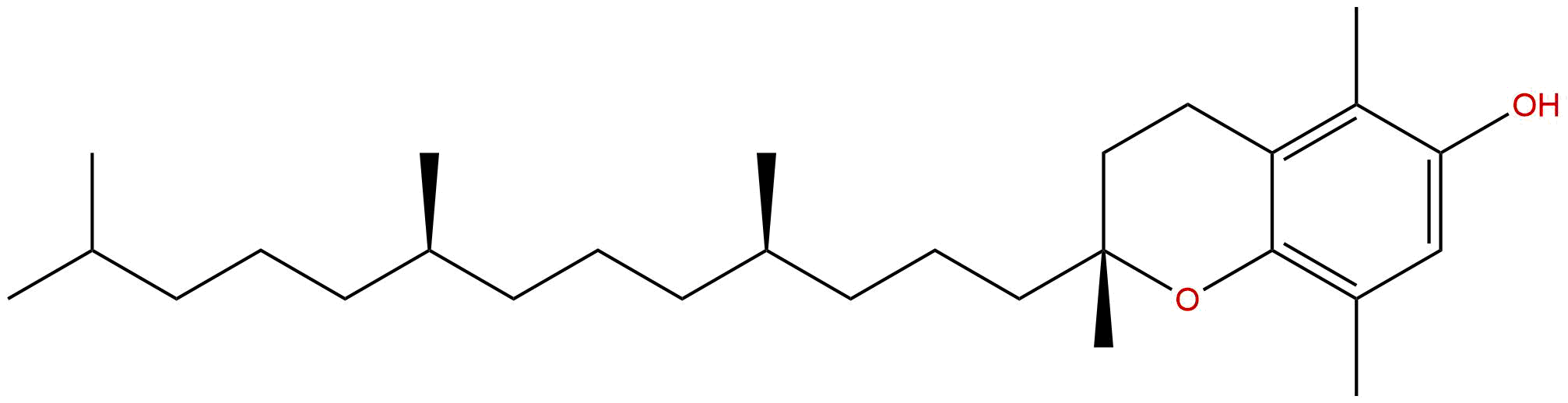


Product name: D-β-Tocopherol
Synonym name: D-beta-Tocopherol; d -β-Tocopherol
Catalogue No.: BP5327
Cas No.: 16698-35-4
Formula: C28H48O2
Mol Weight: 416.69
Botanical Source:
Type of Compound: Tocopherols
Purity: 95%~99%
Analysis Method: HPLC-DAD or/and HPLC-ELSD
Identification Method: Mass, NMR
Packing: Brown vial or HDPE plastic bottle
Storage: Store in a well closed container, protected from air and light. Put into refrigerate or freeze for long term storage.
Whenever possible, you should prepare and use solutions on the same day. However, if you need to make up stock solutions in advance, we recommend that you store the solution as aliquots in tightly sealed vials at -20℃. Generally, these will be useable for up to two weeks.
The product could be supplied from milligrams to grams
Inquire for bulk scale.
For Reference Standard and R&D, Not for Human Use Directly.
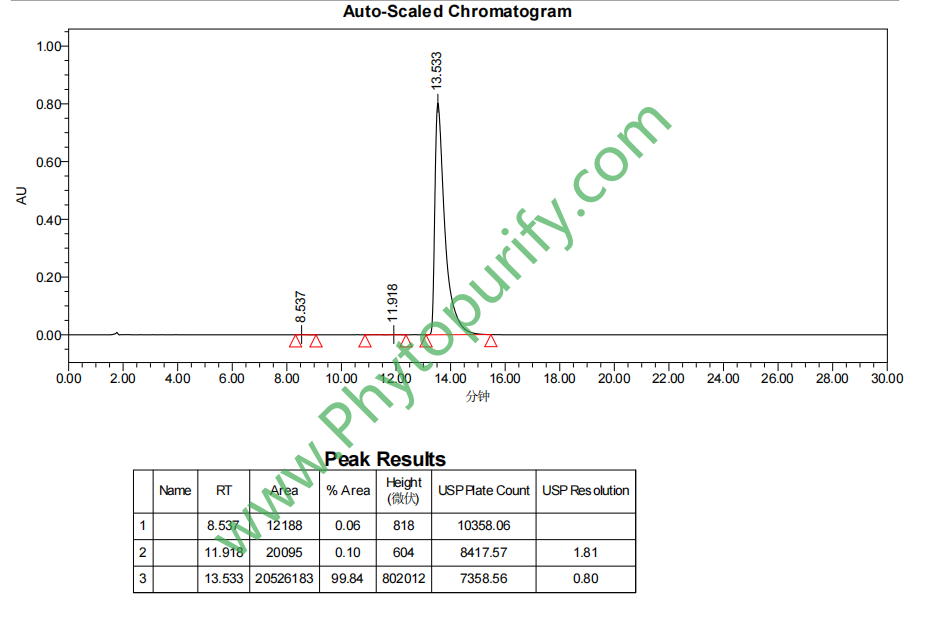
HPLC of D-β-Tocopherol
Storage conditions:Short-term storage at 2~8℃, long-term storage at -20 ~ -80℃
29.4600
10.0530
10.0540
.0002
3.9440
7.2876
High
93.9968
3.8173
Yes
No
Yes
No
No
No
0.0
No
No
No
No
The vitamin E family is a general term for a class of fat soluble antioxidants, including tocopherols and tocotrienols. Each class is further divided into four homologues based on the position and number of methyl groups on the benzodihydropyran ring: alpha, beta, gamma, and delta. Among the four tocopherol homologs of vitamin E, alpha tocopherol has long been at the center of research due to its highest biological activity and tissue selectivity in the human body, while beta tocopherol has been relatively overlooked. However, with the continuous deepening of understanding of the chemical diversity and biological functions of natural products, the unique chemical characteristics and pharmacological activities of D - β - tocopherol (CAS number: 16698-35-4) are gradually attracting attention from the academic community.
The chemical full name of D - β - tocopherol is 2,5,8-trimethyl-2- (4,8,12-trimethyltridecyl) -6-benzodihydropyranol. In its molecular structure, the core of the benzodihydropyran has one methyl substitution at positions 5 and 8, while there is no methyl substitution at position 7. This unique methyl substitution pattern gives it distinct characteristics from alpha - and gamma tocopherols in terms of antioxidant capacity, lipophilicity, and interaction with biomolecules. Although β - tocopherol is not as widely distributed in nature as α - and γ - tocopherols, it is abundant in cottonseed oil and its safety as a food additive and dietary supplement ingredient has been widely recognized.
In recent years, the causal relationship between oxidative stress and various chronic diseases, including neurodegenerative diseases, cardiovascular diseases, metabolic syndrome, and cancer, has been extensively studied and confirmed. D - β - tocopherol, as a fat soluble antioxidant, has a role that goes far beyond directly scavenging free radicals. More and more evidence suggests that it can affect the expression of a series of downstream antioxidant enzymes, including superoxide dismutase (SOD1, SOD2), catalase (CAT), glutathione peroxidase 1 (GPX1), and heme oxygenase 1 (HMOX1), by regulating the nuclear factor E2 related factor 2 (NFE2L2/NRF2) signaling pathway. This multi-target and multi-level regulatory mechanism endows D - β - tocopherol with therapeutic potential beyond traditional antioxidants.
This article will provide a systematic academic review of D - β - tocopherol from the aspects of chemical structure, natural sources, pharmacological activity, molecular mechanism, pharmacological characteristics, and clinical application prospects, aiming to provide a comprehensive theoretical basis for the in-depth study of this underestimated vitamin E homologue.
The molecular formula of D - β - tocopherol is C ₂₈ H ₄₈ O ₂, with a molecular weight of 416.69 Da. Its core structure consists of two parts: a polar head - the 6-benzodihydropyranol ring, and a hydrophobic tail - the saturated phytol side chain. The 6th hydroxyl group on the benzodihydropyran ring is the key functional group that endows it with antioxidant activity. This hydroxyl group can provide hydrogen atoms to lipid peroxidation radicals, thereby interrupting the lipid peroxidation chain reaction.
Compared with other tocopherol homologs, the methyl substitution mode of β - tocopherol is unique: there is one methyl group at positions 5 and 8, while there is no methyl group at positions 7 and 3. This structural feature places it between alpha tocopherol (5,7,8-trimethyl) and gamma tocopherol (7,8-dimethyl) in terms of antioxidant activity. It is worth noting that the "D -" prefix in D - β - tocopherol indicates that its molecular configuration is the naturally occurring R, R, R-configuration, i.e. the 2, 4 ', and 8' positions are all R configurations. This stereochemical characteristic has a decisive impact on its binding affinity with in vivo tocopherol transporters, such as alpha tocopherol transfer protein (alpha TP).
The physicochemical properties of D - β - tocopherol have a profound impact on its in vivo behavior. Its lipid water partition coefficient LogP is as high as 10.053, indicating that the compound has extremely strong lipophilicity and is almost insoluble in water (with a water solubility of only 0.0002 mg/mL). This extreme lipophilicity allows it to efficiently embed into the phospholipid bilayer of biological membranes, exerting antioxidant protection within the cell membrane, but also limits its free diffusion in body fluids.
The topologically polar surface area (TPSA) is only 29.46 Å ², far below the upper limit of 140 Å ² typically required for oral drugs, which is consistent with the structural feature of having only one hydroxyl polar group in its molecule. A low TPSA value indicates that the molecule has the potential to penetrate the biological membrane barrier. In fact, its blood-brain barrier penetration is evaluated as "high," providing a pharmacological basis for the application of D - β - tocopherol in central nervous system diseases.
In terms of thermal stability, D - β - tocopherol is sensitive to oxygen, light, and heat, and is particularly prone to oxidative degradation under alkaline conditions. Its melting point is 42-44 ° C, and it appears as a light yellow viscous oily liquid at room temperature. Due to the presence of multiple chiral centers in the molecule, natural D - β - tocopherol exhibits specific optical activity.
The distribution of D - β - tocopherol in the plant kingdom is highly selective. Unlike alpha tocopherol, which is widely present in various plant oils, beta tocopherol is only relatively abundant in certain specific plant species. Cottonseed oil (Gossypium hirsutum) is the natural source with the highest known content of β - tocopherols, accounting for 15-25% of total tocopherols. In addition, soybean oil, corn oil, and palm oil also contain small amounts of β - tocopherols, but typically not exceeding 5% of total tocopherols.
In grains, wheat germ oil contains a certain proportion of β - tocopherol, while the content is lower in grains such as barley and oats. It is worth noting that the distribution of β - tocopherol in plant tissues is not uniform, and the content in seeds and embryos is usually higher than that in leaves and stems. This distribution pattern is closely related to the physiological function of tocopherols in plants - protecting polyunsaturated fatty acids in seeds from oxidative damage and maintaining seed vitality.
Given the low content and strong lipophilicity of D - β - tocopherol in natural oils, its extraction and purification face technical challenges. Traditional extraction methods include organic solvent extraction, molecular distillation, and column chromatography techniques. Non polar solvents such as n-hexane and petroleum ether are commonly used to extract crude tocopherol mixtures from oilseeds, followed by the removal of some fatty acid and sterol impurities through low-temperature crystallization or urea encapsulation.
In modern extraction technology, supercritical CO ₂ extraction (SC-CO ₂) is highly favored due to its green and efficient characteristics. Under appropriate temperature and pressure conditions (usually 40-60 ° C, 20-35 MPa), supercritical CO ₂ can selectively extract tocopherol, and the extraction rate of β - tocopherol can be improved by adding entrainers such as ethanol. Compared with traditional organic solvent methods, supercritical extraction not only avoids solvent residue problems, but also better protects the active structure of tocopherols.
For the purification of β - tocopherol, high-performance liquid chromatography (HPLC) is the gold standard prepared on a laboratory scale. By using a normal phase silica gel column or a C18 reverse phase column, combined with UV detection (292 nm) or fluorescence detection (excitation 295 nm, emission 330 nm), baseline separation of β - tocopherol from other tocopherol homologs can be achieved. On an industrial scale, molecular distillation combined with preparative HPLC or high-speed countercurrent chromatography (HSCCC) is the main technical route for obtaining high-purity β - tocopherol.
The most classic and extensively studied pharmacological activity of D - β - tocopherol is its antioxidant effect. As a lipid soluble chain breaking antioxidant, β - tocopherol can provide hydrogen atoms to lipid peroxidation radicals (LOO ·) through phenolic hydroxyl groups, generating relatively stable tocopherol radicals (Toc ·), thereby interrupting the lipid peroxidation chain reaction. The rate constant (k_inh) of this reaction is approximately 10 ⁶ M ⁻¹ s ⁻¹, on the same order of magnitude as alpha tocopherol.
It is worth noting that the antioxidant efficiency of β - tocopherol is even better than that of α - tocopherol in some systems. Research has shown that in liposome models, β - tocopherol has a significantly stronger inhibitory effect on copper induced low-density lipoprotein (LDL) oxidation than α - tocopherol. This phenomenon may be related to the localization and orientation of β - tocopherol in the membrane - its shorter side chain conformation brings its phenolic hydroxyl group closer to the membrane water interface, thereby more effectively capturing free radicals from the aqueous phase.
At the cellular level, D - β - tocopherol can protect various cell types from oxidative stress damage. In human umbilical vein endothelial cells (HUVECs), pretreatment with β - tocopherol significantly reduces hydrogen peroxide (H ₂ O ₂) - induced apoptosis and lactate dehydrogenase (LDH) release. In neural cell models, β - tocopherol has a protective effect against glutamate induced oxidative neurotoxicity, which is comparable or slightly better than α - tocopherol.
In addition to its direct antioxidant effect, D - β - tocopherol also exhibits independent anti-inflammatory activity. In a macrophage model stimulated by lipopolysaccharide (LPS), β - tocopherol can inhibit the expression of cyclooxygenase-2 (COX-2) and inducible nitric oxide synthase (iNOS), reducing the production of prostaglandin E ₂ (PGE ₂) and nitric oxide (NO). This anti-inflammatory effect is partially achieved by inhibiting the nuclear factor kappa B (NF - κ B) signaling pathway, rather than relying entirely on its antioxidant capacity.
In animal models, supplementation with β - tocopherol can alleviate the pathological progression of various inflammatory diseases. For example, in the carrageenan induced rat paw swelling model, oral administration of β - tocopherol can significantly inhibit inflammatory response, and its effect is positively correlated with dosage. In colitis models, treatment with β - tocopherol can reduce the levels of pro-inflammatory cytokines (TNF - α, IL-1 β, IL-6) in colon tissue and alleviate tissue pathological damage.
Given the high blood-brain barrier penetration of D - β - tocopherol, its potential application value in central nervous system diseases has attracted much attention. In the Alzheimer's disease (AD) model, β - tocopherol can reduce β - amyloid (A β) - induced neuronal apoptosis, inhibit tau protein hyperphosphorylation, and improve cognitive function. These effects may be related to their dual mechanisms of inhibiting oxidative stress and neuroinflammation.
In the Parkinson's disease (PD) model, β - tocopherol has a protective effect on dopaminergic neuron damage induced by 6-hydroxydopamine (6-OHDA). The mechanism involves activating the NRF2/ARE signaling pathway, upregulating antioxidant enzyme expression, and inhibiting mitochondrial dysfunction and cytochrome c release mediated apoptosis pathway.
The protective effect of D - β - tocopherol on the cardiovascular system has been confirmed in multiple studies. In the animal model of hypercholesterolemia, β - tocopherol supplementation can reduce the level of serum oxidized LDL and inhibit the formation and development of atherosclerotic plaque. In addition, β - tocopherol can improve endothelial function, enhance the bioavailability of nitric oxide (NO), inhibit platelet aggregation and the expression of adhesion molecules.
It is worth noting that the cardiovascular protective effect of β - tocopherol is superior to that of α - tocopherol in some studies. This may be related to the stronger inhibitory effect of β - tocopherol on protein kinase C (PKC) - the over activation of PKC is considered to be the key link of vascular complications caused by cardiovascular risk factors such as diabetes and hypertension.
One of the core molecular mechanisms by which D - β - tocopherol exerts pleiotropic pharmacological effects is through the activation of the nuclear factor E2 related factor 2 (NFE2L2, NRF2) signaling pathway. NRF2 is the main transcription factor for cells to cope with oxidative stress and electrophilic substances, and its downstream target genes include a series of antioxidant enzymes and phase II detoxifying enzymes.
In the basal state, NRF2 binds to Kelch like ECH related protein 1 (KEAP1), is anchored in the cytoplasm, and rapidly degrades through the ubiquitin proteasome pathway. When cells are exposed to D - β - tocopherol, the compound or its oxidative metabolites can modify specific cysteine residues of KEAP1 (such as Cys151, Cys273, and Cys288), causing conformational changes in KEAP1 and releasing NRF2. After release, NRF2 translocates into the nucleus and forms heterodimers with small Maf proteins, binding to the antioxidant response element (ARE) in the promoter region of the target gene to initiate transcription of downstream genes.
The NRF2 target genes regulated by D - β - tocopherol include:
- SOD1 (Cu/Zn SOD) and SOD2 (Mn SOD)Catalytic dismutation of superoxide anion radicals into hydrogen peroxide and oxygen is the first line of defense for cells against superoxide radicals.
- CAT (catalase)Decompose hydrogen peroxide into water and oxygen, and work synergistically with SOD to prevent the generation of hydroxyl radicals.
- GPX1 (Glutathione Peroxidase 1)Using glutathione as a reducing agent, hydrogen peroxide and organic hydroperoxides are reduced to water and corresponding alcohols.
- HMOX1 (Heme Oxygenase 1)Catalytic degradation of heme into biliverdin, carbon monoxide, and free iron, biliverdin and its reduced product bilirubin have strong antioxidant activity.
By simultaneously upregulating these multi-level antioxidant enzymes, D - β - tocopherol can establish a long-lasting and extensive cell protective state, which is far beyond the capabilities of simple free radical scavengers.
In addition to indirectly regulating the expression of antioxidant enzymes, D - β - tocopherol itself is also an efficient free radical scavenger. Its phenolic hydroxyl group can provide hydrogen atoms to lipid peroxidation radicals (LOO ·), generating tocopherol radicals (Toc ·). The tocopherol free radicals are relatively stable and can be reduced back to their active form through interactions with water-soluble antioxidants such as vitamin C or glutathione, achieving a regenerative cycle.
The free radical scavenging efficiency of β - tocopherol is closely related to its molecular structure. The presence of a 5-methyl group increases the electron cloud density of the benzene ring and enhances the hydrogen donating ability of the phenolic hydroxyl group; And the 8-methyl group stabilizes the tocopherol free radical through steric hindrance effect. Compared with alpha tocopherol, the tocopherol free radicals of beta tocopherol have higher stability, which makes its antioxidant duration in the membrane longer.
Another unique mechanism of action of D - β - tocopherol involves its regulation of the physical properties of biofilms. Due to its amphiphilic nature - the polar benzodihydropyranol head and hydrophobic phyto tail - β - tocopherol can be embedded in phospholipid bilayers, affecting membrane fluidity, permeability, and phase transition temperature through intermolecular interactions.
Research has shown that β - tocopherol can reduce the orderliness of membrane lipids, increase membrane fluidity, and thus reduce the diffusion and reaction probability of free radicals in the membrane. In addition, β - tocopherol can form complexes with polyunsaturated fatty acid chains, limiting its conformational flexibility and reducing its sensitivity to oxidative attacks. The protective mechanism at the physical and chemical level works in synergy with the chemical antioxidant mechanism to jointly maintain the integrity of the membrane.
In addition to the above mechanisms, D - β - tocopherol can also directly regulate various cellular signaling pathways. For example, it can inhibit the activity of protein kinase C (PKC), especially PKC alpha and PKC beta II subtypes. This effect does not depend on its antioxidant activity, but rather interferes with its interaction with diacylglycerol (DAG) and phosphatidylserine by directly binding to the regulatory domain of PKC.
In addition, β - tocopherol can regulate the activity of phospholipase A2 (PLA2), affecting the release of arachidonic acid and the synthesis of arachidonic acid. At the transcriptional level, β - tocopherol can inhibit the activation of NF - κ B, reduce the expression of pro-inflammatory genes, and activate nuclear receptors such as PPAR γ, regulating lipid metabolism and inflammatory response.
From the perspective of medicinal chemistry, the pharmacological properties of D - β - tocopherol exhibit obvious duality. Its molecular weight (416.69 Da) is slightly higher than the upper limit of the "500 rule" for traditional small molecule drugs, but still within an acceptable range. The LogP value is as high as 10.053, far exceeding the requirement of LogP<5 in Lipinski's rule, indicating that the compound may face challenges in terms of solubility and oral bioavailability.
However, the TPSA of D - β - tocopherol is only 29.46 Å ², far below the upper limit of 140 Å ², indicating its good membrane penetration potential. In fact, its blood-brain barrier penetration has been evaluated as' high ', which is a significant advantage for the development of therapeutic drugs for central nervous system diseases.
In terms of safety, D - β - tocopherol exhibits good characteristics. The hERG inhibition assessment is negative, indicating a low risk of cardiac toxicity. The Ames test result is 0.0, indicating no significant mutagenicity. These safety data are consistent with the long-term safe use history of the vitamin E family as a dietary supplement.
The absorption process of D - β - tocopherol is closely related to dietary fat. After oral administration, β - tocopherol forms mixed micelles with fat in the stomach and small intestine, which are absorbed by intestinal epithelial cells through passive diffusion and possibly involved transporters such as NPC1L1. Within cells, β - tocopherol is integrated into chylomicrons and enters the bloodstream through the lymphatic system.
Compared with alpha tocopherol, the bioavailability of beta tocopherol is significantly lower. This is mainly because the affinity of α - tocopherol transfer protein (α - TP) in the liver for β - tocopherol is only about 12% of that for α - tocopherol. Alpha TP is responsible for transporting tocopherol from liver cells to extremely low-density lipoprotein (VLDL), which is then secreted into the bloodstream. Due to the weak binding between β - tocopherol and α - TP, a large amount of β - tocopherol is metabolized by cytochrome P450 enzymes (mainly CYP4F2) in the liver and subsequently excreted through bile.
In the bloodstream, D - β - tocopherol mainly binds to lipoproteins, especially VLDL and LDL. Its organizational distribution pattern is similar to alpha tocopherol, but the concentration is generally lower. It is worth noting that β - tocopherol has a relatively strong accumulation capacity in the adrenal gland, adipose tissue, and brain, which may be related to its high lipophilicity and specific transport mechanisms.
The metabolism of D - β - tocopherol is mainly carried out through the ω - oxidation pathway. Firstly, CYP4F2 catalyzes the methylation of the end of its plant-based side chain to generate 13 '- hydroxytocopherol. Subsequently, the intermediate undergoes a series of β - oxidation reactions, gradually shortening the side chain and ultimately generating a metabolite of tocopherol carboxylic acid (such as 2,5,8-trimethyl-2- (2 '- carboxyethyl) -6-hydroxybenzodihydropyran, also known as β - CEHC). These metabolites are mainly excreted through urine and bile.
D - β - tocopherol may interact with other drugs. Due to its high lipophilicity, it may affect the absorption and distribution of other lipophilic drugs such as warfarin and statins. In addition, the potential impact of β - tocopherol on the CYP450 enzyme system is worth noting, although current research suggests that its inhibitory effect is relatively weak. When combined with vitamin K antagonists, high-dose β - tocopherol may enhance anticoagulant effects and increase the risk of bleeding.
Given the high blood-brain barrier penetration and multi-target neuroprotective mechanism of D - β - tocopherol, it has broad prospects in the prevention and treatment of neurodegenerative diseases such as Alzheimer's disease and Parkinson's disease. At present, there is controversy over the clinical trial results of alpha tocopherol in the treatment of AD, while beta tocopherol may provide better therapeutic effects due to its unique NRF2 activation ability and stronger anti-inflammatory activity. Future research should focus on the long-term efficacy evaluation of β - tocopherol in animal models of neurodegenerative diseases, as well as its synergistic effects with existing therapeutic drugs such as cholinesterase inhibitors.
Oxidative stress and chronic low-grade inflammation are the core pathological features of metabolic syndrome. D - β - tocopherol can simultaneously improve insulin resistance, lipid metabolism disorders, and endothelial dysfunction by activating the NRF2 pathway and inhibiting NF - κ B signaling. Preclinical studies have shown that β - tocopherol can improve glucose tolerance and insulin sensitivity in obese mice induced by a high-fat diet. In the future, a well-designed randomized controlled clinical trial should be carried out to evaluate the effect of β - tocopherol supplementation on metabolic parameters of patients with type 2 diabetes and non-alcoholic fatty liver disease.
The anti atherosclerosis effect of D - β - tocopherol has been confirmed in animal models. Considering that β - tocopherol has a higher inhibitory efficiency on LDL oxidation than α - tocopherol and possesses unique PKC inhibitory activity, its application in primary and secondary prevention of cardiovascular diseases deserves further exploration. However, the negative results of previous vitamin E clinical trials remind us that the clinical translation of β - tocopherol needs to fully consider key factors such as dosage, dosage form, patient selection, and endpoint indicators.
The lipid solubility and antioxidant properties of D - β - tocopherol make it an ideal skin protectant. Topical application of β - tocopherol can alleviate UV induced skin photoaging, erythema, and DNA damage. It upregulates the expression of antioxidant enzymes in the skin by activating the NRF2 pathway, providing long-lasting protective effects. β - tocopherol can be used as an active ingredient or stabilizer in cosmetics and dermatological preparations.
Although D - β - tocopherol has various pharmacological activities and good safety, its clinical translation still faces several challenges. Firstly, its extremely low bioavailability is the biggest obstacle. To address this issue, various drug delivery strategies can be employed, including liposomes, nanoemulsions, solid lipid nanoparticles, and phospholipid complexes. These formulation techniques can enhance the solubility and oral absorption rate of β - tocopherol, improving its pharmacokinetic characteristics.
Secondly, β - tocopherol has poor chemical stability and is prone to oxidative degradation. The stability of the formulation can be improved through microencapsulation, encapsulation techniques, or the addition of antioxidant stabilizers. In addition, developing prodrugs or structural analogues of β - tocopherol to improve physicochemical properties while maintaining pharmacological activity is also a direction worth exploring.
Finally, the targeting ability of β - tocopherol needs to be improved. By coupling it with specific ligands such as folate and transferrin, or designing an intelligent delivery system that responds to specific microenvironments such as oxidative stress and low pH, precise drug delivery to diseased tissues can be achieved, improving treatment efficacy and reducing systemic exposure.
D - β - tocopherol, as a long neglected member of the vitamin E family, is re entering the field of researchers with its unique chemical structure and multi-level pharmacological activity. From directly clearing free radicals to regulating the NRF2/ARE signaling pathway, from stabilizing biofilms to regulating signal transduction, β - tocopherol exhibits a range of biological functions beyond traditional antioxidants. Its high blood-brain barrier penetration and good safety characteristics provide new candidate molecules for the prevention and treatment of neurodegenerative diseases, metabolic syndrome, and cardiovascular diseases.
However, there is still a significant gap between laboratory discoveries and clinical applications. The extremely low bioavailability and chemical instability of β - tocopherol are the main bottlenecks restricting its clinical translation. Future research should focus on developing efficient delivery systems, elucidating their optimal dosage and treatment window in different disease models, and validating their efficacy and safety through rigorously designed clinical trials.
In the context of precision medicine and natural product drug development, research on D - β - tocopherol not only helps deepen our understanding of the biological functions of the vitamin E family, but also may provide a safe, effective, and multi-target new strategy for the treatment of oxidative stress-related diseases. With the continuous deepening of understanding of its molecular mechanism and the continuous advancement of formulation technology, D - β - tocopherol is expected to transform from a "forgotten vitamin E" to a "rediscovered drug lead".
