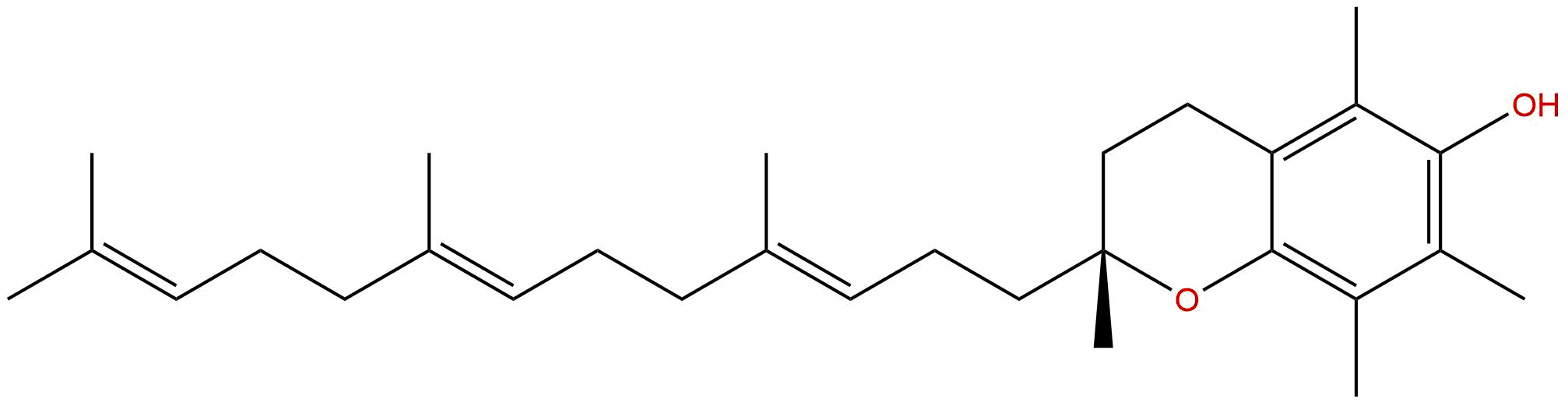


Product name: D-α-Tocotrienol
Synonym name: (R)-α-Tocotrienol
Catalogue No.: BP5330
Cas No.: 58864-81-6
Formula: C29H44O2
Mol Weight: 424.669
Botanical Source:
Type of Compound: Tocopherols
Purity: 95%~99%
Analysis Method: HPLC-DAD or/and HPLC-ELSD
Identification Method: Mass, NMR
Packing: Brown vial or HDPE plastic bottle
Storage: Store in a well closed container, protected from air and light. Put into refrigerate or freeze for long term storage.
Whenever possible, you should prepare and use solutions on the same day. However, if you need to make up stock solutions in advance, we recommend that you store the solution as aliquots in tightly sealed vials at -20℃. Generally, these will be useable for up to two weeks.
The product could be supplied from milligrams to grams
Inquire for bulk scale.
For Reference Standard and R&D, Not for Human Use Directly.
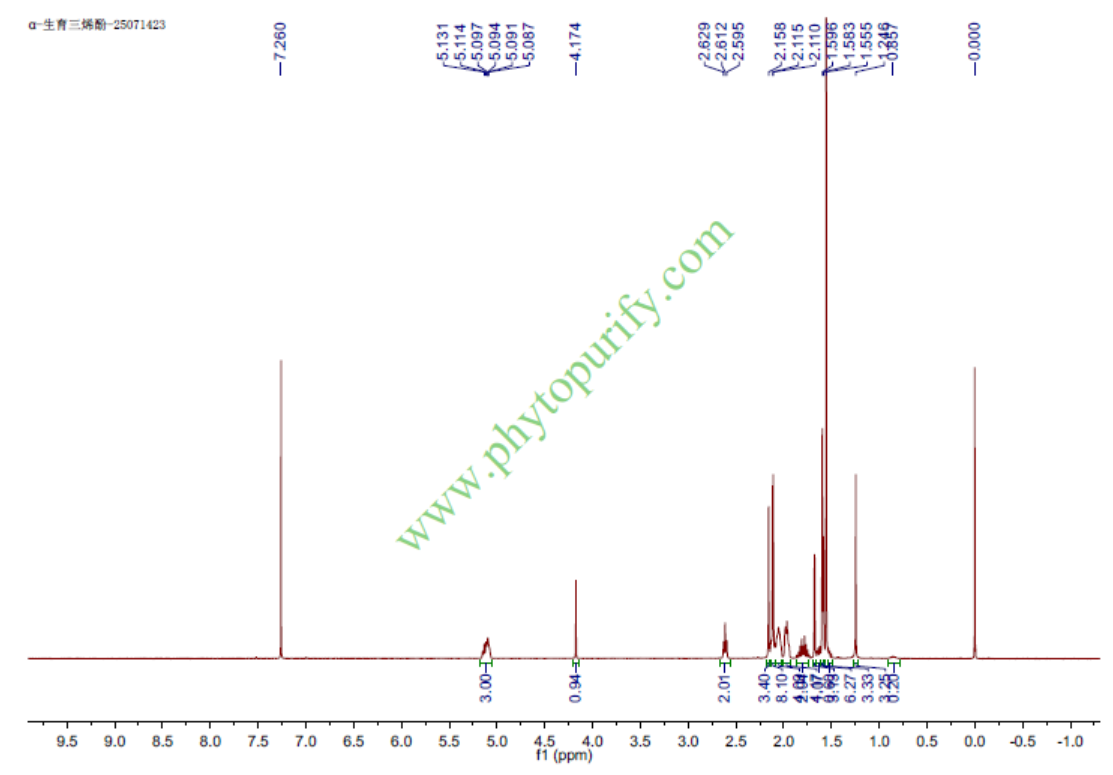
HNMR of D-α-Tocotrienol
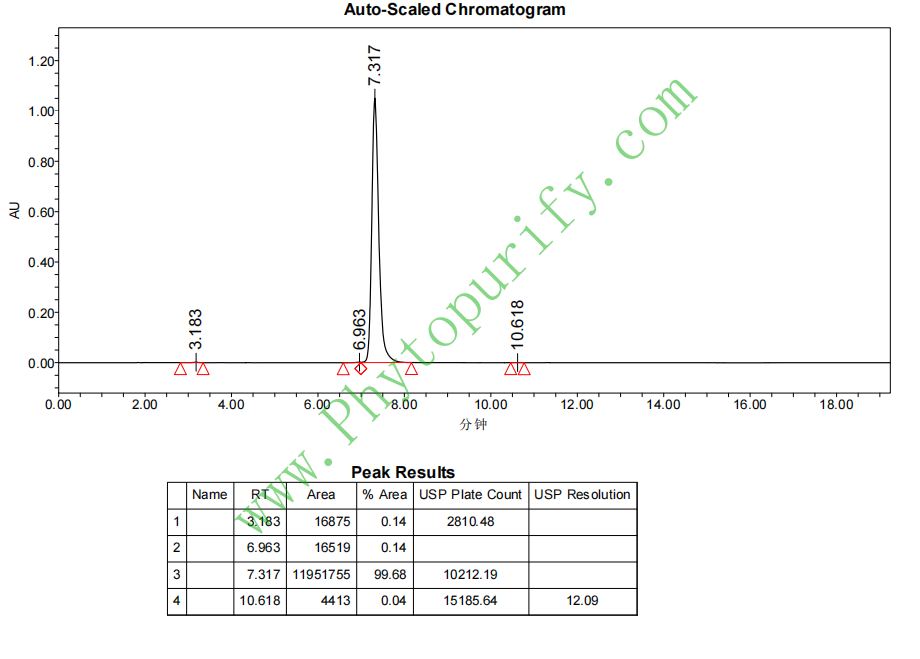
HPLC of D-α-Tocotrienol
Storage conditions:Short-term storage at 2~8℃, long-term storage at -20 ~ -80℃
29.4600
9.5433
9.5433
.0009
5.0254
8.2755
High
92.8372
3.6065
Yes
Yes
Yes
No
No
No
0.0
No
No
No
No
Natural products have always been an important source of drug discovery and development, especially in the prevention and treatment of chronic and degenerative diseases. The vitamin E family, as a classic class of fat soluble antioxidants, has long received widespread attention. Traditional vitamin E is mainly composed of two categories: tocopherols and tocotrienols, each of which contains four homologous compounds: alpha, beta, gamma, and delta. Although tocopherols, especially alpha tocopherols, dominate nutrition and clinical applications, in recent years, tocotrienols, especially alpha tocotrienols, have become a research hotspot due to their unique pharmacological effects that go beyond traditional antioxidant activity.
Alpha tocotrienol (CAS number: 58864-81-6) is a naturally occurring vitamin E analogue. Compared with saturated tocopherols, the isoprene side chain in its molecular structure contains three unsaturated double bonds, which endows it with unique membrane affinity, signal transduction regulation ability, and a wider range of biological activities. Early research mainly focused on its powerful antioxidant properties, believing that it can effectively eliminate free radicals and protect cell membranes from lipid peroxidation damage. However, subsequent in-depth research has shown that alpha tocotrienol exhibits distinct and even superior potential in neuroprotection, anti-inflammatory, anti-tumor, and cardiovascular protection compared to alpha tocopherol. What is particularly noteworthy is that it can effectively inhibit cell apoptosis, DNA breakage, and nuclear morphological changes in the context of independent oxidative stress, suggesting that its mechanism of action may involve direct regulation of specific signaling pathways rather than solely relying on its antioxidant function.
Given its positive performance in various disease models, alpha tocotrienol has evolved from a simple nutrient to a lead compound with enormous potential for development. This article aims to systematically review the chemical structure and physicochemical properties, plant sources and extraction methods, pharmacological activity, mechanism of action, pharmacological evaluation, and clinical application prospects of alpha tocotrienol, in order to provide comprehensive references for in-depth research and development in this field.
The chemical name of alpha tocotrienol is 2,5,7,8-tetramethyl-2- (4,8,12-trimethyl-3,7,11-tridecanotrienyl) -6-chromanol, with a molecular formula of C ₂ - H ₄ - O ₂ and a molecular weight of 424.6690. Its core structure consists of a chromonol ring and a fifteen carbon side chain containing three double bonds. The hydroxyl group (- OH) at position 6 on the chromophore is the key functional group for its antioxidant activity, which can provide hydrogen atoms to free radicals and terminate the lipid peroxidation chain reaction. Compared with alpha tocopherol, alpha tocotrienol has three trans double bonds on its side chain at positions 3 ', 7', and 11 ', which makes its side chain more flexible and fluid due to its unsaturated structure.
From the perspective of physicochemical properties, alpha tocotrienol is a highly lipophilic compound. Its oil-water partition coefficient (LogP) is as high as 9.5433, indicating that it has extremely high solubility in non-polar solvents, while its solubility in water is extremely low, only 0.0009 mg/mL. This strong lipophilicity enables it to efficiently embed into the phospholipid bilayer of biological membranes, especially in membrane regions rich in polyunsaturated fatty acids, effectively protecting the membrane structure from oxidative damage. Its topological polar surface area (TPSA) is 29.4600 Å ², which is relatively small and conducive to its transmembrane transport. It is worth noting that alpha tocotrienol has a high blood-brain barrier (BBB) penetration ability, which is crucial for its application in central nervous system diseases. It can enter brain tissue through passive diffusion or carrier mediated pathways, directly acting on neurons and glial cells. In addition, preliminary toxicity predictions indicate that it does not have hERG inhibitory activity (hERG inhibition: No), and the Ames test result is 0.0, suggesting a low risk of mutagenicity and good preliminary safety characteristics. However, its extremely poor water solubility is one of the main obstacles restricting its oral bioavailability and clinical application, which needs to be improved through formulation methods such as nanoemulsions, liposomes, cyclodextrin inclusion complexes, etc.
The distribution of alpha tocotrienol in nature is relatively limited, mainly found in the oils of certain specific plants, with the most abundant sources being palm oil (Elaeis guineensis) and rice bran oil (Oryza sativa). Palm oil is the most abundant commercial source of tocotrienols, accounting for over 70% of total vitamin E content, with alpha tocotrienols being one of the main components. Rice bran oil is also rich in tocotrienols, especially gamma - and delta homologs, but the content of alpha tocotrienols is also considerable. In addition, lower levels of tocotrienols have been detected in coconut oil, cocoa butter, barley, oats, as well as certain nuts and seeds.
Extracting alpha tocotrienols from these natural raw materials typically involves the following steps:
In recent years, researchers have been exploring new extraction techniques such as microwave-assisted extraction, ultrasound assisted extraction, and enzyme assisted extraction to improve extraction efficiency and purity, while reducing costs and environmental impact. These methods can effectively destroy cell walls, accelerate the release of target compounds, and reduce the use of organic solvents.
The pharmacological activity spectrum of alpha tocotrienol is extremely broad, far beyond its classical antioxidant function. Numerous in vitro and in vivo studies have revealed its potential therapeutic value in multiple disease fields.
One of the most notable activities of alpha tocotrienol is its powerful neuroprotective effect. Research has shown that it can protect neurons from various damaging factors, including glutamate excitotoxicity, hypoxia/ischemia, β - amyloid (A β) aggregation, and oxidative stress-induced damage. In the glutamate induced HT-4 hippocampal neuronal cell damage model, α - tocotrienol can significantly inhibit cell apoptosis, reduce DNA fragmentation and nuclear morphological changes, and this protective effect is independent of its antioxidant activity. In the model of cerebral ischemia-reperfusion injury, pretreatment with alpha tocotrienol can significantly reduce infarct volume and improve neurological function scores. The mechanism may involve inhibiting c-Src kinase activity, regulating PI3K/Akt and ERK signaling pathways, as well as inhibiting mitochondrial dysfunction and cytochrome c release.
α - tocotrienol shows significant anti proliferation and pro apoptosis activities in a variety of cancer types, including breast cancer, prostate cancer, colon cancer, liver cancer, lung cancer and pancreatic cancer. Its anti-tumor mechanism is multifaceted:
- Inducing cell cycle arrest By downregulating Cyclin D1 and cyclin dependent kinases (CDKs), tumor cells are arrested in the G0/G1 or G2/M phase.
- Inducing cell apoptosis By activating the caspase cascade reaction (caspase-3, -8, -9), upregulating the pro apoptotic protein Bax, downregulating the anti apoptotic protein Bcl-2, and inducing endoplasmic reticulum stress and mitochondrial dysfunction.
- Inhibit angiogenesis Inhibiting tumor angiogenesis by downregulating vascular endothelial growth factor (VEGF) and its receptors.
- Inhibition of NF - κ B and STAT3 signaling pathways These pathways play a crucial role in tumor development, progression, and drug resistance, and alpha tocotrienol can effectively inhibit their activation.
Alpha tocotrienol has multiple protective effects on the cardiovascular system. It can reduce serum total cholesterol and low-density lipoprotein cholesterol (LDL-C) levels by inhibiting the activity of hydroxymethylglutaryl-CoA reductase, which is the rate limiting enzyme for cholesterol synthesis. In addition, it can inhibit platelet aggregation, reduce the formation of atherosclerotic plaque, and improve vascular endothelial function. In the myocardial ischemia-reperfusion injury model, α - tocotrienol can reduce myocardial infarction area and protect myocardial cells from oxidative stress and apoptosis damage.
Alpha tocotrienol can inhibit the production of various inflammatory mediators, such as tumor necrosis factor - α (TNF - α), interleukin-1 β (IL-1 β), interleukin-6 (IL-6), and cyclooxygenase-2 (COX-2). Its anti-inflammatory effect is partially achieved by inhibiting the activation of NF - κ B and MAPK signaling pathways. In addition, it can also regulate the function of immune cells, such as inhibiting the maturation and antigen presentation ability of dendritic cells.
In addition to the above main activities, α - tocotrienol has also been reported to have the effects of anti osteoporosis, anti diabetes nephropathy, protecting the liver from chemical damage and delaying skin aging.
The pharmacological activity of alpha tocotrienol cannot be explained by a single mechanism, but involves a complex network of multiple molecular targets and signaling pathways. Its mechanism of action can be summarized as follows:
As a member of the vitamin E family, alpha tocotrienol has strong free radical scavenging ability. The phenolic hydroxyl groups on its colored ring can provide hydrogen atoms to lipid peroxidation radicals (LOO •), generating stable tocotrienol radicals and lipid hydroperoxides (LOOH), thereby interrupting the lipid peroxidation chain reaction. Due to its unsaturated side chains, it is easier to embed into biofilms, and its membrane antioxidant efficiency is even higher than that of alpha tocopherol. In addition, it can stabilize the membrane structure through non antioxidant mechanisms, reduce membrane fluidity, and thus reduce free radical damage to the membrane.
This is the core characteristic that distinguishes alpha tocotrienol from alpha tocopherol. It can directly interact with specific proteins or lipid rafts on the cell membrane, thereby regulating downstream signaling pathways.
- C-Src kinase inhibition In neuroprotection, alpha tocotrienol can directly bind to and inhibit the activity of non receptor tyrosine kinase c-Src, thereby blocking its downstream apoptotic signals.
- Activation of PI3K/Akt pathway In various cell models, alpha tocotrienol can activate the PI3K/Akt survival signaling pathway, promoting cell survival.
- MAPK pathway regulation It can regulate the activity of ERK, JNK, and p38 MAPK pathways, and its effect depends on cell type and stimulation conditions. It usually manifests as inhibiting the pro-inflammatory or pro apoptotic JNK and p38 pathways, while activating the pro survival ERK pathway.
- Inhibition of NF - κ B pathway By inhibiting the activity of I κ B kinase (IKK) and preventing its degradation, the nuclear translocation and transcriptional activity of NF - κ B are suppressed, which is one of the key mechanisms for its anti-inflammatory and anti-tumor activities.
- STAT3 pathway inhibition In tumor cells, alpha tocotrienol can inhibit the phosphorylation and dimerization of STAT3, thereby downregulating the expression of its target genes (such as Cyclin D1, Bcl xL, VEGF).
Recent studies have found that alpha tocotrienol can also exert its biological effects through epigenetic mechanisms. For example, it can inhibit the activity of histone deacetylase (HDAC), especially HDAC1 and HDAC3, thereby altering the structure of chromatin and upregulating or downregulating the expression of specific genes. In addition, it can also affect DNA methylation patterns.
Alpha tocotrienol can downregulate the activity of HMG CoA reductase through post transcriptional mechanisms. It effectively reduces cholesterol synthesis by accelerating the degradation of the enzyme rather than inhibiting its mRNA expression. This mechanism is different from statins and provides a new approach for the treatment of hypercholesterolemia.
Although alpha tocotrienol has a wide range of pharmacological activities, its medicinal properties face severe challenges, mainly due to its extremely poor physicochemical properties and pharmacokinetic characteristics.
Overall, although alpha tocotrienol complies with some pharmaceutical regulations, its extremely poor water solubility and high lipophilicity make it a typical "insoluble" candidate compound that requires advanced formulation technology to overcome this bottleneck.
The oral absorption of alpha tocotrienol is poor and varies greatly among individuals. Its absorption depends on the formation of bile acids and chylomicrons, mainly transported through the lymphatic system. Unlike alpha tocopherol, alpha tocotrienol has a faster metabolism and clearance rate in the body. It is mainly subjected to ω - oxidation by cytochrome P450 enzymes (especially CYP4F2) in the liver, and then undergoes β - oxidation to produce carboxylic acid metabolites, which are ultimately excreted from the body through urine and feces. Its plasma half-life is relatively short (usually 4-8 hours), much lower than alpha tocopherol (about 48 hours). In addition, the affinity of alpha tocopherol transporter protein (alpha TP) in the liver for tocotrienol is much lower than its affinity for alpha tocopherol, which leads to a shorter retention time of alpha tocotrienol in the body and limited tissue distribution. In order to improve its bioavailability, researchers have developed various novel delivery systems, such as self emulsifying drug delivery systems (SEDD), nano lipid carriers, polymer nanoparticles, and phospholipid complexes, which can significantly increase its oral absorption rate and plasma exposure.
Based on its unique pharmacological activity and preliminary safety data, alpha tocotrienol has shown broad application prospects in multiple therapeutic fields, but also faces many challenges.
Given its strong neuroprotective effects, anti apoptotic properties, and excellent BBB penetration ability, alpha tocotrienol has great potential in the prevention and treatment of neurodegenerative diseases such as Alzheimer's disease, Parkinson's disease, Huntington's disease, and ischemic stroke. Preclinical studies have provided strong evidence, but there is still a lack of large-scale, rigorously designed clinical trials to validate its efficacy in humans. Future research should focus on its intervention effect in the early stages of the disease, as well as its combined application with other neuroprotective agents.
The anti-tumor activity of alpha tocotrienol makes it a promising adjuvant drug for cancer chemotherapy and radiotherapy. It not only directly inhibits tumor growth, but may also reverse tumor cell resistance and alleviate the toxic side effects of traditional chemotherapy drugs by inhibiting pathways such as NF - κ B. For example, it has been proven to enhance the anti-tumor effects of drugs such as tamoxifen and gemcitabine. However, how to effectively deliver it to tumor tissue and achieve sufficient therapeutic concentration is the key to clinical translation.
Its role in reducing cholesterol, anti platelet aggregation and anti atherosclerosis makes it valuable in the primary and secondary prevention of cardiovascular diseases. Especially its mechanism of inhibiting HMG CoA reductase through non statin pathways provides a new treatment option for patients with hypercholesterolemia. However, its short half-life and rapid metabolic characteristics require the development of sustained-release formulations to maintain effective blood drug concentrations.
Alpha tocotrienol, as a unique natural vitamin E analogue, has become a shining pearl in the field of natural product pharmacology due to its extensive pharmacological effects beyond traditional antioxidant activity, especially its neuroprotective, anti-tumor, and cardiovascular protective activities independent of oxidative stress. Its unique molecular structure endows it with biological characteristics distinct from alpha tocopherol, including stronger membrane affinity, regulatory ability on specific signaling pathways, and faster in vivo metabolism. However, its extremely poor water solubility and oral bioavailability are the main bottlenecks that restrict its transition from laboratory to clinical application. Future research needs to deepen the elucidation of its molecular mechanism while vigorously promoting formulation innovation and structural modification research, in order to overcome these barriers to drug formation. With the continuous advancement of nanotechnology and medicinal chemistry, alpha tocotrienol and its derivatives are expected to play an important role in the prevention and treatment of major chronic diseases such as neurodegenerative diseases, cancer, and cardiovascular diseases, bringing new benefits to human health.
