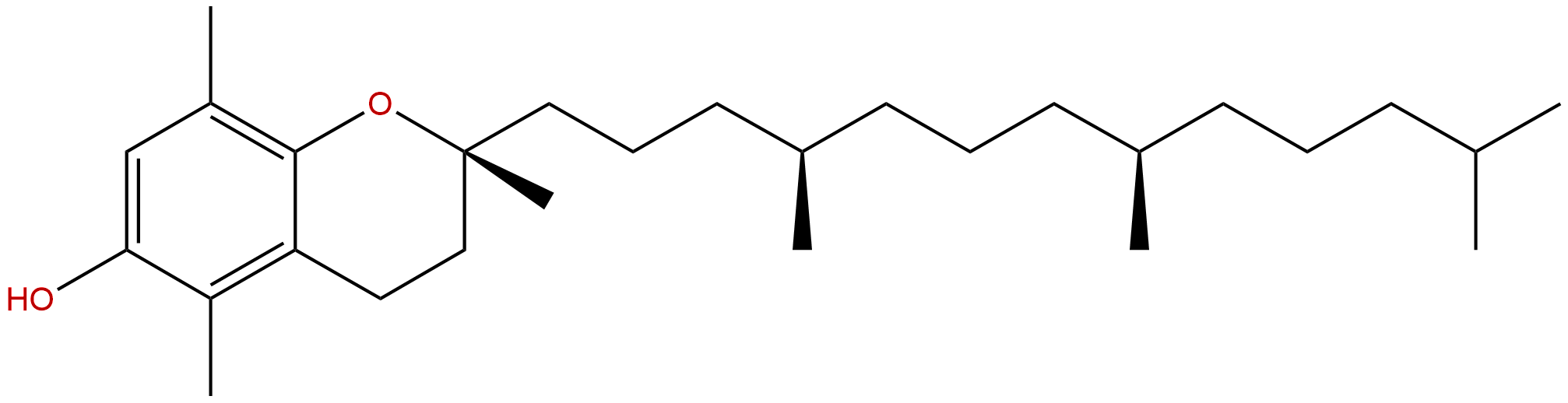


Product name: β-Tocopherol
Synonym name:
Catalogue No.: SBP03357
Cas No.: 148-03-8
Formula: C28H48O2
Mol Weight: 416.69
Botanical Source:
Physical Description:
Type of Compound: Phenols
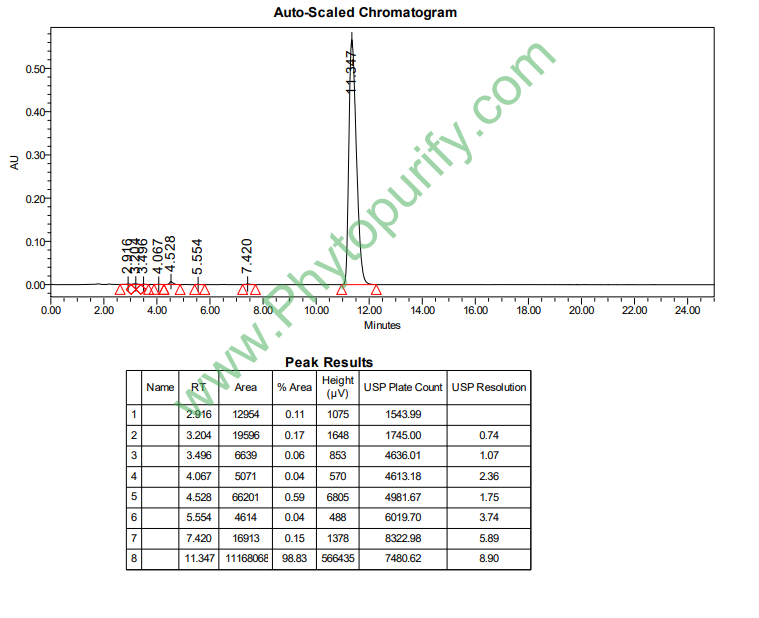
Purity: 95%~99%
Analysis Method: HPLC-DAD or/and HPLC-ELSD
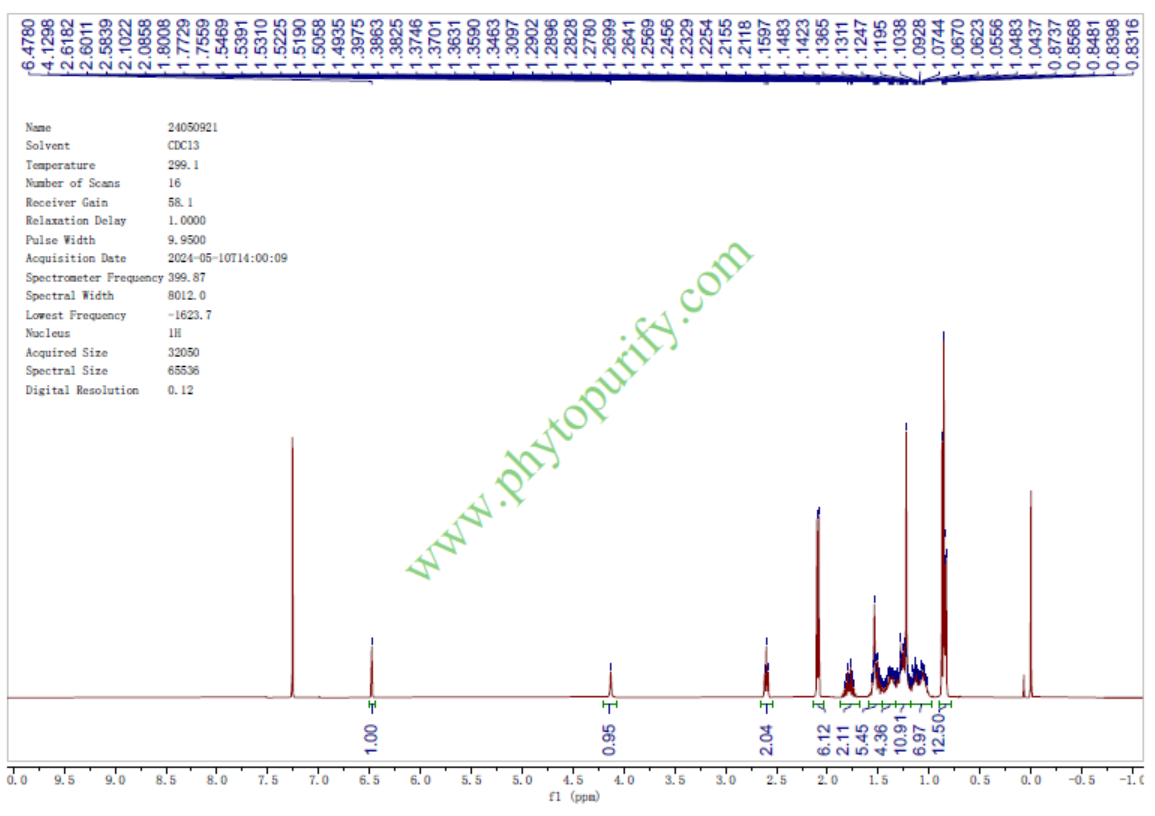
Identification Method: Mass, NMR
Packing: Brown vial or HDPE plastic bottle
The product could be supplied from milligrams to grams. Inquire for bulk scale.
We provide solution to improve the water-solubility of compounds, thereby facilitating the variety of activity tests and clinic uses.
For Reference Standard and R&D, Not for Human Use Directly.
HPLC of β-Tocopherol
HNMR of β-Tocopherol
Storage conditions:Short-term storage at 2~8℃, long-term storage at -20 ~ -80℃
29.4600
10.0530
10.0540
.0002
3.9440
7.2876
High
93.9968
3.8173
Yes
No
Yes
No
No
No
0.0
No
No
No
No
Vitamin E is a family of eight lipophilic compounds, including four tocopherols (alpha -, beta -, gamma -, delta tocopherols) and four tocotrienols (alpha -, beta -, gamma -, delta tocotrienols). Among them, alpha tocopherol has long occupied a central position in vitamin E research due to its highest biological activity in the human body and its main form of existence in plasma. However, with the deepening of research, other tocopherol homologs, especially β - tocopherol, whose unique chemical structure and potential biological activity are gradually attracting widespread attention in the field of natural product pharmacology.
β - tocopherol, also known as 5,8-dimethyl-2- (4,8,12-trimethyltridecyl) -6-benzodihydropyranol, is a member of the tocopherol family. Compared with alpha tocopherol (5,7,8-trimethyl), beta tocopherol has one methyl group at positions 5 and 8 of the benzodihydropyran ring, while there is no methyl substitution at position 7. This subtle chemical structural difference endows β - tocopherol with physicochemical properties and biological activity that differ from α - tocopherol. Although β - tocopherol is not as widely distributed in nature as α - and γ - tocopherol, and its content is usually lower, it is abundant in certain specific plant oils, such as cottonseed oil, making it a natural product with unique research value.
For a long time, β - tocopherol has been mainly regarded as a vitamin E homolog with antioxidant activity. However, recent studies have revealed that its pharmacological effects go far beyond clearing free radicals. β - tocopherol has shown unique potential in anti-inflammatory, anti-tumor, neuroprotective, and regulating cellular signaling pathways. Its mechanism of action also involves multiple molecular targets, such as tyrosinase (TYR), matrix metalloproteinases (MMPs), and nuclear factor E2 related factor 2 (Nrf2). These findings challenge the traditional view that alpha tocopherol is the only active form and suggest that beta tocopherol may play an important role as a multi-target natural active molecule in the prevention and treatment of oxidative stress-related diseases, inflammatory diseases, and even certain cancers.
This article aims to provide a comprehensive professional review of β - tocopherol, systematically elaborating on its chemical structure and physicochemical properties, plant sources and extraction methods, pharmacological activity, mechanism of action and molecular targets, pharmacological evaluation and pharmacokinetic characteristics, and looking forward to its clinical application prospects, in order to provide scientific basis for the in-depth research and development of β - tocopherol.
The chemical structure of β - tocopherol is the basis of its biological activity. Its core structure consists of a 6-benzodihydropyran ring and a saturated isoprenoid side chain (plant-based side chain). The C-2 position of the benzodihydropyran ring is connected to the plant-based side chain, and the phenolic hydroxyl group (C-6 position) on the ring is the key functional group for its antioxidant activity. The key difference between β - tocopherol and α - tocopherol lies in the methyl substitution pattern on the benzene ring: α - tocopherol has three methyl groups at positions C-5, C-7, and C-8, while β - tocopherol only has two methyl groups at positions C-5 and C-8, with no substitution at position C-7. This structural difference results in a slightly higher molecular polarity of β - tocopherol compared to α - tocopherol, but overall it still belongs to a highly lipophilic molecule.
Its molecular formula is C ₂₈ H ₄₈ O ₂, and its molecular weight is 416.68 g/mol. The calculated lipid water partition coefficient (LogP) is as high as 10.053, indicating that it has strong lipophilicity and is highly soluble in organic solvents such as ethanol, ether, chloroform, and vegetable oil, but almost insoluble in water (with a water solubility of only 0.0002 mg/mL). This high lipophilicity determines that it is mainly distributed in cell membranes, lipoproteins, and adipose tissue in the body. The topological polar surface area (TPSA) is 29.46 Å ², far below the threshold of 60 Å ², which is consistent with its high lipophilicity and ease of penetrating biological membranes.
The physical state of β - tocopherol is usually a light yellow to amber transparent viscous oily liquid, which is prone to oxidation and deterioration under light, high temperature, and alkaline conditions, but relatively stable under anaerobic conditions. Its antioxidant activity mainly originates from the phenolic hydroxyl group on the benzodihydropyran ring, which can provide a hydrogen atom to lipid peroxidation radicals (ROO ·), generating relatively stable tocopherol radicals and interrupting the lipid peroxidation chain reaction. Compared with alpha tocopherol, the antioxidant activity of beta tocopherol is generally considered slightly weaker, which is related to the smaller number of methyl groups on its benzene ring, resulting in a slight difference in its free radical stability. However, in certain specific oxidative environments and systems, β - tocopherol may exhibit unique antioxidant advantages.
The distribution of β - tocopherol in nature is not as widespread as that of α - and γ - tocopherol, and its content is relatively low in most plant oils. However, cottonseed oil is the most abundant known source of β - tocopherol. In cottonseed oil, the content of β - tocopherol can account for a considerable proportion of total tocopherols, sometimes even exceeding 30%, making it the preferred raw material for extracting and separating β - tocopherol. In addition, some other vegetable oils such as wheat germ oil, soybean oil, corn oil, palm oil, and certain nuts and seeds also contain trace amounts of β - tocopherol, but the content is usually extremely low, making it difficult to achieve economically effective extraction.
Given the significant differences in the content of β - tocopherol in vegetable oils, the extraction method mainly relies on starting from raw materials rich in β - tocopherol (such as cottonseed oil) and obtaining them through a series of separation and purification steps. The traditional extraction method mainly includes the following steps:
Saponification and Extraction Firstly, plant oils rich in β - tocopherols (such as cottonseed oil) are subjected to saponification treatment, and triglycerides in the oil are hydrolyzed into fatty acid salts (soap) and glycerol using an ethanol solution of potassium hydroxide or sodium hydroxide. After saponification reaction, liquid-liquid extraction is carried out by adding water and insoluble organic solvents such as ether and n-hexane. Unsaponifiable substances such as β - tocopherol will preferentially distribute to the organic phase, thereby separating from fatty acid salts and glycerol.
Preliminary purification The crude extract obtained contains various impurities such as tocopherol homologs, sterols, pigments, etc. Preliminary separation can be achieved through column chromatography (such as silica gel column chromatography) or thin layer chromatography. By using different proportions of organic solvents (such as n-hexane/ether mixtures) as the mobile phase, separation can be achieved based on the polarity differences of each component. The polarity of β - tocopherol is between alpha - and gamma tocopherol. By optimizing the elution conditions, a component rich in β - tocopherol can be obtained.
Efficient separation and purification To obtain high-purity β - tocopherol, more efficient separation techniques are needed. High performance liquid chromatography (HPLC) is currently the most commonly used and effective method. The baseline separation of β - tocopherol from other tocopherol homologues can be achieved by using a normal or reverse phase chromatography column (such as a C18 column) combined with a UV detector or a fluorescence detector. By preparative HPLC, the target peak can be collected to obtain a standard β - tocopherol with a purity of over 95%.
Modern extraction techniques In recent years, some green and efficient extraction techniques have also been applied to the extraction of tocopherols, such as supercritical fluid extraction (SFE, commonly using CO ₂ as a solvent), molecular distillation, etc. These technologies have the advantages of low operating temperature, no solvent residue, and good selectivity, especially suitable for the extraction of thermosensitive natural products. For β - tocopherol, supercritical CO ₂ extraction combined with appropriate entrainers can efficiently enrich tocopherol from by-products such as cottonseed oil deodorized distillate.
Although the pharmacological activity research of β - tocopherol is not as extensive as that of α - tocopherol, there is evidence to suggest that it has multiple important biological activities, especially showing unique potential in antioxidant, anti-inflammatory, anti-tumor, and neuroprotective aspects.
1. Antioxidant activity
As a member of the vitamin E family, the core pharmacological activity of β - tocopherol is its antioxidant effect. It can effectively eliminate lipid peroxidation free radicals, protect cell membranes and lipoproteins from oxidative damage. Research has shown that β - tocopherol has comparable efficacy to α - tocopherol in inhibiting low-density lipoprotein (LDL) oxidation, and even performs better in certain models. In addition, β - tocopherol can also work synergistically with endogenous antioxidant enzymes such as glutathione peroxidase (GPX) and superoxide dismutase (SOD) to maintain cellular redox balance. Its antioxidant activity is closely related to the hydrogen supply ability of its phenolic hydroxyl group, and the absence of the C-7 methyl group may give it a more flexible conformation in specific microenvironments, thereby more effectively embedding into biofilms and capturing free radicals.
2. Anti inflammatory activity
More and more evidence suggests that β - tocopherol has significant anti-inflammatory effects. It can inhibit the production of various pro-inflammatory factors, such as tumor necrosis factor - α (TNF - α), interleukin-1 β (IL-1 β), interleukin-6 (IL-6), etc. Its anti-inflammatory mechanism may involve inhibiting the activation of the nuclear factor kappa B (NF - κ B) signaling pathway. NF - κ B is a key transcription factor that regulates inflammatory responses. β - tocopherol can inhibit the activity of I κ B kinase (IKK), prevent the phosphorylation and degradation of I κ B, and thus suppress the nuclear translocation of NF - κ B and the expression of downstream inflammatory genes. In addition, β - tocopherol can regulate the activity of cyclooxygenase-2 (COX-2) and inducible nitric oxide synthase (iNOS), reducing the production of inflammatory mediators such as prostaglandin E2 (PGE2) and nitric oxide (NO).
3. Antitumor activity
β - tocopherol exhibits anti proliferative and apoptosis inducing activity in various tumor cell lines. Studies have found that β - tocopherol can inhibit the growth of prostate cancer, breast cancer, colon cancer and other cancer cells. Its anti-tumor mechanism may involve multiple aspects: firstly, by reducing reactive oxygen species (ROS) levels through its antioxidant activity, it inhibits tumor cell proliferation signals driven by ROS; Secondly, it can directly regulate the expression of cell cycle related proteins such as Cyclin D1 and p21, blocking the cell cycle in the G1/S phase; Thirdly, it can activate the mitochondrial apoptosis pathway, upregulate the pro apoptotic protein Bax, downregulate the anti apoptotic protein Bcl-2, and activate Caspase-3 and Caspase-9, ultimately inducing cell apoptosis. In addition, β - tocopherol can also inhibit the activity of matrix metalloproteinases (MMPs, such as MMP1 and MMP3), thereby suppressing the invasion and metastasis ability of tumor cells.
4. Neuroprotective activity
Given its high lipophilicity and ability to penetrate the blood-brain barrier, β - tocopherol also exhibits potential in neuroprotection. In models of neurodegenerative diseases such as Alzheimer's disease (AD) and Parkinson's disease (PD), oxidative stress and neuroinflammation are key pathological mechanisms. β - tocopherol can exert neuroprotective effects by clearing free radicals, inhibiting neuroinflammatory responses (such as suppressing excessive activation of microglia), and reducing neurotoxicity induced by β - amyloid protein (A β). Research has shown that β - tocopherol can upregulate the expression of antioxidant enzymes such as SOD, CAT, and GPX1, activate the Nrf2/ARE signaling pathway, enhance cellular antioxidant defense capabilities, and protect neurons from oxidative damage.
The pharmacological activity of β - tocopherol is not caused by a single mechanism, but by acting on multiple molecular targets and regulating multiple signaling pathways. Its core mechanism of action can be summarized as follows:
1. Direct antioxidant and free radical scavenging
This is the most classic mechanism of action of β - tocopherol. The phenolic hydroxyl group (- OH) on its benzodihydropyran ring can provide a hydrogen atom to lipid peroxidation radicals (ROO ·), forming stable tocopherol radicals (Toc ·). This free radical is relatively stable and can further react with another lipid peroxide free radical to generate non free radical products, thereby interrupting the lipid peroxidation chain reaction. This process directly protects the cell membrane, mitochondrial membrane, and lipoproteins from oxidative damage. Related targets include endogenous antioxidant enzymes such as SOD1, CAT, GPX1, etc. β - tocopherol can upregulate the expression or activity of these enzymes, enhancing the cellular antioxidant defense network.
2. Regulating redox sensitive signaling pathways
β - tocopherol can affect multiple signaling pathways by regulating the redox state within cells. Among them, the Nrf2/ARE signaling pathway is a key target for its antioxidant and cell protective effects. Under normal conditions, Nrf2 binds to Keap1 and is degraded by ubiquitination. When cells are subjected to oxidative stress, β - tocopherol can promote the dissociation of Nrf2 from Keap1, stabilize Nrf2 and translocate it into the nucleus, bind with antioxidant response elements (ARE), and initiate the transcription of downstream antioxidant and detoxifying enzyme genes, such as HMOX1 (heme oxygenase-1), NQO1 (quinone oxidoreductase 1), GST (glutathione S-transferase), etc. In addition, β - tocopherol can inhibit the activation of the NF - κ B signaling pathway, thereby reducing the production of inflammatory factors.
3. Regulating proteins related to cell proliferation and apoptosis
In terms of anti-tumor effects, β - tocopherol directly acts on cell cycle and apoptosis regulatory proteins. It can inhibit the activity of cyclin dependent kinases (CDKs), upregulate the expression of cell cycle inhibitory proteins such as p21 and p27, thereby blocking the cell cycle in the G1/S phase. At the same time, it can induce tumor cell apoptosis by regulating the balance of Bcl-2 family proteins (such as upregulating Bax and downregulating Bcl-2), as well as activating the Caspase cascade reaction. In addition, β - tocopherol can also inhibit the expression and activity of matrix metalloproteinases such as MMP1 and MMP3, which play a key role in tumor invasion and metastasis.
4. Inhibit tyrosinase activity
β - tocopherol has been found to inhibit the activity of tyrosinase (TYR). Tyrosinase is a key rate limiting enzyme in the synthesis of melanin. By inhibiting TYR, β - tocopherol can reduce the production of melanin, providing a theoretical basis for its application in skin whitening and the treatment of pigmentation diseases.
5. Other potential targets
In addition to the aforementioned targets, β - tocopherol may also interact with other proteins, such as protein kinase C (PKC). Research has shown that alpha tocopherol can inhibit the activity of PKC, while beta tocopherol may also have similar effects, thereby affecting cell proliferation, differentiation, and apoptosis. In addition, β - tocopherol may exert its biological activity by regulating sphingomyelin metabolism and affecting gene expression (such as through epigenetic modifications).
As a natural product, the evaluation of the pharmacological properties of β - tocopherol is a key factor in determining whether it can be developed from laboratory research to clinical application. Based on the provided pharmacological parameters, we can conduct a preliminary evaluation.
1. Physical and chemical properties and drug like properties
The molecular weight of β - tocopherol is 416.68 Da, slightly higher than the threshold of molecular weight less than 500 Da in Lipinski's Rule of Five, which meets the requirements. Its LogP is as high as 10.053, far above the threshold of 5, indicating its extremely strong lipophilicity, which may lead to poor water solubility (0.0002 mg/mL), which will affect its oral absorption and bioavailability. The TPSA is 29.46 Å ², which is less than 140 Å ², indicating its good cell membrane penetration ability. Overall, the physicochemical properties of β - tocopherol tend towards high lipophilicity and low water solubility, which is both its advantage (easy entry into cell membranes and lipoproteins) and a challenge for its drug development (poor oral absorption).
2. Pharmacokinetic characteristics
3. Safety evaluation
According to the provided parameters, the result of β - tocopherol in the Ames test is 0.0, indicating that it does not have mutagenicity. The hERG inhibition assessment is' no ', indicating a low risk of causing QT interval prolongation and arrhythmia in the heart. These preliminary security data are positive. However, when used as high-dose supplements, potential side effects such as interference with the function of vitamin K-dependent coagulation factors (especially in populations taking anticoagulant drugs) and other unknown effects that may arise from long-term high intake should still be considered.
4. Challenges and strategies for drug development
The main challenge for the pharmacological development of β - tocopherol lies in its extremely poor water solubility and low oral bioavailability. To improve its medicinal properties, the following strategies can be adopted:
- Formulation technology Develop new drug delivery systems, such as liposomes, nanoemulsions, solid lipid nanoparticles, cyclodextrin inclusion complexes, etc., to improve their solubility and oral absorption rate.
- Structural modification Chemical modification of its phenolic hydroxyl group or side chain to synthesize prodrugs or analogues, in order to improve its water solubility and pharmacokinetic properties while maintaining or enhancing its biological activity.
- combination therapy Combined use with other antioxidants or drugs may produce synergistic effects and reduce the required dosage.
Based on the unique pharmacological activity and preliminary safety data of β - tocopherol, its clinical application prospects in multiple disease fields are worth looking forward to.
1. Oxidative stress-related diseases
The strong antioxidant capacity of β - tocopherol has potential in preventing and treating diseases closely related to oxidative stress, such as cardiovascular disease (atherosclerosis), non-alcoholic fatty liver disease (NAFLD), chronic obstructive pulmonary disease (COPD), etc. By protecting LDL from oxidation, reducing liver lipid peroxidation, and inhibiting lung inflammation, β - tocopherol may serve as an adjuvant therapy to slow down disease progression.
2. Inflammatory diseases
Its anti-inflammatory activity suggests that β - tocopherol may play a role in chronic inflammatory diseases such as rheumatoid arthritis, inflammatory bowel disease (IBD), and dermatitis. By inhibiting the NF - κ B pathway and reducing the production of pro-inflammatory cytokines, β - tocopherol is expected to alleviate inflammatory symptoms and improve patients' quality of life.
3. Prevention and adjuvant therapy of tumors
The anti-tumor activity of β - tocopherol, especially its role in inhibiting cell proliferation, inducing apoptosis, and suppressing invasion and metastasis, makes it a candidate molecule for tumor chemoprevention and adjuvant therapy. In the future, more clinical studies are needed to verify its effect in specific cancers (such as prostate cancer and breast cancer), and explore its synergy with chemotherapy drugs or radiotherapy.
4. Neurodegenerative diseases
Given its ability to penetrate the blood-brain barrier and its antioxidant, anti-inflammatory, and neuroprotective effects, β - tocopherol has shown promising prospects in the prevention and treatment of neurodegenerative diseases such as Alzheimer's disease and Parkinson's disease. It may delay disease progression by reducing A β toxicity, inhibiting microglial activation, protecting mitochondrial function, and other mechanisms.
5. Skin Health and Beauty
The inhibitory effect of β - tocopherol on tyrosinase gives it the potential to be developed as a skin whitening agent. Meanwhile, its antioxidant activity can protect the skin from oxidative damage and photoaging caused by ultraviolet radiation. Therefore, β - tocopherol can be used as a functional cosmetic ingredient in whitening, anti wrinkle, and sunscreen products.
prospect
Despite significant progress in the study of β - tocopherol, there are still many challenges to be faced. Firstly, its low oral bioavailability is the main bottleneck limiting its clinical application, requiring the development of efficient delivery systems. Secondly, its specific metabolic pathways and active metabolites in the body are not fully understood and require further research. Thirdly, the optimal dosage, long-term safety, and interactions with other drugs in the human body still need to be clarified through large-scale clinical trials. Finally, the interactions and synergistic effects between β - tocopherol and other vitamin E homologs such as α - tocopherol in vivo are also important directions for future research.
With a deeper understanding of the mechanism of action of β - tocopherol and the continuous emergence of new formulation technologies, we have reason to believe that this long neglected vitamin E homologue will play an increasingly important role in the future development of natural medicines and disease prevention and treatment.
As a relatively low-key member of the vitamin E family, β - tocopherol's unique chemical structure endows it with physicochemical properties and biological activity distinct from α - tocopherol. It is not only an effective fat soluble antioxidant, but also a multifunctional natural product with anti-inflammatory, anti-tumor, neuroprotective, and tyrosinase inhibitory activities. Its mechanism of action involves direct clearance of free radicals, regulation of key signaling pathways such as Nrf2/ARE and NF - κ B, regulation of cell cycle and apoptosis related proteins, and inhibition of specific enzyme activity at multiple levels. Despite facing challenges such as poor water solubility and low oral bioavailability, its high lipophilicity, good blood-brain barrier penetration, and preliminary safety data provide possibilities for its application in areas such as oxidative stress, inflammation, tumors, neurodegenerative diseases, and skin health. In the future, by developing advanced formulation technologies and conducting in-depth preclinical and clinical research, β - tocopherol is expected to move from the laboratory to clinical use, becoming a valuable natural medicine or functional food ingredient, and contributing to human health. The in-depth study of β - tocopherol not only enriches our understanding of the diversity of the vitamin E family, but also provides new ideas for developing multi-target therapeutic strategies based on natural products.
