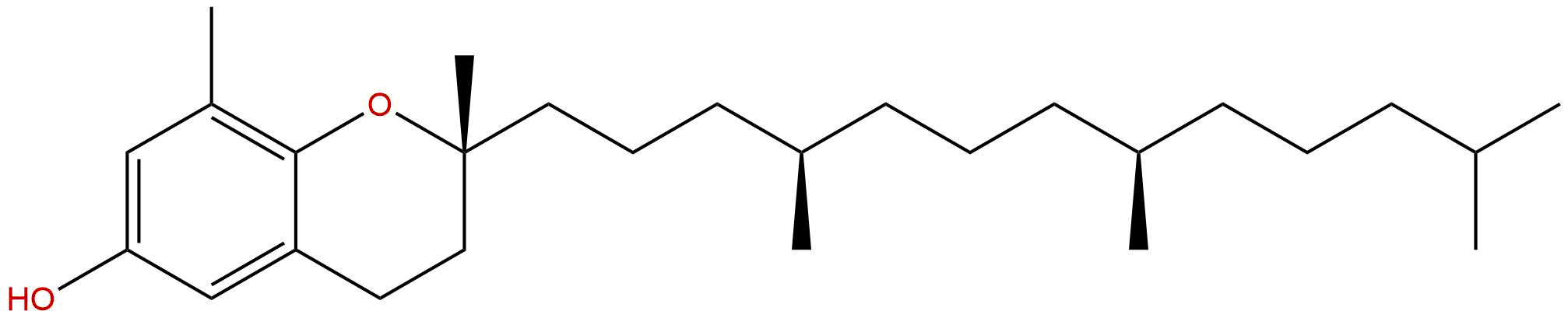


Product name: D-δ-Tocopherol
Synonym name: D-delta-Tocopherol; δ-Tocopherol; δ-Vitamin E
Catalogue No.: BP5329
Cas No.: 119-13-1
Formula: C27H46O2
Mol Weight: 402.663
Botanical Source:
Type of Compound: Tocopherols
Purity: 95%~99%
Analysis Method: HPLC-DAD or/and HPLC-ELSD
Identification Method: Mass, NMR
Packing: Brown vial or HDPE plastic bottle
Storage: Store in a well closed container, protected from air and light. Put into refrigerate or freeze for long term storage.
Whenever possible, you should prepare and use solutions on the same day. However, if you need to make up stock solutions in advance, we recommend that you store the solution as aliquots in tightly sealed vials at -20℃. Generally, these will be useable for up to two weeks.
The product could be supplied from milligrams to grams
Inquire for bulk scale.
For Reference Standard and R&D, Not for Human Use Directly.
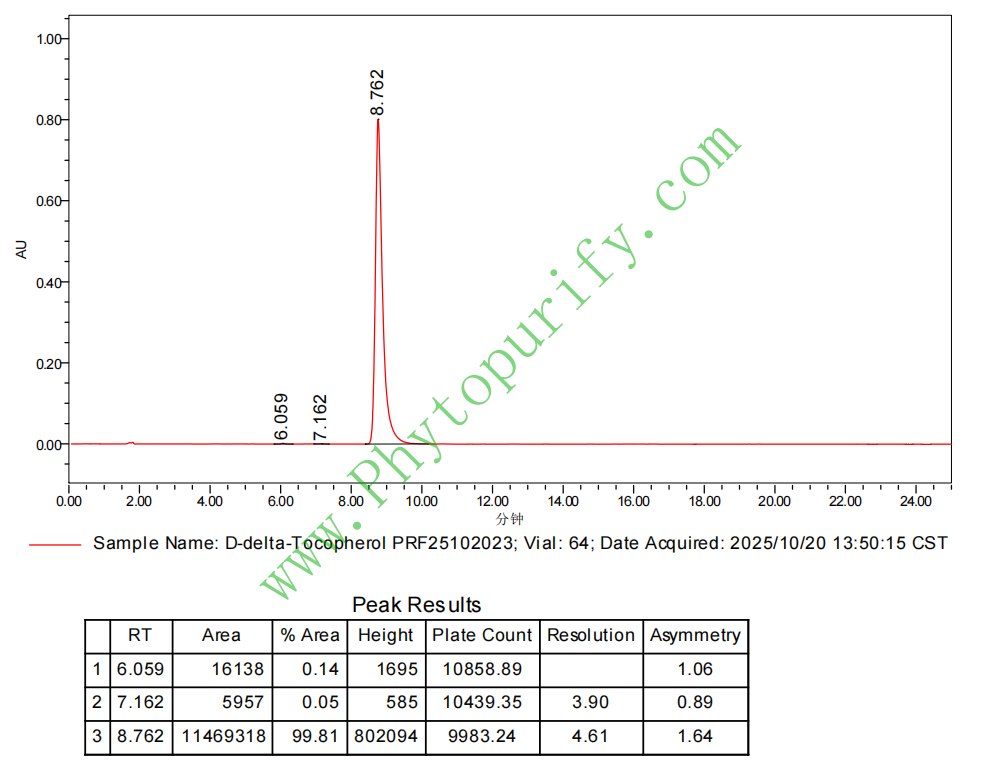
HPLC of D-δ-Tocopherol
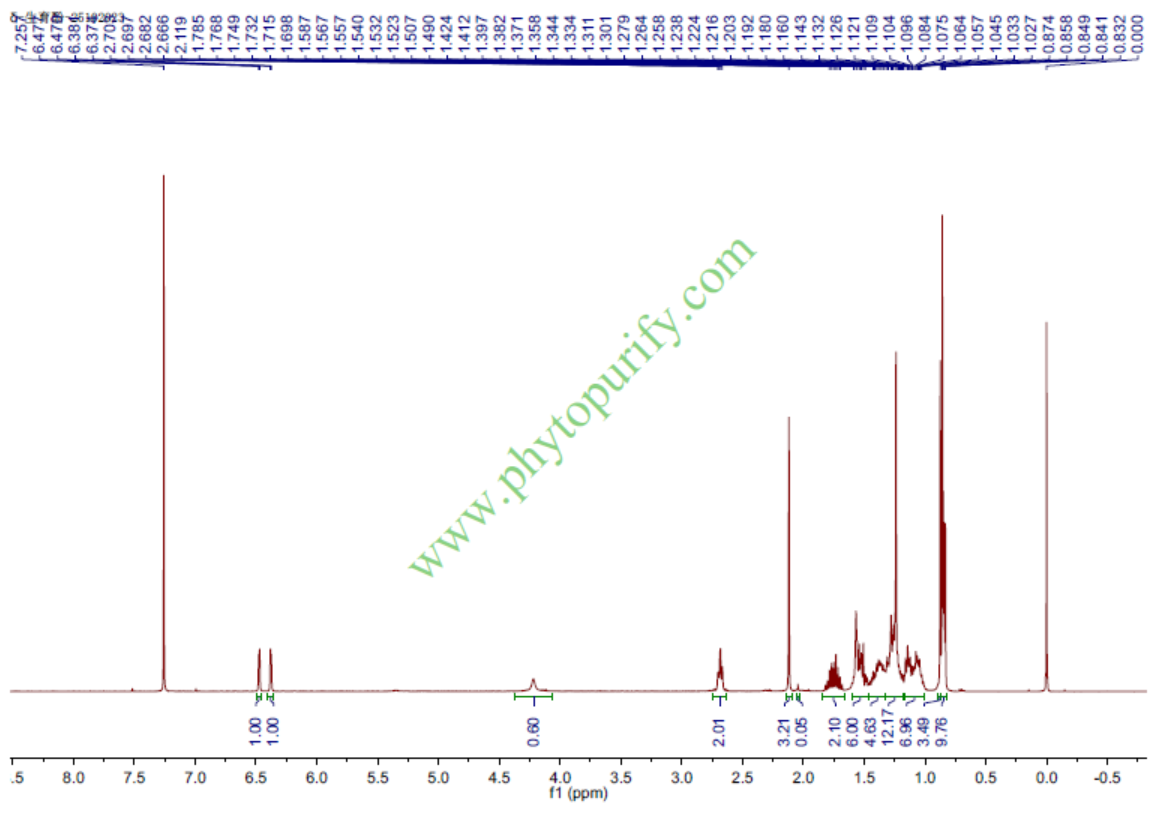
HNMR of D-δ-Tocopherol
Storage conditions:Short-term storage at 2~8℃, long-term storage at -20 ~ -80℃
29.4600
9.7117
9.7117
.0002
4.2754
5.8594
High
94.2767
3.7402
Yes
No
Yes
No
No
No
0.0
No
No
No
No
Vitamin E is a general term for a family of fat soluble vitamins, including tocopherols and tocotrienols. Each class is further divided into four isomers based on their methylation positions and quantities: alpha, beta, gamma, and delta. For a long time, alpha tocopherol has received the most attention due to its highest biological activity and plasma concentration in the human body, and is widely regarded as the main active form of vitamin E. However, as research deepens, other isomers of tocopherol, especially delta tocopherol, are gradually showing unique biological activity and potential therapeutic value.
δ - tocopherol (CAS number: 119-13-1) is a naturally occurring isomer of vitamin E, characterized by a benzodihydropyran-6-ol core with methyl substitution at position 8 and no methyl substitution at positions 5 and 7. This unique methylation pattern endows delta tocopherol with different physicochemical properties and biological activities compared to other isomers of tocopherol. δ - tocopherol is mainly found in plant oils in nature, especially abundant in corn oil and soybean oil, and is an important contributor to the antioxidant activity of these plant oils.
In recent years, research on δ - tocopherol has expanded from simple food antioxidants to multiple biomedical fields. Research has shown that δ - tocopherol has multiple pharmacological activities such as anti-inflammatory, anti-tumor, neuroprotective, and cardiovascular protection, and its mechanism of action involves multiple signaling pathways and molecular targets. Compared with alpha tocopherol, delta tocopherol exhibits stronger efficacy in certain biological activities, especially in inducing tumor cell apoptosis and inhibiting inflammatory responses. In addition, the pharmacological characteristics of δ - tocopherol, including its high lipid solubility, good blood-brain barrier permeability, and low toxicity risk, make it a candidate molecule worth paying attention to in drug development.
This review aims to systematically summarize the chemical structure characteristics, plant sources and extraction methods, pharmacological activities, mechanisms of action, pharmacokinetic properties, and clinical application prospects of δ - tocopherol, in order to provide comprehensive academic references for the in-depth research and development of this natural product.
The chemical name of δ - tocopherol is 2,8-dimethyl-2- (4,8,12-trimethyltridecyl) chroman-6-ol, with a molecular formula of C ₂₇ H ₄₆ O ₂ and a molecular weight of 402.6630 g/mol. Its core structure consists of a benzodihydropyran ring (chroman ring) and a saturated plant-based side chain. The hydroxyl group at position 6 of the benzodihydropyran ring is the key functional group that endows it with antioxidant activity, while the methyl substitution at position 8 is the structural feature that distinguishes delta tocopherol from other tocopherol isomers.
Compared with other isomers of tocopherol, δ - tocopherol has the lowest degree of methylation on the chromogenic ring: α - tocopherol has three methyl groups at positions 5, 7, and 8; β - tocopherol has two methyl groups at positions 5 and 8; Gamma tocopherol has two methyl groups at positions 7 and 8; And δ - tocopherol only has one methyl group at position 8. The difference in this methylation pattern directly affects its electron cloud distribution, spatial hindrance effect, and ability to interact with biomolecules.
δ - tocopherol is a light yellow to amber oily liquid with typical lipid solubility characteristics. The key physicochemical parameters are as follows: the lipid water partition coefficient (LogP) is 9.7117, indicating that it has extremely high lipid solubility and tends to be distributed in the lipid bilayer of biological membranes; The topological polar surface area (TPSA) is 29.46 Å ², which is much lower than the upper limit of 140 Å ² typically required for oral medications, indicating good membrane permeability; The water solubility is extremely low, only 0.0002 mg/mL, which determines that its absorption and transport in vivo rely on lipid carriers or lipoprotein systems.
δ - tocopherol is relatively stable to heat and acid, but it is prone to oxidative degradation under alkaline conditions and exposure to oxygen and ultraviolet radiation. Its antioxidant activity mainly comes from the hydrogen atom donor ability of the hydroxyl group at position 6 of the chromophore, which can effectively eliminate lipid peroxidation free radicals and interrupt the lipid peroxidation chain reaction. It is worth noting that the antioxidant activity of delta tocopherol is usually higher than that of alpha tocopherol in vitro experiments, which may be related to its lower degree of methylation, as fewer methyl substitutions reduce steric hindrance, making it easier for phenolic hydroxyl groups to approach and neutralize free radicals.
δ - tocopherol exhibits characteristic absorption peaks in the UV visible spectrum, with a maximum absorption wavelength (λ max) of approximately 298 nm (in ethanol) and a molar extinction coefficient of approximately 3200 M ⁻¹ · cm ⁻¹. In the infrared spectrum, a stretching vibration peak of the phenolic hydroxyl group is displayed at approximately 3400 cm ⁻¹, and a C-H stretching vibration peak of the saturated hydrocarbon group is displayed at 2920 cm ⁻¹ and 2850 cm ⁻¹. In the nuclear magnetic resonance hydrogen spectrum (¹ H NMR), the aromatic proton signal on the chromophore appears in the range of approximately 6.4-6.5 ppm, while the methyl and methylene proton signals on the side chains of the plant are distributed in the range of 0.8-2.8 ppm.
δ - tocopherol is widely present in the photosynthetic tissues, seeds, and oils of higher plants, and is an important lipid soluble antioxidant substance in the plant body. There is a significant difference in the content of δ - tocopherol among common vegetable oils. Soybean oil is one of the most abundant sources of delta tocopherols, accounting for 15-25% of total tocopherols; The content of δ - tocopherol in corn oil is also relatively high, accounting for about 10-20% of the total tocopherol content. In addition, cottonseed oil, palm oil, rapeseed oil, and sesame oil also contain a certain amount of delta tocopherol.
The content of δ - tocopherol is relatively low in grains and nuts, but it can still be detected. For example, wheat germ oil is mainly composed of alpha tocopherol, with less content of delta tocopherol; The content of δ - tocopherol in nuts such as walnuts and almonds varies depending on the variety and place of origin. It is worth noting that certain specific plant varieties or crops that have been improved through breeding may contain a higher proportion of δ - tocopherol, which provides a resource basis for the large-scale extraction of natural products.
The extraction of δ - tocopherol is usually carried out using organic solvent extraction, which is the most classic and widely used method. Common solvents include n-hexane, petroleum ether, ether, ethanol, or their mixed solvents. For vegetable oil samples, liquid-liquid extraction can be directly performed using n-hexane; For solid plant materials such as seeds and leaves, pre-treatment such as crushing and drying is required first, followed by solid-liquid extraction using a Soxhlet extractor or soaking method. The extraction temperature is generally controlled at 40-60 ° C to avoid degradation of thermosensitive components.
Supercritical fluid extraction (SFE) is a green extraction technology developed in recent years, particularly suitable for the extraction of fat soluble natural products. Using supercritical CO ₂ as the extraction solvent, δ - tocopherol can be selectively extracted by adjusting pressure and temperature (usually between 30-50 MPa, 40-60 ° C). The advantages of this method include no residual organic solvents, high extraction efficiency, and low operating temperature, making it particularly suitable for heat sensitive tocopherol compounds. Research has shown that under appropriate conditions, the recovery rate of δ - tocopherol extracted by supercritical CO ₂ can reach over 90%.
In addition, enzyme assisted extraction method has also been applied to the extraction of δ - tocopherol. By using cellulases, pectinases, and other enzymes to hydrolyze plant cell walls, the cell structure can be disrupted, promoting the release of tocopherols and thus improving extraction efficiency. This method is usually carried out in aqueous phase or low concentration organic solvents, and is environmentally friendly.
Purification of δ - tocopherol from crude extracts typically requires a combination of multiple chromatographic techniques. Column chromatography is the most commonly used preliminary purification method, which uses silica gel or alumina as the stationary phase and n-hexane ethyl acetate or n-hexane isopropanol as the mobile phase for gradient elution to separate δ - tocopherol from other tocopherol isomers and impurities. High performance liquid chromatography (HPLC) is used for the preparation of high-purity δ - tocopherol, usually using a normal or reverse phase C18 chromatographic column, combined with a UV detector (295 nm) or a fluorescence detector (excitation wavelength 295 nm, emission wavelength 330 nm) for monitoring.
For large-scale production, molecular distillation technology has also been applied to the concentration and purification of tocopherols. This technology utilizes the difference in volatility of different components under high temperature and high vacuum conditions to achieve effective separation of tocopherols from impurities such as fatty acids and sterols, with a product purity of over 90%.
As a lipid soluble antioxidant, the core function of δ - tocopherol is to protect biological membranes from damage caused by lipid peroxidation. Compared with alpha tocopherol, delta tocopherol exhibits stronger free radical scavenging ability in vitro antioxidant experiments. In linoleic acid or liposome oxidation models, the inhibitory effect of δ - tocopherol on lipid peroxidation is significantly lower than that of α - tocopherol, which is related to its lower degree of methylation leading to phenolic hydroxyl groups being more likely to approach free radicals.
At the cellular level, δ - tocopherol can effectively protect cells from oxidative stress-induced damage. Research has shown that pretreatment with δ - tocopherol can significantly reduce the increase in cellular reactive oxygen species (ROS) levels induced by hydrogen peroxide (H ₂ O ₂) or tert butyl hydroperoxide (t-BHP), alleviate the loss of mitochondrial membrane potential, and inhibit the production of lipid peroxidation product malondialdehyde (MDA). In addition, delta tocopherol can activate the nuclear factor E2 related factor 2 (Nrf2) signaling pathway, upregulate the expression of antioxidant enzymes such as superoxide dismutase (SOD), catalase (CAT), and glutathione peroxidase (GPx), and enhance the endogenous antioxidant defense ability of cells.
δ - tocopherol has shown significant anti-inflammatory effects in various inflammatory models. In a macrophage model stimulated by lipopolysaccharide (LPS), delta tocopherol can inhibit the production of pro-inflammatory cytokines such as tumor necrosis factor - α (TNF - α), interleukin-1 β (IL-1 β), and interleukin-6 (IL-6), while reducing the expression of cyclooxygenase-2 (COX-2) and inducible nitric oxide synthase (iNOS), and decreasing the release of nitric oxide (NO).
In animal models, δ - tocopherol has inhibitory effects on both acute and chronic inflammation. In the rat toe swelling model induced by carrageenan, oral administration of δ - tocopherol can significantly reduce the degree of edema; In a mouse colitis model induced by dextran sulfate sodium (DSS), treatment with delta tocopherol can alleviate inflammation infiltration and mucosal damage in colon tissue, and reduce disease activity index. It is worth noting that the anti-inflammatory activity of delta tocopherol is stronger than that of alpha tocopherol in some studies, which may be related to its stronger ability to inhibit protein kinase C (PKC) activity.
The anti-tumor activity of δ - tocopherol has been one of the hot topics in recent years. In vitro experiments show that δ - tocopherol has the effect of inhibiting proliferation and inducing apoptosis in a variety of tumor cell lines, including breast cancer cells (MCF-7, MDA MB-231), prostate cancer cells (PC-3, LNCaP), colon cancer cells (HT-29, Caco-2), lung cancer cells (A549) and liver cancer cells (HepG2). Its IC ₅₀ value is usually in the range of 10-50 μ M, and its toxicity to normal cells is relatively low, showing a certain degree of selectivity.
At the mechanistic level, δ - tocopherol exerts anti-tumor effects through multiple pathways. Firstly, it can induce tumor cell apoptosis by activating the caspase cascade reaction, upregulating the expression of pro apoptotic protein Bax, downregulating the expression of anti apoptotic protein Bcl-2, leading to mitochondrial dysfunction and cytochrome c release. Secondly, δ - tocopherol can induce cell cycle arrest, mainly by upregulating the expression of cell cycle inhibitory proteins such as p21 and p27, blocking cells in the G1 or G2/M phase. In addition, δ - tocopherol can also inhibit the migration and invasion ability of tumor cells, which may be related to its inhibition of the expression and activity of matrix metalloproteinases (MMPs).
In animal tumor models, δ - tocopherol has also shown certain anti-tumor effects. In nude mouse transplant tumor models, intraperitoneal injection or oral administration of delta tocopherol can inhibit tumor growth, reduce tumor volume and weight. It is worth noting that when combined with chemotherapy drugs such as cisplatin and paclitaxel, delta tocopherol can enhance the anti-tumor effect of chemotherapy drugs while reducing their toxic side effects, demonstrating its potential as a chemotherapy adjuvant.
Due to its high lipid solubility and excellent blood-brain barrier permeability, delta tocopherol has unique advantages in neuroprotection. In the glutamate induced neuronal excitotoxicity model, δ - tocopherol can alleviate neuronal damage, reduce intracellular calcium ion concentration, and inhibit the generation of reactive oxygen species. In the neurotoxic model induced by β - amyloid protein (A β), δ - tocopherol can inhibit the aggregation of A β, reduce oxidative stress and inflammatory response, and protect neurons from damage.
In animal models of Alzheimer's disease (AD), long-term administration of delta tocopherol can improve cognitive function, reduce A β deposition and tau protein hyperphosphorylation in the brain, and inhibit neuroinflammatory responses. In the Parkinson's disease (PD) model, delta tocopherol has a protective effect against 1-methyl-4-phenyl-1,2,3,6-tetrahydropyridine (MPTP) - induced dopaminergic neuron damage and can alleviate motor dysfunction. These studies suggest that δ - tocopherol has potential application value in the prevention and treatment of neurodegenerative diseases.
The protective effect of δ - tocopherol on the cardiovascular system is mainly related to its antioxidant, anti-inflammatory, and antiplatelet aggregation activities. In the atherosclerosis model, δ - tocopherol can inhibit the oxidative modification of low-density lipoprotein (LDL), reduce the endothelial cell injury and foam cell formation induced by oxidized LDL (ox LDL). In addition, δ - tocopherol can inhibit the abnormal proliferation and migration of vascular smooth muscle cells, and alleviate the inflammatory response of vascular walls.
In the myocardial ischemia-reperfusion injury model, pretreatment with δ - tocopherol can reduce myocardial infarction area, improve heart function, and reduce myocardial cell apoptosis rate. Its protective mechanism involves inhibiting oxidative stress, reducing endoplasmic reticulum stress, and regulating autophagy pathways. In the hypertension model, δ - tocopherol showed a certain antihypertensive effect, which may be related to improving endothelial function and reducing angiotensin II levels.
The antioxidant effect of δ - tocopherol is mainly achieved through two mechanisms: direct free radical scavenging and indirect activation of the antioxidant defense system. In the direct clearance mechanism, the phenolic hydroxyl group of δ - tocopherol provides hydrogen atoms to lipid peroxidation radicals (LOO •), forming relatively stable tocopherol radicals and interrupting the lipid peroxidation chain reaction. Tocopherol free radicals can also be regenerated into active forms by reducing agents such as vitamin C or glutathione.
In terms of indirect mechanisms, δ - tocopherol can activate the Nrf2/ARE signaling pathway. Nrf2 is a key transcription factor that regulates the expression of antioxidant enzymes. Under normal conditions, it binds to Keap1 and is anchored in the cytoplasm. Oxidative stress or electrophilic agents can induce Nrf2 to dissociate from Keap1, translocate into the nucleus, bind to antioxidant response elements (ARE), and initiate transcription of downstream antioxidant enzyme genes. Research has shown that δ - tocopherol can promote nuclear translocation of Nrf2 and upregulate the expression of phase II detoxifying enzymes such as glutathione S-transferase (GST), quinone oxidoreductase 1 (NQO1), and heme oxygenase-1 (HO-1).
The anti-inflammatory effect of δ - tocopherol involves the regulation of multiple signaling pathways. Among them, the nuclear factor kappa B (NF - κ B) pathway is one of the key targets. In the resting state, NF - κ B binds to the inhibitory protein I κ B and exists in the cytoplasm. Inflammatory stimulation leads to activation of I κ B kinase (IKK), phosphorylation and degradation of I κ B, release of NF - κ B into the nucleus, and initiation of transcription of pro-inflammatory genes. δ - tocopherol can inhibit the activity of IKK, reduce the phosphorylation and degradation of I κ B, thereby inhibiting the activation of NF - κ B and reducing the expression of pro-inflammatory factors such as TNF - α, IL-1 β, COX-2, and iNOS.
In addition, δ - tocopherol can also inhibit the mitogen activated protein kinase (MAPK) signaling pathway, including p38, JNK, and ERK. These kinases play an important role in the inflammatory response, and upregulation of their phosphorylation levels promotes the production of inflammatory factors. δ - tocopherol can reduce the phosphorylation levels of these kinases, thereby inhibiting the transmission of inflammatory signals.
The anti-tumor effect of δ - tocopherol involves multiple molecular targets and signaling pathways. In terms of apoptosis regulation, δ - tocopherol induces tumor cell apoptosis through the mitochondrial pathway (endogenous pathway). It can increase the permeability of mitochondrial membrane, promote the release of cytochrome c into the cytoplasm, activate caspase-9 and caspase-3, and ultimately lead to cell apoptosis. Meanwhile, δ - tocopherol can upregulate the expression of death receptors such as Fas and DR5, enhancing the sensitivity of exogenous apoptotic pathways.
In terms of cell cycle regulation, delta tocopherol upregulates cell cycle inhibitory proteins such as p21 and p27, inhibits the activity of cyclin dependent kinases (CDKs), and leads to cell cycle arrest. In addition, delta tocopherol can also inhibit the phosphatidylinositol 3-kinase (PI3K)/Akt signaling pathway, which plays a critical role in tumor cell survival and proliferation. By inhibiting the phosphorylation of Akt, δ - tocopherol can weaken the survival signal of tumor cells and enhance the induction of apoptosis.
It is worth noting that δ - tocopherol can also inhibit the expression and secretion of vascular endothelial growth factor (VEGF), reduce the formation of tumor neovascularization, and thus inhibit tumor growth and metastasis. In addition, it can regulate the tumor microenvironment, inhibit M2 polarization of tumor associated macrophages (TAMs), and enhance anti-tumor immune response.
There are both similarities and differences in the mechanism of action between δ - tocopherol and other isomers of tocopherol. Compared with alpha tocopherol, delta tocopherol typically exhibits stronger efficacy in inhibiting PKC activity, inducing tumor cell apoptosis, and suppressing inflammatory responses. This may be related to its lower degree of methylation, as fewer methyl substitutions make it easier for delta tocopherol to bind to target proteins, or its metabolites have stronger biological activity.
However, the bioavailability and tissue distribution of delta tocopherol in vivo differ from those of alpha tocopherol. Alpha tocopherol is selectively transported to the liver and plasma through the alpha tocopherol transporter protein (alpha TP), while delta tocopherol has a lower affinity for alpha TP, resulting in a lower concentration and faster clearance rate in plasma. This difference may affect the duration of action and tissue accumulation of δ - tocopherol in the body.
Based on medicinal chemistry and pharmacokinetic standards, the pharmacokinetic parameters of δ - tocopherol exhibit some advantages and challenges. Its molecular weight is 402.66 Da, slightly higher than the upper limit of traditional small molecule drugs (500 Da), but still within an acceptable range. The LogP value is 9.7117, much higher than the LogP range typically required for oral medications (0-5), indicating its extremely high lipid solubility, which may lead to poor water solubility and limited oral absorption. The TPSA is 29.46 Å ², which is lower than the upper limit of 140 Å ² typically required for oral medications, indicating good membrane permeability.
In terms of toxicity prediction, the hERG inhibition risk assessment was negative, indicating a low risk of delta tocopherol induced cardiac QT interval prolongation. The Ames test result is 0.0, indicating that it does not have significant mutagenicity. These data indicate that the safety of δ - tocopherol is relatively good and meets the preliminary safety requirements for drug development.
However, the extremely low water solubility of δ - tocopherol (0.0002 mg/mL) is the main challenge for its medicinal properties. This high lipid solubility results in extremely low dissolution in the gastrointestinal tract, and oral bioavailability may be limited. To address this issue, it is necessary to develop appropriate formulation technologies, such as lipid nanoparticles, self microemulsifying drug delivery systems (SMEDS), cyclodextrin inclusion complexes, or phospholipid complexes, to improve their water solubility and oral absorption.
The absorption of δ - tocopherol mainly occurs in the small intestine, relying on the action of bile acids and pancreatic lipase to form mixed micelles, which then passively diffuse into intestinal epithelial cells. Within intestinal cells, delta tocopherol is packaged as chylomicrons and enters the bloodstream through the lymphatic system. Unlike alpha tocopherol, delta tocopherol has a lower affinity for alpha TP, resulting in lower retention and secretion efficiency in the liver and plasma, leading to relatively lower plasma concentrations.
In terms of tissue distribution, δ - tocopherol is mainly distributed in lipid rich tissues such as adipose tissue, liver, adrenal gland, and brain tissue. Due to its high lipid solubility and good blood-brain barrier permeability, delta tocopherol can reach a certain concentration in brain tissue, providing a pharmacological basis for its neuroprotective effect. In addition, δ - tocopherol can also be distributed in cell membranes and lipoproteins, exerting its antioxidant and protective effects.
The metabolism of δ - tocopherol is mainly mediated by the cytochrome P450 enzyme system (mainly CYP4F2) through the pathways of ω - oxidation and β - oxidation. Firstly, the plant-based side chain of δ - tocopherol is oxidized by CYP4F2 enzyme to form ω - hydroxy derivatives, which are then further oxidized to ω - carboxylic acid derivatives. Subsequently, the side chains are gradually shortened through the β - oxidation process, generating a series of short chain metabolites, ultimately forming tocopheronic acid and tocopheronolactone, which are excreted through urine and bile.
It is worth noting that the metabolites of δ - tocopherol may have unique biological activities. For example, the metabolites of delta tocopherol, delta tocopheryl quinone and delta tocopheryl succinate, have shown stronger anti-tumor activity than the parent compound in vitro experiments. The study of these metabolites provides ideas for the development of novel anti-tumor drugs based on the delta tocopherol structure.
The excretion of δ - tocopherol mainly enters the intestine through bile and is excreted with feces, while a small amount of metabolites are excreted through urine. Compared with alpha tocopherol, delta tocopherol has a faster clearance rate in vivo, which may be related to its lower alpha TP affinity and higher metabolic rate.
δ - tocopherol may interact with other drugs, affecting its pharmacokinetics and pharmacodynamics. As a fat soluble compound, the absorption of delta tocopherol may be influenced by other fat soluble substances such as fat and other fat soluble vitamins. Meanwhile, δ - tocopherol may alter the metabolism and distribution of other drugs by affecting the activity of drug metabolizing enzymes or transporters.
For example, delta tocopherol may inhibit the activity of drug metabolizing enzymes such as CYP3A4 and CYP2C9, thereby increasing the blood drug concentration of drugs metabolized by these enzymes. In addition, δ - tocopherol may affect the function of drug transporters such as P-glycoprotein (P-gp), altering drug absorption and distribution. Therefore, when using delta tocopherol in combination with other drugs, it is necessary to pay attention to potential drug interactions.
As a natural antioxidant, δ - tocopherol has broad application prospects in the fields of dietary supplements and functional foods. At present, there are various vitamin E supplements on the market that contain delta tocopherol, usually in the form of mixed tocopherols. Compared to using alpha tocopherol alone, mixed tocopherol preparations containing delta tocopherol may provide more comprehensive health benefits, including stronger antioxidant protection and anti-inflammatory effects.
In the field of functional foods, δ - tocopherol can be added as a natural preservative to foods with high oil content, preventing lipid oxidation and rancidity, and extending the shelf life of food. Meanwhile, plant oils rich in delta tocopherols, such as soybean oil and corn oil, can serve as functional food ingredients, providing consumers with additional health benefits.
Based on the multiple pharmacological activities of δ - tocopherol, it has potential application value in the prevention and treatment of chronic diseases. In cardiovascular disease, δ - tocopherol may reduce the risk of atherosclerosis through antioxidant, anti-inflammatory and vascular function improvement mechanisms. In terms of neurodegenerative diseases, the neuroprotective effect of δ - tocopherol makes it a candidate molecule for the prevention and treatment of Alzheimer's disease and Parkinson's disease.
The anti-tumor activity of δ - tocopherol has attracted widespread attention in cancer prevention and treatment. Epidemiological studies have shown that higher intake of tocopherols in the diet is associated with a reduced risk of certain cancers, such as prostate cancer and colon cancer. Although there is currently a lack of large-scale clinical trial evidence, the potential of delta tocopherol as a chemopreventive or chemotherapy adjuvant is worth further exploration.
The development of new formulations and delivery systems is currently the focus of research to address the issues of poor water solubility and low oral bioavailability of delta tocopherol. Lipid nanoparticles (such as solid lipid nanoparticles and nanostructured lipid carriers) can encapsulate delta tocopherol, improving its water dispersibility and oral absorption. The Self Microemulsifying Drug Delivery System (SMEDDS) can spontaneously form microemulsions in the gastrointestinal tract, increasing the dissolution and absorption of delta tocopherol. In addition, phospholipid complexes and cyclodextrin inclusion complexes can also improve the solubility and bioavailability of delta tocopherol.
For local application, δ - tocopherol can be prepared into cream, gel or liposome for external use for skin protection and wound healing. Its antioxidant and anti-inflammatory activities make it potentially valuable for anti-aging, sun protection, and dermatitis treatment on the skin.
Although δ - tocopherol exhibits various pharmacological activities and potential applications, its clinical translation still faces some challenges. Firstly, the low bioavailability and rapid clearance of δ - tocopherol in the body limit its therapeutic efficacy, and efficient delivery systems need to be developed to address this issue. Secondly, further research is needed on the interactions between δ - tocopherol and other isomers of tocopherol, as well as their impact on overall biological activity. In addition, more clinical studies are needed to evaluate the long-term safety data of δ - tocopherol, especially the potential toxicity at high doses.
Future research directions should include: in-depth elucidation of the molecular mechanism of action of δ - tocopherol, particularly its interaction with specific protein targets; Develop efficient and secure delivery systems to improve their bioavailability; Conduct high-quality clinical trials to validate its efficacy and safety in specific diseases; Explore the synergistic effects of δ - tocopherol with other natural products or drugs, and develop compound formulations; And utilizing synthetic biology and metabolic engineering techniques to achieve efficient biosynthesis of delta tocopherol.
As a relatively overlooked member of the vitamin E family, δ - tocopherol has gradually demonstrated its unique biological activity and therapeutic potential in recent years. From a chemical structure perspective, its lower degree of methylation endows it with distinct physicochemical properties and biological activity compared to other tocopherol isomers. From the perspective of pharmacological activity, δ - tocopherol not only has strong antioxidant capacity, but also exhibits multiple effects such as anti-inflammatory, anti-tumor, neuroprotective, and cardiovascular protection. Its mechanism of action involves multiple signaling pathways and molecular targets such as Nrf2, NF - κ B, MAPK, PI3K/Akt.
In terms of drug properties, δ - tocopherol has good safety characteristics and membrane permeability, but its extremely low water solubility and rapid in vivo clearance are the main obstacles to its clinical translation. By developing new formulations and delivery systems, it is expected to overcome these limitations and fully unleash its therapeutic potential.
Looking ahead, δ - tocopherol has broad application prospects in the fields of dietary supplementation, functional foods, and drug development. With a deeper understanding of its mechanism of action and continuous advances in formulation technology, δ - tocopherol is expected to transform from a traditional food antioxidant into a natural drug molecule with clear therapeutic applications. However, the translation from laboratory research to clinical application still requires a significant amount of basic research and clinical trial work. We have reason to believe that with further research, the natural product of δ - tocopherol will play an increasingly important role in human health maintenance and disease prevention.
