


Product name: Hericenone E
Synonym name:
Catalogue No.: BP2349
Cas No.: 137592-05-3
Formula: C37H54O6
Mol Weight: 594.833
Botanical Source: Hericium erinaceus
Type of Compound:
Purity: 95%~99%
Analysis Method: HPLC-DAD or/and HPLC-ELSD
Identification Method: Mass, NMR
Packing: Brown vial or HDPE plastic bottle
Storage: Store in a well closed container, protected from air and light. Put into refrigerate or freeze for long term storage.
Whenever possible, you should prepare and use solutions on the same day. However, if you need to make up stock solutions in advance, we recommend that you store the solution as aliquots in tightly sealed vials at -20℃. Generally, these will be useable for up to two weeks.
The product could be supplied from milligrams to grams
Inquire for bulk scale.
For Reference Standard and R&D, Not for Human Use Directly.
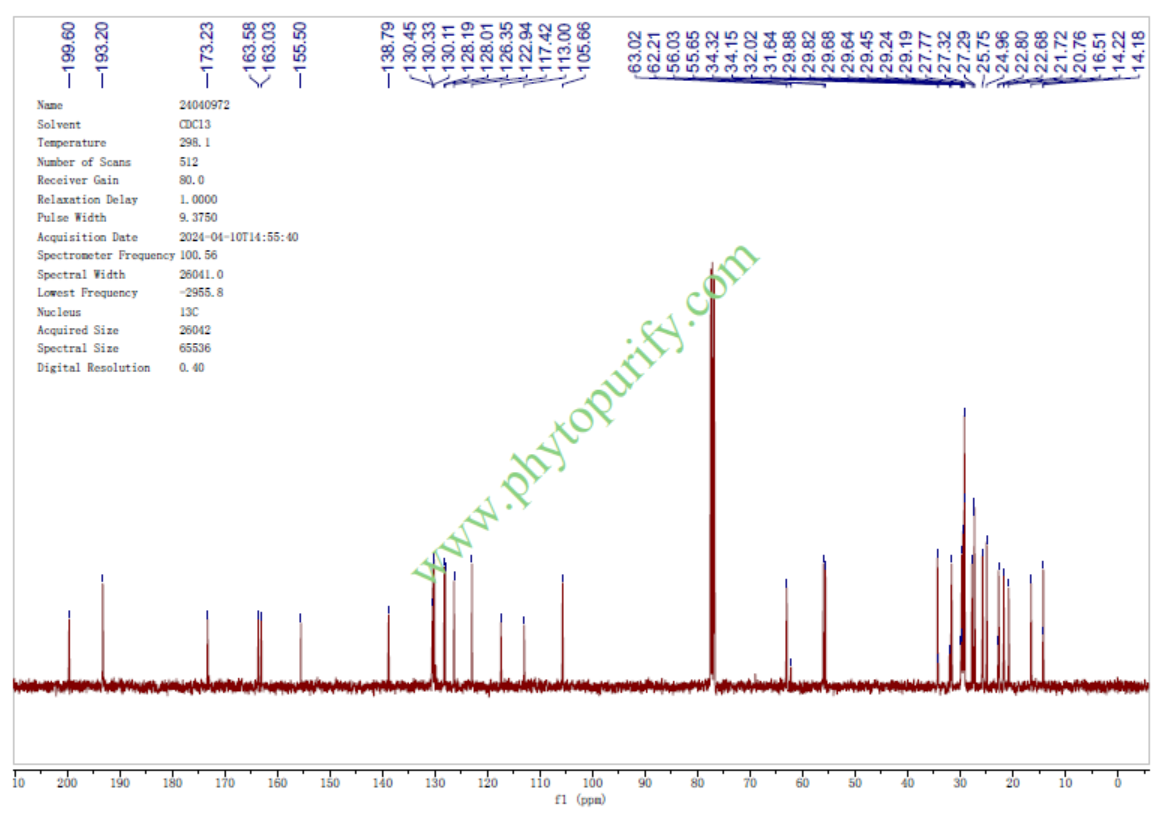
NMR of Hericenone E
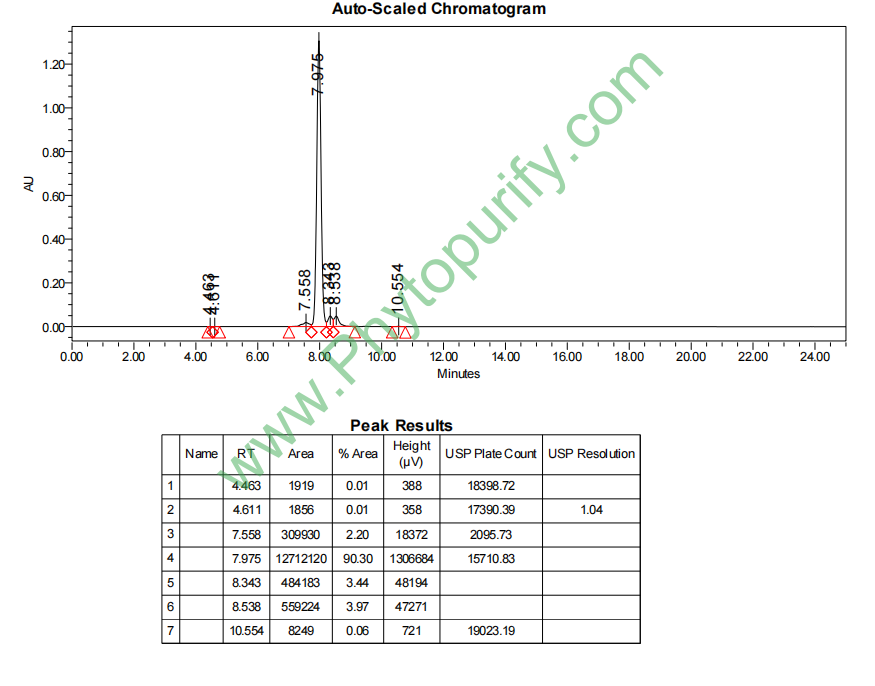
HPLC of Hericenone E
Storage conditions:Short-term storage at 2~8℃, long-term storage at -20 ~ -80℃
89.9000
8.9065
8.8646
.0083
3.1980
2.0648
High
93.5170
3.4320
No
Yes
Yes
No
No
No
0.0
No
Yes
No
No
Natural products, as an important source of drug discovery, play an irreplaceable role in the long history of human struggle against diseases. Among numerous natural products, secondary metabolites derived from higher fungi have attracted much attention due to their unique chemical structures and diverse biological activities. Monkey head mushroom(Hericium erinaceus)Also known as Hericium erinaceus or Hedgehog fungus, it is a precious edible mushroom with medicinal and edible properties. It has a long history of consumption and medicinal use in East Asian countries such as China, Japan, and South Korea. Traditional Chinese medicine believes that Hericium erinaceus has the effects of benefiting the five organs, aiding digestion, and nourishing the body. Modern pharmacological research has confirmed that it has various biological activities such as neuroprotection, anti-inflammatory, antioxidant, anti-tumor, and immune regulation.
Hericenones are a class of aromatic compounds isolated from the fruiting or mycelium of Hericium erinaceus, belonging to the isoprenoid phenolic derivatives. Since its first report in the 1980s, over 20 types of monkey head mushroom ketone compounds have been identified. Among them, Hericenone E (CAS number: 137592-05-3) is a representative member of this family, and its unique chemical structure and significant biological activity make it a hot molecule in natural product chemistry and pharmacology research. In recent years, as the incidence rate of neurodegenerative diseases continues to rise and the limitations of existing therapeutic drugs, finding new neuroprotective agents from natural products has become an important direction of drug research and development. Monkey head mushroom ketone E has shown significant value as a lead compound due to its potential neuroprotective, neurotrophic factor inducing, and anti-inflammatory activities.
This article will provide a systematic review of the research progress of Hericione E from the aspects of chemical structure, plant origin, pharmacological activity, mechanism of action, pharmacological evaluation, and clinical application prospects, in order to provide reference for the in-depth research and development of this compound.
The chemical structure of Hericium erinaceus E belongs to the isoprenoid phenolic compound, and its core skeleton is composed of a benzene ring and a pyran ring fused together to form a chromane structural unit. Specifically, its structural features include: a highly substituted benzene ring with a long-chain isoprene side chain connected at C-2 position, which contains multiple double bonds and methyl branches, endowing the molecule with significant hydrophobicity; There is a methoxy group connected to the C-4 position; The C-5 position is connected to a hydroxyl group; There is a prenyl side chain connected to the C-6 position; There is a methoxy group connected to the C-7 position; The C-8 position is connected by an isoprene side chain. In addition, the molecule also contains a gamma lactone ring structure, which is connected to the benzopyran skeleton to form a unique four ring system.
From the perspective of physical and chemical properties, the molecular weight of Hericione E is 594.8330 Da, which belongs to the category of medium to large molecules. Its lipophilic water partition coefficient (LogP) is 8.9065, indicating that the compound has strong lipophilicity, which is closely related to its multiple isoprene side chains and aromatic ring structures in the molecule. The extremely high LogP value means that the solubility of Hericione E in water is extremely low, with a measured water solubility of only 0.0083 mg/mL, which poses a challenge to its formulation development and in vivo administration route. The topological polar surface area (TPSA) is 89.9000 Å ², which is at a moderate level, indicating that the molecule has a certain polarity region, mainly derived from functional groups such as hydroxyl and carbonyl groups.
It is worth noting that the blood-brain barrier (BBB) penetration ability of monkey head mushroom ketone E was evaluated as "high". This characteristic is crucial for the development of central nervous system (CNS) drugs, as the blood-brain barrier is a critical physiological barrier that limits the entry of most drugs into brain tissue. The high BBB penetration ability may be related to the high lipophilicity and moderate molecular weight of the molecule, allowing Hericione E to cross the blood-brain barrier through passive diffusion or carrier mediated transport, thereby achieving effective concentrations in brain tissue. In addition, hERG inhibition was evaluated as' no ', indicating a low risk of the compound causing cardiac QT interval prolongation, which is a favorable safety feature. The Ames test result is 0.0, indicating that no mutagenicity was observed under standard testing conditions, and the preliminary genetic toxicity risk is low.
Hericione E is mainly derived from Hericium erinaceus(Hericium erinaceus)The fruiting body and mycelium. Hericium erinaceus belongs to the Basidiomycota, Agaricales, Russula, and Hericidae families. It is a wood decaying fungus that usually grows on the wounds of dead or standing broad-leaved trees. Wild Hericium erinaceus is mainly distributed in temperate regions of northern China, including China, Japan, South Korea, Europe, and North America. In China, Hericium erinaceus is mainly produced in mountainous forests in Northeast, North China, Southwest and other regions. Due to limited wild resources and difficulties in collection, Hericium erinaceus is mainly obtained through artificial cultivation, including solid culture (such as sawdust bag cultivation) and liquid deep fermentation.
The content of Hericione E in Hericium erinaceus is usually low and belongs to trace components. Its biosynthetic pathway belongs to fungal secondary metabolism, involving both the shikimic acid pathway and the mevalonate pathway. Specifically, the benzene ring is derived from aromatic amino acids (such as phenylalanine or tyrosine) produced by the shikimic acid pathway, while the isoprene side chain is derived from isopentenyl pyrophosphate (IPP) and dimethylallyl pyrophosphate (DMAPP) produced by the mevalonic acid pathway. Through the catalysis of isopentenyl transferase, the isoprene unit is attached to the aromatic ring, and then undergoes modification steps such as cyclization, oxidation, methylation, etc., ultimately forming the complex structure of Hericione E.
The conventional methods for extracting Hericione E from Hericium erinaceus include solvent extraction, ultrasound assisted extraction, and supercritical fluid extraction. Traditional solvent extraction typically uses organic solvents with lower polarity, such as chloroform, ethyl acetate, dichloromethane, or methanol chloroform mixed solvents, because Hericione E has high lipophilicity. The extraction process generally includes: crushing the dried fruiting body or mycelium of Hericium erinaceus, soaking or refluxing it with a solvent, filtering and concentrating under reduced pressure to obtain the crude extract. In order to improve extraction efficiency and selectivity, modern technologies such as ultrasound assisted extraction (UAE) and microwave-assisted extraction (MAE) have also been widely used. These methods can shorten extraction time, reduce solvent usage, and improve the yield of target compounds.
The separation and purification of Hericione E from crude extracts usually require the use of multiple chromatographic techniques. Common methods include: silica gel column chromatography (with n-hexane ethyl acetate or chloroform methanol as the elution system), Sephadex LH-20 gel column chromatography (with methanol or chloroform methanol as the elution system), preparative high-performance liquid chromatography (Prep-HPLC, using C18 reverse phase column, acetonitrile water or methanol water as the mobile phase). Due to the structural similarity between Hericinone E and other Hericinone compounds (such as Hericinone A, B, C, D, etc.), separation is difficult and usually requires multiple chromatographic purifications to obtain high-purity monomeric compounds. In recent years, new separation methods such as high-speed countercurrent chromatography (HSCCC) and molecular imprinting technology have also been applied to the separation of ketone compounds in Hericium erinaceus, showing promising application prospects.
Neuroprotection is one of the most closely studied pharmacological activities of Hericione erinaceus E. Multiple in vitro studies have shown that Hericione E can protect nerve cells from various damaging factors. In the glutamate induced excitotoxicity model, Hericione E can significantly reduce the mortality rate of primary cultured rat cortical neurons and PC12 cells, and its protective effect is dose-dependent. In the oxidative stress model induced by hydrogen peroxide (H ₂ O ₂), Hericione E can reduce the production of reactive oxygen species (ROS), inhibit lipid peroxidation, and increase the activity of superoxide dismutase (SOD) and glutathione peroxidase (GSH Px), thereby reducing oxidative damage. In addition, in the neurotoxic model induced by β - amyloid protein (A β), monkey head mushroom ketone E also showed a protective effect by reducing cell apoptosis caused by A β aggregation, which has potential significance for the treatment of Alzheimer's disease (AD).
One unique activity of Hericione E is its ability to induce the synthesis and release of neurotrophic factors. Research has found that Hericium erinaceus E can significantly promote the secretion of nerve growth factor (NGF) by astrocytes. At concentrations of 10-100 μ M, the secretion of NGF can increase by 2-5 times. NGF is an important neurotrophic factor that maintains the survival, development, and function of sympathetic and sensory neurons, and plays a crucial role in the treatment of neurodegenerative diseases. In addition, Hericium erinaceus E can induce the expression of brain-derived neurotrophic factor (BDNF) and glial cell derived neurotrophic factor (GDNF), which have protective effects on dopaminergic neurons, motor neurons, etc. The induction activity of neurotrophic factors makes Hericione E potentially valuable in the treatment of neurodegenerative diseases such as Alzheimer's disease, Parkinson's disease (PD), Huntington's disease, etc.
Inflammatory response plays a crucial role in the occurrence and development of various diseases, especially in neurodegenerative diseases, where neuroinflammation is considered one of the important pathological mechanisms. Monkey head mushroom ketone E exhibits significant anti-inflammatory activity. In the BV-2 microglial cell model stimulated by lipopolysaccharide (LPS), monkey head mushroom ketone E can inhibit the production of nitric oxide (NO) and prostaglandin E ₂ (PGE ₂), and reduce the expression of inducible nitric oxide synthase (iNOS) and cyclooxygenase-2 (COX-2). Meanwhile, it can also reduce the release of pro-inflammatory cytokines such as tumor necrosis factor - α (TNF - α), interleukin-1 β (IL-1 β), and interleukin-6 (IL-6). In vivo experiments, Hericium erinaceus E can alleviate LPS induced neuroinflammatory responses in mice, reduce levels of inflammatory factors in brain tissue, and improve cognitive function.
The antioxidant activity of Hericium erinaceus E is closely related to the phenolic hydroxyl group in its molecular structure. Phenolic hydroxyl groups can provide hydrogen atoms or electrons, neutralize free radicals, and thus block free radical chain reactions. Research has shown that Hericione E has good scavenging ability against 1,1-diphenyl-2-trinitrophenylhydrazine (DPPH) free radicals, 2,2 '- bis (3-ethylbenzothiazoline-6-sulfonic acid) (ABTS) cationic free radicals, and hydroxyl free radicals. At the cellular level, monkey head mushroom ketone E can activate the nuclear factor E2 related factor 2 (Nrf2) signaling pathway, promote the expression of antioxidant enzymes such as heme oxygenase-1 (HO-1) and quinone oxidoreductase 1 (NQO1), and enhance the antioxidant defense ability of cells.
In addition to the main activities mentioned above, Hericione E also exhibits other pharmacological effects. In terms of anti-tumor, Hericinone E shows certain cytotoxicity to some cancer cell lines (such as human hepatoma cell HepG2, human breast cancer cell MCF-7), but its selectivity index is low, which may not be suitable for direct development as an anti-tumor drug. In terms of antibacterial properties, Hericione E acts against Staphylococcus aureus(Staphylococcus aureus)And Bacillus subtilis(Bacillus subtilis)Gram positive bacteria have a moderate inhibitory effect, but their activity against Gram negative bacteria and fungi is weak. In addition, Hericium erinaceus E also showed activity in promoting neurite outgrowth and inducing neurite extension in PC12 cells and primary neurons, which may have a synergistic effect with its neurotrophic factor induction activity.
The pharmacological effects of Hericium erinaceus E involve multiple signaling pathways and molecular targets, and its mechanism of action has the characteristics of multi-target and multi pathway.
The mechanism by which Hericium erinaceus E induces the expression of neurotrophic factors involves the activation of multiple transcription factors. Research has shown that Hericione E can activate cAMP response element binding protein (CREB), a transcription factor that is a key factor in regulating the expression of neurotrophic factor genes such as NGF and BDNF. The activation of CREB depends on the phosphorylation of upstream kinases such as protein kinase A (PKA) and extracellular signal regulated kinase (ERK). In addition, Hericione E can activate calcium/calmodulin dependent protein kinase II (CaMKII), promoting phosphorylation of CREB through the calcium signaling pathway. In astrocytes, treatment with Hericione E can lead to an increase in intracellular calcium ion concentration, which in turn activates the CaMKII-CREB signaling axis and ultimately upregulates the expression and secretion of NGF.
The anti-inflammatory effect of Hericium erinaceus E is mainly achieved by inhibiting the nuclear factor kappa B (NF - κ B) and mitogen activated protein kinase (MAPK) signaling pathways. In LPS stimulated microglia, Hericione E can inhibit the phosphorylation and degradation of I κ B α, thereby preventing nuclear translocation and transcriptional activity of NF - κ B and reducing the expression of pro-inflammatory genes. Meanwhile, Hericione E can also inhibit the phosphorylation of p38 MAPK and c-Jun N-terminal kinase (JNK), but has a relatively small effect on the phosphorylation of ERK. In addition, Hericione E can activate the Nrf2/ARE signaling pathway, promote the expression of antioxidant enzymes such as HO-1, and indirectly exert anti-inflammatory effects by inhibiting oxidative stress.
The antioxidant effect of Hericium erinaceus E is closely related to the activation of the Nrf2/ARE signaling pathway. Under normal physiological conditions, Nrf2 binds to Kelch like ECH related protein 1 (Keap1) and is in an inactive state. When cells are stimulated by oxidative stress or electrophilic agents, Nrf2 dissociates from Keap1, translocates into the nucleus, binds to antioxidant response elements (ARE), and initiates transcription of downstream antioxidant enzyme genes. The phenolic hydroxyl and α, β - unsaturated carbonyl structures in Hericione E molecule may act as electrophilic agents to modify cysteine residues on Keap1 protein, leading to the release and activation of Nrf2. In addition, Hericione E can activate the phosphatidylinositol 3-kinase (PI3K)/Akt signaling pathway, which promotes Nrf2 nuclear accumulation and transcriptional activity by phosphorylating glycogen synthase kinase-3 β (GSK-3 β).
The neuroprotective effect of Hericium erinaceus E also involves the regulation of mitochondrial function. Research has shown that Hericione E can inhibit the opening of mitochondrial permeability transition pores (mPTP), maintain mitochondrial membrane potential (Δ PSI m), reduce the release of cytochrome c, thereby inhibiting caspase-3 activation and cell apoptosis. In addition, Hericium erinaceus E can upregulate the expression of anti apoptotic protein Bcl-2, downregulate the expression of pro apoptotic protein Bax, regulate the Bcl-2/Bax ratio, and exert anti apoptotic effects. In the glutamate excitotoxicity model, Hericione E can inhibit the overactivation of N-methyl-D-aspartate (NMDA) receptors, reduce calcium ion influx, and alleviate cell damage caused by calcium overload.
At present, the direct molecular target of Hericione E has not been fully elucidated. Based on its structural characteristics and pharmacological activity, it is speculated that possible direct targets include Keap1 protein (through covalent modification of cysteine residues), NMDA receptors (possibly acting as antagonists or negative allosteric modulators), certain protein kinases (such as PKA, CaMKII), and transcription factors (such as CREB, Nrf2). However, these speculations require further experimental validation through molecular docking, surface plasmon resonance (SPR), or drug affinity reaction target stability (DARTS). In the future, advanced technologies such as chemical proteomics and thermal proteomics (TPP) are expected to identify the direct target of Hericione E, providing important basis for the in-depth elucidation of its mechanism of action and structural optimization.
Based on the provided pharmacological parameters, there are obvious advantages and disadvantages in the pharmacological characteristics of Hericium erinaceus E. From the perspective of advantages, although its molecular weight (594.83 Da) is slightly higher than the threshold of molecular weight<500 in Lipinski's Rule of Five, considering the particularity of natural products and the re examination of drug like rules in recent years, this molecular weight is still within an acceptable range. More importantly, the negative results of hERG inhibition and Ames test indicate that the compound has good safety in terms of cardiac toxicity and genetic toxicity, which is an important prerequisite for drug development. The high blood-brain barrier penetration ability is a significant advantage for the development of CNS drugs.
However, the pharmacological properties of Hericione E also face severe challenges. Its LogP value is as high as 8.9065, far exceeding the requirement of LogP<5 in Lipinski's rule, indicating that the compound has extremely strong lipophilicity, which may lead to poor water solubility (0.0083 mg/mL), low oral bioavailability, metabolic instability, and potential toxic side effects (such as phospholipid disease, hepatotoxicity, etc.). In addition, TPSA is 89.9 Å ², which is at a moderate level, but combined with a high LogP value, indicating that the molecule may have a tendency to aggregate, affecting its specific binding to the target.
At present, there are few systematic studies on the pharmacokinetics of Hericione E in vivo, but some basic characteristics can be inferred based on its physicochemical properties. Due to its extremely low water solubility, the oral absorption of Hericione E will be severely limited, and its oral bioavailability may be very low. High lipophilicity makes it easy to bind with plasma proteins (especially albumin and lipoprotein), leading to a decrease in free drug concentration and affecting drug efficacy. At the same time, high lipophilicity also means that the compound may be widely distributed in tissues, especially in adipose tissue and brain tissue, which may pose long-term safety issues.
In terms of metabolism, the isoprene side chain and benzene ring structure of Hericium erinaceus E are potential substrates for cytochrome P450 enzymes (CYP450), which may undergo phase I metabolic reactions such as hydroxylation, epoxidation, and demethylation. In addition, the phenolic hydroxyl and carboxylic acid groups in the molecule may undergo II phase metabolic reactions such as glucuronic acid binding or sulfuric acid binding. The activity and toxicity of metabolites need further research. In terms of excretion, due to its high lipophilicity, monkey head mushroom ketone E and its metabolites may mainly enter the intestine through bile excretion, and some may undergo enterohepatic circulation, prolonging their retention time in the body.
Multiple strategies can be adopted to improve the pharmacological properties of Hericione E in response to its shortcomings. In terms of formulation, modern formulation technologies such as liposomes, nanoparticles, cyclodextrin inclusion complexes, and solid dispersions can be used to improve their water solubility and oral bioavailability. For example, encapsulating monkey head mushroom ketone E in polylactic acid hydroxyacetic acid copolymer (PLGA) nanoparticles can significantly improve its dispersibility and stability in water, while achieving sustained release effect. In addition, phospholipid complex technology can also improve the oral absorption of highly lipophilic drugs.
In terms of structural optimization, Hericione E can be structurally modified through medicinal chemical methods to improve its pharmacological properties. Possible modification strategies include: (1) introducing polar groups (such as hydroxyl, carboxyl, amino, phosphate, etc.) into the molecule to reduce LogP value and improve water solubility; (2) Oxidation or cyclization modification of isoprene side chains to reduce metabolic instability; (3) Synthesize the prodrug of Hericione E and interpret the active parent drug through in vivo enzymes; (4) Simplify the molecular structure, retain key pharmacophores, remove unnecessary hydrophobic groups, and reduce molecular weight. For example, retaining the core of the benzopyran and the γ - lactone ring structure, shortening or modifying the isoprene side chain, may result in better drug like analogues.
Monkey head mushroom ketone E has shown broad application prospects in the treatment of neurodegenerative diseases. Alzheimer's disease is the most common neurodegenerative disease, characterized by A β deposition, tau protein hyperphosphorylation, neuroinflammation, and oxidative stress. Monkey head mushroom ketone E may have comprehensive benefits in the treatment of Alzheimer's disease by inducing the expression of NGF and BDNF, inhibiting neuroinflammation, antioxidant stress, and protecting neurons from A β toxicity through multiple mechanisms. The characteristic of Parkinson's disease is the progressive loss of dopaminergic neurons, and the neurotrophic factor inducing activity of Hericium erinaceus E (especially the induction of GDNF) may help protect and repair damaged dopaminergic neurons. In addition, in diseases such as amyotrophic lateral sclerosis (ALS) and Huntington's disease, the neuroprotective and anti-inflammatory effects of Hericilone E may also play a therapeutic role.
In cerebrovascular diseases such as ischemic stroke and cerebral hemorrhage, ischemia-reperfusion injury is a key factor leading to neurological deficits. The antioxidant, anti-inflammatory, and anti apoptotic effects of Hericium erinaceus E may alleviate ischemia-reperfusion injury, reduce infarct volume, and improve neurological function prognosis. Its high blood-brain barrier penetration ability enables it to reach effective concentrations in brain tissue, which is particularly important for acute phase treatment. In addition, the neurotrophic factor inducing activity of Hericium erinaceus E may promote neural repair and functional reconstruction after stroke.
The neurotrophic factor inducing activity of Hericium erinaceus E is not limited to the central nervous system, but may also have a protective effect on the peripheral nervous system. Diabetes peripheral neuropathy (DPN) is a common complication of diabetes, which is characterized by sensory abnormalities, pain and motor dysfunction. Monkey head mushroom ketone E may promote peripheral nerve repair and regeneration, and improve symptoms of DPN by inducing the expression of NGF and BDNF. In addition, in chemotherapy-induced peripheral neuropathy (CIPN), Hericium erinaceus E may also play a protective role.
Despite the various pharmacological activities of Hericione E that have attracted attention, there are still many challenges from laboratory research to clinical application. Firstly, its extremely poor water solubility and oral bioavailability are the biggest obstacles, requiring the development of suitable formulations or structural optimization. Secondly, current research mainly remains at the level of in vitro and animal experiments, lacking systematic preclinical pharmacokinetic, toxicological, and pharmacodynamic studies. Thirdly, the direct molecular target of Hericione E is not yet clear, which limits a deeper understanding of its mechanism of action and structure based drug design. Fourthly, the content of Hericione E in Hericium erinaceus is relatively low, and the establishment of chemical or biological synthesis methods is crucial for meeting the needs of research and large-scale production.
Future research directions should include: (1) establishing efficient chemical synthesis or semi synthesis methods for Hericione E, providing sufficient material basis for subsequent research; (2) Identify its direct target using techniques such as chemical proteomics and thermal proteomics; (3) Conduct systematic pharmacokinetic studies, including absorption, distribution, metabolism, excretion (ADME) characteristics, tissue distribution, and brain penetration kinetics; (4) Conduct a comprehensive toxicological evaluation, including acute toxicity, chronic toxicity, reproductive toxicity, carcinogenicity, etc; (5) Develop new formulations, such as nanoliposomes, polymer micelles, phospholipid complexes, etc., to improve their bioavailability and targeting; (6) Based on the structural skeleton of Hericione E, a series of analogues were designed and synthesized, and structure-activity relationship (SAR) studies were conducted to search for lead compounds with better drug like properties.
Hericione E, as a unique isoprenoid phenolic compound in Hericium erinaceus, has attracted widespread attention for its diverse pharmacological activities and unique mechanism of action. Its multiple activities including neurotrophic factor induction, neuroprotection, anti-inflammatory, and antioxidant make it potentially valuable for the treatment of neurodegenerative diseases, cerebrovascular diseases, and peripheral neuropathy. The high blood-brain barrier penetration ability and good preliminary safety characteristics are important advantages of it as a lead compound for CNS drugs. However, poor water solubility and oral bioavailability are the main challenges facing its drug development, which need to be overcome through formulation technology and structural optimization strategies.
From natural products to innovative drugs, research on Hericione E is still in its early stages. In the future, with the in-depth elucidation of its mechanism of action, comprehensive understanding of its pharmacokinetic characteristics, and systematic development of medicinal chemical modifications, Hericione E and its derivatives are expected to develop into a new class of neuroprotective drugs. At the same time, the study of Hericione E also provides a successful example for discovering lead compounds from medicinal and edible fungi, demonstrating the sustained value of natural products in innovative drug development. We look forward to the near future when Hericione E can move from the laboratory to clinical practice, bringing new treatment options for patients with neurodegenerative diseases.
