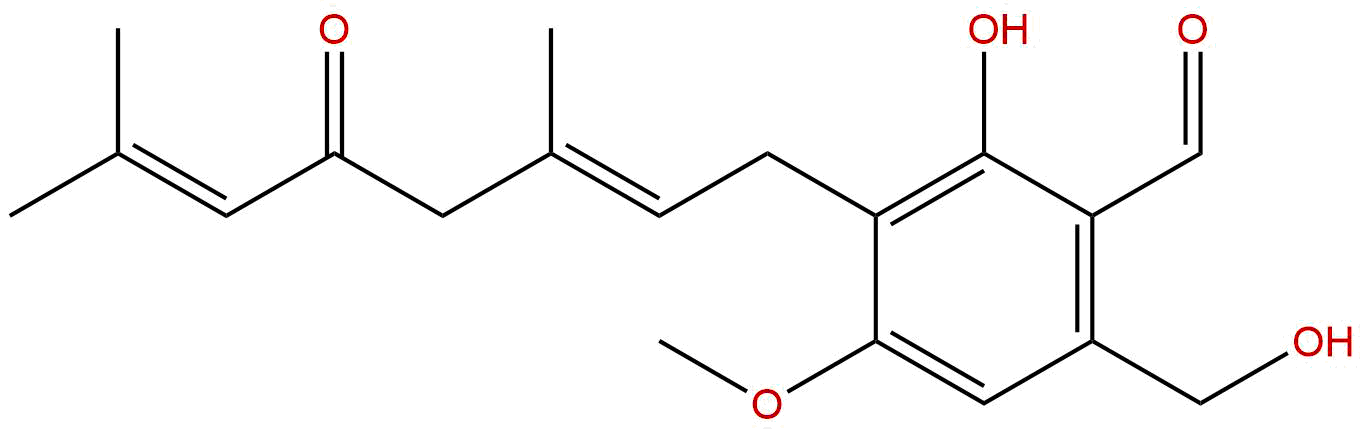


Product name: Deacylhericenone
Synonym name:
Catalogue No.: BP2375
Cas No.: 2606592-90-7
Formula: C19H24O5
Mol Weight: 332.396
Botanical Source: Hericium erinaceus
Type of Compound:
Purity: 95%~99%
Analysis Method: HPLC-DAD or/and HPLC-ELSD
Identification Method: Mass, NMR
Packing: Brown vial or HDPE plastic bottle
Storage: Store in a well closed container, protected from air and light. Put into refrigerate or freeze for long term storage.
Whenever possible, you should prepare and use solutions on the same day. However, if you need to make up stock solutions in advance, we recommend that you store the solution as aliquots in tightly sealed vials at -20℃. Generally, these will be useable for up to two weeks.
The product could be supplied from milligrams to grams
Inquire for bulk scale.
For Reference Standard and R&D, Not for Human Use Directly.
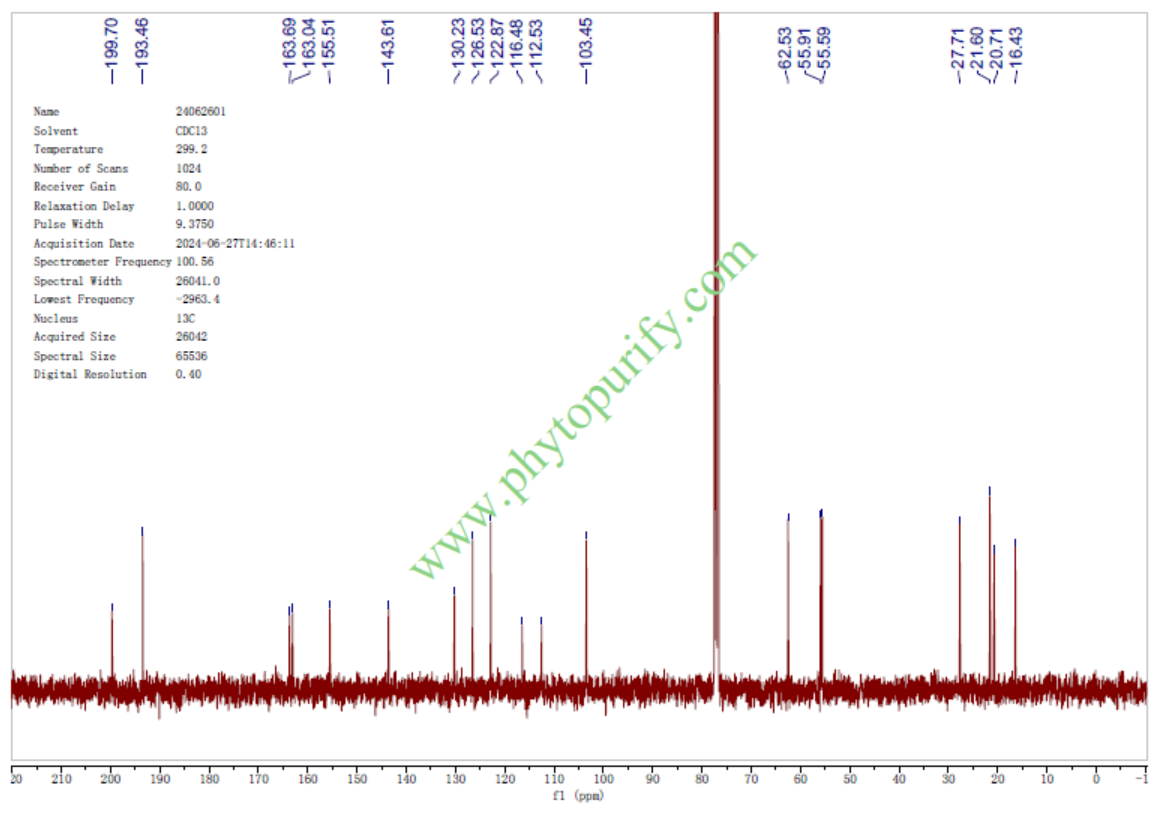
NMR of Deacylhericenone
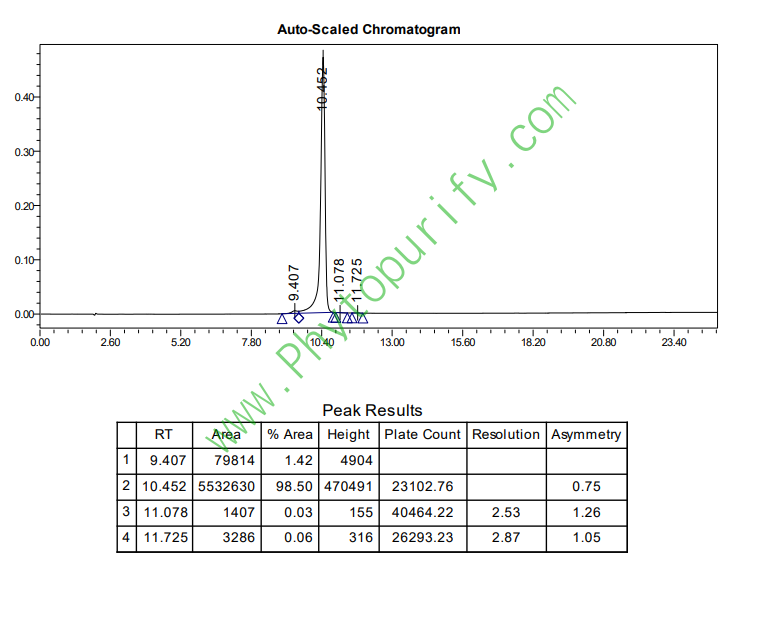
HPLC of Deacylhericenone
Storage conditions:Short-term storage at 2~8℃, long-term storage at -20 ~ -80℃
83.8300
2.6023
2.5926
.5455
2.5365
4.2747
High
83.7402
3.1676
Yes
No
Yes
No
No
No
0.0
No
Yes
Yes
No
Natural products, as an important source of drug discovery, play an irreplaceable role in human health maintenance and disease treatment. Among numerous medicinal fungi, Hericium erinaceus(Hericium erinaceus)It has attracted much attention due to its unique neuroprotective and cognitive improvement effects. Hericium erinaceus, also known as Hericium erinaceus or Hedgehog fungus, is a precious medicinal and edible fungus with a long history of consumption and medicinal use in East Asian countries such as China, Japan, and South Korea. Traditionally, Hericium erinaceus has been used to treat stomach diseases and enhance immunity, while modern pharmacological research has revealed its enormous potential in the prevention and treatment of neurological diseases.
The active ingredients of Hericium erinaceus mainly include polysaccharides, terpenoids, phenolic compounds, etc. Among them, Hericenones and Erinacines are the two most representative small molecule active ingredients. Deacylerinone (CAS number: 2606592-90-7), as an important member of the erinone family, has attracted widespread attention from researchers in recent years. This compound is structurally similar to other monkey head mushroom ketone compounds, but its unique deacetylation structure endows it with special biological activity and pharmacological properties.
The discovery and research of deacetylated Hericium erinaceus not only enriched the chemical diversity of active ingredients in Hericium erinaceus, but also provided important lead compounds for the development of new neuroprotective drugs. With the aging of the population, the incidence rate of neurodegenerative diseases such as Alzheimer's disease and Parkinson's disease continues to rise, so it is urgent to find safe and effective means of prevention and treatment. Acylated monkey head mushroom ketone has shown great potential as a candidate molecule for neuroprotective drugs due to its excellent neuroprotective activity, low toxicity, and high blood-brain barrier permeability.
This article will provide a comprehensive and systematic review of the research progress of deacetylated monkey head mushroom ketone from the aspects of chemical structure and physicochemical properties, plant sources and extraction methods, pharmacological activity research, mechanism of action and molecular targets, pharmacological evaluation and pharmacokinetics, clinical application prospects and prospects, in order to provide reference for the in-depth research and development of this natural product.
Acylated monkey head mushroom ketone belongs to isoindolinone compounds, and its core structure is the isoindolin-1-one skeleton. From a chemical structure perspective, the main difference between deacetylated monkey head mushroom ketone and other monkey head mushroom ketone compounds is the lack of acyl groups on its side chains, which endows it with unique physicochemical properties and biological activity.
The molecular formula of this compound is C ₁₉ H ₂₄ O ₅, with a molecular weight of 332.3960 g/mol. Its structure contains multiple hydroxyl and carbonyl functional groups, and the presence of these polar groups has a significant impact on its solubility and biological activity. From the perspective of stereochemistry, deacetylated monkey head mushroom ketone may have a chiral center, and its absolute configuration needs further research on its biological activity.
In terms of physical and chemical properties, deacetylated monkey head mushroom ketone exhibits moderate lipid solubility, with a LogP value of 2.6023, indicating that the compound has good distribution equilibrium in the lipid water phase. This characteristic is beneficial for its absorption and distribution within living organisms. The topological polar surface area (TPSA) is 83.8300 Å ², which meets the general requirements for oral drugs (usually TPSA<140 Å ²), indicating good oral absorption potential.
Water solubility is an important parameter in drug development. The water solubility value of deacetylated monkey head mushroom ketone is 0.5455 mg/mL, which belongs to a slightly soluble compound. Although its water solubility is not high, considering its moderate lipid solubility, the dissolution and absorption of this compound in the body may not be the main obstacle. It is worth noting that deacetylated monkey head mushroom ketone has high blood-brain barrier permeability, which is crucial for drugs targeting the central nervous system to effectively reach brain targets and exert pharmacological effects.
In terms of safety assessment, the hERG inhibition test result was negative, indicating that the compound has a low risk of causing QT interval prolongation in the heart. The Ames test result is 0.0, indicating that it does not have significant mutagenicity. These preliminary safety data provide favorable conditions for the further development of deacetylated monkey head mushroom ketone.
Acylated Hericium erinaceus ketone is mainly derived from Hericium erinaceus(Hericium erinaceus)This is a fungus belonging to the Basidiomycota phylum and the Hericidae family. Monkey head mushrooms mainly grow on dead or live trees of broad-leaved trees in nature, especially on hardwood such as oak and walnut trees. This fungus is widely distributed in northern temperate regions, including China, Japan, South Korea, Europe, and North America.
In Hericium erinaceus, the content of deacetylated Hericione is usually low, and its content is influenced by various factors, including strain differences, cultivation conditions, harvesting time, etc. Research has shown that both the fruiting body and mycelium of Hericium erinaceus contain ketone compounds, but the composition and content of these compounds vary in different parts. Generally speaking, the types of ketone compounds in the fruiting body of Hericium erinaceus are more diverse, while the mycelium may have advantages in certain specific components.
The method for extracting acyl free monkey head mushroom ketone is mainly based on organic solvent extraction technology. Common extraction solvents include methanol, ethanol, ethyl acetate, etc. The traditional extraction method usually adopts cold soaking or hot reflux extraction. The dried powder of Hericium erinaceus is mixed with a solvent, stirred or soaked at a certain temperature for a certain period of time, and then filtered and concentrated to obtain the crude extract. In order to improve extraction efficiency and selectivity, researchers have developed various modern extraction techniques, such as ultrasound assisted extraction, microwave-assisted extraction, supercritical fluid extraction, etc.
Ultrasonic assisted extraction utilizes the cavitation effect and mechanical vibration of ultrasound to effectively destroy cell wall structure, promote the release of active ingredients, and significantly improve extraction efficiency. Microwave assisted extraction utilizes the penetration and selective heating properties of microwaves to rapidly dissolve the target components into the solvent. Supercritical fluid extraction, especially supercritical CO ₂ extraction, has been widely used in natural product extraction due to its advantages of green environmental protection, good selectivity, and high product purity.
The crude extract after extraction needs to undergo a series of purification steps to obtain high-purity deacetylated monkey head mushroom ketone. Common purification methods include silica gel column chromatography, reverse phase column chromatography, high performance liquid chromatography (HPLC), etc. Silica gel column chromatography is the most commonly used preliminary separation method, which can separate monkey head mushroom ketone compounds from other impurities by gradient elution with solvent systems of different polarities. Reverse phase column chromatography, such as C18 column, is suitable for further purification. Preparation HPLC can obtain high-purity target compounds, but the cost is high and suitable for laboratory scale preparation.
In recent years, with the advancement of biotechnology, the use of fermentation engineering to produce active ingredients of Hericium erinaceus has become a research hotspot. By optimizing fermentation conditions such as medium composition, pH value, temperature, and aeration rate, the yield of target components in mycelium can be significantly increased. In addition, genetic engineering and metabolic engineering methods have also been used to regulate the secondary metabolic pathways of Hericium erinaceus, in order to achieve efficient biosynthesis of deacetylated Hericium erinaceus ketone.
The pharmacological activity research of deacetylated monkey head mushroom ketone mainly focuses on neuroprotection, anti-inflammatory, antioxidant and other aspects. In recent years, with the deepening of research, its various biological activities have gradually been revealed.
Neuroprotection is the most concerned pharmacological activity of deacetylated monkey head mushroom ketone. Research has shown that this compound can significantly protect neurons from various damaging factors. In vitro experiments have shown that deacetylated monkey head mushroom ketone can alleviate glutamate induced neurotoxicity and reduce neuronal apoptosis rate. Glutamate is the main excitatory neurotransmitter in the central nervous system, but its excessive release can lead to excitotoxicity and participate in the pathological processes of various neurodegenerative diseases. Acylated monkey head mushroom ketone effectively inhibits glutamate mediated neuronal damage by regulating glutamate receptor function and downstream signaling pathways.
In addition, deacetylated monkey head mushroom ketone also has a protective effect against neurotoxicity induced by β - amyloid protein (A β). The abnormal aggregation and deposition of A β is one of the core pathological features of Alzheimer's disease. The experimental results showed that deacetylated monkey head mushroom ketone can reduce A β - induced oxidative stress and inflammatory response, maintain mitochondrial function, and protect neurons from the toxic effects of A β.
In Parkinson's disease models, deacetylated monkey head mushroom ketone also exhibits protective effects. 1-Methyl-4-phenyl-1,2,3,6-tetrahydropyridine (MPTP) and 6-hydroxydopamine (6-OHDA) are commonly used inducers of Parkinson's disease models. Research has found that pretreatment with deacetylated monkey head mushroom ketone can alleviate the damage of MPTP and 6-OHDA to dopaminergic neurons, improve cell survival rate, and alleviate mitochondrial dysfunction.
Inflammatory response plays a crucial role in the occurrence and development of various diseases, especially in neurodegenerative diseases, where chronic neuroinflammation is considered an important driving factor for disease progression. Acylated monkey head mushroom ketone exhibits significant anti-inflammatory activity and can inhibit the production and release of various inflammatory mediators.
In a small glial cell model stimulated by lipopolysaccharides (LPS), deacetylated monkey head mushroom ketone can significantly reduce the expression levels of pro-inflammatory cytokines such as tumor necrosis factor - α (TNF - α), interleukin-1 β (IL-1 β), and interleukin-6 (IL-6). Meanwhile, it can also inhibit the production of nitric oxide (NO) and prostaglandin E ₂ (PGE ₂), which play important roles in neuroinflammation.
Further research has found that the anti-inflammatory effect of deacetylated monkey head mushroom ketone is closely related to its regulation of the nuclear factor kappa B (NF - κ B) signaling pathway. NF - κ B is the core transcription factor of inflammatory response, regulating the expression of various inflammation related genes. Acylated monkey head mushroom ketone can inhibit LPS induced NF - κ B activation, reduce its nuclear translocation, and thus downregulate the transcription of inflammatory genes.
Oxidative stress is a common pathological feature of many diseases, especially neurodegenerative diseases. Acylated monkey head mushroom ketone has strong antioxidant activity, which can scavenge free radicals and reduce oxidative damage.
In vitro experiments have shown that deacetylated monkey head mushroom ketone can effectively scavenge 1,1-diphenyl-2-trinitrophenylhydrazine (DPPH) free radicals, 2,2 '- diazo-bis-3-ethylbenzothiazoline-6-sulfonic acid (ABTS) free radicals, and hydroxyl free radicals. In cell models, this compound can reduce reactive oxygen species (ROS) levels, increase the activity of antioxidant enzymes such as superoxide dismutase (SOD) and glutathione peroxidase (GSH Px), and enhance the ability of cells to resist oxidative stress.
The antioxidant effect of deacetylated monkey head mushroom ketone may be related to the phenolic hydroxyl group in its molecular structure. Phenolic hydroxyl groups can provide hydrogen atoms, neutralize free radicals, and thus exert antioxidant effects. In addition, the compound may also upregulate the expression of a series of antioxidant enzymes and enhance the endogenous antioxidant defense system of cells by activating the nuclear factor E2 related factor 2 (Nrf2) signaling pathway.
In addition to the main activities mentioned above, deacetylated monkey head mushroom ketone also exhibits other biological activities. Research has shown that this compound has certain anti-tumor activity, which can inhibit the proliferation of certain cancer cells and induce cell apoptosis. In addition, it may also have immunomodulatory and antidepressant effects, but these activities still need further validation and in-depth research.
The pharmacological effects of deacetylated monkey head mushroom ketone involve multiple molecular targets and signaling pathways, and their mechanisms of action are complex and interrelated. A deep understanding of its mechanism of action is of great significance for the further development and clinical application of this compound.
Neurotrophic factors, especially brain-derived neurotrophic factor (BDNF) and nerve growth factor (NGF), play a crucial role in the survival, differentiation, and synaptic plasticity of neurons. Research has shown that deacetylated monkey head mushroom ketone can promote the synthesis and release of NGF, thereby exerting a neurotrophic effect. In vitro cultured astrocytes, treatment with deacetylated monkey head mushroom ketone can significantly increase the mRNA and protein expression levels of NGF.
Further research has found that the induction of NGF expression by deacetylated monkey head mushroom ketone is related to the mitogen activated protein kinase (MAPK) signaling pathway. This compound can activate extracellular signal regulated kinase (ERK) and p38 MAPK, thereby activating downstream transcription factors such as cAMP response element binding protein (CREB), promoting the transcription of NGF gene.
The neuroprotective effect of deacetylated monkey head mushroom ketone is closely related to its anti apoptotic activity. This compound can regulate the expression of Bcl-2 family proteins, increase the expression of anti apoptotic protein Bcl-2, reduce the expression of pro apoptotic protein Bax, thereby maintaining mitochondrial membrane potential, inhibiting the release of cytochrome c and activation of caspase.
The phosphatidylinositol 3-kinase/protein kinase B (PI3K/Akt) signaling pathway is a key pathway regulating cell survival. Research has shown that deacetylated monkey head mushroom ketone can activate the PI3K/Akt pathway, promote Akt phosphorylation, and thereby inhibit downstream apoptotic signals. The use of PI3K inhibitors can partially reverse the neuroprotective effect of deacetylated monkey head mushroom ketone, confirming the important role of this pathway in it.
The anti-inflammatory effect of deacetylated monkey head mushroom ketone is mainly achieved by inhibiting the NF - κ B signaling pathway. In the resting state, NF - κ B binds to the inhibitory protein I κ B and exists in an inactive form in the cytoplasm. When stimulated by inflammation, I κ B is phosphorylated and degraded, releasing NF - κ B, which enters the nucleus to initiate transcription of inflammatory genes.
Acylated monkey head mushroom ketone can inhibit the phosphorylation and degradation of I κ B, thereby preventing the activation and nuclear translocation of NF - κ B. In addition, the compound may also reduce the production of inflammatory signals by inhibiting the expression of Toll like receptor 4 (TLR4) or interfering with its downstream signaling.
The antioxidant effect of deacetylated monkey head mushroom ketone is partially achieved by activating the Nrf2/antioxidant response element (ARE) signaling pathway. Nrf2 is a key transcription factor that regulates the antioxidant defense system. Under normal conditions, it binds to Kelch like ECH related protein 1 (Keap1) and is degraded by ubiquitination. When cells are subjected to oxidative stress, Nrf2 is released from Keap1 and enters the nucleus to bind with ARE, initiating the transcription of a series of antioxidant enzyme genes.
Research has shown that deacetylated monkey head mushroom ketone can promote nuclear translocation of Nrf2, increase its transcriptional activity, and upregulate the expression of antioxidant enzymes such as heme oxygenase-1 (HO-1), quinone oxidoreductase 1 (NQO1), and glutathione S-transferase (GST). This mechanism helps to enhance the ability of cells to resist oxidative stress and protect neurons from oxidative damage.
Mitochondrial dysfunction is a common feature of neurodegenerative diseases. Acylated monkey head mushroom ketone can protect mitochondrial function, maintain mitochondrial membrane potential, and reduce the production of mitochondrial ROS. This compound may also maintain the integrity of the mitochondrial network by regulating mitochondrial dynamics, promoting mitochondrial fusion, inhibiting mitochondrial fission.
In addition, deacetylated monkey head mushroom ketone can enhance the activity of mitochondrial respiratory chain complexes, improve mitochondrial energy metabolism, and provide sufficient energy supply for neurons. These effects together constitute an important component of its neuroprotective mechanism.
As a potential drug candidate molecule, the evaluation of drug properties and pharmacokinetic characteristics of deacetylated monkey head mushroom ketone are key factors determining its successful development.
From the perspective of medicinal chemistry, deacetylated monkey head mushroom ketone conforms to Lipinski's "Rule of Five", which includes a molecular weight of less than 500 (332.4), a LogP of less than 5 (2.60), a hydrogen bond donor count of less than 5 (3 hydroxyl groups), and a hydrogen bond acceptor count of less than 10 (5 oxygen atoms). These characteristics indicate that the compound has good oral bioavailability potential.
In addition, the TPSA of deacetylated monkey head mushroom ketone is 83.83 Å ², which is less than 140 Å ², indicating its good intestinal absorption capacity. Its water solubility is 0.5455 mg/mL. Although it is a slightly soluble compound, considering its moderate lipid solubility, it may be absorbed in vivo through passive diffusion and carrier mediated transport.
In terms of safety, the hERG inhibition test was negative, reducing the risk of cardiac toxicity. The Ames test is negative, indicating no mutagenicity. These preliminary security data provide favorable conditions for subsequent development. However, a comprehensive safety evaluation still requires more toxicological studies, including acute toxicity, chronic toxicity, reproductive toxicity, etc.
The blood-brain barrier permeability is a key parameter in the development of central nervous system drugs. Acylated monkey head mushroom ketone has been evaluated to have high blood-brain barrier permeability, which allows it to effectively enter brain tissue and act on targets in the central nervous system. This advantage makes it uniquely valuable in the treatment of neurodegenerative diseases.
There is currently relatively limited research data on the detailed pharmacokinetic parameters of deacetylated monkey head mushroom ketone. Based on its physicochemical properties, it is speculated that the absorption of this compound in vivo may be relatively fast, but further animal experiments are needed to determine its oral bioavailability, peak time, half-life, and other parameters.
In terms of distribution, due to its moderate lipid solubility and high blood-brain barrier permeability, deacetylated monkey head mushroom ketone may have a higher concentration in brain tissue. In addition, it may also be distributed in metabolic and excretory organs such as the liver and kidneys.
Metabolism is an important factor affecting the in vivo processes of drugs. The metabolic pathway of deacetylated monkey head mushroom ketone may include phase II metabolic reactions such as hydroxylation, glucuronidation, and sulfation. The cytochrome P450 enzyme system may play a role in its oxidative metabolism. Further research is needed on the activity, toxicity, and contribution of metabolites to the efficacy of the parent drug.
In terms of excretion, deacetylated monkey head mushroom ketone and its metabolites may be mainly excreted through bile and urine. The relative contributions of renal excretion and hepatic biliary excretion need to be experimentally determined.
There is a lack of systematic research on the interaction between deacetylated monkey head mushroom ketone and other drugs. Considering that it may be metabolized by the cytochrome P450 enzyme system, when used in combination with other drugs metabolized by the same enzyme system, it may produce competitive inhibition or induction effects. In addition, this compound may affect the function of transporters such as P-glycoprotein, thereby affecting the absorption and distribution of other drugs.
Acylated monkey head mushroom ketone has shown broad application prospects in the treatment of various diseases due to its unique neuroprotective activity, good safety, and high blood-brain barrier permeability.
Alzheimer's disease is the most common neurodegenerative disease, and the number of patients worldwide continues to grow. Acylated monkey head mushroom ketone exerts neuroprotective effects through various mechanisms such as anti A β toxicity, anti-inflammatory, and antioxidant effects, and is expected to become a therapeutic drug for Alzheimer's disease. At present, cholinesterase inhibitors and NMDA receptor antagonists used clinically can only alleviate symptoms and cannot prevent disease progression. The multi-target action characteristics of deacetylated monkey head mushroom ketone make it possible to have disease modifying effects, which can delay or prevent neurodegenerative processes.
Parkinson's disease is the second largest neurodegenerative disease, characterized by progressive loss of dopaminergic neurons in the substantia nigra of the midbrain. Acylated monkey head mushroom ketone has shown protective effects on dopaminergic neurons in Parkinson's disease models, providing experimental evidence for its clinical application. In addition, the compound may also improve non motor symptoms related to Parkinson's disease, such as depression, cognitive impairment, etc.
Ischemic stroke is a serious cerebrovascular disease that leads to high disability and mortality rates. The neuroprotective effect of deacetylated monkey head mushroom ketone may have a protective effect on cerebral ischemia-reperfusion injury. By inhibiting oxidative stress, inflammatory response, and cell apoptosis, this compound may alleviate neurological damage after cerebral ischemia and improve prognosis.
Depression is a common mental illness, and its pathogenesis involves multiple aspects such as neurotransmitter imbalance, neuroinflammation, and reduced neurotrophic factors. The anti-inflammatory and neurotrophic effects of deacetylated monkey head mushroom ketone may have therapeutic potential for depression. Preliminary studies have shown that Hericium erinaceus extract exhibits antidepressant like effects in animal models, but the specific contribution of deacetylated Hericium erinaceus ketone still needs further investigation.
In addition to neurological disorders, the anti-inflammatory and antioxidant activities of deacetylated monkey head mushroom ketone may also play a role in other diseases, such as inflammatory bowel disease, arthritis, metabolic disorders, etc. In addition, its potential anti-tumor activity also deserves further exploration.
Although deacetylated monkey head mushroom ketone has shown promising application prospects, its development still faces some challenges. Firstly, the low content and high extraction cost of this compound in Hericium erinaceus limit its large-scale preparation. Developing efficient and economical synthesis methods or biosynthetic technologies is the key to solving this problem. Secondly, current research is mainly based on in vitro experiments and animal models, and there is still a lack of clinical research data. Systematic preclinical studies and clinical trials are needed to verify its safety and efficacy.
In addition, the mechanism of action of deacetylated monkey head mushroom ketone still needs further clarification, especially the details of its interaction with molecular targets. Structural optimization is also an important way to improve its pharmacological and pharmacokinetic properties. Through chemical modification, it is possible to obtain derivatives with stronger activity, higher selectivity, and better pharmacokinetic properties.
With the continuous deepening of research on deacetylated monkey head mushroom ketone, it is believed that this natural product will play an important role in the development of neuroprotective drugs. Combining modern drug design concepts and advanced technology, deacetylated monkey head mushroom ketone and its derivatives are expected to become new drugs for the treatment of neurodegenerative diseases.
As an important active ingredient in Hericium erinaceus, deacetylated Hericione has attracted widespread attention due to its unique chemical structure and significant biological activity. This article systematically reviews the research progress on the chemical structure and physicochemical properties of the compound, plant sources and extraction methods, pharmacological activity research, mechanism of action and molecular targets, drug evaluation and pharmacokinetics, as well as clinical application prospects.
Acylated monkey head mushroom ketone has moderate lipid solubility and good blood-brain barrier permeability, which meets the basic requirements of drug development. Its multiple pharmacological activities, including neuroprotection, anti-inflammatory, and antioxidant effects, as well as molecular mechanisms such as regulating the neurotrophic factor signaling pathway, anti apoptotic signaling pathway, anti-inflammatory signaling pathway, and antioxidant signaling pathway, have shown great potential in the treatment of neurodegenerative diseases.
However, the research on deacetylated monkey head mushroom ketone is still in its early stages, and many issues need to be addressed. Future research should focus on the following aspects: firstly, developing efficient and economical preparation methods to meet the needs of research and application; Secondly, conduct in-depth pharmacokinetic and toxicological studies to comprehensively evaluate their safety; Thirdly, conduct systematic preclinical and clinical studies to verify its efficacy and safety; The fourth is to develop more active derivatives through structural optimization and structure-activity relationship research.
In summary, deacetylated monkey head mushroom ketone, as a natural product with unique structure and significant activity, provides new directions and candidate molecules for the development of neuroprotective drugs. With the continuous deepening of research, it is believed that this compound will play an increasingly important role in human health.
