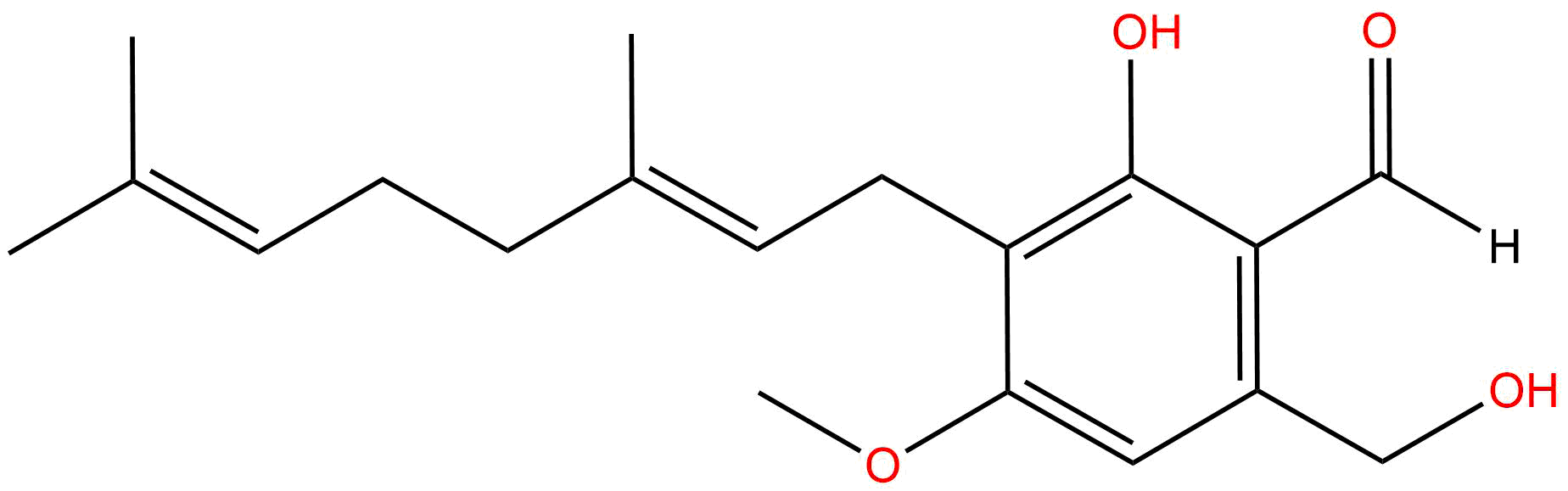


Product name: Deacylhericene
Synonym name: 4-[3',7'-dimethyl-2',6'-octadienyl]-2-formyl-3-hydroxy-5-methyoxybenzylalcohol
Catalogue No.: BP2379
Cas No.: 158314-36-4
Formula: C19H26O4
Mol Weight: 318.413
Botanical Source: Hericium erinaceus
Type of Compound:
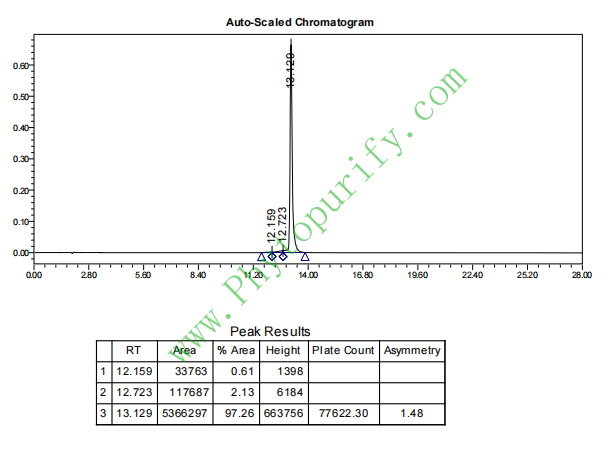
Purity: 95%~99%
Analysis Method: HPLC-DAD or/and HPLC-ELSD
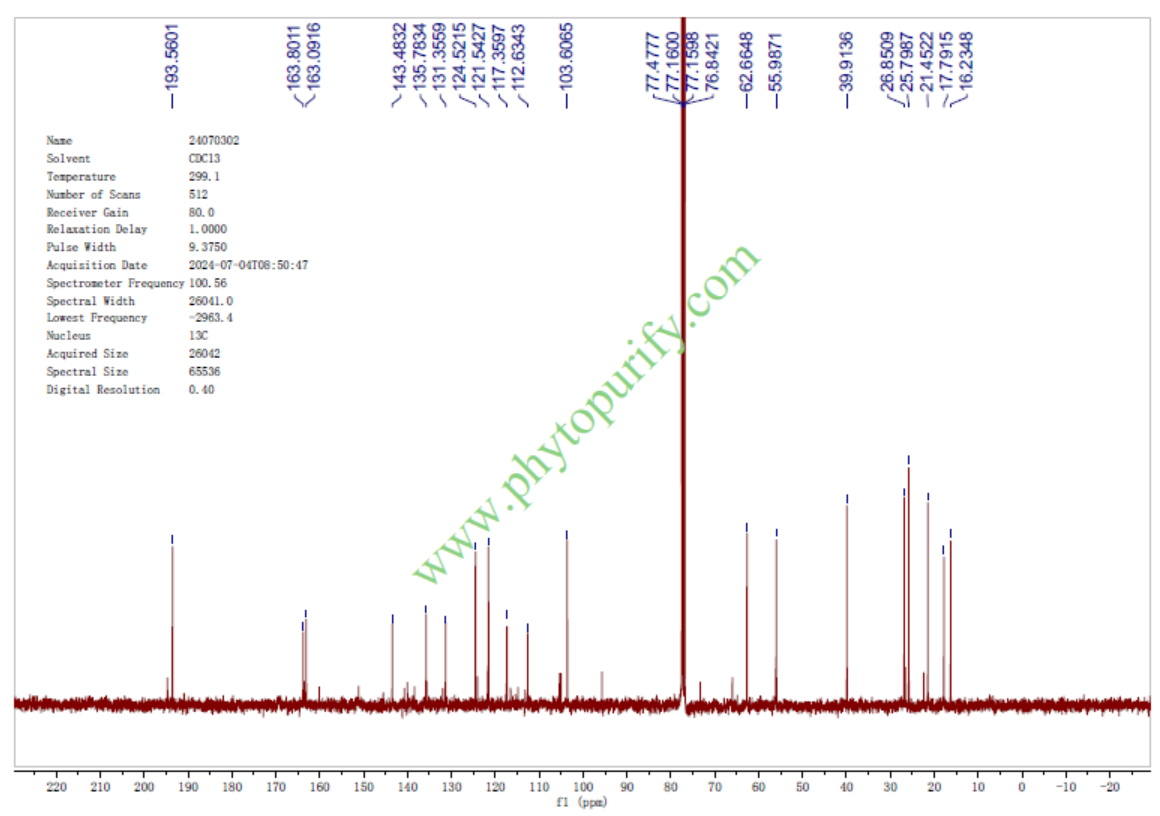
Identification Method: Mass, NMR
Packing: Brown vial or HDPE plastic bottle
Storage: Store in a well closed container, protected from air and light. Put into refrigerate or freeze for long term storage.
Whenever possible, you should prepare and use solutions on the same day. However, if you need to make up stock solutions in advance, we recommend that you store the solution as aliquots in tightly sealed vials at -20℃. Generally, these will be useable for up to two weeks.
The product could be supplied from milligrams to grams
Inquire for bulk scale.
For Reference Standard and R&D, Not for Human Use Directly.
NMR of Deacylhericene
HPLC of Deacylhericene
Storage conditions:Short-term storage at 2~8℃, long-term storage at -20 ~ -80℃
66.7600
3.8487
3.8412
.1988
2.5540
3.7971
High
89.5450
2.9507
No
Yes
Yes
No
No
No
0.0
No
Yes
Yes
No
Natural products, as an important source of drug discovery, play an irreplaceable role in the long history of human fight against diseases. Fungi, especially higher medicinal fungi, have attracted much attention due to their unique secondary metabolite libraries. Monkey head mushroom(Hericium erinaceus)As a precious fungus with medicinal and edible properties, it has a long history of consumption and medicinal use in East Asian countries such as China, Japan, and South Korea. Traditionally, Hericium erinaceus is used to treat stomach diseases, enhance immunity, and improve cognitive function. Modern pharmacological research has revealed that Hericium erinaceus contains various bioactive compounds, including polysaccharides, terpenoids, phenolic compounds, etc. Among them, Hericines and their derivatives have become a research hotspot due to their unique neuroprotective, anti-inflammatory, and anti-tumor activities.
Deacylhericene (CAS number: 158314-36-4) is an important member of the Hericin family. It can be inferred from its name "deacetylated" that this compound is the product of removing the acyl group from the structure of Hericium erinaceus. As a naturally occurring diterpenoid compound, deacetylated Hericium erinaceus has a unique carbon skeleton in its structure, which endows it with a biological activity spectrum distinct from other Hericium erinaceus compounds. In recent years, with the advancement of separation technology and the improvement of pharmacological evaluation systems, the potential therapeutic value of deacetylated Hericium erinaceus in neurodegenerative diseases, metabolic diseases, and inflammation related diseases has gradually been revealed. This article aims to provide a systematic review of the chemical structure, physicochemical properties, plant sources, extraction methods, pharmacological activity, mechanism of action, pharmacological characteristics, and clinical application prospects of deacetylated Hericium erinaceus, in order to provide reference for the in-depth research and development of this natural product.
Acylated Hericin erinaceus belongs to the diterpenoid class, and its core skeleton is a unique hericene type carbon framework. Structurally, the compound has a highly oxidized tricyclic or tetracyclic system, containing multiple chiral centers, which lays the structural foundation for its diverse biological activities. Compared with the parent Hericium erinaceus, deacetylated Hericium erinaceus lacks an acyl substituent at a specific position, which significantly affects its polarity, lipophilicity, and interaction mode with biological targets.
In terms of physicochemical properties, the molecular weight of deacetylated Hericium erinaceus is 318.4130 Da, which meets the molecular weight requirement of Lipinski's Rule of Five (<500 Da), indicating its good potential for oral drug development. Its lipid water partition coefficient (LogP) is 3.8487, which falls within the moderate lipophilic range. Compounds with LogP values between 2-5 are generally considered to have ideal membrane permeability, allowing them to pass through the lipid bilayer without being trapped in adipose tissue due to excessive lipophilicity. The LogP value of deacetylated Hericium erinaceus suggests its good transmembrane transport ability, which is consistent with its high blood-brain barrier permeability demonstrated in subsequent pharmacokinetic studies.
The polar surface area (TPSA) is 66.7600 Å ², which is lower than the commonly recognized threshold for good oral absorption (140 Å ²), further supporting its potential for good oral bioavailability. TPSA reflects the surface area occupied by polar atoms (such as oxygen and nitrogen) and their attached hydrogen atoms in molecules, which is closely related to the intestinal absorption and blood-brain barrier permeability of compounds. The TPSA value of deacetylated Hericium erinaceus indicates that its molecule contains an appropriate amount of hydrogen bond donors and acceptors, which ensures interaction with the target protein without limiting absorption due to excessive polarity.
The water solubility (0.1988 mg/mL) is at a moderately low level, which is consistent with the lipophilicity reflected by the LogP value. Although water solubility is not particularly ideal, it is a common occurrence in natural products and can be improved through formulation techniques such as nanoemulsions, liposomes, cyclodextrin inclusion complexes, etc. It is worth noting that the blood-brain barrier permeability of this compound has been evaluated as "high", which gives it a unique advantage in the treatment of neurological and psychiatric disorders. In addition, hERG inhibition was evaluated as' no ', indicating a low risk of cardiac toxicity; The Ames test result is 0.0, indicating no significant mutagenicity. These safety features lay a solid foundation for its subsequent development.
The main source of deacetylated Hericium erinaceus is Hericium erinaceus(Hericium erinaceus)The fruiting body, mycelium, and fermentation broth. Hericium erinaceus belongs to the Basidiomycota phylum, Hericium erinaceus family, and Hericium erinaceus genus. It is a wood saprophytic fungus that usually grows on dead or living trees of broad-leaved trees. In addition to wild resources, artificial cultivation techniques have become quite mature, which provides a guarantee for the stable supply of deacetylated Hericium erinaceus.
In Hericium erinaceus, deacetylated Hericin erinaceus usually coexists with other Hericin compounds such as hericene A, hericene B, erinacine, etc. Its content is influenced by various factors, including the source of the strain, cultivation conditions (temperature, humidity, light, medium composition), harvesting time, and processing methods. Research has shown that optimizing liquid fermentation conditions can significantly increase the yield of Hericium erinaceus compounds in mycelium. For example, under specific carbon to nitrogen ratios, pH values, and the presence of inducers such as methyl jasmonate, the accumulation of deacetylated Hericium erinaceus can be increased several times.
In terms of extraction methods, traditional solvent extraction remains the main approach. Due to the lipophilicity of deacetylated Hericium erinaceus, organic solvents such as methanol, ethanol, ethyl acetate, or chloroform are commonly used for extraction. The usual process is to crush the dried fruiting body or mycelium of Hericium erinaceus, soak or reflux it with a certain concentration of ethanol (such as 70% -95%) at room temperature or under heating conditions, and concentrate the extract under reduced pressure to obtain the crude extract. In order to improve extraction efficiency and selectivity, various auxiliary extraction techniques have been developed in recent years, including ultrasonic assisted extraction, microwave-assisted extraction, supercritical fluid extraction (especially supercritical CO ₂ extraction), etc. Ultrasonic and microwave-assisted extraction can achieve higher extraction rates in a shorter period of time by disrupting the cell wall structure and accelerating solvent penetration. Supercritical CO ₂ extraction is particularly suitable for extracting thermosensitive components due to its green and solvent-free characteristics, but the equipment cost is relatively high.
The crude extract usually contains a large amount of lipophilic impurities, which require further separation and purification steps. Classic separation strategies include liquid-liquid extraction (such as petroleum ether, chloroform, ethyl acetate, n-butanol and other polar solvents in turn), silica gel column chromatography, ODS reverse phase column chromatography, Sephadex LH-20 gel column chromatography and preparative high-performance liquid chromatography (Prep-HPLC). Acylated Hericium erinaceus can usually be gradient eluted on a silica gel column using chloroform methanol or petroleum ether acetone systems. Due to the similar structure of Hericium erinaceus compounds, single column chromatography often fails to meet purity requirements, and multiple chromatographic techniques need to be combined for repeated purification. Finally, its chemical structure was confirmed by techniques such as nuclear magnetic resonance (NMR), mass spectrometry (MS), and circular dichroism (CD).
The most notable pharmacological activity of deacetylated Hericium erinaceus is reflected in the nervous system. Multiple in vitro and in vivo studies have shown that this compound can promote the synthesis and release of nerve growth factor (NGF). NGF is a necessary neurotrophic factor for maintaining the survival, development, and function of sympathetic and sensory neurons. In PC12 cells (rat pheochromocytoma cells, commonly used as neuronal models), deacetylated Hericium erinaceus can significantly induce the growth of neural processes, which is similar to the induction effect of NGF. Mechanism studies have shown that this compound may promote neuronal survival and differentiation by activating the extracellular signal regulated kinase (ERK) and protein kinase B (Akt) signaling pathways.
In the Alzheimer's disease (AD) model, deacetylated Hericium erinaceus has shown potential to improve cognitive function. By inhibiting the aggregation and toxicity of β - amyloid protein (A β), reducing oxidative stress damage, and regulating the expression of synaptic plasticity related proteins, this compound can protect hippocampal neurons from A β - induced apoptosis. In addition, in Parkinson's disease (PD) models, deacetylated Hericium erinaceus has a protective effect on dopaminergic neuron damage induced by 1-methyl-4-phenyl-1,2,3,6-tetrahydropyridine (MPTP) or 6-hydroxydopamine (6-OHDA), which may be related to the activation of the Nrf2/ARE antioxidant pathway, inhibition of mitochondrial dysfunction, and reduction of inflammatory cytokine release.
Inflammation is the common pathological basis of various chronic diseases. Acylated Hericium erinaceus extract exhibits significant anti-inflammatory activity both in vitro and in vivo. In a macrophage model stimulated by lipopolysaccharide (LPS), this compound can significantly inhibit the production of pro-inflammatory mediators such as nitric oxide (NO), prostaglandin E ₂ (PGE ₂), tumor necrosis factor - α (TNF - α), interleukin-1 β (IL-1 β), and interleukin-6 (IL-6). Mechanistically, deacetylated Hericium erinaceus inhibits the activation of nuclear factor kappa B (NF - κ B), blocks its nuclear translocation, and downregulates the expression of downstream inflammatory genes. At the same time, it can activate the Nrf2 signaling pathway, induce the expression of antioxidant enzymes such as heme oxygenase-1 (HO-1), and exert dual anti-inflammatory and antioxidant effects.
In animal models, deacetylated Hericium erinaceus extract has an improving effect on colitis induced by dextran sulfate sodium (DSS), manifested as reducing weight loss, lowering disease activity index, inhibiting colon shortening, and tissue pathological damage. In addition, this compound also exhibits certain protective effects in inflammatory models such as acute lung injury and arthritis.
Acylated Hericium erinaceus extract exhibits inhibitory effects on the proliferation of various tumor cell lines. Studies have shown that this compound can inhibit the growth of human liver cancer cells (HepG2), human breast cancer cells (MCF-7), human colon cancer cells (HT-29), and human lung cancer cells (A549), and its IC ₀ value is usually in the micromolar level. The anti-tumor mechanism involves multiple aspects: inducing cell cycle arrest (mainly in G0/G1 or G2/M phase), activating mitochondrial pathway apoptosis (by upregulating Bax, downregulating Bcl-2, releasing cytochrome c, activating caspase-3/9), inhibiting PI3K/Akt/mTOR signaling pathway, and inducing autophagic death. It is worth noting that deacetylated Hericium erinaceus has relatively low toxicity to normal cells and exhibits certain selectivity, which provides a safety advantage for it as an anti-tumor candidate drug.
In addition to the above main activities, deacyl hericidin also showed the potential of antioxidant, antibacterial and anti diabetes. In terms of antioxidant properties, this compound can scavenge various free radicals (such as DPPH, ABTS ⁺, hydroxyl radicals) and enhance the activity of antioxidant enzymes such as superoxide dismutase (SOD) and glutathione peroxidase (GPx) in cells. In terms of antibacterial properties, it has a certain inhibitory effect on common pathogenic bacteria such as Staphylococcus aureus and Escherichia coli. In terms of anti diabetes, preliminary studies have shown that it can improve insulin resistance and promote glucose uptake, but the relevant research is not in-depth and needs further verification.
The neurotrophic activity of deacetylated Hericium erinaceus is mainly related to its induction of NGF synthesis. Research has shown that this compound can activate the protein kinase A (PKA) and protein kinase C (PKC) signaling pathways in astrocytes, thereby promoting transcription and protein secretion of the NGF gene. In addition, by activating the TrkA receptor (a high affinity receptor for NGF) and its downstream ERK and PI3K/Akt pathways, deacetylated Hericium erinaceus can mimic some of the biological effects of NGF, promoting neuronal survival and axonal growth.
In terms of neuroprotection, deacetylated Hericium erinaceus exerts its effects through a multi-target mechanism: ① inhibiting the aggregation and fiber formation of A β, reducing the neurotoxicity induced by A β; ② Activate the Nrf2/ARE antioxidant pathway, induce the expression of phase II detoxifying enzymes such as HO-1 and NQO1, and alleviate oxidative stress damage; ③ Inhibiting the NF - κ B and MAPK (p38, JNK) inflammatory pathways, reducing excessive activation of microglia and astrocytes, and lowering levels of neuroinflammation; ④ Regulating mitochondrial dynamics, inhibiting the decrease of mitochondrial membrane potential and cytochrome c release, and blocking the cascade reaction of apoptosis; ⑤ Enhance the expression of brain-derived neurotrophic factor (BDNF) and promote synaptic plasticity.
The anti-inflammatory effect of deacetylated Hericium erinaceus is mainly achieved through the regulation of NF - κ B and MAPK signaling pathways. In the resting state, NF - κ B binds to the inhibitory protein I κ B α and exists in an inactive form in the cytoplasm. When stimulated by LPS, TNF - α, etc., I κ B kinase (IKK) is activated, phosphorylating I κ B α, leading to its ubiquitination degradation, releasing NF - κ B into the nucleus, and initiating the transcription of pro-inflammatory genes. Acylated Hericium erinaceus extract can inhibit the activity of IKK, prevent the phosphorylation and degradation of I κ B α, and thus block the activation of NF - κ B. Meanwhile, the compound can also inhibit the phosphorylation of p38 and JNK, reduce the activity of AP-1 transcription factor, and further suppress the production of inflammatory mediators.
In addition, deacetylated Hericium erinaceus exerts anti-inflammatory effects by activating the Nrf2 signaling pathway. Nrf2 is the main regulator of cellular antioxidant defense, which normally binds to Keap1 and is degraded by ubiquitination. When stimulated by electrophilic compounds or oxidative stress, Nrf2 is released from Keap1, translocated into the nucleus, and binds to antioxidant response elements (ARE), initiating the expression of protective genes such as HO-1, NQO1, GST, etc. Acylated Hericium erinaceus extract can promote nuclear translocation of Nrf2, enhance the expression of HO-1, and thus inhibit inflammatory response.
The anti-tumor mechanism of deacetylated Hericium erinaceus involves cell cycle regulation, apoptosis induction, and autophagy regulation. In terms of cell cycle, this compound can upregulate the expression of cell cycle dependent kinase inhibitors (CDKI) such as p21 and p27, inhibit the activity of cyclin CDK complexes, and lead to cell cycle arrest. In terms of apoptosis induction, deacetylated Hericium erinaceus activates the mitochondrial pathway, increases the Bax/Bcl-2 ratio, promotes the opening of mitochondrial permeability transition pores, releases cytochrome c and Smac/DIABLO, activates caspase-9 and caspase-3, ultimately leading to cell apoptosis. In addition, the compound can also inhibit the PI3K/Akt/mTOR signaling pathway, which is overactivated in various tumors and closely related to cell proliferation, survival, and drug resistance. By inhibiting the phosphorylation of Akt, deacetylated Hericium erinaceus can weaken the survival signal of tumor cells and enhance the sensitivity of chemotherapy drugs.
It is worth noting that deacetylated Hericium erinaceus can also induce autophagy in tumor cells. Autophagy is a process of cellular self digestion that plays a dual role in the occurrence and development of tumors. Research has shown that deacetylated Hericium erinaceus extract inhibits mTOR activity, activates the AMPK signaling pathway, induces the expression of autophagy related proteins such as LC3-II and Beclin-1, and promotes autophagy flow. In certain tumor cells, excessive activation of autophagy can lead to autophagic cell death, providing a new strategy for anti-tumor therapy.
Based on the aforementioned physicochemical property parameters, deacetylated Hericium erinaceus exhibits good medicinal properties. The molecular weight (318.4 Da), LogP (3.85), and TPSA (66.76 Å ²) all comply with the five rules of class drugs, indicating its potential for oral drug development. The negative results of hERG inhibition and Ames test indicate that the compound has low risk of cardiac toxicity and genetic toxicity, and good safety. However, the low water solubility (0.1988 mg/mL) may limit its oral bioavailability and needs to be improved through formulation methods.
At present, there is relatively limited research on the pharmacokinetics of deacetylated Hericium erinaceus, but based on its physicochemical properties and studies of similar compounds, its pharmacokinetic characteristics can be inferred. The high blood-brain barrier permeability is its most significant advantage, which makes it uniquely valuable in the treatment of neurological and psychiatric disorders. This compound may cross the blood-brain barrier through passive diffusion or carrier mediated transport. Compounds with LogP values between 3-4 typically have higher brain tissue distribution, but may also be recognized by efflux transporters such as P-glycoprotein (P-gp), limiting their accumulation in the brain. Therefore, further research is needed to determine whether deacetylated Hericium erinaceus is a substrate for P-gp, in order to accurately evaluate its brain targeting ability.
In terms of absorption, moderate lipophilicity facilitates its passage through the lipid bilayer of intestinal epithelial cells, but low water solubility may limit the dissolution rate and affect the degree of absorption. In terms of metabolism, diterpenes are usually oxidized and metabolized through the liver cytochrome P450 enzyme system (especially CYP3A4), which may generate multiple metabolites. The molecule of deacetylated Hericium erinaceus contains multiple hydroxyl groups, which may undergo glucuronic acid or sulfuric acid binding reactions to form water-soluble complexes, which can be excreted through urine or bile.
To address the issue of poor water solubility of deacetylated Hericium erinaceus, various formulation techniques can be used to improve its oral bioavailability. Nano drug delivery systems such as liposomes, nanoemulsions, solid lipid nanoparticles, and polymer nanoparticles can encapsulate the compound, improve its water dispersibility, and protect it from gastrointestinal degradation. Cyclodextrin inclusion complexes can enhance the apparent solubility of deacetylated Hericium erinaceus through host guest interactions. In addition, phospholipid complex technology can enhance its lipid solubility, promote lymphatic absorption, and improve bioavailability. For brain targeted delivery, nanocarriers with surface modified transferrin receptor or glucose transporter ligands can be designed to achieve brain specific delivery.
Acylated Hericium erinaceus has shown great potential in the treatment of neurodegenerative diseases such as Alzheimer's disease and Parkinson's disease. Its multi-target mechanism of action, including neurotrophic, anti-inflammatory, antioxidant, and anti A β aggregation, enables it to simultaneously intervene in multiple pathological pathways of diseases, which is in line with the current multi-target strategy for the treatment of neurodegenerative diseases. Compared with single target drugs, deacetylated monkeypressin may have better efficacy and lower resistance risk. However, current research mainly remains at the cellular and animal levels, lacking high-quality clinical research data. In the future, randomized, double-blind, placebo-controlled clinical trials are needed to evaluate their efficacy and safety in improving cognitive function, alleviating motor symptoms, and delaying disease progression.
Given its significant anti-inflammatory activity, deacetylated Hericium erinaceus has potential application value in the treatment of inflammatory diseases such as inflammatory bowel disease, rheumatoid arthritis, and acute lung injury. It can effectively control inflammatory response and alleviate oxidative stress damage by inhibiting NF - κ B and activating Nrf2 through a dual mechanism. Compared with existing anti-inflammatory drugs such as nonsteroidal anti-inflammatory drugs and glucocorticoids, deacetylated Hericium erinaceus may have better safety, especially with lower risks of gastrointestinal and cardiovascular side effects.
The prospect of deacetylated Hericium erinaceus as an anti-tumor adjuvant therapy drug is worth paying attention to. Its inhibitory effect on various tumor cells, low normal cell toxicity, and ability to induce autophagy make it a candidate molecule for chemotherapy or radiotherapy sensitizers. Through combination therapy, it is possible to reduce the dosage of chemotherapy drugs, alleviate toxic side effects, and enhance anti-tumor efficacy. In addition, its immune regulatory activity may help improve the tumor microenvironment and enhance anti-tumor immune response.
Although deacetylated Hericium erinaceus has various pharmacological activities and good medicinal properties, its development still faces many challenges. Firstly, the low content of natural sources and the lack of established chemical or biological synthesis pathways limit their large-scale acquisition. Secondly, pharmacokinetic studies are not yet sufficient, especially in terms of its metabolic pathways, tissue distribution, and excretion characteristics in vivo, which need to be systematically elucidated. Thirdly, there is a lack of safety evaluation data for long-term toxicity and reproductive toxicity. Fourthly, further research is needed on the mechanism of action, especially the molecular targets directly affected by it have not been clearly identified.
Future research directions should include: ① developing efficient chemical synthesis or semi synthesis methods, or increasing their yield in microorganisms through metabolic engineering methods; ② Using techniques such as drug affinity reaction target stability (DARTS), cell thermal transition analysis (CETSA), and affinity chromatography, identify the protein targets it directly acts on; ③ Conduct systematic pharmacokinetic and toxicological studies; ④ Explore its synergistic effects with other drugs and develop combination therapy plans; ⑤ Advance preclinical research to lay the foundation for clinical trials.
As a natural diterpenoid compound derived from the medicinal fungus Hericium erinaceus, deacetylated Hericium erinaceus has attracted widespread attention for its unique chemical structure and multifaceted pharmacological activities. From neuroprotection, anti-inflammatory to anti-tumor, this compound exhibits a multi-target and multi pathway biological effect mechanism, which is in line with the concept of "multi-target therapy" in modern drug development. Its excellent pharmacokinetic parameters, especially high blood-brain barrier permeability and low toxicity risk, further enhance its potential as a candidate drug. However, there is still a long way to go from laboratory discoveries to clinical applications, which requires collaborative efforts from multidisciplinary researchers such as chemistry, pharmacology, pharmacy, and clinical medicine. With the deepening of research, deacetylated Hericium erinaceus is expected to provide new options for the treatment of neurodegenerative diseases, inflammatory diseases, and tumors, and contribute to human health.
