


Product name: Hericene D
Synonym name:
Catalogue No.: BP2338
Cas No.: 1343477-87-1
Formula: C37H56O5
Mol Weight: 580.85
Botanical Source:
Type of Compound:
Purity: 95%~99%
Analysis Method: HPLC-DAD or/and HPLC-ELSD
Identification Method: Mass, NMR
Packing: Brown vial or HDPE plastic bottle
Storage: Store in a well closed container, protected from air and light. Put into refrigerate or freeze for long term storage.
Whenever possible, you should prepare and use solutions on the same day. However, if you need to make up stock solutions in advance, we recommend that you store the solution as aliquots in tightly sealed vials at -20℃. Generally, these will be useable for up to two weeks.
The product could be supplied from milligrams to grams
Inquire for bulk scale.
For Reference Standard and R&D, Not for Human Use Directly.
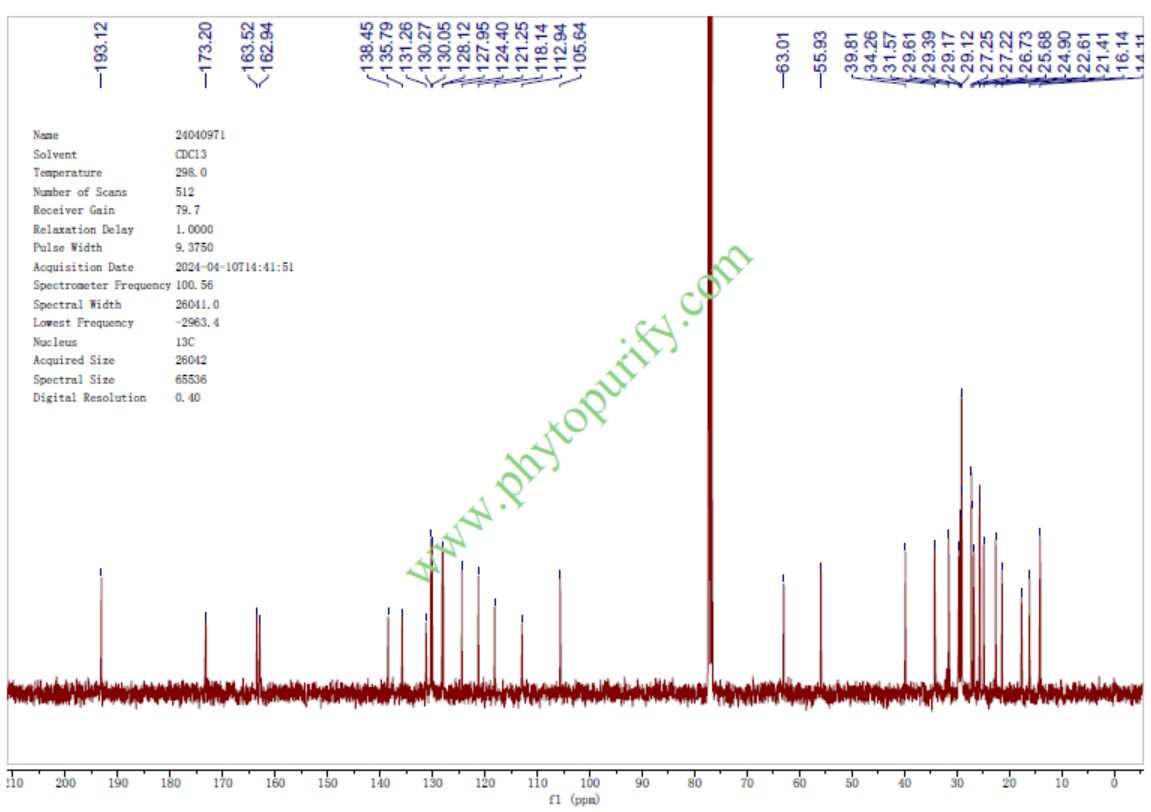
NMR of Hericene D
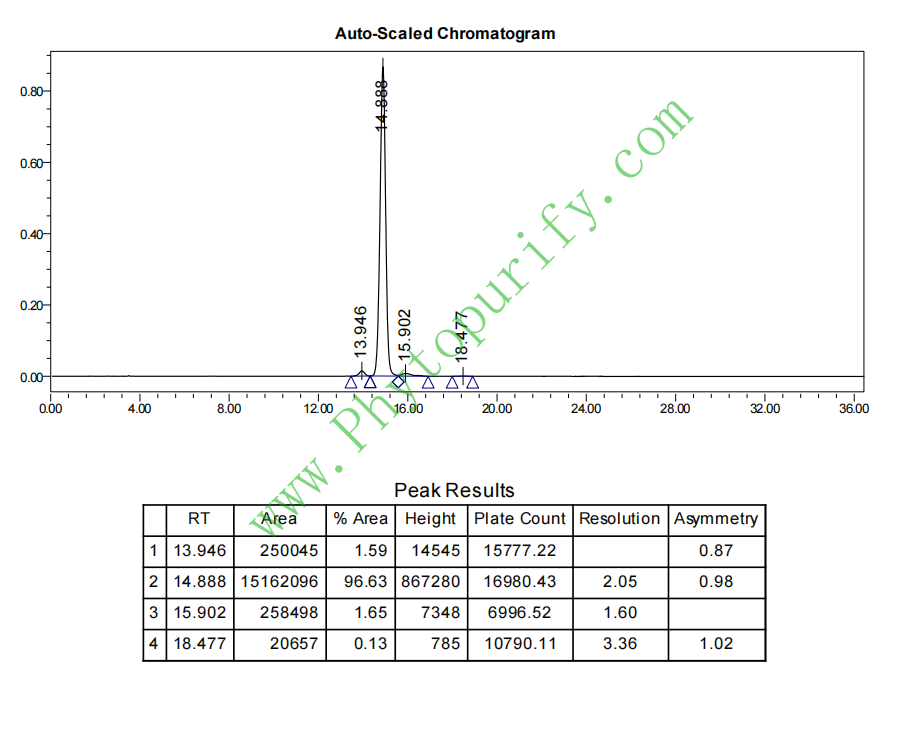
HPLC of Hericene D
Storage conditions:Short-term storage at 2~8℃, long-term storage at -20 ~ -80℃
72.8300
10.2180
10.1882
.0045
3.4275
2.0336
High
95.4230
3.2944
No
Yes
Yes
No
No
No
0.0
No
Yes
Yes
Yes
Autoimmune diseases are a type of chronic inflammatory disease caused by abnormal responses of the body's immune system to self antigens, which then attack normal tissues and organs. Their pathogenesis is complex and involves imbalances in genetics, environment, and immune regulatory networks. At present, commonly used clinical treatment methods such as glucocorticoids, immunosuppressants, and biologics can effectively control the condition, but long-term use often accompanies serious side effects, increased risk of infection, and high treatment costs. Therefore, searching for new lead compounds with immunomodulatory activity and low toxicity from natural products has become an important direction in the field of drug development.
Monkey head mushroom(Hericium erinaceus)As a rare fungus that can be used as both medicine and food, it has a long history of consumption and medicinal use in East Asia. Modern pharmacological research has shown that Hericium erinaceus and its active ingredients have various biological activities such as neuroprotection, anti-inflammatory, antioxidant, anti-tumor, and immune regulation. Hericene D (CAS number: 1343477-87-1) is a phenolic compound with a unique chemical structure isolated from the fruiting body or mycelium of Hericium erinaceus, belonging to the hericene family. In recent years, with the deepening of research on the chemical composition of Hericium erinaceus, Hericin D has received increasing attention due to its significant activity in immune regulation. Preliminary research has found that Hericium erinaceus D can regulate multiple key immune signaling pathways, affecting T cell differentiation and function, thus demonstrating potential application value in the treatment of autoimmune diseases. This article will systematically review the research progress of Hericium erinaceus D from the aspects of chemical structure, plant origin, pharmacological activity, mechanism of action, pharmacological evaluation, and clinical application prospects, in order to provide reference for the further development and utilization of this compound.
The chemical structure of Hericium erinaceus D belongs to the diterpenoid class, and its parent nucleus is an isopentenoid type diterpenoid with multiple phenolic hydroxyl and sugar units connected. Specifically, its molecular skeleton consists of four isoprene units, forming a tricyclic diterpene system, with hydroxyl substitution at positions such as C-12 and C-15. In addition, the molecule also contains a glucose group, which is connected to the aglycone through a glycosidic bond. This structural feature endows it with certain water solubility and biological activity. The molecular formula of Hericium erinaceus D is C ∝₁ H ₄₈ O ₁₀, with a molecular weight of 580.85 g/mol. Its precise structure has been confirmed by techniques such as nuclear magnetic resonance spectroscopy (NMR) and high-resolution mass spectrometry (HR-MS).
In terms of physicochemical properties, Hericium erinaceus D exhibits typical lipophilic characteristics. The calculated lipid water partition coefficient (LogP) is 10.2180, indicating that the compound has strong lipophilicity and is easy to penetrate biological membranes, but it may also cause poor water solubility. The water solubility value determined by the experiment is only 0.0045 mg/mL, which belongs to compounds that are extremely difficult to dissolve in water. This low water solubility may limit its bioavailability when administered orally, but high lipophilicity is beneficial for its passage through the blood-brain barrier (BBB), and its blood-brain barrier penetration is evaluated as "high". This characteristic may have unique advantages for treating autoimmune diseases related to the central nervous system, such as multiple sclerosis. The topological polar surface area (TPSA) is 72.83 Å ², which is at a moderate level, indicating its potential for transmembrane transport. In addition, hERG inhibition prediction is negative, indicating a low risk of cardiac toxicity; The Ames test result is 0.0, indicating no significant mutagenicity under standard testing conditions. These preliminary toxicological evaluations provide positive signals for the safety of Hericium erinaceus D.
Hericium erinaceus D is mainly derived from the fungus Hericium erinaceus in the family Hericiaceae of the order Basidiomycota(Hericium erinaceus). This fungus is widely distributed in northern temperate regions, including China, Japan, South Korea, Europe, and North America. In China, Hericium erinaceus mainly grows on decaying broad-leaved trees such as oak and peach trees in the northeast, north, and southwest regions. The artificial cultivation technology has become quite mature, making both the fruiting body and mycelium of Hericium erinaceus a stable source of raw materials.
The extraction of Hericium erinaceus D is usually carried out using organic solvent extraction method. Due to its high lipophilicity, commonly used extraction solvents include methanol, ethanol, ethyl acetate, and chloroform. The typical extraction process is as follows: after crushing the dried fruiting body or mycelium of Hericium erinaceus, it is repeatedly soaked and extracted with 95% ethanol or methanol at room temperature or heating conditions. The extracted liquids are combined and concentrated under reduced pressure to obtain the crude extract. Subsequently, the crude extract was suspended in water and subjected to liquid-liquid extraction using petroleum ether, ethyl acetate, and n-butanol in sequence to preliminarily separate components of different polarities. Hericin D is mainly enriched in the ethyl acetate extraction layer.
Further purification usually requires the combination of multiple chromatographic techniques. Silica gel column chromatography is a commonly used preliminary separation method, which uses chloroform methanol or petroleum ether ethyl acetate systems for gradient elution. Then, Sephadex LH-20 gel column chromatography can be used to separate according to the molecular size with methanol or chloroform methanol (1:1) as the mobile phase. For obtaining high-purity Hericium erinaceus D, high performance liquid chromatography (HPLC) is an essential step, usually using a reverse phase C18 column, with equal or gradient elution in acetonitrile water or methanol water systems, and monitoring at wavelengths of 210-280 nm with a UV detector. In recent years, green extraction techniques such as supercritical fluid extraction (SFE) and microwave-assisted extraction (MAE) have also been attempted for the extraction of active ingredients from Hericium erinaceus. However, further optimization is needed for the large-scale application of Hericin erinaceus D.
The most prominent pharmacological activity of Hericium erinaceus D is reflected in its regulatory effect on the immune system. Multiple in vitro and in vivo studies have shown that this compound can significantly inhibit the production of pro-inflammatory factors and promote the expression of anti-inflammatory factors. In a macrophage model stimulated by lipopolysaccharide (LPS), Hericin erinaceus D can dose dependently reduce the levels of tumor necrosis factor - α (TNF - α), interleukin-6 (IL-6), and interleukin-1 β (IL-1 β). Meanwhile, it can also upregulate the expression of anti-inflammatory factor interleukin-10 (IL-10), thereby exerting a bidirectional regulatory effect in inflammatory response.
In T cell-mediated immune response, Hericium erinaceus D exhibits regulatory ability on helper T cell (Th) differentiation. Research has found that this compound can inhibit the differentiation of Th17 cells and reduce the secretion of its signature cytokine interleukin-17A (IL-17A). Th17 cells are a key pathogenic cell group in autoimmune diseases such as rheumatoid arthritis, psoriasis, and multiple sclerosis. Meanwhile, Hericium erinaceus D can also promote the differentiation and function of regulatory T cells (Tregs), upregulate the expression of forkhead box protein P3 (FOXP3). Treg cells are important cells for maintaining immune tolerance and suppressing excessive immune responses. By promoting the balance of Treg/Th17 towards Treg, Hericium erinaceus D provides a new strategy for the treatment of autoimmune diseases.
In animal models, the pharmacological activity of Hericium erinaceus D has been further validated. In the collagen induced arthritis (CIA) mouse model, oral administration of Hericium erinaceus D can significantly reduce joint swelling, bone erosion, and cartilage damage, as well as decrease serum levels of anti collagen antibodies and pro-inflammatory cytokines. Histopathological examination showed a significant reduction in synovial hyperplasia and inflammatory cell infiltration in the treatment group of mice. In the experimental autoimmune encephalomyelitis (EAE) mouse model (a classic model of multiple sclerosis), Hericium erinaceus D also showed protective effects, delaying disease onset, reducing clinical scores, and decreasing the area of inflammatory demyelinating lesions in the central nervous system. These in vivo research results strongly support the potential of Hericium erinaceus D as a candidate drug for treating autoimmune diseases.
In addition to its immunomodulatory effects, Hericium erinaceus D also exhibits certain neuroprotective activity. Given its ability to cross the blood-brain barrier, this compound may have therapeutic significance for neurodegenerative diseases with immune inflammatory responses. Preliminary studies have shown that Hericium erinaceus D can promote the synthesis and release of nerve growth factor (NGF) and protect neurons from oxidative stress damage. However, current research on its neuroprotective activity is not sufficient and requires more experimental data to support it.
The immunomodulatory effects of Hericium erinaceus D involve multiple signaling pathways and molecular targets, among which Signal Transduction and Transcription Activation Factor 3 (STAT3) is considered one of its core targets. STAT3 is a key member of the JAK/STAT signaling pathway, playing a decisive role in the differentiation and functional maintenance of Th17 cells. Activated STAT3 can directly bind to the promoter regions of Th17 related genes such as IL-17A and ROR γ t, promoting their transcription. Hericin D can inhibit the phosphorylation of STAT3 (Tyr705 site), thereby blocking its nuclear translocation and transcriptional activity. This inhibitory effect may be achieved by directly binding to STAT3 protein or indirectly affecting the activity of upstream kinases such as JAK2 and Src.
In addition, Hericium erinaceus D also has a regulatory effect on the transforming growth factor - β 1 (TGF β 1) signaling pathway. TGF β 1 plays a dual role in immune regulation: in the presence of IL-6, TGF β 1 and IL-6 synergistically induce Th17 cell differentiation; In the absence of inflammatory factors, TGF β 1 promotes the differentiation of Treg cells. Hericin D can upregulate the expression of TGF β 1 and inhibit pro-inflammatory signals such as IL-6, thereby creating a favorable microenvironment for Treg differentiation. Specifically, this compound may enhance the transcription of FOXP3 gene by activating the Smad2/3 signaling pathway, thereby promoting the generation of Treg cells.
Interleukin-10 (IL-10) is another key anti-inflammatory target. Hericin D can significantly upregulate the expression of IL-10. IL-10 is mainly secreted by Treg cells and certain B cell subsets, which can inhibit the function of antigen-presenting cells and directly suppress the proliferation of effector T cells and cytokine production. Hericin D may directly promote the transcription of IL-10 gene by activating transcription factors such as c-Maf or Ahr. In addition, FOXP3 serves as a specific biomarker and key transcription factor for Treg cells, and its expression level directly determines the number and function of Treg cells. Hericin D upregulates FOXP3 expression through the aforementioned mechanism, thereby enhancing the immunosuppressive function of Treg cells.
In summary, Hericium erinaceus D achieves precise regulation of the immune system through the synergistic effect of multiple targets and pathways. The core mechanism can be summarized as: inhibiting STAT3 phosphorylation to block Th17 differentiation, while activating the TGF β 1/Smad signaling pathway to promote Treg differentiation, and enhancing immunosuppressive effects by upregulating IL-10 and FOXP3 expression. This "dual pronged" regulatory model gives Hericium erinaceus D a unique advantage in restoring immune homeostasis.
Based on the existing physicochemical properties and preliminary toxicological data, Hericium erinaceus D exhibits certain potential for medicinal use, but also faces significant challenges. Its molecular weight (580.85 Da) is at the critical value of Lipinski's Rule of Five (<500 Da), but considering the large molecular weight of many active ingredients in natural products, this limitation is not absolute. Its extremely high LogP value (10.2180) far exceeds the ideal range (0-3), indicating that there may be issues with the solubility and absorption of the compound in vivo. The main weakness is its extremely low water solubility (0.0045 mg/mL), which may lead to extremely low oral bioavailability. Therefore, developing suitable drug delivery systems (such as liposomes, nanoemulsions, solid dispersions, etc.) to improve their solubility and bioavailability is a key focus of future formulation research.
In terms of safety, Hericium erinaceus D exhibits good preliminary characteristics. HERG inhibition prediction is negative, reducing the risk of cardiac toxicity. The Ames test result is 0.0, indicating no mutagenicity. However, these data only come from computer simulations or preliminary in vitro experiments, and systematic in vivo toxicology studies are still needed, including acute toxicity, chronic toxicity, reproductive toxicity, and genetic toxicity, to comprehensively evaluate their safety.
At present, experimental data on the pharmacokinetics of Hericium erinaceus D in vivo is very limited. Based on its physicochemical properties, it is speculated that after oral administration, the dissolution and absorption of this compound in the gastrointestinal tract may be poor, resulting in lower blood drug concentrations. But its high lipophilicity makes it easy to penetrate cell membranes and may have a larger distribution volume. Its high blood-brain barrier penetration suggests that the compound may reach effective concentrations in the central nervous system, which is of great significance for the treatment of central nervous system autoimmune diseases such as multiple sclerosis.
In terms of metabolism, Hericium erinaceus D may be mainly metabolized by the cytochrome P450 enzyme system in the liver, undergoing phase II reactions such as hydroxylation, glucuronidation, or sulfation. Its glycosidic bonds may be hydrolyzed by gut microbiota or liver enzymes, releasing glycosides. The main excretion pathway may be bile excretion, with some metabolites excreted through urine. Due to the lack of specific pharmacokinetic parameters such as half-life, clearance rate, bioavailability, etc., it is currently impossible to accurately evaluate its in vivo behavior. In the future, systematic pharmacokinetic studies are needed, including the establishment of sensitive biological sample analysis methods (such as LC-MS/MS) to elucidate their absorption, distribution, metabolism, and excretion (ADME) characteristics in animals.
Hericium erinaceus D, as a natural product with unique immune regulatory activity, has shown broad application prospects in the treatment of autoimmune diseases. It can effectively restore Th17/Treg balance and inhibit inflammatory response by regulating multiple key targets such as STAT3, TGF β 1, IL-10, FOXP3, and IL-17A, providing a new molecular basis for the treatment of various autoimmune diseases such as rheumatoid arthritis, psoriasis, inflammatory bowel disease, and multiple sclerosis.
Of particular note is that Hericium erinaceus D can penetrate the blood-brain barrier, which gives it a unique advantage in treating central nervous system autoimmune diseases such as multiple sclerosis. At present, the drugs used for multiple sclerosis in clinical practice are mostly immunomodulators, but most drugs are difficult to effectively enter the central nervous system or have serious systemic side effects. The brain penetrability of Hericium erinaceus D allows it to directly act on immune cells in the central nervous system, such as microglia and astrocytes, thereby more effectively controlling neuroinflammation.
However, the clinical translation of Hericium erinaceus D still faces many challenges. The primary issue is its extremely poor water solubility and high lipophilicity, which severely limits its oral bioavailability. Future research directions should include: 1) developing novel drug delivery systems, such as liposomes, polymer nanoparticles, phospholipid complexes, etc., to improve their solubility and oral absorption; 2) Structural modification can be carried out by designing prodrugs or introducing polar groups (such as phosphate groups, amino acid esters, etc.) to improve their physicochemical properties without affecting their activity; 3) Explore non oral routes of administration, such as transdermal, nasal, or injection administration.
In addition, more in-depth pharmacodynamics research is needed, including verifying its efficacy in more autoimmune disease animal models (such as systemic lupus erythematosus, type 1 diabetes model), and clarifying its dose effect relationship. Systematic toxicology research is a necessary step before entering clinical trials, and the safety of long-term medication needs to be evaluated. Finally, establishing large-scale, high-purity extraction or synthesis processes to meet the demand for active pharmaceutical ingredients in future clinical research is also key to promoting their industrialization.
Hericin D, as an important active diterpenoid compound in Hericium erinaceus, has become a research hotspot in the field of natural product pharmacology due to its unique chemical structure and significant immune regulatory activity. This article systematically reviews its chemical structure, physicochemical properties, plant origin, pharmacological activity, mechanism of action, evaluation of drug properties, and clinical application prospects. Existing research has shown that Hericium erinaceus D can effectively restore Th17/Treg immune balance by regulating multiple molecular targets such as STAT3, TGF β 1, IL-10, FOXP3, and IL-17A, demonstrating good therapeutic potential in various autoimmune disease models. Its high blood-brain barrier penetration provides a unique advantage for the treatment of central nervous system autoimmune diseases.
Although Hericium erinaceus D has significant shortcomings in medicinal properties, especially in terms of water solubility, these issues are expected to be resolved through modern medicinal chemistry and pharmacology methods. In the future, with the in-depth elucidation of its pharmacological mechanism, comprehensive analysis of its pharmacokinetic characteristics, and continuous innovation in formulation technology, Hericium erinaceus D and its derivatives are expected to develop into a new class of low toxicity and high efficiency immunomodulatory drugs, bringing new treatment options for patients with autoimmune diseases. The road from natural products to clinical drugs is long, but Hericium erinaceus D undoubtedly injects new vitality and hope into this field.
