


Product name: Hericene A
Synonym name:
Catalogue No.: BP2335
Cas No.: 157207-54-0
Formula: C35H56O5
Mol Weight: 556.828
Botanical Source:
Type of Compound:
Purity: 95%~99%
Analysis Method: HPLC-DAD or/and HPLC-ELSD
Identification Method: Mass, NMR
Packing: Brown vial or HDPE plastic bottle
Storage: Store in a well closed container, protected from air and light. Put into refrigerate or freeze for long term storage.
Whenever possible, you should prepare and use solutions on the same day. However, if you need to make up stock solutions in advance, we recommend that you store the solution as aliquots in tightly sealed vials at -20℃. Generally, these will be useable for up to two weeks.
The product could be supplied from milligrams to grams
Inquire for bulk scale.
For Reference Standard and R&D, Not for Human Use Directly.
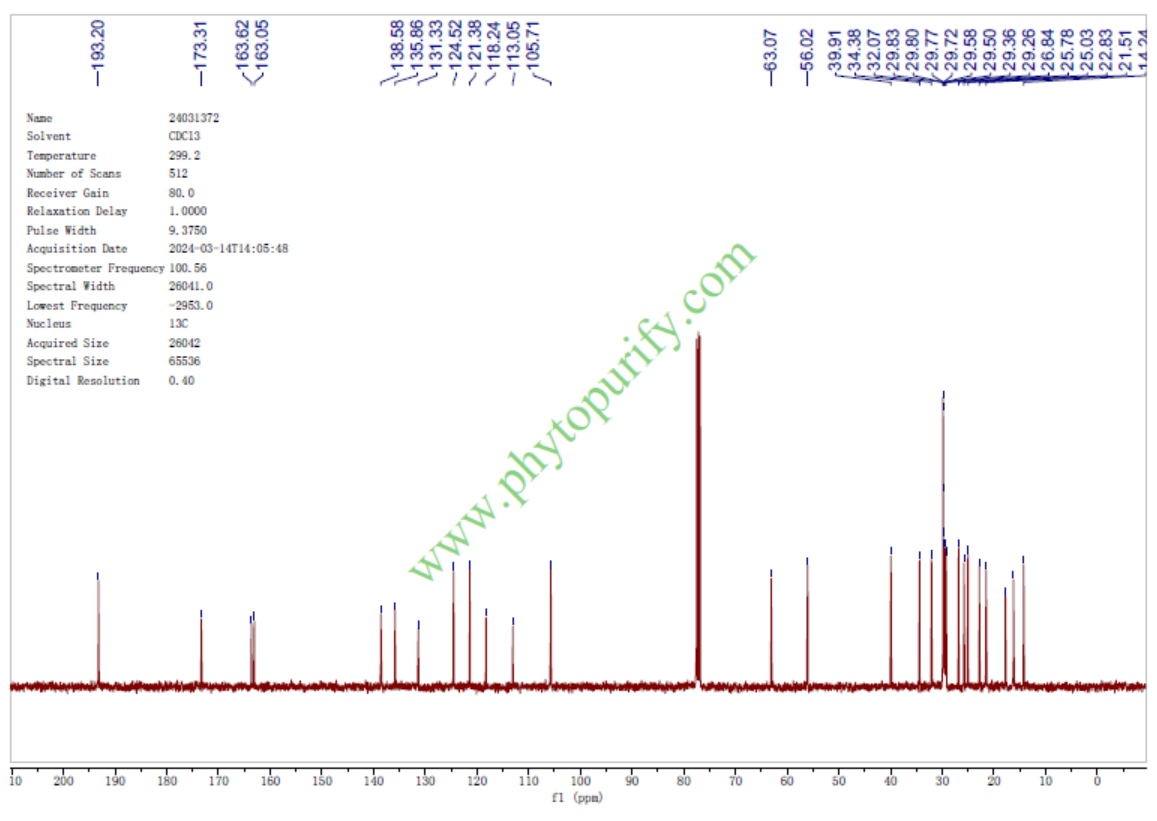
NMR of Hericene A
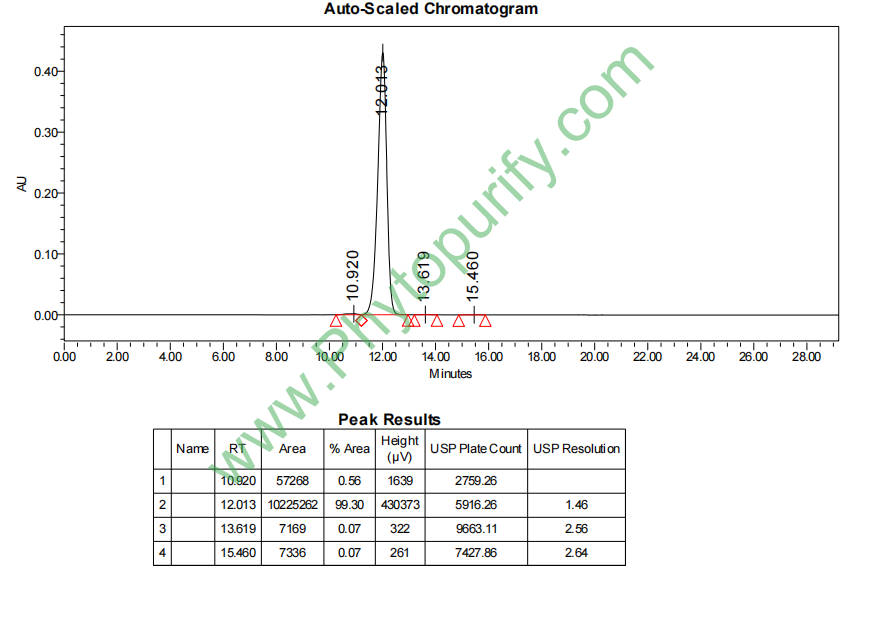
HPLC of Hericene A
Storage conditions:Short-term storage at 2~8℃, long-term storage at -20 ~ -80℃
72.8300
10.1801
10.1486
.0051
3.0202
2.2443
High
95.1697
2.9975
No
No
Yes
No
No
No
0.0
No
No
No
No
Alzheimer's disease (AD), as a progressive neurodegenerative disease, has become a major challenge in the global public health field. Its pathological features mainly include senile plaques formed by the deposition of β - amyloid protein (A β), neurofibrillary tangles caused by excessive phosphorylation of Tau protein, and extensive neuronal loss and synaptic dysfunction. Despite significant investment in the development of targeted drugs targeting A β and Tau proteins, the success rate of clinical translation is extremely low, indicating that the pathogenesis of AD is far more complex than described by the "amyloid cascade hypothesis". In recent years, the core role of neuroinflammation in the occurrence and development of Alzheimer's disease has been increasingly recognized. The excessive activation of microglia and astrocytes releases a large amount of pro-inflammatory cytokines such as tumor necrosis factor alpha (TNF - α), interleukin-6 (IL-6), and nitric oxide (NO), which not only directly damage neurons, but also exacerbate A β deposition and Tau protein pathology through positive feedback loops, forming a vicious cycle. Therefore, the search for natural products that can effectively regulate neuroinflammation and have good blood-brain barrier penetration ability has become an important direction for AD drug discovery.
Monkey head mushroom(Hericium erinaceus)As a fungus with medicinal and edible properties, it has a long history of consumption and medicinal use in East Asia. Modern pharmacological research has confirmed that Hericium erinaceus and its active ingredients have various biological activities such as neurotrophic, neuroprotective, anti-inflammatory, and antioxidant properties. Hericene A is a phenolic derivative isolated from the fruiting or mycelium of Hericium erinaceus, belonging to the class of isobenzofuranone compounds. Since its first report in the 1990s, Hericium erinaceus A has attracted widespread attention due to its unique chemical structure and significant biological activity, particularly its potential to regulate AD related pathological processes. Preliminary studies have shown that Hericium erinaceus A can inhibit the neuroinflammatory response induced by lipopolysaccharide (LPS), reduce the secretion of pro-inflammatory factors such as TNF - α, IL-6, and NO, and may affect the production of A β by regulating the processing of amyloid precursor protein (APP) and BACE1 activity. In addition, its potential intervention effect on Tau protein phosphorylation and apolipoprotein E4 (APOE4) related pathology has also made it a hot topic in the research of multi-target anti AD natural products. This article will systematically review the research progress of Hericium erinaceus A from the aspects of chemical structure, plant origin, pharmacological activity, mechanism of action, and medicinal properties, and explore its prospects and challenges as a lead compound for AD treatment.
The chemical name of Hericene A is 4- (3,4-dihydroxyphenyl) -6,7-dihydroxy-3-methyl-1 (3H) - isobenzofuranone. Its chemical structure belongs to the isobenzofuranone skeleton and is connected to a catechol group. This structural feature endows it with unique physicochemical properties and biological activity. Its molecular formula is C ∝₀ H ∝₆ O ₁₀, with an accurate molecular weight of 556.8280 Da. The structure contains multiple phenolic hydroxyl groups, which are not only key pharmacophores for its antioxidant activity, but also endow the molecule with excellent hydrogen bond donor and acceptor abilities, which are closely related to the target interactions discussed later.
From the perspective of physical and chemical properties, Hericium erinaceus A has strong lipophilicity, with an oil-water partition coefficient (LogP) of up to 10.1801, indicating that the compound has extremely high lipophilicity. This characteristic makes it easy to penetrate biological membranes, including the blood-brain barrier (BBB). In fact, the pharmacological parameters clearly indicate that its blood-brain barrier penetration ability is "high", which is an extremely advantageous attribute for AD treatment drugs targeting the central nervous system. However, high LogP also brings the problem of poor water solubility, with a water solubility of only 0.0051 mg/mL. This extremely low water solubility is the main reason for the low bioavailability of oral administration and the primary obstacle to its drug development. The topological polar surface area (TPSA) is 72.8300 Å ², which is within the acceptable range for oral medication (usually<140 Å ²), indicating that it may have some potential for oral absorption, but requires improved dissolution through formulation technology.
In terms of safety, preliminary computer predictions show that Hericium erinaceus A has no inhibitory activity on hERG potassium channels (hERG inhibition: no), which reduces its risk of causing QT interval prolongation and arrhythmia in the heart. Meanwhile, the Ames test result was 0.0, indicating that it did not exhibit mutagenicity in the bacterial recovery mutation test, and the preliminary genetic toxicity risk was low. These safety data provide positive signals for subsequent in vivo pharmacological studies. However, it must be pointed out that these parameters are mainly based on computational predictions and still need to be validated through systematic experimental toxicology studies. Overall, the chemical structure of Hericium erinaceus A determines its contradictory characteristics of high lipophilicity (beneficial for entering the brain) and low water solubility (limiting absorption), which is both its advantage as a neuroactive molecule and a key bottleneck in its drug development.
Hericium erinaceus A mainly comes from the fungi of Basidiomycota, Hericium erinaceus family, and Hericium genus - Hericium erinaceus(Hericium erinaceus). This fungus is widely distributed in northern temperate regions, including China, Japan, South Korea, Europe, and North America. In China, Hericium erinaceus mainly grows on decaying or living trees of broad-leaved trees (such as oak and peach trees) in Northeast, North, and Southwest regions. In addition to wild resources, Hericium erinaceus has achieved large-scale artificial cultivation, and its fruiting bodies and mycelium can be used as raw materials for obtaining Hericium erinaceus A. It is worth noting that the content of Hericium erinaceus A varies significantly at different growth stages, under different culture conditions (such as medium composition, light, temperature), and in different tissue parts (fruiting bodies, mycelium, fermentation broth). Generally speaking, the content of Hericin A in the fruiting body may be higher than that in the mycelium, but by optimizing the liquid fermentation conditions, the yield of Hericin A in the mycelium or fermentation broth can be significantly increased.
The classic methods for extracting Hericium erinaceus A typically include solvent extraction, liquid-liquid extraction, and chromatographic separation. Due to the fact that Hericium erinaceus A is a moderately polar phenolic compound, methanol, ethanol, or their aqueous solutions are often used as extraction solvents. For example, the dried and crushed fruiting body or mycelium of Hericium erinaceus can be repeatedly extracted with 70% -95% ethanol at room temperature or heating conditions, and the extracted liquids can be combined and concentrated under reduced pressure to obtain a paste. Subsequently, the extract was dispersed in water and extracted sequentially with solvents of different polarities such as petroleum ether, ethyl acetate, and n-butanol. Hericin A is usually enriched in the ethyl acetate extraction layer due to its equipolarity. The crude extract was purified by modern separation technologies such as silica gel column chromatography, ODS (octadecyl silane bonded silica gel) reverse phase column chromatography, Sephadex LH-20 gel column chromatography and preparative high-performance liquid chromatography (Prep HPLC), and finally obtained the high-purity Hericidin A monomer. The structural identification mainly relies on nuclear magnetic resonance spectroscopy (NMR, including ¹ H-NMR, ¹ ³ C-NMR, HMBC, HSQC, etc.) and high-resolution mass spectrometry (HR-MS) techniques.
In recent years, in order to improve extraction efficiency and environmental friendliness, some new extraction techniques have also been attempted to be applied to the extraction of Hericium erinaceus A, such as ultrasound assisted extraction, microwave-assisted extraction, and supercritical fluid extraction. These techniques can significantly shorten extraction time, improve yield, and reduce the use of organic solvents by disrupting cell walls, accelerating solvent permeation and solute diffusion. In addition, with the deepening of research on the biosynthetic pathway of Hericium erinaceus A, the potential direction for solving its source problem in the future is to use genetic engineering methods to construct high-yield engineering strains, or to achieve microbial industrial production of Hericium erinaceus A by heterologous expression of key synthase genes. At present, the extraction and separation of Hericium erinaceus from natural Hericium erinaceus is still the main way to obtain Hericium erinaceus A, but the development of efficient and green extraction processes and sustainable production systems is crucial for meeting future research and application needs.
The pharmacological activity research of Hericium erinaceus A mainly focuses on its anti-inflammatory, neuroprotective, and potential anti Alzheimer's disease effects. The existing research evidence mainly comes from in vitro cell experiments and some animal models, and systematic clinical studies are still blank.
1. Anti inflammatory activity
This is the most core and extensively studied pharmacological activity of Hericium erinaceus A. Multiple studies have used lipopolysaccharide (LPS) - stimulated BV-2 mouse microglia or RAW 264.7 macrophages as inflammatory models to evaluate the anti-inflammatory effects of Hericium erinaceus A. The results showed that Hericium erinaceus A could significantly inhibit the excessive production of TNF - α, IL-6, and NO induced by LPS in a dose-dependent manner. The inhibition of NO is usually accompanied by downregulation of inducible nitric oxide synthase (iNOS) protein and mRNA expression levels. In addition, Hericium erinaceus A can also inhibit the expression of cyclooxygenase-2 (COX-2) and reduce the synthesis of prostaglandin E2 (PGE2). These effects indicate that Hericium erinaceus A exerts anti-inflammatory effects through multiple targets and pathways, effectively inhibiting key pro-inflammatory mediators in the inflammatory cascade.
2. Neuroprotection and Neurotrophic Activity
Due to its anti-inflammatory properties, the neuroprotective effect of Hericium erinaceus A has attracted much attention. In A β - oligomer or glutamate induced neuronal injury models, pretreatment with Hericium erinaceus A can significantly improve neuronal survival and reduce apoptosis. This protective effect is partially attributed to its ability to inhibit oxidative stress and inflammatory responses. In addition, Hericium erinaceus A has been reported to promote the synthesis and release of nerve growth factor (NGF). In vitro cultured astrocytes, Hericium erinaceus A can upregulate the expression of NGF mRNA, indirectly exerting neurotrophic effects and promoting the growth and extension of neural processes. This characteristic is of great significance for the repair of damaged neurons and maintenance of synaptic plasticity in neurodegenerative diseases such as AD.
3. Anti Alzheimer's disease-related activity
Based on the pathological characteristics of AD, researchers further explored the effects of Hericium erinaceus A on A β metabolism and Tau protein phosphorylation. Preliminary research has found that Hericium erinaceus A can reduce the secretion levels of A β 40 and A β 42 in SH-SY5Y cells overexpressing APP Swedish mutant (APPsw). Mechanism studies suggest that this may be related to its downregulation of the expression and activity of β - secretase 1 (BACE1). BACE1 is the rate limiting enzyme for APP to generate A β, and inhibiting BACE1 activity is an important strategy for the development of anti AD drugs. In addition, studies suggest that Hericium erinaceus A may affect the phosphorylation levels of Tau protein at Ser396, Ser404 and other sites by regulating the activity of protein phosphatase 2A (PP2A) or glycogen synthase kinase-3 β (GSK-3 β). Although these findings are still in the preliminary stage, they provide important clues for Hericium erinaceus A as a multi-target anti AD candidate molecule. There are currently no reports of Hericium erinaceus A directly acting on APOE4, the strongest genetic risk factor for AD. However, considering the mechanism by which APOE4 exacerbates neuroinflammation and A β deposition, the anti-inflammatory and anti A β effects of Hericium erinaceus A may indirectly improve the pathological status of APOE4 carriers.
4. Other pharmacological activities
In addition to the aforementioned effects, Hericium erinaceus A has been reported to have antioxidant activity, capable of scavenging DPPH and hydroxyl radicals, and enhancing the activity of intracellular superoxide dismutase (SOD) and glutathione peroxidase (GSH Px). In addition, in the model of digestive system diseases, Hericium erinaceus A showed protective effects on gastric mucosa, inhibition of Helicobacter pylori growth, and anti ulcerative colitis, suggesting its potential gastrointestinal protective function. These activities further expand the application prospects of Hericium erinaceus A.
The pharmacological activity of Hericium erinaceus A, especially its anti-inflammatory and anti AD effects, involves multiple complex molecular signaling pathways and targets. A deep understanding of its mechanism of action is crucial for developing it into effective therapeutic drugs.
1. Regulating the NF - κ B signaling pathway
Nuclear factor kappa B (NF - κ B) is the core transcription factor in inflammatory response. In the resting state, NF - κ B binds to its inhibitory protein I κ B α and exists in an inactive form in the cytoplasm. When cells are stimulated by LPS, TNF - α, etc., I κ B kinase (IKK) is activated, phosphorylating I κ B α, leading to its ubiquitination degradation and release of NF - κ B. Free NF - κ B immediately translocates into the nucleus, initiating the transcription of downstream pro-inflammatory genes such as TNF - α, IL-6, iNOS, COX-2. Research has shown that Hericium erinaceus A can significantly inhibit LPS induced phosphorylation and degradation of I κ B α, thereby blocking the nuclear translocation and transcriptional activity of NF - κ B. This is one of the core mechanisms by which it inhibits the secretion of inflammatory factors such as TNF - α, IL-6, and NO.
2. Regulating the MAPK signaling pathway
The mitogen activated protein kinase (MAPK) family, including extracellular signal regulated kinase (ERK), c-Jun N-terminal kinase (JNK), and p38 MAPK, also plays a key role in inflammation and cellular stress response. After being activated by upstream signals, these kinases can phosphorylate and activate multiple transcription factors, synergistically regulating inflammatory gene expression with NF - κ B. Research has found that Hericium erinaceus A can inhibit LPS induced phosphorylation of JNK and p38 MAPK, but has little effect on ERK phosphorylation. This indicates that Hericium erinaceus A partially mediates its anti-inflammatory effects by selectively inhibiting the JNK and p38 MAPK pathways.
3. Targeting BACE1 and APP processing
As mentioned earlier, Hericium erinaceus A can reduce the production of A β. Its molecular mechanism may involve direct or indirect regulation of BACE1. On the one hand, Hericium erinaceus A may downregulate the gene transcription level of BACE1 by inhibiting the NF - κ B or MAPK pathways. On the other hand, studies suggest that certain phenolic compounds can directly bind to the active site of BACE1, competitively inhibiting its enzymatic activity. The catechol structure of Hericium erinaceus A endows it with the ability to form hydrogen bonds or π - π stacking interactions with key amino acid residues at the active site of BACE1, such as Asp32 and Asp228, which may directly inhibit BACE1. In addition, Hericium erinaceus A may also regulate the transport and localization of APP, changing its pathway of being cleaved by BACE1 and gamma secretase, and leaning towards the non amyloid protein generation pathway (i.e. alpha secretase pathway), thereby reducing the production of A β.
4. Affects Tau protein phosphorylation
The mechanism of the effect of Hericium erinaceus A on Tau protein phosphorylation is currently unclear. It is speculated that this may be achieved through the following pathways: ① activation of protein phosphatase 2A (PP2A), which is the most important Tau protein dephosphorylation enzyme in the brain, and its decreased activity is closely related to Tau hyperphosphorylation in AD. ② Inhibit the activity of glycogen synthase kinase-3 β (GSK-3 β), which is one of the key kinases for phosphorylating Tau protein. Hericin A may inactivate the Ser9 site of GSK-3 β by activating the PI3K/Akt signaling pathway. ③ Indirectly affecting Tau pathology through anti-inflammatory effects, as cytokines in the neuroinflammatory environment can activate multiple kinases and promote Tau protein phosphorylation.
5. Potential association with APOE4
There is currently no direct evidence to suggest a physical interaction between Hericium erinaceus A and APOE4 protein. However, APOE4 is the strongest genetic risk factor for AD, and its pathogenic mechanism includes exacerbating A β deposition, impairing A β clearance, promoting excessive phosphorylation of Tau protein, and exacerbating neuroinflammation. Hericin A can theoretically counteract various pathological processes mediated by APOE4 by inhibiting neuroinflammation, reducing A β production, and possibly regulating Tau phosphorylation. Therefore, Hericium erinaceus A may exert a potential therapeutic effect on APOE4 carriers by improving the pathological cascade downstream of APOE4.
In summary, the mechanism of action of Hericium erinaceus A exhibits a multi-target and multi pathway network regulatory feature. It mainly exerts anti-inflammatory effects by inhibiting the NF - κ B and MAPK signaling pathways, and may also affect A β metabolism by regulating BACE1 activity, indirectly regulating Tau protein phosphorylation. This multi-target mode of action has potential advantages in dealing with complex diseases such as AD, but it also increases the complexity of studying the mechanism of action.
To develop Hericium erinaceus A from a natural product into a clinical candidate drug, a systematic evaluation of its pharmacological properties is necessary, with pharmacokinetic (PK) characteristics being one of the key factors determining its success.
1. Absorption and bioavailability
The most prominent pharmaceutical challenge of Hericium erinaceus A is its extremely low water solubility (0.0051 mg/mL) and extremely high lipid solubility (LogP 10.18). According to the Lipinski Five Rules, LogP greater than 5 is generally considered unfavorable for oral absorption. High LogP and low water solubility make it difficult for compounds to dissolve and disperse in water, severely limiting their transport from the gastrointestinal tract to the systemic circulation, resulting in extremely low oral bioavailability. At present, there are no publicly reported PK data of Hericium erinaceus A orally administered to humans or animals. However, based on its physicochemical properties, it is speculated that its oral absorption will be very limited. Therefore, improving its solubility and dissolution rate is the primary task in enhancing oral bioavailability. Feasible strategies include: preparing in salt form (if there are salt forming groups in the structure), using nanocrystal technology, solid dispersion technology, liposomes or cyclodextrin inclusion complexes, and other formulation methods.
2. Distribution
The high lipophilicity of Hericium erinaceus A gives it excellent membrane penetration ability. The pharmacological parameters clearly indicate that its blood-brain barrier penetration ability is "high". This means that once it enters the bloodstream, Hericium erinaceus A can effectively cross the BBB and reach central nervous system targets. This is a crucial advantage for treating brain diseases such as AD. Its high LogP also indicates a large apparent distribution volume (Vd), which may be widely distributed in adipose tissue and various organs.
3. Metabolism and excretion
There is currently little research on the metabolic pathway of Hericium erinaceus A. As a compound containing multiple phenolic hydroxyl groups, its main metabolic pathways are likely to include phase II metabolic reactions such as glucuronidation and sulfation. These reactions typically occur in the liver and intestines, aimed at increasing the water solubility of compounds and promoting their excretion through urine or bile. However, these metabolic processes may also lead to a decrease or inactivation of the activity of Hericium erinaceus A. In addition, ester or ether bonds that may exist in its structure may also be hydrolyzed or oxidized by esterase or cytochrome P450 enzyme systems. The high lipophilicity of Hericium erinaceus A also suggests that it may be excreted into the intestine through bile and there is a possibility of enterohepatic circulation.
4. Security
As mentioned earlier, preliminary computer predictions indicate that Hericin A has no hERG inhibitory activity and Ames mutagenicity, which is a positive signal. However, these predictions cannot replace a comprehensive toxicological evaluation. Systematic acute toxicity, subchronic toxicity, chronic toxicity, reproductive and developmental toxicity, and genetic toxicity experiments are required to determine their safety window and potential toxic target organs. Especially considering its high lipophilicity, it is necessary to pay attention to the long-term toxicity risks that may arise from its accumulation in adipose tissue.
5. Summary of drug properties
The medicinal properties of Hericium erinaceus A exhibit obvious "double-edged sword" characteristics. Its advantages lie in: ① high BBB penetration, which can effectively target the central nervous system; ② Preliminary safety prediction is good (no hERG inhibition, no mutagenicity); ③ The multi-target mechanism of action is in line with the needs of treating complex AD diseases. Its disadvantage lies in: ① extremely low water solubility, resulting in poor oral absorption and low bioavailability; ② The metabolic stability is unknown, and there may be issues with first pass effects and rapid clearance; ③ Lack of systematic in vivo PK and toxicology data. Therefore, Hericin A should currently be considered more as a valuable lead compound rather than a direct candidate drug. Future research directions should focus on overcoming its solubility defects through structural modifications (such as introducing polar groups, prodrug design) or advanced formulation techniques, while conducting in-depth in vivo PK/PD and toxicological evaluations to promote its clinical translation.
Hericin A, as a natural product derived from medicinal and edible fungi, has shown unique application prospects in the treatment of Alzheimer's disease and other neuroinflammatory related diseases, but it also faces many challenges.
1. Application prospects
- Multi target therapy for AD AD is a multifactorial disease, and single target drugs are difficult to achieve ideal therapeutic effects. Hericium erinaceus A aligns with the concept of multi-target therapy for Alzheimer's disease by simultaneously inhibiting neuroinflammation, reducing A β production, potentially regulating Tau phosphorylation, and exerting neurotrophic effects. Especially its high BBB penetration allows it to directly act on pathological processes in the brain.
- Broad spectrum potential of neuroinflammatory related diseases In addition to AD, chronic neuroinflammation is also a common pathological feature of neurodegenerative diseases such as Parkinson's disease, multiple sclerosis, and amyotrophic lateral sclerosis. The anti-inflammatory and neuroprotective effects of Hericium erinaceus A may also have therapeutic potential for these diseases.
- As a dietary supplement or functional food ingredient Given that Hericium erinaceus is a safe edible mushroom, Hericin erinaceus A or its extract rich in Hericin erinaceus A has the potential to be developed as a dietary supplement or functional food to improve cognitive function and prevent neurodegenerative diseases after rigorous toxicological evaluation. This may be a feasible path for achieving application conversion in the short term.
- Structural optimization of lead compounds The unique skeleton of Hericium erinaceus A provides a good structural modification platform for medicinal chemists. By introducing polar groups (such as hydroxyl, carboxyl, aminoglycosides, etc.) on its parent nucleus to improve water solubility, or designing prodrugs (such as phosphate ester prodrugs, amino acid ester prodrugs) to improve oral absorption and metabolic stability, it is expected to obtain derivatives with better drug properties.
2. Challenges and Future Research Directions
- Solving the problem of water solubility This is the most urgent challenge facing the development of Hericium erinaceus A. Future research should focus on exploring: ① new formulation technologies, such as lipid nanoparticles, polymer micelles, phospholipid complexes, etc., to improve their apparent solubility and oral bioavailability; ② Structural modification involves introducing hydrophilic groups to reduce LogP values while maintaining or enhancing activity.
- Elucidate pharmacokinetic characteristics in vivo Systematic animal in vivo PK studies must be conducted, including multiple administration routes such as oral and intravenous injection, to clarify the entire process of absorption, distribution, metabolism, and excretion (ADME), especially its concentration time curve in brain tissue. At the same time, it is necessary to identify its main metabolites and evaluate their activity and toxicity.
- Verify in vivo efficacy and safety It is necessary to systematically evaluate the improvement effects of Hericium erinaceus A on cognitive function, A β pathology, Tau pathology, neuroinflammation, and synaptic plasticity through long-term administration in various AD animal models, such as APP/PS1 transgenic mice, 3xTg AD mice, APOE4 targeted replacement mice, etc. At the same time, a comprehensive preclinical toxicology evaluation must be completed.
- Clarify molecular targets and mechanisms of action Despite preliminary research, the direct protein target of Hericium erinaceus A is still unclear. Chemical biology methods such as Drug Affinity Reaction Target Stability (DARTS), Thermoproteomics (TPP), or Activity Based Proteomic Analysis (ABPP) are needed to identify the target proteins directly bound to it, in order to more accurately elucidate its mechanism of action.
Hericin A, as a unique phenolic derivative of Hericium erinaceus, has shown remarkable potential in drug discovery for neurodegenerative diseases such as Alzheimer's disease due to its significant anti-inflammatory activity, neuroprotective effects, and high blood-brain barrier penetration. Its multi-target mode of action, especially its regulation of neuroinflammation, A β metabolism, and Tau protein phosphorylation, distinguishes it from traditional single target drugs and provides new ideas for addressing the complexity of AD. However, the pharmacokinetic defects caused by extremely low water solubility are the key bottleneck restricting its clinical translation. Future research should focus on overcoming this obstacle through advanced formulation techniques or rational structural modifications, while conducting systematic and in-depth in vivo pharmacological, pharmacokinetic, and toxicological studies. Despite the challenges of transitioning from natural products to clinical drugs, Hericin A is undoubtedly a highly valuable lead molecule for research. In depth research on it is not only expected to promote the development of new candidate drugs for treating AD, but also deepen our understanding of the molecular mechanisms of natural products regulating neuroinflammation and neurodegeneration processes, providing valuable examples for the "new use of old drugs" or "rediscovery of natural products".
