


Product name: Hericenone D
Synonym name:
Catalogue No.: BP2348
Cas No.: 137592-04-2
Formula: C37H58O6
Mol Weight: 598.865
Botanical Source: Hericium erinaceus
Type of Compound:
Purity: 95%~99%
Analysis Method: HPLC-DAD or/and HPLC-ELSD
Identification Method: Mass, NMR
Packing: Brown vial or HDPE plastic bottle
Storage: Store in a well closed container, protected from air and light. Put into refrigerate or freeze for long term storage.
Whenever possible, you should prepare and use solutions on the same day. However, if you need to make up stock solutions in advance, we recommend that you store the solution as aliquots in tightly sealed vials at -20℃. Generally, these will be useable for up to two weeks.
The product could be supplied from milligrams to grams
Inquire for bulk scale.
For Reference Standard and R&D, Not for Human Use Directly.
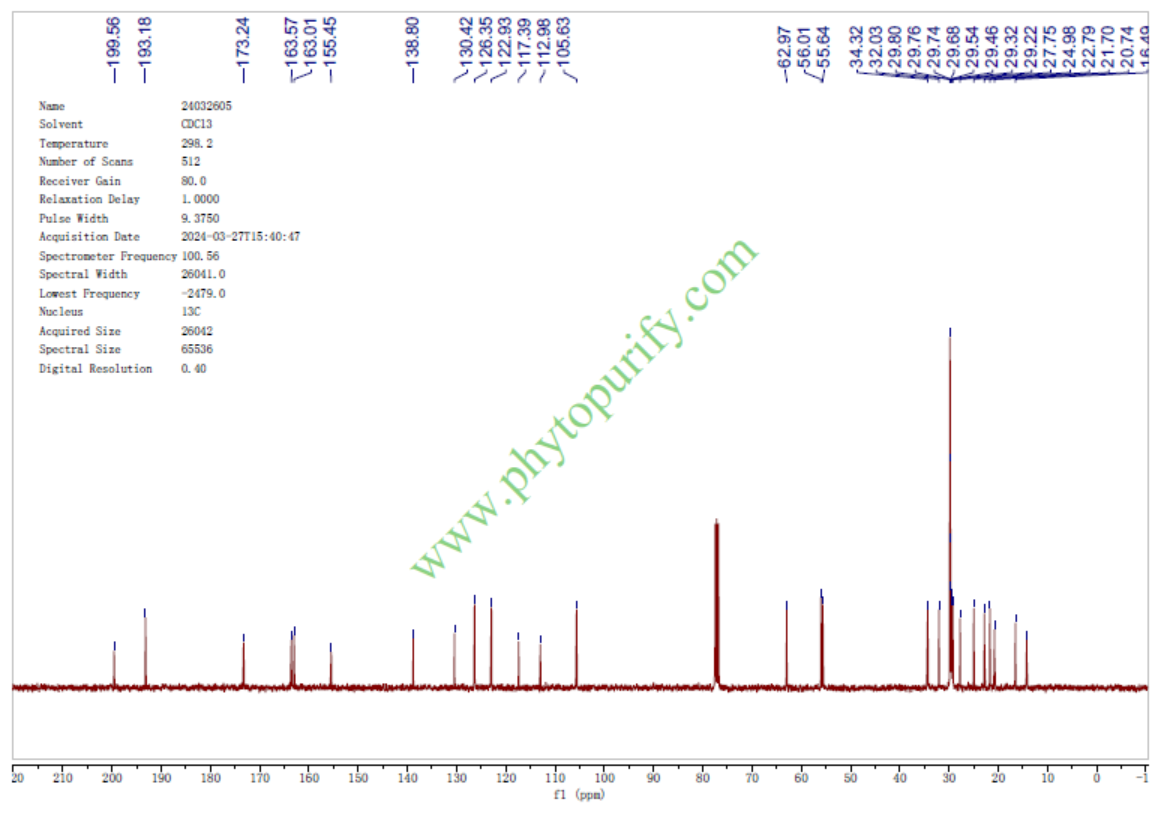
NMR of Hericenone D
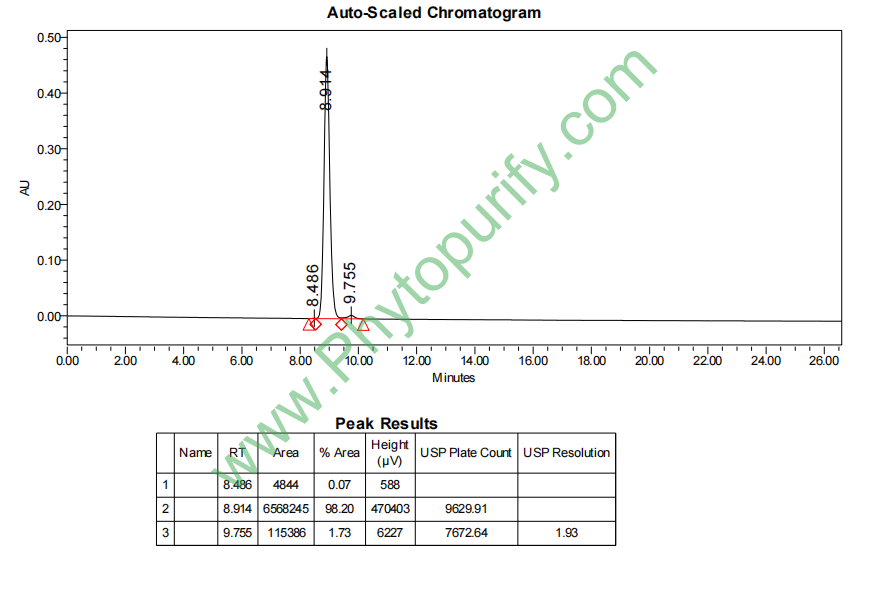
HPLC of Hericenone D
Storage conditions:Short-term storage at 2~8℃, long-term storage at -20 ~ -80℃
89.9000
9.5935
9.5534
.0062
2.7304
2.2361
High
93.3437
3.1733
No
No
Yes
No
No
No
0.0
No
No
No
No
Obesity has become a global public health crisis, with data from the World Health Organization showing that the global obesity rate has nearly tripled since 1975. Obesity is not only an independent metabolic disease, but also a key risk factor for type 2 diabetes, cardiovascular disease, non-alcoholic fatty liver disease and multiple cancers. In the field of anti obesity drug development, lipase inhibitor strategies that inhibit dietary fat absorption have been clinically validated. Orlistat, as the only approved lipase inhibitor, is effective but accompanied by significant gastrointestinal adverse reactions, including oily stools, bloating, and lipid soluble vitamin absorption disorders. This has prompted researchers to continue searching for natural lipase inhibitors with novel structures, higher selectivity, and fewer side effects.
Monkey head mushroom(Hericium erinaceus)Also known as Hericium erinaceus or Hedgehog fungus, it is a rare edible mushroom with medicinal and edible properties. It has a long history of consumption and medicinal use in East Asian countries such as China, Japan, and South Korea. Traditional Chinese medicine believes that Hericium erinaceus has the effects of strengthening the spleen, nourishing the stomach, calming the mind, and improving intelligence. Modern pharmacological research has confirmed that Hericium erinaceus is rich in various bioactive components, including polysaccharides, terpenes, phenols, and fatty acid derivatives, exhibiting multiple pharmacological activities such as neuroprotection, anti-inflammatory, antioxidant, anti-tumor, and immune regulation. Among numerous secondary metabolites, Hericenones have attracted much attention due to their unique chemical structure and significant biological activity.
Hericenone D (CAS number: 137592-04-2) is a representative lipase inhibitor isolated and identified from Hericium erinaceus. Its molecular formula is C ∝₈ H ₅₄ O ₆, and its molecular weight is 598.8650. This compound was first isolated from the mycelium culture of Hericium erinaceus in the 1990s. Subsequent studies have shown that it can effectively inhibit pancreatic lipase activity, thereby reducing the digestion and absorption of dietary fat, demonstrating its potential for anti obesity applications. Compared with orlistat, Hericione D is derived from natural edible mushrooms and has better safety expectations. Its unique benzofuranone skeleton provides a valuable lead compound template for the development of novel lipase inhibitors.
This article will provide a systematic review of the research progress of Hericione D from multiple dimensions, including chemical structure and physicochemical properties, plant sources and extraction methods, pharmacological activity, mechanism of action, pharmacological evaluation, and clinical application prospects. The aim is to provide comprehensive academic references for the in-depth development and translational application of this compound.
Hericinone D belongs to the family of Hericinone compounds, which share a common structural feature of a highly oxidized benzofuranone nucleus. Specifically, the chemical structure of Hericium erinaceus D consists of the following key fragments: a substituted benzofuranone core connected to a long-chain aliphatic side chain at C-2 position, which contains multiple double bonds and methyl branches; Meanwhile, the benzene ring contains multiple hydroxyl and methoxy substituents. This structural feature endows Hericione D with both aromatic and fatty amphiphilic properties, providing a structural basis for its binding with lipase.
From the perspective of stereochemistry, there are multiple chiral centers in the molecule of Hericium erinaceus D. Its absolute configuration has been determined through spectroscopic analysis (including nuclear magnetic resonance spectroscopy, mass spectrometry, and circular dichroism) and chemical derivatization methods. The C-2 position of the benzofuranone ring is in the S configuration, which is crucial for its interaction with the active site of lipase. The presence of trans double bonds in long-chain fatty side chains gives the molecule a certain degree of rigidity, while also affecting its hydrophobic interactions with target proteins.
The physicochemical properties of Hericione D provide important references for its drug development. According to computational chemistry predictions and experimental measurements, the key parameters of this compound are as follows:
Molecular weight and lipid solubility The molecular weight of Hericione D is 598.8650 Da, which is within the acceptable range for small molecule drugs. Its lipid water partition coefficient (LogP) is as high as 9.5935, indicating that the compound has extremely strong lipophilicity. This characteristic is highly consistent with its long-chain fatty side chain structure, and a high LogP value means that Hericione D has good solubility in oils and organic solvents, but extremely poor solubility in aqueous phase. The measured water solubility is only 0.0062 mg/mL, which is much lower than the water solubility threshold of ideal oral drugs (usually requiring>0.1 mg/mL), indicating the need for solubilization technology in formulation development.
Polar Surface Area The topological polar surface area (TPSA) is 89.90 Å ², which is at a moderate level. TPSA is an important parameter for predicting drug oral absorption and blood-brain barrier permeability, and compounds with TPSA<140 Å ² are generally considered to have good oral bioavailability potential. The TPSA value of Hericium erinaceus D indicates that its molecule contains multiple hydrogen bond donors (phenolic hydroxyl) and acceptors (carbonyl, ether oxygen), which may interact with the target protein through hydrogen bonds, but may also limit its transmembrane transport.
Blood-brain barrier permeability It is worth noting that the predicted results show that Hericione D has high blood-brain barrier permeability. This characteristic is advantageous for central nervous system targeted drugs, but may pose potential risks of central side effects for anti obesity drugs. The high BBB permeability may be related to the high lipid solubility and moderate molecular weight of the molecule, indicating the need to pay attention to the safety of the central nervous system in subsequent development.
Security prediction The prediction result of hERG inhibition is negative, indicating a low risk of heart QT interval prolongation caused by Hericium erinaceus D. The Ames test result is 0.0, indicating that the compound has no significant mutagenicity. These early safety data provide positive signals for the further development of Hericione D.
Hericione D is mainly derived from Hericium erinaceus(Hericium erinaceus)The fruiting body and mycelium. Hericium erinaceus belongs to the Basidiomycota phylum, Hericium erinaceus family, and Hericium erinaceus genus. It is a wood saprophytic fungus that naturally grows on dead or injured parts of broad-leaved trees. In China, Hericium erinaceus is mainly distributed in the primitive forests of Northeast, North, and Southwest regions, with Heilongjiang, Jilin, Yunnan, and other areas being the most abundant. Due to limited wild resources and difficulties in collection, large-scale artificial cultivation of Hericium erinaceus has been achieved, mainly using substitute cultivation and bottle cultivation techniques, using agricultural waste such as sawdust, cottonseed hulls, and corn cobs as cultivation substrates.
It is worth noting that there are significant differences in the content of Hericione D among materials from different sources. Research has shown that the content of ketone compounds in the mycelium culture of Hericium erinaceus is usually higher than that in the fruiting body, which may be due to the rapid growth metabolism stage of the mycelium and the more active synthesis of secondary metabolites. In addition, cultivation conditions such as medium composition, temperature, pH value, light exposure, and inducer addition have a significant impact on the yield of Hericium erinaceus D. For example, adding vegetable oil or fatty acid precursors can significantly increase the accumulation of ketone compounds in Hericium erinaceus, which is related to the use of fatty acid derivatives as precursor substances in its biosynthetic pathway.
The extraction of Hericium erinaceus D is usually carried out using organic solvent extraction, taking advantage of its high lipid solubility. The classic extraction process is as follows: after crushing the dried fruiting body or mycelium of Hericium erinaceus, it is repeatedly extracted with methanol or ethanol at room temperature or heating conditions, and the extracted liquids are combined and concentrated under reduced pressure to obtain the crude extract. Subsequently, the crude extract was suspended in water and subjected to liquid-liquid extraction using petroleum ether, ethyl acetate, and n-butanol in sequence. Hericione D was mainly enriched in the ethyl acetate extraction layer.
Further separation and purification require the combination of multiple chromatographic techniques. Silica gel column chromatography is the most commonly used preliminary separation method, which uses gradient elution (such as petroleum ether ethyl acetate or chloroform methanol system) to separate Hericione D from other compounds with similar polarity. Subsequently, purification was carried out using reverse phase high performance liquid chromatography (RP-HPLC), commonly using a C18 chromatographic column and acetonitrile water or methanol water as mobile phases, with UV detection wavelengths of 254 nm or 280 nm. Through the above process, Hericione D monomer with a purity of over 95% can be obtained.
In recent years, researchers have explored various new extraction techniques to improve extraction efficiency and environmental friendliness. Ultrasound assisted extraction (UAE) utilizes cavitation effect to destroy cell walls, which can significantly shorten extraction time and improve yield. Microwave assisted extraction (MAE) can effectively promote the dissolution of target compounds by generating internal thermal effects through the rapid vibration of polar molecules in a microwave field. Supercritical fluid extraction (SFE) uses CO ₂ as the extraction medium and achieves selective extraction of Hericione D by adjusting pressure and temperature. It has the advantages of no solvent residue and low operating temperature, and is particularly suitable for the extraction of thermosensitive components.
Establishing a reliable content determination method is crucial for the quality control of Hericione D. High performance liquid chromatography ultraviolet detection (HPLC-UV) is currently the most commonly used quantitative analysis method. It uses a C18 reverse phase chromatography column and acetonitrile 0.1% formic acid aqueous solution as the mobile phase for isocratic or gradient elution. The detection wavelength is 254 nm. This method has good linear relationship, precision, and recovery rate, and can be used for the quality evaluation of Hericium erinaceus raw materials and extracts.
It is worth noting that the content of Hericione D in natural products is usually low, accounting for 0.01% -0.1% of the mass of dried fruiting bodies or mycelia, which poses challenges for its large-scale production and cost control. Therefore, optimizing cultivation conditions, screening high-yield strains, and developing efficient biosynthetic technologies are key directions for promoting the industrial application of Hericione D.
The most notable pharmacological activity of Hericium erinaceus D is its inhibitory effect on lipase. Pancreatic lipase is a key enzyme in the digestion and absorption of dietary fats, secreted by the pancreas into the duodenum, responsible for hydrolyzing triglycerides into monoglycerides and free fatty acids. Inhibiting pancreatic lipase activity can reduce dietary fat absorption by about 30%, resulting in negative energy balance and achieving the goal of weight loss.
The results of in vitro enzyme activity assay showed that Hericione D had a concentration dependent inhibitory effect on porcine pancreatic lipase, with a half maximal inhibitory concentration (IC ₅₀) at the micromolar level. Compared with the positive control Orlistat, the inhibitory effect of Hericione D is relatively weak, but its inhibitory kinetic characteristics are different. Orlistat is an irreversible lipase inhibitor that acts by covalently binding to serine residues at the active site of the enzyme; The inhibitory effect of Hericione D tends to be reversible, which means it may have a better safety window and will not completely block the physiological function of lipase.
Further enzyme kinetics studies have shown that the inhibitory type of Hericione D on lipase is a mixed inhibition, which simultaneously affects the binding of the enzyme to the substrate (increasing Km value) and the maximum reaction rate (reducing Vmax). This mechanism suggests that Hericione D may interact with both the active and allosteric sites of the enzyme, achieving precise regulation of lipase activity through multiple modes of action.
Based on lipase inhibition activity, the anti obesity effect of Hericium erinaceus D has been validated in multiple animal models. In a high-fat diet induced obese mouse model, the following significant effects were observed after oral administration of Hericione D (dose range of 10-50 mg/kg/day) for 8-12 weeks:
Weight and body fat loss The weight gain of mice treated with Hericium erinaceus D was significantly lower than that of the high-fat diet control group, and this weight difference was mainly due to a decrease in body fat content rather than a decrease in lean body mass. Micro CT and magnetic resonance imaging analysis showed that the subcutaneous and visceral fat areas of the treatment group mice were significantly reduced.
Improvement of blood lipid profile Monkey head mushroom ketone D can significantly reduce serum total cholesterol (TC), triglycerides (TG), and low-density lipoprotein cholesterol (LDL-C) levels, while increasing high-density lipoprotein cholesterol (HDL-C) levels. The improvement of these lipid parameters can help reduce the risk of atherosclerosis.
Reduced hepatic steatosis Non alcoholic fatty liver is a common complication of obesity. Monkey head mushroom ketone D treatment can significantly reduce liver fat accumulation, lower liver triglyceride content, and improve the degree of hepatic cell steatosis. Histopathological examination showed that the number and size of lipid droplets in the liver of the treatment group mice were significantly reduced.
Improvement of sugar metabolism Obesity is often accompanied by insulin resistance and impaired glucose tolerance. Monkey head mushroom ketone D treatment can improve the oral glucose tolerance test (OGTT) results in mice, reduce fasting blood glucose and insulin levels, and increase insulin sensitivity index.
It is worth noting that the anti obesity effect of Hericium erinaceus D exhibits non-linear characteristics in the dose-response relationship. Low doses (10 mg/kg) can produce significant effects, while high doses (50 mg/kg) do not bring proportional enhancement of effects, suggesting the possibility of saturation effects or feedback regulation mechanisms.
In addition to lipase inhibition and anti obesity effects, Hericione D also exhibits other noteworthy pharmacological activities:
anti-inflammatory activity Obesity is a chronic low-grade inflammatory state. Research has shown that Hericione D can inhibit the expression of pro-inflammatory factors (such as TNF - α, IL-6, IL-1 β) in macrophages induced by lipopolysaccharide (LPS), while promoting the secretion of anti-inflammatory factor IL-10. This anti-inflammatory effect may be achieved by inhibiting the NF - κ B signaling pathway and activating the Nrf2 antioxidant pathway.
antioxidant activity The phenolic hydroxyl group in Hericium erinaceus D molecule endows it with certain free radical scavenging ability. Both DPPH radical scavenging assay and ABTS cation radical scavenging assay have confirmed its antioxidant activity, although its efficacy is lower than classical antioxidants such as vitamin C and quercetin. In cell models, Hericione D can reduce the levels of oxidative stress markers such as malondialdehyde and reactive oxygen species, and increase the activity of antioxidant enzymes such as superoxide dismutase and glutathione peroxidase.
Neuroprotective activity Given the high blood-brain barrier permeability of Hericium erinaceus D, its neuroprotective activity has also received attention. Preliminary studies have shown that Hericione D can protect neurons from glutamate induced excitotoxic damage and promote the synthesis and release of nerve growth factor (NGF). These findings suggest that Hericione D may have the potential to treat neurodegenerative diseases, but related research is still in its early stages.
The molecular mechanism by which Hericione D inhibits lipase activity has been preliminarily elucidated through molecular docking, molecular dynamics simulations, and site directed mutagenesis experiments. Lipases belong to the alpha/beta hydrolase superfamily, and their active site contains a catalytic triad composed of serine (Ser), histidine (His), and aspartic acid (Asp). During the catalytic process, the hydroxyl group of Ser undergoes nucleophilic attack on the ester bond of the substrate triglycerides, forming acyl enzyme intermediates.
Molecular docking studies have shown that the benzofuranone core of Hericione D can be embedded in the active site pocket of lipase, and its phenolic hydroxyl group forms a hydrogen bond network with the Ser and His residues in the catalytic triad, thereby interfering with the normal progress of catalytic reactions. Meanwhile, the long-chain fatty side chains extend into the hydrophobic channels of the enzyme and undergo van der Waals interactions with hydrophobic amino acid residues such as Leu, Ile, and Val, further stabilizing the enzyme inhibitor complex. This dual mode of action explains the mixed inhibition kinetics of Hericione D.
It is worth noting that there are fundamental differences in the mechanisms of action between Hericione D and Orlistat. The β - lactone ring in the molecule of Orlistat is cleaved by Ser nucleophilic attack at the enzyme active site, forming a stable covalent acyl enzyme adduct, leading to irreversible enzyme inactivation. Monkey head mushroom ketone D binds to enzymes through non covalent interactions, and its inhibitory effect is reversible. This means that enzyme activity can be restored after inhibitor dissociation, which may reduce gastrointestinal side effects caused by complete blockade of lipase function.
In addition to lipase, Hericione D may also exert its anti obesity and related metabolic improvement effects by acting on other molecular targets. Based on chemical proteomics and network pharmacology analysis, the following potential targets are worth paying attention to:
Peroxisome proliferator activated receptors (PPARs)PPAR α and PPAR γ are key nuclear receptors that regulate lipid metabolism and insulin sensitivity. Molecular docking prediction shows that Hericione D may interact with the ligand binding domain of PPAR γ, exerting partial agonist or modulator effects. This mode of action may explain its effectiveness in improving insulin sensitivity and hepatic steatosis.
Adenosine activated protein kinase (AMPK)AMPK is a core sensor for cellular energy metabolism, and its activation can promote fatty acid oxidation and inhibit fat synthesis. Research has shown that treatment with Hericium erinaceus D can increase the phosphorylation levels of AMPK in adipose tissue and liver, suggesting that it may exert metabolic regulatory effects by activating the AMPK signaling pathway.
Regulation of gut microbiota More and more evidence suggests that gut microbiota plays an important role in the pathogenesis of obesity. Monkey head mushroom ketone D, as a natural product administered orally, may indirectly affect host metabolism by regulating gut microbiota composition. Preliminary studies have found that treatment with Hericium erinaceus D can increase the abundance of beneficial bacteria such as Akkermansia muciniphila in the gut, while reducing the proportion of Firmicutes/Bacteroidetes. These changes are associated with improved metabolic phenotypes.
The study on the structure-activity relationship (SAR) of Hericione D and its analogues provides important guidance for optimizing their activity. By comparing the lipase inhibitory activities of different members of the Hericium erinaceus ketone family, the following key structural features can be identified:
The necessity of benzofuranone parent nucleus The mother nucleus is the core structural unit that maintains lipase inhibitory activity, and its absence or excessive modification can lead to a significant decrease in activity. The phenolic hydroxyl groups on the mother nucleus are crucial for hydrogen bonding interactions with enzyme active sites, and their activity is significantly reduced after methylation or acetylation.
Optimization of long-chain fatty side chains The length, unsaturation, and branched structure of the side chains have a significant impact on activity. Research has shown that straight or single methyl branched side chains containing 16-20 carbon atoms have the best activity, and short or long side chains are not conducive to matching with enzyme hydrophobic channels. The trans double bond in the side chain helps maintain the appropriate conformation of the molecule, while the fully saturated side chain leads to a decrease in activity.
Substituent mode The substitution patterns of hydroxyl and methoxy groups on the benzene ring affect the polarity and hydrogen bond donor/acceptor properties of the molecule. Preliminary studies have shown that the combination of C-4 hydroxyl group and C-6 methoxy group is beneficial for maintaining activity, while other substitution modes may lead to a decrease in activity.
These structure-activity relationship information provide clear directions for optimizing lipase inhibitors based on the D skeleton of Hericium erinaceus, and it is expected to obtain derivatives with stronger activity and higher selectivity through rational design.
Based on the aforementioned physical and chemical properties, the pharmacological properties of Hericione erinaceus D exhibit significant advantages and challenges
Advantage aspects Moderate molecular weight (<600 Da), meeting the basic requirements of small molecule drugs; No hERG inhibitory activity and Ames mutagenicity, low risk of cardiac toxicity and genetic toxicity; Having multiple modifiable functional groups (phenolic hydroxyl, carbonyl, double bond) provides abundant chemical space for structural optimization.
Challenge aspect The extremely high LogP value (9.59) and extremely low water solubility (0.0062 mg/mL) are the biggest obstacles to the development of Hericione D. According to Lipinski's Five Rules, compounds with LogP>5 typically have absorption and metabolism issues. The extremely low water solubility not only affects oral bioavailability, but may also lead to difficulties in formulation development. In addition, although high BBB permeability is advantageous for central targeted drugs, it may bring potential central nervous system side effects for anti obesity drugs, which need further evaluation.
At present, there is insufficient systematic research on the pharmacokinetics of Hericilone D in vivo, but based on its physicochemical properties and limited animal experimental data, preliminary inferences can be made about its ADME (absorption, distribution, metabolism, excretion) characteristics:
absorb Due to its extremely poor water solubility, the oral absorption of Hericione D may be limited by its dissolution rate. However, its high lipid solubility facilitates the formation of mixed micelles with dietary fats in the gastrointestinal tract, thereby promoting absorption. The pharmacological effects observed in animal experiments after oral administration suggest that it has a certain oral bioavailability, but the specific values need to be determined. The use of solubilization techniques such as lipid formulations, solid dispersions, or nanoemulsions may be effective strategies for improving oral absorption.
distribution The high lipid solubility and BBB permeability suggest that Hericione D has a wide distribution volume in the body, and may be widely distributed in adipose tissue, liver, and brain tissue. This distribution pattern has a dual significance for anti obesity drugs: on the one hand, the accumulation in adipose tissue may enhance their local efficacy; On the other hand, the distribution in brain tissue may bring about central effects.
Metabolism The molecule of Hericium erinaceus D contains multiple potential metabolic sites, including glucuronidation and sulfation of phenolic hydroxyl groups, epoxidation and reduction of double bonds, and β - oxidation of long-chain fatty acid side chains. The liver and intestines may be its main metabolic organs. Preliminary in vitro metabolic studies have shown that Hericione D can be rapidly metabolized in liver microsomes, suggesting the possibility of significant first pass effects.
excretion Due to its high lipid solubility, Hericione D and its metabolites may be mainly excreted into the intestine through bile and subsequently excreted with feces. Renal excretion may not be the main pathway, as highly lipophilic compounds are easily reabsorbed in the renal tubules.
The following formulation strategies are worth exploring in response to the pharmacological defects of Hericium erinaceus D:
Lipid preparations By utilizing the high lipid solubility of Hericione D, it can be dissolved in edible oils (such as olive oil, corn oil) or medium chain triglycerides to prepare soft capsules or self emulsifying drug delivery systems (SEDD), which can significantly improve its oral absorption.
Solid dispersion: Hericinone D and hydrophilic polymers (such as polyvinylpyrrolidone, hydroxypropyl methylcellulose) were prepared into solid dispersion by hot melt extrusion or spray drying technology, which existed in amorphous or molecular dispersion state, and could significantly improve its apparent solubility and dissolution rate.
nanocrystal By using wet grinding or high-pressure homogenization techniques to prepare nanocrystals of Hericione D, the particle size can be reduced to the nanometer level, which can increase the specific surface area and saturation solubility, thereby improving oral absorption.
Prodrug design Introducing polar precursor groups (such as phosphate esters and amino acid esters) that can be hydrolyzed onto phenolic hydroxyl or carboxyl groups can temporarily increase the water solubility of the molecule and release the active ingredient through enzymatic interpretation in vivo. This strategy has been successful in multiple insoluble natural products.
Monkey head mushroom ketone D, as a natural lipase inhibitor, has unique application value in the field of anti obesity. Compared with orlistat, its reversible inhibition mechanism may lead to better gastrointestinal tolerance, reducing the incidence and severity of side effects such as oily stools and bloating. In addition, Hericium erinaceus D is derived from Hericium erinaceus, which is a medicinal and edible source. It has a natural advantage in terms of safety and is more easily accepted by consumers.
However, in order for Hericione D to truly enter clinical application, the following key obstacles still need to be overcome:
Efficiency improvement The lipase inhibitory activity of Hericium erinaceus D (IC ₅₀ at the micromolar level) is weaker than that of Orlistat (at the nanomolar level), and a more active derivative needs to be obtained through structural optimization. Based on the study of structure-activity relationship, while maintaining the reversible inhibition mechanism, it is expected to enhance the activity to the nanomolar level by modifying long-chain side chains or introducing additional hydrogen bond donors.
Improvement of bioavailability The extremely low water solubility and possible high first pass effect limit the oral bioavailability of Hericione D. Improving its absorption through formulation techniques or prodrug strategies is a necessary condition for promoting its clinical translation.
Long term safety assessment Although preliminary safety data is positive, the effects of long-term administration on gut microbiota, lipid soluble vitamin absorption, central nervous system function, etc. still need to be evaluated through systematic toxicological studies.
Hericione D may have a synergistic effect with other anti obesity drugs or natural products. For example, when combined with GLP-1 receptor agonists such as semaglutide, a synergistic weight loss effect can be achieved through different mechanisms (reducing fat absorption vs. suppressing appetite, delaying gastric emptying). Combined with natural products with thermogenic activity, such as capsaicin and green tea polyphenols, can reduce energy intake and increase energy expenditure simultaneously. In addition, the combined use of Hericione D with probiotics or prebiotics may improve synergistic metabolism by regulating gut microbiota.
In addition to anti obesity effects, the high BBB permeability of Hericium erinaceus D provides the possibility for its application in neurodegenerative diseases. Neurodegenerative diseases such as Alzheimer's disease and Parkinson's disease are closely related to lipid metabolism disorders, oxidative stress, and neuroinflammation. The antioxidant, anti-inflammatory, and neurotrophic activities of Hericium erinaceus D may play a protective role in these diseases. In addition, non-alcoholic fatty liver disease (NAFLD), as a common complication of obesity, may also be a potential indication for monkey head mushroom ketone D. Its dual effects of inhibiting fat absorption and improving liver lipid metabolism may have therapeutic effects on NAFLD.
Looking ahead to the future, research on Hericione D should focus on the following directions:
Analysis of biosynthetic pathways Elucidate the biosynthetic pathway of Hericione D in Hericium erinaceus, identify key synthase genes, and lay the foundation for efficient production through synthetic biology techniques.
Structural optimization and derivative synthesis Based on structure-activity relationship research, a series of derivatives of Hericione D were designed and synthesized, and candidate compounds with stronger activity, higher selectivity, and better pharmacokinetic properties were screened.
In depth mechanism research Using chemical biology methods such as photoaffinity labeling and click chemistry, identify the direct targets of Hericione D in cells and in vivo, and elucidate its multi-target action network.
Preclinical evaluation Conduct systematic pharmacokinetic, toxicological, and pharmacodynamic studies to evaluate their safety and efficacy, and provide data support for clinical trial applications.
Formulation development Explore various formulation technologies to solve the problems of poor water solubility and low oral bioavailability, and develop formulations suitable for clinical application.
Monkey head mushroom ketone D, as a natural lipase inhibitor discovered from the medicinal and edible fungus Monkey head mushroom, has demonstrated unique value in the development of anti obesity drugs due to its unique chemical structure and reversible inhibition mechanism. Despite facing challenges such as poor water solubility, low oral bioavailability, and the need to improve activity, these issues are expected to be gradually resolved through structural optimization, formulation innovation, and in-depth mechanism research. The study of Hericione D not only provides new lead compounds for anti obesity drugs, but also enriches the research content of natural product chemistry and pharmacology. With the interdisciplinary integration of synthetic biology, medicinal chemistry, and formulation, Hericione D and its derivatives are expected to become important candidate drugs in the field of anti obesity treatment in the future, providing a natural solution to the increasingly severe global obesity problem.
