| Catalog No | Package | Original Price | Price | Inventory | Quantity | Operating |
|---|---|---|---|---|---|---|
| BP4812-5mg | 5mg | $420.00 | Sign in |
|


Storage conditions:Short-term storage at 2~8℃, long-term storage at -20 ~ -80℃
131.7500
1.6085
1.6085
.1060
.7579
1.7034
Low
65.7829
5.2933
No
No
No
No
Yes
No
0.0
No
No
No
Yes
Natural products, as an important source of drug discovery, play an irreplaceable role in the long history of human fight against diseases. Among them, cardiac glycosides have attracted much attention due to their unique cardiovascular pharmacological activities, and drugs such as digitalis and digoxin are still used in clinical practice to treat heart failure and arrhythmia. However, in recent years, research has found that these traditional cardiac glycosides have a pharmacological activity spectrum far beyond their classical indications, especially showing remarkable potential in the fields of anti-tumor and antiviral effects. Pervoside is one of the representative compounds in this research hotspot.
Huangjiaci Glycoside A, also known as Pervoside in English, with a CAS number of 1182-87-2, is a type of yellow flowered oleander from the Oleander family(Thevetia peruviana)The cardiac glycoside compounds isolated from the middle. This compound was initially recognized for its cardiotonic effect, but in recent years, numerous studies have shown that Huangjiaci glycoside A has a wider range of pharmacological activities, including broad-spectrum anti-tumor, antiviral, and reversal of tumor resistance functions. It is worth noting that melatonin A can simultaneously inhibit several key signaling pathways, such as Src, PI3K, JNK, STAT and EGFR, and induce apoptosis and autophagy of tumor cells, showing significant anti-tumor activity in a variety of malignant tumors, such as breast cancer, lung cancer, liver cancer and leukemia. In addition, its broad-spectrum antiviral activity against sense RNA viruses has also attracted high attention from scholars in the field of virology.
This article will provide a systematic review of the research progress of Huangjiaci glycoside A from the aspects of chemical structure, plant origin, pharmacological activity, mechanism of action, medicinal evaluation, and clinical application prospects, in order to provide reference for the in-depth study and clinical translation of this natural product.
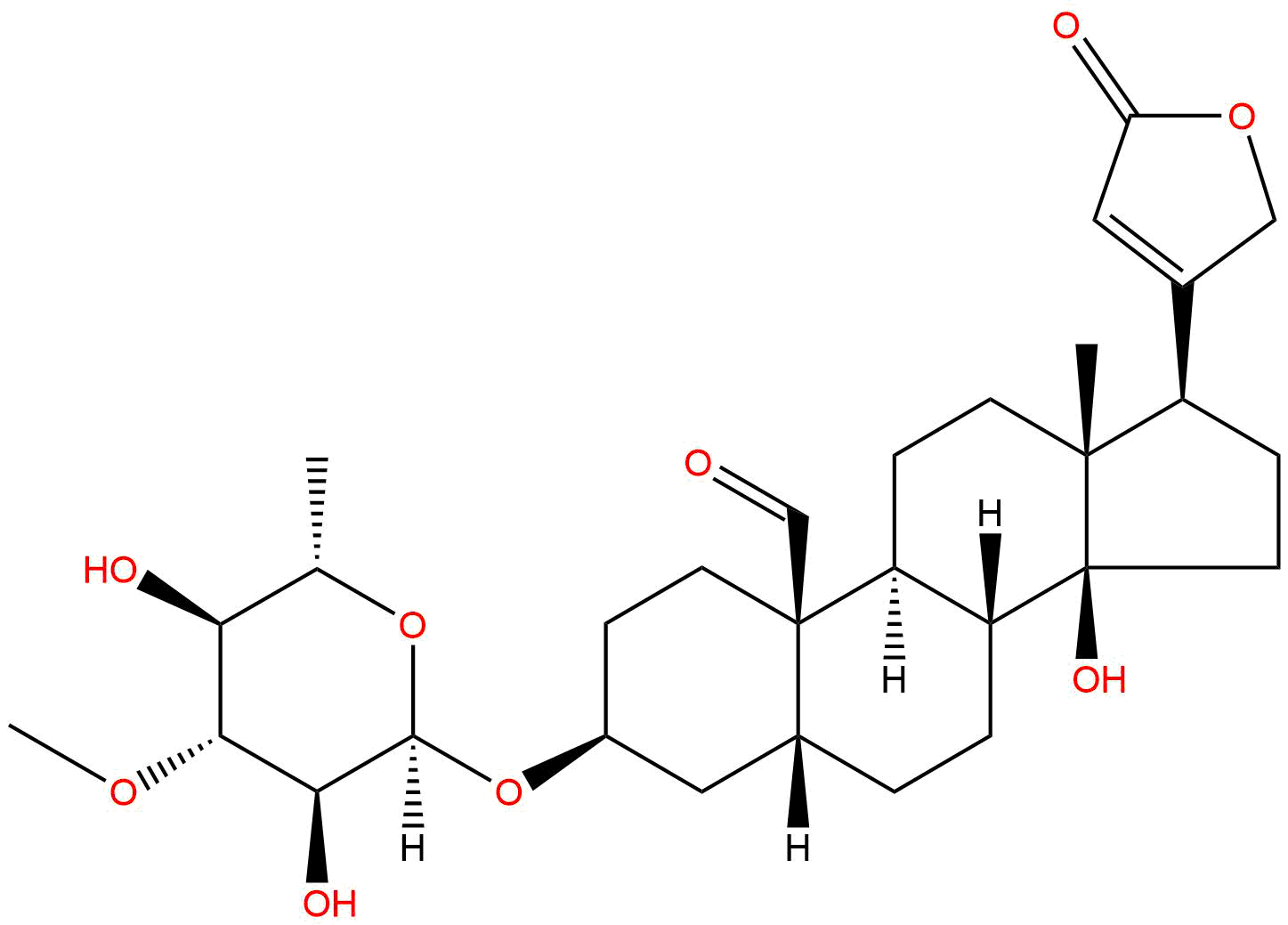
Huangjiaci Glycoside A is a typical cardiac glycoside compound, whose chemical structure consists of a glycoside and a sugar group. The glycoside moiety is a cardenolide type steroid skeleton with a cyclopentane dihydrophenanthrene core, connected to an unsaturated pentalactone ring (butenolide ring) at position C-17, which is a common structural feature of cardiac glycosides. The sugar moiety is L-thevetose, which is connected to the C-3 hydroxyl group of the nucleoside through a β - glycosidic bond.
From the molecular formula, the molecular formula of Huangjiaci Glycoside A is C ∝₀ H ₄₄ O ₉, with a molecular weight of 548.6730. Its LogP value is 1.6085, indicating that the compound has moderate lipid solubility, which is consistent with its ability to exert pharmacological effects across cell membranes. The topological polar surface area (TPSA) is 131.7500 Å ², which is a relatively high value, indicating that the compound may have more hydrogen bond donor and acceptor sites, which are conducive to forming hydrogen bond interactions with the target protein. The water solubility parameter is 0.1060 mg/mL, which belongs to the category of slightly soluble in water, which to some extent limits its oral bioavailability, but can be improved through formulation technology.
In terms of drug safety parameters, the blood-brain barrier penetration ability of Huangjiaci glycoside is relatively low, which helps to reduce adverse reactions related to the central nervous system. More importantly, the hERG inhibition test result was negative, indicating that the compound has a low risk of causing QT interval prolongation in the heart, which is an important safety advantage for a compound with strong cardiac activity. The Ames test result is 0.0, indicating that Huangjiaci Glycoside A does not have significant mutagenicity and has a low risk of genetic toxicity.
From the perspective of structure-activity relationship, the strong cardiac activity of Huangjiaci Glycoside A mainly comes from its lactone structural unit, which can specifically bind to Na ⁺/K ⁺ - ATPase (ATP1A1 and other subtypes) and inhibit its activity. The sugar moiety affects the pharmacokinetic properties and target selectivity of the compound. It is worth noting that the inhibitory activity of Huangjiaci Glycoside A on various protein kinases may be related to the specific spatial conformation of its steroid skeleton and lactone ring, which provides an important chemical basis for subsequent structural modification and optimization.
Huangjiaci Glycoside A is mainly derived from the Apocynaceae plant, Apocynaceae(Thevetia peruviana)This plant is native to tropical America and has been widely introduced and cultivated in tropical and subtropical regions worldwide. Huanghua oleander is an evergreen shrub or small tree that contains milk throughout its entire plant, with the seeds, leaves, and bark being the most abundant in cardiac glycosides. In addition to hesperidin A, this plant also contains various cardiac glycoside compounds such as hesperidin B and hesperidin.
The traditional extraction method usually uses organic solvent extraction. Due to its moderate lipid solubility, commonly used extraction solvents include methanol, ethanol, chloroform methanol mixed solvents, etc. The specific process is as follows: after crushing the dried yellow oleander seeds or leaves, they are refluxed and extracted with 70% -95% ethanol. The extracted solution is concentrated and then subjected to liquid-liquid extraction with petroleum ether, ethyl acetate, and n-butanol in sequence. Huangjiaci glycoside is mainly enriched in the n-butanol extraction site. Subsequently, high-purity Huangjiaci glycoside monomer can be obtained through separation and purification techniques such as silica gel column chromatography, ODS reverse phase column chromatography, and preparative high-performance liquid chromatography (HPLC).
In recent years, with the promotion of the concept of green chemistry, some new extraction techniques have also been applied to the extraction and separation of Huangjiaci glycoside. For example, ultrasound assisted extraction (UAE) and microwave-assisted extraction (MAE) can significantly shorten extraction time, improve extraction efficiency, and reduce the use of organic solvents. In addition, supercritical fluid extraction (SFE) technology, especially using carbon dioxide as the extraction solvent, has shown promising application prospects in the extraction of cardiac glycosides. These modern extraction techniques not only improve the yield of target compounds, but also better preserve the integrity of their chemical structures.
It is worth noting that the yellow flowered oleander, as an ornamental plant, is widely planted around the world. Its high seed yield and low cost provide sufficient raw material sources for the large-scale extraction of flavonoids. However, the entire plant is toxic and necessary safety measures need to be taken during collection and processing. In addition, establishing standardized planting bases and extraction processes is of great significance for ensuring the quality stability and sustainable supply of Huangjiaci glycoside.
As a typical representative of cardiac glycosides, Huangjiaci glycoside A has significant cardiac activity. Its mechanism of action is similar to classical cardiac glycosides such as digoxin, mainly by inhibiting Na ⁺/K ⁺ - ATPase (ATP1A1, ATP1A2, ATP1A3 and other subtypes) on the myocardial cell membrane, leading to an increase in intracellular Na ⁺ concentration. This, in turn, promotes Ca ⁺ influx through the Na ⁺/Ca ² ⁺ exchanger (SLC8A1), leading to an increase in intracellular Ca ⁺ concentration and enhancing myocardial contractility. In addition, Huangjiaci glycoside A can regulate myocardial electrophysiological activity by affecting targets such as potassium ion channels (KCNJ2) and β - adrenergic receptors (ADRB1). Compared with digoxin, the cardiotonic effect of Huangjiaci glycoside A is comparable, but the therapeutic index may be narrower, which to some extent limits its clinical application as a cardiotonic drug.
In recent years, the anti-tumor activity of Huangjiaci glycoside A has become a research hotspot. A large number of in vitro and in vivo experiments have confirmed that this compound has significant proliferation inhibition and killing effects on a variety of malignant tumor cells, and its anti-tumor spectrum covers breast cancer, lung cancer, liver cancer, leukemia and other types.
In the study of breast cancer, flavanthetidine A can inhibit the proliferation of MCF-7, MDA-MB-231 and other breast cancer cell lines, induce cell cycle arrest in G2/M phase, and promote cell apoptosis by activating caspase cascade reaction. It is worth noting that melatonin A also shows strong activity on triple negative breast cancer cells, which provides a new treatment option for triple negative breast cancer patients who lack effective treatment targets.
In the field of lung cancer, Huangjiaci glycoside A has shown inhibitory effects on non-small cell lung cancer cell lines such as A549, H1975, and PC9. Of particular note is that Huangjiaci glycoside A can increase the sensitivity of Gefitinib resistant tumor cells (A549, PC9/gef, and H1975) to the drug, which has important clinical significance for overcoming EGFR-TKI resistance. Mechanism studies have shown that Huangjiaci glycoside A may restore the sensitivity of drug-resistant cells to gefitinib by inhibiting EGFR and its downstream signaling pathways.
In liver cancer research, Huangjiaci Glycoside A exhibits anti proliferative activity against HepG2, Huh7 and other liver cancer cell lines, and can induce autophagic cell death. Autophagy, as a cellular protective mechanism, can also lead to cell death in some cases. The autophagy induced by Huangjiaci glycoside A exhibits a pro apoptotic effect in liver cancer cells.
In terms of leukemia, Huangjiaci glycoside A has significant cytotoxicity against leukemia cell lines such as K562 and HL-60, and can induce cell differentiation and apoptosis. In addition, the compound also showed a certain targeting effect on acute myeloid leukemia stem cells, indicating its potential value in clearing leukemia stem cells.
The antiviral activity of Huangjiaci Glycoside A is another important pharmacological effect discovered in recent years. Research has shown that the compound has broad-spectrum and potent antiviral activity against various sense RNA viruses, including dengue virus, Zika virus, West Nile virus and other flavivirus viruses, as well as enteroviruses. Its antiviral mechanism may involve multiple levels: on the one hand, Huangjiaci glycoside A can inhibit the virus from entering host cells; On the other hand, it can also interfere with the replication of the viral genome and the synthesis of viral proteins. It is worth noting that the antiviral activity of Huangjiaci glycoside A seems to be separated from its cardiac activity, which provides the possibility for developing antiviral derivatives with low cardiac toxicity.
In addition to the main activities mentioned above, Huangjiaci Glycoside A also exhibits pharmacological effects such as anti-inflammatory and immune regulation. For example, the compound can inhibit lipopolysaccharide (LPS) - induced macrophage inflammatory response and reduce the expression of pro-inflammatory factors such as TNF - α and IL-6. These activities may be related to their regulation of multiple signaling pathways and provide a theoretical basis for the application of Huangjiaci Jia Jia in inflammation related diseases.
The pharmacological mechanism of Huangjiaci Glycoside A is extremely complex, involving the interactive regulation of multiple molecular targets and signaling pathways. A deep understanding of its mechanism of action is of great significance for the rational design of clinical application plans and the development of new derivatives.
As a cardiac glycoside compound, the most basic mechanism of action of Huangjiaci glycoside A is to inhibit Na ⁺/K ⁺ - ATPase. This enzyme is composed of alpha and beta subunits, with the alpha subunit (ATP1A1, ATP1A2, ATP1A3, etc.) serving as the binding site for cardiac glycosides. After binding with Na ⁺/K ⁺ - ATPase, Huangjiaci glycoside A inhibits its function of pumping out intracellular Na ⁺ and pumping in extracellular K ⁺, resulting in an increase in intracellular Na ⁺ concentration. This change not only affects the contractile function of myocardial cells, but also triggers a series of downstream effects in tumor cells. Research has shown that inhibition of Na ⁺/K ⁺ - ATPase can lead to an imbalance of intracellular Ca ² ⁺ homeostasis, activating apoptosis related proteases such as calpain and caspase, thereby inducing tumor cell apoptosis. In addition, Na ⁺/K ⁺ - ATPase itself serves as a signal transduction platform, and its inhibition can activate signaling pathways such as Src kinase and PI3K/Akt, thereby regulating cell proliferation, differentiation, and survival.
Huangjiaci Glycoside A has been identified as an inhibitor of various protein kinases such as Src, PI3K, JNK, STAT, and EGFR, greatly expanding our understanding of its mechanism of action.
Src kinase is an important member of the non receptor tyrosine kinase family, which is overexpressed or abnormally activated in various tumors and participates in regulating processes such as cell proliferation, migration, invasion, and angiogenesis. Huangjiaci glycoside A inhibits the activity of Src kinase and blocks its downstream signal transduction, thereby suppressing the malignant phenotype of tumor cells.
The PI3K/Akt signaling pathway is an important intracellular survival signaling pathway that is abnormally activated in various tumors, promoting cell survival and drug resistance. The inhibition of PI3K by Huangjiaci Glycoside A leads to a decrease in Akt phosphorylation levels, which in turn inhibits the activity of downstream target proteins such as mTOR, Bad, Caspase-9, and promotes cell apoptosis.
JNK (c-Jun N-terminal kinase) is a member of the mitogen activated protein kinase (MAPK) family, involved in regulating cellular stress response, apoptosis, and autophagy. The regulatory effect of Huangjiaci Glycoside A on JNK is cell type dependent, activating JNK to promote apoptosis in some cells and inhibiting JNK activity in others.
STAT(Signal Transducer and Activator of Transcription) The protein family is an important transcription factor involved in regulating cell proliferation, differentiation, and immune response. Huangjiaci Glycoside A can inhibit the phosphorylation and nuclear translocation of STAT3 and STAT5, reduce their transcriptional activity, and thus inhibit tumor cell growth.
EGFR (Epithelial Growth Factor Receptor) is an important driver gene for various epithelial derived tumors such as lung cancer. Huangjiaci glycoside A can directly inhibit the tyrosine kinase activity of EGFR and downregulate its downstream signaling pathway, which explains its mechanism of enhancing the sensitivity of gefitinib resistant tumor cells.
Huangjiaci glycoside A can induce both apoptosis and autophagy in tumor cells, and there is a complex interaction between these two modes of cell death. In terms of apoptosis, Huangjiaci glycoside A activates the caspase cascade through both the mitochondrial pathway (endogenous pathway) and the death receptor pathway (exogenous pathway). Specifically, this compound can cause a decrease in mitochondrial membrane potential, release cytochrome c, and activate caspase-9 and caspase-3; Simultaneously upregulate the expression of death receptors such as Fas and TRAIL-R, and activate caspase-8. In terms of autophagy, Huangjiaci glycoside A inhibits the mTOR signaling pathway, activates the ULK1 complex, and promotes autophagosome formation. It is worth noting that in some tumor cells, autophagy induced by Huangjiaci glycoside A exhibits a pro apoptotic effect, while in other cells it exhibits protective autophagy, depending on the cell type and drug concentration.
The mechanism by which Huangjiaci glycoside A reverses tumor drug resistance has attracted much attention. Taking the resistance of non-small cell lung cancer to gefitinib as an example, Huangjiaci Jia restores drug sensitivity of resistant cells through the following mechanisms: ① Inhibiting the activity of EGFR and its mutants (such as T790M); ② Blocking compensatory activation signaling pathways such as PI3K/Akt and STAT3; ③ Downregulate the expression of ABC transporters (such as P-gp) and increase intracellular drug concentration; ④ Inducing apoptosis and autophagy in drug-resistant cells. These multi-target mechanisms give Huangjiaci Jia a unique advantage in overcoming tumor drug resistance.
From the perspective of medicinal chemistry, Huangjiaci Glycoside A has the following pharmacological characteristics: a molecular weight of 548.67 Da, slightly higher than the "500 rule" of traditional small molecule drugs, but still within an acceptable range; The LogP value is 1.61, indicating moderate lipid solubility and favorable membrane permeability; The TPSA is 131.75 Å ², with a large number of hydrogen bond donors and acceptors, which facilitates the formation of specific interactions with the target. However, one of its main drawbacks is its low water solubility (0.106 mg/mL), which may affect oral absorption and bioavailability.
In terms of safety, a negative hERG inhibition test reduced the risk of cardiac toxicity, while a negative Ames test ruled out genetic toxicity, both of which are favorable pharmacological features. However, as a cardiac glycoside compound, the therapeutic index of Huangjiaci glycoside A is relatively narrow, and the dose window between its cardiac activity and anti-tumor activity needs to be carefully evaluated. In addition, the compound has a low blood-brain barrier penetration ability, which reduces adverse reactions in the central nervous system but also limits its application in brain tumors and central nervous system diseases.
At present, there is insufficient systematic research on the pharmacokinetics of Huangjiaci Glycoside A. However, based on its physicochemical properties and studies of similar compounds, it can be inferred that oral absorption may be poor and bioavailability may be low, mainly due to its water solubility and P-gp efflux. Intravenous administration may be a more effective route of administration. In terms of distribution in the body, Huangjiaci Glycoside A may be mainly distributed in organs with abundant blood flow such as the liver, kidneys, and heart. In terms of metabolism, this compound may be mainly metabolized by the CYP450 enzyme system in the liver, where the glycosyl portion may be hydrolyzed and the aglycone portion may undergo phase I metabolic reactions such as hydroxylation and reduction, followed by phase II metabolism by binding with glucuronic acid or sulfuric acid. The main excretion pathways may be bile excretion and renal excretion.
It is worth noting that there may be similar pharmacokinetic characteristics between Huangjiaci glycoside A and cardiac glycosides such as digoxin, such as longer half-life, narrower treatment window, and susceptibility to drug interactions. Therefore, close monitoring of blood drug concentration is necessary in clinical applications to avoid toxic reactions.
To improve the water solubility and bioavailability of Huangjiaci Glycoside A, researchers have attempted various formulation strategies. New drug delivery systems such as liposomes, nanoparticles, and cyclodextrin inclusion complexes have been used for the delivery of Huangjiaci glycoside. For example, poly (lactic acid glycolic acid) copolymer (PLGA) nanoparticles can improve the encapsulation efficiency and drug loading of berberine, prolong the circulation time of the drug in the body, and enhance the anti-tumor effect. In addition, targeted modified nanocarriers (such as folate modification and RGD peptide modification) can achieve selective enrichment of Huangjiaci glycoside in tumor tissues, improve therapeutic efficacy, and reduce systemic toxicity.
The broad-spectrum anti-tumor activity, multi-target mechanism of action, and ability to reverse tumor drug resistance of Huangjiaci Glycoside A make it have broad clinical application prospects in the field of tumor treatment. Especially noteworthy are the following aspects:
Firstly, EGFR-TKI resistant non-small cell lung cancer. Huangjiaci glycoside A can increase the sensitivity of gefitinib resistant tumor cells, suggesting that its combination with EGFR-TKI may be an effective strategy to overcome resistance. In the future, clinical trials can be conducted to evaluate the safety and efficacy of Huangjiaci Glycoside A in combination with drugs such as gefitinib and osimertinib.
Second, triple negative breast cancer. Due to the lack of effective targeted treatment, the prognosis of triple negative breast cancer patients is poor. The activity of hypoglycoside A on triple negative breast cancer cells suggests that it may become a new therapeutic drug for this subtype of breast cancer.
Thirdly, leukemia. The effect of Huangjiaci Glycoside A on leukemia stem cells suggests its potential in clearing small residual lesions and preventing recurrence, and can be used in combination with standard chemotherapy regimens.
The broad-spectrum antiviral activity of Huangjiaci Glycoside A against various sense RNA viruses makes it of great value in combating new and recurrent viral infectious diseases. Especially for viruses such as dengue virus and Zika virus that lack specific antiviral drugs, Huangjiaci glycoside A or its derivatives may become candidate drugs. However, the risk of cardiac toxicity caused by its strong cardiac activity needs to be controlled in antiviral therapy, and systemic exposure can be reduced through structural modifications or local administration (such as topical preparations).
Despite the multifaceted pharmacological activities and clinical potential of Huangjiaci Glycoside A, it still faces many challenges in transitioning from laboratory research to clinical application
Firstly, narrow treatment index is the biggest obstacle. There is an overlap between the cardiotonic activity and anti-tumor/antiviral activity of Huangjiaci Glycoside A. How to reduce cardiac toxicity while maintaining therapeutic activity is a key issue that medicinal chemists need to address. By structural modification, such as changing the type or connection mode of sugar groups, modifying the lactone ring, etc., it is possible to obtain derivatives with higher selectivity.
Secondly, the pharmacokinetic properties need to be improved. The low water solubility and potential low oral bioavailability limit its clinical application. By means of prodrug design and new formulation technology, it is expected to improve its pharmacokinetic characteristics.
Thirdly, in-depth research on the mechanism of action still needs to be strengthened. The regulatory effects of Huangjiaci Glycoside A on multiple targets and its signaling network in cells need further clarification, especially its selective mechanism in different cell types, as well as the balance between inducing apoptosis and autophagy.
Fourthly, preclinical and clinical research data are not yet sufficient. At present, research on Huangjiaci Glycoside A mainly remains at the level of in vitro and animal experiments, lacking systematic toxicological evaluation and clinical trial data. In the future, it is necessary to conduct comprehensive preclinical safety evaluations and pharmacological studies in accordance with the regulatory requirements for new drug development, and gradually promote clinical trials.
Huangjiaci glycoside A, as a natural cardiac glycoside compound isolated from oleander, has a pharmacological activity spectrum far beyond traditional knowledge. From cardiotonic effects to broad-spectrum anti-tumor and antiviral activities, and then to reversing tumor drug resistance, Huangjiaci Glycoside A exhibits multi-target and multi pathway pharmacological characteristics. Its inhibitory activity against various protein kinases such as Src, PI3K, JNK, STAT, and EGFR, as well as its classical action on Na ⁺/K ⁺ - ATPase, together constitute its complex mechanism of action network.
Despite the challenges of narrow therapeutic index and poor water solubility in drug development, the unique pharmacological activity and mechanism of action of Huangjiaci Glycoside A make it an important lead compound for drug development. Through strategies such as structural modification, formulation optimization, and combination therapy, it is expected to overcome these obstacles and develop safe and effective derivatives or novel formulations of Huangjiaci glycoside. In the future, with a deeper understanding of the mechanism of action of Huangjiaci Glycoside A and continuous innovation in medicinal chemistry, this natural product is expected to play an important role in the treatment of tumors and viral diseases, and contribute to human health.
Batch can search by a CAS number,one per line
