Introduction/Overview
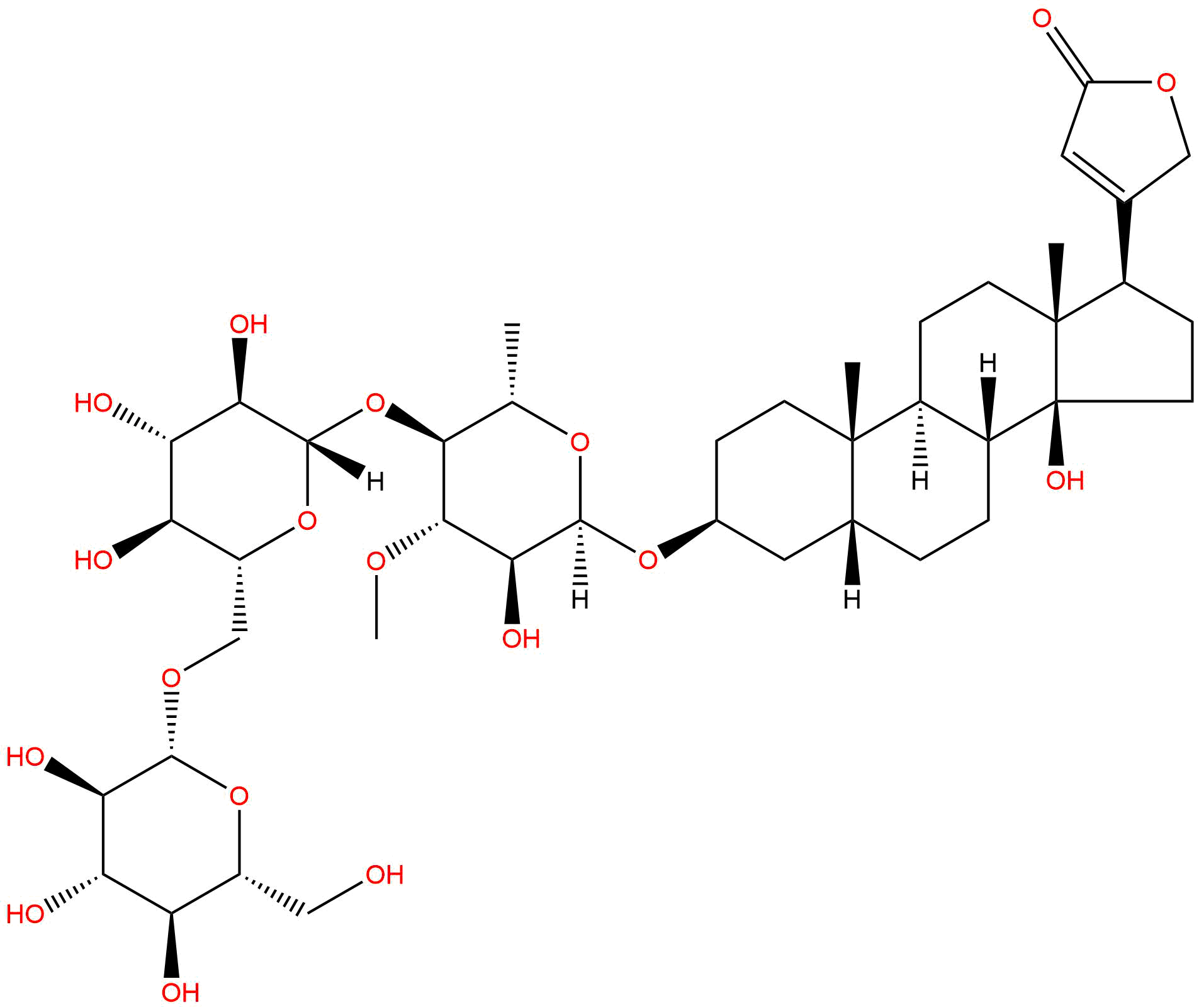
Thevetin B (CAS number: 27127-79-3) is a natural sugar beet glycoside derived from Thevetia peruviana. Yellow oleander, as a plant in the oleander family, exhibits significant biological activity in both traditional medicine and modern pharmacological research due to its various chemical components, especially cardiac glycosides. Huangjia glycoside B, as one of the important cardiac glycoside components in this plant, has received widespread attention in recent years due to its unique chemical structure and potential pharmacological effects. Its therapeutic potential in cardiovascular diseases, especially heart failure, arrhythmia, hypertension and stroke, and its targeting role in tumor diseases such as breast cancer provide a new research direction for natural product pharmacology and drug development.
This article aims to provide a systematic review of the chemical structure and physicochemical properties, plant sources and extraction methods, pharmacological activity and mechanism of action, drug evaluation and pharmacokinetic characteristics of Huangjia Glycoside B. Combined with its molecular targets in related diseases, it deeply explores its clinical application prospects and development trends, and provides theoretical basis and practical guidance for subsequent basic and clinical research.
Chemical structure and physicochemical properties
Huangjia glycoside B belongs to the beet glycoside class, with a molecular weight of 794.9700. Its chemical structure consists of a steroid core and a glycoside moiety. Its core structure is a typical cardiac glycoside steroid skeleton, containing multiple hydroxyl and methoxy substituents. The glycoside part is usually connected by multiple sugar units through glycosidic bonds, giving it high polarity and water solubility.
Specifically, the steroid structure of Huangjia glycoside B enables it to bind to specific protein targets on the cell membrane, especially sodium potassium ATPase (ATP1A1), which is also the basis of its cardiac pharmacological activity. It contains multiple chiral centers in its molecule, with stable conformation, and the length and composition of the polysaccharide chain in the glycosidic part have a significant impact on its biological activity and pharmacokinetic properties.
In terms of physical and chemical properties, Huangjia glycoside B exhibits good water solubility, but its ability to penetrate biofilms is relatively limited due to its large molecular weight. Its stability is greatly affected by pH and temperature, and it is prone to hydrolysis in strong acid or alkali environments, leading to glycosidic bond breakage and reduced activity. In addition, the solubility of Huangjia glycoside B in organic solvents is low, and suitable solvent systems need to be selected for extraction and purification processes to ensure the integrity and purity of the product.
Plant sources and extraction methods
Huangjia glycoside B is mainly isolated from Thevetia peruviana. Yellow oleander is a plant of the oleander family, widely distributed in tropical and subtropical regions, and is widely cultivated for its ornamental and medicinal value. The leaves, fruits, and seeds of plants all contain abundant cardiac glycosides, among which the content of Huangjia glycoside is relatively high.
Traditional extraction methods often use organic solvent extraction and separation techniques. The general process includes:
- Sample Pretreatment Collect leaves or seeds of oleander, dry and crush them to increase surface area for solvent penetration.
- Solvent extraction Commonly used polar organic solvents such as methanol, ethanol, or ethyl acetate are used for extraction of cardiac glycosides.
- Crude extract concentration Concentrate the extract by rotary evaporation, remove the solvent, and obtain the crude extract.
- Separation and purification Separation is performed using column chromatography techniques such as silica gel columns and reverse phase C18 columns, combined with high performance liquid chromatography (HPLC) for purity detection and component identification.
- Structural Identification Confirm the structure of the compound through modern analytical techniques such as nuclear magnetic resonance (NMR), mass spectrometry (MS), and infrared spectroscopy (IR).
In recent years, the application of new technologies such as ultrasound assisted extraction and microwave-assisted extraction has significantly improved extraction efficiency and purity, reduced solvent usage, and promoted the industrial production potential of Huangjiagui.
Pharmacological activity research
Huangjia glycoside B, as a typical cardiac glycoside, mainly exhibits multiple pharmacological activities on the cardiovascular system. Numerous in vitro and in vivo studies have shown that it has significant therapeutic effects in disease models such as heart failure, arrhythmia, hypertension, and stroke. In addition, the antiproliferative and pro apoptotic effects of xanthoside B in tumor cells, especially in breast cancer cells, have gradually been revealed.
heart failure
Huangjia glycoside B increases intracellular sodium ion concentration by inhibiting sodium potassium ATPase activity, thereby affecting the sodium calcium exchange mechanism, enhancing intracellular calcium ion levels, and strengthening myocardial contractility. This mechanism is similar to that of digitalis drugs and is the basis for improving cardiac contractile function in patients with heart failure. In addition, Huangjia glycoside B can optimize the excitation contraction coupling process of myocardial cells and reduce cardiac burden by regulating the activity of β 1 adrenergic receptors (ADRB1) and calcium channels (CACNA1C).
arrhythmia
In the arrhythmia model, Huangjia glycoside B exhibits the ability to regulate sodium channels (SCN5A), potassium channels (KCNQ1), and acetylcholine receptors (CHRM2), stabilize myocardial cell membrane potential, reduce abnormal excitation conduction, and lower the incidence of arrhythmia. Its regulation of calcium channels (CACNA1C) also helps maintain the stability of cardiac electrophysiology.
Hypertension
Huangjia glycoside B inhibits the activation of the angiotensin system by suppressing angiotensin-converting enzyme (ACE) and angiotensin II receptor type 1 (AGTR1), exerting vasodilator and antihypertensive effects. At the same time, regulating the activity of sodium potassium ATPase (ATP1A1) and endothelial nitric oxide synthase (NOS3) promotes sodium excretion and nitric oxide production, improves vascular endothelial function, and overall lowers blood pressure levels.
stroke
Huangjia Glycoside B regulates the activity of NMDA receptor (GRIN1) in a stroke model, reducing neurotoxicity and protecting nerve cells from damage caused by excessive influx of calcium ions. At the same time, inhibiting sodium potassium ATPase (ATP1A1) and angiotensin-converting enzyme (ACE) improves cerebral blood flow perfusion and reduces brain tissue ischemic injury. In addition, by affecting the platelet glycoprotein IIb/IIIa receptor (ITGA2B), platelet aggregation is reduced and thrombosis is prevented.
Cancer (breast cancer)
Xanthoside B shows multi target anti-tumor activity in breast cancer cells. It inhibits tumor cell proliferation by regulating the estrogen receptor alpha (ESR1) and human epidermal growth factor receptor 2 (ERBB2) signaling pathways. Intervention in the phosphatidylinositol 3-kinase (PIK3CA) pathway, blocking downstream AKT/mTOR signaling, and promoting cell apoptosis. Huangjia glycoside B can also regulate the expression of Bcl-2 protein (BCL2) and p53 protein (TP53), promote programmed cell death of cancer cells, and enhance chemotherapy sensitivity.
Mechanism of action and molecular targets
The pharmacological effects of Huangjia glycoside B depend on its regulation of multiple key molecular targets, including the cardiovascular system and tumor related signaling pathways. Its core targets and mechanism of action are as follows:
- Sodium potassium ATPase (ATP1A1)Huangjia glycoside B inhibits the activity of sodium potassium ATPase by binding to it, leading to an increase in intracellular sodium ion concentration, indirectly promoting calcium ion influx, enhancing myocardial contractility, and improving symptoms of heart failure.
- β 1 adrenergic receptor (ADRB1)Regulating the response of myocardial cells to sympathetic nervous system stimulation, optimizing heart rate and myocardial contraction function.
- Calcium channel (CACNA1C)Regulating calcium ion channels in myocardial cells, maintaining cardiac electrophysiological stability, and preventing arrhythmia.
- Angiotensin converting enzyme (ACE) and angiotensin II receptor type 1 (AGTR1)Block the angiotensin system, reduce vascular constriction, alleviate hypertension and related cardiovascular burden.
- Potassium channels (KCNH2, KCNQ1)Participate in the repolarization process of myocardial cell action potentials and regulate heart rhythm.
- Acetylcholine receptor (CHRM2): Affects the regulation of the vagus nerve on the heart and stabilizes the heart rate.
- Endothelial nitric oxide synthase (NOS3)Promote the production of nitric oxide and improve vasodilation function.
- NMDA receptor (GRIN1)Reduce neurotoxicity and protect brain tissue.
- Platelet glycoprotein IIb/IIIa receptor (ITGA2B)Inhibit platelet aggregation and prevent thrombus formation.
- Breast cancer related targets (ESR1, ERBB2, PIK3CA, BCL2, TP53)Multi pathway synergistic inhibition of tumor cell proliferation and promotion of apoptosis.
Through the comprehensive action of multiple targets and pathways mentioned above, Huangjia Glycoside B exhibits complex and effective pharmacological activities, providing a solid molecular basis for its potential as a therapeutic drug.
Evaluation of drug properties and pharmacokinetics
The pharmacological evaluation of Huangjia Glycoside B involves its physicochemical properties, pharmacokinetic (ADME) characteristics, and safety analysis.
Physical and chemical properties and drug compatibility
Huangjia Glycoside B has a relatively high molecular weight (794.97 Da) and its glycosidic structure endows it with high polarity. It has good water solubility, but its membrane permeability is limited, which may affect its oral bioavailability. Its stability is affected by the pH of the gastrointestinal tract, and glycosidic bonds are easily hydrolyzed, indicating that oral formulations need to be optimized to improve stability and absorption.
Pharmacokinetic characteristics
At present, there is limited systematic pharmacokinetic research on Huangjia Glycoside B. Previous studies have shown that it is mainly metabolized by the liver in vivo, with metabolites including deglycosylated and hydroxylated derivatives. Its half-life is moderate and has a certain duration in the body. The kidneys and bile are both pathways for its excretion. Due to its high affinity for sodium potassium ATPase, dosage control should be cautious to avoid cardiac toxicity.
Safety and Toxicology
Huangjia glycoside B, as a cardiac glycoside, has a potential risk of cardiac toxicity, especially when the dose is too high, it can cause arrhythmia. Animal experiments have shown that moderate use has good safety, but long-term toxicity and teratogenicity studies still need to be supplemented. Its impact on liver and kidney function needs further evaluation.
Drug interactions
Huangjia glycoside B may interact with other cardiovascular drugs (such as digitalis preparations, calcium channel blockers, beta blockers), affecting efficacy and safety. Risk management of combination therapy should be taken into account in clinical applications.
Clinical application prospects and prospects
Huangjia glycoside B, as a natural cardiac glycoside compound, has shown broad application prospects in the field of cardiovascular disease treatment due to its multi-target and multi mechanism pharmacological properties. It may become an effective supplement or alternative to traditional digitalis drugs in the treatment of heart failure and arrhythmia, especially with potential advantages in drug-resistant or intolerant patients.
In addition, the multiple mechanisms of action of Huangjia glycoside B in the prevention and treatment of hypertension and stroke provide new ideas for the management of comprehensive cardiovascular and cerebrovascular diseases. Its anti-tumor activity, especially its potential application in breast cancer, has opened up a new direction for the development of natural anti-cancer drugs. In the future, optimizing its pharmacokinetics and safety through structural modification is expected to enhance its clinical applicability.
However, the clinical translation of Huangjia glycoside B still faces many challenges, including determining the dose safety window, long-term toxicological evaluation, drug interaction studies, and clinical trial validation. Combining modern drug design with nano delivery technology to enhance its targeting and bioavailability will be the focus of future research.
Conclusion
As an important beet glycoside in the yellow oleander, phlenchoside B, with its unique chemical structure and multi-target pharmacological activity, has shown significant therapeutic potential in cardiovascular disease, breast cancer and other fields. The pharmacological mechanism study of the system revealed that it achieves cardioprotective, antihypertensive, antiarrhythmic, and anti-tumor effects by regulating sodium potassium ATPase, calcium channels, angiotensin system, and tumor related signaling pathways.
The evaluation of drug properties suggests that it has certain potential for development, but it needs to overcome limitations such as high molecular weight, poor membrane permeability, and risk of cardiac toxicity. In the future, combining modern medicinal chemistry, pharmacokinetic optimization, and clinical research, it is expected to promote the clinical application of Huangjia glycoside B and become an important breakthrough in the field of natural product pharmacology.
In summary, Huangjia Glycoside B not only enriches the chemical and pharmacological knowledge system of cardiac glycoside drugs, but also provides a new paradigm for the application of natural products in the treatment of complex diseases, which is worthy of further in-depth research and development.