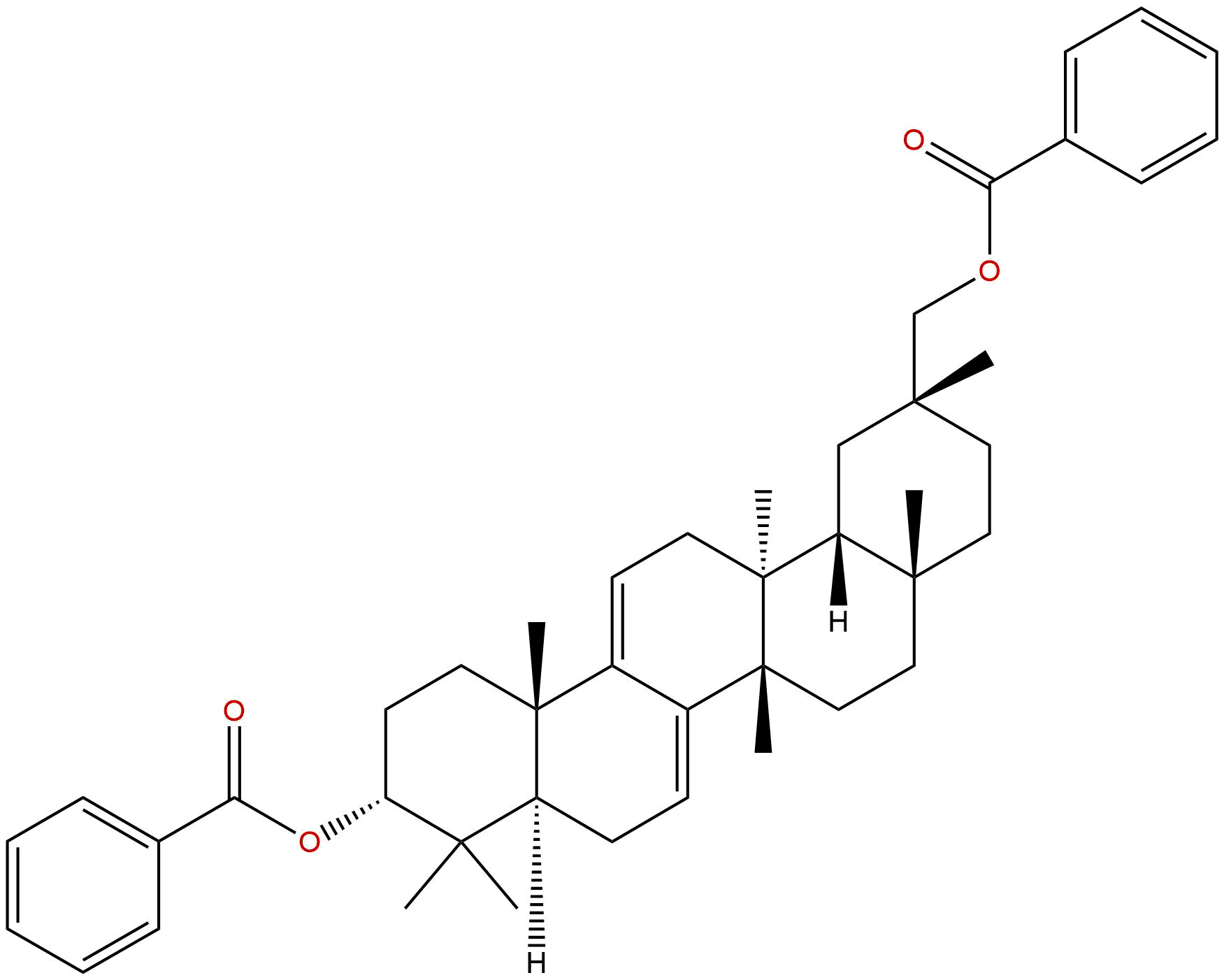


Product name: 3,29-Dibenzoyloxykarounidiol
Synonym name:
Catalogue No.: BP4280
Cas No.: 389122-01-4
Formula: C44H56O4
Mol Weight: 648.928
Botanical Source: Trichosanthis semen
Type of Compound: Triterpenoids
Purity: 95%~99%
Analysis Method: HPLC-DAD or/and HPLC-ELSD
Identification Method: Mass, NMR
Packing: Brown vial or HDPE plastic bottle
Storage: Store in a well closed container, protected from air and light. Put into refrigerate or freeze for long term storage.
Whenever possible, you should prepare and use solutions on the same day. However, if you need to make up stock solutions in advance, we recommend that you store the solution as aliquots in tightly sealed vials at -20℃. Generally, these will be useable for up to two weeks.
The product could be supplied from milligrams to grams
Inquire for bulk scale.
For Reference Standard and R&D, Not for Human Use Directly.
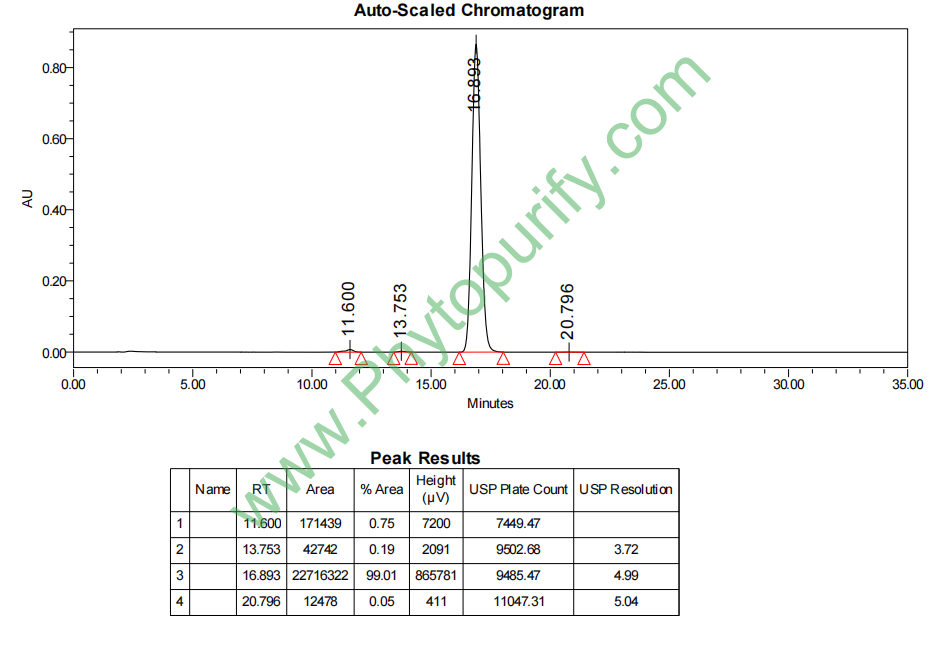
HPLC of 3,29-Dibenzoyloxykarounidiol
Storage conditions:Short-term storage at 2~8℃, long-term storage at -20 ~ -80℃
52.6000
10.1812
10.1801
.0000
8.5138
5.3273
High
95.5696
4.8937
No
Yes
No
No
No
No
0.0
No
No
No
Yes
Natural products, as important resources for drug discovery, have long played an irreplaceable role in the development of anti-tumor drugs. 3,29-Dibenzoyloxykarounediol (CAS number: 389122-01-4) is a unique natural diol derived from plants in the Trichosanthes family. In recent years, it has attracted widespread attention due to its significant anti-tumor activity. This compound exhibits good pharmacological potential by regulating the growth, apoptosis, and metastasis related signaling pathways of tumor cells through multiple targets. The purpose of this article is to systematically review the chemical structure, physicochemical properties, plant sources, and extraction methods of 3,29-dibenzoyl-Trichosanthes kirilowii diol, with a focus on its anti-tumor pharmacological activity and mechanism of action, exploring its drug properties and pharmacokinetic characteristics, and looking forward to its clinical application prospects.
3,29-dibenzoyl-Trichosanthes kirilowii diol is a natural diol with a complex structure, with a molecular formula of C39H-40O8 and a molecular weight of 648.9280. Its structure contains two benzoyl substituted hydroxyl groups located at the 3rd and 29th positions of the molecule, endowing it with strong hydrophobicity. The LogP value is as high as 10.1812, indicating that it has extremely strong lipid solubility and is difficult to dissolve in water (with a water solubility of 0.0000), but it has a high blood-brain barrier permeability. The polar surface area (TPSA) is 52.6 Å ², which is moderate and supports its membrane permeability. This compound does not exhibit hERG channel inhibitory activity, and the Ames mutagenicity test result is 0, indicating its good safety and low risk of genetic toxicity.
The benzoyl modification of chemical structure not only affects its physical and chemical properties, but may also enhance its binding affinity with target proteins, thereby enhancing its biological activity. Multiple hydroxyl and ester bonds in the molecule provide potential chemical modification sites, which are beneficial for subsequent structural optimization and drug design.
3,29-dibenzoyl-Trichosanthes kirilowii diol is mainly found in the seeds and roots of plants in the Trichosanthes family, especially in the genus Trichosanthes. As a traditional Chinese medicinal herb, Gualou Ren has always been used to treat various diseases. In depth research on its active ingredients has revealed various diol compounds with potential medicinal value.
The extraction process usually uses organic solvent extraction combined with chromatographic separation technology. Common extraction solvents include methanol, ethanol, and their aqueous solutions. Taking advantage of their high lipid solubility, organic phase extraction is preferred. The extract was purified through multiple steps such as silica gel column chromatography and reverse phase high performance liquid chromatography (RP-HPLC), ultimately obtaining high-purity 3,29-dibenzoyl trichosanthiadiol. In recent years, supercritical CO2 extraction and microwave-assisted extraction techniques have also been attempted to improve extraction efficiency and purity, reduce solvent usage, and conform to the concept of green chemistry.
The pharmacological research of 3,29-dibenzoyl-Trichosanthes kirilowii diol mainly focuses on the field of anti-tumor. In vitro cell experiments showed that the compound had obvious inhibitory effect on proliferation of many tumor cell lines (such as breast cancer, lung cancer, liver cancer and colorectal cancer cells), and IC_50 values were generally in the low molar range. Its anti-tumor activity is manifested by promoting tumor cell apoptosis, blocking cell cycle progression, and inhibiting tumor cell migration and invasion ability.
The in vivo animal model study further confirmed its anti-tumor effect. In the mouse transplant tumor model, 3,29-dibenzoyl-Trichosanthes kirilowii diol significantly prolonged survival, reduced tumor volume, and showed no significant toxic side effects, demonstrating good safety and therapeutic potential. In addition, the compound also exhibits certain anti angiogenic activity, which may exert comprehensive anti-cancer effects by regulating the tumor microenvironment.
The anti-tumor mechanism of 3,29-dibenzoyl trichosanthes kirilowii diol involves multiple signaling pathways and key molecular targets, reflecting its pharmacological characteristics of multi-target and multi mechanism.
Anti apoptotic regulation
This compound can downregulate the expression of anti apoptotic proteins MCL1 and BCL2, disrupt the survival signal of tumor cells, and induce mitochondrial mediated apoptosis. By regulating the balance of BCL2 family proteins, it promotes programmed cell death.
Regulation of signal transduction pathways
3,29-dibenzoyl-Trichosanthes kirilowii diol inhibits the activity of STAT3 and MAPK1 signaling pathways, blocking the proliferation and metastasis signals of tumor cells. STAT3, as a key regulatory factor for tumor cell proliferation and immune escape, its inhibition helps to restore the tumor immune microenvironment.
Matrix metalloproteinase inhibition
By inhibiting the expression and activity of MMP2, reducing the degradation of tumor cell matrix, and preventing the invasion and metastasis of tumor cells.
Inhibition of DNA Topoisomerase
This compound exhibits inhibitory effects on TOP1 and TOP2A, interferes with DNA replication and transcription processes, and prevents tumor cell proliferation.
Regulation of hypoxia inducible factors
Inhibiting HIF1A expression, blocking tumor hypoxia adaptation mechanisms, and reducing tumor drug resistance and invasiveness.
Hormone receptor and metabolic enzyme regulation
The regulation of estrogen receptor ESR1 and aromatase CYP19A1 suggests that it has potential application value in hormone dependent tumors (such as breast cancer).
In summary, 3,29-dibenzoyl trichosanthes kirilowii diol exhibits broad-spectrum anti-tumor potential by intervening in multiple key biological processes of tumor cells through multi-target synergistic effects.
From the perspective of medicinal properties, 3,29-dibenzoyl trichosanthes kirilowii diol poses certain challenges. Its extremely high lipid solubility (LogP=0.1812) results in poor water solubility, limiting its oral bioavailability and in vivo distribution. However, its low polar surface area (TPSA=52.6) and high blood-brain barrier permeability indicate that the compound can effectively enter the central nervous system and has the potential to develop drugs for the treatment of brain tumors.
In terms of safety, the compound did not exhibit hERG channel inhibitory activity, indicating a low risk of cardiac toxicity. The negative result of Ames test supports its genetic toxicity safety and meets the basic requirements of drug development.
Pharmacokinetic studies are still in the preliminary stage. The in vivo metabolic kinetics indicate that the compound is mainly metabolized by the liver and may involve the CYP450 enzyme system. The activity and toxicity of the metabolites need further evaluation. Its high lipid solubility may lead to widespread distribution in the body, but it may also cause problems with accumulation and slow metabolism. In the future, drug carrier systems such as nanoparticles and liposomes will be needed to improve their solubility and bioavailability.
Given the significant anti-tumor activity and multi-target mechanism exhibited by 3,29-dibenzoyl trichosanthes kirilowii diol in various tumor cell lines, this compound has the potential to become a novel anti-tumor drug. Especially in the field of treating drug-resistant tumors and brain tumors, its high blood-brain barrier permeability provides the possibility to break through the limitations of traditional drugs.
Future research should focus on the following aspects:
Structural optimization and drug design
Reduce LogP value through chemical modification, enhance water solubility and oral bioavailability, while maintaining or enhancing anti-tumor activity.
Drug delivery system development
Using nanotechnology, liposomes, polymer carriers, etc. to improve in vivo stability and targeting, and reduce side effects.
In depth mechanism research
Further elucidate its effects on the tumor microenvironment, immune regulation, and tumor stem cells, and expand its application scope.
Preclinical and clinical research
Conduct systematic toxicological evaluation and pharmacokinetic studies to promote its entry into clinical trials.
Combination therapy strategy
Explore synergistic effects with existing chemotherapy drugs, targeted drugs, or immunotherapy to enhance treatment efficacy.
As a natural product with a unique structure and multi-target anti-tumor activity, 3,29-dibenzoyl trichosanthes kirilowii diol has shown broad prospects for drug development. Its complex mechanism of action provides new ideas for the innovation of anti-tumor drugs, but the limitations of drug properties and pharmacokinetics also suggest the need for further optimization. Through interdisciplinary collaboration, combined with modern medicinal chemistry, drug delivery technology, and molecular biology methods, 3,29-dibenzoyl-Trichosanthes kirilowii diol is expected to become an important candidate drug in the field of anti-tumor therapy, bringing new treatment options for cancer patients.
