Introduction/Overview
Natural products, as an important source of drug discovery, play an irreplaceable role in the history of human disease prevention and treatment. Among them, isoquinoline alkaloids have always been a hot topic in medicinal chemistry and pharmacology research due to their structural diversity and wide range of biological activities. Columbamine, also known as dehydroisocorypalmine, is a tetracyclic isoquinoline alkaloid isolated from various medicinal plants. Its CAS number is 3621-36-1 and its molecular weight is 338.38. As one of the key in vivo metabolites of the famous alkaloid Berberine, African tetrandrine not only inherits some of the pharmacological activities of the parent compound, but also exhibits unique and diverse biological effects.
In recent years, with the deepening of modern separation and identification techniques and molecular biology research, the pharmacological activity spectrum of African tetrandrine has been continuously expanded. Research has shown that it not only has traditional antibacterial and anti-inflammatory effects, but also shows great potential in fields such as anti-tumor, antioxidant, neuroprotection, liver protection, regulation of glucose and lipid metabolism, and anti parasitic effects. In particular, in anti malaria research, African tetrandrine has been found to act on multiple key targets of malaria parasites, providing new candidate molecules to address the increasingly severe problem of drug resistance. This article aims to provide a systematic review of the chemical properties, plant sources, pharmacological activities, mechanisms of action, and pharmacological research progress of African tetrandrine, and to explore its clinical application prospects, in order to provide scientific references for the deep development and utilization of this natural product.
Chemical structure and physicochemical properties
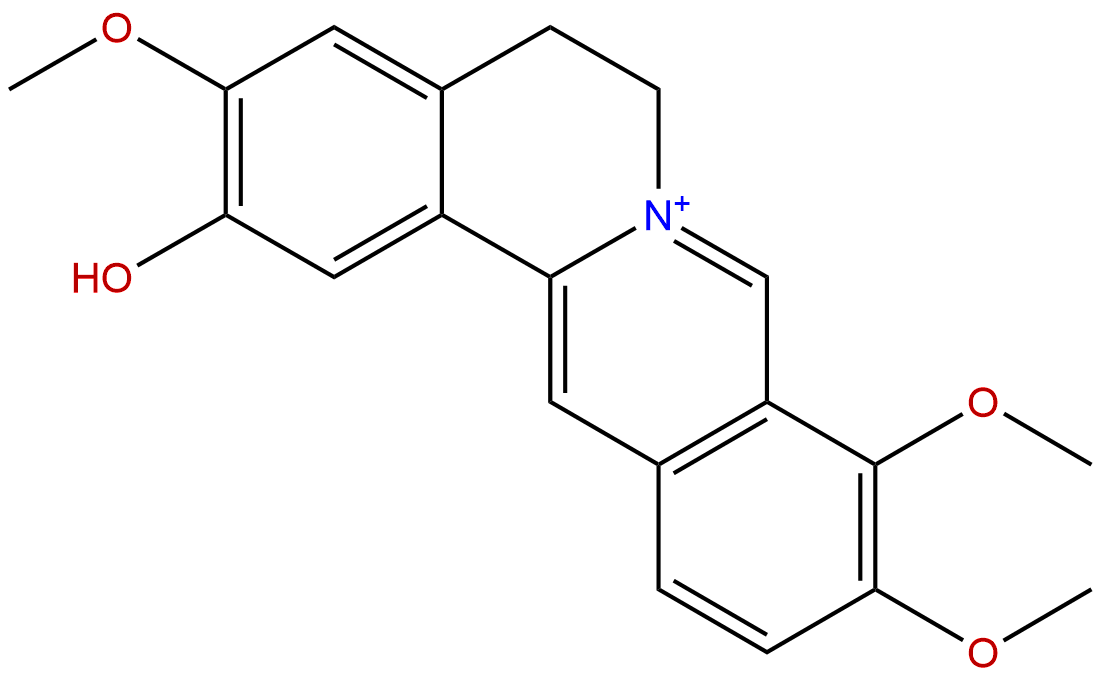
The chemical structure of African berberine belongs to the protoberberine type isoquinoline alkaloid. Its basic skeleton is composed of two benzene rings (A ring and D ring) fused together through two nitrogen-containing heterocycles (B ring and C ring), forming a rigid planar four ring system. Compared with berberine, African tetrandrine has a single bond between C-2 and C-3 positions, and there are two adjacent methoxy substituents on the D ring (usually at C-9 and C-10 positions), while C-2 position is usually a hydroxyl or methoxy group. This structural difference is the material basis for its unique activity.
From the analysis of physical and chemical properties, the molecular formula of African tetrandrine is C20H21NO4, and the calculated LogP value is about 0.56, indicating that it has moderate lipophilicity. Its topological polar surface area (TPSA) is 51.8 Å ², indicating that it has a certain membrane permeability. Experimental data shows that its water solubility is about 0.472 mg/mL, belonging to the category of slight solubility. These parameters collectively affect its in vivo absorption and distribution characteristics. It is worth noting that the predictive model shows that African tetrandrine has a high blood-brain barrier permeability, which provides a possibility for its application in the treatment of central nervous system diseases. In addition, preliminary drug safety screening showed that it had no significant inhibitory effect on hERG potassium channels at a concentration of 1 μ M (indicating a low potential risk of cardiac toxicity), and the Ames test result was 0.9, indicating a low risk of mutagenicity, laying a preliminary safety foundation for its further development.
Plant sources and extraction methods
African berberine is widely present in various plant families and genera, especially in plants of the Menispermaceae, Papaveraceae, Ranunculaceae, and Berberidaceae families. Its main plant sources include Jateorhiza palmata (also known as "Columbus root", from which Columbamine is named), Corydalis yanhusuo, Coptis chinensis, Fibrauerea recisa, and various Berberis plants. In these plants, African berberine often coexists with other isoquinoline alkaloids such as berberine, palmatine, and jatrorrhizine.
Its extraction and separation usually follow the conventional process of natural product chemistry. Firstly, dry plant roots or whole plants are crushed and extracted using methanol, ethanol, or acidic aqueous solutions (such as 0.5-1% sulfuric acid or hydrochloric acid) through percolation, reflux, or ultrasound assisted extraction. Acidic solvents help dissolve alkaloids in plant tissues in the form of salts. Subsequently, by adjusting the pH value of the extraction solution (usually alkalizing to pH 9-10), alkaloids can be freely precipitated, or extracted and enriched using organic solvents such as chloroform, dichloromethane, or ethyl acetate. The crude total alkaloids obtained require further chromatographic separation and purification. The silica gel column chromatography method is commonly used for preliminary separation using a gradient elution system of chloroform methanol or dichloromethane methanol. High performance liquid chromatography (HPLC), especially preparative or semi preparative reverse phase HPLC (commonly using C18 columns, with methanol water or acetonitrile water systems, often adjusted with small amounts of trifluoroacetic acid or formic acid), is a key technology for obtaining high-purity African tetrandrine monomers. Modern technologies such as high-speed countercurrent chromatography (HSCCC) have also been applied to the efficient preparation and separation of such alkaloids due to their advantage of avoiding irreversible adsorption by solid adsorbents.
Pharmacological activity research
A large number of in vitro and in vivo studies have confirmed that African tetrandrine has broad and significant pharmacological activities, and its potential for application far exceeds traditional knowledge.
1. Antitumor activity: African tetrandrine exhibits growth inhibition and induces apoptosis in various human cancer cell lines. Studies have shown that it can inhibit the proliferation of HepG2, MCF-7, A549 and HCT-116 cells in a concentration and time-dependent manner. The mechanism of promoting apoptosis involves a decrease in mitochondrial membrane potential, release of cytochrome c, activation of caspase-3/9, and regulation of apoptosis related proteins (such as an increase in Bax/Bcl-2 ratio).
2. Anti inflammatory and antioxidant activity: African tetrandrine can effectively inhibit the excessive production of nitric oxide (NO), prostaglandin E2 (PGE2), and pro-inflammatory cytokines (such as TNF - α, IL-1 β, IL-6) in macrophages induced by stimuli such as lipopolysaccharide (LPS). Its anti-inflammatory effect is closely related to the inhibition of the activation of nuclear factor kappa B (NF - κ B) and mitogen activated protein kinases (MAPKs) signaling pathways. At the same time, African tetrandrine exhibits significant ability to scavenge free radicals (such as DPPH, ABTS free radicals) and reduce them, and can upregulate the intracellular antioxidant defense system, such as the nuclear factor E2 related factor 2 (Nrf2) pathway and its downstream antioxidant enzymes (HO-1, NQO1), thereby reducing oxidative stress damage.
3. Antiparasitic activity (especially anti malaria): African Tetrandrine against Plasmodium falciparum(Plasmodium falciparum)Multiple life cycle stages, including chloroquine sensitive and resistant strains, have shown inhibitory activity. Its anti malarial effect is not achieved through a single mechanism, but through the synergistic effect of multiple targets, which gives it a unique advantage in overcoming drug resistance.
4. Metabolic disease-related activities: In the model of diabetes and its complications, African tetrandrine shows the potential to reduce blood sugar and improve insulin resistance. It can inhibit intestinal alpha glucosidase activity, delay carbohydrate absorption, and may improve peripheral tissue utilization of glucose by regulating the AMPK signaling pathway. In addition, research has found that it has a lipid-lowering effect, which can lower the levels of total cholesterol and triglycerides in the serum of animals with hyperlipidemia models.
5. Liver and neuroprotective activity: In chemical (such as acetaminophen, carbon tetrachloride) or alcohol induced liver injury models, African tetrandrine can significantly reduce serum transaminase levels, alleviate liver pathological damage, and its mechanism is related to anti-inflammatory, antioxidant, and inhibition of liver cell apoptosis. Its excellent blood-brain barrier permeability has attracted much attention in the protection of the central nervous system. Research suggests that it has an improving effect on models such as Alzheimer's disease and cerebral ischemia-reperfusion injury, which may be related to the inhibition of neuroinflammation, reduction of A β deposition, and excessive phosphorylation of tau protein.
Mechanism of action and molecular targets
The multiple pharmacological activities of African tetrandrine stem from its interactions with various biomolecules, and its mechanism of action is complex and has multi-target characteristics.
1. Multi target mechanism of action for anti malaria: This is the most prominent field in the study of the mechanism of action of African alkaloids. Research has shown that it may act on multiple key proteins of malaria parasites:
* PfCRT and PfMDR1: These two proteins are transporters located on the food vesicle membrane of malaria parasites and are closely related to the development of resistance to drugs such as chloroquine. African tetrandrine may reverse drug resistance or directly inhibit the transport of nutrients by interfering with its function.
* PfDHFR: Dihydrofolate reductase is a target of sulfonamide and pyrimethamine antimalarial drugs. African tetrandrine may inhibit the enzyme activity and interfere with the nucleotide synthesis of malaria parasites.
* PfATP6: The sarcoplasmic/endoplasmic reticulum calcium ATPase of Plasmodium is considered one of the main targets of artemisinin. African tetrandrine may disrupt the calcium homeostasis of malaria parasites by inhibiting the enzyme.
* PfCYT b/c1 complex: The key component of the mitochondrial electron transport chain is the target of atorvastatin. Interfering with the function of this complex can block the energy metabolism of malaria parasites.
* PfPK and PfATG8: The signal transduction and autophagy processes involved in malaria parasites are potential novel anti malarial targets.
This multi-target attack mode makes it difficult for malaria parasites to develop efficient drug resistance through single gene mutations, providing strategies for developing new antimalarial combination therapies or overcoming existing drug resistance.
2. Mechanisms of anti-tumor and induced apoptosis: In addition to the classic mitochondrial apoptosis pathway mentioned above, African tetrandrine can also affect multiple tumor related signaling pathways. For example, it can inhibit the key pathway of PI3K/Akt/mTOR that promotes cell survival and proliferation; It can also affect cell fate by regulating the phosphorylation levels of MAPK family members (JNK, p38, ERK). In addition, studies suggest that it may serve as a moderate intensity inhibitor of cytochrome P450 enzymes (especially CYP3A4, with an IC50 of approximately 30.6 µ M), which may affect its own or other drug metabolism, but may also be used for targeted tumor treatment strategies that rely on CYP enzyme activity.
3. Anti inflammatory and antioxidant signaling pathways: The core anti-inflammatory mechanism of African berberine is to inhibit the activation of NF - κ B. It downregulates the expression of numerous downstream inflammatory mediators by preventing the degradation and phosphorylation of I κ B α, or inhibiting the nuclear translocation of p65 subunit. At the same time, it activates the Nrf2 signaling pathway, promotes the expression of protective genes driven by antioxidant response elements (ARE), and enhances the antioxidant capacity of cells. The regulation of the MAPK pathway (JNK, p38, ERK) is also involved in its anti-inflammatory effect.
4. Metabolic regulatory targets: Its hypoglycemic effect may be related to the inhibition of alpha glucosidase, activation of AMPK (increasing glucose uptake), and protection of pancreatic beta cell function. The lipid-lowering effect may involve regulating gene expression related to fatty acid synthesis (such as SREBP-1c) and oxidation (such as PPAR α) in the liver.
Evaluation of drug properties and pharmacokinetics
Although African tetrandrine has a wide range of pharmacological activities, its successful development as a drug largely depends on its drug like and pharmacokinetic (PK) properties.
Pharmaceutical properties parameters It shows some advantageous characteristics: moderate molecular weight (338.38) and LogP value (0.56) conform to Lipinski's "five rules", indicating that it has good oral absorption potential. The higher blood-brain barrier permeability prediction provides a pharmacokinetic basis for its neuroprotective effect. HERG inhibition negative and low Ames mutagenicity risk are positive signals for early safety.
However, it Pharmacokinetic study Still relatively limited and challenging. As a metabolite of berberine, the exposure of African tetrandrine in the body may be partially due to the transformation of berberine. Limited animal pharmacokinetic studies suggest that its oral bioavailability may not be high, which is related to its low solubility and potential first pass effects. Its distribution, metabolism, and excretion pathways in the body still require systematic research. It is known to inhibit CYP3A4, indicating the potential risk of drug drug interactions and requiring careful evaluation when used in combination therapy. Meanwhile, it may also be metabolized by CYP450 enzymes or II binding enzymes (such as UGT and SULT) in the liver, and its specific metabolites and pathways need to be elucidated.
To enhance its pharmacological properties, researchers are exploring various strategies, including preparing its soluble salts (such as hydrochloride and sulfate), developing nano formulations (liposomes, nanoparticles, micelles), solid dispersions or cyclodextrin inclusion complexes to improve solubility and bioavailability; Improve its pharmacokinetic properties or enhance targeting through structural modifications (prodrug design or skeleton optimization).
Clinical application prospects and prospects
The diverse pharmacological activities of African tetrandrine have depicted broad prospects for its application in multiple therapeutic fields, but its clinical application still faces both opportunities and challenges.
Potential clinical application directions:
1. Anti malaria treatment: Given its effectiveness and multi-target mechanism of action against multidrug-resistant malaria parasites, African tetrandrine is the most promising new antimalarial drug, especially when combined with existing drugs (such as artemisinin derivatives) to form fixed dose formulations, in order to delay the development of drug resistance, improve efficacy, and shorten treatment duration.
2. Tumor adjuvant therapy: Can be used as a sensitizer for chemotherapy or radiotherapy, or for chemoprevention of tumors. Its multi-target and low cardiac toxicity (based on hERG data) characteristics have certain advantages, especially suitable for situations where traditional chemotherapy is resistant or long-term medication is needed.
3. Metabolic disorders: As a natural product regulating glucose and lipid metabolism, it is expected to be developed as an adjuvant drug for type 2 diabetes, non-alcoholic fatty liver disease (NAFLD) and related cardiovascular complications.
4. Neurodegenerative diseases and liver diseases: With its neuroprotective and liver protective activities, it has exploratory value in fields such as Alzheimer's disease, Parkinson's disease, post-stroke nerve repair, drug-induced liver injury, and alcoholic liver disease.
Challenges and future research directions:
1. Systematic pharmacokinetic and toxicological studies: The most urgent task at present is to conduct comprehensive preclinical research on ADME (absorption, distribution, metabolism, excretion) and standardized long-term toxicity, reproductive toxicity, and other safety evaluations to clarify its treatment window.
2. Deep analysis of the mechanism of action: Especially for its multi-target effect on malaria, precise identification of its direct target and binding mode is required using chemical biological methods such as photoaffinity labeling and proteomics.
3. Breakthrough in formulation technology: Developing efficient, stable, and highly bioavailable new formulations is the key to translating their activity into clinical efficacy.
4. Obtaining clinical evidence: Ultimately, rigorous clinical trials need to be designed to verify its safety, efficacy, and optimal medication regimen in humans.
Conclusion
African tetrandrine, as an isoquinoline alkaloid derived from traditional medicinal plants, has become a star molecule in natural product drug research due to its unique chemical structure and extensive and powerful pharmacological activity. From anti malaria and anti-tumor to anti-inflammatory, antioxidant, and metabolic regulation, its multi-target mode of action not only reflects the charm of the complexity of natural products, but also provides new ideas for coping with complex diseases such as malaria resistance and tumor heterogeneity. Although there are still many challenges in optimizing drug properties, systems pharmacology, and clinical translation, with the rapid development of modern science and technology, especially multi omics technology, structural biology, and novel drug delivery systems, these bottlenecks are expected to be gradually overcome. In the future, through interdisciplinary and in-depth research, African tetrandrine is highly likely to be successfully developed from a promising lead compound into a new type of drug serving human health, especially making important contributions to global public health fields such as drug-resistant malaria. Continued and in-depth research on it will further enrich our understanding of the complex network of pharmacological effects of natural products.