| Catalog No | Package | Original Price | Price | Inventory | Quantity | Operating |
|---|---|---|---|---|---|---|
| BP3002-20mg | 20mg | $96.00 | Sign in |
|


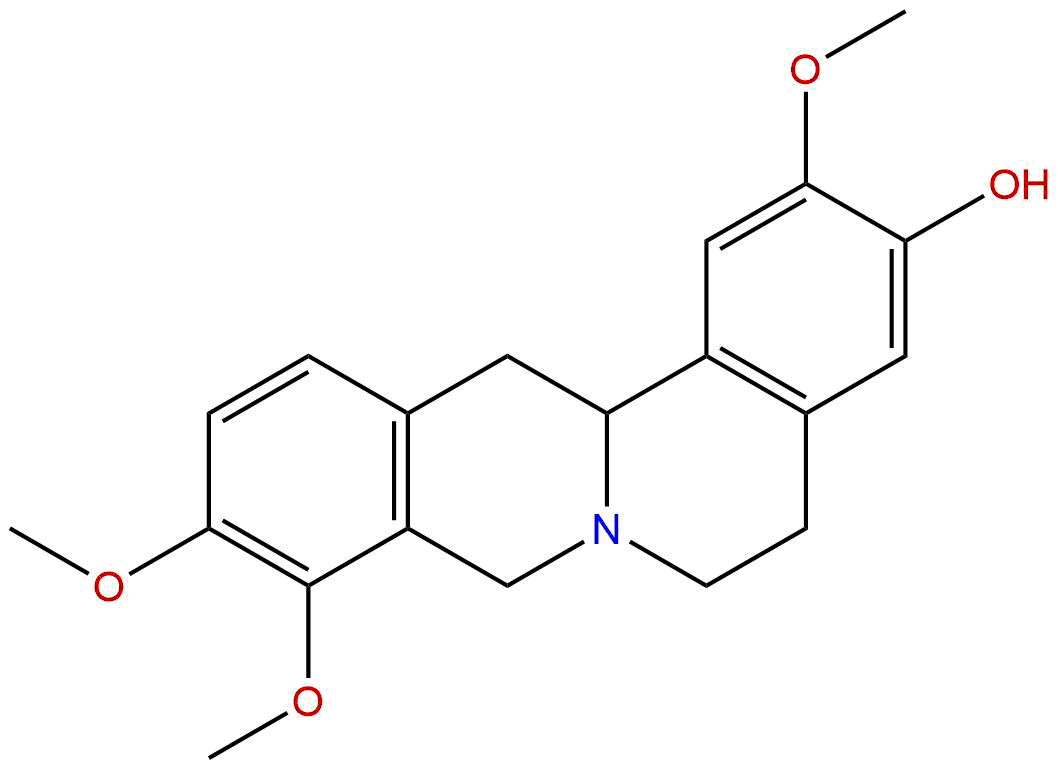
Product name: Corypalmine
Synonym name: 13063-54-2; Tetrahydrojatrorrhizine; (R)-(+)-Corypalmine;D-Corypalmine
Catalogue No.: BP3002
Cas No.: 27313-86-6
Formula: C20H23NO4
Mol Weight: 341.407
Botanical Source:
Physical Description: Powder
Type of Compound: Alkaloids
Purity: 95%~99%
Analysis Method: HPLC-DAD or/and HPLC-ELSD
Identification Method: Mass, NMR
Packing: Brown vial or HDPE plastic bottle
The product could be supplied from milligrams to grams. Inquire for bulk scale.
We provide solution to improve the water-solubility of compounds, thereby facilitating the variety of activity tests and clinic uses.
For Reference Standard and R&D, Not for Human Use Directly.
Storage conditions:Short-term storage at 2~8℃, long-term storage at -20 ~ -80℃
51.1600
2.9044
2.7087
.0527
7.9319
14.4715
High
89.5183
2.9304
No
No
No
No
No
No
0.6
No
No
No
No
Natural products, as an important source of drug discovery, play an irreplaceable role in the long struggle between humans and diseases. Especially alkaloids derived from traditional medicinal plants, due to their structural diversity and significant biological activity, have always been a hot topic in medicinal chemistry and pharmacology research. Among numerous isoquinoline alkaloids, Corypalmine, with its unique pharmacological spectrum and potential therapeutic value, has gradually attracted widespread attention in the academic community.
Tetrahydrogen alkaloids are a type of protoberberine alkaloid, originally derived from the family Menispermaceae plant Golden Thread Hanging Turtle(Stephania cepharantha Isolation and identification in Hayata. Golden thread hanging turtle, as a traditional Chinese medicinal herb, is commonly used in folk medicine to treat sore throat, rheumatism, and various inflammatory diseases. Modern plant chemistry research has revealed that this plant is rich in various bioactive compounds, among which tetrahydroartemisinin is one of the representative compounds. It is worth noting that tetrahydrogen alkaloids are structurally related to the more well-known berberine, but due to their saturated tetrahydropyridine ring, they exhibit completely different physicochemical properties and biological activity characteristics.
From a pharmacological perspective, tetrahydrogen alkaloids exhibit various biological activities. Early research mainly focused on its antifungal effect, confirming its inhibitory effect on various pathogenic fungi. However, in recent years, with the deepening of research, the potential regulatory effect of tetrahydrogen alkaloids in the cardiovascular system, especially their activity against arrhythmia, has become a new research focus. Arrhythmia is a common and dangerous cardiovascular disease in clinical practice, with a complex pathogenesis involving disturbances in the electrophysiological activity of myocardial cells. Although existing antiarrhythmic drugs have certain therapeutic effects, they often come with serious side effects such as arrhythmia. Therefore, it is of great clinical significance to search for lead compounds with novel structures, unique mechanisms of action, and higher safety. The emergence of tetrahydrogen alkaloids has provided new research directions and candidate molecules for this field.
This article aims to systematically review the research progress of tetrahydrogen alkaloids, covering their chemical structure and physicochemical properties, plant sources and extraction methods, pharmacological activity, mechanism of action and molecular targets, pharmacological evaluation and pharmacokinetic characteristics. It also looks forward to their clinical application prospects, in order to provide comprehensive scientific references for the subsequent research and development of this compound.
Corypalmine belongs to the family of berberine alkaloids, and its chemical structure is centered around a partially saturated tetracyclic system. Specifically, its parent nucleus is composed of two fused isoquinoline rings, forming a skeleton with four rings (A, B, C, D rings). Unlike fully aromatic protoberberine such as berberine, the C-ring (i.e. central pyridine ring) of tetrahydrogen alkaloids is reduced to its tetrahydro form, so there is no quaternary ammonium nitrogen atom in its structure, but rather exists in the form of a tertiary amine. This structural difference is a key factor determining its physicochemical properties and biological activity. In terms of substituents, functional groups such as methoxy (- OCH ∝) and hydroxyl (- OH) are usually attached to the A and D rings of tetrahydrogen alkaloids. The position and quantity of these groups may vary in different isomers or analogues, thereby affecting their interaction with biological targets.
From the perspective of physicochemical properties, the molecular weight of tetrahydrogen alkaloids is 341.4070 g/mol, belonging to the category of small molecule compounds, which lays the foundation for their good cell membrane permeability and oral absorption potential. Its lipophilic water partition coefficient (LogP) is 2.9044, indicating that the compound has moderate lipophilicity. According to the Lipinski Five Rules, a LogP value less than 5 is one of the ideal characteristics for oral drug candidate molecules, and the LogP value of tetrahydrogen alkaloids meets this standard, indicating that they may have good transmembrane transport ability. However, its water solubility is only 0.0527 mg/mL, making it a poorly soluble compound. This characteristic is both a challenge and an opportunity in drug development: low water solubility may limit its in vivo absorption and bioavailability, but it can be effectively improved through appropriate formulation techniques such as solid dispersion, nanocrystals, or liposome encapsulation.
Topological Polarity Surface Area (TPSA) is an important parameter for evaluating the passive transport of compounds through cell membranes, particularly closely related to oral absorption and blood-brain barrier penetration. The TPSA of tetrahydrogen alkaloids is 51.16 Å ², far below the recommended upper limit of 140 Å ² for oral medications and below the recommended threshold of 60-70 Å ² for central nervous system drugs. This data strongly suggests that tetrahydrogen alkaloids have high blood-brain barrier penetration. In fact, its blood-brain barrier penetration assessment result is "high", which means that the compound can effectively enter the central nervous system. This characteristic has potential advantages for the development of drugs to treat central nervous system related diseases, such as certain types of neuropathic pain or psychiatric disorders, but at the same time, caution should be exercised about the potential central nervous system side effects it may bring.
In addition, key pharmacological evaluations have shown that tetrahydrogen alkaloids have no inhibitory activity on hERG (human Ether - à - go Related Gene) potassium channels. HERG channel inhibition is one of the main causes of drug-induced QT interval prolongation and fatal arrhythmias (apical torsion ventricular tachycardia), as well as an important risk factor for drug development failure and delisting. Tetrahydrogen alkaloids have no hERG inhibitory activity, which is a major safety advantage as a candidate antiarrhythmic drug. The Ames test result is 0.6, usually indicating no significant mutagenicity under standard testing conditions, which provides a positive toxicological signal for its further development.
The tetrahydrogen root alkaloid mainly comes from plants in the Menispermaceae family, among which the golden thread hanging turtle(Stephania cepharantha Hayata is its most classic source. Golden thread hanging turtle, also known as Baiyaozi or Panhuadi Bu, is mainly distributed in southern China, Japan, Southeast Asia and other regions. Its root is widely used in traditional medicine. In addition, other plants belonging to the same genus, such as those that are not allowed to grow on the ground(Stephania epigaea)Thousand Golden Vines(Stephania japonica)And yellow leaf fields are not allowed(Stephania viridiflavens)It has also been reported to contain tetrahydrogen alkaloids, but the content may vary depending on species, place of origin, harvest season, and location. In addition to the family Menispermaceae, trace amounts have also been found in some plants of the Papaveraceae and Berberidaceae families, but Menispermaceae plants are still the main source in current research.
Extracting tetrahydrogen alkaloids from plant materials usually follows the general principle of alkaloid extraction, which is to utilize their solubility differences under different pH conditions. The classic extraction process includes the following key steps: first, the dried plant material (usually the tubers) is crushed and soaked in an acidic aqueous solution (such as 0.5% -1% hydrochloric acid or sulfuric acid solution) to dissolve the alkaloids in salt form. Subsequently, the acidic extract is filtered and concentrated, and the pH is adjusted to alkaline (pH 9-10) using an alkaline solution (such as ammonia or sodium hydroxide solution) to precipitate free alkaloids. Then, liquid-liquid extraction is performed using organic solvents that are immiscible with water, such as chloroform, dichloromethane, or ethyl acetate, to transfer free alkaloids from the aqueous phase to the organic phase. Finally, the organic solvent was recovered to obtain the crude extract of total alkaloids.
In order to obtain high-purity tetrahydrogen alkaloids monomer, further separation and purification of the crude extract is required. The traditional separation methods include repeated silica gel column chromatography, using solvent systems such as chloroform methanol or petroleum ether acetone with different ratios for gradient elution. Due to the coexistence of tetrahydroartemisinin alkaloids with other structurally similar berberine alkaloids (such as berberine alkaloids, palmatine, etc.), separation is difficult. In recent years, modern chromatographic techniques have been widely used for the purification of this compound. High speed counter current chromatography (HSCCC) utilizes the difference in distribution coefficients of solutes in two-phase solvent systems, without the need for solid supports. It has the advantages of large sample size, high recovery rate, and less irreversible adsorption, making it particularly suitable for the preparation and separation of alkaloid compounds. In addition, preparative high-performance liquid chromatography (Prep HPLC) can achieve high-resolution separation and is an effective means of obtaining high-purity standards. With the promotion of green chemistry concepts, some new extraction technologies, such as ultrasound assisted extraction, microwave-assisted extraction, and enzyme assisted extraction, have also been attempted to improve the extraction efficiency and shorten the extraction time of tetrahydrogen alkaloids, showing good application prospects.
The pharmacological activity research of tetrahydrogen alkaloids has gone through an expansion process from traditional antifungal effects to modern cardiovascular protection, demonstrating multi-target and multi pathway action characteristics.
Antifungal activity It is one of the earliest pharmacological effects discovered by tetrahydrogen alkaloids. Research has shown that tetrahydrogen alkaloids have broad-spectrum inhibitory effects on various pathogenic fungi, including Candida albicans(Candida albicans)Cryptococcus neoformans(Cryptococcus neoformans)And various skin fungi such as Trichophyton rubrum(Trichophyton rubrum)Trichophyton and tinea vaginalis(Trichophyton mentagrophytes). Its antifungal mechanism may be related to the destruction of the integrity and permeability of fungal cell membranes, leading to the leakage of important substances inside the cells, thereby inhibiting fungal growth and even killing fungi. Compared with commonly used azole antifungal drugs such as fluconazole, tetrahydrogen alkaloids have shown activity against certain drug-resistant strains in vitro experiments, suggesting their potential to overcome fungal resistance. However, its antifungal effect and toxicity in vivo still need further evaluation.
Antiarrhythmic effect It is the most prominent field in the research of tetrahydrogen alkaloids in recent years. Arrhythmia, especially atrial fibrillation and ventricular tachycardia, is one of the main causes of sudden cardiac death. Multiple in vitro and in vivo experiments have shown that tetrahydrogen alkaloids can effectively counteract various experimental arrhythmia models. For example, in rat models of arrhythmia induced by aconitine, barium chloride, or coronary artery ligation, intravenous injection of tetrahydrogen alkaloids can significantly delay the onset of arrhythmia, shorten its duration, and reduce arrhythmia scores. Its strength of action is comparable to classical antiarrhythmic drugs such as quinidine or lidocaine, but it exhibits different electrophysiological characteristics. It is worth noting that tetrahydrogen alkaloids did not show significant negative inotropic or arrhythmogenic effects at effective doses, which is highly consistent with their pharmacological evaluation results without hERG inhibitory activity, suggesting that they may have a higher therapeutic safety window.
In addition to the main activities mentioned above, tetrahydrogen alkaloids also exhibit other potential pharmacological effects. Preliminary studies have found that it has certain anti-inflammatory activity and can inhibit the release of pro-inflammatory factors such as tumor necrosis factor - α (TNF - α) and interleukin-6 (IL-6) by macrophages stimulated by lipopolysaccharide (LPS). In addition, based on its high blood-brain barrier penetration, its potential impact on the central nervous system is also worth paying attention to. There are reports that it may have mild sedative and analgesic effects, but relevant research is not yet in-depth.
The pharmacological activity of tetrahydrogen alkaloids, especially their anti arrhythmic effect, is closely related to their regulation of multiple ion channels and receptors. Through techniques such as molecular docking, electrophysiological recording, and gene knockout, researchers have gradually revealed a network map of its mechanism of action.
Direct regulation of ion channels It is the core mechanism of tetrahydrogen alkaloids in treating arrhythmia. The electrical activity of myocardial cells is determined by the coordinated opening and closing of multiple ion channels. Tetrahydrogen alkaloids have been shown to act on multiple key ion channels:
- sodium channel Tetrahydrogen alkaloids can inhibit voltage-gated sodium channels (mainly encoded by the SCN5A gene, Nav1.5)。 This inhibition is usage dependent, with stronger inhibitory effects under high-frequency stimulation, which allows it to preferentially suppress abnormal rapid electrical activity (such as tachycardia) in pathological states, with less impact on normal heart rate. In addition, it may also act on the brain sodium channel SCN1A, which is related to its high blood-brain barrier penetration and potential central effects.
- potassium channels Tetrahydrogen alkaloids have regulatory effects on various potassium channels. It can inhibit fast delayed rectified potassium current (I2 Kr, encoded by KCNH2) and slow delayed rectified potassium current (I2 Ks, encoded by KCNQ1), prolong the action potential duration and effective refractory period of myocardial cells, which is one of its important mechanisms for anti arrhythmic effects. At the same time, it can also block the voltage-gated potassium channel KCNA5 (Kv1.5), which is highly expressed in atrial muscle. Therefore, inhibition of KCNA5 may give it a special advantage in the treatment of atrial fibrillation.
- calcium channel Tetrahydrogen alkaloids have inhibitory effects on both L-type calcium channels (encoded by CACNA1C) and T-type calcium channels (encoded by CACNA1H). Inhibiting calcium influx can reduce calcium overload in myocardial cells, decrease triggering activity, and thus prevent and terminate ventricular arrhythmias triggered by early and delayed depolarization.
Regulation of G protein coupled receptors Further enriched its mechanism of action. Tetrahydrogen alkaloids have been found to interact with various G protein coupled receptors closely related to cardiac function:
- Muscarinic acetylcholine receptor Especially exhibiting antagonistic effects on the M2 receptor (CHRM2). The M2 receptor is the main receptor of the cardiac parasympathetic nervous system, and its activation can slow down heart rate and reduce atrioventricular conduction velocity. The antagonistic effect of tetrahydrogen alkaloids on M2 receptors may help counteract bradycardia caused by excessive excitation of the vagus nerve.
- β 2-adrenergic receptor It has a regulatory effect on ADRB2. Overactivation of β receptors is an important factor leading to arrhythmia and heart failure, and tetrahydrogen alkaloids may exert cardioprotective effects by partially blocking β 2 receptors.
- α 7-nicotinic acetylcholine receptor The regulatory effect of CHRNA7 may be related to its anti-inflammatory effect, as this receptor is expressed in immune cells and participates in the cholinergic anti-inflammatory pathway.
In summary, tetrahydrogen alkaloids do not act on a single target, but exert their anti arrhythmic effects through a "multi-target, multi pathway" network regulation mode. This "multi pharmacological" feature may have better efficacy and lower risk of drug resistance in the treatment of complex arrhythmia diseases, but it also increases the complexity of accurately understanding its pharmacological effects and predicting potential side effects.
The conversion of tetrahydrogen alkaloids from active natural products into clinically available drugs requires a systematic evaluation of their pharmacological properties, with pharmacokinetic characteristics being a key step.
Based on its physicochemical properties (molecular weight 341.4, LogP 2.9, TPSA 51.2 Å ²), tetrahydrogen alkaloids meet the basic requirements for oral medication. However, its extremely low water solubility (0.0527 mg/mL) is the main limiting step for oral absorption. It is expected that its oral bioavailability may be low, and individual differences may also be significant. Therefore, when developing oral formulations, solubilization techniques must be used, such as preparing them into salts (such as hydrochloride and sulfate salts), using cyclodextrin inclusion complexes, solid dispersions, or lipid nanoparticles. In contrast, intravenous administration can completely avoid absorption problems and directly exert drug efficacy, making it an ideal route of administration in the treatment of acute arrhythmias.
In terms of distribution, the high blood-brain barrier penetration of tetrahydrogen alkaloids is a double-edged sword. For the treatment of central nervous system diseases, this is an advantage; But for drugs primarily used to treat cardiovascular diseases, this may lead to central nervous system side effects such as dizziness, drowsiness, or cognitive impairment. Therefore, in drug design, it may be necessary to reduce its blood-brain barrier penetration through structural modifications, or to reduce systemic distribution through local administration (such as transdermal administration). Its apparent distribution volume (Vd) is expected to be relatively large, indicating a widespread tissue distribution.
Metabolism and excretion are the key factors determining the duration of drug action. Tetrahydrogen alkaloids, as isoquinoline alkaloids, are mainly metabolized in the liver and may involve O-demethylation, hydroxylation, and glucuronic acid or sulfate binding reactions catalyzed by cytochrome P450 enzyme systems (especially CYP2D6 and CYP3A4). Its metabolites may retain some biological activity or produce toxicity. The main excretion pathway may be renal excretion, with some excretion through bile. Due to the significant genetic polymorphism of CYP2D6, there may be significant differences in the metabolic rate of tetrahydrogen alkaloids among individuals, which requires attention in clinical applications.
In terms of safety evaluation, in addition to the aforementioned lack of hERG inhibitory activity and negative Ames test results, more comprehensive toxicological studies are needed, including acute toxicity, long-term toxicity, reproductive toxicity, and genetic toxicity. Preliminary animal experiments have shown that the LD50 (median lethal dose) of tetrahydrogen alkaloids is relatively high, and the therapeutic index (TI) may be ideal, but the specific values vary depending on the animal species and administration route. Given its high blood-brain barrier penetration, special attention needs to be paid to its central nervous system toxicity, such as its impact on motor coordination, memory, and sleep.
As a natural product with unique pharmacological activity, tetrahydrogen alkaloids have broad clinical application prospects, especially in the field of cardiovascular and cerebrovascular diseases, showing great potential.
Development of antiarrhythmic drugs This is its most direct application direction. Given its multi-target mechanism of action and good safety characteristics (without hERG inhibition), tetrahydrogen alkaloids are expected to be developed as a novel class of antiarrhythmic drugs. Especially for atrial fibrillation, its selective inhibition of KCNA5 (Kv1.5) channel may make it an "atrial selective" drug, effectively treating atrial fibrillation while reducing the risk of ventricular arrhythmia. In addition, for refractory ventricular arrhythmias, especially those related to calcium overload and triggering activity, tetrahydrogen alkaloids may provide a new treatment option. In the future, more preclinical studies are needed to optimize its pharmacokinetic properties and ultimately enter the clinical trial phase.
Supplementation of antifungal drugs Although antifungal activity is its traditional activity, given the increasingly severe problem of resistance to existing antifungal drugs, the unique antifungal mechanism of tetrahydrogen alkaloids makes it a potential candidate molecule for combination therapy with azole or polyene drugs to enhance efficacy and overcome resistance. Developing topical formulations (such as creams and lotions) for the treatment of superficial fungal infections may be a more realistic short-term goal.
Research on Structure Modification and Structure Activity Relationship It is a key way to enhance the pharmacological properties of tetrahydrogen alkaloids. By chemically modifying its parent nucleus, such as introducing different substituents, changing the saturation degree of the ring, or constructing new heterocyclic systems, it is expected to obtain derivatives with stronger activity, higher selectivity, and better pharmacokinetic properties. For example, the water solubility can be improved by introducing hydrophilic groups such as phosphate esters and amino acid esters; By modifying specific positions of methoxy or hydroxyl groups, their selectivity towards different ion channels or receptors can be adjusted.
The Application of Modern Formulation Technology It will effectively overcome the inherent defects of tetrahydrogen alkaloids. Nano delivery systems such as liposomes, nanoparticles, and polymer micelles can not only improve their water solubility, but also achieve targeted delivery (such as targeting myocardial cells or atrial tissue), increase local drug concentration, and reduce systemic side effects. For oral administration, solid dispersion technology is an effective means to improve its dissolution and bioavailability.
Tetrahydrogen alkaloids, a berberine type alkaloid derived from the traditional Chinese medicine Golden Thread Hanging Turtle, are undergoing a transformation from classic antifungal natural products to modern cardiovascular drug lead compounds. Its unique chemical structure - a partially saturated four ring skeleton - endows it with physicochemical properties and pharmacological activity spectrum that are completely different from its berberine counterparts. Through precise regulation of multiple key ion channels (sodium, potassium, calcium channels) and G protein coupled receptors (M2, β 2, α 7 receptors) in cardiomyocytes, tetrahydrogen alkaloids exhibit a multi-target, networked anti arrhythmic mechanism without the fatal side effect of hERG inhibition, demonstrating good safety potential.
However, the path from laboratory discovery to clinical application remains challenging. The potential central side effects caused by its extremely low water solubility, high blood-brain barrier penetration, and unclear metabolic processes in the body are all obstacles that must be overcome in the development of its drug properties. Future research should focus on the following aspects: firstly, to deeply elucidate its structure-activity relationship and obtain better candidate molecules through systematic structural modification; The second is to develop advanced drug delivery systems and improve their pharmacokinetic properties; Thirdly, conduct comprehensive toxicological and pharmacological evaluations to clarify the treatment window and potential risks; The fourth is to explore its synergistic effects with other drugs and expand its clinical application scope.
In short, tetrahydrogen alkaloids, as a precious gem in the treasure trove of natural products, have yet to fully explore their research value. With the continuous advancement of modern medicinal chemistry, pharmacology, and pharmaceutical technology, we have reason to believe that tetrahydrogen alkaloids and their derivatives have the potential to provide new, safer, and more effective drug options for the treatment of diseases such as arrhythmia in the future, continuing the glorious chapter of natural products in human health.
Batch can search by a CAS number,one per line
