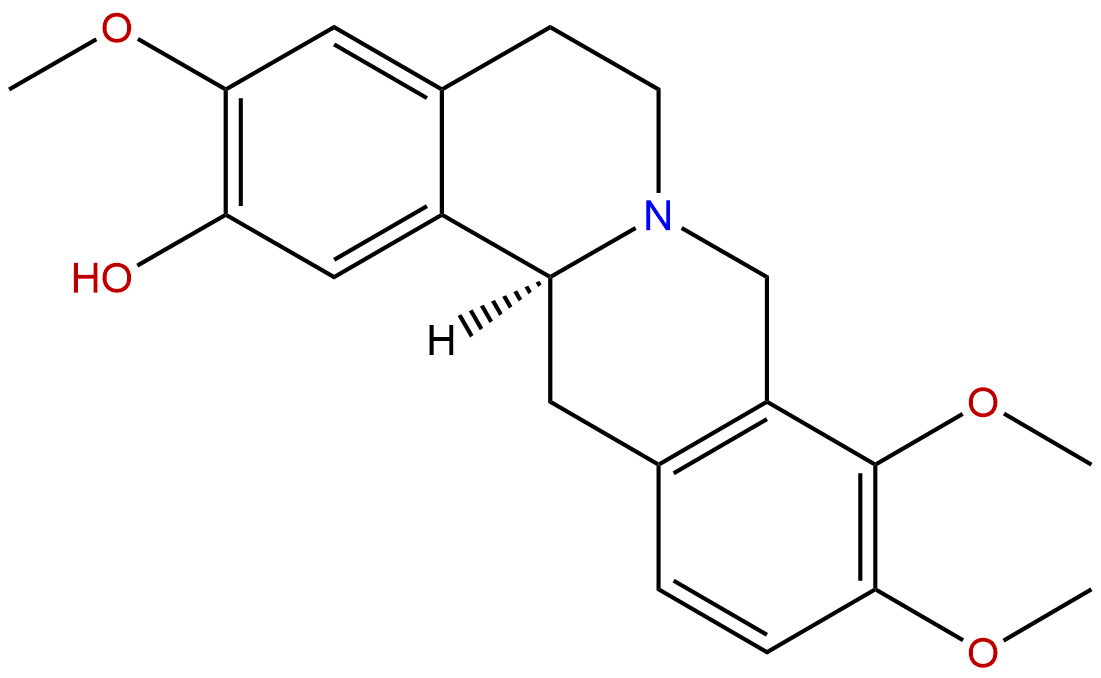


Product name: Tetrahydrocolumbamine
Synonym name:
Catalogue No.: BP3384
Cas No.: 483-34-1
Formula: C20H23NO4
Mol Weight: 341.407
Botanical Source:
Physical Description: Powder
Type of Compound: Alkaloids
Purity: 95%~99%
Analysis Method: HPLC-DAD or/and HPLC-ELSD
Identification Method: Mass, NMR
Packing: Brown vial or HDPE plastic bottle
The product could be supplied from milligrams to grams. Inquire for bulk scale.
We provide solution to improve the water-solubility of compounds, thereby facilitating the variety of activity tests and clinic uses.
For Reference Standard and R&D, Not for Human Use Directly.
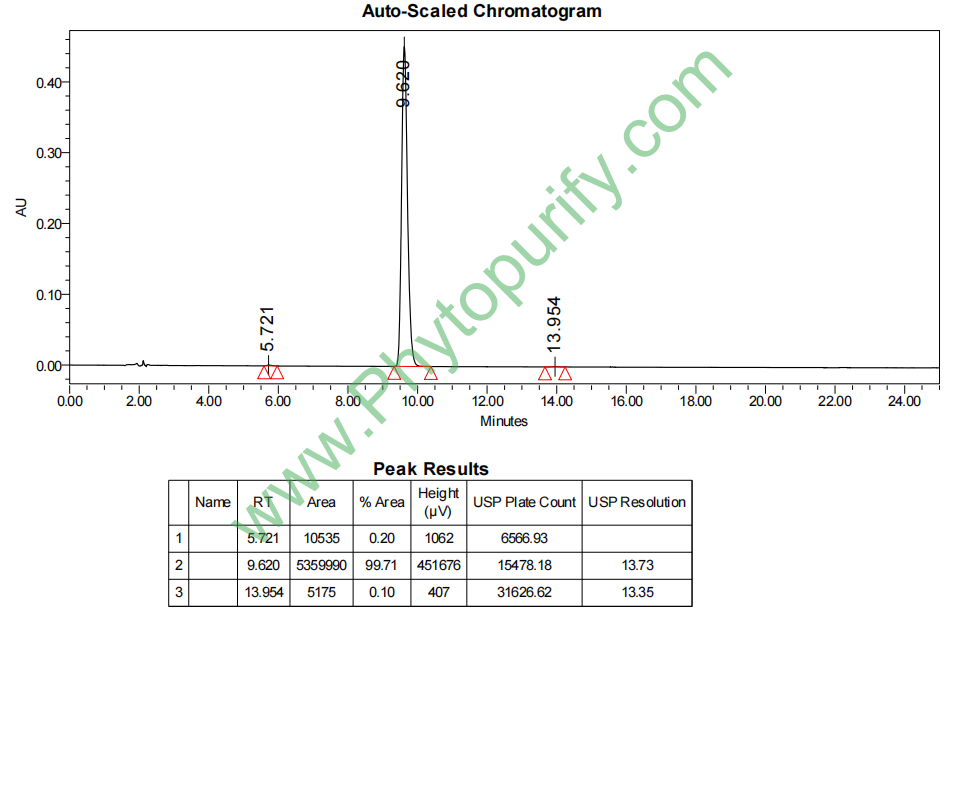
HPLC of Tetrahydrocolumbamine
Storage conditions:Short-term storage at 2~8℃, long-term storage at -20 ~ -80℃
51.1600
2.9703
2.7503
.0513
7.5213
17.3407
High
90.0381
2.9296
No
No
No
No
No
No
0.6
No
No
No
No
Natural products, especially alkaloids derived from plants, occupy a pivotal position in the history of human drug discovery. Berberine alkaloids, as an important class of isoquinoline alkaloids, are widely distributed in various plants such as Papaveraceae, Menispermaceae, Ranunculaceae, etc., and have attracted much attention for their rich and diverse biological activities. Tetrahydrocolumbamine (CAS: 483-34-1), as a member of the berberine alkaloid family, is the fully hydrogenated reduced form of Columbamine and has the (S) - configuration. Although there has been relatively more research on its parent compound, tetrahydro African tetrazine, its unique pharmacological value, especially its multi-target potential in the field of analgesia, is gradually becoming an emerging hotspot in natural product pharmacology research. In traditional medicine, plants containing such alkaloids are often used for purposes such as pain relief and anti-inflammatory, providing valuable clues for modern scientific research. This article aims to provide a systematic review of the chemical properties, plant sources, pharmacological activities, molecular mechanisms of action, pharmacological properties, and clinical application prospects of tetrahydro African tetrazine, in order to provide comprehensive scientific references for the in-depth research and potential drug development of this compound.
The chemical name of tetrahydro African tetrazine is (S) -2,3,9,10-tetramethoxy-5,8,13,13a-tetrahydro-6H-dibenzo [a, g] quinoline, with a molecular formula of C20H25NO4 and a molecular weight of 341.4070. Structurally, it is an organic heterocyclic compound with a core skeleton of dibenzo [a, g] quinoline. Unlike the parent compound African tetrazine (which has an isoquinolinium cation structure), tetrahydroAfrican tetrazine undergoes complete hydrogenation reduction at positions 5, 8, 13, and 13a, transforming it from a planar aromatic system to a partially saturated stereo structure and introducing a chiral center, naturally existing in the (S) - configuration. This structural transformation profoundly affects its physicochemical properties and biological activity.
In terms of physicochemical properties, the calculated lipid water partition coefficient (LogP) is 2.9703, indicating that the compound has moderate lipophilicity, which is beneficial for its penetration into cell membranes. The topologically polar surface area (TPSA) is 51.1600 Å ², which is relatively low and further supports its good membrane permeability. Its water solubility data is 0.0513 mg/mL, which belongs to the category of slight solubility, indicating that solubilization strategies may need to be considered in formulation development. The key pharmacological predictions indicate that tetrahydropalmatine has a high blood-brain barrier permeability potential, which is crucial for its action on central nervous system targets such as opioid receptors, dopamine receptors, etc. to achieve analgesic effects. In addition, preliminary toxicity predictions showed a negative risk of hERG inhibition, and the Ames test (mutagenicity) predicted a value of 0.6 (usually considered a higher risk of>1.0), suggesting that it may have a lower risk of early cardiac and genetic toxicity, laying a niche foundation for subsequent development.
Tetrahydrofluorouracil is mainly found in various plants of the Menispermaceae and Papaveraceae families. In plants of the family Menispermaceae, such as African Menispermaceae(Jateorhiza palmata)And various species of the genus Tripterygium(Stephania)The genus of green cowhide(Tinospora)In plants, this compound and its related alkaloids can often be detected. In poppy plants, especially poppies(Papaver somniferum)And some Artemisia species(Meconopsis)In plants, it is also a component of their complex alkaloid composition.
The extraction and separation method follows the conventional process of natural product chemistry. Firstly, the dried plant roots, stems, and other parts are crushed and subjected to cold soaking or reflux extraction using methanol, ethanol, or acidic aqueous solution (such as methanol containing 1% hydrochloric acid) to fully dissolve the alkaloids. After concentration, the extract is dissolved in acidic water, and insoluble substances are filtered out. The acidic water is then alkalized (usually with ammonia or sodium hydroxide) to a pH of 9-10, allowing the alkaloids to precipitate freely. Subsequently, organic solvents such as chloroform, dichloromethane, or ethyl acetate are used for extraction to obtain the total alkaloid fraction.
Further purification relies on chromatographic techniques. The silica gel column chromatography method is commonly used for preliminary separation using gradient elution systems such as chloroform methanol or dichloromethane methanol. Due to the close physical and chemical properties of tetrahydro African tetrazine and other structurally similar berberine or protoberberine alkaloids, separation is difficult and usually requires the combination of high performance liquid chromatography (HPLC), especially preparative reverse phase HPLC (using C18 column, methanol water or acetonitrile water system, sometimes adding a small amount of buffer salt such as triethylamine) for final purification. Modern technologies such as high-speed countercurrent chromatography (HSCCC) also provide powerful tools for efficient and gentle separation of such alkaloids. Structural identification is accomplished through methods such as nuclear magnetic resonance (NMR, including 1H, 13C, 2D NMR), mass spectrometry (MS), and specific rotation determination.
The most notable pharmacological activity of tetrahydro African tetrazine is concentrated in its analgesic properties, but its effects extend far beyond that, exhibiting multiple biological activities.
1. Analgesic activity:
This is the core of research on tetrahydro African tetrazine. A large number of in vivo pharmacological experiments have confirmed that it exhibits significant analgesic effects in various pain models, including acetic acid-induced twisting response in mice (chemical stimulation pain), hot plate and tail flick experiments (thermal stimulation pain), and formalin experiments (early neurogenic pain and late inflammatory pain). Its analgesic effect can be compared with some classic analgesics in different models, and its duration of action is relatively long. Importantly, preliminary research suggests that its analgesic effect may not be entirely dependent on the traditional opioid receptor pathway, suggesting that it has a mechanism of action different from potent opioid drugs such as morphine, which may lead to lower addiction and respiratory depression risks.
2. Anti inflammatory activity:
Pain and inflammation often go hand in hand. Research has shown that tetrahydro African tetrazine can effectively inhibit edema and reduce the levels of inflammatory mediators such as prostaglandin E2 (PGE2) at the site of inflammation in acute and chronic inflammation models induced by carrageenan or Freund's complete adjuvant in rats. Its anti-inflammatory effect provides an important basis for its synergistic analgesia.
3. Other potential activities:
Based on the structural background of its berberine alkaloids, the study also suggests that it may have other potential activities. For example, some studies have shown that it has a proliferative inhibitory effect on certain tumor cell lines, which may involve inducing cell cycle arrest and apoptosis. In addition, there have been reports of its potential regulatory effects on the cardiovascular system, such as mild antihypertensive and antiarrhythmic activity, but these studies are still in the preliminary stage and need further validation.
The analgesic effect of tetrahydropalmatine is not achieved through a single target, but presents a multi-target, networked regulatory feature, which is consistent with its complex chemical structure. Existing research has revealed interactions with multiple pain related targets:
In summary, tetrahydropalmatine may form a synergistic analgesic network by simultaneously acting on multiple pain signaling nodes in the peripheral (TRPV1/TRPA1, COX) and central (opioid receptors, CB1 receptors, monoamine system) regions. This multi-target mode of action is expected to have better therapeutic effects on complex chronic pain, especially those that are insensitive to single target drugs.
Based on calculations and preliminary experimental data, tetrahydropalmatine has shown certain potential as a drug, but its comprehensive pharmacokinetic characteristics still need to be systematically studied.
Drug Evaluation:
As mentioned earlier, its moderate LogP and lower TPSA indicate good membrane permeability and oral absorption potential. The prediction of high blood-brain barrier permeability is a key advantage for its use in central analgesia. HERG inhibition negative and lower Ames test risk prediction provide preliminary positive signals for its safety. However, the primary obstacle that needs to be overcome in the development of its formulation is its slight water solubility, which may require the use of salt (such as hydrochloride, phosphate), cyclodextrin inclusion, nanocrystals, or liposomes delivery systems to improve its solubility and bioavailability.
Pharmacodynamics (based on speculation and preliminary studies of similar substances):
At present, there are relatively few research reports on the pharmacokinetics of tetrahydroberberine and tetrahydropalmatine systems in Africa, but reasonable speculation can be made by referring to the study of their structural analogues (such as tetrahydroberberine and tetrahydropalmatine). It is expected that after oral administration, it will be well absorbed in the intestine, but there may be a first pass effect. Widely distributed in the body, due to its lipophilicity, it may accumulate in tissues such as fat and liver, and more importantly, it can be distributed to the central nervous system. In terms of metabolism, as an isoquinoline alkaloid, its metabolism may mainly occur in the liver, involving reactions such as oxidation and demethylation of cytochrome P450 enzymes (such as CYP2D6, CYP3A4), as well as subsequent glucuronidation or sulfation binding reactions. Metabolites are mainly excreted through urine and bile. Future research needs to clarify its absolute bioavailability, half-life, major metabolites and activities, as well as potential drug drug interaction risks.
Tetrahydrofluorouracil, as a natural small molecule with a unique multi-target analgesic mechanism, has a clinical application prospect mainly focused on pain management, especially in the treatment of chronic pain.
1. New options for pain treatment: In the field of neuropathic pain, cancer pain, chronic inflammatory pain (such as arthritis) and other existing drugs (such as opioid addiction and high side effects, NSAIDs have gastrointestinal and cardiovascular risks, and gabapentin drugs have limited efficacy and many side effects) with poor efficacy or prominent side effects, the multi-target, non single strong opioid dependent mechanism of action of tetrahydroAfrican tetrazine may provide a new, safer and more effective treatment option. It may serve as a substitute or adjuvant medication for first-line drugs.
2. Development of compound preparations: Considering its multi-target nature, it can be explored to combine it with low-dose analgesics with other mechanisms of action, such as acetaminophen and selective COX-2 inhibitors, to form a compound formulation that enhances efficacy through synergistic effects, while reducing the dosage of each individual drug to minimize side effects.
3. Management of symptoms related to neurological disorders: Its potential to regulate dopamine D2 receptors and 5-HT system also suggests its potential application value in the management of symptoms such as pain or sensory abnormalities associated with Parkinson's disease and depression.
However, there are still many challenges to clinical application:
* Deepening basic research: More precise in vitro and in vivo studies are needed to clarify its properties of action (excitation/antagonism/regulation), efficacy, and selectivity towards various targets, and to draw clearer pharmacological action network diagrams.
* Systematic pharmacokinetics and toxicology research: A comprehensive preclinical pharmacokinetic, safety pharmacology, and long-term toxicology evaluation must be completed to clarify its treatment window.
* Formulation optimization: Resolve its water solubility issue and develop stable formulations suitable for different routes of administration (oral, transdermal, injection).
* Clinical validation: Ultimately, its effectiveness, safety, and pharmacokinetic characteristics in humans need to be validated through rigorous clinical trials (phases I-III).
TetrahydroAfrican tetrazine, a (S) - configuration berberine alkaloid derived from plants, exhibits pharmacological activity with multi-target analgesia as its core and multiple potential anti-inflammatory effects due to its unique tetrahydroisoquinoline structure. It constructs a complex analgesic signaling regulatory network by synergistically regulating multiple pain related targets such as TRP channels, endocannabinoid system, opioid receptors, cyclooxygenase, and monoamine system. Although its physical and chemical properties such as water solubility pose certain challenges, its good membrane permeability, high blood-brain barrier permeability potential, and initially predicted low toxicity risk provide a favorable basis for its drug development. The current research is still in the preclinical stage, and further exploration is needed in the precise analysis of its mechanism of action, systematic pharmacokinetics, toxicology, and formulation technology in the future. With the continuous advancement of research, tetrahydropalmatine is expected to develop from a traditional phytochemical component into an innovative drug candidate molecule for the treatment of chronic pain and other difficult to treat diseases, injecting new natural vitality into modern drug development.
