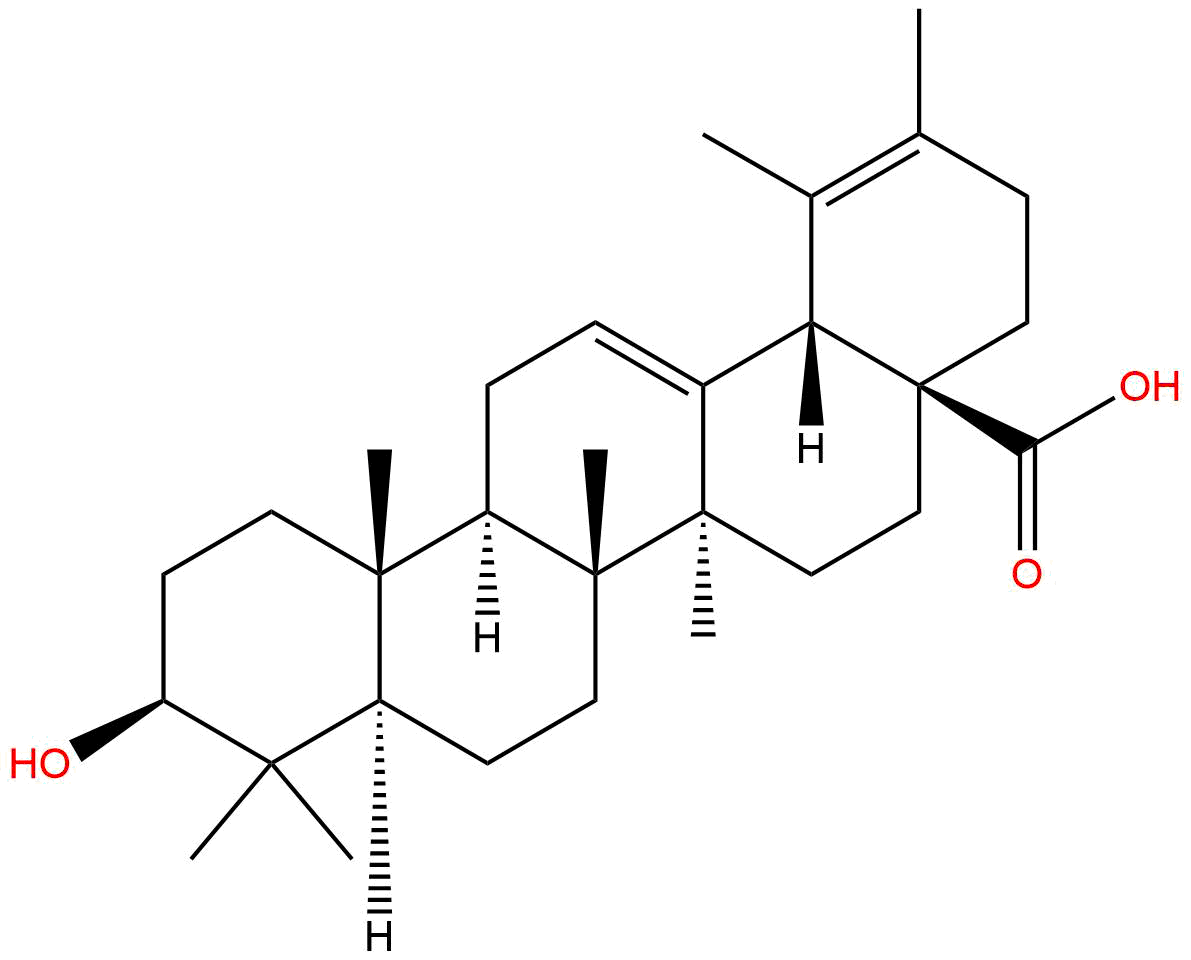


Product name: Sanguisorbigenin
Synonym name: 19-Dehydroursolic acid
Catalogue No.: BP4591
Cas No.: 6812-98-2
Formula: C30H46O3
Mol Weight: 454.695
Botanical Source:
Type of Compound: Triterpenoids
Purity: 95%~99%
Analysis Method: HPLC-DAD or/and HPLC-ELSD
Identification Method: Mass, NMR
Packing: Brown vial or HDPE plastic bottle
Storage: Store in a well closed container, protected from air and light. Put into refrigerate or freeze for long term storage.
Whenever possible, you should prepare and use solutions on the same day. However, if you need to make up stock solutions in advance, we recommend that you store the solution as aliquots in tightly sealed vials at -20℃. Generally, these will be useable for up to two weeks.
The product could be supplied from milligrams to grams
Inquire for bulk scale.
For Reference Standard and R&D, Not for Human Use Directly.
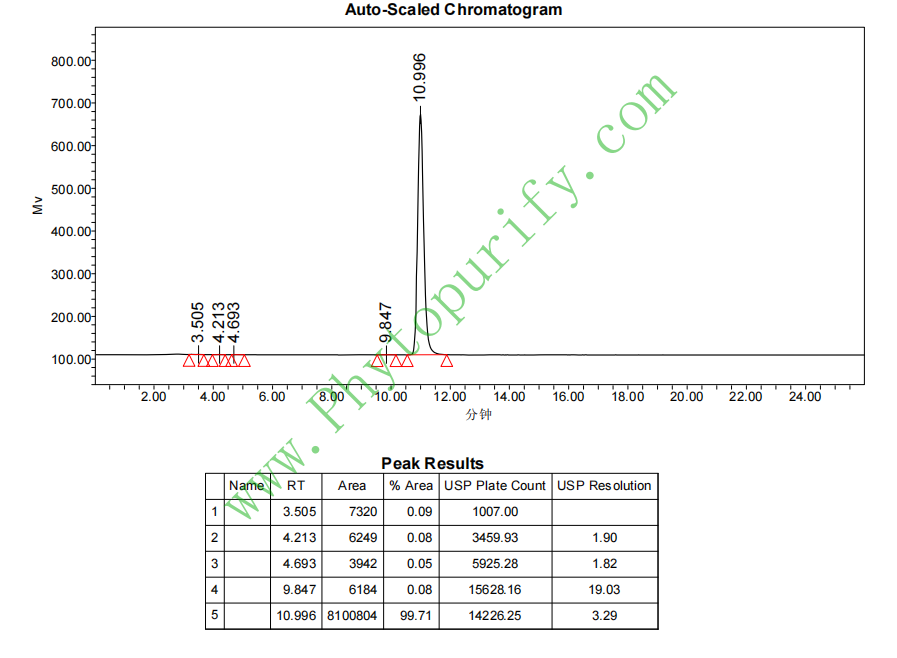
HPLC of Sanguisorbigenin
Storage conditions:Short-term storage at 2~8℃, long-term storage at -20 ~ -80℃
57.5300
6.5991
4.7918
.0017
5.6041
9.5115
Low
93.5036
4.8446
No
No
No
No
No
No
0.0
No
No
Yes
No
In the long river of natural product chemistry and pharmacology research, saponin compounds have always occupied a central position due to their extensive and significant biological activities. Sanguisorbigenin, as a type of triterpenoid sapogenin with a unique skeleton, has increasingly highlighted its research value. This compound is mainly derived from the traditional hemostatic herb Diyu(Sanguisorba officinalis L. The root of Sanguisorbigenin, also known as Sanguisorbigenin, is derived from this. Early research focused more on its role as a common glycoside of various saponins (such as saponins I, II, etc.) in Eucommia ulmoides, which is one of the important material foundations for the astringent and hemostatic effects of Eucommia ulmoides. With the deepening of modern pharmacological research, the biological activity spectrum of Ulmus chinensis saponins continues to expand, especially its potential to inhibit multidrug-resistant strains such as methicillin-resistant Staphylococcus aureus (MRSA), which has given it new research connotations. MRSA infection is a major challenge in the global public health field, and the development of new antibacterial drugs is urgent. This makes the discovery of natural antibacterial agents such as dioscin from Ulmus officinalis of great strategic significance. Meanwhile, its multiple coagulation and anticoagulation targets traditionally associated with hemostatic function, such as SERPINE1, coagulation factors II, VII, IX, X (F2, F7, F9, F10), also suggest that it may have a complex multi-target mechanism of action in regulating coagulation fibrinolysis balance. This article aims to systematically review the chemical structure, plant origin, pharmacological activity, mechanism of action, pharmacological evaluation, and clinical application prospects of Ulmus chinensis saponins, in order to provide comprehensive scientific references for the in-depth development and utilization of this natural product with dual potential (antibacterial and hemostatic).
Diyu sapogenin (CAS number: 6812-98-2) is a pentacyclic triterpenoid compound, specifically belonging to the Oleanane type triterpenoid sapogenin. Its molecular formula is C30H46O4 and its molecular weight is 454.6950. Its core structure is composed of five hexagonal rings (A/B/C/D/E rings) fused together, exhibiting a typical trans trans cis fused ring system of oleanane type triterpenes. The structural feature is that the C-28 position usually exists in the form of a carboxyl group (often forming ester glycosidic bonds with the sugar chain in saponins), the C-3 and C-23 positions are often connected to hydroxyl groups, and there is a double bond (Δ 12) between the C-12 and C-13 positions. These functional groups are important active sites.
From the analysis of the parameters related to medicinal properties, the saponins of Ulmus chinensis exhibit typical lipophilic characteristics. The calculated lipid water partition coefficient (LogP) is 6.5991, indicating strong lipid solubility, which is consistent with the hydrophobic structure of its triterpenoid parent nucleus. Consistent with this, its water solubility is extremely low, only 0.0017 mg/mL, which may affect its dissolution and absorption in living organisms. The topologically polar surface area (TPSA) is 57.53 Å ², which is relatively small, further confirming its low molecular polarity. These physical and chemical properties determine the basic behavior of Diyu saponin in vivo: it is difficult to penetrate the blood-brain barrier (predicted as low permeability), which to some extent limits its application in central nervous system infections, but may also reduce the risk of central neurotoxicity. In terms of preliminary safety prediction, its hERG inhibitory activity is' no ', indicating a low potential risk of causing QT interval prolongation in the heart. The Ames test result is 0.0, indicating that under this predictive model, its mutagenic risk is negative, but further experimental verification is needed. Overall, dioscin is a triterpenoid compound with high lipid solubility and low water solubility, and its medicinal development needs to focus on addressing solubility and bioavailability issues.
The main source of saponins in Ulmus officinalis is from plants in the Rosaceae family, especially medicinal Ulmus officinalis(Sanguisorba officinalis L. Dry roots. In addition, in plants of the same genus such as the long leaved elm(S. officinalis var. longifolia)Waiting also exists. In the elm plant, elm saponins are not abundant in free form, but act as glycosides that bind to various sugar chains (such as arabinose, glucose, etc.) through glycosidic bonds, forming a series of structurally complex elm saponins (such as Sanguisorbin A, B, Ziyuglycoside I, II, etc.). Therefore, obtaining saponins from Eucommia ulmoides usually requires extracting total saponins from plant materials and then undergoing hydrolysis steps.
Traditional extraction methods often use solvent extraction. The general process is to dry and crush the roots of Eucommia ulmoides, and then use polar solvents such as methanol, ethanol, or aqueous ethanol for heating reflux or ultrasound assisted extraction to obtain the crude extract. After defatting with petroleum ether and other solvents, the crude extract is repeatedly extracted with water saturated n-butanol to obtain a saponin rich fraction. Subsequently, the part is subjected to heating hydrolysis under acidic conditions (such as dilute alcohol solutions of hydrochloric acid or sulfuric acid) to break the glycosidic bonds in the saponins and release the aglycones. After neutralization, extraction (commonly using chloroform or ethyl acetate), silica gel column chromatography, recrystallization and other separation and purification steps, the hydrolysis product can finally obtain high-purity Diyu sapogenin.
Modern extraction and separation technologies provide more options for improving efficiency and purity. For example, using macroporous adsorption resins such as AB-8 and D101 to enrich and purify total saponins, combined with high-speed countercurrent chromatography (HSCCC) or preparative high-performance liquid chromatography (HPLC) for separation, can more efficiently obtain monomeric saponins, which can then be hydrolyzed or enzymatically hydrolyzed to obtain aglycones. In recent years, there have also been studies exploring biotransformation or chemical synthesis pathways to obtain saponins and their derivatives from Eucommia ulmoides, in order to solve the problem of limited plant sources, but it is still in the laboratory stage.
The pharmacological activity research of Eucommia ulmoides saponins shows a multi effect characteristic, mainly focusing on antibacterial, hemostatic, and related anti-inflammatory, antioxidant aspects.
Antibacterial activity This is one of the most noteworthy activities of Ulmus chinensis saponins in recent years. Research has shown that it has inhibitory effects on various Gram positive bacteria, especially on the clinically challenging drug-resistant strain MRSA. In vitro antibacterial experiments have shown that dioscin can effectively destroy the integrity of MRSA cell membrane, leading to leakage of intracellular contents and inhibiting the formation of biofilm, which is a key factor in bacterial resistance and persistent infection. Its antibacterial activity may be related to its hydrophobic structure being able to insert into the phospholipid bilayer of bacterial cell membranes. In addition, it also has inhibitory effects on Staphylococcus aureus, Staphylococcus epidermidis, etc., but has poor effects on most Gram negative bacteria.
Hemostasis and coagulation related activities The hemostatic effect of Eucommia ulmoides has a long history, and Eucommia ulmoides saponins, as one of its main active ingredients, play an important role in this regard. Research has shown that dioscin can shorten the bleeding time and clotting time of mice. Its function is not simply to promote coagulation, but may regulate the balance of the coagulation fibrinolysis system through multiple targets. For example, it may affect key factors in endogenous or exogenous coagulation pathways and regulate the activity of plasminogen activator inhibitor-1 (PAI-1, encoded by the SERPINE1 gene), thereby promoting local hemostasis while avoiding systemic hypercoagulability.
Anti inflammatory and immune regulatory activity Inflammation is closely related to tissue repair after infection and bleeding. Research has shown that dioscin can inhibit the excessive production of pro-inflammatory mediators such as nitric oxide (NO), prostaglandin E2 (PGE2), tumor necrosis factor - α (TNF - α), and interleukin-6 (IL-6) in various inflammatory models, such as LPS induced macrophage inflammation model. The mechanism may be related to the inhibition of the activation of nuclear factor kappa B (NF - κ B) and mitogen activated protein kinase (MAPK) signaling pathways.
antioxidant activity As a triterpenoid compound, dioscin has a certain ability to scavenge free radicals, such as DPPH radicals and hydroxyl radicals. This antioxidant activity helps alleviate tissue oxidative damage caused by reactive oxygen species (ROS) at the site of infection or bleeding, assists in anti-inflammatory and promotes healing.
Other activities Preliminary studies also suggest that Diyu saponin may have anti ulcer and mild cytotoxic activity (targeting certain tumor cell lines), but related research is not yet in-depth.
The pharmacological effects of Eucommia ulmoides saponins, especially their antibacterial and hemostatic activities, involve the regulation of multiple molecular targets.
1. Antibacterial mechanism and potential targets:
The main mechanism of the anti MRSA effect of Diyu saponins may be based on their physical and chemical properties that damage bacterial cell membranes. Its high LogP value indicates strong lipophilicity, making it easy to bind and insert into bacterial cell membranes (especially Gram positive bacterial cell membranes rich in phospholipids), disrupting the ordered arrangement of membrane lipid bilayers, increasing membrane permeability, leading to ion imbalance, ATP leakage, and content efflux, ultimately causing bacterial death. In addition, research has found that it can inhibit MRSA biofilm related genes, such as icaA)The expression of this substance interferes with the synthesis of extracellular polysaccharide matrix, thereby preventing the formation and maturation of biofilms. At present, the specific protein targets it binds to are not yet clear, and its role may be more biased towards multi-target membrane interference mechanisms.
2. Mechanisms and targets related to hemostasis and coagulation:
The regulatory effect of Diyu saponin on hemostasis is more complex, involving multiple coagulation and anticoagulation targets, reflecting the synergistic characteristics of multiple targets:
* Coagulation factors (F2, F7, F9, F10)These are the core proenzymes of the coagulation cascade reaction. Research has shown that extracts or their components from Eucommia ulmoides can affect the activity or expression of these factors. Diyu saponins may activate or upregulate some coagulation factors (especially exogenous pathway F7 and endogenous pathways F9 and F10, as well as the common terminal pathway factor F2, prothrombin) in some way, accelerating the conversion of fibrinogen to fibrin and promoting clot formation.
* Von Willebrand factor (VWF)VWF plays a crucial role in the early stages of platelet adhesion and aggregation. Diyu saponin may promote the release of VWF from endothelial cells or stabilize its polymeric structure, enhance platelet adhesion at damaged blood vessels, and initiate primary hemostasis.
* Protein C (PROC)Protein C is an important natural anticoagulant substance. The regulation of Diyu saponin on hemostasis may be bidirectional, promoting local coagulation while preventing excessive thrombus expansion by affecting the protein C system. However, its specific mode of action (activation or inhibition) still needs further research.
* Plasminogen activator inhibitor-1 (SERPINE1/PAI-1)PAI-1 is the main inhibitor of the fibrinolytic system. Diyu saponin may upregulate the activity or expression of PAI-1, inhibit the activity of tissue type plasminogen activator (t-PA), thereby slowing down the premature dissolution of fibrin clots and stabilizing hemostatic suppositories.
In summary, the hemostatic effect of Eucommia ulmoides saponins is not a single "coagulant", but rather a synergistic effect on multiple processes such as coagulation initiation (VWF, F7), coagulation amplification (F9, F10), thrombin generation (F2), and anti fibrinolysis (SERPINE1), and may also take into account anticoagulant regulation (PROC), finely regulating the local hemostatic process.
Based on its physical and chemical properties and limited pharmacokinetic studies, a preliminary evaluation of the pharmacological properties of Diyu saponins is conducted
Pharmacokinetic characteristics As a compound with high lipid solubility and low water solubility, the oral absorption of Diyu saponin may face challenges. Its absorption may depend on bile secretion and the formation of micelles, and the absorption site is mainly in the small intestine. Preliminary studies on animal pharmacokinetics suggest that its oral bioavailability may be low. After entering the systemic circulation, due to its high lipid solubility and medium molecular weight, it is expected to have a large distribution volume and be easily distributed in tissues and organs with abundant blood flow, but difficult to penetrate the blood-brain barrier. Triterpenoid compounds are usually widely metabolized, and dioscin may undergo phase I metabolism (such as oxidation and reduction by cytochrome P450 enzymes) and phase II metabolism (such as glucuronidation and sulfation) in the liver. Metabolites are mainly excreted through bile and feces, with a small amount excreted through the kidneys and urine. The specific metabolic enzyme spectrum, major metabolites, and half-life parameters need to be elucidated through systematic in vitro and in vivo pharmacokinetic experiments.
Advantages and challenges of pharmaceutical properties:
* Advantage① Natural source, novel structure, unique activity against MRSA, meeting clinical needs. ② A multi-target hemostatic mechanism may have a better safety window (avoiding systemic hypercoagulability). ③ Preliminary safety predictions indicate no hERG inhibition or mutagenic risk (Ames negative).
* challenge:① Poor water solubility This is the biggest obstacle to its development as an injection or oral formulation, seriously affecting solubility and bioavailability. ② Oral absorption and first pass effect Low solubility and possible intestinal metabolism, as well as liver first pass effects, may lead to ineffective oral administration. ③ Potential metabolic stability issues It is necessary to clarify the speed of metabolism in the body and whether active/toxic metabolites are produced. ④ Lack of systematic in vivo pharmacological and toxicological data。
Formulation strategy To improve its pharmacological properties, advanced formulation technologies such as nanocrystals, liposomes, micelles, solid dispersions, or cyclodextrin inclusion complexes can be considered to enhance its solubility and dissolution rate, thereby improving oral absorption. For local drug use (such as skin infection and wound bleeding), gel, cream, spray or wound dressing can be developed to directly act on the target site to avoid systemic pharmacokinetic problems.
The dual activity of Diyu Saponin (anti MRSA and regulating hemostasis) depicts unique potential prospects for its clinical application:
The future research focus should include: ① Thoroughly elucidating the precise molecular targets and signaling pathways of its anti MRSA and hemostatic effects. ② Conduct systematic preclinical pharmacokinetic and safety evaluation (acute toxicity, long-term toxicity) studies. ③ Strengthen pharmaceutical research and break through delivery bottlenecks. ④ Explore its synergistic effects with other antibiotics or hemostatic drugs. ⑤ Conduct high-quality clinical trials to verify the effectiveness and safety of its local application.
Diyu sapogenin, a triterpenoid sapogenin derived from the traditional hemostatic herb Diyu, is attracting the attention of modern pharmaceutical researchers for its significant activity against multidrug-resistant MRSA and unique, multi-target regulated hemostatic mechanism. It bridges the gap between traditional medical experience and modern pharmacology, reflecting the enormous potential of natural products in solving contemporary medical problems such as bacterial resistance. Although it faces classic challenges such as poor water solubility and low bioavailability in terms of drug properties, these challenges are expected to be gradually overcome through the comprehensive application of modern medicinal chemistry, pharmacology, and multi omics technologies. A deep analysis of its mechanism of action not only helps to develop new antibiotics and hemostatic and healing agents, but may also provide a new perspective for understanding the cross regulation of the coagulation fibrinolysis inflammation network. Looking ahead to the future, the saponins and derivatives of Eucommia ulmoides are expected to be transformed and applied in fields such as local anti infection therapy and innovative wound management products, becoming a new star originating from ancient herbs and contributing unique value to human health.
