Introduction/Overview
Alzheimer's disease, diabetes and its complications, malignant tumors and other diseases are major challenges in the field of global public health today. Their pathogenesis is complex, and the existing treatment methods often have problems such as limited efficacy, obvious side effects or susceptibility to drug resistance. Therefore, searching for structurally novel, multi-target, and low toxicity lead compounds from natural products has become one of the important strategies for new drug development. Berberine alkaloids are a class of isoquinoline compounds widely present in various medicinal plants, with various pharmacological activities such as antibacterial, anti-inflammatory, hypoglycemic, anti-tumor, and neuroprotective effects. Berberine has been extensively studied and applied. Groenlandicine, as a member of the berberine family, has attracted much attention in recent years due to its significant activities in cholinesterase inhibition, β - secretase (BACE1) inhibition, anti glycosylation, antioxidant, and anti-tumor effects. Its CAS number is 38691-95-1, with a molecular weight of 322.34, making it a natural small molecule compound with potential multi-target therapeutic value. The purpose of this paper is to systematically review the chemical structure, plant origin, pharmacological activity, mechanism of action, pharmaceutical properties and application prospects in osteosarcoma, Alzheimer's disease, diabetes and other related diseases of Glandinew, in order to provide a comprehensive scientific reference for the in-depth research and development of this compound.
Chemical structure and physicochemical properties
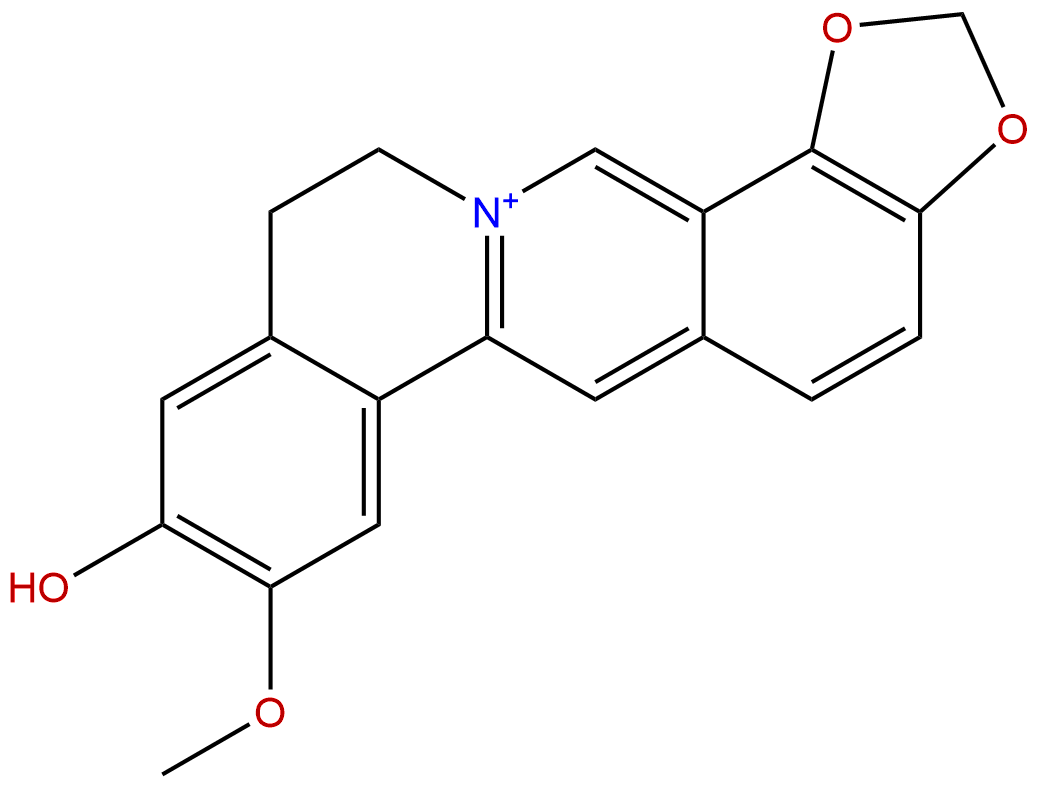
Grandixin is a tetrahydroberberine alkaloid, with the chemical name 5,8,13a-13a tetrahydro-6H-dibenzo [a, g] quinazine-2,3,9,10-tetraol. Its core structure is composed of two benzene rings (A ring and D ring) fused with a dihydroisoquinoline ring system (B ring and C ring), belonging to the derivatives of isoquinoline alkaloids. Compared with classical berberine (such as berberine), the C-ring of Grandixin is partially saturated (5,8,13,13a tetrahydro), which reduces its molecular rigidity and provides some conformational flexibility, which may affect its binding mode with different targets.
From the analysis of physical and chemical properties, the molecular weight of Grandixin is 322.3400, and its topological polar surface area (TPSA) is 51.8000 Å ², indicating that its molecule contains multiple polar groups (mainly four hydroxyl groups), which gives it a certain degree of hydrophilicity. The calculated LogP value is 0.2605, and the predicted water solubility is 0.3794 mg/mL. These parameters comprehensively show that Grandixin belongs to alkaloids with strong hydrophilicity, which is beneficial for its dissolution and distribution in organisms. Of particular note is that its blood-brain barrier permeability is predicted to be "high", which is crucial for its action on central nervous system targets such as AChE and BACE1 required for the treatment of Alzheimer's disease, and is a significant advantage as a candidate compound for neuroprotective agents. In addition, preliminary pharmacological risk assessment showed that its hERG inhibition was predicted as' no ', indicating a low risk of causing cardiac QT interval prolongation related arrhythmias; The Ames test value is 2.4, indicating that its mutagenic risk needs further confirmation in subsequent experiments, but the preliminary data is acceptable. These physical, chemical, and preliminary safety properties have laid the foundation for the further development of Grandi New.
Plant sources and extraction methods
Grandi Xin mainly belongs to the Papaveraceae family and the genus Quercus(Chelidonium)And the genus Artemisia with green velvet(Meconopsis)Separate from plants. Among them, Bai Qu Cai(Chelidonium majus L.), Also known as Dijincao, it is one of its main sources. This plant is commonly used in traditional medicine to treat hepatitis, warts, stomach pain, and skin diseases. It is rich in various quinoline alkaloids, including berberine, quercetin, and sanguinarine, in addition to granodixin. In addition, the presence of this component has also been detected in some plants of the Artemisia genus.
The extraction and separation of Grandi Xin usually follow the conventional process of natural product chemistry. Firstly, the dried plant material (such as whole grass) is crushed and subjected to leaching or reflux extraction with appropriate organic solvents (such as methanol, ethanol, or acidified methanol) to fully dissolve the alkaloid components. The extract is concentrated to obtain a total alkaloid extract. Subsequently, preliminary enrichment was carried out using the acid water alkalization organic solvent extraction method: the extract was dissolved in dilute acidic water (such as 1-2% hydrochloric acid or acetic acid) to dissolve the alkaloids into salts, and acid insoluble impurities were removed by filtration; Then alkalize the aqueous phase (usually ammonia or sodium hydroxide solution) to alkalinity, allowing the alkaloids to precipitate freely, and extract with organic solvents such as chloroform, dichloromethane, or ethyl acetate to obtain the total alkaloid fraction.
Further purification relies on various chromatographic techniques. Silica gel column chromatography is commonly used for crude separation using gradient elution systems such as chloroform methanol or dichloromethane methanol. The fractions rich in Glandicin are then subjected to repeated silica gel column chromatography, preparative thin layer chromatography (PTLC), or high-performance liquid chromatography (HPLC), often using a reverse phase C18 column in methanol water or acetonitrile water systems, sometimes with the addition of a small amount of buffer salts such as trifluoroacetic acid, for fine separation and purification. The identification of its structure is completed through modern spectroscopic techniques, including mass spectrometry (MS) to determine molecular weight, nuclear magnetic resonance hydrogen spectroscopy (¹ H NMR) and carbon spectroscopy (¹ ³ C NMR) to analyze its planar and stereoscopic structure, and confirmation by comparing with literature data. With the development of separation technology, liquid-liquid distribution chromatography techniques such as high-speed counter current chromatography (HSCCC) have also been applied to the efficient preparation of this type of alkaloid due to their high recovery rate and advantages of avoiding irreversible adsorption of solid adsorbents.
Pharmacological activity research
Galandix has demonstrated a variety of pharmacological activities, mainly focusing on three fields: neuroprotection, anti diabetes complications and anti-tumor.
1. Neuroprotection and anti Alzheimer's activity:
Grandesine is an effective dual inhibitor of acetylcholinesterase, with half maximal inhibitory concentrations (IC ₅₀) of 0.54 μ M and 3.32 μ M for acetylcholinesterase (AChE) and butyrylcholinesterase (BChE), respectively. Inhibiting AChE can reduce the hydrolysis of acetylcholine (ACh), increase the level of ACh in synaptic cleft, and thus improve cognitive dysfunction in Alzheimer's disease patients. Meanwhile, its non competitive inhibition of BACE1 (β - site amyloid precursor protein lyase 1) (IC ₅₀=19.68 μ M, Ki=21.2 μ M) is particularly noteworthy. BACE1 is a key rate limiting enzyme for the generation of beta amyloid protein (A β), and the aggregation and deposition of A β are the core pathological processes of Alzheimer's disease. Granidoxin can act on both the cholinergic system and the A β pathway simultaneously, demonstrating the potential of multi-target intervention in the pathological process of Alzheimer's disease.
2. Anti diabetes complication activity:
Complications of diabetes, such as cataract and neuropathy, are closely related to the accumulation of advanced glycation end products (AGEs) and oxidative stress. Grandesin exhibited inhibitory activity against aldose reductase (AR) in vitro, with IC ₀ values of 140.1 μ M and 154.2 μ M for rat lens aldose reductase (RLAR) and human recombinant aldose reductase (HRAR), respectively. AR is a key enzyme in the polyol pathway. Its over activation leads to sorbitol accumulation, which leads to osmotic pressure and oxidative stress injury, and is an important mechanism of diabetes cataract and neuropathy. In addition, Glandixin can also effectively inhibit the generation of total reactive oxygen species (ROS) (IC ≮₀=51.78 μ M), and its antioxidant capacity is helpful to reduce oxidative damage in diabetes.
3. Antitumor activity:
Research has shown that Grandesin has significant anti proliferative and pro apoptotic effects on osteosarcoma cells. It can inhibit the vitality of osteosarcoma cells in a dose-dependent manner and induce cell apoptosis, manifested as activation of caspase cascade reaction and changes in apoptosis related protein expression. More noteworthy is that when combined with the commonly used chemotherapy drug Cisplatin, Grandesine exhibits a synergistic inhibitory effect on tumor growth. This synergistic effect may be attributed to the enhanced cytotoxicity of cisplatin through different pathways, or the reversal of tumor cell resistance, which provides new ideas for the combination chemotherapy of osteosarcoma.
Mechanism of action and molecular targets
The multi pharmacological activity of Grandixin stems from its interactions with multiple molecular targets, and its mechanism of action is complex and synergistic.
1. Alzheimer's disease related targets:
* Acetylcholinesterase (AChE/BChE): As a competitive or mixed inhibitor, Grandixin inhibits the entry and hydrolysis of substrate ACh by binding to the catalytic triad or peripheral anionic site of the enzyme active center through its aromatic ring and nitrogen atom in its molecular structure.
* β - secretase 1 (BACE1): Grandesin inhibits BACE1 in a non competitive manner, meaning it does not directly compete with the substrate for the enzyme's active center, but binds to other sites (conformational sites) of the enzyme, causing conformational changes and thus reducing its catalytic efficiency. This inhibitory mode may be more selective and not easily weakened by an increase in substrate concentration.
* Antioxidant and anti-inflammatory pathways: Its ability to inhibit ROS generation may be achieved by activating endogenous antioxidant pathways such as Nrf2/ARE, or directly clearing free radicals. Oxidative stress and neuroinflammation are important contributing factors to Alzheimer's disease, and this activity helps protect neurons.
2. Targets related to complications of diabetes:
* Aldehyde reductase (AR): Grandesin may form hydrogen bonds or hydrophobic interactions with amino acid residues in the AR active center (such as Tyr48, His110, Trp111) through the phenolic hydroxyl groups in its molecule, thereby inhibiting the binding of NADPH to enzymes or substrate conversion, and blocking the polyol pathway.
* AGEs formation and ROS: Its antioxidant activity directly counteracts high glucose induced oxidative stress, and may indirectly inhibit the formation of AGEs by capturing active carbonyl species.
3. Mechanism of anti-tumor effect:
In osteosarcoma, the mechanism by which granodixin induces apoptosis may involve:
* Mitochondrial pathway: Induce a decrease in mitochondrial membrane potential, release cytochrome C, and subsequently activate caspase-9 and caspase-3.
* Death receptor pathway: May upregulate the expression of Fas or TRAIL receptors.
* Cell cycle arrest: May block cells at specific cell cycle checkpoints (such as G1 phase or G2/M phase).
* Collaboration with Cisplatin: The specific synergistic mechanism needs to be elucidated, which may include the inhibition of DNA repair ability in tumor cells by granodixin, enhancement of cisplatin induced DNA damage, or regulation of the expression of apoptosis inhibiting proteins (such as Bcl-2 family).
4. Potential cardiovascular target association analysis:
Although existing pharmacological studies have not directly reported on the effect of granodixin on arrhythmia, attention should be paid to its structural analogues (some isoquinoline alkaloids) and the provided list of related arrhythmia targets (such as KCNH2 (hERG), KCNQ1, SCN5A, CACNA1C, etc.) in future in-depth development. Although its hERG inhibition prediction is negative, given the complexity and species differences of ion channels, it is still necessary to experimentally verify its specific effects on various ion channels (sodium, potassium, calcium channels) in the heart to comprehensively evaluate its cardiac safety. Its interaction with cholinergic receptors (such as CHRM2) may also indirectly affect cardiac autonomic regulation.
Evaluation of drug properties and pharmacokinetics
Based on calculations and preliminary experimental data, Granidexin has shown certain potential as a drug, but its comprehensive pharmacokinetic (PK) characteristics still need to be systematically studied.
1. Prediction and challenges of absorption, distribution, metabolism, and excretion (ADME):
* Absorption: The LogP value and polar surface area suggest that it may have moderate oral bioavailability. Hydrophilicity may facilitate its dissolution in the gastrointestinal tract, but excessive polarity and hydrogen bonding between molecules may also limit its passive transmembrane diffusion. It may be necessary to study its formulation strategies (such as making salts, using absorption enhancers or nano formulations) to improve oral absorption.
* Distribution: The predicted high blood-brain barrier permeability is a huge advantage for its treatment of central nervous system diseases, which is expected to enable drugs to reach effective concentrations in the brain. Its distribution volume and tissue specificity need to be confirmed by in vivo experiments.
* Metabolism: As a compound containing phenolic hydroxyl groups and tetrahydroisoquinoline structures, Grandixin is likely to undergo extensive metabolism in vivo, including phase I metabolism (such as CYP450 enzyme oxidation and demethylation) and phase II binding reactions (such as glucuronidation and sulfation). Clarifying its main metabolic enzymes, metabolites, and activities is the key to subsequent research.
* Excretion: Expected to be primarily excreted through the kidneys (prototype or metabolite) and/or bile.
2. Preliminary safety assessment:
* Cardiac toxicity: The calculation prediction does not inhibit hERG channels, which is a positive signal, but it needs to be confirmed through in vitro hERG potassium current experiments and in vivo electrocardiogram monitoring.
* Genetic toxicity: The Ames test value (2.4) suggests the presence of mutagenic signals under specific conditions, and a more comprehensive genetic toxicity test (such as micronucleus test, chromosome aberration test) is needed for risk assessment.
* Acute and subchronic toxicity: Systematic animal toxicity studies are needed to determine its maximum tolerated dose, target organ toxicity, and reversibility.
3. Potential for drug interactions:
If granodixin is a substrate or inhibitor of CYP450 enzymes or transporters (such as P-gp), it may interact with co administered drugs, which needs to be investigated in the early stages of development.
At present, there are few public reports on the in vivo pharmacokinetic studies of the Granidoxin system, such as plasma concentration time curves, absolute bioavailability, tissue distribution, half-life, etc. in rats or mice. This is a knowledge gap that must be filled before it can be applied clinically.
Clinical application prospects and prospects
As a multi-target natural product, Grandixin has broad development prospects in multiple disease fields, but also faces many challenges.
1. Potential therapeutic areas:
* Alzheimer's disease (AD): Its dual acetylcholinesterase inhibition and BACE1 inhibition properties make it a promising new type of AD treatment drug, especially suitable for mild to moderate patients. Compared with existing single target drugs such as donepezil, it may have better potential for symptom improvement and disease modification. It is possible to explore its combination therapy with NMDA receptor antagonists such as memantine.
* Complications of diabetes: For diabetes cataract and neuropathy, its AR inhibition and antioxidant activity provide rational treatment. Local administration formulations (such as eye drops) can be considered for cataracts, or oral preparations can be used for neuropathy.
* Adjuvant treatment for osteosarcoma: Its synergistic anti-tumor effect with cisplatin provides a synergistic and attenuated combination therapy for osteosarcoma chemotherapy. Further research can be conducted on the specific mechanism of reversing chemotherapy resistance and exploring its application in other types of tumors.
* Others: Based on its antioxidant and anti-inflammatory properties, it may also have application value in other diseases related to oxidative stress, such as ischemia-reperfusion injury and certain inflammatory diseases.
2. Development Strategy and Challenges:
* Structural optimization: Using it as a lead compound, reasonable structural modifications (such as esterification, etherification of phenolic hydroxyl groups, or modification of saturated rings) are carried out to enhance activity (especially the potency of BACE1 and AR), improve pharmacokinetic properties (such as enhancing metabolic stability, optimizing oral bioavailability), and reduce potential toxicity (such as further ensuring cardiac safety).
* Formulation development: Develop suitable drug delivery systems based on their water solubility and stability characteristics, such as nanoparticles and liposomes for brain targeting, or solid dispersions and self microemulsions for improving oral absorption.
* Deepening of multi-target collaborative mechanism: Using methods such as systems pharmacology, network pharmacology, and proteomics, comprehensively reveal its "multi-component multi-target multi-path" action network and clarify the core target group for its therapeutic effect.
* Preclinical and clinical studies: The preclinical pharmacodynamics (on animal models closer to the disease), pharmacokinetics, and safety evaluation of the system must be completed. Afterwards, clinical trials can be carried out in an orderly manner to verify its effectiveness and safety in the human body.
3. Outlook:
Grandixin represents a successful case of discovering multi-target drug lead compounds from natural products. Future research should integrate the strengths of multiple disciplines such as chemistry, biology, pharmacology, and pharmacy to overcome the bottleneck of drug formation and deeply elucidate its complex mechanisms of action. With the development of precision medicine and combination therapy, Glandixin or its derivatives are expected to become a new weapon for the treatment of complex diseases (such as AD, diabetes complications and malignant tumors), or as an effective supplement to existing therapies, which has important scientific value and social significance.
Conclusion
Glandixin is a kind of protoberberine alkaloid derived from traditional medicinal plants. With its unique chemical structure and multi-target pharmacological activity, it has shown great development potential in the field of neurodegenerative diseases, diabetes complications and tumor treatment. It can not only effectively inhibit cholinesterase and BACE1, providing a dual intervention strategy for the treatment of Alzheimer's disease, but also fight against the key pathological link of diabetes complications by inhibiting aldose reductase and clearing reactive oxygen species. In terms of anti-tumor effects, its efficacy in inhibiting osteosarcoma alone and in combination with cisplatin is remarkable. Although its good blood-brain barrier permeability and preliminary safety prediction have laid a favorable foundation for its subsequent development, comprehensive pharmacokinetic characteristics, in-depth toxicological evaluation, and drug efficacy improvement based on structural optimization are still key issues that it must overcome from the laboratory to clinical practice. In summary, Grandixin is a highly valuable natural lead compound for research. Continuous and in-depth exploration of it not only helps to reveal the mysteries of multi-target effects of natural products, but also provides new directions and hope for the development of new drugs for the treatment of major diseases.