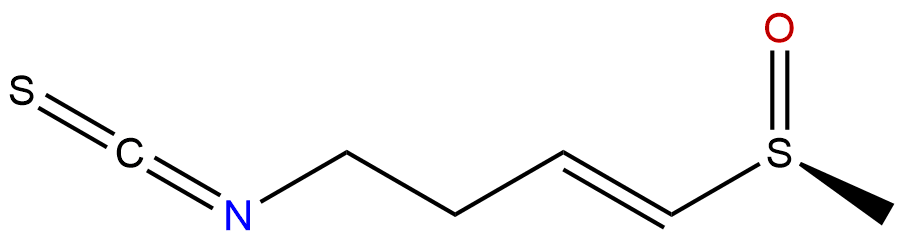


Product name: Sulforaphene
Synonym name:
Catalogue No.: BP1814
Cas No.: 592-95-0
Formula: C6H9NOS2
Mol Weight: 175.264
Botanical Source: seeds of Raphanus sativus L.(Radish)
Physical Description: Clear Yellow Oil
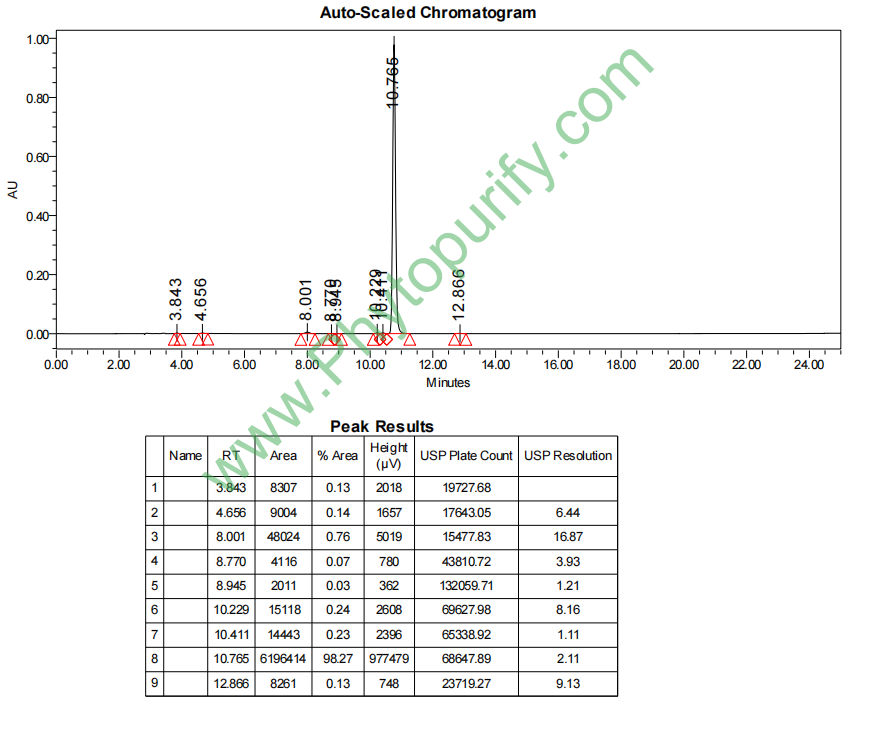
Purity: 90%~98%
Analysis Method: HPLC-DAD
Identification Method: Mass, NMR
Packing: Brown vial or HDPE plastic bottle
The product could be supplied from milligrams to grams, up to kgs.
Inquire for bulk scale.
Sulforaphene is an extract from the seeds of Raphanus sativus and displays anti-inflammatory and anti-cancer activity.
Sulforaphene exhibits herbicidal and anticancer activities. S-Sulforaphene inhibits proliferation of colon adenocarcinoma cells and suppresses growth of velvetleaf seedlings. Like other isothiocyanates, S-sulforaphene may also exhibit chemopreventive benefit and induce phase II enzymes.
HPLC of Sulforaphene
Storage conditions:Short-term storage at 2~8℃, long-term storage at -20 ~ -80℃
35.4200
.6622
.6621
1.2274
5.4199
7.6738
High
48.4521
4.9129
Yes
Yes
Yes
No
Yes
No
1.5
Yes
Yes
Yes
Yes
Gastric cancer is one of the malignant tumors with the highest incidence rate and mortality in the world. Its occurrence and development is a complex process involving multiple stages and factors, ranging from chronic gastritis, atrophic gastritis, intestinal metaplasia to dysplasia (i.e. precancerous lesions of gastric cancer), and ultimately evolving into invasive cancer. Effective intervention in this precancerous stage to reverse or block its malignant progression is an important strategy for the prevention and treatment of gastric cancer, with significant clinical and public health implications. Therefore, the search for efficient, low toxicity, and targeted natural chemopreventive agents to intervene in precancerous lesions of gastric cancer has become a current research hotspot.
Sulforaphene (SFE), also known as 4-isothiocyanato-1-butene, is a natural isothiocyanate compound found in cruciferous plants. Its structure is highly similar to another famous anti-cancer active molecule, sulforaphane (SFN), with only one double bond difference. For a long time, sulforaphane has attracted much attention due to its powerful antioxidant, anti-inflammatory, and anticancer activities. However, recent studies have shown that sulforaphane exhibits stronger potential than sulforaphane in certain pharmacological activities. Early studies have found that it has a strong inhibitory effect on plant seed germination (ED50 of 2 × 10 ⁻⁴ M), indicating its significant biological activity. More importantly, modern pharmacological research has gradually revealed that rapamycin can exert anti-tumor effects in various cancer models by inducing cell cycle arrest, promoting apoptosis, inhibiting migration and invasion, and other pathways. Its mechanism of action involves the regulation of key signaling pathways such as EGFR, ERK, NF - κ B.
This article aims to provide a systematic review of the chemical structure, plant sources, extraction methods, pharmacological activities, especially the mechanism of action and molecular targets of rapamycin in the intervention of precancerous lesions of gastric cancer. Combined with its pharmacological parameters, the clinical application prospects of rapamycin are also discussed, in order to provide scientific reference for the deep development and utilization of this natural product.
Lysine (CAS number: 592-95-0) is an aliphatic isothiocyanate with the molecular formula C ₆ H ₉ NOS and a molecular weight of 175.2780. The core of its chemical structure is a 4-carbon straight chain with an isothiocyanate group (- N=C=S) at one end, which is the key pharmacophore for its biological activity; The other end is an vinyl group (- CH=CH ₂), which makes the structure of rapamycin significantly different from that of sulforaphane (with a methylsulfonyl end). The presence of this bond not only affects its physicochemical properties, but is also closely related to its unique biological activity.
From the analysis of physical and chemical properties, the lipid water partition coefficient (LogP) of rapamycin is 0.6622, indicating its moderate lipophilicity, which is beneficial for transmembrane transport and intracellular distribution. Its topological polar surface area (TPSA) is 35.42 Å ², which is relatively small, further indicating its good membrane permeability. The calculated water solubility is about 1.2274 mg/mL, which belongs to the range of slightly soluble to soluble. This poses certain challenges for the development of its formulation, but also provides room for improvement. It is worth noting that the predictive model shows that rapamycin has a high blood-brain barrier permeability, which provides potential for its application in the study of central nervous system related diseases. In the early safety indicators, the Ames test result was 1.5 (usually considered negative if the ratio is less than 2), indicating a low risk of mutagenicity; Meanwhile, it does not inhibit hERG potassium channels, indicating a lower potential risk of arrhythmia and providing preliminary positive signals for its safety evaluation.
The chemical stability of sulforaphane is relatively poor, especially under aqueous, heated, or alkaline conditions. Its isothiocyanate groups are prone to hydrolysis, polymerization, or nucleophilic addition reactions with thiol and amino groups. Therefore, attention should be paid to controlling conditions during extraction, storage, and subsequent research to maintain its activity.
Lycopene mainly comes from cruciferous plants, including radish(Raphanus sativus L.)The seed content is the most abundant, and it is the main natural source for obtaining rapamycin. In addition, some varieties of broccoli seedlings and mustard seeds also contain their precursor substances or trace amounts of rapamycin.
In plants, rapamycin does not exist in free form, but is stored in the cytoplasm in the form of its inactive precursor, glucosinolate. Lycopene is a type of glucosinolate. When plant tissues are subjected to mechanical damage (such as cutting, grinding) or biological stress, cell integrity is disrupted, and glucosinolates come into contact with myrosinase present in specific areas of the cell (such as vacuoles). Under the catalysis of myrosinase, glucosinolates undergo hydrolysis, releasing glucose and unstable intermediates. The latter undergoes a Losen rearrangement reaction, ultimately producing biologically active glucosinolates. This' damage activation 'mechanism is a chemical defense strategy of plants.
Based on the above biosynthetic principles, the extraction and preparation methods of rapamycin can be mainly divided into two categories:
1. Enzymatic extraction method This is the most classic and commonly used method. After crushing the dried radish seeds, mix them with water or buffer solution, and use their own endogenous myrosinase to perform enzymatic hydrolysis reaction under suitable temperature (usually around 37 ℃) and pH (near neutral) conditions. After the reaction is complete, organic solvents such as dichloromethane and ethyl acetate are used for extraction, followed by concentration, column chromatography (such as silica gel column, preparative high-performance liquid chromatography), and other steps for separation and purification to obtain high-purity rapamycin.
2. Chemical/Exogenous Enzymatic Hydrolysis To avoid insufficient or inactive endogenous enzyme activity, exogenous addition of myrosinase (which can be extracted from mustard seeds) or hydrolysis of glucosidase from certain intestinal bacteria can be used to hydrolyze glucosinolates. In addition, there are also studies exploring the use of chemical simulation methods to synthesize rapamycin, but natural extraction methods are still mainstream.
The optimization of extraction process focuses on controlling enzymatic hydrolysis conditions (time, temperature, pH), improving extraction efficiency, and adopting mild purification methods to reduce the degradation of rapamycin. In recent years, new technologies such as ultrasound assisted extraction and microwave-assisted extraction have also been applied to this process, aiming to improve yield and efficiency.
Numerous in vitro and in vivo studies have confirmed that rapamycin has a wide range of pharmacological activities, with its core being anti-cancer and chemopreventive effects.
1. Antitumor activity
Lycopene exhibits significant growth inhibition and pro apoptotic effects on various human cancer cell lines, and its efficacy is superior to that of sulforaphane in some studies.
- Gastric cancer and precancerous lesions In the field of gastric cancer research, sulforaphane has shown outstanding potential. Research has shown that rapamycin can effectively inhibit the proliferation of human gastric cancer cells (such as SGC-7901, MKN-45) and induce their apoptosis. In the rat model of gastric precancerous lesions induced by N-methyl-N '- nitro-N-nitrosoguanidine (MNNG), intervention with rapamycin can significantly reduce the incidence of gastric mucosal dysplasia, alleviate inflammatory cell infiltration, indicating its potential to reverse gastric precancerous lesions.
- Other cancers The anti-tumor activity of rapamycin is broad-spectrum. It also showed the effects of inhibiting cell viability, blocking cell cycle (mostly blocking cells in G2/M phase), inducing apoptosis and autophagy in colon cancer, prostate cancer, breast cancer, lung cancer, liver cancer and bladder cancer models.
2. Inhibit cancer cell migration and invasion
The metastasis of tumors is the main cause of treatment failure and patient death. Laisu not only inhibits the growth of cancer cells, but also effectively suppresses their migration and invasion abilities. Studies have confirmed that sulforaphane treatment can down regulate the markers related to epithelial mesenchymal transformation (EMT) in gastric cancer, breast cancer and other cells, such as increasing the expression of epithelial markers E-cadherin and reducing the expression of interstitial markers N-cadherin and Vimentin, thereby reversing the EMT process and weakening the motility of cancer cells.
3. Antioxidant and anti-inflammatory activities
Chronic inflammation is an important driving factor for the occurrence of cancer. Lysine is an effective activator of nuclear factor E2 related factor 2 (Nrf2). Nrf2 is a central regulatory factor of cellular antioxidant stress response. Lycopene modifies the cysteine residues of Keap1 protein, causing Nrf2 to dissociate and translocate into the nucleus, initiating the gene expression of downstream phase II detoxifying enzymes (such as HO-1, NQO1) and antioxidant proteins, thereby enhancing the cell's defense against oxidative damage and carcinogenic attacks. At the same time, rapamycin can inhibit the activation of pro-inflammatory signaling pathways such as nuclear factor kappa B (NF - κ B), reduce the production of inflammatory mediators such as tumor necrosis factor - α (TNF - α), interleukin-6 (IL-6), cyclooxygenase-2 (COX-2), and fundamentally inhibit the process of inflammation related carcinogenesis.
4. Antibacterial and other activities
Lysine also has broad-spectrum antibacterial activity against Helicobacter pylori(H. pylori)Staphylococcus aureus, Escherichia coli, and other bacteria all have inhibitory effects. Given that Helicobacter pylori infection is one of the most important risk factors for gastric cancer, the activity of rapamycin adds value to its application in gastric cancer prevention.
The pharmacological effects of rapamycin are the result of multi-target and multi pathway synergy. For precancerous lesions of gastric cancer, its mechanism of action is particularly critical, involving the regulation of multiple disease-related targets.
1. Inducing cell apoptosis and cycle arrest
Lysine can induce apoptosis in cancer cells through the mitochondrial pathway and death receptor pathway. It can lower mitochondrial membrane potential, promote cytochrome C release, and activate the cascade reaction of Caspase-9 and Caspase-3. Meanwhile, rapamycin can regulate the balance of Bcl-2 family proteins, upregulate pro apoptotic proteins (such as Bax), and downregulate anti apoptotic proteins (such as Bcl-2). In terms of cell cycle, rapamycin often causes G2/M phase arrest, which is related to its regulation of the expression and activity of cyclin dependent kinases (such as CDK1) and cyclins (such as Cyclin B1).
2. Inhibit key oncogenic signaling pathways
- EGFR/ERK pathway The epidermal growth factor receptor (EGFR) and its downstream extracellular signal regulated kinase (ERK) signaling pathway play a central role in cell proliferation, survival, and migration, and are often overactivated in gastric cancer. The study clearly indicates that rapamycin can Downregulate the expression and phosphorylation level of EGFR, and inhibit the downstream activation of p-ERK1/2 This directly weakens the key growth signals that drive the progression of precancerous lesions in gastric cancer.
- NF - κ B pathway NF - κ B is a core transcription factor that connects inflammation and cancer. Laisu inhibits the activity of I κ B kinase (IKK) and prevents the degradation of I κ B α, thereby blocking NF - κ B in the cytoplasm and preventing it from entering the nucleus to initiate the transcription of genes that promote survival, inflammation, and metastasis (such as COX-2, MMP-9).Downregulate NF - κ B activity It is an important mechanism for the anti-inflammatory and apoptosis inducing effects of rapamycin.
3. Intervene in specific targets related to precancerous lesions of gastric cancer
Based on the molecular characteristics of precancerous lesions of gastric cancer, the action of rapamycin is associated with multiple key targets:
- TP53 TP53 is an important tumor suppressor gene. Lysine can exert growth inhibitory effects by activating p53 independent apoptotic pathways or synergistically enhancing their function in wild-type p53 cells.
- HER2 Overexpression of HER2 is associated with poor prognosis in gastric cancer. The inhibitory effect of rapamycin on the EGFR family may also have a certain regulatory effect on its homologous protein HER2, which is worthy of further research.
- CDH1 The CDH1 gene encodes the E-cadherin protein, and its expression loss is a marker of EMT and gastric cancer spread. Lysine can reverse EMT and Upregulation of CDH1 expression Restore intercellular adhesion and inhibit cell dispersal.
- MUC1 MUC1 is a transmembrane mucin that is often abnormally overexpressed and glycosylated in precancerous lesions and gastric cancer, promoting tumor progression. Lysine may indirectly regulate the expression or function of MUC1 by affecting related signaling pathways.
- COX2 Cyclooxygenase-2 (COX-2) is an important downstream target of the NF - κ B pathway, highly expressed in inflammation and carcinogenesis. Lysine can effectively inhibit NF - κ B by inhibiting it Downregulate the expression of COX2 Reduce the production of pro-inflammatory and pro proliferative mediators such as prostaglandin E2.
4. Epigenetic regulation
Emerging research suggests that rapamycin can also act as a histone deacetylase (HDAC) inhibitor, increasing histone acetylation levels, thereby altering chromatin structure and activating the transcription of tumor suppressor genes, providing a new mechanistic dimension for its chemopreventive effect.
Although rapamycin has shown great potential in preclinical studies, its pharmacological properties still require systematic evaluation.
Pharmacokinetic characteristics Current research has mostly focused on animal models. After oral administration, rapamycin is rapidly absorbed, but due to its high reactivity, it is prone to bind with thiol containing substances such as glutathione (GSH) in the gastrointestinal tract, forming conjugates (such as rapamycin glutathione conjugates). This is not only its detoxification pathway, but also may affect its bioavailability. These conjugates can be further metabolized into the corresponding thiol uric acid, which is excreted through urine. Lysine and its metabolites are widely distributed and can enter various tissues due to their lipid solubility and small molecular weight. Its half-life in the body is relatively short, indicating that appropriate administration strategies or dosage form improvements may be needed to maintain effective blood drug concentrations.
Advantages and challenges of pharmaceutical properties:
- Advantage Low molecular weight, moderate LogP, good permeability; Natural products, with relatively wide sources; The mechanism of action is multi-target, which may not easily lead to drug resistance; The preliminary safety indicators (Ames test, hERG inhibition) are relatively optimistic.
- challenge:
1. Poor chemical stability Sensitive to light, heat, and moisture, which poses difficulties for drug production and storage.
2. Generally water-soluble Absolute solubility needs to be improved, which affects oral absorption and injection development.
3. The bioavailability may be low The first pass metabolism of the gastrointestinal tract and rapid binding with biomolecules may result in limited systemic exposure.
4. Rapid metabolism in the body Short half-life, requiring frequent administration or use of sustained-release technology.
Formulation strategy To overcome the above challenges, new drug delivery systems have been extensively researched. including:
- Nano delivery system Such as liposomes, nanoparticles, and polymer micelles. These systems can encapsulate rapamycin, improve its stability, water solubility, and biofilm penetration, achieve targeted delivery and sustained release, enhance anti-tumor efficacy, and reduce systemic toxicity.
- Phospholipid complex Forming a complex with phospholipids can significantly improve lipid solubility and absorption.
- Prodrug strategy Design prodrugs that are activated in specific locations (such as the tumor microenvironment) to improve selectivity and reduce side effects.
Laisu, especially its unique value in intervening in precancerous lesions of gastric cancer, has drawn a clear roadmap for its clinical application.
1. As a chemopreventive agent for gastric cancer
This is the most promising direction for sulforaphane. For patients with chronic atrophic gastritis, intestinal metaplasia, dysplasia and other precancerous lesions of gastric cancer, develop rapamycin or its radish seed extract rich in rapamycin as a dietary supplement or prescription drug for long-term use, in order to reverse lesions and reduce the incidence of gastric cancer. Its multi-target effects (inhibiting inflammation, antioxidant, inducing abnormal cell apoptosis) are very suitable for intervening in this complex pathological process.
2. As an adjuvant therapy drug for gastric cancer
When used in combination with existing chemotherapy drugs (such as 5-fluorouracil, cisplatin) or targeted drugs, rapamycin may have sensitizing and detoxifying effects. It may reverse tumor chemotherapy resistance by inhibiting pathways such as NF - κ B; Meanwhile, its antioxidant properties that protect normal cells help alleviate the side effects of chemotherapy.
3. Joint eradication of Helicobacter pylori
Given its dual antibacterial and anti-inflammatory effects, rapamycin may be used as an auxiliary ingredient in combination with standard triple/quadruple therapy to improve the eradication rate of Helicobacter pylori mycorrhizal fungi and alleviate treatment induced gastric mucosal inflammation, achieving a combination of "root cause" and "symptomatic" treatment.
Future research directions and challenges:
- In depth mechanism research It is necessary to accurately elucidate the specific regulatory network of rapamycin on driver genes such as TP53 and CDH1 in gastric precancerous lesions on organoids or transgenic animal models that are closer to the human body.
- Clinical translational research Conduct standardized Phase I/II clinical trials to clarify the safety, tolerability, pharmacokinetics, and preliminary efficacy of rapamycin in humans, and determine the optimal dosage and regimen for administration.
- Breakthrough in Pharmaceutical Science Developing stable, efficient, and patient compliant clinical formulations (such as enteric coated capsules, sustained-release tablets, functional foods) is the key to transformation.
- Biological synthesis and structural optimization Explore green production methods such as microbial fermentation, or make reasonable structural modifications to rapamycin to improve its pharmacokinetic properties while retaining its activity.
Lysine, a natural isothiocyanate derived from radish seeds, is moving from a traditional medicinal plant ingredient to a modern candidate drug with clear molecular targets. Its multi pathway and multi-target pharmacological activities in anti-tumor, especially in intervening in precancerous lesions of gastric cancer, including downregulation of EGFR/ERK, inhibition of NF - κ B, upregulation of CDH1, downregulation of COX2, etc., make it strategically valuable in the field of chemoprevention of gastric cancer. Despite facing challenges in terms of chemical stability and bioavailability, these obstacles are expected to be gradually overcome through the empowerment of modern pharmacy and nanotechnology. In the future, with the continuous deepening of basic research and the acceleration of clinical translation, sulforaphane is expected to develop into a new natural medicine for preventing precancerous lesions and malignant transformation of gastric cancer, reducing the risk of gastric cancer, providing a powerful weapon for practicing the tumor prevention and control concept of "treating diseases before they occur", and also providing useful reference for the modern development of other natural products.
