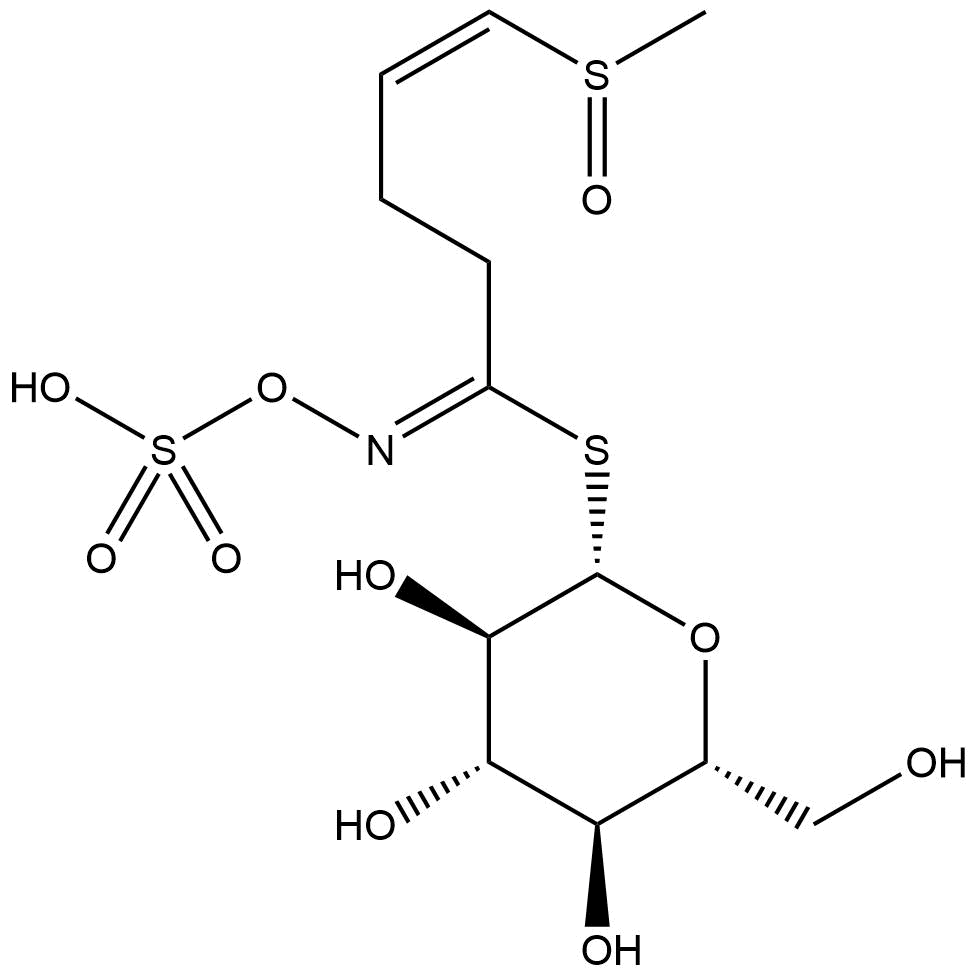


Product name: Glucoraphenin
Synonym name:
Catalogue No.: BP4103
Cas No.: 28463-24-3
Formula: C12H21NO10S3
Mol Weight: 435.477
Botanical Source:
Physical Description:
Type of Compound: Aliphatics
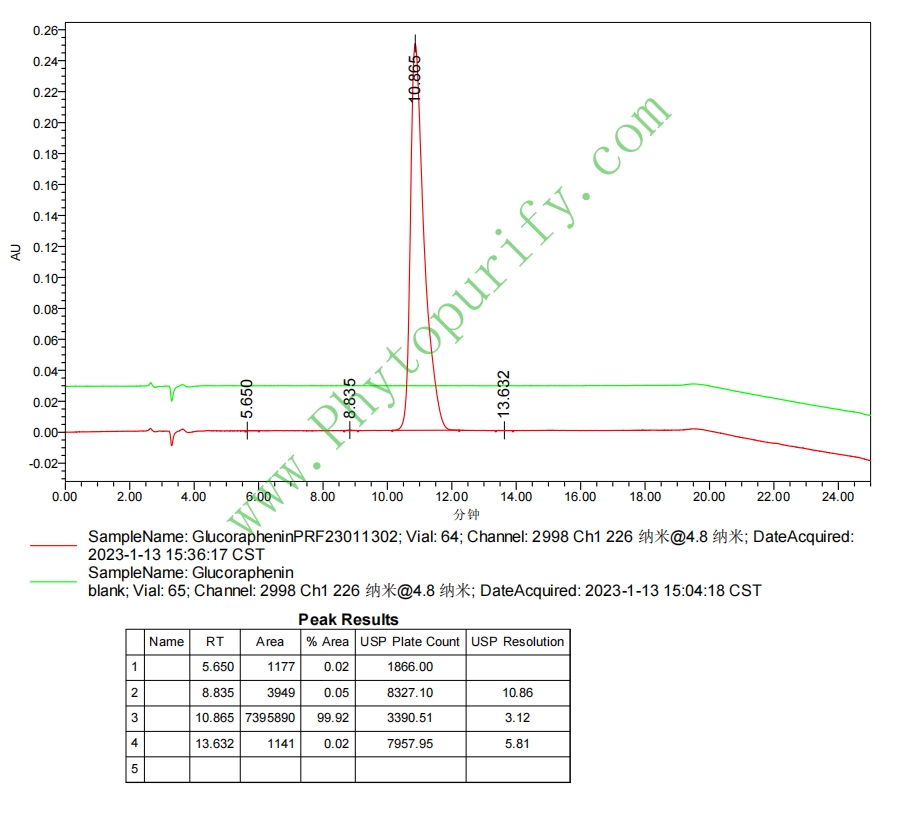
Purity: 95%~99%
Analysis Method: HPLC-DAD or/and HPLC-ELSD
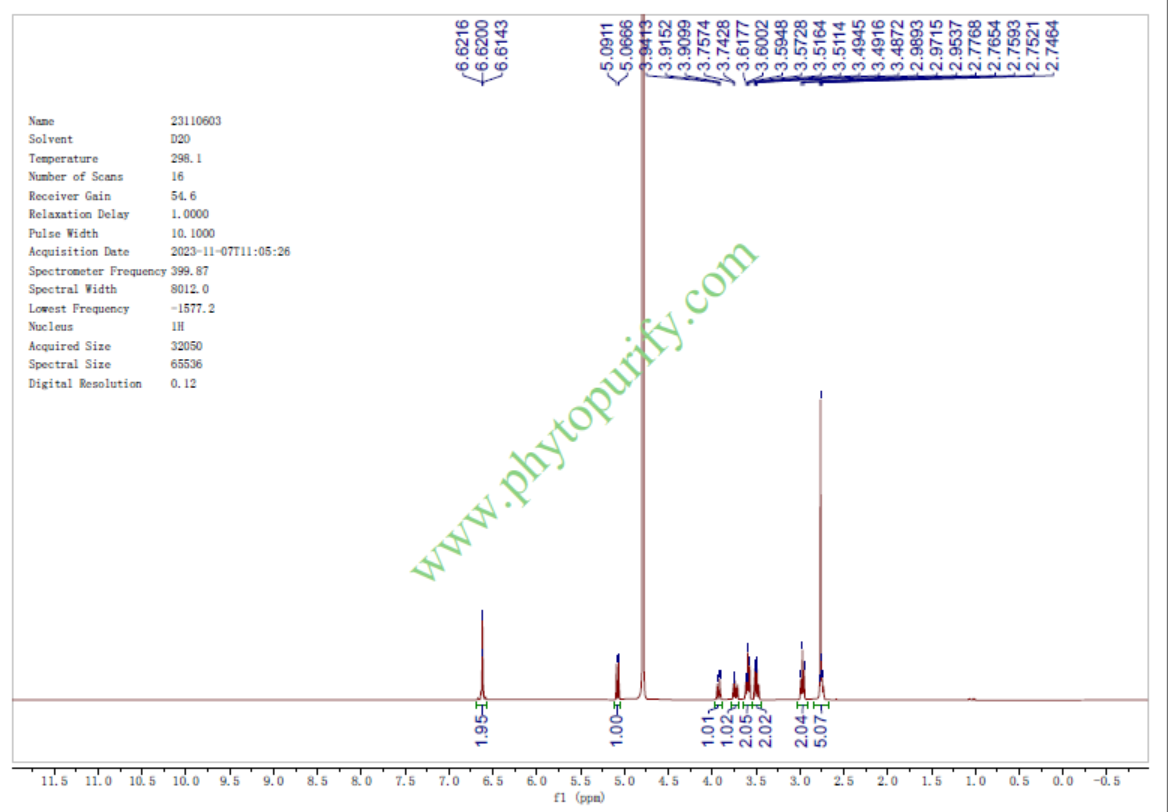
Identification Method: Mass, NMR
Packing: Brown vial or HDPE plastic bottle
Storage: Store in a well closed container, protected from air and light. Put into refrigerate or freeze for long term storage.
Whenever possible, you should prepare and use solutions on the same day. However, if you need to make up stock solutions in advance, we recommend that you store the solution as aliquots in tightly sealed vials at -20℃. Generally, these will be useable for up to two weeks.
The product could be supplied from milligrams to grams
Inquire for bulk scale.
For Reference Standard and R&D, Not for Human Use Directly.
HPLC of Glucoraphenin
HNMR of Glucoraphenin
Storage conditions:Short-term storage at 2~8℃, long-term storage at -20 ~ -80℃
Glucoraphenin, CAS number 28463-24-3, is a naturally occurring glucosinolate compound in cruciferous plants. As a unique secondary metabolite in radish (Raphanus sativus) and its related species, glucosinolate has received widespread attention in recent years due to its potential biological activity, especially its significant role in anti-inflammatory fields. Inflammatory response is the pathological basis of various chronic diseases, including autoimmune diseases, metabolic syndrome, neurodegenerative diseases, and tumors. Finding natural anti-inflammatory active ingredients with low toxicity and side effects has become an important direction for drug development. Lycopene, with its unique chemical structure and good safety, has demonstrated the ability to regulate various inflammation related signaling pathways, making it a hot topic in natural product pharmacology research.
This article will provide a systematic review of the chemical structure and physicochemical properties, plant sources and extraction methods, pharmacological activity and mechanism of action, pharmacological evaluation and pharmacokinetic characteristics of glucosinolates, and explore their clinical application prospects in combination with existing research. The aim is to provide theoretical basis and research direction for subsequent drug development and clinical translation.
Lycopene belongs to the glucosinolate family, and its basic structure consists of a glucosinolate core and a side chain. The molecular formula of glucosinolate is C15H26NO10S3, with a molecular weight of 435.4980. Its structural features include a glucose residue connected to a sulfur-containing side chain through a sulfur bond, and the side chain structure endows it with specific biological activity.
In terms of physical and chemical properties, the LogP value of glucosinolate is -1.3134, indicating its strong hydrophilicity. Its water solubility is 40.7128 (usually measured in mg/mL or relevant standards, specific units need to be confirmed with literature), and its polar surface area (TPSA) is 189.1700 Å ², indicating its high polarity, which may affect its cell membrane permeability and bioavailability. The low permeability of the blood-brain barrier suggests that the distribution of glucosinolates in the central nervous system is limited. The negative result of hERG channel inhibition experiment indicates a low risk of cardiac toxicity. The Ames test value is 0.9, which is close to non mutagenic, indicating a low risk of genetic toxicity.
These physicochemical parameters indicate that glucosinolates have good safety and certain drug compatibility, but their high polarity and low blood-brain barrier permeability may limit the efficacy of certain pharmacological effects, which need to be optimized through drug formulation techniques or structural modifications.
Lycopene is mainly found in cruciferous plants, especially in radish (Raphanus sativus) and its wild relatives, which are abundant in content. Its content is significantly affected by plant variety, growth environment, harvesting time, and storage conditions. In addition to radishes, glucosinolates have also been detected in related plants such as Brassica oleracea var. alboglabra and Brassica juncea.
Traditional extraction methods mainly rely on a combination of water extraction and alcohol extraction, supplemented by solid-phase extraction or column chromatography purification. The specific steps usually include:
In recent years, modern technologies such as ultrasound assisted extraction and microwave-assisted extraction have been applied to the extraction of glucosinolates, significantly improving extraction efficiency and purity while reducing solvent usage, in line with the concept of green chemistry.
The pharmacological activity research of glucosinolates mainly focuses on anti-inflammatory effects, as well as antioxidant, anti-tumor, and immune regulation aspects. Its anti-inflammatory activity has been validated in various in vitro cell and animal models.
Numerous studies have shown that glucosinolates can significantly inhibit the release of inflammatory mediators and the activation of inflammatory signaling pathways. For example, in macrophage and epithelial cell models, after treatment with glucosinolate, the expression of pro-inflammatory cytokines such as IL-6 and TNF - α was significantly reduced, and the activity of inflammation related enzymes such as PTGS2 (COX-2) and NOS2 (iNOS) was inhibited. In addition, glucosinolates can also alleviate tissue damage caused by inflammation and exhibit good tissue protective effects.
In addition to anti-inflammatory effects, paeoniflorin has a certain antioxidant capacity, which can clear free radicals and reduce oxidative stress damage to cells. Some studies have reported that it has a proliferative inhibitory effect on tumor cells, which may be related to its regulation of cell apoptosis and signal transduction pathways. In addition, glucosinolates have shown the potential to regulate immune responses, possibly by affecting the activation status of immune cells and cytokine networks.
The anti-inflammatory mechanism of glucosinolates involves multiple signaling pathways and key molecular targets, mainly including:
In summary, the synergistic effect of glucosinolates on multiple targets and pathways regulates multiple stages of inflammatory response, demonstrating its potential as a natural anti-inflammatory agent.
The pharmacological evaluation of glucosinolates is based on their physicochemical properties, toxicological data, and in vivo pharmacokinetic characteristics.
The LogP value of glucosinolate is -1.3134, indicating its strong hydrophilicity, which may affect oral absorption and cell membrane penetration. The high TPSA value (189.17 Å ²) further supports its high polarity, which may limit its oral bioavailability. The low permeability of the blood-brain barrier suggests that it is not easily able to enter the central nervous system and is suitable for the treatment of peripheral inflammatory diseases. The hERG channel inhibition is negative and the Ames test is close to negative, indicating a low risk of cardiac and genetic toxicity and good safety.
At present, there is limited research on the pharmacokinetics of glucosinolates. Previous studies have shown that glucosinolates are mainly absorbed through the intestine and enter the bloodstream, and their metabolic pathways may involve hydrolysis and transformation of glucosinolates. Its high hydrophilicity and polarity may lead to faster renal clearance and limited tissue distribution. The low permeability of the blood-brain barrier limits its pivotal role. In the future, systematic in vivo metabolic kinetics research is needed, including detailed analysis of absorption, distribution, metabolism, and excretion (ADME) processes, to guide formulation development and clinical applications.
As a natural glucosinolate compound, glucosinolate has significant anti-inflammatory activity and good safety, demonstrating broad clinical application potential. Its multi-target regulation of inflammatory signaling pathways has potential advantages in the treatment of chronic inflammatory diseases, autoimmune diseases, and related pain management.
The key to future clinical applications lies in:
In addition, the potential of glucosinolates in anti-tumor, antioxidant, and immune regulation is also worth exploring, providing new ideas for the development of drugs in multiple fields.
Lycopene, as a natural glucosinolate derived from cruciferous plants, has become an important object of natural product pharmacology research due to its unique chemical structure and significant anti-inflammatory activity. The mechanism of multi-target regulation of inflammatory signaling pathways provides a theoretical basis for the development of novel anti-inflammatory drugs. Although research on its pharmacokinetics and clinical applications is still in its infancy, its good safety and diverse biological activities indicate broad application prospects. In the future, through dosage form optimization, structural modification, and clinical validation, paeoniflorin is expected to become an important natural drug candidate molecule for the treatment of inflammation related diseases.
