


Synonym name: Rhetine; Rutecarpine
Catalogue No.: BP1232
Cas No.: 84-26-4
Formula: C18H13N3O
Mol Weight: 287.322
Botanical Source: A major component of the Chinese drug Wou-chou-yu (the dried fruit of Evodia rutaecarpa). Also Hortia arborea, Hortia badinii, Zanthoxylum rhetsa, Zanthoxylum ovalifolium and Zanthoxylum integrifoliolum
Purity: 95%~99%
Analysis Method: HPLC-DAD or/and HPLC-ELSD
Identification Method: Mass, NMR
Packing: Brown vial or HDPE plastic bottle
Can be supplied from milligrams to grams.
For Reference Standard and R&D, Not for Human Use Directly.
Inquire for bulk scale.
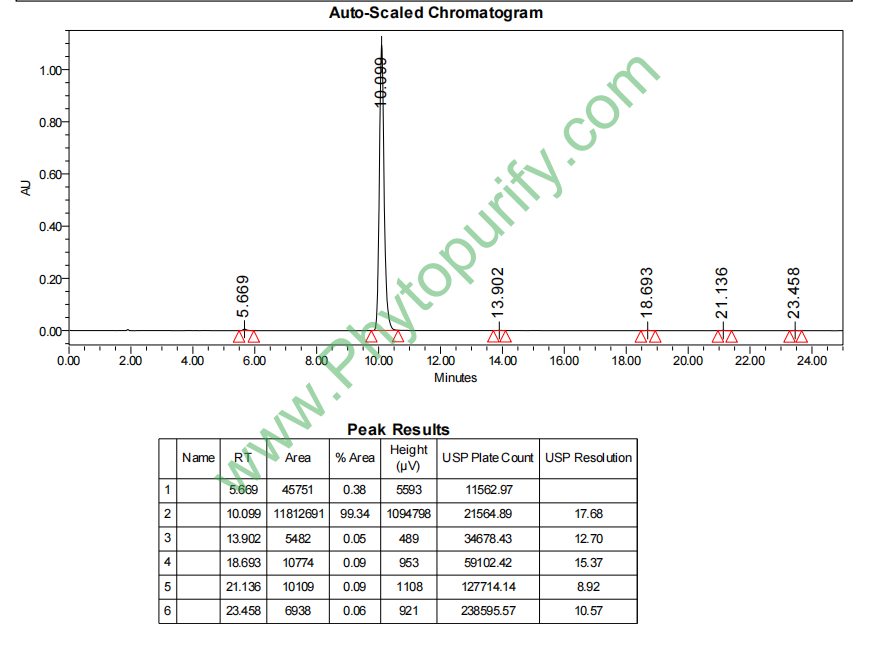
HPLC of Rutaecarpine
Storage conditions:Short-term storage at 2~8℃, long-term storage at -20 ~ -80℃
50.6800
3.1007
3.1007
.0056
4.8525
10.1211
High
90.3180
2.2220
No
Yes
No
No
Yes
Yes
0.6
Yes
No
Yes
Yes
Natural products, as a treasure trove of drug discovery, play an irreplaceable role in the history of human disease treatment. Among them, alkaloid compounds have always been a hot topic in medicinal chemistry and pharmacology research due to their structural diversity and significant biological activity. Rutaecarpine, a quinazoline alkaloid isolated from traditional Chinese medicine Rutaecarpine, has attracted much attention in recent years due to its wide and unique pharmacological activities. Early research mainly focused on its traditional effects of warming and dispersing cold, relieving pain and nausea, while modern pharmacological studies have gradually revealed its potential for anti-inflammatory, analgesic, cardiovascular protection, neuroprotection and other aspects. In particular, its properties as a selective inhibitor of cyclooxygenase-2 (COX-2) and activator of the nuclear factor E2 related factor 2 (NRF2) pathway provide a solid scientific basis for its use in the treatment of inflammatory diseases, pain, and oxidative stress-related nerve damage. This article aims to systematically review the chemical properties, plant sources, pharmacological activities, molecular mechanisms of action, pharmacological evaluation, and clinical application prospects of rutaecarpa alkaloids, in order to provide comprehensive references for the in-depth research and development of this natural product.
The chemical name of wuzhuzi alkaloid is 8,13-dihydro-2,3-dimethoxy-13-oxoindolo [2 ', 3': 3,4] pyrido [2,1-b] quinazolin-5-ium, and its CAS number is 84-26-4. Structurally, it is a complex polycyclic system with a core skeleton composed of indole, pyridine, and quinazolinone rings fused together, forming a rigid planar large π - conjugated structure. This unique quinazoline carboline structure is an important basis for its biological activity.
Its molecular formula is C ₁₈ H ₁∝ N ∝ O, and its molecular weight is 287.3220. According to the calculated chemical parameters, its lipophilic water partition coefficient (LogP) is 3.1007, indicating that the compound has good lipophilicity. The topological polar surface area (TPSA) is 50.68 Å ², which is relatively small and advantageous for its penetration through the cell membrane. The water solubility data is relatively low, about 0.0056 mg/mL, indicating poor solubility in water, which may be one of the difficulties that need to be overcome in the development of its formulation. However, its high lipophilicity also indicates good membrane permeability, which is consistent with its known ability to efficiently cross the blood-brain barrier (BBB). The preliminary drug risk assessment showed that it exhibited a low mutagenic risk in the Ames test (result 0.6) and had no significant inhibitory effect on hERG potassium channels, indicating a low risk of cardiac toxicity and providing favorable preliminary safety data for its further development.
The main source of wuzhuyu alkaloids is the Rutaceae plant wuzhuyu(Evodia rutaecarpa Dry near mature fruit of (Juss. Benth.). Wu Zhu Yu, as a traditional Chinese medicine, has the effects of dispelling cold and relieving pain, reducing nausea and vomiting, and promoting yang and stopping diarrhea. It is commonly used to treat symptoms such as Jueyin headache, cold hernia and abdominal pain, cold and damp athlete's foot, and menstrual abdominal pain. Wu Zhuyu alkaloid is one of the characteristic alkaloids with high content in Wu Zhuyu, and is an important substance basis for its pharmacological activity.
The extraction of rutaecarpa alkaloids from plant materials is usually carried out using solvent extraction method. The common process is as follows: Grind the dried Evodia fruit and perform reflux extraction or ultrasound assisted extraction with suitable polar organic solvents (such as methanol, ethanol, chloroform, or mixed solvents). The extract is concentrated under reduced pressure to obtain a paste. Subsequently, taking advantage of the alkaline and soluble characteristics of wuzhuzi alkaloids, the extract is often dissolved in acidic water (such as dilute hydrochloric acid), and insoluble substances are filtered out. Then, the pH is adjusted to alkaline with alkali (such as ammonia water) to precipitate or transfer the alkaloids to the organic phase (such as chloroform, ethyl acetate) for liquid-liquid extraction. The crude product can be further separated and purified by methods such as silica gel column chromatography and preparative high-performance liquid chromatography (HPLC) to obtain high-purity rutaecarpa alkaloids monomer. Modern extraction techniques such as supercritical CO ₂ extraction and high-speed countercurrent chromatography have also been applied to improve extraction efficiency and purity.
A large number of pharmacological studies both in vitro and in vivo have shown that rutaecarpine has various biological activities, mainly including:
Anti inflammatory and analgesic effects This is one of the most noteworthy activities of rutaecarpa alkaloids. It can effectively inhibit the foot swelling and increased intra-abdominal capillary permeability induced by inflammatory agents such as carrageenan and acetic acid in mice, demonstrating significant anti-inflammatory effects. In various pain models (such as hot plate method, acetic acid writhing test, formalin test, chronic neuropathic pain model), rutaecarpa alkaloids have shown clear analgesic effects, and their effects do not depend on opioid receptors, which provides the possibility for the development of non addictive analgesics.
Cardiovascular protective effect Wu Zhuyu alkaloids have a regulatory effect on the cardiovascular system. Research has shown that it can dilate blood vessels, lower blood pressure, and its mechanism may be related to promoting endothelial cell release of nitric oxide (NO), inhibiting calcium ion influx, and antagonizing angiotensin II receptors. In addition, it can also inhibit platelet aggregation and has certain anti thrombotic potential.
Neuroprotective effect Wu Zhuyu alkaloids can efficiently cross the blood-brain barrier, which is crucial for the treatment of central nervous system diseases. In animal models of traumatic brain injury (TBI), cerebral ischemia-reperfusion injury, Alzheimer's disease, etc., rutaecarpine shows significant neuroprotective effects, reducing brain edema, neuronal apoptosis, and improving neurological deficits. Its core mechanism is closely related to combating oxidative stress and inhibiting neuroinflammation.
Other activities The study also found that rutaecarpine has potential activities such as anti obesity, improving insulin resistance, and anti-tumor effects (such as inhibiting the proliferation of gastric and liver cancer cells), but its in-depth research in these fields is still ongoing.
The multiple pharmacological activities of rutaecarpa alkaloids stem from their regulation of multiple molecular targets and signaling pathways, forming a complex network.
COX-2 inhibition and prostaglandin pathway Evodiamine is a selective inhibitor of COX-2, with an IC50 value of approximately 0.28 μ M. COX-2 is a key rate limiting enzyme in the synthesis of prostaglandins (PGs) during inflammation and pain. By inhibiting COX-2, rutaecarpine reduces the production of inflammatory and analgesic mediators such as PGE ₂, which is one of the core mechanisms of its anti-inflammatory and analgesic effects.
Activate NRF2/antioxidant response element (ARE) pathway This is the core mechanism by which rutaecarpa alkaloids exert antioxidant stress and cell protective effects. Under oxidative stress conditions, evodiamine can promote NRF2 nuclear translocation by interfering with the binding of KEAP1 (Kelch like ECH related protein 1) to NRF2. NRF2 entering the nucleus binds to ARE, initiating the transcriptional expression of downstream phase II detoxifying enzymes and antioxidant proteins, such as heme oxygenase-1 (HO-1), quinone oxidoreductase 1 (NQO1), glutathione S-transferase (GST), etc. Especially in neuroprotective research, it has shown clear effectiveness in reducing secondary damage caused by oxidative stress in TBI through the PGK1/KEAP1/NRF2 signaling pathway.
Regulating pain related ion channels and receptors The analgesic effect of Wu Zhuyu alkaloids involves multiple targets. It can activate the transient receptor potential vanillic acid subtype 1 (TRPV1) channel, producing an initial sense of stimulation, but may subsequently produce long-lasting analgesia through desensitization mechanisms. Meanwhile, it has also been reported to regulate the activity of cannabinoid receptor 1 (CNR1), opioid receptor (OPRD1, OPRM1, OPRK1), dopamine D2 receptor (DRD2), and serotonin transporter (SLC6A4), which collectively participate in its regulation of central and peripheral pain pathways.
Other targets Wu Zhuyu alkaloids can also inhibit phosphodiesterase (PDE) and increase intracellular cyclic adenosine monophosphate (cAMP) levels; Inhibit the activation of the nuclear factor kappa B (NF - κ B) signaling pathway, thereby downregulating the expression of inflammatory factors.
Despite the excellent pharmacological activity of rutaecarpa alkaloids, their pharmacological properties still need to be comprehensively evaluated.
Pharmacokinetic properties Animal pharmacokinetic studies have shown that the absorption of rutaecarpine is rapid after oral administration, but its absolute bioavailability may be limited by its low water solubility and first pass effect. It is widely distributed in the body, thanks to its good lipid solubility and small TPSA, which can effectively penetrate various biological membranes including the blood-brain barrier, reaching effective concentrations in the central nervous system, which is crucial for its neuroprotective applications. Wu Zhuyu alkaloids are mainly metabolized in the body through the liver cytochrome P450 enzyme system (especially CYP3A4 and CYP1A2), with the main metabolic pathways being demethylation and hydroxylation. Metabolites are mainly excreted from the body through urine and feces. Its half-life is relatively short, and it may require formulation techniques or structural modifications to extend its duration of action.
Challenges and optimization of drug development:
* Solubility and permeability Belonging to the Biopharmaceutical Classification System (BCS) Class II or IV drugs (low solubility). The low water solubility limits its development for oral absorption and injection administration. The strategy includes: preparing nanocrystals, liposomes, cyclodextrin inclusion complexes, solid dispersions, etc; Alternatively, prodrug design can be carried out by introducing hydrophilic groups to enhance solubility.
* Metabolic stability Metabolism is faster in liver microsomes. Metabolic stability can be improved through structural modifications, such as introducing fluorine atoms or methyl groups at easily metabolized sites, or searching for metabolic soft spots for modification.
* selectivity Although selective for COX-2, its spectrum of action on other targets (such as multiple pain receptors) is broad, and its therapeutic window needs to be clarified in subsequent research to avoid unnecessary side effects.
The diversified pharmacological effects of wuzhuzi alkaloids have brought broad application prospects in multiple therapeutic fields.
Future research should focus on:
* In depth mechanism exploration Using chemical biology methods (such as chemical proteomics) to systematically identify its direct target of action and draw a more accurate network diagram of action.
* Structural optimization and drug design Based on its pharmacophore, systematic structure-activity relationship research and structural modification are conducted to improve its solubility, metabolic stability, target selectivity, and reduce potential toxicity, in order to obtain lead compounds or candidate drugs with greater development value.
* Development of a new delivery system Develop an intelligent nano drug delivery system to address its physical and chemical property defects, and improve its bioavailability, targeting, and therapeutic efficacy.
* Preclinical and clinical research Conduct standardized GLP toxicology evaluations and promote high-quality clinical trials to verify their safety and efficacy in humans.
As an active natural product derived from the traditional Chinese medicine Wu Zhuyu, the research process of Wu Zhuyu alkaloids reflects a perfect combination of traditional experience and modern scientific interpretation. From the initial anti-inflammatory and analgesic effects to the current expansion in neuroprotection and other fields, its multi-target and multi pathway characteristics have become increasingly clear, especially the inhibition of COX-2 and activation of the NRF2 pathway, which constitute its core pharmacological framework. Despite facing challenges such as solubility and metabolic stability in drug development, its clear and diverse biological activities, good blood-brain barrier penetration ability, and initially demonstrated good safety make it a highly valuable lead compound for development. With the deep involvement of modern medicinal chemistry, pharmacy, and molecular pharmacology, through continuous structural optimization, mechanism elucidation, and formulation innovation of wuzhuzi alkaloid, it is expected to successfully transform it from a potential natural active molecule into an innovative drug for the treatment of important human diseases such as pain and neurodegenerative diseases, thus fully realizing its scientific and clinical value.
