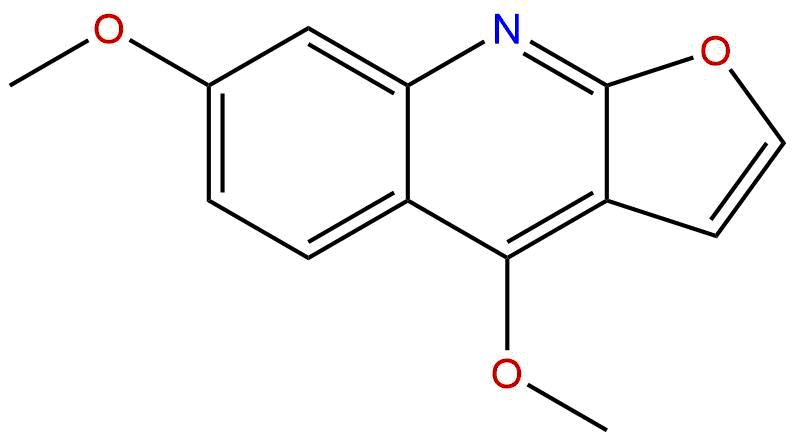


Product name: Evolitrine
Synonym name:
Catalogue No.: BP4230
Cas No.: 523-66-0
Formula: C13H11NO3
Mol Weight: 229.235
Botanical Source: Euodiae fructus
Type of Compound: Alkaloids
Purity: 95%~99%
Analysis Method: HPLC-DAD or/and HPLC-ELSD
Identification Method: Mass, NMR
Packing: Brown vial or HDPE plastic bottle
Storage: Store in a well closed container, protected from air and light. Put into refrigerate or freeze for long term storage.
Whenever possible, you should prepare and use solutions on the same day. However, if you need to make up stock solutions in advance, we recommend that you store the solution as aliquots in tightly sealed vials at -20℃. Generally, these will be useable for up to two weeks.
The product could be supplied from milligrams to grams
Inquire for bulk scale.
For Reference Standard and R&D, Not for Human Use Directly.
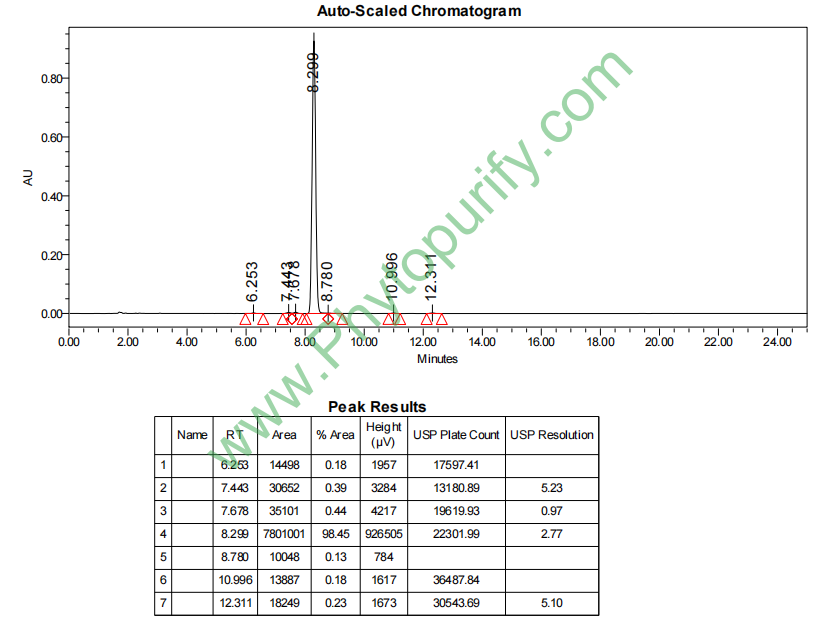
HPLC of Evolitrine
Storage conditions:Short-term storage at 2~8℃, long-term storage at -20 ~ -80℃
44.4900
2.5022
2.5015
.0237
3.2134
31.5565
High
86.8659
2.3663
Yes
No
Yes
No
Yes
Yes
1.8
No
No
Yes
No
Natural products, as an important source of drug discovery, occupy an irreplaceable position in modern pharmaceutical research. Evolitine (CAS number: 523-66-0) is a natural alkaloid isolated from the plant Acronychia pediculata, which has received widespread attention for its significant anti-inflammatory activity. Inflammatory response, as the pathological basis of various diseases, has complex and diverse regulatory mechanisms involving multiple cytokines, signaling pathways, and enzymes. Wu Zhu Chun alkaloid exhibits excellent anti-inflammatory potential by regulating multiple key inflammation related targets, making it a powerful candidate molecule for the development of natural anti-inflammatory drugs. This article provides a systematic review of the chemical structure and physicochemical properties, plant sources and extraction methods, pharmacological activity and mechanism of action, pharmacological evaluation and pharmacokinetic characteristics of Wu Zhu Chun alkaloid, aiming to provide scientific basis and theoretical support for its clinical application and subsequent research.
The molecular formula of 7-Methoxydictamnine (Evolitine) is C13H15NO3, with a molecular weight of 229.2350. Its structural feature is the presence of a methoxy substituted alkaloid skeleton, with typical indole alkaloid structural units. The LogP value of Wu Zhu Chun alkaloid is 2.5022, indicating that it has moderate lipid solubility, which is beneficial for cell membrane penetration and in vivo distribution. The polar surface area (TPSA) is 44.49 Å ², indicating that its molecular polarity is moderate and conducive to binding with biological targets. Low water solubility (0.0237 mg/mL) suggests limited solubility in aqueous phase, which may affect oral bioavailability. The blood-brain barrier has high permeability, indicating its potential central nervous system function. The hERG channel inhibition experiment showed a negative result, indicating a low risk of cardiac toxicity. The Ames test result is 1.8, indicating that its genotoxicity risk is relatively low and meets the basic requirements for safe drug use.
Wu Zhu Chun alkaloid was initially isolated from the Rutaceae plant Acronychia pediculata. This plant is widely distributed in tropical and subtropical regions and has traditionally been used to treat various inflammation related diseases. During the extraction process, organic solvents such as ethanol and methanol are usually used to extract dried plant materials, followed by separation and purification techniques such as liquid-liquid distribution and column chromatography to obtain evodiamine. High performance liquid chromatography (HPLC) and mass spectrometry (MS) techniques are widely used for their qualitative and quantitative analysis. In recent years, new extraction techniques such as ultrasound assisted extraction and microwave-assisted extraction have also been attempted to be applied to the extraction of matrine from Fructus Evodiae to improve yield and purity.
The main pharmacological activity of Wu Zhu Chun alkaloid is focused on anti-inflammatory effects. Both in vitro cell models and in vivo animal inflammation models have confirmed that it significantly inhibits the release of inflammatory mediators and the activation of inflammatory cells. Specifically, it is manifested by inhibiting the expression of pro-inflammatory factors such as IL-6 and TNF - α, and reducing the activity of inflammation related enzymes such as PTGS1 (COX-1), PTGS2 (COX-2), and NOS2 (iNOS). Wu Zhu Chun alkaloid also exhibits regulatory effects on inflammation related ion channels TRPV1 and TRPA1, reducing pain and neuroinflammatory responses. Its anti-inflammatory effect has been demonstrated in various inflammatory disease models, including arthritis, inflammatory bowel disease, and neuroinflammation.
In addition, the regulation of apoptosis related protein CASP1 by Wu Zhu Chun alkaloid suggests its potential role in inflammation related programmed cell death. Its inhibition of key transcription factor NFKB1 and signal transduction protein STAT3 further reveals the molecular mechanism basis of its anti-inflammatory effect.
The anti-inflammatory mechanism of Wu Zhu Chun alkaloid involves multiple signaling pathways and molecular targets. Firstly, it reduces the amplification of inflammatory signals by inhibiting the expression of pro-inflammatory cytokines IL-6 and TNF - α. IL-6, as an important mediator of inflammatory response, can activate the STAT3 signaling pathway and promote the transcription of inflammatory genes. Wu Zhu Chun alkaloid inhibits the phosphorylation and activation of STAT3, blocking the transmission of inflammatory signals.
Secondly, Wu Zhu Chun alkaloid regulates the activity of NFKB1, inhibits its nuclear translocation, and reduces the expression of inflammation related genes. The NFKB signaling pathway is the core regulatory pathway of inflammatory response, and its overactivation is closely related to various chronic inflammatory diseases. Wu Zhu Chun alkaloid exerts anti-inflammatory and tissue protective effects by inhibiting this pathway.
In addition, Wu Zhu Chun alkaloid inhibits inflammation related enzymes PTGS1 and PTGS2, reduces prostaglandin synthesis, and alleviates inflammatory symptoms. Inhibition of NOS2 reduces excessive production of nitric oxide, alleviates oxidative stress and inflammatory damage.
In the field of neuroinflammation, Wu Zhu Chun alkaloid regulates TRPV1 and TRPA1 ion channels, reducing inflammatory pain and neural sensitivity. CASP1, as a key enzyme in inflammasome activation, participates in the maturation and release of pro-inflammatory cytokines. The inhibition of CASP1 by matrine further blocks the inflammatory cascade reaction.
Overall, Wu Zhu Chun alkaloid exhibits good anti-inflammatory potential by synergistically regulating the inflammatory microenvironment through multiple targets and pathways.
The pharmacological parameters of Wu Zhu Chun alkaloid show that it has good potential for drug development. The molecular weight of 229.2350 conforms to Lipinski's rule, with a moderate LogP value of 2.5, which is beneficial for the drug's membrane permeability and oral absorption. The TPSA value of 44.49 Å ² is lower than 140 Å ², indicating that it has good cell membrane permeability. Low water solubility may limit its oral bioavailability, but solubility can be improved through pharmaceutical formulation technologies such as nanocarriers and solid dispersions.
The high permeability of the blood-brain barrier indicates that wuzhuchun alkaloids have the potential to be used for the treatment of central nervous system related inflammatory diseases. The negative inhibition of hERG indicates a low risk of cardiac toxicity and good safety. The Ames test results show that its genotoxicity risk is relatively low and meets the safety medication standards.
At present, there is limited research on the pharmacokinetics of Evodia rutaecarpa alkaloids. Preliminary in vivo experiments indicate that it is rapidly absorbed, widely distributed, and its metabolic pathway may involve the CYP450 enzyme system in the liver, with excretion mainly through the kidneys. In the future, further systematic research is needed on its absorption, distribution, metabolism, and excretion (ADME) characteristics to guide clinical dosage form design and medication regimen optimization.
Given the significant anti-inflammatory activity and good pharmacological characteristics of Wu Zhu Chun alkaloid, it has broad application prospects in the treatment of inflammatory diseases. Especially in the management of rheumatoid arthritis, inflammatory bowel disease, neuroinflammation, and chronic pain, Wu Zhu Chun alkaloid is expected to become a new type of natural anti-inflammatory drug.
Future research should focus on the following aspects: firstly, in-depth analysis of its molecular mechanisms, especially its interaction with inflammatory signaling pathways and regulatory networks; Secondly, conduct systematic pharmacokinetic and toxicological studies to ensure their safety and efficacy; Thirdly, explore multiple routes and dosage forms of administration to enhance their bioavailability and targeting; The fourth is to conduct preclinical animal models and clinical trials to verify their therapeutic efficacy and safety.
In addition, the potential for the combination of Wu Zhu Chun alkaloid with other anti-inflammatory drugs, as well as its applications in immune regulation and anti-tumor fields, are also worth further exploration. Combining modern drug design and synthetic biology techniques to optimize its structure and pharmacological properties will further promote the clinical translation of Wu Zhu Chun alkaloid.
Wu Zhu Chun alkaloid, as a natural alkaloid derived from Acronychia pediculata, has shown great potential as a new type of anti-inflammatory drug due to its multi-target anti-inflammatory effects and good drug properties. It effectively inhibits inflammatory response and reduces tissue damage by regulating key inflammatory targets such as IL-6, STAT3, NFKB1, PTGS1/2, NOS2, TRPV1/TRPA1. Although its pharmacokinetics and clinical application research are still in their infancy, its safety and biological activity have laid a solid foundation for subsequent development. In the future, we should strengthen basic and applied research, promote the clinical translation of Wu Zhu Chun alkaloid, and provide new treatment options for patients with inflammatory diseases.
