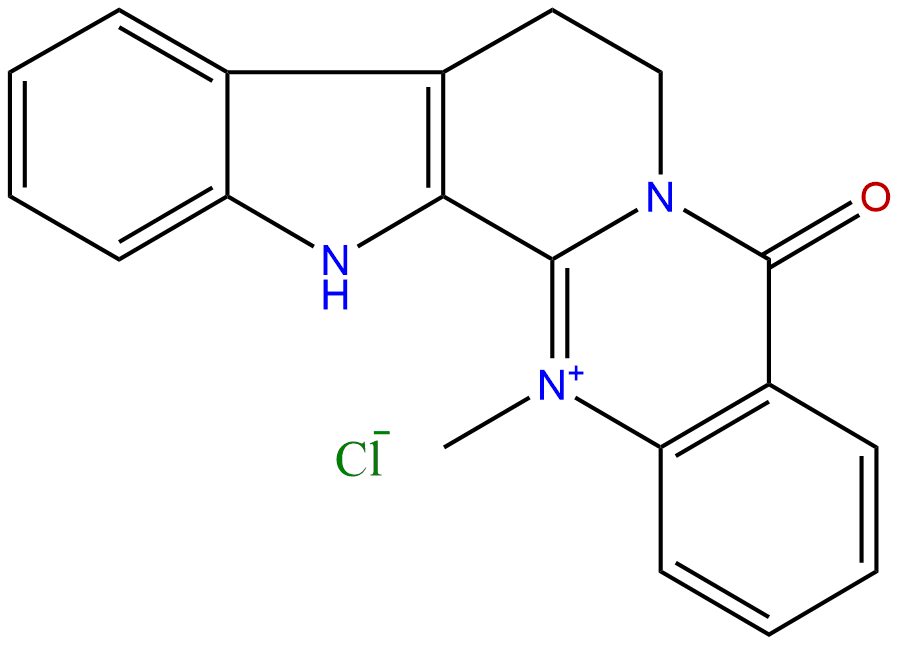


Synonym name: Deleted cas: 75853-60-0
Catalogue No.: BP0465
Cas No.: 111664-82-5
Formula: C19H15N3O.HCl
Mol Weight: 337.81
Botanical Source:
Purity: 95%~99%
Analysis Method: HPLC-DAD or/and HPLC-ELSD
Identification Method: Mass, NMR
Packing: Brown vial or HDPE plastic bottle
Can be supplied from milligrams to grams.
For Reference Standard and R&D, Not for Human Use Directly.
Inquire for bulk scale.
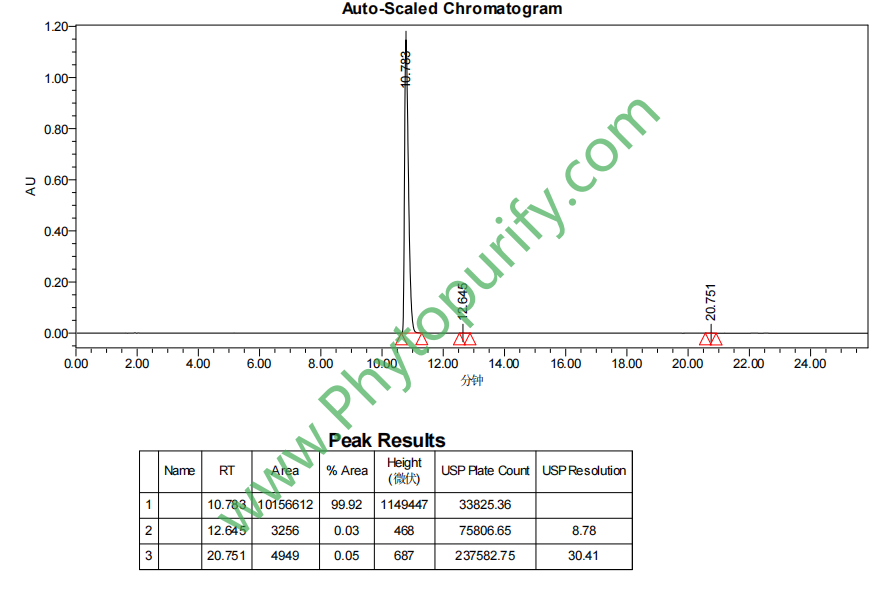
HPLC of Dehydroevodiamine hydrochloride
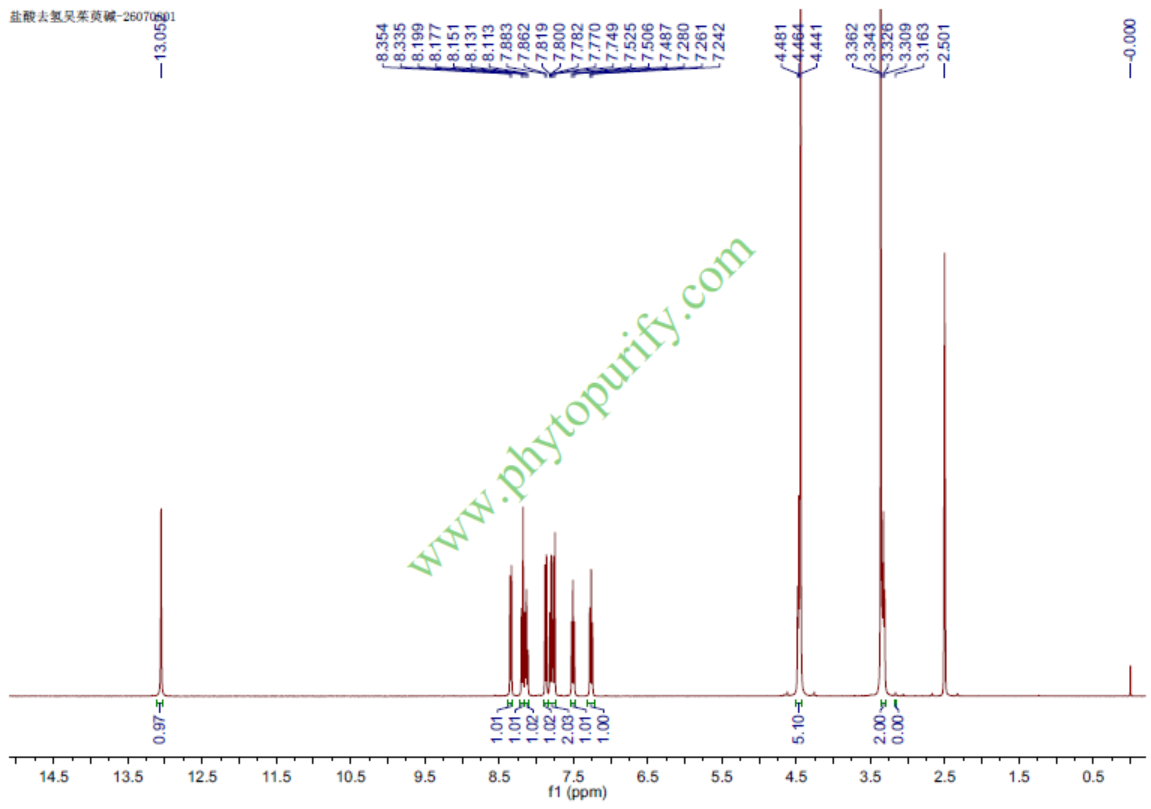
HNMR of Dehydroevodiamine hydrochloride
Storage conditions:Short-term storage at 2~8℃, long-term storage at -20 ~ -80℃
41.6700
.2990
.2991
.1395
.9802
8.2496
High
35.7230
2.8615
No
No
No
No
Yes
Yes
1.5
No
No
No
No
Natural products, as an important source of drug discovery, play an irreplaceable role in the long history of human struggle against diseases. The treasure trove of traditional Chinese medicine (TCM) contains a large number of natural compounds with unique chemical structures and significant biological activities, providing abundant lead molecules for modern pharmacological research. Wu Zhuyu(Evodia rutaecarpa (Juss.) Benth.), As a traditional Chinese medicine, its medicinal history can be traced back to the "Shennong Bencao Jing", which has the effects of dispelling cold and relieving pain, reducing nausea and vomiting, and assisting yang and stopping diarrhea. Modern pharmacological research has revealed that the various pharmacological activities of Fructus Evodiae, including anti-inflammatory, analgesic, anti-tumor, cognitive improvement, and regulation of the cardiovascular system, are closely related to the alkaloids it contains.
Among the numerous active ingredients in Evodia rutaecarpa, dehydroevodiamine (DHE) and its hydrochloride form, dehydroevodiamine hydrochloride (DHE · HCl), have attracted much attention due to their unique chemical structure and wide range of biological activities. Dihydroevodiamine is an indolequinone alkaloid characterized by a highly conjugated planar ring system. Hydrochloric acid dehydroevodiamine (CAS number: 111664-82-5) is its hydrochloride form, usually present in a light yellow or yellow powder form, with better water solubility and stability, making it convenient for pharmacological research.
In recent years, significant progress has been made in the research of dehydroevodiamine hydrochloride, especially in the field of neurological diseases, where its anti anxiety effects and potential molecular mechanisms have become a research hotspot. Anxiety disorder, as a common mental disorder, has a complex pathophysiological mechanism involving multiple neurotransmitter systems, receptors, and signaling pathways. Traditional anti anxiety drugs, such as benzodiazepines, although effective, have side effects such as dependence, tolerance, and cognitive impairment. Therefore, finding anti anxiety drugs with new mechanisms of action, high selectivity, and low side effects is an important direction in current drug development. Hydrochloric acid dehydroevodiamine, with its ability to efficiently penetrate the blood-brain barrier (BBB) and targeting multiple anxiety related targets, such as ABCB1、TOP1、EDNRB、CHRNA7、OPRD1、ADORA3、SIGMAR1、ACHE、EDNRA、GRM2 The potential regulatory ability of (such as) demonstrates enormous potential as a lead compound for novel anti anxiety drugs.
This article aims to provide a systematic review of the research status of dehydroevodiamine hydrochloride, covering its chemical structure and physicochemical properties, plant sources and extraction methods, pharmacological activity, mechanism of action and molecular targets, pharmacological evaluation and pharmacokinetic properties. It also looks forward to its clinical application prospects, in order to provide reference for the in-depth research and development of this natural product.
The chemical structure of dehydroevodiamine hydrochloride is the basis for its biological activity. Its parent nucleus dehydroevodiamine belongs to the indolo [2,3-b] quinazoline alkaloids, which are formed by the fusion of an indole ring and a quinazoline ring through a five membered ring, forming a highly conjugated planar aromatic system. This rigid, planar structural feature enables it to interact with various biomolecules such as enzymes, receptors, DNA, for example, through π - π stacking, embedding, and other methods. The molecular formula is C ₁₉ H ₁₆ N ∝ O ⁺· Cl ⁻, and the molecular weight is 302.3570 (265.31 in the form of free base). The quaternary ammonium nitrogen atom (N ⁺) in its structure endows it with cationic properties, while the hydrochloride form further enhances its solubility in water.
In terms of physical and chemical properties, hydrochloric acid dehydroevodiamine exhibits some unique medicinal characteristics. Its lipid water partition coefficient (LogP) is 0.2990, indicating that it has moderate lipophilicity, neither extremely lipophilic nor extremely hydrophilic, which is beneficial for its absorption and distribution in the body. The topological polar surface area (TPSA) is 41.6700 Å ², which is much lower than the recommended upper limit of 140 Å ² for oral drugs, indicating its good oral absorption potential and cell membrane permeability. Of particular importance is that its TPSA value is below 60-70 Å ², which is one of the key thresholds for predicting whether a compound can penetrate the blood-brain barrier (BBB). Based on its LogP value, it can be inferred that dehydroevodiamine hydrochloride has high blood-brain barrier permeability, which provides a key physicochemical basis for its central nervous system (CNS) activity, especially its anti anxiety effect.
Water solubility is an important factor affecting drug formulations and bioavailability. The water solubility parameter of hydrochloric acid dehydroevodiamine is 0.1395 mg/mL. Compared with its free base form, its water solubility has been significantly improved, but overall it still belongs to low water solubility compounds. This may become a limiting factor for its oral bioavailability. In addition, its pKa value (predicted to be around 8.5-9.5) indicates that it mainly exists in cationic form under physiological pH conditions, which affects its transmembrane transport and distribution. It is worth noting that the predicted result of hERG inhibition is' no ', which is a positive signal indicating a lower risk of causing QT interval prolongation and fatal arrhythmias (such as apical torsion transition ventricular tachycardia) in the heart. The Ames test result is 1.5, indicating a possible genetic toxicity risk, but this requires more comprehensive in vitro and in vivo genetic toxicity tests for verification. Overall, the physicochemical properties of dehydroevodiamine hydrochloride, particularly its high BBB permeability, make it a highly promising candidate for CNS drugs. However, its water solubility and potential genotoxicity are areas that require special attention and optimization.
The natural source of hydrochloric acid dehydroevodiamine is mainly from the Rutaceae genus of the Rutaceae family(Evodia)Plants, among which Evodia rutaecarpa is used(Evodia rutaecarpa)The most common. In addition, in Shihu(Evodia rutaecarpa var. officinalis)He Shu Mao Wu Zhu Zi(Evodia rutaecarpa var. bodinieri)It has also been found in closely related species. Dihydroevodiamine usually coexists with other indole quinazoline alkaloids such as evodiamine and rutaecarpine in the fruit of plants (evodiamine), but it is also distributed in leaves, stems, and other parts. Traditionally, the medicinal part of Evodia rutaecarpa is its dried and nearly ripe fruit. However, studies have shown that hydrochloric acid dehydroevodiamine can also be isolated from the leaves of Evodia rutaecarpa, providing new ideas for expanding its raw material sources and avoiding excessive harvesting of medicinal fruits.
Extraction and purification are key steps in obtaining high-purity hydrochloric acid dehydroevodiamine. Classic extraction methods are usually based on the chemical properties of their alkaloids, which exist in the form of free bases under alkaline conditions and form salts under acidic conditions. The common extraction process is as follows:
Modern extraction and separation techniques, such as supercritical fluid extraction (SFE), microwave-assisted extraction (MAE), and molecular imprinting technology (MIT), have also been explored for the extraction and enrichment of alkaloids from Fructus Evodiae, aiming to improve extraction efficiency, reduce costs, and minimize the use of organic solvents. Choosing appropriate extraction and purification processes requires comprehensive consideration of factors such as raw material sources, purity requirements of target products, production costs, and environmental friendliness.
The pharmacological activity spectrum of dehydroevodiamine hydrochloride is very broad, covering multiple fields such as the nervous system, cardiovascular system, digestive system, and anti-tumor effects. Among them, its anti anxiety effect is particularly prominent and is currently a hot research topic.
1. Anti anxiety effect
A large number of in vitro and in vivo experiments have confirmed the anti anxiety potential of dihydroquercetin hydrochloride. In classic animal anxiety models such as the elevated maze test (EPM), light dark box test (LDB), and Vogel conflict test (VCT), oral or intraperitoneal injection of dihydroquercetin hydrochloride can significantly increase the dwell time and number of entries in the open arm of mice, increase the exploration time in the open box, and increase the amount of water consumed after punishment. These behavioral manifestations are comparable to the commonly used anti anxiety drug Diazepam in clinical practice, but no significant side effects such as sedation, muscle relaxation, or motor coordination disorders were observed. This indicates that it may exert anti anxiety effects through mechanisms different from benzodiazepines, and has higher safety.
2. Improve cognitive function
In addition to its anti anxiety effect, dehydroevodiamine hydrochloride also shows excellent performance in improving cognitive function. Research has shown that it can reverse animal learning and memory impairments induced by factors such as scopolamine, A β amyloid protein, or aging. In the Morris water maze and passive avoidance experiments, the learning and memory retention abilities of animals treated with hydrochloric acid dehydroevodiamine were significantly improved. The mechanism may be related to the inhibition of acetylcholinesterase (AChE) activity, enhancement of cholinergic neurotransmission, antioxidant stress, and inhibition of neuroinflammation. This suggests its potential value in treating cognitive disorders such as Alzheimer's disease (AD).
3. Anti inflammatory and analgesic effects
Wu Zhuyu is commonly used in traditional medicine to treat pain and inflammation. Hydrochloric acid dehydroevodiamine inherits this characteristic. In models such as carrageenan induced paw swelling in rats, acetic acid-induced writhing response in mice, and formalin experiments, dehydroevodiamine hydrochloride showed significant anti-inflammatory and analgesic effects. Its mechanism of action is related to the inhibition of the expression of cyclooxygenase-2 (COX-2) and inducible nitric oxide synthase (iNOS), thereby reducing the production of inflammatory mediators such as prostaglandin E2 (PGE2) and nitric oxide (NO).
4. Cardiovascular protective effect
Research has shown that dehydroevodiamine hydrochloride has multiple protective effects on the cardiovascular system. It can activate endothelial nitric oxide synthase (eNOS), promote the release of nitric oxide (NO) from endothelial cells, thereby causing vasodilation and lowering blood pressure. In addition, it also has anti platelet aggregation, inhibits vascular smooth muscle cell proliferation, and protects myocardial cells from ischemia-reperfusion injury.
5. Other activities
Hydrochloric acid dehydroevodiamine has also been reported to have anti-tumor activity, which can inhibit the proliferation of various cancer cells and induce their apoptosis; Has antibacterial and antiviral effects; And by regulating gastrointestinal hormones and gastrointestinal motility, it exerts a regulatory effect on the digestive system.
The pharmacological activity diversity of dihydroevodiamine hydrochloride is due to its ability to interact with multiple molecular targets. Especially in terms of anti anxiety effects, its multi-target mode of action is considered to be its advantage. According to existing research, its anti anxiety effect involves the following key targets and signaling pathways:
Cholinergic system Dihydroevodiamine hydrochloride is an effective acetylcholinesterase (AChE) inhibitor. By inhibiting AChE and increasing the level of acetylcholine (ACh) in the synaptic cleft, cholinergic neurotransmission is enhanced. The central cholinergic system is closely related to learning, memory, attention, and emotional regulation. Enhancing cholinergic function is considered one of the mechanisms by which it improves cognition and exerts anti anxiety effects. ACHE is clearly listed in the target information.
Opioid receptor system The δ - opioid receptor (OPRD1) plays an important role in emotion regulation. Activating OPRD1 has anti anxiety and anti depression effects. Hydrochloric acid dehydroevodiamine may act as an agonist or forward allosteric modulator of OPRD1, exerting anti anxiety effects by activating this receptor.
σ -1 receptor SIGMAR1 receptor is a chaperone protein located at the endoplasmic reticulum mitochondrial contact site, involved in regulating intracellular calcium signaling, neuroplasticity, and cell survival. Sigma receptor agonists have shown anti anxiety and anti depression effects in various animal models. Hydrochloric acid dehydroevodiamine has a high affinity for SIGMAR1, and its anti anxiety effect is partially attributed to the activation of this receptor.
Adenosine receptor system The function of adenosine A3 receptor (ADORA3) in the CNS is relatively complex, but studies have shown that its agonists have neuroprotective and anti anxiety effects in certain situations. Hydrochloric acid dehydroevodiamine may affect neurotransmitter release and synaptic plasticity by regulating ADORA3.
Nicotinic acetylcholine receptor Alpha 7-nicotinic acetylcholine receptor (CHRNA7) is an important ion channel receptor widely distributed in brain regions associated with cognition and emotion. Activation of CHRNA7 can enhance cholinergic transmission, promote neurotransmitter release, and have anti-inflammatory effects. Hydrochloric acid dehydroevodiamine may act as an agonist or positive regulator of CHRNA7, participating in its anti anxiety and cognitive improvement effects.
Endothelin system Endothelial receptor A (EDNRA) and B (EDNRB) are not only related to vascular function, but also expressed in the CNS, participating in stress response and emotion regulation. Dysregulation of the endothelin system is associated with the occurrence of anxiety disorders. Hydrochloric acid dehydroevodiamine may exert anti anxiety effects by antagonizing EDNRA or regulating the activity of EDNRB.
metabotropic glutamate receptor Metabolic glutamate receptor 2 (GRM2) is an inhibitory self receptor mainly distributed in the presynaptic membrane, which can inhibit the excessive release of glutamate after activation. Overexcitation of the glutamatergic system is closely related to anxiety disorders. The agonists of GRM2 are considered potential anti anxiety drugs. Hydrochloric acid dehydroevodiamine may inhibit glutamatergic transmission and alleviate anxiety by activating GRM2.
Topoisomerase I and P-glycoprotein TOP1 (DNA Topoisomerase I) is a classic target of anti-tumor drugs, but its role in CNS function is not yet clear. ABCB1 (P-glycoprotein) is an important efflux transporter on the blood-brain barrier, which limits the entry of various drugs into the brain. It is interesting that although dehydroevodiamine hydrochloride itself has high BBB permeability, it may affect the distribution of other substrate drugs in the brain by inhibiting the function of ABCB1, which may be a factor to consider when combined with other drugs.
In summary, the anti anxiety effect of dehydroevodiamine hydrochloride is not mediated by a single target, but rather by its simultaneous action on cholinergic, opioid, and other substances σ-1、 Multiple neurotransmitter and receptor systems such as adenosine, nicotine, endothelin, and glutamate produce synergistic effects, effectively alleviating anxiety while avoiding the common side effects of traditional single target drugs. This "multi-target, multi pathway" mode of action is in line with the concept of "multi-target therapy for complex diseases" in modern drug development.
To promote dihydroevodiamine hydrochloride from a promising active compound to clinical use, a comprehensive evaluation of its pharmacological properties is required, including pharmacokinetic (ADME) characteristics and safety assessment.
Pharmacokinetic properties:
* absorb As mentioned earlier, the LogP and TPSA values of dehydroevodiamine hydrochloride indicate its good oral absorption potential. However, its low water solubility (0.1395 mg/mL) may limit its dissolution rate in the gastrointestinal tract, thereby affecting oral bioavailability. Animal experiments have shown that its oral bioavailability may not be high, but it is expected to be improved through appropriate formulation techniques such as solid dispersions, nanoparticles, phospholipid complexes, etc.
* distribution One of its biggest advantages is its high BBB permeability, which ensures sufficient drug concentration to reach the target areas in the brain. In addition, its moderate lipid solubility also facilitates its widespread distribution in tissues.
* Metabolism The detailed metabolic pathway of dihydroquercetin hydrochloride is not yet fully studied. Preliminary studies suggest that it may be mainly metabolized by the liver cytochrome P450 enzyme system (such as CYP3A4), undergoing oxidation, demethylation, and other reactions. The activity and toxicity of metabolites need further clarification.
* excretion Its excretion pathways may include the kidneys and bile. The presence of quaternary ammonium salt structure may allow it to be partially excreted in its original form through the kidneys.
safety evaluation:
* HERG inhibition The predicted result is' no ', which is a very favorable safety feature that greatly reduces its risk of cardiac toxicity.
* Genotoxicity The Ames test result is 1.5, indicating potential mutagenicity. This requires a high level of vigilance. A more comprehensive genetic toxicity assessment must be conducted, including in vitro micronucleus test, chromosome aberration test, and in vivo bone marrow micronucleus test, to clarify its genetic toxicity risk. If genetic toxicity is confirmed, structural modification is necessary to eliminate or reduce the risk.
* Acute and Long term Toxicity Preliminary acute toxicity experiments have shown that the LD50 value of dehydroevodiamine hydrochloride is high and the safety window is wide. However, long-term toxicity research data is still lacking, and a systematic evaluation of its potential toxicity to important organs such as the liver, kidneys, and nervous system is needed.
* Drug drug interactions Due to its potential inhibition of ABCB1 (P-gp) and impact on CYP450 enzyme activity, drug interactions may occur when combined with other drugs (especially CNS drugs or P-gp substrates), requiring special attention.
Summary of Medicinal Properties Hydrochloric acid dehydroevodiamine has a good foundation as a CNS drug, especially its high BBB permeability, multi-target anti anxiety activity, and low hERG inhibition risk. However, its poor water solubility, potential genetic toxicity, and unclear metabolic and long-term toxicity are the main challenges in its drug development. Future research directions should focus on: 1) improving its water solubility and oral bioavailability through prodrug design, salt screening, or novel formulation technologies; 2) Clarify its safety characteristics, especially genetic toxicity issues, through systematic toxicology research; 3) Conduct in-depth research on its metabolic pathways and metabolite activity.
The unique pharmacological activity and mechanism of action of dihydroevodiamine hydrochloride have opened up broad prospects for its clinical application in multiple therapeutic fields, especially in the field of mental and neurological diseases.
Development of new anti anxiety drugs Given its clear anti anxiety effect, multi-target mechanism of action, and potential advantages over traditional benzodiazepines (no sedation, muscle relaxation, or dependence), dihydroevodiamine hydrochloride or its structural analogues have great potential to be developed as a new, safe, and effective anti anxiety drug. It may be particularly suitable for anxiety patients who have poor response to existing treatments or cannot tolerate side effects.
Adjuvant therapy for Alzheimer's disease (AD)It has a dual effect of anti anxiety and improving cognitive function, making it uniquely valuable in the treatment of AD. AD patients often have psychological and behavioral symptoms such as anxiety and depression (BPSD), and existing antipsychotic drugs have significant side effects. Hydrochloric acid dehydroevodiamine can improve core cognitive symptoms and alleviate accompanying anxiety, and is expected to become a component of the comprehensive treatment plan for AD.
Treatment of Pain and Inflammatory Diseases Its anti-inflammatory and analgesic activities make it potentially useful for treating chronic pain, neuropathic pain, and various inflammatory diseases such as arthritis and enteritis. Its mechanism of action is different from that of nonsteroidal anti-inflammatory drugs (NSAIDs) and opioid drugs, which may provide new treatment options.
Adjuvant therapy for cardiovascular diseases Its vasodilation, antiplatelet and myocardial protection effects suggest that it may play a role in the prevention and treatment of cardiovascular diseases such as hypertension, atherosclerosis and myocardial ischemia.
Future research directions:
Hydrochloric acid dehydroevodiamine, as a natural indole quinazoline alkaloid derived from traditional Chinese medicine Evodia, has shown great potential in the treatment of neurological diseases, especially anxiety disorders, due to its unique chemical structure, high blood-brain barrier permeability, and multi-target pharmacological action mode. Its anti anxiety effects involve cholinergic, opioid σ-1、 The multi target system, including adenosine, nicotine, endothelin, and glutamate, exhibits a synergistic effect pattern that aligns with the modern concept of complex disease treatment. Despite facing challenges such as poor water solubility and potential genetic toxicity in drug development, these issues are expected to be resolved through in-depth structure-activity relationship studies, advanced formulation technologies, and systematic preclinical evaluations. The in-depth study of dehydroevodiamine hydrochloride not only helps to reveal the pharmacological substance basis of traditional Chinese medicine Evodia, but also provides valuable lead molecules and research directions for the development of new, safe, and effective anti anxiety drugs derived from natural products. In the future, with a deeper understanding of its mechanism of action and gradual breakthroughs in the issue of drug properties, dehydroevodiamine hydrochloride and its derivatives are expected to play an important role in clinical applications, bringing new therapeutic hope to patients with anxiety disorders and other related diseases.
