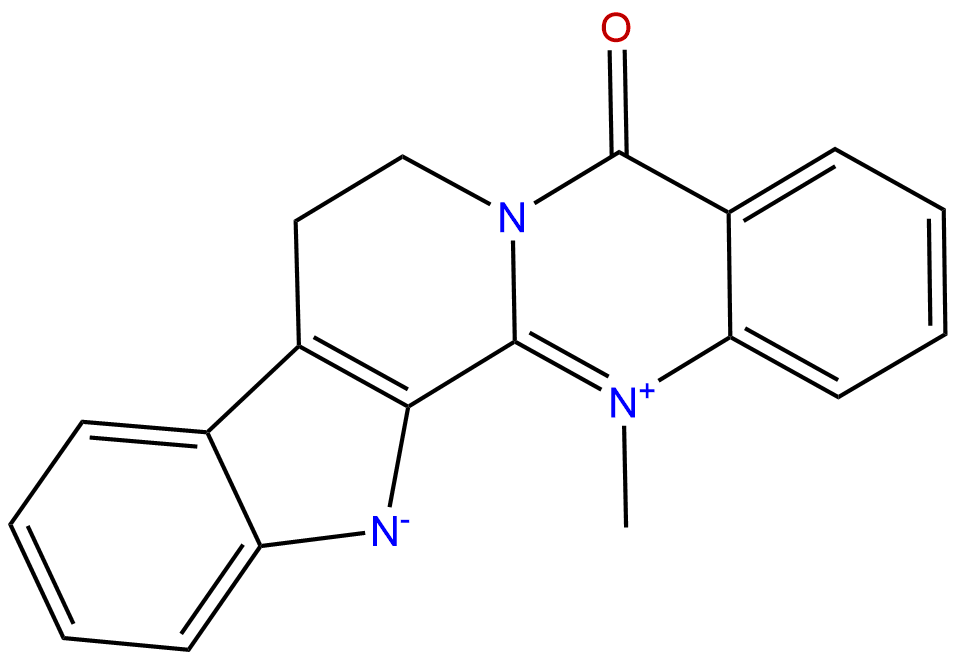


Synonym name:
Catalogue No.: BP0464
Cas No.: 67909-49-3
Formula: C19H15N3O
Mol Weight: 301.35
Botanical Source: Alkaloid from the unripe fruit of Evodia rutaecarpa (Rutaceae)
Purity: 95%~99%
Analysis Method: HPLC-DAD or/and HPLC-ELSD
Identification Method: Mass, NMR
Packing: Brown vial or HDPE plastic bottle
Can be supplied from milligrams to grams, up tp kilograms.
For Reference Standard and R&D, Not for Human Use Directly.
Inquire for bulk scale.
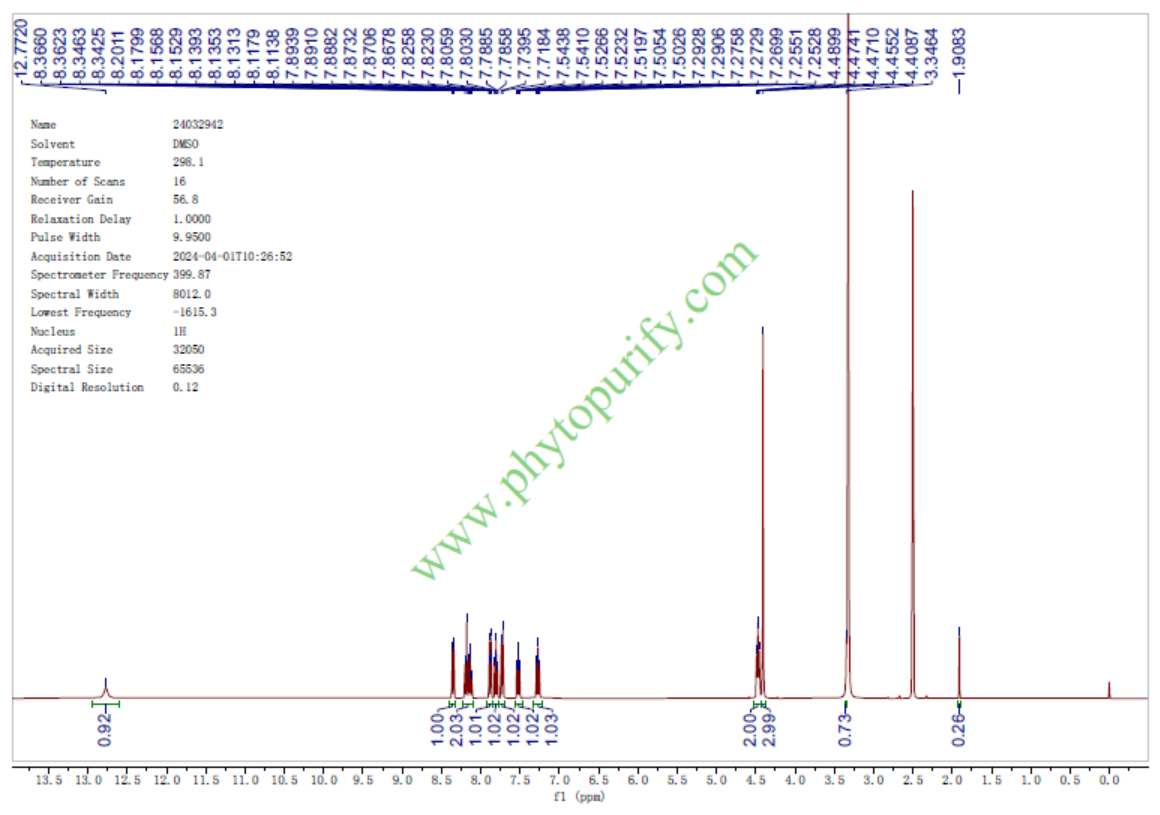
HNMR of Dehydroevodiamine
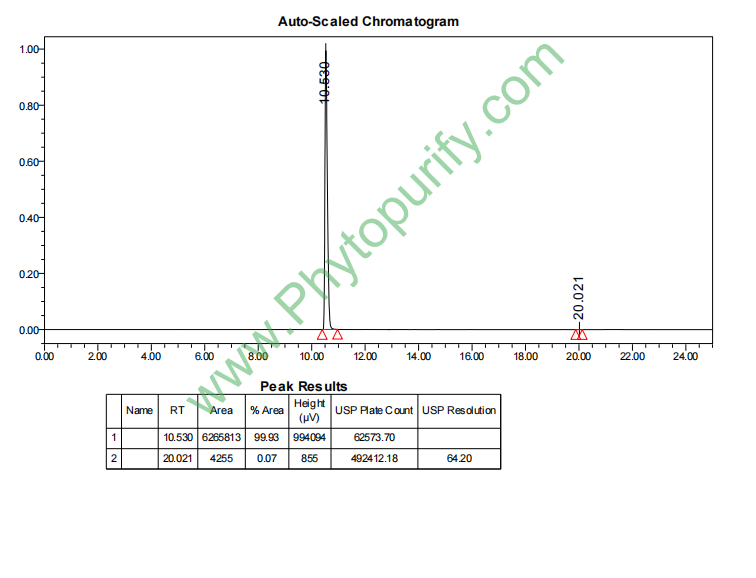
HPLC of Dehydroevodiamine
Storage conditions:Short-term storage at 2~8℃, long-term storage at -20 ~ -80℃
Dehydroevodiamine (DHEVD), CAS number 67909-49-3, is a quinazoline alkaloid isolated from the traditional Chinese medicine Evodiae Fructus. As one of the important active ingredients in Fructus Evodiae, dehydroevodiamine has received widespread attention in recent years due to its multi-target pharmacological activity. Research has shown that DHEVD not only has a significant protective effect on the cardiovascular system, especially in anti arrhythmic effects, but also demonstrates regulatory ability on inflammatory responses, particularly in inhibiting the expression of inflammatory mediators in macrophages. In addition, its multi-target effects in the field of analgesia have laid the foundation for its development as a new type of analgesic drug.
This article provides a systematic review of the chemical structure and physicochemical properties, plant sources and extraction methods, pharmacological activity and mechanism of action, pharmacological evaluation and pharmacokinetic characteristics of dehydroevodiamine. Finally, it looks forward to its clinical application prospects, aiming to provide comprehensive and in-depth reference materials for researchers in the field of natural product pharmacology.
Dihydroevodiamine belongs to the quinazoline alkaloid class, with a molecular formula of C19H19N3O and a molecular weight of 301.3490. Its molecular structure is centered around a quinazoline skeleton, containing multiple aromatic rings and nitrogen heterocycles, endowing it with unique chemical properties and biological activity. The LogP value is 0.2822, indicating that it has moderate lipid solubility, which facilitates permeation through the cell membrane. The polar surface area (TPSA) is 39.98 Å ², and the lower polarity helps it cross the blood-brain barrier, which is consistent with its activity in the central nervous system.
The water solubility is 0.3054, indicating limited solubility in water, but sufficient to support in vivo absorption. The hERG channel inhibition experiment showed a negative result, indicating a low risk of cardiac toxicity. The Ames test result is 1.8, indicating a low risk of genotoxicity and meeting drug safety requirements.
In summary, the physicochemical properties of dehydroevodiamine are suitable for its development as a drug molecule, especially in the fields of central nervous system and cardiovascular diseases.
Dihydroevodiamine is mainly found in Evodiae Fructus, a dried and mature fruit of the Rutaceae family's Evodiae genus. It is widely used in traditional Chinese medicine to treat symptoms such as stomach pain, headache, and cold dampness. The production area of Evodia rutaecarpa is mainly distributed in southern China and Southeast Asia, with a long history of medicinal use and rich chemical composition.
The common methods for extracting dehydrogenated rutaecarpine include:
Solvent extraction method Using ethanol or methanol as solvents, extract alkaloids from Evodia rutaecarpa by reflux or ultrasound assisted extraction.
Acid-base precipitation method By utilizing the alkaline characteristics of alkaloids and adjusting the pH value to precipitate them, further purification can be achieved.
Column chromatography separation Using silica gel or C18 reverse phase column chromatography technology, combined with gradient elution, to achieve efficient separation and purification of dehydroevodiamine.
High performance liquid chromatography (HPLC)Used for qualitative and quantitative analysis and purity testing to ensure the quality of extracts.
In recent years, supercritical CO2 extraction and molecular imprinting techniques have also been attempted to improve the extraction efficiency and purity of dehydroevodiamine, promoting its feasibility for large-scale production.
Dihydroquercetin exhibits significant antiarrhythmic effects on guinea pig ventricular myocytes. Experimental data shows that DHEVD can regulate the action potential of myocardial cells, prolong the effective refractory period, inhibit abnormal excitation conduction, and thus reduce the occurrence of arrhythmia. Its mechanism of action may involve the regulation of potassium ion channels, improving myocardial electrophysiological characteristics, and has potential clinical application value.
Dihydroevodiamine exhibits good anti-inflammatory activity in inflammation models. Especially in LPS induced mouse macrophages, DHEVD can significantly inhibit the expression of inducible nitric oxide synthase (iNOS), cyclooxygenase-2 (COX-2), prostaglandin E2 (PGE2), and nuclear factor kappa B (NF - κ B), reducing inflammatory response. This effect suggests that it may exert anti-inflammatory effects by inhibiting the NF - κ B signaling pathway and reducing the release of pro-inflammatory factors.
Research on the analgesic effects of dehydroevodiamine has shown that it can act on various pain related targets, including TRPV1 (transient receptor potential vanillic acid subtype 1), CNR1 (cannabinoid receptor 1), OPRD1 (delta opioid receptor), PTGS1 (cyclooxygenase-1), TRPA1 (transient receptor potential vanillic acid subtype A1), PTGS2 (cyclooxygenase-2), SLC6A4 (serotonin transporter), OPRM1 (μ - opioid receptor), OPRK1 (κ - opioid receptor), and DRD2 (dopamine D2 receptor). Through multi-target synergistic effects, DHEVD can effectively alleviate inflammatory and neuropathic pain, demonstrating its potential as a novel analgesic drug.
Some studies have also found that dehydroevodiamine has neuroprotective effects, which may alleviate neuronal damage by regulating neurotransmitters and antioxidant mechanisms. In addition, it also has certain effects on blood pressure regulation, gastrointestinal motility, and other aspects, but related research is still in the preliminary stage.
The multi-target mechanism of action of dehydroevodiamine is the basis for its diverse pharmacological activities. The specific mechanisms mainly include:
Regulating ion channels By regulating potassium and calcium ion channels within myocardial cells, the action potential refractory period is prolonged, abnormal electrical activity is inhibited, and arrhythmia is prevented from occurring.
Inhibition of NF - κ B signaling pathway NF - κ B is a key transcription factor in the inflammatory response, and DHEVD reduces the expression of iNOS, COX-2, and PGE2 by inhibiting its activation, thereby alleviating the inflammatory response.
Multi target analgesia mechanism DHEVD acts on pain receptors such as TRPV1 and TRPA1, inhibiting the transmission of pain signals; Simultaneously activate opioid receptors (OPRD1, OPRM1, OPRK1) and cannabinoid receptor CNR1 to enhance endogenous analgesic effects; Regulating serotonin transporter SLC6A4 and dopamine D2 receptor DRD2, involved in pain regulation of the central nervous system.
Antioxidant and neuroprotective effects By clearing free radicals, regulating intracellular antioxidant enzyme activity, and protecting nerve cells from oxidative stress damage.
The synergistic effect of these mechanisms of action demonstrates the broad therapeutic potential of dehydroevodiamine in cardiovascular, inflammatory, and neurological diseases.
From the perspective of pharmacological parameters, dehydroevodiamine has good potential for drug development. Its molecular weight is moderate (301.3490), meeting the requirements of Lipinski rule. The LogP value is 0.2822, indicating that its lipid water phase balance is suitable, which is conducive to in vivo distribution and cell membrane penetration. The TPSA is 39.98, and low polarity helps it cross the blood-brain barrier, which is consistent with its pharmacological activity in the central nervous system.
Although the water solubility is limited (0.3054), oral bioavailability can be improved through formulation optimization. HERG channel inhibition is negative, reducing the risk of cardiac toxicity. The Ames test results indicate that its genotoxicity risk is low and its safety is good.
In terms of pharmacokinetics, dehydroevodiamine has a high blood-brain barrier permeability, indicating that its effective concentration in the central nervous system is easily achievable. The metabolic pathways in the body are not fully understood, but preliminary studies indicate that they are mainly processed by the liver metabolic enzyme system, and the activity and toxicity of metabolites need further investigation.
Overall, dehydroevodiamine shows good pharmacokinetic and safety performance, laying the foundation for further clinical development.
Due to its multi-target and multi mechanism pharmacological properties, dehydroevodiamine has broad clinical application prospects in the fields of cardiovascular disease, inflammatory disease, and pain management.
Arrhythmia treatment Existing antiarrhythmic drugs often have side effects and resistance issues. DHEVD, as a natural product, has good safety and multiple regulatory effects, and is expected to become a new generation of antiarrhythmic drugs.
Anti inflammatory and immune regulation By inhibiting the expression of NF - κ B and inflammatory mediators, DHEVD can be used to treat chronic inflammatory diseases such as rheumatoid arthritis and inflammatory bowel disease, providing a new treatment approach.
Development of analgesic drugs The multi-target mechanism of action of DHEVD for neuropathic and inflammatory pain can help overcome the dependence and resistance of traditional analgesics, and develop safe and effective new analgesics.
Neuroprotection and cognitive impairment Preliminary studies have shown its potential in neuroprotection, and its application in neurodegenerative diseases such as Alzheimer's disease and Parkinson's disease can be explored in the future.
However, the clinical research on dehydroevodiamine is still relatively limited, and there is an urgent need for systematic pharmacological, safety evaluation, and clinical trial support. In addition, optimization of formulation processes, in-depth study of pharmacokinetics, and molecular level analysis of the mechanism of action are also the focus of future research.
Dihydroquercetin, as an important alkaloid component in Fructus Evodiae, has shown broad application prospects in the fields of antiarrhythmic, anti-inflammatory, and analgesic effects due to its unique chemical structure and multi-target pharmacological activity. Its good pharmacokinetic parameters and low toxicity risk provide favorable conditions for clinical translation. In the future, through in-depth mechanism research, pharmacokinetic optimization, and clinical validation, dehydroevodiamine is expected to become an important representative of the new generation of natural medicines, bringing new hope for the treatment of related diseases.
With the continuous advancement of natural product pharmacology and modern drug development technology, the research and application of dehydroevodiamine will usher in a broader development space, promoting the application of natural medicine to a new level in modern medicine.
