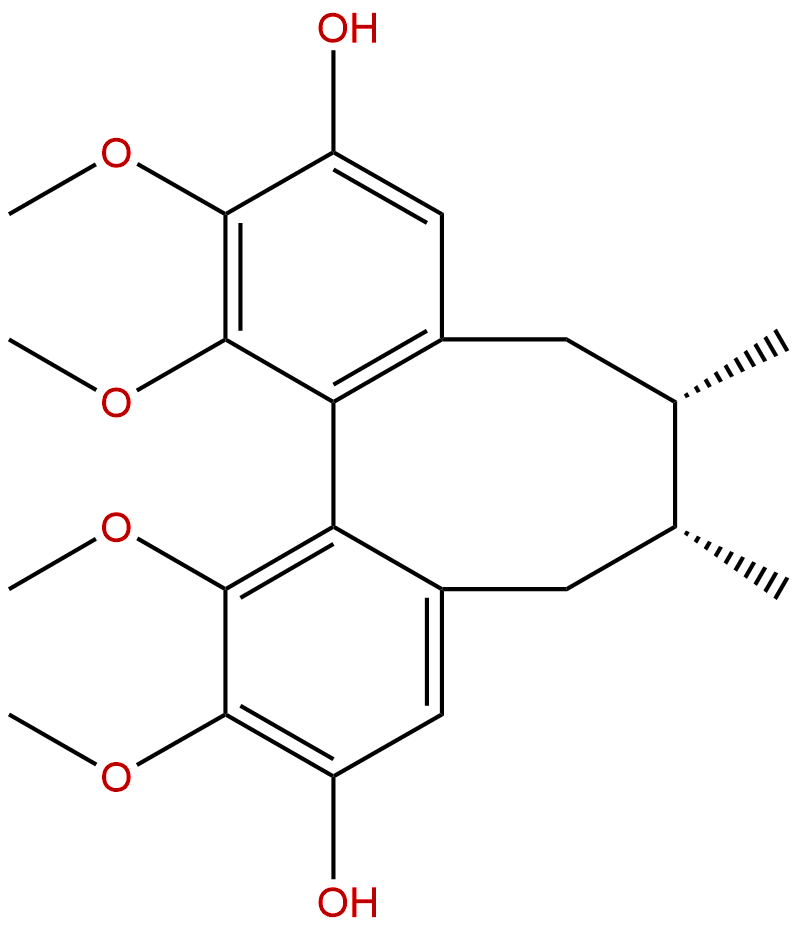


Synonym name:
Catalogue No.: BP0685
Cas No.: 66280-25-9
Formula: C22H28O6
Mol Weight: 388.46
Botanical Source: fruits of Schizandra chinensis and from Kadsura coccinea
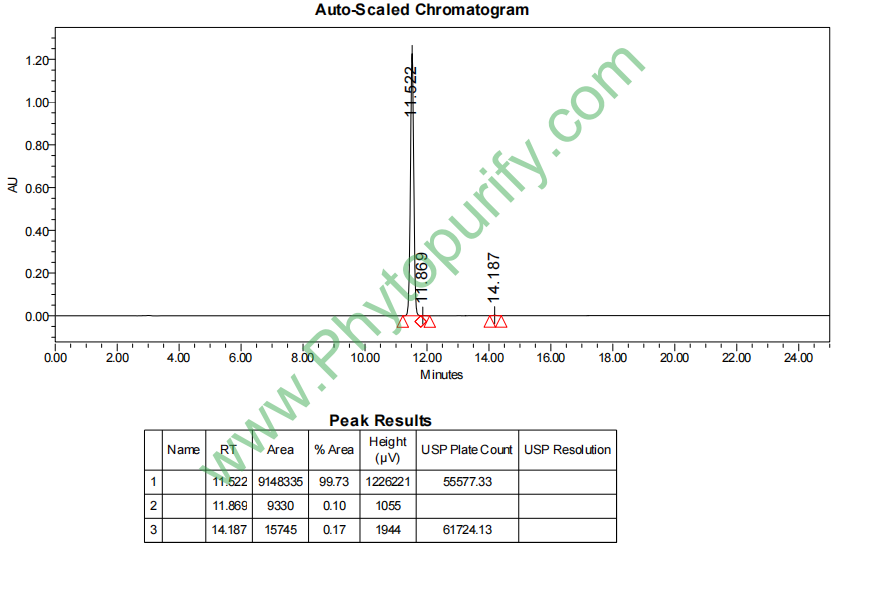
Purity: 95%~99%
Analysis Method: HPLC-DAD or/and HPLC-ELSD
Identification Method: Mass, NMR
Packing: Brown vial or HDPE plastic bottle
Can be supplied from milligrams to grams.
For Reference Standard and R&D, Not for Human Use Directly.
Inquire for bulk scale.
HPLC of Gomisin J
Storage conditions:Short-term storage at 2~8℃, long-term storage at -20 ~ -80℃
Gomisin J is a natural lignan derived from the Chinese medicinal herb Schisandra chinensis, which has attracted much attention in recent years due to its multi-target and multi mechanism pharmacological activities. Schisandra chinensis, as a traditional Chinese medicine, has various effects such as regulating immunity, protecting the liver, antioxidation, and anti-inflammatory. Among them, Gomixin J, as one of its important active ingredients, exhibits a wide range of biological activities. Gomisin J can penetrate the blood-brain barrier and target various key molecules such as eNOS, AMPK (including its upstream kinases LKB1 and CaMKII β), fetuin-A, NF - κ B, and Nrf2/HO-1 signaling pathways, exerting anti hypertensive, lipid metabolism regulating, anti-inflammatory, and antioxidant effects, demonstrating potential therapeutic value in diseases such as hypertension, non-alcoholic fatty liver disease (NAFLD), and cerebral ischemia-reperfusion injury.
This review will systematically introduce the chemical structure and physicochemical properties, plant sources, and extraction methods of Gomixin J, with a focus on its pharmacological activity and mechanism of action. Combined with pharmacological parameters and pharmacokinetics, it will explore its clinical application prospects and future research directions, aiming to provide reference for natural product pharmacology and new drug development.
The chemical name of Gomisin J is (specific chemical name is indexed here with CAS number 66280-25-9 due to diverse literature), with a molecular weight of 388.4600, belonging to the lignan class compounds. Its structural characteristics are having a polycyclic aromatic skeleton, containing functional groups such as methoxy and hydroxyl groups, which endow it with good biological activity. In terms of physical and chemical properties, the LogP value of Gomisin J is 4.1052, indicating that it has good lipid solubility, which is beneficial for cell membrane penetration and blood-brain barrier passage. The topological polar surface area (TPSA) is 77.38 Å ², and moderate polarity facilitates its distribution and targeting ability in vivo. Low water solubility (0.0080 mg/mL) suggests limited solubility in aqueous phase and may require formulation optimization to improve bioavailability.
In terms of safety, Gomixin J did not exhibit hERG channel inhibitory activity, reducing the risk of cardiac toxicity; The Ames test result is 0.6, indicating low mutagenicity and good safety basis. In addition, Gomisin J can effectively cross the blood-brain barrier (BBB), giving it unique advantages in the treatment of neurological diseases.
Gomisin J mainly exists in the fruit of Schisandra chinensis, a plant of the Magnoliaceae family and the Schisandra genus, widely distributed in northeastern China and the Korean Peninsula. Schisandra chinensis fruit contains abundant lignans, which are the main source of gomisin J.
The extraction method usually combines organic solvent extraction with separation and purification techniques. Common extraction solvents include ethanol, methanol, and ethyl acetate, etc. The extraction efficiency is improved by ultrasound assisted extraction or reflux extraction. The crude extract was separated and purified by silica gel column chromatography, reverse phase high performance liquid chromatography (RP-HPLC), and other methods to obtain high-purity gomisin J. In recent years, supercritical CO ₂ extraction and membrane separation techniques have also been explored to improve extraction efficiency and purity.
Gomisin J activates endothelial nitric oxide synthase (eNOS), promotes nitric oxide (NO) production, dilates blood vessels, and lowers blood pressure. Research has shown that Gomixin J can activate phosphorylation of eNOS, enhance NO bioavailability, and improve endothelial function. In addition, Gomisin J indirectly promotes vascular homeostasis by activating the AMPK signaling pathway, regulating energy metabolism and lipid metabolism.
GOMIXIN J exhibits significant lipid-lowering effects in a non-alcoholic fatty liver disease (NAFLD) model. It promotes fatty acid oxidation, inhibits lipid synthesis, and reduces liver fat deposition by activating AMPK and its upstream kinases LKB1 and CaMKII β. At the same time, GOMIXIN J inhibits fetuin-A expression, reduces insulin resistance, and improves liver metabolic disorders.
Gomisin J exerts anti-inflammatory effects by inhibiting the nuclear factor kappa B (NF - κ B) signaling pathway, reducing the expression of pro-inflammatory cytokines such as TNF - α, IL-6, etc. Its inhibitory effect on fetuin-A also helps alleviate inflammatory reactions, especially in the liver and vascular system.
Gomisin J activates the nuclear factor E2 related factor 2 (Nrf2)/heme oxygenase-1 (HO-1) signaling pathway, enhances cellular antioxidant capacity, and reduces oxidative stress damage. In the model of cerebral ischemia-reperfusion injury, Gomisin J alleviates neuronal apoptosis and protects brain tissue function through the aforementioned mechanism. In addition, its excellent blood-brain barrier penetration gives it potential advantages in the treatment of neurological diseases.
Although the main pharmacological activities of GOMIXIN J are concentrated in the cardiovascular, hepatic, and nervous systems, it also exhibits certain regulatory effects on liver cancer-related targets such as BCL2, STAT3, MAPK1, EGFR, etc., indicating its potential for development in the field of tumor therapy.
The multi-target mechanism of action of GOMIXIN J is the basis for its diverse pharmacological activities. The main targets and their mechanisms of action are as follows:
ENOS (endothelial nitric oxide synthase)Gomesin J promotes the activation and phosphorylation of eNOS, enhances NO production, dilates blood vessels, improves hemodynamics, and exerts anti hypertensive effects.
AMPK and its upstream kinases LKB1, CaMKII βAMPK, as a key regulatory factor in cellular energy metabolism, activates the AMPK signaling pathway, promotes fatty acid oxidation, inhibits lipid synthesis, regulates energy metabolism, and improves metabolic syndrome related diseases.
Fetuin-A As a pro-inflammatory and insulin resistance related protein, GOMIXIN J inhibits fetuin-A expression, reduces inflammatory response, and improves insulin sensitivity.
NF - κ B signaling pathway GOMIXIN J inhibits the activation of NF - κ B, reduces the expression of pro-inflammatory factors, and exerts anti-inflammatory effects.
Nrf2/HO-1 antioxidant pathway GOMIXIN J activates Nrf2, induces HO-1 expression, enhances cellular antioxidant defense, and protects tissues from oxidative stress damage.
In addition, Gomisin J also has a certain regulatory effect on liver cancer related signaling molecules such as BCL2, STAT3, MAPK1, EGFR, etc., which may exert anti-tumor effects by regulating cell proliferation, apoptosis, and migration processes.
The pharmacological parameters of GOMIXIN J indicate that it has good potential for drug development. The molecular weight of 388.46 conforms to Lipinski's rule, and the LogP value of 4.1 suggests that it has moderate lipophilicity, which is beneficial for cell membrane penetration and blood-brain barrier passage. The TPSA is 77.38 Å ², suitable for oral absorption and central nervous system distribution.
Low water solubility (0.0080 mg/mL) may limit its oral bioavailability, which needs to be improved through formulation optimization such as nanocarriers and solid dispersions. In terms of safety, there is no hERG channel inhibition, reducing the risk of cardiac toxicity. The Ames test is negative, and the risk of mutagenicity is low.
Pharmacokinetic studies have shown that GOMIXIN J can effectively cross the blood-brain barrier and has the basis of central nervous system efficacy. The metabolic pathways in its body have not been fully elucidated, and it is speculated that it is mainly processed by the liver metabolic enzyme system. In the future, further research is needed on its metabolic stability and drug interactions.
Gomixin J has shown broad clinical application prospects due to its multi-target and multi mechanism pharmacological activity. Its effectiveness in disease models such as hypertension, non-alcoholic fatty liver disease, and cerebral ischemia-reperfusion injury provides new ideas for natural drug treatment of related diseases. Especially its excellent blood-brain barrier penetration ability gives it unique advantages in neuroprotection and treatment of cerebrovascular diseases.
Future research should focus on the following directions:
Pharmacokinetic and toxicological evaluation of the system Clarify the in vivo metabolic pathway, half-life, and long-term safety of Gomixin J, laying the foundation for clinical translation.
In depth analysis of the mechanism Combining multiple omics techniques, further reveal the mechanism of action of Gomisin J in the cellular signaling network and explore its potential anti-tumor activity against tumors such as liver cancer.
Optimization of dosage form and administration route Develop a new drug delivery system to address its poor water solubility and improve bioavailability and targeting.
Preclinical and clinical trial design Conduct animal models and early clinical trials to verify its safety and effectiveness, and promote the clinical application of Gomixin J.
Combination therapy research Exploring the synergistic effect of Gomixin J with existing drugs, especially its potential for combination therapy in metabolic and neurological diseases.
Gomisin J, as an important lignan component in Schisandra chinensis, exhibits multiple biological functions such as anti hypertension, regulation of lipid metabolism, anti-inflammatory, and neuroprotection due to its multi-target and multi mechanism pharmacological activities. Its excellent pharmacological parameters and blood-brain barrier penetration ability provide strong support for the development of new natural medicines. Although research on Gomisin J is still in its early stages, its positive performance in various disease models suggests broad clinical application prospects. In the future, through systematic pharmacokinetic studies, mechanism exploration, and clinical validation, GOMIXIN J is expected to become an important breakthrough in the field of natural product pharmacology, providing new strategies and drug candidates for the treatment of related diseases.
