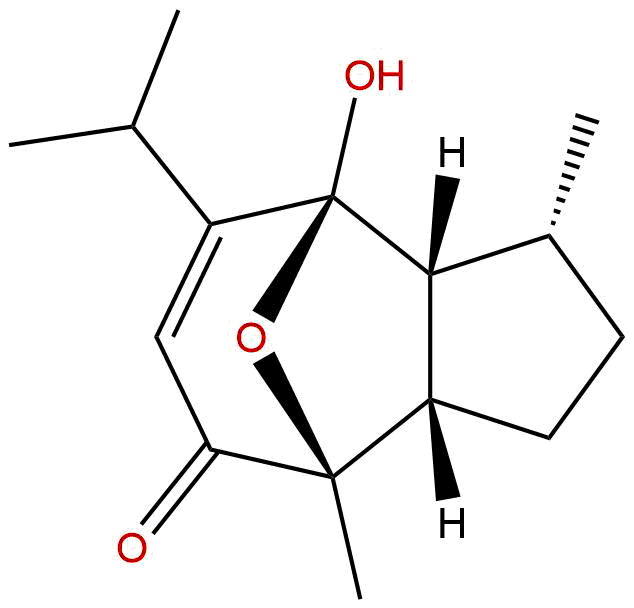


Product name: Alpinenone
Synonym name:
Catalogue No.: BP2323
Cas No.: 103425-23-6
Formula: C15H22O3
Mol Weight: 250.338
Botanical Source:
Type of Compound: Terpenoids
Purity: 95%~99%
Analysis Method: HPLC-DAD or/and HPLC-ELSD
Identification Method: Mass, NMR
Packing: Brown vial or HDPE plastic bottle
Storage: Store in a well closed container, protected from air and light. Put into refrigerate or freeze for long term storage.
Whenever possible, you should prepare and use solutions on the same day. However, if you need to make up stock solutions in advance, we recommend that you store the solution as aliquots in tightly sealed vials at -20℃. Generally, these will be useable for up to two weeks.
The product could be supplied from milligrams to grams
Inquire for bulk scale.
For Reference Standard and R&D, Not for Human Use Directly.
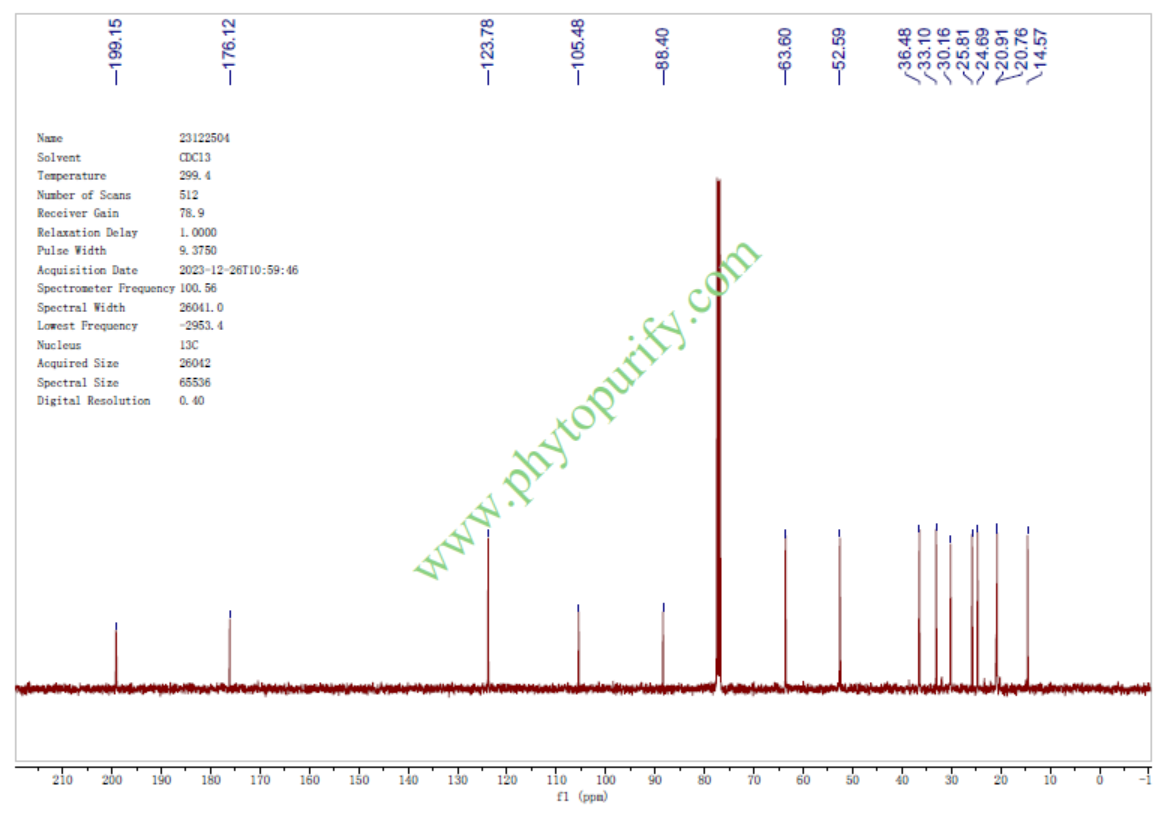
NMR of Alpinenone
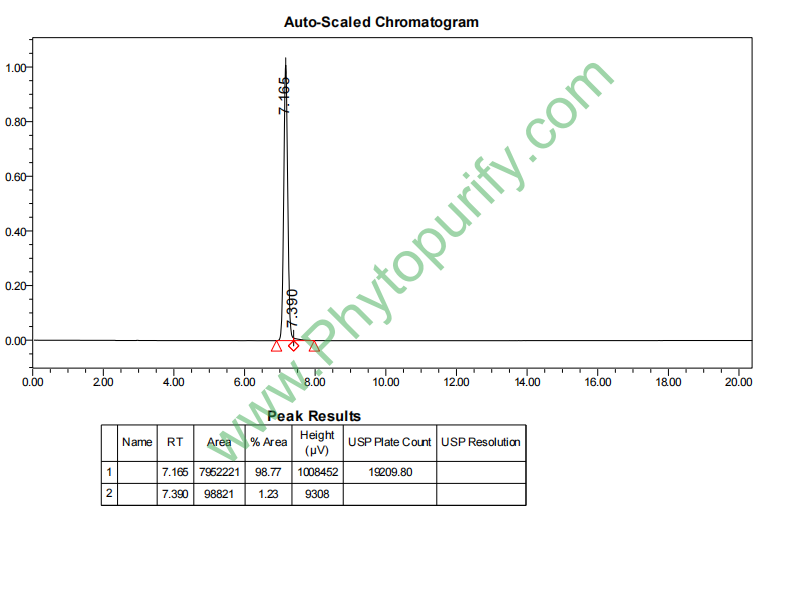
HPLC of Alpinenone
Storage conditions:Short-term storage at 2~8℃, long-term storage at -20 ~ -80℃
46.5300
2.4970
2.4971
.1425
4.6601
29.7881
High
73.0655
5.4418
No
No
No
No
Yes
Yes
0.0
Yes
No
Yes
Yes
Natural products, as an important source of drug discovery, play an irreplaceable role in the long history of human struggle against diseases. Isolating and identifying active ingredients from traditional herbs, and elucidating their pharmacological mechanisms of action, is an important paradigm in modern medicinal chemistry and pharmacology research. In this context, sesquiterpenes have always been a hot topic in natural product research due to their structural diversity and wide range of biological activities. Alpinenone, as a plant species belonging to the ginger family and the ginger genus(Alpinia The sesquiterpenes isolated from spp. have gradually attracted the attention of researchers in recent years. Its chemical name is (1R, 4aS, 8aS) -1,4-dimethyl-6-methyl-5-oxo-1,2,3,4,4a, 7,8,8a-octahydronaphthalene-1-carboxylic acid methyl ester, CAS number 103425-23-6.
Shanjiangenone was originally derived from the traditional Chinese medicine Yizhi(Alpinia oxyphylla Obtained from dried and ripe fruits of Miq. As one of the four major southern medicines in China, Yizhi has the traditional effects of warming the spleen, stopping diarrhea, warming the kidneys, consolidating essence, and reducing urine in traditional Chinese medicine theory. It is commonly used to treat digestive and urinary system diseases such as spleen cold diarrhea, abdominal cold pain, and frequent enuresis. Modern pharmacological research has preliminarily confirmed that mountain ginger ketone is one of the important material foundations for the traditional effects of intelligence enhancement. Research has shown that mountain ginger ketone has significant anti-inflammatory activity, and its mechanism of action is closely related to the inhibition of excessive production of nitric oxide (NO). In addition, preliminary studies on intestinal pathogenic bacteria suggest that the compound may exhibit potential antibacterial activity by acting on key targets such as bacterial DNA gyrases (GYRA/GYRB) and dihydrofolate reductase (DHFR). These findings not only provide a modern scientific explanation for the traditional use of puzzle, but also reveal the potential application value of kaempferone in the treatment of inflammation related diseases and digestive and urinary infectious diseases.
This article aims to provide a systematic review of the research status of mountain ginger ketone, covering its chemical structure and physicochemical properties, plant sources and extraction methods, pharmacological activity, mechanism of action, drug evaluation, and clinical application prospects, in order to provide reference for the in-depth development and utilization of this natural product.
Shanjiangenone belongs to the Eudesmane type sesquiterpenes, and its core skeleton is a decahydronaphthalene ring system. The specific structural features are: there is a methyl substituent at the C-1 and C-4a positions of decahydronaphthalene; The C-6 position is a methylene group (=CH ₂); The C-5 position is a ketone carbonyl group (C=O); In addition, there is a methyl formate group (- COOCH ∝) attached to the C-1 position. This unique structure endows mountain ginger ketone with specific physicochemical properties and is closely related to its biological activity.
From the perspective of physicochemical properties, the molecular weight of mountain ginger ketone is 250.3380 Da, which belongs to small molecule compounds, providing convenience for its transmembrane transport and interaction with biomolecules. The lipophilic water partition coefficient (LogP) of the compound is 2.4970, indicating that it has moderate lipophilicity and is soluble in both organic solvents and water. This characteristic is beneficial for its absorption and distribution within living organisms. Its topological polar surface area (TPSA) is 46.53 Å ², far below the upper limit of 140 Å ² typically required for oral drugs, indicating its good oral absorption potential. However, its water solubility (0.1425 mg/mL) is relatively low, which may limit its bioavailability to some extent and needs to be improved through pharmaceutical methods.
In terms of medicinal chemical properties, predictive models show that kaempferol has high blood-brain barrier (BBB) penetration ability, suggesting its potential central nervous system activity but also increasing the risk of central toxicity. Importantly, the predicted result of hERG inhibition is' no ', indicating a lower risk of inducing QT interval prolongation and arrhythmia in the heart. The Ames test result is 0.0, indicating that it did not show significant mutagenicity in the Salmonella revertant mutation test, and the preliminary safety is good. These pharmacological parameters provide a favorable starting point for the further development of mountain ginger ketone as a lead compound or candidate drug.
The main plant source of mountain ginger ketone is plants in the ginger family and the mountain ginger genus, among which it is used for cognitive purposes(Alpinia oxyphylla Miq. has conducted the most in-depth research. Yizhi is mainly distributed in tropical and subtropical regions such as Hainan, Guangdong, and Guangxi in China. Its dry and mature fruit is the medicinal base of the traditional Chinese medicine "Yizhi Ren". In addition, plants of the same genus such as cardamom(Alpinia katsumadai Hayata and others may also contain this ingredient, but the content is usually low.
The current literature reports mainly rely on traditional solvent extraction methods and their derivative techniques for the extraction of gingerone from Yizhi Zhongshan. Due to its moderate polarity as a sesquiterpene, commonly used extraction solvents include ethanol, methanol, and their aqueous solutions. The typical extraction process is as follows: after crushing the dried puzzle fruit, soak or reflux extract it with a certain concentration of ethanol (such as 70% -95% ethanol) at room temperature or heating conditions. The extract is filtered and concentrated under reduced pressure to obtain the total extract. Subsequently, the total extract was preliminarily separated by liquid-liquid extraction (such as extraction with petroleum ether, ethyl acetate, and n-butanol in sequence), and kaempferol is usually enriched in the ethyl acetate or petroleum ether extraction sites.
In order to obtain high-purity mountain ginger ketone, it is necessary to combine various modern chromatographic separation techniques. Common methods include silica gel column chromatography, ODS (octadecyl silane bonded silica gel) reversed phase column chromatography, Sephadex LH-20 gel column chromatography and preparative high-performance liquid chromatography (Prep HPLC). For example, by loading the ethyl acetate extraction site onto a silica gel column and using solvent systems such as petroleum ether ethyl acetate or chloroform methanol for gradient elution, combined with thin-layer chromatography (TLC) detection, the target components can be preliminarily enriched. Subsequently, using ODS column chromatography, further purification was carried out using methanol water or acetonitrile water systems, and finally, a purity of over 98% of the mountain ginger ketone monomer was obtained through preparative HPLC. The entire separation process usually requires the use of spectroscopic methods such as nuclear magnetic resonance (NMR) and mass spectrometry (MS) for structural identification.
It is worth noting that in order to improve extraction efficiency and reduce solvent consumption, some green extraction techniques such as ultrasound assisted extraction, microwave-assisted extraction, and supercritical fluid extraction have also been applied to the extraction of active ingredients in Sophora alopecuroides. However, specialized optimization research on gingerone is still needed.
Inflammation is a defensive response of the body to harmful stimuli, but excessive or persistent inflammation is the pathological basis of various diseases such as arthritis, colitis, and neurodegenerative diseases. Nitric oxide (NO), as an important inflammatory mediator, is catalyzed by inducible nitric oxide synthase (iNOS) in the inflammatory response. Excessive NO not only directly damages tissues, but also reacts with other reactive oxygen species (ROS) to produce more toxic peroxynitrite, exacerbating inflammatory damage.
One of the most notable pharmacological activities of mountain ginger ketone is its anti-inflammatory effect. In vitro cell experiments have shown that in a lipopolysaccharide (LPS) - stimulated macrophage model (such as RAW264.7 cells), resveratrol can significantly inhibit NO production in a dose-dependent manner. Its mechanism of action is not to directly eliminate the generated NO, but to block the excessive synthesis of NO from the source by downregulating the expression levels of iNOS protein and mRNA. In addition, studies have found that resveratrol can inhibit LPS induced production of prostaglandin E2 (PGE2), which is related to its inhibition of cyclooxygenase-2 (COX-2) expression. These results indicate that resveratrol exerts a multi-target anti-inflammatory effect by simultaneously regulating two key inflammatory pathways, iNOS/NO and COX-2/PGE2.
Traditionally, Yizhi has been used to treat diarrhea, suggesting its potential activity against intestinal pathogenic bacteria. Modern research has preliminarily confirmed the potential of mountain ginger ketone. Computer assisted molecular docking studies have shown that mountain ginger ketone can bind to key target proteins of various intestinal pathogenic bacteria. These targets include:
- DNA gyrases (GYRA and GYRB)This is an essential topoisomerase for bacterial DNA replication and a classic target of quinolone antibiotics. The binding of mountain ginger ketone to GYRA and GYRB may interfere with the supercoiling process of bacterial DNA, thereby inhibiting bacterial growth.
- Dihydrofolate reductase (DHFR)DHFR is a key enzyme in the folate metabolism pathway, responsible for reducing dihydrofolate to tetrahydrofolate, which is an important coenzyme for nucleic acid synthesis. Inhibiting DHFR can block bacterial nucleic acid synthesis and exert antibacterial or bactericidal effects.
- FOLA protein This protein is associated with the transport or metabolism of folate, and its binding may further disrupt the folate metabolism network of bacteria.
Although these findings are mainly based on computational simulations and require validation through in vitro and in vivo experiments, they provide important theoretical basis for the development of mountain ginger ketone as a novel antibacterial lead compound. Especially considering the increasingly severe problem of antibiotic resistance, it is of great strategic significance to search for antibiotics with novel mechanisms of action from natural products.
The traditional effects of mountain ginger ketone, such as antidiarrheal and diuretic effects, have also been preliminarily elucidated by pharmacology. Its antidiarrheal effect may be closely related to its anti-inflammatory and antibacterial activities. By inhibiting intestinal inflammatory response and clearing intestinal pathogenic bacteria, mountain ginger ketone can effectively alleviate diarrhea symptoms caused by infection or inflammation. In addition, studies suggest that resveratrol may exert an antidiarrheal effect by regulating the contractile function of intestinal smooth muscle, slowing down intestinal peristalsis.
The mechanism of diuretic effect is not fully understood and may involve regulation of renal water and salt metabolism. For example, it may promote urine production and excretion by affecting the expression and function of ion channels or aquaporins (AQPs) on renal tubular epithelial cells. This effect may seem contradictory to the traditional efficacy of "warming the kidneys, consolidating essence, and reducing urine" in cognitive development, but traditional Chinese medicine theory emphasizes that "warming the kidneys" helps to promote Qi transformation. If Qi transformation is normal, water metabolism will be orderly. This compound may achieve its complex effects by improving renal microcirculation or regulating neuro humoral factors. The modern scientific connotations of these traditional functions deserve further in-depth research.
The pharmacological mechanism of mountain ginger ketone is multi-level and multi-target, with its core being the regulation of key signaling pathways.
The core mechanism by which shanjiangenone inhibits the expression of iNOS and COX-2 lies in its regulation of transcription factor NF - κ B (nuclear factor kappa B). In the resting state, NF - κ B binds to its inhibitory protein I κ B α and exists in an inactive form in the cytoplasm. When cells are stimulated by inflammation such as LPS, I κ B α is phosphorylated by I κ B kinase (IKK) and subsequently degraded by ubiquitination, releasing NF - κ B. Free NF - κ B immediately enters the nucleus and binds to the κ B sites in the promoter regions of inflammatory genes such as iNOS and COX-2, initiating gene transcription.
Research has shown that resveratrol can effectively inhibit LPS induced phosphorylation and degradation of I κ B α, thereby preventing nuclear translocation of NF - κ B and ultimately downregulating the expression of iNOS and COX-2. In addition, resveratrol may exert anti-inflammatory effects by inhibiting the phosphorylation of mitogen activated protein kinase (MAPK) pathways such as p38 MAPK, JNK, and ERK1/2. The MAPK pathway also participates in regulating the production of inflammatory factors, and its inhibition can further weaken the cascade amplification effect of inflammatory signals.
As mentioned earlier, the antibacterial activity of mountain ginger ketone may stem from its simultaneous action on multiple key bacterial targets. Compared to single target antibiotics, the advantage of this multi-target mode of action is that:
1. synergy Simultaneously interfering with DNA replication (GYRA/GYRB) and folate metabolism (DHFR/FOLA) can synergistically inhibit bacterial growth and reproduction at different levels, enhancing antibacterial efficacy.
2. Reduce drug resistance Bacteria need to develop resistance mutations to multiple unrelated targets simultaneously, with a much lower probability than mutations to a single target. Therefore, multi-target drugs are less likely to induce resistance.
Molecular docking studies provide structural insights into the binding modes of resveratrol to these targets. For example, the ketone carbonyl and ester groups of mountain ginger ketone may interact with key amino acid residues (such as Ser, Asn, Arg, etc.) at the GYRA/GYRB active site through hydrogen bonding, while the hydrophobic decalin skeleton is embedded in the cavity composed of hydrophobic amino acids, forming a stable complex. Similarly, its binding to DHFR may occupy the binding site of folate substrate, competitively inhibiting enzyme activity.
It is worth noting that the pharmacological parameters predict that kaempferol has high blood-brain barrier penetration, suggesting that it may act on targets in the central nervous system. For example, it may exert a protective effect in neurodegenerative diseases such as Alzheimer's disease and Parkinson's disease by regulating the activation status of microglia and inhibiting neuroinflammation in the central nervous system. In addition, ERBB2 (human epidermal growth factor receptor 2) has also been listed as a potential related target, suggesting that resveratrol may have anti-tumor activity, but its specific mechanism remains to be elucidated.
Based on the Lipinski Five Rules and the aforementioned physicochemical parameters, mountain ginger ketone exhibits good drug like properties. Its molecular weight (250.34 Da) is less than 500, LogP (2.50) is less than 5, and the number of hydrogen bond donors (0) and acceptors (3) meets the regulatory requirements. The TPSA value (46.53 Å ²) also indicates good membrane permeability. These parameters collectively predict that resveratrol has the potential to become an oral medication.
In terms of safety evaluation, hERG inhibition negative (no) and Ames test negative (0.0) are two very positive signals. Inhibition of hERG channel is one of the main causes of drug-induced cardiac toxicity, and negative results greatly reduce its cardiac safety risk. A negative Ames test indicates that it does not have direct genotoxicity and has a low initial risk of genotoxicity. However, this is only a preliminary prediction, and comprehensive in vitro and in vivo toxicological evaluations are still needed, including acute toxicity, long-term toxicity, reproductive toxicity, and carcinogenicity tests.
At present, there is limited experimental data on the pharmacokinetics of mountain ginger ketone in vivo, mainly relying on computer prediction. Based on its physicochemical properties, preliminary inferences can be made about its ADME (absorption, distribution, metabolism, excretion) characteristics:
The unique pharmacological activity spectrum and good pharmacological properties of mountain ginger ketone indicate its application prospects in multiple therapeutic fields.
Given its significant anti-inflammatory activity, mountain ginger ketone or its derivatives are expected to be developed as novel drugs for the treatment of chronic inflammatory diseases. For example, in Inflammatory bowel disease (IBD)In the treatment of conditions such as Crohn's disease and ulcerative colitis, kaempferol can exert therapeutic effects by inhibiting local intestinal inflammation, regulating intestinal microbiota, and protecting the intestinal mucosal barrier. In addition, it is Rheumatoid arthritis、acute lung injury The potential in disease models is also worth exploring.
Faced with the increasingly severe problem of bacterial resistance, mountain ginger ketone, as a multi-target antibacterial lead compound, has important development value. Especially for Intestinal pathogenic bacteria Shanjiangenone may become an effective treatment option for infectious diarrhea caused by bacteria such as Escherichia coli, Salmonella, Shigella, etc. Future research should focus on:
1. Determine antibacterial spectrum Determine the minimum inhibitory concentration (MIC) and minimum bactericidal concentration (MBC) of various intestinal pathogenic bacteria through in vitro drug sensitivity testing.
2. Verify the mechanism of action Through techniques such as gene knockout, protein overexpression, and surface plasmon resonance (SPR), the direct binding and mode of action with targets such as GYRA and DHFR were confirmed.
3. Evaluate combination therapy Study its synergistic or additive effects with traditional antibiotics, explore combination therapy to reduce antibiotic dosage and delay the development of drug resistance.
The traditional efficacy of mountain ginger ketone suggests its potential application in functional gastrointestinal diseases (such as diarrhea predominant irritable bowel syndrome) and urinary system diseases (such as urinary tract infections and prostatitis). Future preclinical studies should establish corresponding animal models to systematically evaluate their effects on antidiarrheal, diuretic, and smooth muscle function.
Shanjiangenone, as a sesquiterpene natural product derived from traditional Chinese medicine Yizhi, combines various pharmacological activities such as anti-inflammatory, antibacterial, antidiarrheal, and diuretic effects. Its mechanism of action involves regulating the NF - κ B/MAPK signaling pathway and inhibiting multiple targets such as bacterial DNA gyrase and DHFR. The preliminary pharmacological evaluation shows that it has good drug like properties and low risks of cardiac toxicity and genotoxicity, and has the potential to become a lead compound or candidate drug.
However, current research on mountain ginger ketone is still in its early stages and there are still many gaps. For example, its pharmacokinetic characteristics in vivo, comprehensive toxicological evaluation, precise antibacterial spectrum and mechanism, as well as systematic pharmacological research on digestive and urinary system diseases all need to be further explored. Future research should focus on structural optimization, mechanism elucidation, and formulation development, in order to transform the active molecules in this ancient traditional Chinese medicine into modern drugs that can benefit human health. The research on mountain ginger ketone not only provides scientific basis for the modern application of traditional Chinese medicine for intelligence enhancement, but also opens up new avenues for discovering new anti-inflammatory and antibacterial drugs from natural products.
