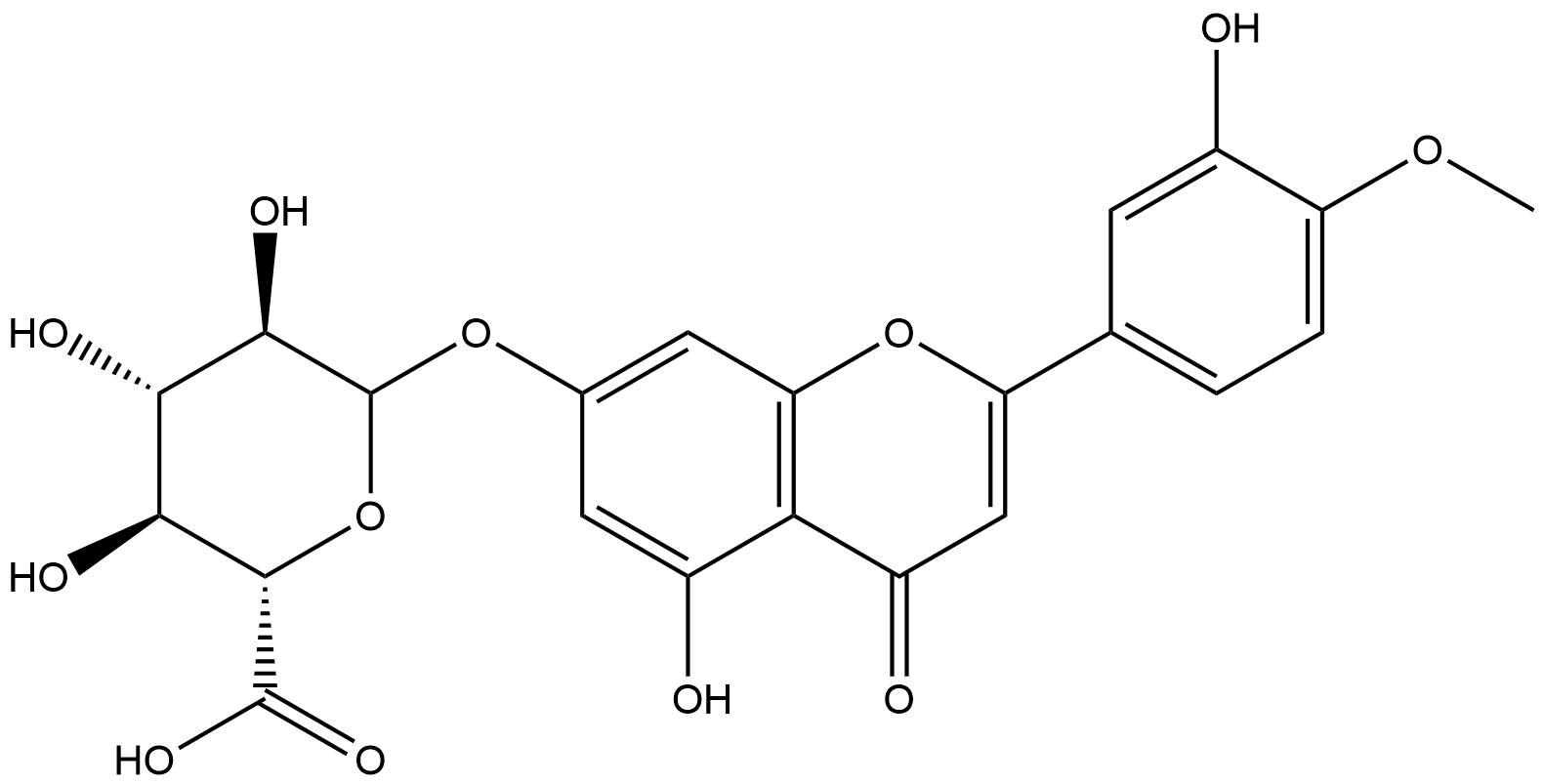


Product name: Diosmetin 7-O-β-D-glucuronide
Synonym name: Diosmetin 7-O-glucuronide;Diosmetin 7-glucuronide
Catalogue No.: BP2103
Cas No.: 35110-20-4
Formula: C22H20O12
Mol Weight: 476.39
Botanical Source: Dracocephalum moldavica L.
Type of Compound: Flavonoids
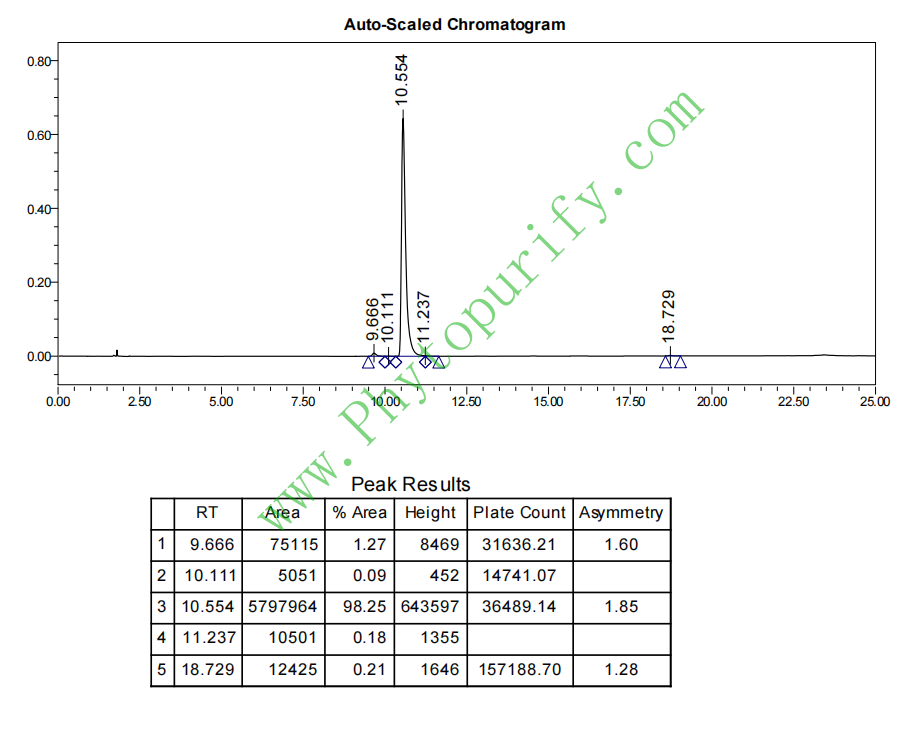
Purity: 95%~99%
Analysis Method: HPLC-DAD or/and HPLC-ELSD
Identification Method: Mass, NMR
Packing: Brown vial or HDPE plastic bottle
Storage: Store in a well closed container, protected from air and light. Put into refrigerate or freeze for long term storage.
Whenever possible, you should prepare and use solutions on the same day. However, if you need to make up stock solutions in advance, we recommend that you store the solution as aliquots in tightly sealed vials at -20℃. Generally, these will be useable for up to two weeks.
The product could be supplied from milligrams to grams
Inquire for bulk scale.
For Reference Standard and R&D, Not for Human Use Directly.
HPLC of Diosmetin 7-O-β-D-glucuronide
Storage conditions:Short-term storage at 2~8℃, long-term storage at -20 ~ -80℃
196.3500
.4473
-1.6395
1.6045
.5720
.2280
Low
87.2791
3.9516
Yes
No
Yes
No
Yes
No
0.6
Yes
No
Yes
No
Diosmetin 7-O - β - D-glucuronide is a glucuronide form of natural flavonoids, which has received widespread attention in the field of natural product pharmacology in recent years due to its unique biological activity and good safety. Flavonoids, as secondary metabolites in plants, have shown great potential in anti-inflammatory, antioxidant, anti allergic, and immune regulation due to their diverse biological activities. As one of the metabolites of Diosmetin, 7-O - β - D-glucuronide, a type of lignin, exhibits different pharmacological characteristics from its parent compound due to its high water solubility and specific molecular structure. Especially in the treatment research of immune related diseases such as allergic rhinitis, it has shown unique molecular target regulation ability and potential clinical application value.
This article will provide a systematic review of the chemical structure and physicochemical properties, plant sources and extraction methods, pharmacological activity and mechanism of action, pharmacological evaluation and pharmacokinetic characteristics of 7-O - β - D-glucuronide glycosides from Fragrant Leaf Lignin. Combined with its molecular targets in diseases such as allergic rhinitis, the future clinical application prospects and development directions will be explored.
The molecular formula of lignin 7-O - β - D-glucuronide is C22H2O12, with a molecular weight of 476.3900. Its structure is based on the core of Diosmetin (4 ′, 5,7-trihydroxy-3 ′ - methoxyflavone), with the 7th hydroxyl group connected to the glucuronic acid group through a β - D-glucuronide bond. This structure endows it with high polarity and water solubility (solubility of about 1.6045 mg/mL), making it have good dispersibility in aqueous media, which is conducive to the improvement of bioavailability.
In terms of physicochemical properties, the LogP value of this compound is 0.4473, indicating its strong hydrophilicity and low lipid solubility, making it difficult to pass through the blood-brain barrier (BBB). This has certain advantages for targeting peripheral immune system diseases such as allergic rhinitis and avoiding central nervous system side effects. The topological polar surface area (TPSA) is 196.35 Å ², and the higher polar surface area supports its binding potential with multiple polar targets.
In addition, the lignin 7-O - β - D-glucuronide in fragrant leaves does not exhibit hERG channel inhibitory activity, indicating a low risk of cardiac toxicity. The Ames test result is 0.6, indicating a low risk of genotoxicity and good safety.
Vanillin 7-O - β - D-glucuronide is mainly found in various plants containing Vanillin, such as Citrus spp., Citrus sinensis, Citrus reticulata, and other Rutaceae plants. As a metabolite of lignin in fragrant leaves, it can also be produced in plants through enzymatic glucuronidation reaction.
The extraction method usually uses water extraction or alcohol extraction combined with liquid chromatography separation technology. The specific steps include:
In addition, modern biosynthetic techniques and microbial transformation methods have also been explored for efficient preparation of this compound to meet the needs of pharmacological research and clinical development.
The pharmacological research of lignin 7-O - β - D-glucuronide in fragrant leaves mainly focuses on its anti-inflammatory, anti allergic, and immune regulatory effects, especially showing significant therapeutic effects in allergic rhinitis models.
Allergic rhinitis is a chronic inflammatory disease mediated by IgE, involving multiple inflammatory mediators and cytokines. Xiangye lignin 7-O - β - D-glucuronide alleviates nasal mucosal edema and inflammatory response by inhibiting degranulation of mast cells, reducing histamine release, and regulating the expression of inflammatory mediators.
This compound can inhibit the activation of the nuclear factor kappa B (NF - κ B) signaling pathway, reduce the expression of pro-inflammatory cytokines such as IL-4, IL-5, and IL-13, regulate Th2 type immune responses, and alleviate allergic inflammation. In addition, its regulation of interleukin-4 receptor (IL4R) and chemokine receptor CCR3 helps to inhibit the recruitment and activation of eosinophils.
Xiangye lignin 7-O - β - D-glucuronide has the ability to scavenge free radicals, alleviate oxidative stress damage, protect nasal mucosal cells from oxidative damage, and indirectly alleviate allergic inflammation.
Preliminary studies have shown that the compound has a certain regulatory effect on histamine H1 receptor (HRH1) and cholinergic receptor M3 type (CHRM3), suggesting that it may improve allergic symptoms through multi-target synergistic regulation.
The pharmacological effects of lignin 7-O - β - D-glucuronide involve multiple signaling pathways and molecular targets, mainly including:
Nuclear factor kappa B (NFKB1)This compound inhibits the nuclear translocation of NFKB1, blocks the transcription of pro-inflammatory genes, reduces the release of Th2 cytokines such as IL-4, IL-5, IL-13, and alleviates allergic inflammation.
Interleukin-4 receptor (IL4R)By regulating the IL4R signal, inhibiting IL-4-mediated IgE synthesis and eosinophil activation, allergic reactions can be alleviated.
Histamine H1 receptor (HRH1)This receptor mediates histamine induced vasodilation and neural stimulation, and the antagonistic effect of lignin 7-O - β - D-glucuronide on it helps alleviate symptoms such as nasal congestion and sneezing.
Cholinergic receptor M3 type (CHRM3)Regulating nasal gland secretion and vascular contraction function, participating in the protection and repair of nasal mucosa.
Fc ε RI receptor (FCER1A)As a high affinity receptor for IgE, it regulates degranulation of mast cells, and lignin 7-O - β - D-glucuronide inhibits its signaling pathway, reducing the release of allergic mediators.
Chemokine receptor CCR3 Mediating eosinophil chemotaxis, the regulation of CCR3 by compounds helps to inhibit eosinophil mediated tissue damage.
Bacterial lipopolysaccharide (LPS) related signals Reduce the inflammatory burden on nasal mucosa by inhibiting LPS induced inflammatory response.
Overall, lignin 7-O - β - D-glucuronide from Xiangye has shown good therapeutic potential by regulating immune balance and inhibiting allergic inflammatory reactions through multi-target and multi pathway synergistic effects.
The pharmacological parameters of lignin 7-O - β - D-glucuronide in fragrant leaves show that it has certain potential for development:
In terms of pharmacokinetics, the form of glucuronide is usually hydrolyzed by β - glucosidase in the intestine and liver to form the active form of parent lignin, which is the active form. This metabolic process affects its bioavailability and in vivo distribution. Research has shown that lignin 7-O - β - D-glucuronide has a long half-life in the body, with obvious sustained release characteristics, and is suitable for continuous treatment.
In addition, its water solubility and low fat solubility characteristics make it mainly excreted through the kidneys, reducing the burden on the liver. Further in vivo pharmacokinetic and metabolic studies are needed in the future to clarify its absorption, distribution, metabolism, and excretion (ADME) characteristics, providing a basis for clinical dosage form design.
Allergic rhinitis, as a common chronic inflammatory disease worldwide, has a serious impact on the quality of life of patients, and existing treatment methods often have side effects and drug resistance issues. Fragrant lignin 7-O - β - D-glucuronide, with its multi-target regulation and good safety, has shown the potential to become a new natural anti allergic drug.
The future clinical application prospects are mainly reflected in:
However, current clinical research on lignin 7-O - β - D-glucuronide is still in its infancy, and there is an urgent need for systematic preclinical safety evaluation and clinical trial data support. Future research should focus on:
As a natural flavonoid glucuronide with significant anti allergic and anti-inflammatory activities, lignin 7-O - β - D-glucuronide has become a powerful candidate molecule in the treatment of immune related diseases such as allergic rhinitis due to its unique chemical structure and good drug properties. The multi-target and multi pathway mechanism of action provides a theoretical basis and practical basis for the development of new safe and effective natural medicines.
In the future, with the deepening of pharmacokinetics, pharmacodynamics, and clinical research, lignin 7-O - β - D-glucuronide is expected to become an important breakthrough in the development of natural product drugs, bringing new treatment options for allergic disease patients and promoting the development and innovation of natural product pharmacology.
