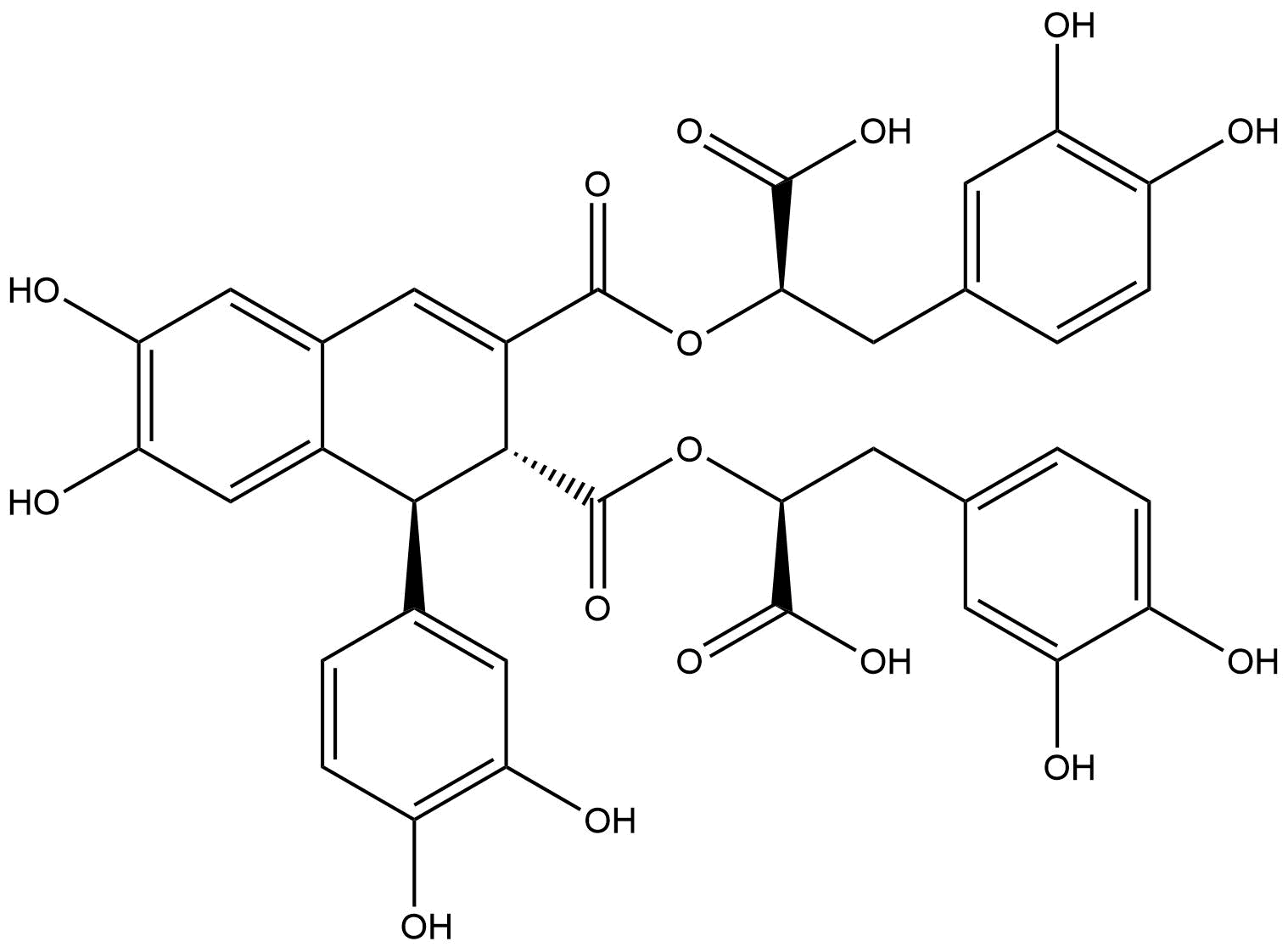


Product name: (+)-Rabdosiin
Synonym name:
Catalogue No.: BP2102
Cas No.: 263397-69-9
Formula: C36H30O16
Mol Weight: 718.62
Botanical Source: Dracocephalum moldavica L.
Type of Compound:
Purity: 95%~99%
Analysis Method: HPLC-DAD or/and HPLC-ELSD
Identification Method: Mass, NMR
Packing: Brown vial or HDPE plastic bottle
Storage: Store in a well closed container, protected from air and light. Put into refrigerate or freeze for long term storage.
Whenever possible, you should prepare and use solutions on the same day. However, if you need to make up stock solutions in advance, we recommend that you store the solution as aliquots in tightly sealed vials at -20℃. Generally, these will be useable for up to two weeks.
The product could be supplied from milligrams to grams
Inquire for bulk scale.
For Reference Standard and R&D, Not for Human Use Directly.
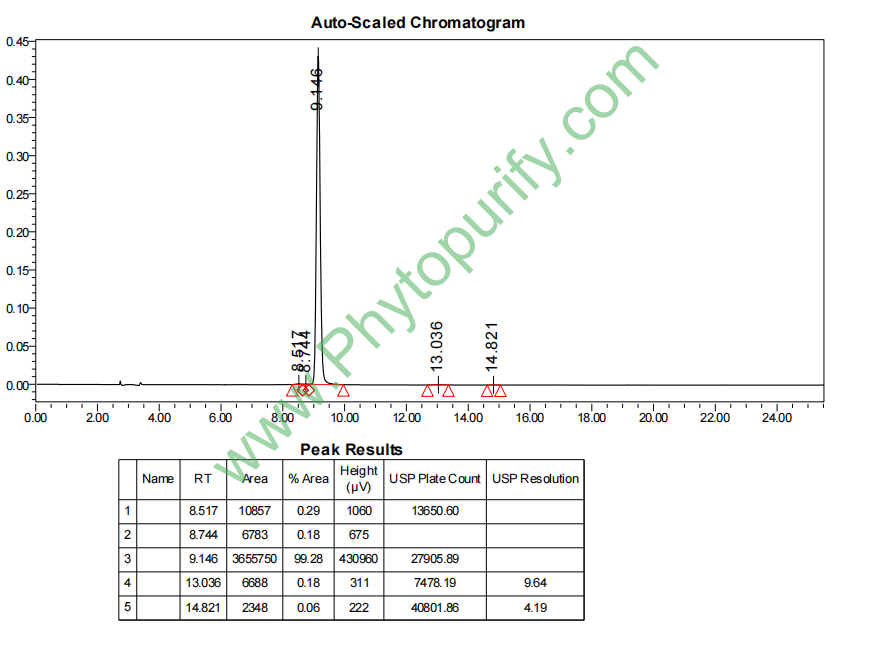
HPLC of (+)-Rabdosiin
Storage conditions:Short-term storage at 2~8℃, long-term storage at -20 ~ -80℃
289.0400
2.1433
-.4296
.1926
1.0012
.4050
Low
90.5046
4.5674
Yes
No
No
No
Yes
Yes
0.0
Yes
No
No
No
(+) - Rabdosiin is a natural product with significant biological activity, belonging to the phenolic compound family, originally isolated from various plants. In recent years, with the rapid development of natural product pharmacology, (+) - Rabdosiin has gradually become a research hotspot due to its unique chemical structure and multi-target mechanism of action. Especially in the prevention and treatment of Helicobacter pylori (H. pylori) infection related diseases, (+) - Rabdosiin exhibits good antibacterial activity and multi-target regulation ability, demonstrating potential clinical application value.
Helicobacter pylori is a Gram negative spiral bacterium widely present in human gastric mucosa, and is an important pathogenic factor for gastritis, peptic ulcers, and even gastric cancer. The existing treatment plans for Helicobacter pylori face challenges of increased drug resistance and significant side effects, prompting researchers to continuously search for new natural antibacterial agents. (+) - Rabdosiin exhibits multi-target synergistic antibacterial effects by acting on various key targets, such as DNA gyrase GYRB, urease UREA, VacA toxin, etc., and has high research and development value.
This article will provide a systematic review of the chemical structure and physicochemical properties, plant sources and extraction methods, pharmacological activity and mechanism of action, pharmacological evaluation and pharmacokinetic characteristics of Rabdosiin, with a focus on exploring its potential applications in Helicobacter pylori infection related diseases. The aim is to provide theoretical basis and research direction for subsequent drug development and clinical translation.
The molecular formula of (+) - Rabdosiin is C36H30O16, with a molecular weight of 718.62 Da, belonging to complex polyphenolic compounds. Its structural features mainly include multiple phenolic hydroxyl groups and ester bonds, with strong polarity and abundant hydrogen bond donor/acceptor functional groups. Structurally, (+) - Rabdosiin is a dimer formed by two units of rosmarinic acid connected by ester bonds, exhibiting typical structural characteristics of phenolic compounds.
In terms of physical and chemical properties, the LogP value of (+) - Rabdosiin is 2.1433, indicating its moderate lipid solubility, which is beneficial for membrane penetration and bioavailability. Its topological polar surface area (TPSA) is relatively large, reaching 289.04 Å ², indicating high molecular polarity, which may affect its oral absorption and membrane permeability. The water solubility is 0.1926, indicating low water solubility, and its bioavailability may need to be improved through formulation strategies. The low permeability of the blood-brain barrier indicates its limited distribution in the central nervous system, which helps to reduce central nervous system related side effects. The hERG channel inhibition experiment showed a negative result, indicating a low risk of cardiac toxicity. The Ames mutagenicity test result was 0, indicating good genetic toxicity safety.
In summary, the physicochemical properties of (+) - Rabdosiin are suitable as lead compounds for oral drugs, but pharmaceutical optimization is needed to address its low water solubility and high polarity in order to enhance its in vivo absorption and bioavailability.
(+) - Rabdosiin was initially isolated from plants in the Lamiaceae family, and is particularly abundant in plants of the Rabdosia genus. Rabdosia plants are widely used in traditional Chinese medicine for anti-inflammatory, antibacterial, and anti-tumor purposes. (+) - Rabdosiin, as one of its main active ingredients, plays an important pharmacological role.
The extraction method usually adopts organic solvent extraction combined with separation and purification technology. The specific process includes:
In recent years, the introduction of supercritical CO2 extraction and membrane separation technology has provided new ideas for the green and efficient extraction of (+) - Rabdosiin, reducing the use of organic solvents and improving extraction purity and yield.
The pharmacological activity of Rabdosiin mainly focuses on the prevention and treatment of Helicobacter pylori infection and related gastrointestinal diseases. Numerous in vitro and in vivo studies have confirmed its significant antibacterial, anti-inflammatory, antioxidant, and immunomodulatory effects.
Multiple studies have shown that (+) - Rabdosiin can effectively inhibit the growth of Helicobacter pylori, with a minimum inhibitory concentration (MIC) in the low micromolar range. Its antibacterial mechanism involves multi-target synergistic effects, which can interfere with bacterial DNA replication, protein synthesis, and toxin secretion, exhibiting a lower risk of resistance compared to traditional antibiotics.
Helicobacter pylori infection is often accompanied by gastric mucosal inflammation. (+) - Rabdosiin reduces gastric mucosal inflammatory damage by inhibiting the expression of inflammatory factors such as TNF - α, IL-6, IL-1 β. At the same time, its rich phenolic hydroxyl structure endows it with strong free radical scavenging ability, which can effectively inhibit oxidative stress and protect gastric mucosal cells from oxidative damage.
(+) - Rabdosiin can also regulate the host immune response, promote the activity of macrophages and lymphocytes, and enhance the body's immune clearance ability against Helicobacter pylori. In addition, its protective effect on the gastric mucosal barrier function helps maintain the integrity and repair ability of the gastric mucosa.
In addition to its anti Helicobacter pylori effect, (+) - Rabdosiin has also shown certain anti-tumor, antiviral, and neuroprotective effects, indicating its broad pharmacological effects and potential for further research in multiple fields in the future.
The mechanism of action of Rabdosiin against Helicobacter pylori involves multiple key targets, demonstrating the advantage of synergistic inhibition of multiple targets.
GYRB is an essential enzyme in the DNA replication process of Helicobacter pylori. (+) - Rabdosiin inhibits its enzyme activity by binding to GYRB, blocking the replication and repair of bacterial DNA, resulting in inhibited bacterial proliferation.
Urease is an important enzyme for the survival of Helicobacter pylori, which can break down urea to produce ammonia and regulate the pH environment in the stomach. (+) - Rabdosiin inhibits the activity of UREA and its subunit UreB, disrupts the acid tolerance mechanism of bacteria, and reduces their gastric mucosal colonization ability.
VacA is the main toxin secreted by Helicobacter pylori, which can cause apoptosis and immune escape in gastric mucosal cells. (+) - Rabdosiin reduces cytotoxicity and inflammatory response by inhibiting the expression or activity of VacA.
HpDnaK, as a molecular chaperone protein, participates in protein folding and stress response. (+) - Rabdosiin interferes with its function and affects the protein homeostasis of bacteria. HopQ is a key adhesion factor in the interaction between bacteria and host cells. (+) - Rabdosiin blocks HopQ mediated adhesion, reducing bacterial adhesion and invasion ability.
In addition, (+) - Rabdosiin may also act on bacterial related proteins such as BABA and CAGA, further enhancing its antibacterial effect. The multi-target mechanism not only enhances antibacterial activity, but also reduces the risk of bacterial resistance.
The pharmacological evaluation of Rabdosiin shows that it has good safety and potential drug development value.
Due to the high molecular weight and polarity of (+) - Rabdosiin, its oral absorption is limited and its bioavailability is low. The low permeability of the blood-brain barrier reduces the possibility of central nervous system side effects. Its metabolism in the body is mainly carried out through the liver enzyme system, and the metabolites need further identification.
To improve its pharmacokinetic performance, researchers have attempted to use strategies such as nanocarriers, liposome encapsulation, and structural modification to enhance its water solubility, stability, and bioavailability.
(+) - Rabdosiin, as a multi-target natural product against Helicobacter pylori, has broad clinical application prospects.
The current standard treatment regimen for Helicobacter pylori faces issues of antibiotic resistance and side effects. (+) - Rabdosiin, with its multi-target antibacterial mechanism and good safety, is expected to become a candidate molecule for novel anti Helicobacter pylori drugs. In the future, existing treatment plans can be combined to achieve synergistic effects.
Through anti-inflammatory, antioxidant, and protective effects on the gastric mucosa, (+) - Rabdosiin can be used as an adjuvant therapy for Helicobacter pylori associated gastritis and peptic ulcers, improving patient symptoms and prognosis.
Given its multiple pharmacological activities, (+) - Rabdosiin also has potential for development in the fields of anti-tumor, immune regulation, and neuroprotection, and deserves further in-depth research.
(+) - Rabdosiin, as a polyphenolic compound derived from natural plants, exhibits significant pharmacological activity and good safety in the prevention and treatment of Helicobacter pylori and related gastrointestinal diseases due to its unique chemical structure and multi-target mechanism of action. The evaluation results of its pharmacological properties support its potential as a candidate molecule for new natural medicines, but it still needs to overcome the limitations of low water solubility and bioavailability. In the future, through pharmaceutical optimization, in-depth mechanism research, and clinical validation, (+) - Rabdosiin is expected to become an important drug for treating Helicobacter pylori infection and related diseases, providing new ideas and examples for natural product pharmacology and anti infective drug development.
