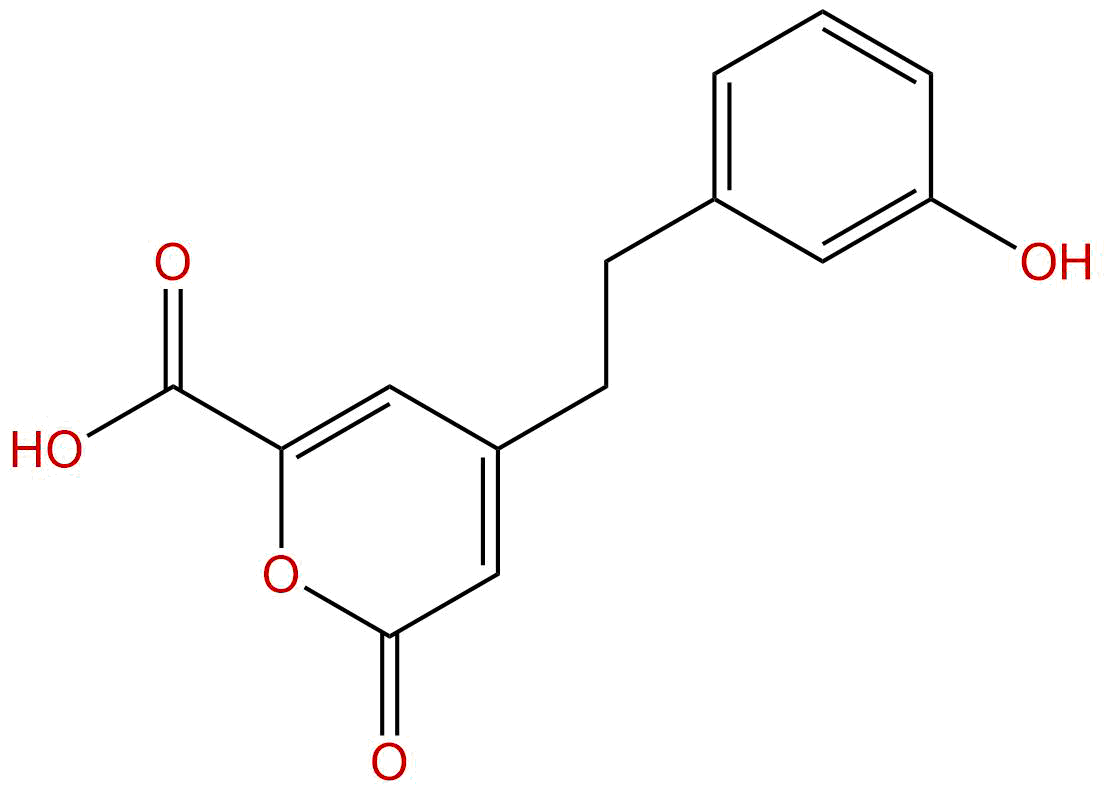


Product name: Moldapyranone B
Synonym name:
Catalogue No.: BP2122
Cas No.:
Formula: C14H12O5
Mol Weight: 260.245
Botanical Source:
Type of Compound:
Purity: 95%~99%
Analysis Method: HPLC-DAD or/and HPLC-ELSD
Identification Method: Mass, NMR
Packing: Brown vial or HDPE plastic bottle
Storage: Store in a well closed container, protected from air and light. Put into refrigerate or freeze for long term storage.
Whenever possible, you should prepare and use solutions on the same day. However, if you need to make up stock solutions in advance, we recommend that you store the solution as aliquots in tightly sealed vials at -20℃. Generally, these will be useable for up to two weeks.
The product could be supplied from milligrams to grams
Inquire for bulk scale.
For Reference Standard and R&D, Not for Human Use Directly.
Storage conditions:Short-term storage at 2~8℃, long-term storage at -20 ~ -80℃
null
null
null
Moldapyranone B is a plant derived from the family Lamiaceae, specifically from the plant Moldapyranone(Dracocephalum moldavica)Natural products obtained through separation. According to its naming suffix 'pyranone', this compound belongs to the pyranone derivative in terms of chemical structure. Pyranone compounds are widely distributed in nature, especially in secondary metabolites of plants and microorganisms, and typically possess diverse biological activities such as antioxidant, anti-inflammatory, antibacterial, and anti-tumor properties. As a traditional medicinal plant, Xiangqinglan is commonly used in folk medicine to treat cardiovascular diseases, neurological disorders, and inflammation related diseases. Therefore, new compounds such as Xiangqinglan pyranoside B isolated and identified from its extracts have attracted attention in the field of natural product pharmacy.
Although there is currently incomplete publicly available research data on pyranoside B in Phalaenopsis, such as its precise molecular formula, molecular weight, CAS number, etc., it represents an important aspect of the plant's chemical diversity as a unique secondary metabolite in Phalaenopsis. In depth research on such compounds not only helps to clarify the material basis of the traditional pharmacological effects of Xiangqinglan, but may also provide clues for the discovery of new drug lead compounds. At present, research on vanillin B is still in its early stages, and its specific pharmacological activity, target of action, and potential as a drug need to be systematically explored. This article will start from existing information and combine the common characteristics of similar compounds to scientifically sort out and prospect their chemical properties, potential activities, and development prospects.
The exact chemical structure, molecular formula, and molecular weight of vanillin B have not been clearly elucidated in public literature or databases. Its name "Moldapyranone B" implies that it belongs to the pyranone group and is one of the compounds in the same series found in Phalaenopsis ("B" usually represents the second member in the series). Pyranone is a class of oxygen-containing six membered heterocyclic compounds, whose basic skeleton consists of a pyran ring (containing one oxygen atom) combined with a ketone group (C=O). The naturally occurring pyranone derivatives have diverse structures and are often linked to fragments such as benzene rings, isopentenyl groups, and glycosyl groups, forming families with diverse structures, such as benzopyranone (coumarins), gamma pyranone derivatives, etc.
Based on the commonality of pyranone compounds, we can make reasonable speculations on the physicochemical properties of pyranone B in Xiangqinglan. Typical pyranone compounds have a molecular weight between 200-500 Da, which falls within the category of small molecule organic compounds. Its solubility is significantly affected by substituents: if it contains more polar groups such as hydroxyl and sugar groups, its water solubility is better; If aromatic rings or isopentenyl groups are predominant, then lipid solubility is strong. Calculating chemical descriptors such as lipid water partition coefficient (LogP) and topological polar surface area (TPSA) is crucial for predicting its membrane permeability and absorption properties. For example, simple pyranone derivatives typically have LogP values between 1-3 and TPSA in the range of 50-100 Å ², suggesting that they may have good oral absorption potential. However, these parameters can only be accurately calculated after the exact structure is announced.
The characteristic functional groups of this type of compound, such as alpha, beta unsaturated ketone structures, give it specific absorption in UV spectra and may also participate in biophilic reactions such as Michael addition, which may be the chemical basis for its pharmacological activity. Future research needs to determine its precise structure through methods such as nuclear magnetic resonance (NMR), mass spectrometry (MS), and X-ray crystallography, and then calculate or determine its detailed physicochemical parameters.
The plant source of vanillin B in Xiangqinglan is Xiangqinglan(Dracocephalum moldavica L.), Belonging to the Lamiaceae family and the Blue Orchid genus(Dracocephalum). This plant is widely distributed in Central Asia, Eastern Europe, and northwest China, and is a herbaceous plant with a long history of medicinal use. In the traditional medical system, especially in Uyghur medicine and Mongolian medicine, the whole plant or aboveground parts of Xiangqinglan are often used as medicine.
Traditionally, Xiangqinglan is mainly used to treat cardiovascular diseases such as palpitations, angina pectoris, and hypertension, which is consistent with its efficacy description of "clearing heart heat and calming liver fire". In addition, it is also used to alleviate neurological symptoms such as headaches, insomnia, and neurasthenia, as well as to treat respiratory inflammations such as cough and bronchitis. For external use, it can be used to treat wound infections and skin inflammation. These traditional applications suggest that Xiangqinglan extract may have various pharmacological effects such as cardiovascular protection, sedation, anti-inflammatory, antibacterial, etc.
Modern plant chemistry research has identified various bioactive components from the orchid, including flavonoids (such as luteolin and apigenin glycosides), phenylethanolic glycosides (such as verbascoside), terpenes (such as citral and geraniol in volatile oils), and phenolic acids. Xiangqinglan pyranone B, as a newly discovered pyranone component in recent years, further enriches the chemical composition spectrum of the plant. Its existence may be one of the contributors to the traditional efficacy of Xiangqinglan, especially considering the anti-inflammatory, antioxidant, and neuroprotective activities of pyranone compounds, which are potentially associated with the use of Xiangqinglan in treating inflammation and neurological diseases. Therefore, the targeted isolation of such structurally novel compounds from traditional medicinal plants is an important strategy for discovering active lead compounds.
At present, there is no publicly reported data on the direct pharmacological activity, target of action, and association with specific diseases of vanillin B, which belongs to a research gap. However, we can make reasonable scientific inferences and prospects based on the overall pharmacological research of its structural type (pyranone) and the source plant (fragrant orchid).
Potential pharmacological activity inference:
1. Antioxidant and anti-inflammatory activities Many natural pyranone derivatives, especially those containing phenolic hydroxyl groups, are effective free radical scavengers and antioxidants. They can upregulate the expression of antioxidant enzymes such as heme oxygenase-1 (HO-1) by activating the Nrf2/ARE pathway. Oxidative stress is a common link in various pathological processes such as inflammation, cardiovascular disease, and neurodegenerative diseases. Therefore, Xiangqinglan pyranoside B may have antioxidant and anti-inflammatory activities derived from it, which may partially explain the traditional efficacy of Xiangqinglan in treating inflammatory diseases.
2. Neuroprotective activity Some pyranone compounds have been reported to have neuroprotective effects, possibly through mechanisms such as inhibiting excessive activation of microglia, reducing the release of pro-inflammatory cytokines, combating glutamate excitotoxicity, or inhibiting acetylcholinesterase. Given that Xiangqinglan has traditionally been used for calming the nerves and treating headaches and insomnia, Xiangqinglan pyranoside B, as its unique component, is worthy of evaluation in neuroprotective models such as Alzheimer's disease, Parkinson's disease cell or animal models.
3. Cardiovascular protective activity The extract of Xiangqinglan has been confirmed by modern research to have effects such as vasodilation, hypotension, and anti myocardial ischemia. The mechanism may be related to calcium channel blockade, antioxidant, and anti apoptotic effects. As one of its active ingredients, vanillin B may contribute to cardiovascular protection by regulating endothelial function, inhibiting abnormal proliferation of vascular smooth muscle cells, or improving myocardial energy metabolism.
4. Antibacterial and anti-tumor activity Some pyranone compounds have inhibitory effects on bacterial and fungal growth. α. The β - unsaturated ketone structure can act as an electrophilic ligand to bind with thiol groups of key microbial enzymes, interfering with their metabolism. In addition, this type of structure can also induce tumor cell cycle arrest and apoptosis. These active directions provide clues for future research.
Research strategy for mechanism of action:
To elucidate the specific mechanism of action of vanillin B, future research needs to follow the following path:
- Activity screening Firstly, it is necessary to conduct multi-target and multi disease activity screening on cell and animal models to determine their most promising pharmacological directions.
- Target exploration Using chemical biology methods such as drug affinity responsive target stability (DARTS), cell thermal shift analysis (CETSA), or active protein analysis (ABPP) combined with mass spectrometry techniques, we search for protein targets that directly bind to the entire proteome. In addition, molecular docking and validation based on known targets with similar structures (such as Keap1, IKK β, AChE, etc.) are also feasible strategies.
- Signal pathway analysis After determining the phenotypic activity, transcriptomics, proteomics and other techniques can be used to analyze the changes in cellular signaling pathways (such as NF - κ B, MAPK, PI3K/Akt, Nrf2, etc.) before and after compound treatment, in order to construct a complete mechanism network from target interactions to downstream biological effects.
- Disease model validation Ultimately, its efficacy needs to be validated in relevant disease animal models, and its mechanism of action needs to be evaluated at the overall animal level.
Drug efficacy assessment aims to predict the likelihood of a small molecule compound developing into an oral medication. At present, due to the unknown precise chemical structure of vanillin B, its key pharmacological parameters such as molecular weight (MW), lipid water partition coefficient (LogP), number of hydrogen bond donors (HBD), number of hydrogen bond acceptors (HBA), topological polar surface area (TPSA), blood-brain barrier (BBB) penetration prediction, and liver toxicity risk cannot be obtained. Therefore, this evaluation will be based on the universal characteristics of pyranone compounds and conduct a principle analysis with reference to well-known standards such as the "Lipinski Rule of Five".
Preliminary analysis based on compound categories:
1. Lipinski Five Rule Compliance Prediction Typical natural pyranone derivatives (such as simple coumarins) typically have a small molecular weight (<500 Da), fewer hydrogen bond donors (- OH, - NH) (≤ 5), a moderate number of hydrogen bond acceptors (O, N) (≤ 10), and a calculated LogP value typically not exceeding 5. Therefore,There is a high possibility that vanillin B conforms to Lipinski's rule This provides favorable preliminary indications for its potential as an oral drug candidate. But if its structure is connected to larger sugar or isopentenyl chains, the molecular weight and LogP may exceed the standard and require specific analysis.
2. Solubility and permeability Its solubility depends on the substituent. If it is a glycoside type (linked sugar group), it has good water solubility but may have poor cell membrane permeability; If it is a glycoside type (sugar free), it has strong lipid solubility and good permeability, but its solubility may be limited. The ideal medication needs to balance these two factors. Its TPSA value will directly affect permeability, and typically TPSA<140 Å ² is beneficial for good intestinal absorption.
3. Metabolic stability and toxicity The pyranone ring itself is relatively stable, but the α, β - unsaturated ketone structure may become a metabolic soft spot that is easily bound to glutathione (GSH) or undergoes reduction reactions. This structure may also undergo Michael addition with the thiol groups of proteins, leading to potential off target effects or toxicity. Therefore,Potential chemical reactivity is the focus of future safety assessments It is necessary to investigate its effects on liver cell CYP450 enzymes (induction, inhibition, or substrate) and preliminary cytotoxicity.
4. Blood-brain barrier penetrability If its pharmacological activity is directed towards central nervous system diseases (such as neuroprotection), BBB penetration is crucial. Based on its predicted LogP and TPSA, rules such as "LogBB>-1 and PSA<90 Å ²" can be used for preliminary judgment. If the molecular weight is small, the lipid solubility is moderate, and the polar surface area is small, the possibility of penetrating the BBB is higher.
Summary and Suggestions:
After obtaining the exact structure of vanillin B, it is necessary to immediately use computational tools (such as SwissADME, Molinspiration, etc.) to calculate its pharmacological parameters and conduct preliminary in vitro ADMET (absorption, distribution, metabolism, excretion, toxicity) experiments, including:
-Measure its solubility in simulated gastrointestinal fluid.
-Evaluate the intestinal epithelial permeability using the Caco-2 cell model.
-Evaluate its metabolic stability in liver microsomes.
-Conduct preliminary cytotoxicity screening (such as toxicity to normal liver cells LO2).
These data will provide key guidance for its subsequent chemical optimization, such as improving solubility, metabolic stability, or reducing toxicity through structural modifications.
Research Status:
At present, there is almost no publicly available scientific research on vanillin B in Xiangqinglan. It is highly likely that a compound was newly discovered or isolated through chromatographic and spectroscopic techniques (such as HPLC, NMR, MS) during the systematic plant chemical isolation and identification of Xiangqinglan. Its structure may have been preliminarily analyzed but the data has not yet been officially published. This reflects a common stage in the field of natural product discovery: compounds have been isolated and named, but their deep biological functions and potential for development have not yet been explored. The current research bottleneck lies in the lack of data on its biological activity and mechanism of action.
Application prospects and future directions:
1. Basic research level:
- top priority The confirmation and public publication of its complete chemical structure (including stereochemistry) is the cornerstone of all subsequent research.
-Carry out extensive In vitro activity screening Testing will be conducted in areas related to traditional plant applications, including antioxidant (such as DPPH and ABTS free radical scavenging experiments), anti-inflammatory (such as inhibiting LPS induced NO production in RAW264.7 cells), neuroprotective (such as A β or H ₂ O ₂ - induced neuronal cell damage models), and cardiovascular (such as vasodilation experiments).
-Utilize Computer aided drug design Conduct virtual target screening and molecular docking to provide hypotheses for experimental verification.
Translation research level:
Potential application areas:
Challenges and Prospects:
The research path of vanillin B is full of opportunities and challenges. The challenges mainly come from the inherent problems of natural products: the content may be low and difficult to obtain in large quantities for in-depth research; The structure may be complex, making total synthesis difficult; The mechanism of action is multi-target and unclear. However, with the development of synthetic biology (such as heterologous biosynthesis), modern analytical techniques, and multi omics integrated research strategies, these challenges are gradually being overcome.
In summary, Xiangqinglan pyranoside B, as a novel natural molecule discovered from traditional medicinal plants, represents a potential new chemical entity. Its future value depends on whether it can reveal its unique biological activity and mechanism of action through rigorous scientific experiments, and successfully overcome drug resistance barriers. It is not only an important puzzle for elucidating the pharmacological substance basis of Xiangqinglan, but also may provide new candidate compounds for the treatment of related diseases, which deserves continuous attention and investment from natural product pharmaceutical researchers.
Batch can search by a CAS number,one per line
