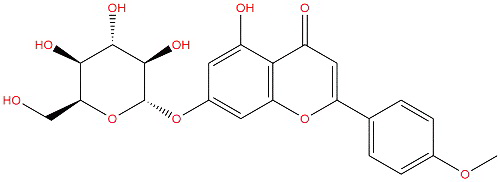


Product name: Acacetin-7-Glucoside; Tilianin
Synonym name: Apigenin 4'-methyl ether 7-glucoside; Moldavoside
Catalogue No.: BP3755
Cas No.: 4291-60-5
Formula: C22H22O10
Mol Weight: 446.408
Botanical Source:
Physical Description:
Type of Compound:
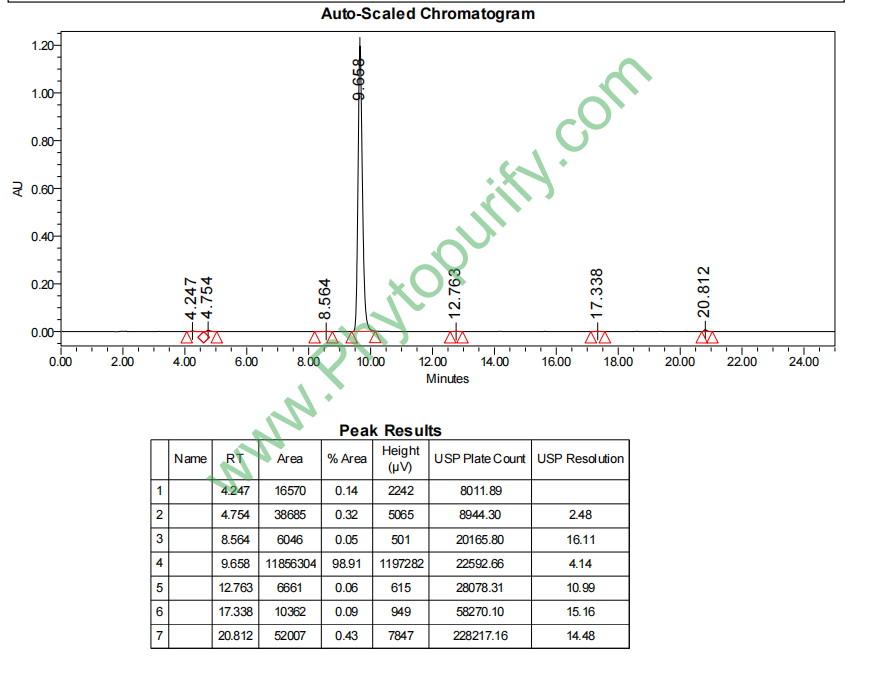
Purity: 95%~99%
Analysis Method: HPLC-DAD or/and HPLC-ELSD
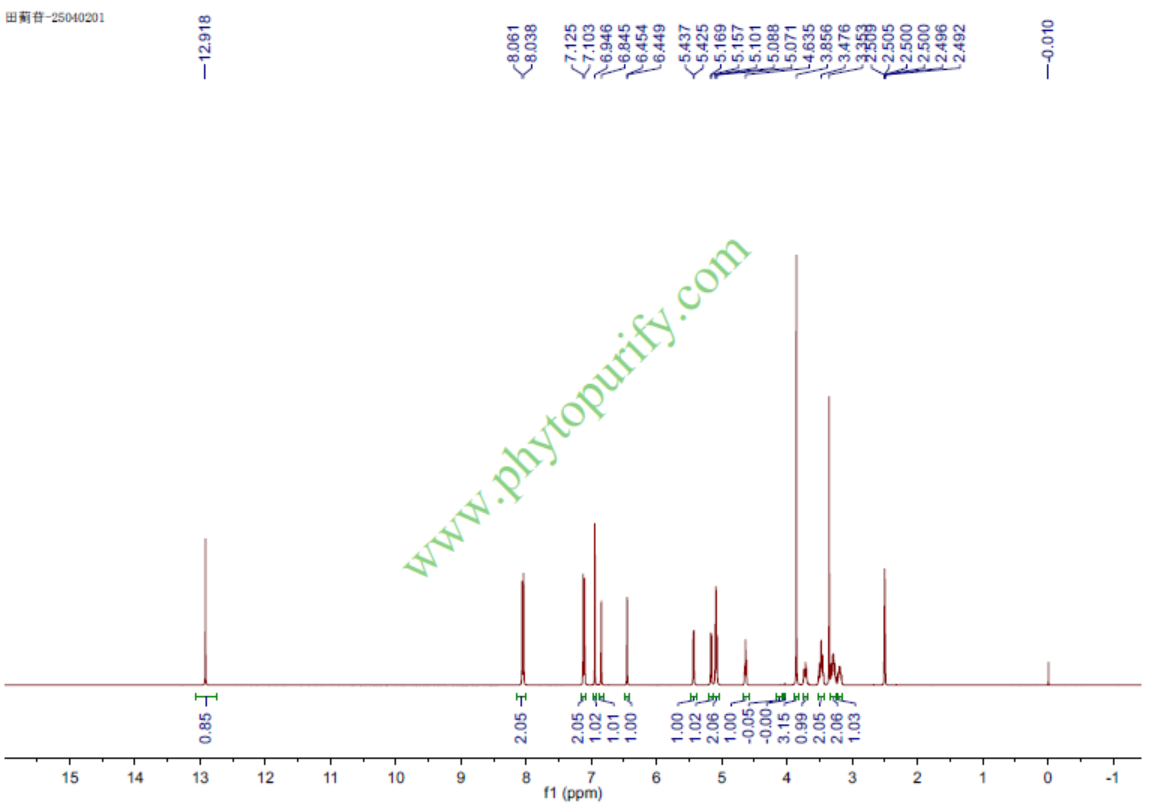
Identification Method: Mass, NMR
Packing: Brown vial or HDPE plastic bottle
Storage: Store in a well closed container, protected from air and light. Put into refrigerate or freeze for long term storage.
Whenever possible, you should prepare and use solutions on the same day. However, if you need to make up stock solutions in advance, we recommend that you store the solution as aliquots in tightly sealed vials at -20℃. Generally, these will be useable for up to two weeks.
The product could be supplied from milligrams to grams
Inquire for bulk scale.
For Reference Standard and R&D, Not for Human Use Directly.
HPLC of Tilianin
HNMR of Tilianin
Storage conditions:Short-term storage at 2~8℃, long-term storage at -20 ~ -80℃
159.0500
.5532
.5482
1.0507
.5300
.1579
Low
83.0205
3.7314
Yes
No
Yes
No
Yes
No
0.9
Yes
No
Yes
Yes
Natural products, as important sources of drug lead compounds, play an irreplaceable role in the history of human disease prevention and treatment. Flavonoids, as one of the most widely distributed and structurally diverse secondary metabolites in nature, have attracted much attention due to their extensive biological activities. Tilianin, also known as 5,7-dihydroxy-4 '- methoxyflavone-7-O - β - D-glucoside, is a typical flavonoid glycoside compound widely present in various medicinal plants such as Lamiaceae, Asteraceae, and Fabaceae. Since its first isolation and identification from plants in the mid-20th century, tanshinone has gradually become a research hotspot in the field of natural product pharmacology due to its diverse pharmacological activities.
The discovery of Tianji glycoside can be traced back to systematic research on the active ingredients of traditional medicinal plants. Early research mainly focused on its basic antioxidant activity as a flavonoid compound. With the advancement of separation and purification technology and the improvement of pharmacological evaluation methods, researchers have gradually revealed its multiple effects in cardiovascular protection, metabolic regulation, anti-inflammatory and immune aspects. In recent years, silymarin has been deeply studied in the fields of anti hypertension, anti diabetes and its complications, hyperlipidemia, myocardial protection, etc., making it a natural active molecule with great development potential. Of particular note is the regulatory effect of Tianji glycoside on multiple disease-related targets, suggesting that it may exert therapeutic effects through multi-target and multi pathway synergy, which is in line with the concept of "multi-target drugs" in modern drug development.
This article will systematically review the research progress of tianjiglycoside from the aspects of chemical structure and physicochemical properties, plant sources and extraction methods, pharmacological activity, mechanism of action and molecular targets, and drug evaluation. It will also look forward to its clinical application prospects, in order to provide reference for the in-depth research and development of this compound.
The chemical structure of Tianji glycoside belongs to the flavonoid glycoside class, and its aglycone is a 4 '- methoxy derivative of 5,7,4' - trihydroxyflavone (apigenin). Specifically, the parent nucleus structure of Tianji glycoside is a 2-phenylchromenone skeleton, with one hydroxyl group at positions C-5 and C-7 of the A ring, and a methoxy group at position C-4 'of the B ring. The hydroxyl group at position C-7 is connected to β - D-glucose through glycosidic bonds to form the glycoside. Its molecular formula is C22H22O10, molecular weight is 446.4080 g/mol, and CAS registration number is 4291-60-5.
From the analysis of structural characteristics, it can be concluded that there are multiple phenolic hydroxyl groups in the molecular structure of Tianji glycoside, which not only endow it with excellent antioxidant activity, but also serve as key sites for its interaction with biomolecules. The glucose group at position C-7 significantly enhances the water solubility of the molecule and affects its binding mode with the target protein. The presence of the 4 '- methoxy group in the B ring alters the electron distribution and hydrophobicity of the molecule, which may affect its transmembrane transport and affinity for receptors.
According to computational chemistry and experimental measurement data, the physicochemical properties of tianjiglycoside are as follows:
Lipid water partition coefficient (LogP): 0.5532. This value indicates that Tianji glycoside has moderate lipophilicity, which can maintain a certain solubility in aqueous phase and has the ability to penetrate biological membranes. The characteristic of LogP values less than 1 suggests that it tends to be distributed in aqueous environments, which is consistent with the typical characteristics of flavonoid glycosides.
Polarized surface area (TPSA)159.0500 Å ². TPSA is an important parameter for measuring molecular polarity and hydrogen bonding ability, and molecules with TPSA greater than 140 Å ² are generally considered to have poor oral absorption. The high TPSA value of Tianji glycoside mainly comes from the contributions of multiple hydroxyl and sugar groups, which poses a challenge to its oral bioavailability.
Water solubility:1.0507 mg/mL。 The water solubility value is at a moderate level, higher than most flavonoid glycosides, thanks to the introduction of sugar groups. However, compared to clinical medication requirements, there is still room for improvement in its water solubility.
Blood-brain barrier permeability: Low. Tianji glycoside is difficult to penetrate the blood-brain barrier, which limits its application in the treatment of central nervous system diseases, but also reduces the risk of central toxicity.
HERG inhibition: Negative. Tianji glycoside has no significant inhibitory effect on hERG potassium channels, indicating a low risk of cardiac toxicity, which is an important advantage for the development of cardiovascular drugs.
Ames test: 0.9 (negative). This result indicates that Tianji glycoside has no significant mutagenicity, low genetic toxicity risk, and meets the safety requirements of drug development.
Based on the above physical and chemical properties, Tianji glycoside has a good safety foundation, but its oral bioavailability may be limited, which needs to be improved through formulation technology or structural modification.
Tianji glycoside is widely distributed in nature and mainly exists in medicinal plants of the following families and genera:
Lamiaceae This is one of the most abundant sources of icariin. Lipstick plants such as patchouli(Pogostemon cablin)Fragrant Elsholtzia(Mosla chinensis)Summer withered grass(Prunella vulgaris)All of them contain a high content of Tianjin glycoside. Among them, as a traditional Chinese medicine, patchouli has a content of 0.5% -1.5% of icariin in its aboveground parts.
Asteraceae (Asteraceae)Asteraceae plants such as wild chrysanthemums(Chrysanthemum indicum)Spinning flowers(Inula japonica)Waiting is also an important source of Tianji glycoside. The content of icariin in wild chrysanthemums varies with the harvest season and place of origin.
Fabaceae (Fabaceae)Some leguminous plants such as chicken blood vine(Spatholobus suberectus)The presence of icariin was also detected, but the content was relatively low.
Other families and genera In addition, Tianji glycoside is also present in various plants such as Scrophulariaceae, Rubiaceae, Rosaceae, etc., demonstrating its widespread distribution in the plant kingdom.
It is worth noting that the content of icariin from different plant sources varies significantly and is influenced by factors such as growth environment, harvesting time, and processing methods. Therefore, establishing a standardized quality control system for medicinal herbs is crucial for the research and development of tianjiglycoside.
The extraction methods of Tianji glycoside have evolved from traditional solvent extraction to modern green extraction technology, mainly including the following:
1. Traditional solvent extraction method
Ethanol water mixed solvent extraction is the most commonly used method. Usually, 50% -80% ethanol is used as the extraction solvent, with a solid-liquid ratio of 1:10-1:20. Reflux extraction is carried out 1-3 times at 60-80 ℃ for 1-2 hours each time. This method is easy to operate and cost-effective, but the extraction efficiency is greatly affected by temperature and time, and may be accompanied by the problem of impurity co dissolution.
2. Ultrasound assisted extraction method
By utilizing the cavitation effect and mechanical vibration of ultrasound, the extraction efficiency of icariin can be significantly improved. Research has shown that under the conditions of ultrasound power of 200-400 W and temperature of 40-60 ℃, the extraction time can be shortened to 30-60 minutes, and the extraction rate can be increased by 20% -40% compared to traditional methods. This method has the advantages of time-saving, high efficiency, and low-temperature protection of active ingredients.
3. Microwave assisted extraction method
Microwave radiation can rapidly increase the internal temperature of plant cells, disrupt cell wall structure, and promote the dissolution of target components. The optimal conditions for microwave-assisted extraction of icariin are usually: microwave power of 300-500 W, extraction time of 5-15 minutes, and ethanol concentration of 60% -70%. This method has a fast extraction speed, but attention should be paid to controlling the temperature to avoid hydrolysis of glycosidic bonds.
4. Enzyme assisted extraction method
Cellulases, pectinases, and other enzymes can degrade plant cell wall polysaccharides and promote the release of icariin. The enzymatic hydrolysis conditions are usually: enzyme concentration of 0.5% -2.0%, pH 4.5-5.5, Temperature 40-50 ℃, enzymatic hydrolysis time 1-3 hours. This method is green and environmentally friendly, but the cost is relatively high.
5. Supercritical fluid extraction method
Supercritical CO ₂ extraction technology has the advantages of no solvent residue and good selectivity. However, due to the high polarity of Tianji glycoside, it is necessary to add solvents such as ethanol to improve the extraction efficiency. This method is suitable for the preparation of high-purity products, but the equipment investment is relatively high.
The crude extract after extraction usually needs to be purified by column chromatography (such as silica gel column, polyamide column, macroporous adsorption resin, etc.), combined with high performance liquid chromatography (HPLC) or high-speed counter current chromatography (HSCCC) technology, to obtain tanshinone monomers with a purity of over 98%.
Antioxidative activity is one of the most fundamental and extensively studied pharmacological activities of Tianji glycoside. The multiple phenolic hydroxyl groups in the Tianji glycoside molecule can directly scavenge free radicals and chelate transition metal ions, thereby exerting antioxidant effects.
In vitro experiments have shown that icariin has significant scavenging ability against DPPH free radicals, ABTS cationic free radicals, superoxide anion free radicals, and hydroxyl free radicals. Its IC ₅₀ value is in the range of 10-50 μ M, which is comparable to the positive control vitamin C. In cell models, tianjizhi (10-100 μ M) can significantly reduce H ₂ O ₂ - induced oxidative stress, decrease intracellular reactive oxygen species (ROS) levels, increase the activity of superoxide dismutase (SOD), catalase (CAT), and glutathione peroxidase (GPX), while reducing malondialdehyde (MDA) content.
In animal models, icariin (50-200 mg/kg, oral) can alleviate tissue damage in various oxidative stress-related disease models. For example, in a myocardial ischemia-reperfusion injury model, pre-treatment with tianjizhi can significantly reduce ROS levels in myocardial tissue, upregulate antioxidant enzyme activity, and reduce myocardial infarction area.
The cardiovascular protective effect of Tianji glycoside is one of its most clinically translational potential activities, mainly reflected in the following aspects:
1. Hypotensive effect Multiple animal experiments have confirmed that tanshinone has significant antihypertensive effects on spontaneously hypertensive rats (SHR) and angiotensin II induced hypertension models. Tianji glycoside (20-80 mg/kg, oral) can dose dependently reduce systolic and diastolic blood pressure, and its antihypertensive mechanism involves inhibiting angiotensin-converting enzyme (ACE) activity, promoting nitric oxide (NO) release, and improving endothelial function.
2. Myocardial protective effect Tianji glycoside has protective effects on myocardial ischemia-reperfusion injury, myocardial hypertrophy, and myocardial fibrosis. In the myocardial ischemia-reperfusion model, tianjizhi can reduce myocardial cell apoptosis, inhibit inflammatory response, and improve cardiac function. The mechanism is related to the activation of the PI3K/Akt signaling pathway, inhibition of NF - κ B activation, and oxidative stress.
3. Anti atherosclerosis: Cirsirin can reduce the level of blood lipid in atherosclerosis model induced by high-fat diet, reduce the area of aortic plaque, inhibit the proliferation and migration of vascular smooth muscle cells, and stabilize plaque.
The silymarin has a good application prospect in the treatment of diabetes and its complications. The research shows that silymarin (50-200 mg/kg, oral) can significantly reduce the blood sugar level of type 1 diabetes model induced by streptozotocin (STZ) and type 2 diabetes model in db/db mice, and improve insulin resistance.
Its anti diabetes mechanism includes: promoting insulin secretion, enhancing insulin signal transduction, inhibiting α - glucosidase activity, improving the function of pancreatic islet β cells, reducing complications such as diabetes nephropathy and diabetes retinopathy. In particular, silymarin has a protective effect on diabetes nephropathy, which can reduce urinary protein excretion, inhibit glomerulosclerosis and tubulointerstitial fibrosis.
The regulatory effect of Tianji glycoside on lipid metabolism is closely related to its cardiovascular protective activity. In hyperlipidemic model rats, tianjizhi (50-200 mg/kg, oral) can significantly reduce serum total cholesterol (TC), triglycerides (TG), and low-density lipoprotein cholesterol (LDL-C) levels, while increasing high-density lipoprotein cholesterol (HDL-C) levels.
Mechanism studies have shown that icariin can activate the AMPK signaling pathway, inhibit the expression of liver lipid synthesis related enzymes (such as HMG CoA reductase and fatty acid synthase), promote fatty acid beta oxidation, and enhance cholesterol reverse transport. In addition, Tianji glycoside can also regulate the composition of intestinal microbiota and reduce lipid absorption.
The anti-inflammatory activity of Tianji glycoside has been validated in various inflammatory models. In the macrophage inflammation model induced by lipopolysaccharide (LPS), Tianji glycoside (5-50 μ M) can significantly inhibit the production of pro-inflammatory factors such as TNF - α, IL-6, IL-1 β, and NO, while upregulating the expression of anti-inflammatory factor IL-10.
In animal inflammation models, tianjizhi can alleviate carrageenan induced toe swelling, xylene induced ear swelling, and acetic acid-induced increased intra-abdominal capillary permeability. In chronic inflammation models such as colitis and arthritis, icariin also exhibits significant anti-inflammatory effects, and its mechanism is related to the inhibition of NF - κ B and MAPK signaling pathways.
The pharmacological activity of Tianji glycoside involves multiple molecular targets and signaling pathways, reflecting its multi-target action characteristics. The following focuses on key targets closely related to antioxidant and anti-inflammatory activities.
1. NRF2/NFE2L2 signaling pathway
Nuclear factor E2 related factor 2 (NRF2, encoded by the NFE2L2 gene) is a core transcription factor in the cellular antioxidant defense system. Tianji glycoside can activate the NRF2 signaling pathway, promote nuclear translocation, and upregulate the expression of various antioxidant enzyme genes. Research has shown that treatment with tianji glycoside can significantly increase the level of NRF2 protein, enhance its binding activity with antioxidant response elements (ARE), and thereby upregulate the expression of downstream target genes.
2. Antioxidant enzyme system
Tianji glycoside has regulatory effects on various antioxidant enzymes:
- SOD1 and SOD2 Superoxide dismutase (SOD) is a key enzyme for clearing superoxide anions. Tianji glycoside can upregulate the expression and activity of SOD1 (cytoplasmic type) and SOD2 (mitochondrial type), enhancing the ability of cells to clear superoxide anions.
- CAT Catalase (CAT) is responsible for decomposing H ₂ O ₂ into water and oxygen. Tianji glycoside can enhance CAT activity and reduce H ₂ O ₂ accumulation.
- GPX1 Glutathione peroxidase 1 (GPX1) utilizes glutathione to reduce H ₂ O ₂ and organic peroxides. Tianji glycoside can upregulate GPX1 expression and enhance glutathione dependent antioxidant defense.
- HMOX1 Heme oxygenase 1 (HMOX1) catalyzes the degradation of heme, producing bilirubin and carbon monoxide with antioxidant activity. Tianji glycoside significantly induces HMOX1 expression by activating NRF2, which is one of the important mechanisms of its antioxidant effect.
3. Matrix metalloproteinases (MMPs)
Tianji glycoside has a regulatory effect on MMP1 and MMP3. MMP1 (interstitial collagenase) and MMP3 (matrix metalloproteinase) are involved in extracellular matrix remodeling and are expressed abnormally in oxidative stress-related diseases. Tianji glycoside can inhibit the overexpression of MMP1 and MMP3 induced by oxidative stress, thereby protecting the tissue matrix structure.
4. TYR (Tyrosinase)
Tyrosinase (TYR) is a key enzyme in melanin synthesis. Tianji glycoside has an inhibitory effect on TYR, which is related to its antioxidant activity, suggesting its potential application in skin whitening and pigmentation diseases.
1. NF - κ B pathway Tianji glycoside can inhibit the phosphorylation and degradation of I κ B α, prevent the nuclear translocation of NF - κ B p65 subunit, and thus suppress the transcription of pro-inflammatory genes.
2. MAPK pathway Tianji glycoside can inhibit the phosphorylation of p38 MAPK, JNK, and ERK1/2, reducing the production of inflammatory mediators.
3. PI3K/Akt pathway Tianji glycoside can activate the PI3K/Akt pathway, promote cell survival, and inhibit apoptosis, which is closely related to its cardioprotective effect.
1. AMPK Tianji glycoside can activate AMPK, promote glucose uptake and fatty acid oxidation, inhibit lipid synthesis, which explains its hypoglycemic and lipid-lowering effects.
2. PPARγTianji glycoside can partially activate PPAR γ and improve insulin sensitivity.
3. ACE Tianji glycoside has an inhibitory effect on angiotensin converting enzyme (ACE), which is related to its antihypertensive activity.
Based on physical and chemical properties and preliminary pharmacological data, the pharmacological properties of Tianji glycoside can be evaluated from the following aspects:
Advantage:
-Good safety: hERG inhibition negative, Ames test negative, low risk of genetic toxicity
-Multi target activity: meet the needs of multi target treatment for complex diseases (such as cardiovascular disease and diabetes)
-Rich sources: can be extracted from various medicinal plants, with guaranteed supply of raw materials
challenge:
-Low oral bioavailability: high TPSA (159.05 Å ²) and moderate LogP (0.55) suggest that oral absorption may be limited
-Metabolic stability: Flavonoid glycosides are easily hydrolyzed by β - glucosidase in the intestine, and aglycones may be further metabolized
-Insufficient water solubility: Although better than most flavonoid glycosides, it still needs improvement to meet the requirements for injection administration
At present, there is insufficient systematic research on the pharmacokinetics of icariin, but preliminary information has been provided by existing studies
absorb After oral administration, some of Tianji glycoside is absorbed in its original form in the small intestine, while others are hydrolyzed by gut microbiota into aglycones (4 '- methoxyapigenin) and absorbed in the colon. Its absolute bioavailability is relatively low, estimated to be between 5% and 15%.
distribution Tianji glycoside has a high plasma protein binding rate (>80%) and a large distribution volume. Due to the low permeability of the blood-brain barrier, the distribution of the central nervous system is limited.
Metabolism Tianji glycoside mainly undergoes metabolic reactions such as glycosidic bond hydrolysis, methylation, glucuronidation, and sulfation in the body. The liver and intestines are the main metabolic organs.
excretion Tianji glycoside and its metabolites are mainly excreted through bile and urine. After oral administration to rats, the cumulative excretion in urine within 48 hours accounts for approximately 10% -20% of the administered dose.
The following strategies can be adopted to address the shortcomings of the medicinal properties of Tianji glycoside:
1. Formulation technology Using novel drug delivery systems such as liposomes, nanoparticles, and phospholipid complexes to improve oral bioavailability
2. Structural modification Introducing specific functional groups to improve water solubility and metabolic stability while maintaining activity
3. Prodrug design Improve water solubility through glycosylation, phosphorylation and other modifications, and convert it into an active form in vivo
4. combination therapy Combined with absorption enhancers or metabolic enzyme inhibitors to improve bioavailability
Based on existing pharmacological research, Tianji glycoside has clinical application potential in the following disease areas:
1. Cardiovascular diseases: hypertension, coronary heart disease, myocardial ischemia, atherosclerosis. Its multi-target effects (blood pressure lowering, lipid-lowering, antioxidant, anti-inflammatory) make it an ideal candidate molecule for comprehensive cardiovascular prevention and treatment.
2. Metabolic disorders: Type 2 diabetes, hyperlipidemia, nonalcoholic fatty liver. Tianji glycoside can simultaneously improve glucose and lipid metabolism disorders, which meets the treatment needs of metabolic syndrome.
3. Inflammatory diseases Chronic inflammations such as colitis, arthritis, and dermatitis. Its anti-inflammatory activity and low risk of immune suppression make it advantageous.
4. Oxidative stress-related diseases Neurodegenerative diseases (although low blood-brain barrier permeability, can be improved through nano drug delivery systems), liver injury, kidney injury.
1. In depth mechanism research Using omics techniques such as transcriptomics, proteomics, and metabolomics, systematically elucidate the multi-target action network of tianjiglycoside and identify its direct targets of action.
2. Study on structure-activity relationship Systematically study the effects of structural modifications of tianjiglycoside on its activity and pharmacokinetic properties, providing a basis for structural optimization.
3. Formulation development Develop a new drug delivery system to improve bioavailability and achieve targeted delivery. For example, nanoliposomes can increase oral bioavailability by 3-5 times.
4. Clinical translation On the basis of completing preclinical research, advance clinical trials. Firstly, it can be considered for development as an adjuvant therapy drug or health supplement.
5. Combination therapy research Explore the synergistic effects of Tianji glycoside with commonly used clinical drugs such as statins, metformin, ACE inhibitors, and develop compound formulations.
6. Biological synthesis research Utilizing synthetic biology techniques to efficiently synthesize icariin in microbial cell factories, addressing the resource limitations of natural extraction.
Tianji glycoside, as a typical flavonoid glycoside natural product, has shown important research value and application potential in the field of natural product pharmacology due to its diverse pharmacological activities and good safety. From antioxidant and anti-inflammatory effects to cardiovascular protection and metabolic regulation, Tianji glycoside exerts therapeutic effects through multi-target and multi pathway synergy, which is in line with the concept of "multi-target drugs" in modern drug development.
However, the clinical translation of Tianji glycoside still faces challenges such as low oral bioavailability and unclear pharmacokinetic characteristics. Future research should focus on: further elucidating its molecular mechanisms and direct targets; Improving drug properties through structural modifications and formulation techniques; Advance preclinical safety evaluation and pharmacokinetic studies of the system; Explore its clinical application value in complex diseases.
With the interdisciplinary integration of natural product chemistry, pharmacology, pharmacy, and other fields, Tianji glycoside is expected to move from laboratory research to clinical application, providing new options for the prevention and treatment of chronic diseases such as cardiovascular disease and metabolic disorders. At the same time, the research paradigm of Tianji glycoside also provides useful reference for the development of other flavonoid glycoside natural products, promoting the development of natural product drugs in a deeper and more systematic direction.
