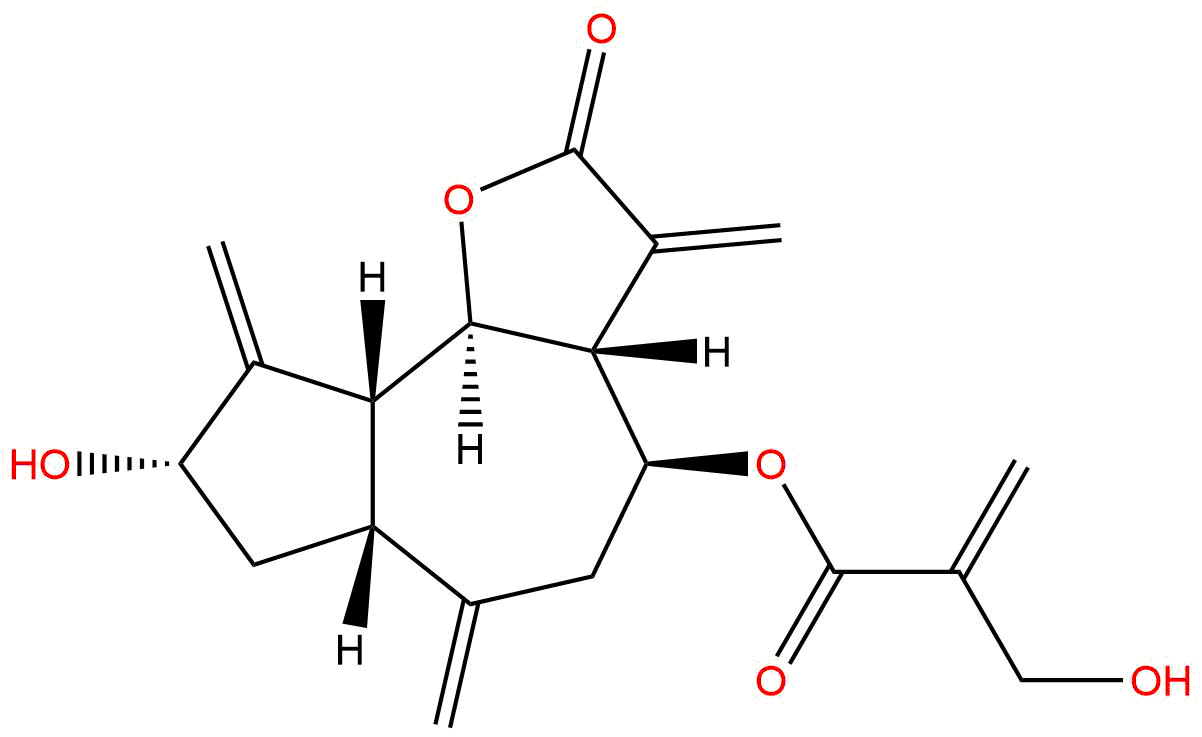


Synonym name:
Catalogue No.: BP0443
Cas No.: 35730-78-0
Formula: C19H22O6
Mol Weight: 346.379
Botanical Source: Cynara scolymus, Centaurea canariensis, Amberboa ramosa, Grossheimia macrocephala, Tricholepis glaberrima and others
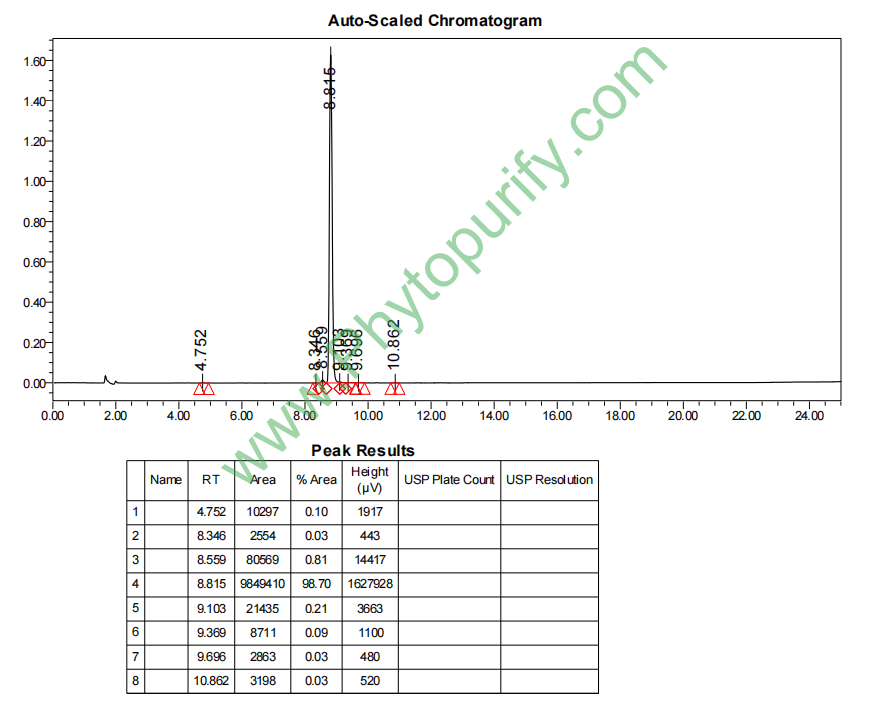
Purity: 95%~99%
Analysis Method: HPLC-DAD or/and HPLC-ELSD
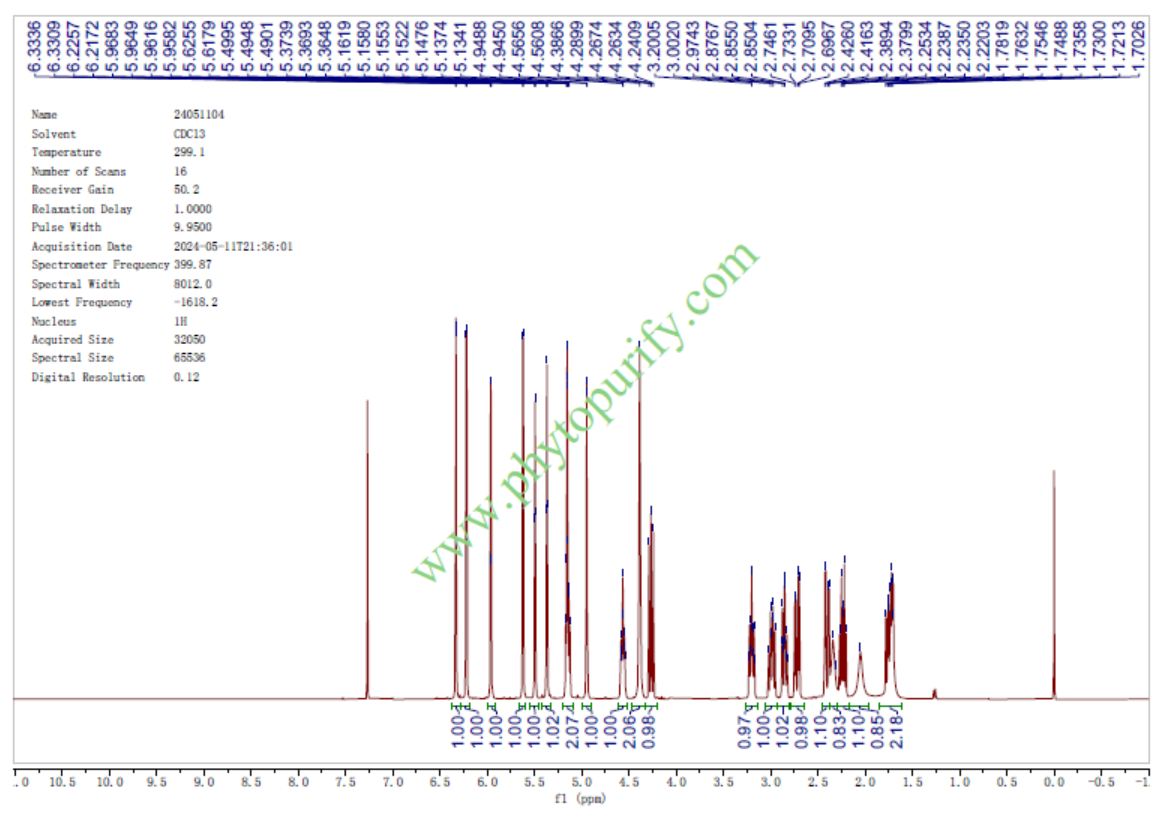
Identification Method: Mass, NMR
Packing: Brown vial or HDPE plastic bottle
Can be supplied from milligrams to grams.
For Reference Standard and R&D, Not for Human Use Directly.
Inquire for bulk scale.
Description:
Cynaropicrin is a potent activator of the AhR-Nrf2-Nqo1 pathway, and could therefore be applied to prevention of UVB-induced photo aging; it may be a potential anticancer agent against some leukocyte cancer cells such as lymphoma or leukemia, through pro-apoptotic activity. Cynaropicrin shows in vivo activity against Trypanosoma brucei. Cynaropicrin possesses immunomodulatory effects on cytokine release, nitric oxide production and immunosuppressive effects. Cynaropicrin also has anti-inflammatory effects, it may participate in the inflammatory response by inhibiting the production of inflammatory mediators and the proliferation of lymphocytes and its inhibitory effect is mediated through conjugation with sulphydryl groups of target protein(s).
References:
Eur J Pharmacol. 2000 Jun 23;398(3):399-407.
In vitro anti-inflammatory effects of cynaropicrin, a sesquiterpene lactone, from Saussurea lappa.
We investigated in vitro anti-inflammatory effects of Cynaropicrin, a sesquiterpene lactone from Saussurea lappa, on tumor necrosis factor (TNF)-alpha and nitric oxide (NO) release, and lymphocyte proliferation.
METHODS AND RESULTS:
Cynaropicrin strongly inhibited TNF-alpha release from lipopolysaccharide-stimulated murine macrophage, RAW264.7 cells, and differentiated human macrophage, U937 cells, proved to produce notable amount of TNF-alpha. It also potently attenuated the accumulation of NO released from lipopolysaccharide- and interferon-gamma-stimulated RAW264.7 cells in a dose-dependent manner. In addition, the immunosuppressive effects of the compound on lymphocyte proliferation in response to mitogenic stimuli were examined. Cynaropicrin also dose-dependently suppressed the proliferation of lymphocytes from splenocytes and interleukin-2-sensitive cytotoxic T lymphocyte, CTLL-2 cells, stimulated by lipopolysaccharide, concanavalin A, phytohemagglutinin and interleukin-2. However, treatment with sulphydryl compound, L-cysteine, abrogated all these inhibitory effects.
CONCLUSIONS:
These results suggest that Cynaropicrin may participate in the inflammatory response by inhibiting the production of inflammatory mediators and the proliferation of lymphocytes and its inhibitory effect is mediated through conjugation with sulphydryl groups of target protein(s).
Planta Med. 2012 Apr;78(6):553-6.
Cynaropicrin: the first plant natural product with in vivo activity against Trypanosoma brucei.
A screen of 1800 plant and fungal extracts with subsequent HPLC-based activity profiling was done to identify new antiprotozoal leads from nature.
METHODS AND RESULTS:
This led to the identification of Cynaropicrin (1) from the herb CENTAUREA SALMANTICA L. (Asteraceae) as a potent IN VITRO inhibitor of TRYPANOSOMA BRUCEI RHODESIENSE. It preferentially inhibited T. B. RHODESIENSE (IC (50) of 0.3 μM) and T. BRUCEI GAMBIENSE (IC (50) of 0.2 μM), compared to TRYPANOSOMA CRUZI (IC (50) of 4.4 μM) and PLASMODIUM FALCIPARUM (IC (50) of 3.0 μM). Testing against melarsoprol- and pentamidine-resistant strains (IC (50)s of 0.3 μM and 0.1 μM, respectively) showed no cross-resistance. Intraperitoneal administration of 2 × 10 mg/kg body weight/day in the T. B. RHODESIENSE STIB 900 acute mouse model led to a 92 % reduction of parasitemia compared to untreated controls on day seven post-infection. Removal of the 2-hydroxymethyl-2-propenoyl moiety of Cynaropicrin led to a loss of toxicity towards T. B. RHODESIENSE. Cytotoxicities against rat myoblasts (L6 cells), human colon adenocarcinoma cells, and murine peritoneal macrophages were measured, and selectivity indices of 7.8, 62, and 9.5 were determined.
CONCLUSIONS:
This is the first report of a plant natural product with potent IN VIVO activity against TRYPANOSOMA BRUCEI.
HPLC of Cynaropicrin
HNMR of Cynaropicrin
Storage conditions:Short-term storage at 2~8℃, long-term storage at -20 ~ -80℃
Cynaropicin, CAS number 35730-78-0, is a natural sesquiterpene lactone compound originally isolated from the Asteraceae plant Cynara scolymus L. As a natural product with multiple biological activities, caryophyllin has attracted much attention due to its significant anti-inflammatory, anti-tumor, and liver protective effects. In recent years, with in-depth research on the molecular mechanisms of chronic inflammation, tumors, and liver diseases, the role of icariin in regulating key inflammatory factors and signaling pathways has gradually been revealed, demonstrating its enormous value as a potential drug candidate molecule.
This review will systematically summarize the chemical structure and physicochemical properties, plant sources and extraction methods, pharmacological activities, and mechanisms of action of Cirsium asiatica, with a focus on analyzing its regulatory effects on tumor necrosis factor alpha (TNF - α), cartilage degradation factor 13 (MMP13), and nuclear factor kappa B (NF - κ B) signaling pathways. At the same time, by combining the parameters of drug formation and safety evaluation, this study explores its clinical application prospects and future research directions, aiming to provide comprehensive and authoritative reference materials for researchers in the field of natural product pharmacology.
Cijisu is a typical sesquiterpene lactone with a molecular formula of C20H26O5 and a molecular weight of 346.37. Structurally, icariin contains one lactone ring and multiple unsaturated double bonds, indicating high reactivity. Its physical and chemical properties are as follows:
In addition, there are multiple active groups in the structure of thistle bitter extract, such as α, β - unsaturated lactone rings, which are the key to its biological activity. This structure endows it with the ability to covalently bind with the thiol groups of proteins, thereby regulating various signaling pathways.
Cynara scolymus L., a perennial herbaceous plant in the Asteraceae family, is mainly found in the leaves of Cynara scolymus L. It is widely distributed in the Mediterranean region and is often cultivated as a vegetable and medicinal plant. Traditionally, vegetable thistle leaves have been used as an adjuvant therapy to promote liver and gallbladder function and digestive system diseases.
The process of extracting bitter extract from vegetable thistle mainly includes the following steps:
In recent years, the introduction of supercritical CO2 extraction and membrane separation technology has improved extraction efficiency and purity, reduced the use of organic solvents, and is in line with the concept of green chemistry.
Vegetable thistle bitter extract has shown a wide range of pharmacological activities in various in vitro and in vivo models, especially achieving significant results in anti-inflammatory, anti-tumor, and liver protection.
Vegetable thistle extract can significantly inhibit the release of tumor necrosis factor alpha (TNF - α). Research has shown that in mouse and human macrophages, the inhibitory IC50 values of icariin against TNF - α are 8.24 μ M and 3.18 μ M, respectively, indicating its strong anti-inflammatory potential. In addition, vegetable thistle extract can also inhibit the expression of other pro-inflammatory cytokines such as IL-1 β and IL-6, reducing inflammatory response.
Vegetable thistle bitter extract inhibits the NF - κ B signaling pathway, blocking the proliferation and migration of tumor cells. NF - κ B, as a key regulatory factor for the survival and drug resistance of various tumor cells, its reduced activity helps induce tumor cell apoptosis. Related studies have shown that icariin can induce cell cycle arrest and apoptosis in various tumor cell lines, and has low toxicity to normal cells.
The liver, as a key organ for metabolism and detoxification, is susceptible to oxidative stress and inflammatory damage. Vegetable thistle bitter extract enhances liver antioxidant defense ability by regulating the expression of various antioxidant enzymes (such as SOD1, SOD2, CAT, GPX1) and detoxifying enzymes (NQO1, HMOX1). At the same time, icariin inhibits matrix metalloproteinase 9 (MMP9) and transforming growth factor beta 1 (TGFB1), alleviates the process of liver fibrosis, and protects the structure and function of liver cells.
The pharmacological effects of vegetable thistle bitter extract are mainly achieved through multi-target and multi pathway synergistic regulation, and the specific mechanism is as follows:
Vegetable thistle extract can directly inhibit the synthesis and secretion of TNF - α in macrophages, reduce the release of inflammatory mediators, and alleviate inflammatory reactions. Its mechanism of action is closely related to the covalent modification of key proteins by the α, β - unsaturated carbonyl structures in the lactone ring.
NF - κ B is a core transcription factor that regulates inflammation and immune responses. Vegetable thistle bitter extract inhibits the translocation of NF - κ B from cytoplasm to nucleus by blocking the phosphorylation and degradation of I κ B α, reducing the transcriptional activity of pro-inflammatory genes, and achieving anti-inflammatory and anti-tumor effects.
Cirsium extract inhibits the expression of MMP13, reduces extracellular matrix degradation, and protects tissue structural integrity. This effect is of great significance for the prevention and treatment of diseases such as arthritis and liver fibrosis.
Vegetable thistle extract activates the nuclear factor erythroid 2-related factor 2 (NRF2) signaling pathway, promotes the expression of antioxidant enzymes (SOD1, SOD2, CAT, GPX1) and detoxifying enzymes (NQO1, HMOX1), enhances cell resistance to oxidative stress, and reduces liver cell damage.
By downregulating transforming growth factor beta 1 (TGFB1) and actin alpha 2 (ACTA2), icariin inhibits the activation of hepatic stellate cells, slows down the process of liver fibrosis, and promotes liver tissue repair.
The pharmacological parameters of vegetable thistle bitter extract show that it has good potential for drug development:
Although there is limited research on the pharmacokinetics of icariin at present, preliminary data suggests that its oral bioavailability is moderate, its metabolism is stable in vivo, and it is mainly processed by the liver metabolic enzyme system. Its excretion pathways are mainly bile and urine. Further systematic pharmacokinetic and toxicological studies are needed in the future to provide a basis for clinical applications.
Based on the multi-target effects of icariin in anti-inflammatory, anti-tumor, and liver protection, its clinical application prospects are broad:
Future research directions should focus on:
As a natural sesquiterpene lactone derived from Cirsium grandiflorum, caryophyllin has become a hot topic in natural product pharmacology research due to its multi-target and multi mechanism pharmacological activities, especially its outstanding performance in anti-inflammatory, anti-tumor, and liver protection. Its good pharmaceutical properties and safety have laid a solid foundation for clinical translation. In the future, with the continuous advancement of modern drug research and development technology, vegetable thistle bitter extract is expected to develop into an important natural medicine for treating various chronic diseases, contributing new strength to human health.
