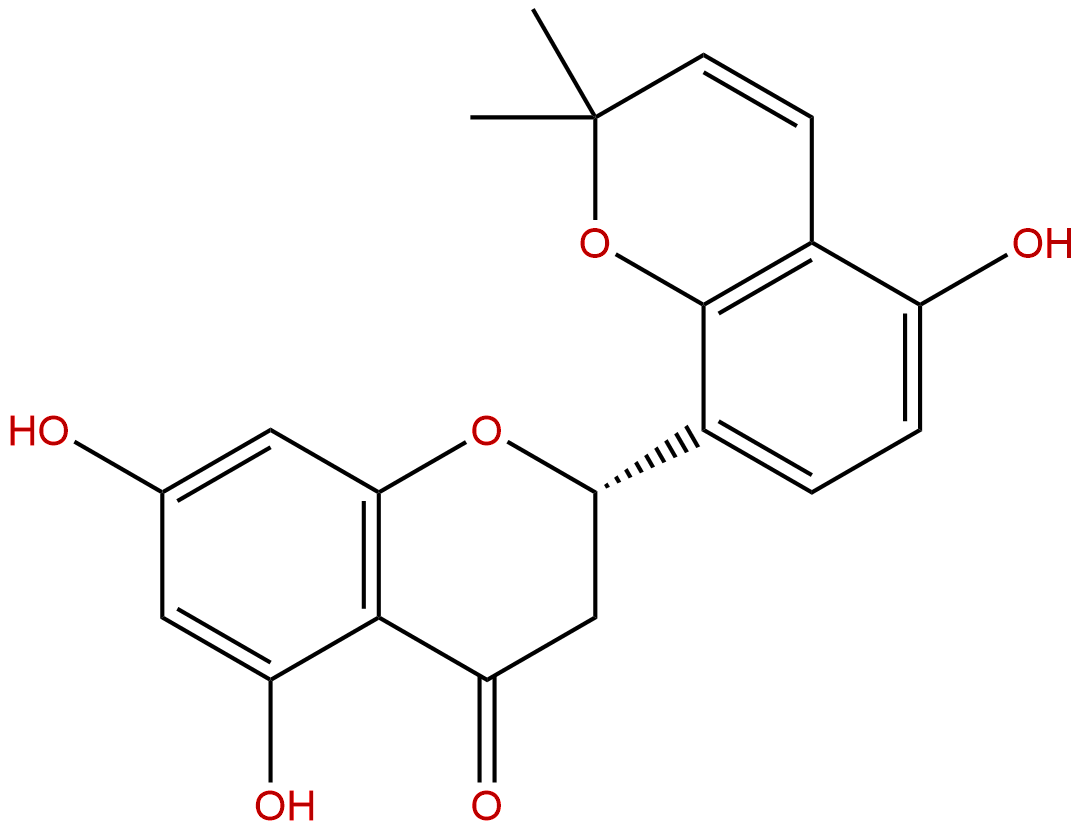
Sangenone H: a natural anti-inflammatory and anti liver cancer potential molecule derived from mulberry trees
1. Overview
Sanggenone H (CAS number: 86450-80-8) is a traditional medicinal plant derived from the mulberry tree(Morus alba L. Natural flavonoids isolated from the root bark of the plant. Its molecular formula is C20H18O6 and its molecular weight is 354.3580 g/mol. As an important member of a series of mulberry root ketone compounds in the mulberry genus, mulberry root ketone H has gradually become a focus of research in the field of natural product pharmacology in recent years due to its unique chemical structure and potential biological activity. Preliminary studies suggest that Sangenone H may have significant anti-inflammatory activity, which can inhibit the secretion of tumor necrosis factor - α (TNF - α) and interleukin-1 β (IL-1 β) in macrophages stimulated by lipopolysaccharide (LPS), and suppress the nuclear translocation of nuclear factor kappa B (NF - κ B). More notably, bioinformatics analysis suggests that its role may involve multiple key targets closely related to cell cycle, apoptosis, and signal transduction, such as TP53, CTNNB1, AXIN1, MYC, CDKN1A, which are closely associated with the occurrence and development of liver cancer. Therefore, Sangenone H not only provides a modern scientific annotation for understanding the traditional pharmacological effects of mulberry trees, but may also provide valuable clues for the development of new anti-inflammatory or anti liver cancer drug lead compounds. This article will provide a systematic and professional science popularization analysis of this natural product based on its chemical structure, pharmacological activity, mechanism of action, and pharmacological parameters.
2. Chemical structure and physicochemical properties
The chemical structure of Sangenone H belongs to highly oxidized dihydroflavonoid derivatives. The SMILES string (CC1 (C) C=Cc2c (O) ccc ([C @ @ H] 3CC (=O) c4c (O) cc (O) cc4O3) c2O1) reveals a complex fused ring system, consisting of a dihydroflavonoid core connected to an additional oxygen-containing heterocyclic ring (pyran or furan ring) and multiple phenolic hydroxyl groups. The chiral center ([C @ @ H]) in the structure indicates that the molecule has optical activity, and its specific stereoconfiguration may be crucial for its biological activity.
Analyzing its physicochemical properties from the parameters of drug properties:
- Molecular weight (MW):354.36 g/mol, Meets the standard that small molecule drugs typically have a molecular weight of less than 500 Da.
- Lipid water partition coefficient (LogP/LogD)LogP is 3.75 and LogD is 3.52, indicating that the compound has moderate lipophilic properties. This is beneficial for its penetration through the cell membrane, but it may also affect its water solubility.
- Water solubility The value of 0.0979 (usually measured in mg/mL or mol/L, which is not specified in the database but is relatively small) confirms its low water solubility, which is a common challenge faced by many flavonoids.
- Topological Polarity Surface Area (TPSA)96.22 Å ² reflects the polarity brought by multiple hydroxyl and carbonyl groups in the molecule. This value is below the threshold of 140 Å ² commonly used to predict oral absorption, indicating that it may have moderate potential for oral absorption.
- Membrane permeability The permeability of Caco-2 cells is 9.69 (× 10 ⁻⁶ cm/s), which belongs to moderate permeability; The effective permeability (Peff) is 3.10 cm/s × 10 ⁻⁴, further supporting its intestinal absorption capacity.
- Blood-brain barrier (BBB) penetrability Marked as' low ', it means that the compound is not easily able to enter the central nervous system, which may actually reduce the potential risk of central nervous system side effects for applications primarily targeting peripheral diseases such as inflammation and liver cancer.
These physicochemical properties lay the foundation for subsequent pharmacological activity research and preliminary pharmacological evaluation.
3. Plant sources and traditional applications
The plant source of mulberry root ketone H is single and clear, namely the mulberry tree in the Moraceae family(Morus alba L. The root bark of mulberry is called "mulberry white bark" in traditional Chinese medicine. Mulberry trees have a long history of cultivation and application in China and even East Asia. Their leaves (mulberry leaves) are used for raising silkworms, their fruits (mulberries) are excellent for both food and medicine, and their root bark is an important traditional Chinese medicinal herb.
In traditional Chinese medicine theory, mulberry bark is sweet and cold in nature, and belongs to the lung meridian. Its main functions are to clear the lungs, relieve asthma, promote diuresis, and reduce swelling. It is commonly used in clinical practice to treat symptoms such as lung heat cough and asthma, edema and fullness, and difficulty urinating. Traditional applications are mostly used in the form of its decoction or compound. There are records of its medicinal value in ancient books such as the Compendium of Materia Medica. Modern plant chemistry research has isolated and identified various flavonoids, alkaloids, and stilbenes, including mulberry root ketone H, from mulberry bark. These active ingredients are considered the material basis for its traditional therapeutic effects. Especially mulberry root ketone compounds are often regarded as one of the characteristic components of mulberry bark. Therefore, in-depth research on mulberry root ketone H is a scientific path to explain the traditional effects of mulberry bark, such as "purging the lungs" (possibly related to anti-inflammatory and immune regulation) and "promoting diuresis" (possibly related to metabolic regulation), from the perspective of modern pharmacology. It is also a concrete practice to achieve modernization and internationalization of traditional Chinese medicine.
4. Pharmacological activity and mechanism of action
The existing description clearly indicates that Sangenone H may have anti-inflammatory activity, and its mechanism involves inhibiting pro-inflammatory factors (TNF - α, IL-1 β) and the NF - κ B signaling pathway. NF - κ B is a core transcription factor that regulates inflammation, immune response, and cell survival. Its abnormal activation is closely related to chronic inflammation and various cancers, including liver cancer. Sangenone H can inhibit LPS induced NF - κ B nuclear translocation, which means it can block the activation of this pathway upstream, thereby reducing the expression of a series of pro-inflammatory mediators and pro survival genes downstream from the root. This anti-inflammatory property not only conforms to the traditional understanding that the medicinal herb mulberry bark is used to treat "lung heat" (inflammation), but also provides a direct basis for its intervention in diseases driven by chronic inflammation, such as hepatitis liver cancer transformation.
More in-depth and insightful information comes from its target prediction. The database suggests that Sangenone H is associated with five key protein targets: TP53, CTNNB1 (β - catenin), AXIN1, MYC, and CDKN1A (p21). These targets form a highly correlated network with the occurrence and development of liver cancer:
- TP53 Famous tumor suppressor genes, whose mutations or functional inactivation occur in over 50% of liver cancers. The p53 protein regulates cell cycle arrest, DNA repair, and apoptosis.
- CTNNB1 & AXIN1 Both are core components of the Wnt/β - catenin signaling pathway. CTNNB1 encodes β - catenin, and its stability is regulated by a "disruption complex" composed of proteins such as AXIN1. Abnormal activation of this pathway (such as CTNNB1 mutation or AXIN1 inactivation) is another major driving factor for liver cancer, promoting cell proliferation and survival.
- MYC A proto oncogene that is a key regulatory factor in cell proliferation, growth, metabolism, and apoptosis. Overexpression is often observed in liver cancer due to activation of upstream signals, such as the Wnt/β - catenin pathway.
- CDKN1A (p21)It is a cyclin dependent kinase inhibitor downstream of p53, mediating p53 induced G1 phase arrest of the cell cycle.
Scientific explanation and correlation of the mechanism of action:
Sangenone H may intervene in the development of liver cancer through multi-target action. Its anti-inflammatory effect (inhibition of NF - κ B) can improve the microenvironment of liver cancer occurrence. Meanwhile, the predicted target network suggests that it may directly act on tumor cells:
1. The impact on the p53 pathway Possible upregulation of downstream target gene CDKN1A (p21) by stabilizing or activating TP53 may induce cell cycle arrest in liver cancer cells.
2. The impact on the Wnt/β - catenin pathway Possible mechanisms include acting on AXIN1 or directly inhibiting CTNNB1, disrupting the stability of β - catenin, inhibiting its nuclear translocation, and downregulating the expression of downstream oncogenes such as MYC, thereby suppressing tumor cell proliferation.
3. Network synergy effect The activation of the p53 pathway and inhibition of the Wnt/β - catenin pathway have a synergistic effect on anti-tumor effects. For example, upregulation of p21 can enhance cell cycle arrest, while downregulation of MYC further weakens cell proliferation ability.
Therefore, Sangenone H exhibits a potential mode of action through a dual approach of "anti-inflammatory microenvironment regulation" and "multi-target direct anti-tumor", making it of unique research value in the prevention and treatment of liver cancer, especially liver cancer associated with chronic hepatitis. Of course, these target predictions require subsequent biochemical experiments (such as molecular docking, surface plasmon resonance, co precipitation, etc.) and cellular functional experiments for validation.
5. Evaluation of drug properties
Based on the provided pharmacological parameters and combined with the classic Lipinski Rule of Five (Ro5) for preliminary evaluation, the potential and challenges of Sangenone H as an oral drug lead compound can be determined.
Lipinski's Five Rules Compliance Status:
1. Molecular weight<500 Da: 354.36,Comply with。
2. LogP < 5:3.75,Comply with。
3. Hydrogen bond donor (OH+NH) number<5: According to the structural formula, there are approximately 3-4 phenolic hydroxyl groups,Comply with。
4. The number of hydrogen bond acceptors (O+N) is less than 10: there are 6 oxygen atoms in the molecule,Comply with。
Sangenone H fully complies with Lipinski's five rules, indicating that it may have good oral absorption potential. This is consistent with the previously analyzed TPSA value (96.22 Å ²) and moderate Caco-2 permeability results.
Analysis of other key pharmacological parameters:
- Protein binding rate (PPB)Up to 90.98%, indicating that it binds very tightly to plasma proteins (mainly albumin) in the blood. High protein binding rates can affect the free concentration, tissue distribution, metabolism, and clearance rate of drugs, and may require higher dosages to achieve effective free drug concentrations, but may also prolong the half-life.
- Toxicity risk:
- Genotoxicity The Ames test result is 0.6 (usually<1.0 is considered negative, but it needs to be judged based on specific experiments), but the "chromosomal aberration" is marked as "present", which is a highly alert signal indicating that the compound may have a genetic toxicity risk, which is a serious issue that needs to be prioritized for exclusion in the early stages of drug development.
- Organ toxicity Respiratory sensitization (Resp_Sens) is "Yes", phototoxicity (Photo_tox) is "Yes", and serum markers suggest possible effects on the liver (Ser_ST and Ser_LT are "Yes"). These all indicate potential risks of side effects.
- cardiotoxicity The inhibition of hERG as' no 'is a favorable information that reduces the risk of QT interval prolongation and arrhythmia.
- Metabolism and disposal The maximum recommended therapeutic dose (MRTD) is' no ', which may mean that its safety window is narrow or not up to standard in existing data or predictions.
Comprehensive Assessment:
Sangenone H is present Oral absorption Has shown good potential in terms of aspect (compliant with Ro5, moderate permeability). However, it Development risk Higher, mainly reflected in potential Genotoxicity (chromosomal aberration)and Organ toxicity (liver, skin, respiratory system) On the signal. High protein binding rate is also a pharmacokinetic characteristic that requires further research. Therefore, although its pharmacological activities (anti-inflammatory, multi-target anti liver cancer) are quite attractive, it is currently more suitable as an excellent Pharmacological tool molecules or lead compound, used to explore related target pathways and mechanisms of action. If you want to push it towards drug development, a systematic approach must be taken Early safety pharmacology and toxicology studies Especially through in vitro and in vivo experiments to confirm and understand the sources and mechanisms of its genetic toxicity, and through Structural modification(such as changing its parent nucleus structure through chemical synthesis or semi synthesis) to optimize properties, while maintaining activity, striving to eliminate or reduce toxicity risks, improve solubility and pharmacokinetic behavior.
6. Research Status and Application Prospects
At present, there is relatively limited public research literature on Sangenone H, and its activity description and target information mostly come from the collection and prediction of professional compound databases. This reflects that the compound is still in the early stages of natural product drug discovery research. The existing information outlines a potential molecular image with dual effects (anti-inflammatory, multi-target anticancer), especially showing unique advantages in the target network related to liver cancer.
Research status:
1. Basic research needs to be further explored At present, the cytological evidence of its anti-inflammatory activity needs to be further validated in more cell models and animal inflammation models. The predicted multiple liver cancer-related targets (TP53, CTNNB1, etc.) urgently need to be confirmed through experimental biological methods to elucidate their specific interaction modes and signal regulation details.
2. Networked mechanism of action The focus of future research should be on constructing a network diagram of the intervention of Sangenone H on the "inflammation cancer" axis, especially in the "hepatitis liver cancer" transformation process, integrating the cross talk between the NF - κ B pathway and the p53, Wnt/β - catenin pathways.
3. Clear bottleneck of drug development The identified toxicity risks, especially genetic toxicity, are the main obstacles hindering its advancement towards preclinical development.
Application Prospects:
1. As a lead compound The complex fused ring structure and multiple active functional groups of Sangenone H provide excellent modification templates for medicinal chemists. Through structural optimization, it is expected to obtain derivatives with lower toxicity, higher activity, or better pharmacokinetic properties, thus giving birth to new anti liver cancer or anti-inflammatory candidate drugs with independent intellectual property rights.
2. As a pharmacological probe By utilizing its potential multi-target properties, it can serve as a chemical probe for studying the interaction between p53 and the Wnt/β - catenin pathway in liver cancer, contributing to the discovery of new tumor biological mechanisms.
3. Interpretation of Modernization of Traditional Chinese Medicine The in-depth study of mulberry root ketone H is a modern scientific basis for elucidating the traditional pharmacological effects of mulberry bark at the molecular level, such as clearing heat and possibly preventing pathological changes caused by heat toxin accumulation. It helps to enhance the value of mulberry tree resources and the international recognition of traditional Chinese medicine.
4. Health product development It is not suitable to directly develop it as a drug until its safety (especially genetic toxicity) is thoroughly clarified. But if subsequent low-dose studies prove that it has clear health benefits within a safe range, it may be possible to explore its application in the field of functional foods or health products (subject to strict regulation and evaluation).
In summary, Sangenone H is a natural molecule that contains important biological activity information. The current research challenges and opportunities coexist. Through interdisciplinary collaboration, combining natural product chemistry, computational biology, molecular pharmacology, and pharmacotoxicology, systematic work from activity validation, mechanism elucidation to structural optimization is expected to transform this compound derived from the ancient mulberry tree into an innovative drug development resource with modern medical value.