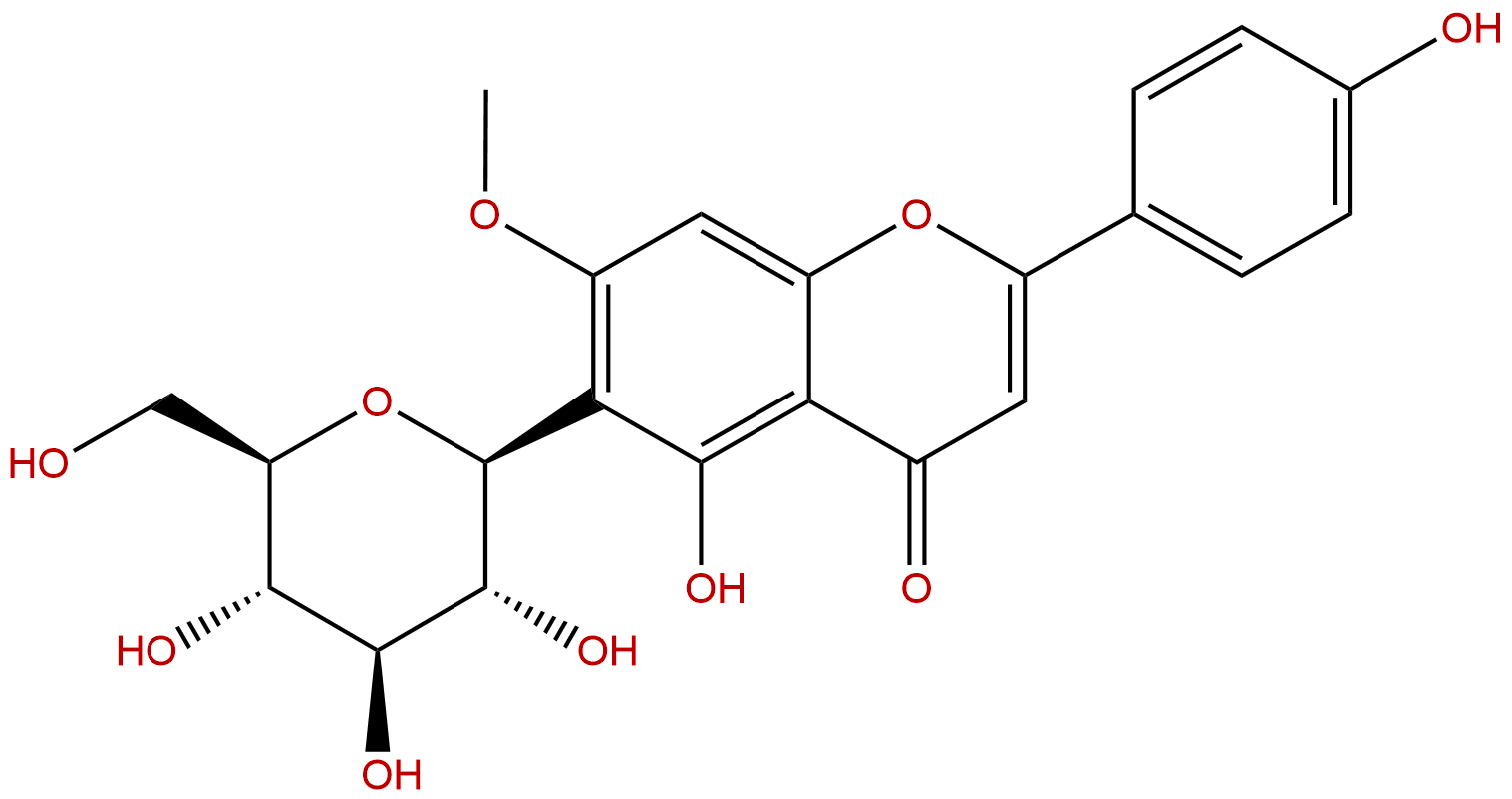


Product name: Swertisin
Synonym name:
Catalogue No.: BP3376
Cas No.: 6991-10-2
Formula: C22H22O10
Mol Weight: 446.408
Botanical Source:
Physical Description: Yellow powder
Type of Compound: Flavonoids
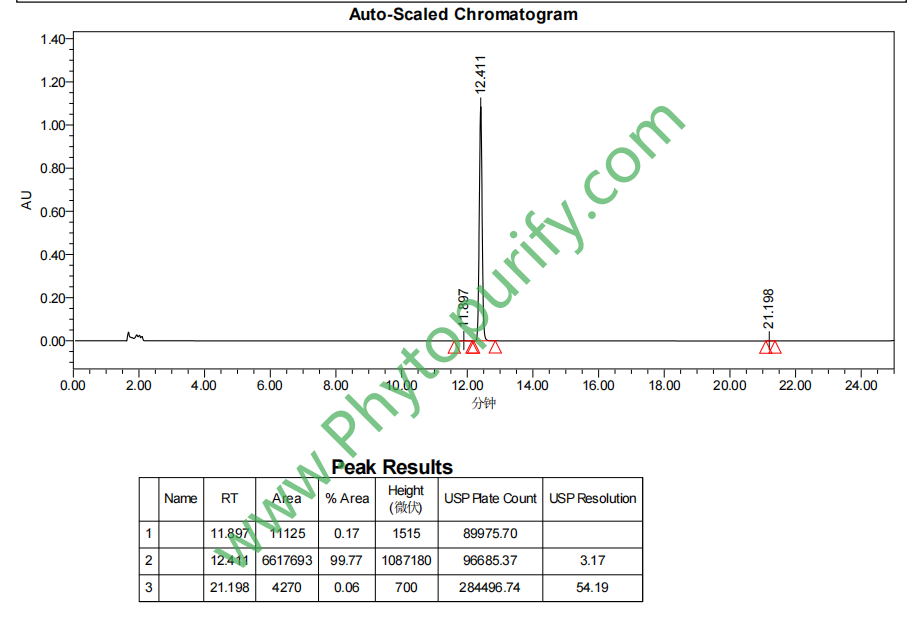
Purity: 95%~99%
Analysis Method: HPLC-DAD or/and HPLC-ELSD
Identification Method: Mass, NMR
Packing: Brown vial or HDPE plastic bottle
The product could be supplied from milligrams to grams. Inquire for bulk scale.
We provide solution to improve the water-solubility of compounds, thereby facilitating the variety of activity tests and clinic uses.
For Reference Standard and R&D, Not for Human Use Directly.
HPLC of Swertisin
Storage conditions:Short-term storage at 2~8℃, long-term storage at -20 ~ -80℃
170.0500
.2895
.2720
.6852
.5260
.4008
Low
80.2081
3.9083
Yes
No
No
No
Yes
No
0.6
Yes
No
Yes
No
Swertin, also known as 6-C - β - D-glucosyl-7-O-methyl apigenin, is a naturally occurring flavonoid carbon glycoside compound. Its CAS number is 6991-10-2, molecular formula is C22H22O10, and molecular weight is 446.4080 g/mol. This compound is mainly derived from plants of the genus Swertia in the family Gentianaceae, especially Japanese Swertia(Swertia japonica)Separated from the middle. As an important class of plant secondary metabolites, flavonoid carbon glycosides have better metabolic stability than oxygen glycosides due to their stable carbon carbon glycosidic bonds, and have attracted much attention in nature and traditional medicine.
In recent years, with the deepening of research on natural products, lutein has become a research hotspot due to its wide range of biological activities. The existing pharmacological studies have shown that it is not only an effective oral adenosine A1 receptor antagonist and sodium glucose cotransporter 2 inhibitor, but also has significant multiple pharmacological effects such as anti diabetes, anti-oxidation, anti hepatitis B virus and improving cognitive dysfunction. Especially by activating the Nrf2/ARE antioxidant pathway and regulating the expression of related antioxidant enzymes, it exhibits strong cell protective potential. These characteristics make it have broad application prospects in the prevention and treatment of metabolic diseases, neurodegenerative diseases, and oxidative stress-related diseases. This article will systematically elaborate on its chemical structure, plant origin, pharmacological mechanism, and pharmacological parameters, in order to provide scientific references for the in-depth research and development of this natural product.
The chemical structure of berberine is based on the flavonoid nucleus and is a derivative of apigenin. Specifically, based on the structure of apigenin, it is connected to a β - D-glucosyl group at the 6th carbon atom of the A ring through a stable C-C bond, and methylated at the 7th oxygen atom (- OCH3). This structural feature classifies it as flavonoid C-glycosides. The SMILES string is:COc1cc2oc(-c3ccc(O)cc3)cc(=O)c2c(O)c1[C@@H]1O[C@H](CO)[C@@H](O)[C@@H](O)[C@H]1OIt clearly demonstrates the chiral centers ([C @ @ H] and [C @ H]) of its sugar moiety and the overall connectivity.
According to the analysis of drug parameters, its molecular weight is 446.41 g/mol, slightly higher than the recommended upper limit of 500 Da in Lipinski's Five Rules, but still within an acceptable range. The calculated lipid water partition coefficient LogP value is 0.2895 and LogD value is 0.2720, indicating that the molecule has strong hydrophilicity in physiological pH environment, which is consistent with the structural characteristics of the molecule containing multiple hydroxyl groups and one hydrophilic sugar group. Its topological polar surface area is as high as 170.05 Å ², much higher than the threshold commonly believed to facilitate transmembrane permeation (about 140 Å ²), indicating that its passive transmembrane absorption may be limited. The water solubility parameter is 0.6852 (usually measured in mg/mL or log mol/L, indicating moderate to lower solubility), further confirming its high polarity.
These physical and chemical properties directly affect their bioavailability. High TPSA and low LogP values are usually associated with lower oral absorption and poorer blood-brain barrier penetration ability, which is consistent with the predicted results of "BBB penetration: low" given by the database. However, as a natural product, it is often taken in the form of plant extracts, and other components may affect its bioavailability by inhibiting metabolic enzymes or transporters, which brings complexity to practical applications.
The main plant source of medicinal flavonoids is the Swertia genus in the Gentianaceae family. There are about 150 species of this genus of plants worldwide, widely distributed in Asia, Europe, and North America, many of which have a long history of application in traditional medical systems in various regions. In China, swertia (often referring to)Swertia bimaculata It is called "medicine" or "swertia" due to its bitter taste and cold nature. It belongs to the liver, gallbladder, and stomach meridians and is traditionally used for clearing heat and dampness, strengthening the stomach and digestion, treating jaundice hepatitis, cholecystitis, and indigestion. In Japan,Swertia japonica It is also used as a bitter stomach tonic.
Modern plant chemistry research has confirmed that plants of the Swertia genus are rich in various active ingredients such as iridoid glycosides, flavonol glycosides, and kaempferol glycosides, which are the main material basis for their bitterness and pharmacological effects. As a characteristic flavonoid carbon glycoside component, although not separately emphasized in its traditional efficacy description, the antioxidant, anti-inflammatory, and hepatoprotective effects of medicinal flavonoids are likely to synergistically contribute to the overall "clearing heat and dampness" and "promoting bile flow" effects of Swertia sinensis. From traditional application experience to modern monomer compound activity research, it reflects the important path of exploring lead compounds from traditional herbs. The traditional knowledge of using Swertia sinensis provides valuable historical basis and research and development clues for the modern pharmacological research of medicinal flavonoids, especially in the application of digestive system and liver diseases.
When the pharmacological activity of lutein exhibits multiple targets and pathways, its mechanism of action is complex and has network regulatory characteristics.
4.1 Core pharmacological activity
1. Anti diabetes effect This is one of the most in-depth areas of research on medicinal flavonoids. Its mechanism of action is twofold: on the one hand, as SGLT2 inhibitor It can competitively inhibit the activity of sodium glucose cotransporter 2 in the renal proximal tubules, reduce glucose reabsorption, promote urinary glucose excretion, and directly lower blood glucose levels. This mechanism is similar to the widely used SGLT2 inhibitor drugs in clinical practice, such as empagliflozin and dapagliflozin. On the other hand, as Adenosine A1 receptor antagonist It can block the activation of adenosine A1 receptors. Overactivation of adenosine A1 receptors can inhibit insulin secretion, promote hepatic glucose output, and increase insulin resistance. Antagonising this receptor can improve pancreatic beta cell function, enhance insulin sensitivity, and inhibit hepatic gluconeogenesis, thereby improving blood glucose homeostasis from multiple aspects.
2. Antioxidant effect The strong antioxidant activity of lutein is the basis for its various protective effects, such as neuroprotection and liver protection. Its function is not simply to directly eliminate free radicals, but more importantly, through Activate Nrf2/ARE signaling pathway To achieve systematic antioxidant defense. The target information displayed in the database (NFE2L2, SOD1, CAT, GPX1, HMOX1) perfectly explains this mechanism.
- Core target NFE2L2 Nuclear factor E2 related factor 2 is the overall switch of cellular antioxidant stress response. When lutein can promote the dissociation of Nrf2 from the cytoplasm and its transfer to the nucleus.
- Downstream effect targets In the nucleus, Nrf2 binds to antioxidant response elements and initiates gene transcription of a series of endogenous antioxidant enzymes and phase II detoxifying enzymes, including:
- SOD1(Superoxide Dismutase 1): Catalyzes the conversion of superoxide anion radicals into hydrogen peroxide.
- CAT(Catalase): Decomposes hydrogen peroxide into water and oxygen.
- GPX1(Glutathione Peroxidase 1): Reduces hydrogen peroxide and lipid peroxides using glutathione.
- HMOX1(Heme oxygenase 1): degrades toxic heme to produce biliverdin and carbon monoxide, which have antioxidant and anti-inflammatory effects.
Through this series of cascade reactions, the drug flavin significantly enhances the intrinsic ability of cells to resist oxidative damage.
3. Neuroprotection and improvement of cognitive impairment Based on its antioxidant and anti-inflammatory properties, lutein has been shown to improve cognitive and memory impairments in mice in neurodegenerative disease models such as Alzheimer's disease. The mechanism may involve: alleviating oxidative stress and neuroinflammation induced by β - amyloid protein; Protect neurons from apoptosis; And it may regulate neurotransmitter release and synaptic plasticity by antagonizing adenosine A1 receptors.
4. Inhibit hepatitis B virus Preliminary studies have shown that lutein has an inhibitory effect on hepatitis B virus, and its mechanism may be related to interfering with the virus replication cycle or enhancing the host cell's antiviral immune response. The specific target remains to be further elucidated.
5. anti-inflammatory effect As a polyphenolic compound, berberine can exert anti-inflammatory effects by inhibiting inflammatory signaling pathways such as NF - κ B, reducing the production of pro-inflammatory factors (such as TNF - α, IL-6).
4.2 Networked perspective on the mechanism of action
The multiple activities of lutein do not exist in isolation. For example, its anti diabetes effect is closely linked to its antioxidant effect, because hyperglycemia itself will lead to mitochondrial dysfunction and a large number of reactive oxygen species (oxidative stress), and oxidative stress will aggravate insulin resistance and β cell damage. When lutein inhibits blood glucose through SGLT2 and antagonizes A1 receptors, it also activates the Nrf2 pathway to counteract potentially reduced oxidative stress, forming a synergistic protective effect. This multi-target, networked mode of action is precisely the advantage of natural products in treating complex chronic diseases.
Based on the provided pharmacological parameters, we can conduct a preliminary evaluation of the potential of lutein as an oral drug lead compound, and refer to the famous Lipinski's Five Rules(Rule 5) Make a judgment:
Conclusion When the drug flavin violates two of Lipinski's five rules (HBD>5, HBA>10) and the TPSA is too high. This is not Caco-2 cells have low permeability (0.4008) And predicted Low blood-brain barrier penetration The results are consistent, indicating that its oral bioavailability may not be ideal. This is a common challenge faced by many natural active glycoside compounds.
Analysis of other key parameters:
- Plasma protein binding rate 80.21%, belonging to a moderately high level, may affect its free drug concentration and the speed of drug efficacy.
- Toxicity warning:
- AMES test 0.6 (usually considered negative if<0.8 or<1.0) indicates no direct risk of mutagenicity.
- chromosome aberration The data shows' yes', which is a potential genotoxic signal that requires high vigilance and must be confirmed through more comprehensive experiments (such as in vivo micronucleus tests) in subsequent development.
- HERG inhibition'No' indicates a low risk of inducing QT interval prolongation in the heart, which is a positive signal for cardiovascular safety.
- Hepatotoxicity markers The data shows that it may cause an increase in serum AST (Ser_ST: Yes), indicating a potential risk of liver cell damage and requiring special attention in toxicology research.
- Feasibility of synthesis The synthetic accessibility index (SyneAccessibility) is 3.91, indicating that the synthetic route has moderate complexity.
Comprehensive Assessment Dang Yao Huang is an excellent natural lead compound with clear and multiple pharmacological activities. However, its inherent pharmaceutical deficiencies (poor oral absorption, potential chromosomal aberrations, and liver toxicity risks) limit its prospects for direct development as a traditional oral medication. Future research directions should focus on:
1. structural optimization Modify it through medicinal chemical methods, such as preparing prodrugs (such as esterifying glycosyl hydroxyl groups to improve lipid solubility), simplifying the structure (exploring the activity of de glycosylated or methylated analogues), or conducting salt formation studies to improve its solubility and permeability while reducing toxicity.
2. Formulation innovation Using nano formulations (such as liposomes, nanoparticles), phospholipid complexes, or cyclodextrin inclusion techniques to improve their solubility, stability, and bioavailability.
3. In depth security evaluation Comprehensive preclinical toxicology research must be systematically conducted, especially in-depth exploration of the mechanisms of chromosomal aberrations and hepatotoxicity, to clarify their safety window.
At present, most of the research on lutein is in the preclinical stage, focusing on activity screening, mechanism of action exploration, and preliminary in vivo pharmacological verification. Its protective role in diabetes, oxidative stress related diseases (such as liver fibrosis, neurodegenerative diseases) models has been supported by more evidence. However, there is still a relative lack of research on its pharmacokinetics, systemic toxicology, and deeper target network of action.
The application prospects are mainly reflected in the following aspects:
1. As a dietary supplement or functional food ingredient Given its natural sources and multiple benefits of antioxidant and anti glycation properties, the use of lutein or its rich extract from Swertia sinensis has direct potential in the development of health products for assisting blood glucose management and anti-aging.
2. Developed as a new anti diabetes drug Its unique dual mechanism of SGLT2 inhibition and A1 receptor antagonism provides a new idea for the development of anti diabetes drugs with new characteristics. By modifying its structure to overcome its drug weakness, it is expected to obtain candidate drugs with better activity and fewer side effects.
3. Application in the prevention and treatment of neurodegenerative diseases With the aging population, there is an urgent need for treatment of diseases such as Alzheimer's disease. The neuroprotective effect exerted by genistein through the Nrf2 pathway makes it a potential candidate molecule for preventing or delaying the progression of such diseases.
4. As a chemical tool or probe Its clear targets (such as A1 receptor, Nrf2) can be used for basic research on related signaling pathways.
Future research directions:
- In depth mechanism research Using chemical biology methods to identify the protein targets directly affected by it and create a more accurate network diagram of its interactions.
- Research on ADME/T System Comprehensively evaluate its absorption, distribution, metabolism, excretion, and toxicity characteristics to provide key data for development.
- Research on Structure Activity Relationship Synthesize a series of derivatives, clarify their pharmacophores and toxic groups, and guide safe and effective structural optimization.
- Exploring the potential of combination therapy Studying the synergistic effect of the combination of lutein and existing drugs such as metformin and SGLT2 inhibitors may reduce their respective dosages and side effects.
In short, Dangyao Huang is a treasure molecule hidden in traditional herbal medicine, and its multi-target mechanism of action reflects the unique advantages of natural products in treating complex diseases. Although there are still challenges in developing drug properties on the path towards modern medicine, with the empowerment of modern pharmaceutical chemistry and formulation technologies, it is highly likely to give rise to new drugs or health products with significant clinical value, contributing to the cause of human health. Continuous and in-depth research on it is an important bridge connecting traditional wisdom with modern science.
