


Synonym name: Swertiamaroside
Catalogue No.: BP1349
Cas No.: 17388-39-5
Formula: C16H22O10
Mol Weight: 374.342
Botanical Source: Swertia japonica, Anthocleista procera, Centaurium littorale, Swertia pseudochinensis, Swertia mileensis and Enicostema litorale
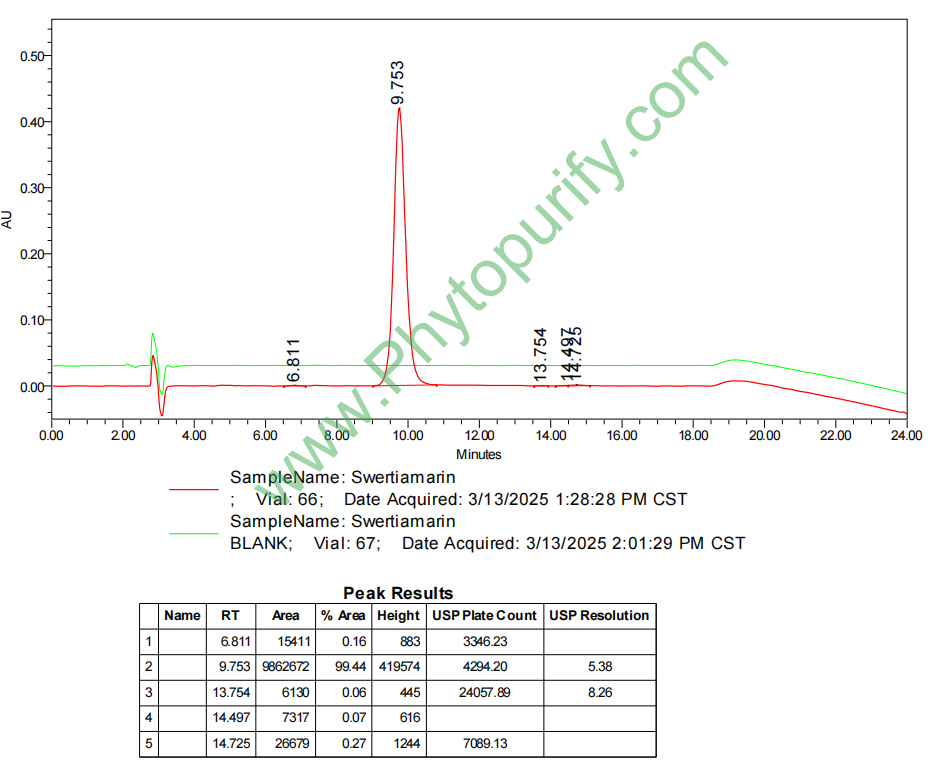
Purity: 95%~99%
Analysis Method: HPLC-DAD or/and HPLC-ELSD
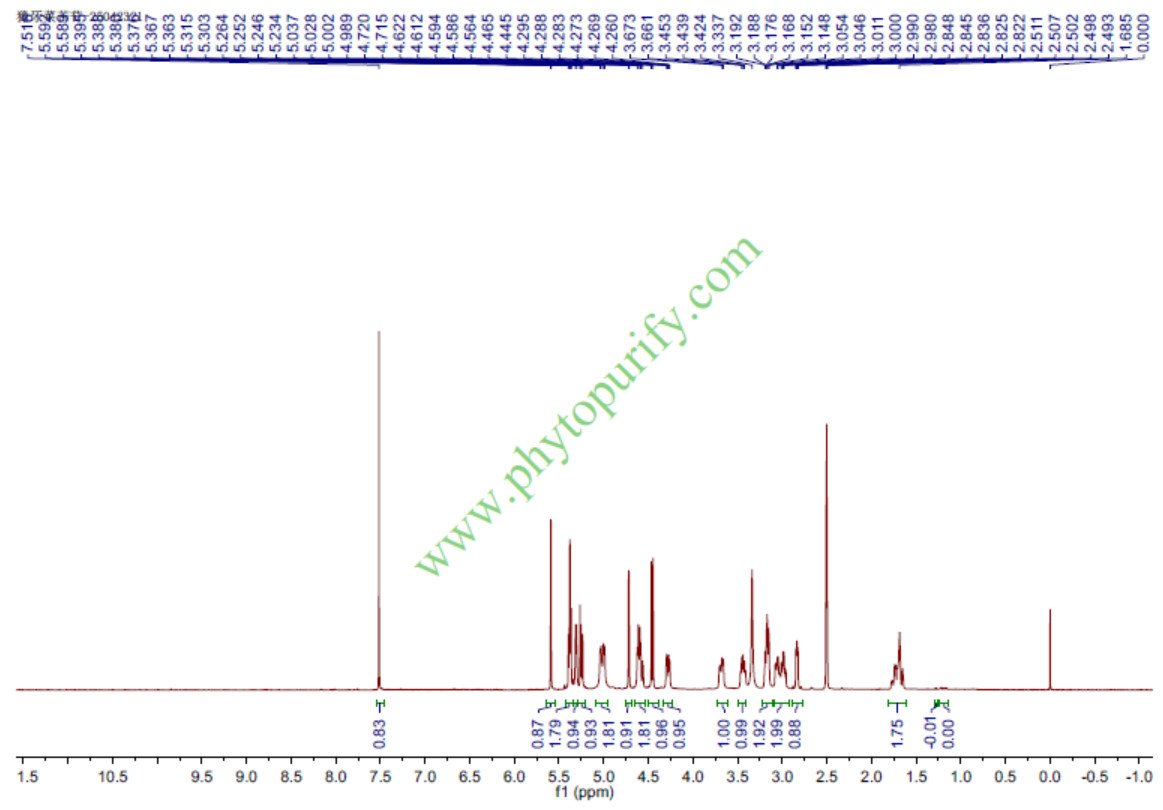
Identification Method: Mass, NMR
Packing: Brown vial or HDPE plastic bottle
Can be supplied from milligrams to grams.
For Reference Standard and R&D, Not for Human Use Directly.
Inquire for bulk scale.
HPLC of Swertiamarin
HNMR of Swertiamarin
Storage conditions:Short-term storage at 2~8℃, long-term storage at -20 ~ -80℃
Swertiamarin is a natural monoterpenoid bitter glycoside widely present in Swertia spp. and related plants. Due to its significant pharmacological activity and good oral bioavailability, it has become a hot topic in natural product pharmacology research in recent years. As a natural compound with multiple biological activities, swertiamarin shows good therapeutic potential in reducing blood sugar, blood lipid, anti rheumatism, antioxidant and anti-inflammatory aspects, especially in experimental models of diabetes, arthritis and liver disease. This article aims to systematically review the chemical structure, physicochemical properties, plant sources, and extraction methods of swertiamarin, with a focus on its pharmacological activity and mechanism of action. Combined with the latest molecular target research, it evaluates its pharmacological properties and pharmacokinetic characteristics, explores its clinical application prospects and future research directions, and provides theoretical basis and research references for the development and application of this natural product.
The chemical name of swertiamarin is (2S, 3R, 4S, 5S, 6R) -2- (β - D-glucopyranosyloxy) -3,4,5,6-tetrahydroxycyclohexylacetic acid lactone, with a molecular formula of C16H22O10 and a molecular weight of 374.3420. Its structural feature is a monoterpene skeleton connected to a β - D-glucoside through glycosidic bonds, containing multiple hydroxyl groups and lactone rings, giving it high polarity and water solubility. In terms of physicochemical properties, the LogP value of swertiamarin is -1.5760, indicating its strong hydrophilicity; The topological polar surface area (TPSA) is 155.14 Å ², indicating that it has a good distribution of polar groups, which is conducive to binding with biomolecules. The water solubility is about 44.73 mg/mL, indicating good water solubility, which is beneficial for oral administration. Its blood-brain barrier permeability is low, the hERG channel inhibition test result is negative, and the Ames mutagenicity test is 0, indicating its high safety and low risk of toxic side effects.
Swertia picroside mainly exists in Swertia plants of Gentianaceae, such as Swertia japonica, Swertia chirayita, Swertia mussotii, etc. These plants are widely used in traditional Chinese medicine to treat hepatobiliary diseases, diabetes and rheumatic diseases. The content of swertiamarin in plants varies depending on the species, collection time, geographical environment, and extraction process.
In terms of extraction methods, commonly used techniques include solvent extraction, ultrasound assisted extraction, and microwave-assisted extraction. Generally, ethanol water mixed solvents (such as 70% ethanol) are used for extraction, combined with ultrasound assistance to improve extraction efficiency. After concentration, separation, and purification of the extract, qualitative and quantitative analysis was performed using high-performance liquid chromatography (HPLC). In recent years, supercritical fluid extraction and membrane separation technologies have also been applied to the efficient extraction and purification of swertiamarin, further improving purity and yield.
Swertiamarin has significant hypoglycemic activity, mainly by improving insulin sensitivity, promoting glucose metabolism, and inhibiting gluconeogenesis pathways. Animal experiments show that swertiamarin can reduce the fasting blood glucose level of diabetes rats, improve glucose tolerance, and reduce triglycerides and total cholesterol in plasma, showing a good effect of reducing blood lipids. The mechanism may involve activation of the AMPK signaling pathway, promoting lipid metabolism and energy homeostasis regulation.
In the rheumatoid arthritis model, swertiamarin reduces joint inflammation and tissue damage by inhibiting the release of pro-inflammatory cytokines (such as TNF - α, IL-1 β, IL-6) and downregulating the expression of inflammation related enzymes (MMPs). Its mechanism of action is closely related to the regulation of the JAK2/STAT3 signaling pathway, which can inhibit the overexpression of inflammatory mediators and slow down the inflammatory process. Preclinical studies have shown that swertiamarin has potential value in the development of anti rheumatic drugs.
Swertia sinensis bitter glycoside exhibits significant antioxidant activity in various oxidative stress models. Taking carbon tetrachloride (CCl4) - induced liver injury in rats as an example, swertiamarin can activate the Nrf2/HO-1 antioxidant defense pathway, reduce liver oxidative damage, alleviate liver cell necrosis and inflammatory response, and demonstrate good hepatoprotective effects. In addition, it can regulate the activity of various antioxidant enzymes and enhance the body's free radical scavenging ability.
Research has found that swertiamarin can promote the proliferation and differentiation of osteoblasts, regulate the expression of bone metabolism related genes, and has potential preventive and therapeutic effects on osteoporosis. The mechanism of promoting bone formation involves regulating the bone morphogenetic protein (BMP) signaling pathway and inhibiting the expression of bone resorption related MMPs, demonstrating potential applications in the treatment of bone and joint diseases.
The multiple pharmacological effects of swertiamarin are closely related to its regulation of multiple signaling pathways and molecular targets. The main mechanisms of action include:
Regulating pro-inflammatory cytokines and NF - κ B signaling pathway
Swertiamarin can inhibit the activation of NF - κ B, reduce the expression of pro-inflammatory factors such as TNF - α, IL-1 β, IL-6, and alleviate inflammatory reactions. NF - κ B, as a core transcription factor in inflammatory response, its inhibition helps alleviate rheumatoid arthritis and other inflammatory diseases.
Activate Nrf2/HO-1 antioxidant pathway
By promoting Nrf2 nuclear translocation and enhancing the expression of HO-1 and other antioxidant enzymes, swertiamarin effectively resists oxidative stress, protects liver cells from free radical damage, and exerts hepatoprotective and anti fibrotic effects.
Regulating the JAK2/STAT3 signaling pathway
In the adjuvant induced arthritis model, swertiamarin inhibits the abnormal activation of JAK2/STAT3, reduces the production of inflammatory mediators, and alleviates joint inflammation and tissue damage.
Affects liver fibrosis related targets
Swertiamarin can regulate key targets such as AMPK, BCL2, STAT3, MMP2, MMP9, SMAD3, PPARG, inhibit hepatic stellate cell activation, block fibrosis process, and has the potential to resist liver fibrosis.
Promote proliferation and differentiation of osteoblasts
By regulating genes and signaling pathways related to bone metabolism, promoting bone formation, and inhibiting bone resorption, swertiamarin is expected to become a new natural medicine for the treatment of osteoporosis and joint diseases.
The molecular weight of swertiamarin is 374.34, which is a medium molecular weight natural product. Its LogP value is -1.576, indicating strong hydrophilicity, which is beneficial for the dissolution and absorption of oral preparations. High TPSA (155.14 Å ²) suggests strong polarity and may limit the penetration of the blood-brain barrier, which is consistent with its low central nervous system side effects. Good water solubility (44.73 mg/mL), conducive to formulation development.
In terms of safety, swertiamarin did not exhibit hERG channel inhibition, reducing the risk of cardiac toxicity; Ames test negative, indicating no significant mutagenicity. Preliminary pharmacokinetic studies have shown that the oral bioavailability of swertiamarin is good, with a moderate plasma half-life. It is mainly metabolized by the liver and excreted through the kidneys. Its low blood-brain barrier permeability reduces the possibility of central nervous system toxicity and side effects.
However, further systematic research is needed on the oral absorption and metabolic kinetics of swertiamarin, especially its metabolites and pharmacological substances in vivo, which are not yet fully understood. In the future, it is necessary to combine in vivo and in vitro pharmacokinetic and pharmacodynamic studies to optimize dosage form design and improve clinical conversion rates.
As a multi target and multi mechanism natural active ingredient, swertiamarin has attracted extensive attention in the treatment potential of chronic metabolic and inflammatory diseases such as diabetes, rheumatoid arthritis and liver diseases. Its good safety and multiple pharmacological effects provide a solid foundation for the development of new natural medicines.
The future clinical application prospects are mainly reflected in the following aspects:
Treatment of diabetes and metabolic syndrome
Swertiflorin is expected to become an adjuvant therapy for diabetes and related metabolic diseases by improving insulin resistance and regulating lipid metabolism.
Development of anti rheumatic and anti-inflammatory drugs
Its regulatory effect on the JAK2/STAT3 and NF - κ B pathways makes it potentially valuable for the treatment of rheumatoid arthritis and other inflammatory diseases.
Liver protection and anti liver fibrosis
By activating the Nrf2/HO-1 pathway and regulating multiple fibrosis related targets, swertiamarin may become a candidate drug for liver fibrosis and liver injury.
Osteoporosis and joint diseases
The promotion of osteoblast proliferation and differentiation provides new ideas for the treatment of osteoporosis and joint diseases.
However, the clinical translation of swertiamarin still faces many challenges, including improving pharmacokinetic characteristics, optimizing dosage forms, and evaluating clinical safety and efficacy. In the future, it is necessary to strengthen multi center and large sample clinical research, combined with modern medicinal chemistry and pharmacology techniques, to promote its transition from laboratory to clinical application.
As a natural product with rich pharmacological activity and good safety, swertiamarin shows broad application prospects in diabetes, inflammatory diseases and liver diseases. Its multi-target and multi mechanism mode of action provides a new strategy for the comprehensive treatment of complex diseases. Future research should focus on in-depth analysis of its molecular mechanism, optimization of drug formulations, improvement of pharmacokinetic data, and systematic clinical evaluation to promote the clinical translation and industrial application of swertiamarin. Through interdisciplinary collaboration, swertiamarin is expected to become an important representative of natural product drug development, contributing new natural drug resources to human health.
