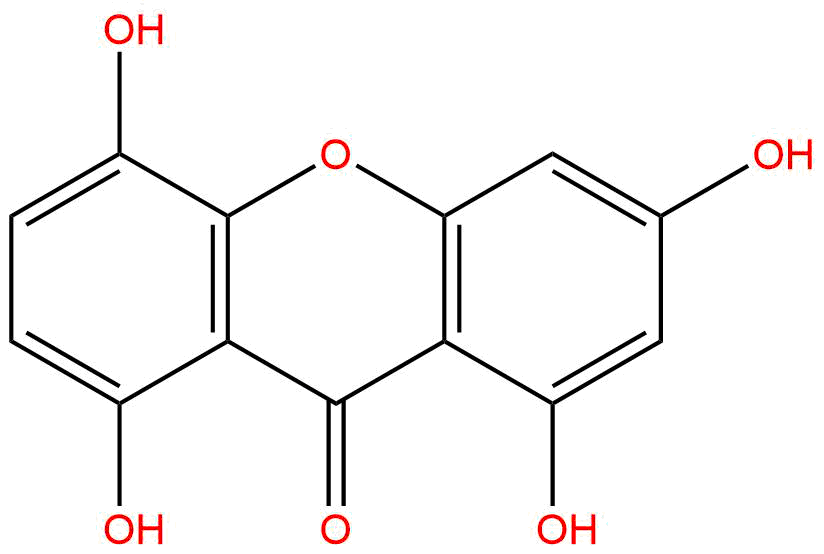


Product Name: Demethylbellidifolin
Synonym name: Bellidin; 1,3,5,8-Tetrahydroxyxanthone
Catalogue No.: BP0003
Cas No.: 2980-32-7
Formula: C13H8O6
Mol Weight: 260.201
Botanical Source: Gentiana bellidifolia and of Swertia spp.
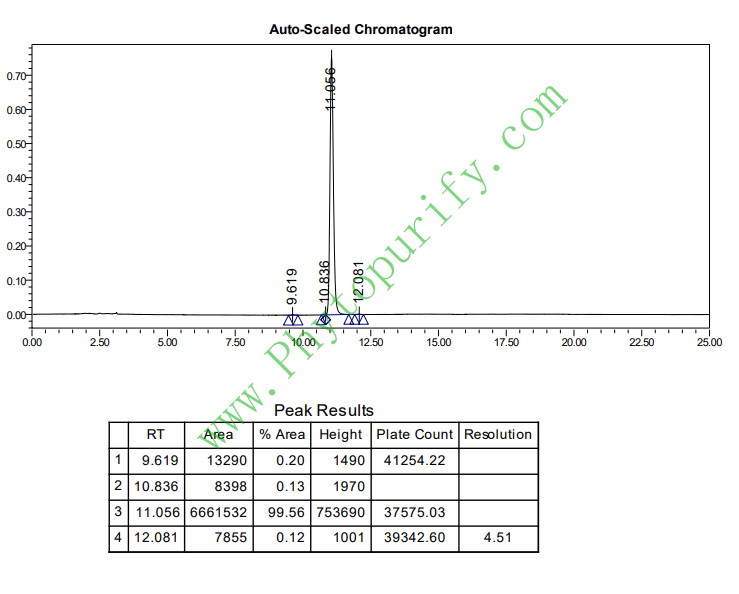
Purity: 95%~99%
Analysis Method: HPLC-DAD or/and HPLC-ELSD
Identification Method: Mass, NMR
Packing: Brown vial or HDPE plastic bottle
Can be supplied from milligrams to grams.
For Reference Standard and R&D, Not for Human Use Directly.
Inquire for bulk scale.
HPLC of Demethylbellidifolin
Storage conditions:Short-term storage at 2~8℃, long-term storage at -20 ~ -80℃
110.3800
2.0000
Low
Unknown
Unknown
Unknown
Unknown
Unknown
Unknown
Demethylbellidifolin (CAS number: 2980-32-7) is a naturally occurring xanthone compound belonging to the anthraquinone family. This type of compound has received widespread attention in the field of natural product pharmacology due to its unique multi hydroxyl structure and diverse biological activities. Demethylated daisy leaf gentian ketone mainly exists in plants such as Iris nigricans and Gentiana macrophylla, and has significant pharmacological effects such as antioxidant, acetylcholinesterase inhibition, free radical scavenging, and metabolic regulation. In recent years, with the in-depth study of its molecular target and mechanism of action, the therapeutic potential of demethyl daisy gentianone in atherosclerosis, Alzheimer's disease, diabetes and other chronic diseases has gradually emerged, and it has become an important candidate molecule for the development of new natural drugs.
This article aims to systematically review the chemical structure and physicochemical properties, plant sources, and extraction methods of demethylated daisy leaf gentian ketone. Combined with the latest pharmacological activity research, it deeply analyzes its mechanism of action and molecular targets, evaluates its pharmacological and pharmacokinetic characteristics, explores its clinical application prospects and development directions, and provides theoretical basis and research references for researchers and drug developers in related fields.
Demethylated daisy leaf gentian ketone belongs to the natural product of xanthones, and its core structure is the xanthone skeleton. Its molecular formula is C14H12O6, with a molecular weight of 260.20 Da. Structurally, demethylated daisy leaf gentian ketone is replaced by hydroxyl groups at positions 1, 3, 5, and 8, forming a tetraol structure. This multi hydroxylation feature endows it with strong polarity and good free radical scavenging ability.
In terms of physical and chemical properties, the LogP value of demethylated daisy leaf gentian ketone is about 2.0, indicating its moderate lipid solubility, which facilitates cell membrane penetration while maintaining a certain degree of water solubility. Its topological polar surface area (TPSA) is 110.38 Å ², indicating that the compound has strong polarity and hydrogen bonding ability, with 6 hydrogen bond acceptors, further supporting its high affinity binding to protein targets. The evaluation of blood-brain barrier penetration ability is low, indicating limited permeability in the central nervous system, but this does not rule out the possibility that it may affect neuropathological processes through indirect mechanisms.
At present, there is no clear data on the safety indicators such as hepatotoxicity, cardiotoxicity, and hERG channel inhibition of demethylated daisy leaf gentian ketone, and the results of Ames mutagenicity test have not been reported, indicating the need for further systematic toxicology research in the future to ensure its clinical development safety.
Demethylated daisy leaf gentian ketone is mainly distributed in plants with traditional medicinal value such as Iris nigricans and Gentiana macrophylla. Black iris is a plant of the Iris family, widely distributed in some parts of Asia, traditionally used to treat inflammation and liver diseases. Rapeseed gentian is a plant of the Gentianaceae family, commonly used in traditional Chinese medicine to clear heat, detoxify, promote blood circulation, and remove blood stasis.
The common methods for extracting demethylated daisy leaf gentian include solvent extraction, column chromatography separation, and high-performance liquid chromatography (HPLC) purification. Generally, methanol or ethanol is used as the extraction solvent, and ultrasonic assisted extraction or reflux extraction is used to improve the extraction efficiency. Subsequently, separation and purification were performed using silica gel column chromatography or reverse phase C18 column, and the structure was finally confirmed by mass spectrometry and nuclear magnetic resonance (NMR) techniques. In recent years, the introduction of supercritical fluid extraction and membrane separation technologies has further optimized the extraction process, improving yield and purity.
The pharmacological activities of demethyl daisy leaf gentianone cover antioxidant, anti-inflammatory, metabolic regulation, neuroprotection and other aspects, and relevant research mainly focuses on its potential therapeutic effects on atherosclerosis, Alzheimer's disease, diabetes and other chronic diseases.
The multi hydroxyl structure endows demethylated daisy leaf gentian ketone with excellent antioxidant capacity. In vitro experiments have shown that the compound can effectively scavenge superoxide anions, hydroxyl radicals, and hydrogen peroxide, reducing cell damage caused by oxidative stress. Its antioxidant effect is closely related to the prevention and treatment of many chronic diseases, especially in atherosclerosis and neurodegenerative diseases.
Demethylated daisy leaf gentian ketone exhibits EC 3.1.1.7 (acetylcholinesterase, AChE) inhibitory effect, which helps to increase the level of neurotransmitter acetylcholine and improve cognitive dysfunction. This characteristic has attracted much attention in the treatment research of Alzheimer's disease, with potential neuroprotective and cognitive improvement effects.
By activating the AMPK (5 'AMP activated protein kinase) signaling pathway, demethylated daisy leaf gentian ketone can regulate energy metabolism, promote lipid metabolism, and balance glucose metabolism. In the diabetes model, its regulation of glucose transporter SGLT2 and glucokinase (GCK) contributes to improving insulin sensitivity and blood glucose control. In addition, its regulation of protein tyrosine phosphatase 1B (PTPN1) and monoamine oxidase A (MAOA) further supports its multi-target metabolic regulation function.
Through regulating IDO1 (indoleamine-2,3-dioxygenase-1) and other immune related targets, demethyldaisy gentianone shows certain anti-inflammatory and immunomodulatory effects, which helps to alleviate chronic inflammatory conditions and block inflammation mediated tissue damage, especially in atherosclerosis and neurodegenerative diseases.
The multi-target mechanism of action of demethylated daisy leaf gentian ketone provides a molecular basis for its broad pharmacological activities. By regulating multiple key proteins and signaling pathways, it can unleash its therapeutic potential.
The multiple regulatory mechanisms of the above targets demonstrate the potential of demethylated daisy leaf gentian ketone as a natural multi-target drug, laying a molecular foundation for its application in complex diseases.
The molecular weight of demethylated daisy leaf gentian ketone is moderate (260.20 Da), with a LogP value of 2.0, which meets the basic requirements for drug affinity in Lipinski's rules. Its high polarity and number of hydrogen bond receptors (6) suggest that it has good target binding ability, but its blood-brain barrier penetration ability is low, which may limit its direct action on the central nervous system.
At present, there is a lack of data on its liver metabolism, kidney excretion, and bioavailability, and systematic pharmacokinetic studies are still needed. In terms of safety, key indicators such as hepatotoxicity, cardiotoxicity, and hERG channel inhibition are not yet clear, and future evaluations need to be conducted through in vitro and in vivo toxicology and safety pharmacology experiments.
In addition, the water solubility and stability of demethylated daisy leaf gentian ketone have a significant impact on its oral bioavailability, and related pharmaceutical improvements such as nanocarriers and liposome encapsulation techniques may help improve its in vivo utilization efficiency.
Based on the multiple activities of demethyl daisy leaf gentianone in antioxidant, metabolic regulation and neuroprotection, its application prospects in atherosclerosis, Alzheimer's disease, diabetes and other chronic diseases are broad.
In the field of atherosclerosis, demethyldaisy gentianone may become an effective natural drug to prevent and treat cardiovascular diseases by regulating lipid metabolism, inhibiting inflammatory reaction and protecting vascular endothelium. Its regulation of AMPK, LOX-1 and other targets provides a theoretical basis for the development of new antiatherosclerotic drugs.
In the treatment of Alzheimer's disease, the acetylcholinesterase inhibitory effect and regulation of amyloid metabolism related targets of demethylated daisy leaf gentian ketone suggest its potential to improve cognitive function and slow down neurodegenerative diseases. Despite its low blood-brain barrier penetration, effective treatment of the central nervous system can still be achieved through structural modification or optimization of drug delivery systems.
For diabetes, demethyldaisy gentianone regulates glucose metabolism and insulin signaling pathway through multiple targets, showing the potential to regulate blood glucose and improve metabolic syndrome, which can be used as a candidate molecule for the development of adjuvant drugs in the future.
However, the clinical translation of demethylated daisy leaf gentian ketone still faces many challenges, including systematic pharmacokinetic and toxicological evaluation, development of effective dosage forms, and design and implementation of clinical trials. Future research should focus on in-depth analysis of its mechanism of action, structural optimization, and safety evaluation to promote its transition from laboratory to clinical application.
As a natural anthraquinone compound with multiple biological activities, demethylated daisy leaf gentian ketone exhibits significant potential in antioxidant, metabolic regulation, and neuroprotection. Its multi-target mechanism provides new ideas and strategies for the treatment of complex chronic diseases such as atherosclerosis, Alzheimer's disease and diabetes.
Although there is currently insufficient research on its pharmacokinetics, safety, and clinical efficacy, with the development of modern natural medicine research technology, demethylated daidzein is expected to become an important breakthrough in the future development of natural product drugs. The in-depth basic and translational research of the system will lay a solid foundation for its clinical application and promote its widespread application in the field of modern medicine.
