


Product name: Isorhamnetin-3-O-beta-D-Glucoside
Synonym name: 3-Glucosylisorhamnetin; Isorhamnetin 3-glucoside;
Catalogue No.: BP0796
Cas No.: 5041-82-7
Formula: C22H22O12
Mol Weight: 478.406
Botanical Source: Typhae Pollen
Physical Description:
Type of Compound: Flavonoids
Purity: 95%~99%
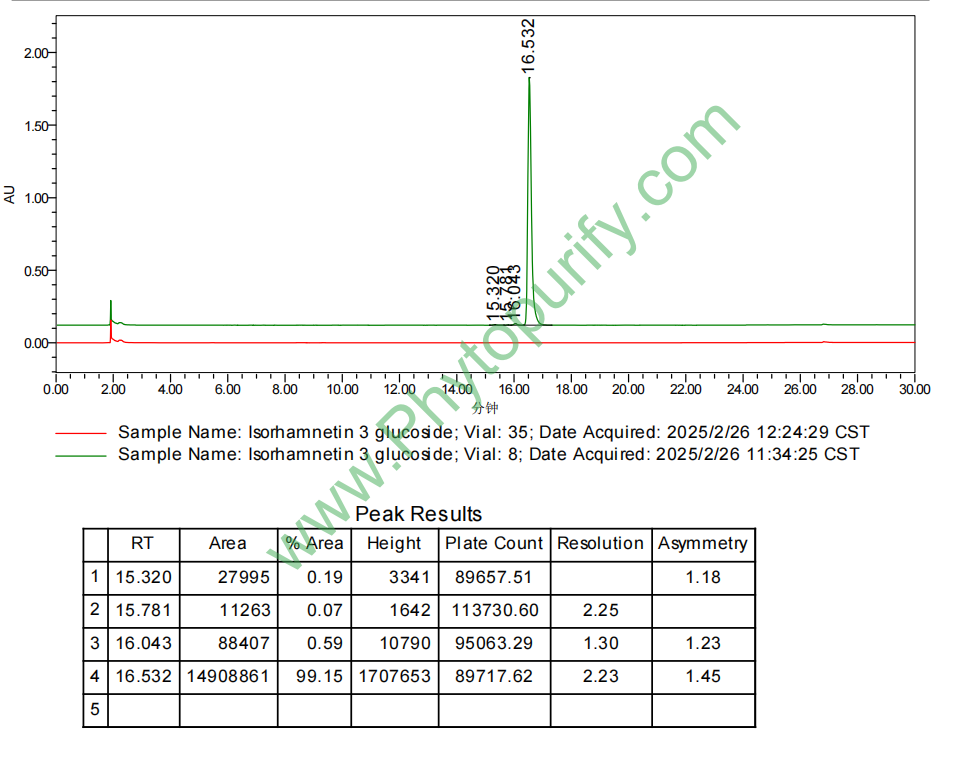
Analysis Method: HPLC-DAD or/and HPLC-ELSD
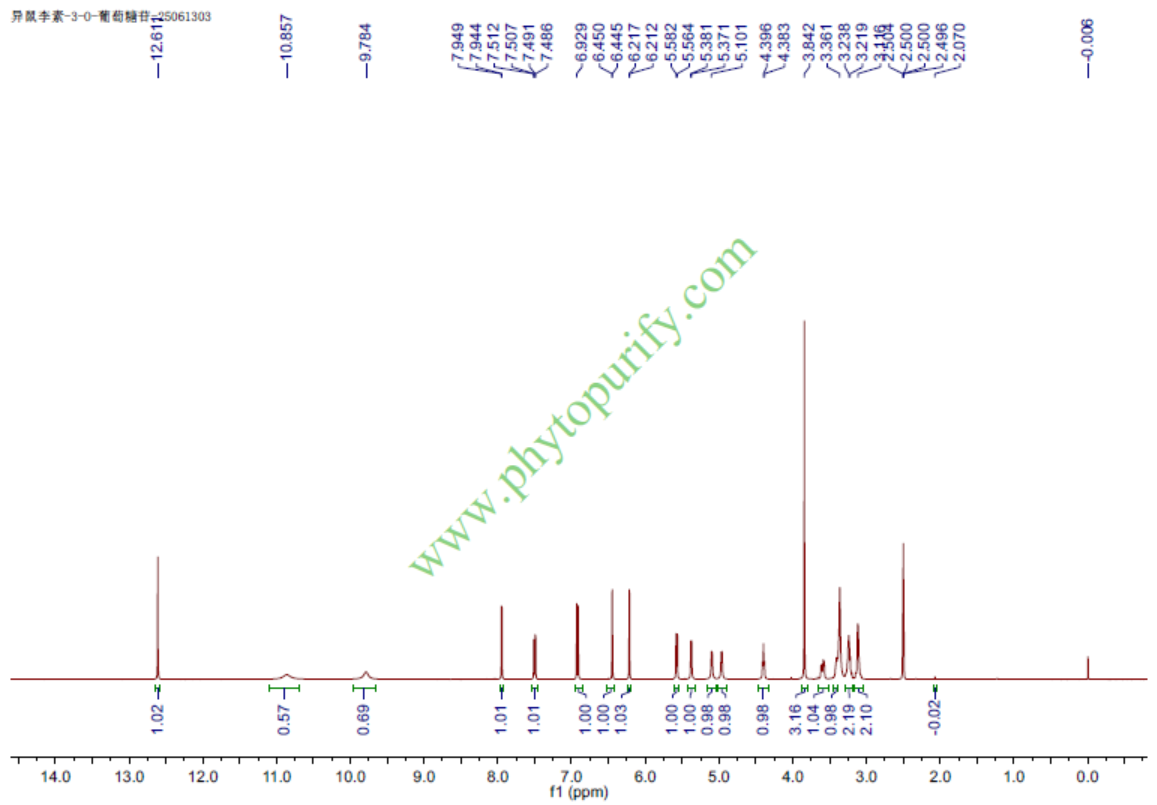
Identification Method: Mass, NMR
Packing: Brown vial or HDPE plastic bottle
Storage: Store in a well closed container, protected from air and light. Put into refrigerate or freeze for long term storage.
Whenever possible, you should prepare and use solutions on the same day. However, if you need to make up stock solutions in advance, we recommend that you store the solution as aliquots in tightly sealed vials at -20℃. Generally, these will be useable for up to two weeks.
The product could be supplied from milligrams to grams
Inquire for bulk scale.
Chengdu Biopurify Phytochemicals Ltd. is a leading company in the research, development, manufacture and marketing of High Quality Phytochemicals and Extracts(especially Active Ingredients from Traditional Chinese Medicine,TCM), Natural Active Pharmaceutical Ingredients worldwide.
The main services:
A. Supply active ingredients and reference standards of TCM, from mgs to kgs scale
B. Custom extraction and purification, target Herb Active Ingredients
C. Custom synthesis and semi-synthesis for Natural Active Ingredients
D. CR(contract research), CM(contract manufacture) and PD(process development) services from lab scale, pilot scale to commercial scale(GMP is also available)
E. TCM compounds library for drug screen,more than 3000 compounds available, many of them are rare and unique.
HPLC of Isorhamnetin-3-O-beta-D-Glucoside
HNMR of Isorhamnetin-3-O-beta-D-Glucoside
Storage conditions:Short-term storage at 2~8℃, long-term storage at -20 ~ -80℃
199.5100
.0051
-.1697
1.7095
.5058
.2205
Low
79.4683
3.9558
Yes
No
Yes
No
Yes
No
0.6
Yes
No
Yes
Yes
Isorhamnetin-3-O-glucoside (hereinafter referred to as isorhamnetin-3-O - β - D-glucoside) is an important natural product of glycosylated flavonoids, belonging to the glycoside derivatives of monomethoxytrihydroxyflavones. The third hydroxyl group of the isorhamnetin structure in its molecule is replaced by a β - D-glucopyranose group, endowing it with unique physicochemical properties and biological activity. As one of the main metabolites of isorhamnetin, isorhamnetin-3-glucoside is widely present in various plants, especially abundant in medicinal plants and functional foods. In recent years, there has been an increasing amount of research on its pharmacological effects, including antioxidant, anti-inflammatory, anti-tumor, and neuroprotective properties, demonstrating its significant value in the field of natural product pharmacology.
This article will provide a systematic review of the chemical structure and physicochemical properties, plant sources and extraction methods, pharmacological activity and mechanism of action, pharmacological evaluation and pharmacokinetic characteristics of isorhamnetin-3-glucoside, and explore its clinical application prospects and future research directions, aiming to provide theoretical basis and technical support for the development and utilization of this compound.
The chemical formula of isorhamnetin-3-glucoside is C22H2O12, with a molecular weight of 478.4060. Its core structure is isorhamnetin (3 '- methoxyquercetin), which belongs to the monomethoxytrihydroxyflavone class of flavonoids. The hydroxyl group at position 3 is connected by a β - D-glucopyranose group through an O-glycosidic bond, forming a glycosyl oxyflavonoid structure.
In terms of physicochemical properties, the LogP value of isorhamnetin-3-glucoside is 0.0051, indicating its strong hydrophilicity, which is consistent with its glycosylation structure. The polar surface area (TPSA) is relatively large, at 199.51 Å ², indicating high molecular polarity and good water solubility (solubility of approximately 1.7095 mg/mL), which has a significant impact on its bioavailability and in vivo distribution. The low permeability of the blood-brain barrier suggests limited penetration ability in the central nervous system. The negative result of hERG channel inhibition experiment indicates a low risk of cardiac toxicity. The Ames mutagenicity test score is 0.6, indicating a low risk of genotoxicity and good safety.
Structurally, the introduction of sugar groups not only improves the water solubility of compounds, but may also affect their binding ability to biological targets and metabolic stability. The hydrolysis product of glycosidic bonds, isorhamnetin itself, has various biological activities. Therefore, isorhamnetin-3-glucoside can exist as both an active substance and a precursor or metabolite of isorhamnetin.
Isorhamnetin-3-glucoside is widely distributed in various traditional Chinese medicinal materials and edible plants, especially in Isorhamnetum, Rhamnus, and certain Rosaceae plants with high content. Typical source plants include Scutellaria baicalensis, Ginkgo biloba, Lycium barbarum, and various wild berry plants.
Extraction methods often use polar solvents such as methanol, water, or ethanol water mixed solvent systems to obtain crude extracts rich in isorhamnose-3-glucoside through techniques such as ultrasound assisted extraction, reflux extraction, or pressure extraction. Subsequently, separation and purification techniques such as liquid-liquid distribution, silica gel column chromatography, and reverse phase high performance liquid chromatography (RP-HPLC) were used to obtain high-purity isorhamnetin-3-glucoside.
In recent years, green extraction techniques such as supercritical CO2 extraction, microwave-assisted extraction, and enzymatic assisted extraction have also been applied to the separation of isorhamnose-3-glucoside, significantly improving extraction efficiency and purity, reducing solvent usage, and meeting the sustainable development requirements of modern natural product extraction.
The pharmacological activity research of isorhamnetin-3-glucoside mainly focuses on its antioxidant, anti-inflammatory, neuroprotective, and cardiovascular protection aspects, and is mainly based on in vitro cell models and animal models.
Isorhamnetin-3-glucoside exhibits significant antioxidant capacity, capable of clearing free radicals, inhibiting lipid peroxidation, and protecting cells from oxidative stress damage. Its antioxidant activity is closely related to the multiple hydroxyl and methoxy groups in its structure. Although glycosylation modification slightly reduces the free radical scavenging ability, it improves water solubility and promotes its distribution and stability in organisms.
Multiple studies have shown that isorhamnetin-3-glucoside can enhance the activity of intracellular antioxidant enzyme systems, such as superoxide dismutase (SOD), catalase (CAT), and glutathione peroxidase (GPX), alleviate cellular damage caused by oxidative stress, and has potential anti-aging and cardiovascular protective effects.
Isorhamnetin-3-glucoside can inhibit the expression of inflammatory factors such as TNF - α, IL-6, and IL-1 β, and alleviate the inflammatory response. The mechanism may involve regulating the nuclear factor kappa B (NF - κ B) signaling pathway, inhibiting the release of inflammatory mediators, and thus exerting anti-inflammatory effects.
Due to its antioxidant and anti-inflammatory activities, isorhamnetin-3-glucoside exhibits neuroprotective potential in neurodegenerative disease models. Research has shown that it can alleviate oxidative stress and inflammation mediated neuronal damage, improve cognitive function, and suggest its application value in neurological diseases such as Alzheimer's disease and Parkinson's disease.
Isorhamnetin-3-glucoside protects myocardial cells, improves vascular endothelial function, inhibits the occurrence and development of atherosclerosis, and has a good cardiovascular protection effect through antioxidant and anti-inflammatory mechanisms.
In addition, some studies have found that it has potential activities in liver protection, anti-tumor, and regulation of glucose and lipid metabolism, but the relevant mechanisms still need further clarification.
The main mechanism of action of isorhamnetin-3-glucoside is focused on regulating the intracellular antioxidant defense system and inflammatory signaling pathway, with key targets including:
NFE2L2/NRF2 As the main intracellular antioxidant transcription factor, NRF2 regulates the expression of various antioxidant enzyme genes. Isorhamnetin-3-glucoside can activate the NRF2 signaling pathway, promote nuclear translocation, enhance the expression of antioxidant enzymes such as SOD1, SOD2, CAT, GPX1, and HMOX1, and improve the ability of cells to resist oxidative stress.
SOD1 and SOD2 Superoxide dismutase, located in the cytoplasm and mitochondria respectively, catalyzes the conversion of superoxide anion radicals into hydrogen peroxide, reducing oxidative damage. Isorhamnetin-3-glucoside enhances free radical scavenging efficiency by upregulating SOD expression.
CAT (catalase)Catalytic decomposition of hydrogen peroxide into water and oxygen, reducing the toxicity of hydrogen peroxide. The enhancement of its activity helps maintain cellular redox homeostasis.
GPX1 (Glutathione Peroxidase)Using glutathione to reduce peroxides and protect cells from oxidative damage. Isorhamnetin-3-glucoside can promote GPX1 expression and enhance cellular antioxidant capacity.
HMOX1 (Heme Oxygenase 1)It has antioxidant and anti-inflammatory effects, and isorhamnetin-3-glucoside induces HMOX1 expression, participating in cellular protective mechanisms.
Through the regulation of the above targets, isorhamnetin-3-glucoside effectively reduces oxidative stress and inflammatory response, maintaining cellular function and tissue homeostasis. In addition, its inhibitory effect on inflammatory signaling pathways such as NF - κ B further consolidates its multi-target and multi-path pharmacological properties.
The pharmacological parameters of isorhamnetin-3-glucoside show that it has certain development potential:
molecular weight 478.4060, which falls within the range of most small molecule drugs and is beneficial for absorption and distribution in the body.
LogP 0.0051 indicates strong hydrophilicity and good water solubility (1.7095 mg/mL), which is beneficial for the preparation and absorption of oral preparations.
TPSA 199.51 Å ², a higher polar surface area may limit its cell membrane permeability, especially with lower blood-brain barrier permeability, indicating limited application in the central nervous system.
Blood-brain barrier penetrability Low, which limits its direct action as a central nervous system drug, but can exert indirect effects through the metabolite isorhamnetin.
HERG inhibition None, reduces the risk of cardiac toxicity, which is beneficial for safety evaluation.
Ames test Score 0.6, indicating no significant mutagenicity and good safety.
In terms of pharmacokinetics, isorhamnetin-3-glucoside, as a glycoside flavonoid, is mainly affected by the hydrolysis of glycosidic bonds during oral absorption. The gut microbiota and enzyme system can convert it into isorhamnetin, which is the active metabolite. Its distribution in the body is mainly concentrated in metabolic organs such as the liver and kidneys, and its excretion is mainly through urine and bile. Due to its strong hydrophilicity, its bioavailability may be limited, and pharmaceutical methods are needed to improve absorption and stability.
Isorhamnetin-3-glucoside has broad application prospects in the prevention and treatment of oxidative stress-related diseases due to its excellent antioxidant and anti-inflammatory activities. Its potential clinical applications include:
Anti aging and skin protection By clearing free radicals and slowing down the process of skin aging, it has development value as a functional skincare ingredient.
Prevention and treatment of cardiovascular and cerebrovascular diseases: Improve vascular endothelial function, inhibit atherosclerosis, and prevent myocardial ischemia reperfusion injury.
Adjuvant therapy for neurodegenerative diseases Although the blood-brain barrier has limited penetration, it may alleviate neurological damage through metabolite action and peripheral anti-inflammatory mechanisms.
Metabolic syndrome and complications of diabetes Regulating oxidative stress and inflammatory response, improving metabolic abnormalities.
Future research should focus on:
Pharmacokinetic optimization Develop novel drug delivery systems such as nanocarriers and liposomes to improve oral bioavailability and targeting.
In depth analysis of the mechanism Using multi omics techniques to elucidate its molecular action network and discover more potential targets.
Preclinical and clinical research Conduct safety assessments and effectiveness verification of the system to promote its commercialization or industrialization of functional foods.
Structural modification and derivative development Improve its pharmacokinetic properties and enhance its biological activity through chemical modification.
As a typical glycosylated flavonoid, isorhamnetin-3-O-glucoside exhibits excellent water solubility and diverse biological activities, particularly in the field of antioxidant damage. Its mechanism of action mainly activates the NRF2 antioxidant signaling pathway, regulates the expression of various key antioxidant enzymes, reduces oxidative stress and inflammatory responses, and exhibits multi-target and multi pathway pharmacological properties. Despite its low blood-brain barrier permeability and limited bioavailability, modern pharmaceutical technology and structural optimization have the potential to overcome these limitations and promote its clinical application.
In the future, combined with systematic pharmacological mechanism research and preclinical evaluation, isorhamnetin-3-glucoside is expected to become an important natural drug candidate molecule for the prevention and treatment of oxidative stress-related diseases, providing strong support for natural product pharmacology and functional natural product development.
